

Quadient AR vs Versapay for Collections and Dunning: A 2026 Buyer’s Guide

The Short Version
- Quadient AR’s public materials emphasize credit risk scoring and Salesforce-native collections. Versapay’s public materials emphasize payment capture and buyer-facing dispute resolution.
- Neither vendor showed list pricing in the materials reviewed for this comparison. Quotes are typically based on feature tier or annual invoice volume, depending on the provider.
- Versapay’s public materials describe recurring billing and AutoPay. Quadient’s reviewed public materials do not show subscription billing.
- Quadient’s Salesforce-native positioning is strongest when the CRM is the operating system. If your ERP or collections workflow lives elsewhere, confirm how collections context is accessed day to day.
Disclosure: Blixo is the sponsor/alternative in this comparison.
Who Each One Is Actually For
If you run a credit-heavy revenue team out of Salesforce, Quadient AR’s public materials suggest a closer fit. If your problem is friction around invoice delivery, customer payments, and buyer-side disputes, Versapay’s public materials suggest a closer fit. That is a directional recommendation, not a final verdict.
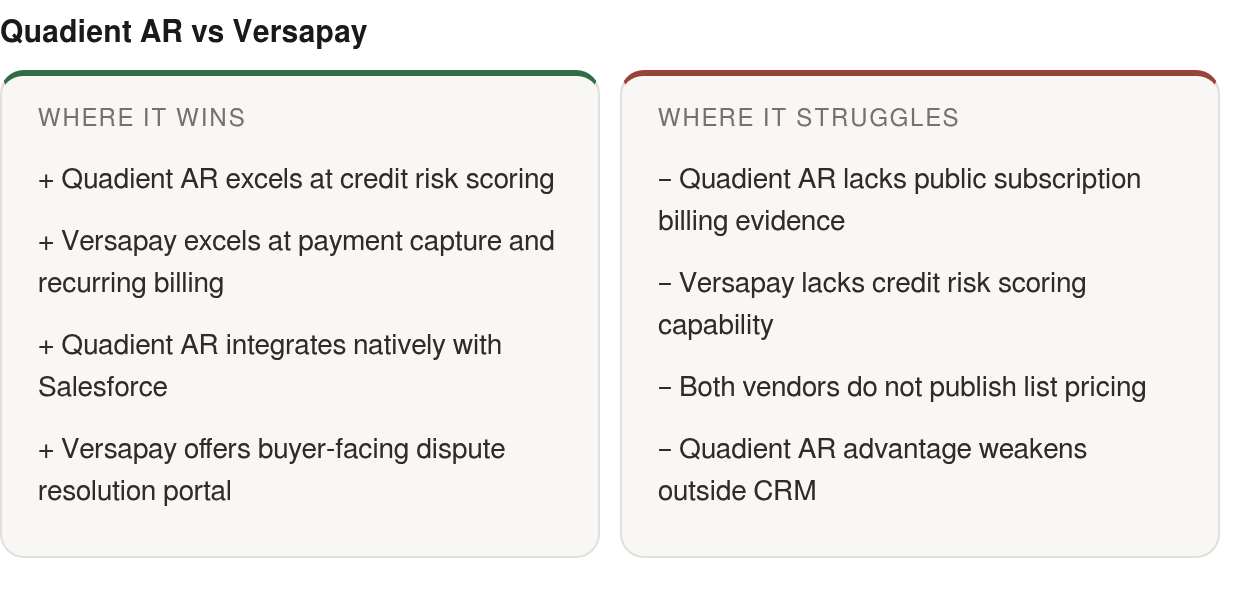
For SaaS buyers, that split creates an instant filter. Versapay’s public materials describe recurring billing and automatic payments. Quadient’s public materials point more toward credit and collections. But the recovery motions most specific to subscription revenue still have to be tested directly, because vendor pages rarely show the messy middle of dunning: what happens after a failed card, a partial commitment, or a customer asking for time.
The Feature Split Comes Down to Credit vs Cash Capture
Across many public comparisons, these two are often placed close on core AR capability, with the real gaps clustering in a few spots. Quadient AR’s reviewed public materials have more detail on the credit side, including risk assessment and digital application workflows. Versapay’s public materials emphasize money-in, especially remittance handling and exception workflows.
The table below reflects public vendor claims and should be verified in a live demo.
| Capability | Blixo | Quadient AR | Versapay |
|---|---|---|---|
| Subscription / recurring billing | Advertised as built-in | Not evidenced in reviewed public materials | Emphasized in public materials |
| Multi-channel dunning (email, SMS, calls, letters) | Advertised as built-in | Public materials cover reminder sequencing | Public materials cover automated reminders |
| Cash application AI | Advertised as built-in | Supported per public materials | Emphasized in public materials |
| Credit risk scoring | Not advertised as a focus | Emphasized in public materials | Not emphasized |
| Customer self-service portal | Advertised as built-in | Supported per public materials | Emphasized as buyer network |
| Salesforce-native collections view | Not advertised | Emphasized in public materials | Not emphasized |
| Published pricing | Pricing page disclosed | Quote only in materials reviewed | Quote only in materials reviewed |
Quadient is more visible on credit-management work in public materials. Versapay is more visible on payment capture and buyer-facing resolution. Read the matrix that way and most of the noise drops out.
User Ratings Don’t Track the Feature Sheets
A vendor can look ahead in a category on paper while users describe a messier day-to-day. Coverage and usability are different things, and a feature matrix is not a customer-success story.
Sample size matters too. A category score built on a handful of reviews should not outweigh a broad pattern across platforms. Use ratings to form a hypothesis, then test it with a pilot on your invoices, your collectors, and your customer workflows.
Pricing Stays Behind a Sales Call
Neither vendor displayed a public list price in the materials reviewed. That makes apples-to-apples comparison hard unless you normalize the quote request. Ask each rep for one complete first-year number at your expected seat count and transaction profile.
This is where SaaS buyers on tighter budgets may feel it. If transparent pricing and native subscription billing sit at the top of your list, quote-only enterprise tools can be a poor fit. Blixo, the sponsor/alternative in this comparison, publishes its plans on its website; verify current pricing and whether it includes unlimited customers and automated invoices. Shortlist on the two or three flows you run daily, then demo those live. If you want a repeatable scoring method, our guide on comparing AR automation software without reading vendor pages lays one out.

Why These Two Come Up At All
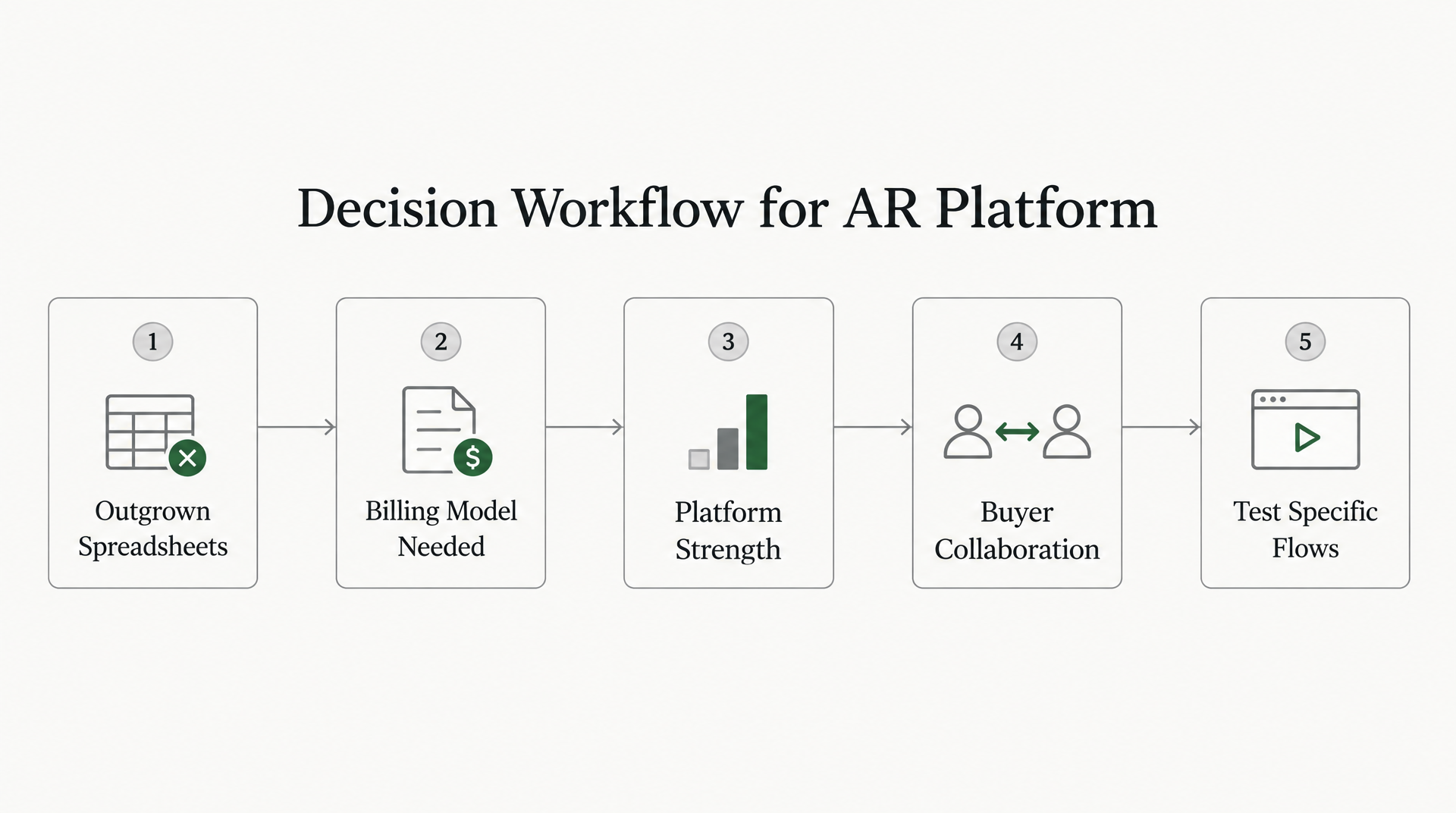
Most buyers reach the Quadient AR vs Versapay question after outgrowing spreadsheets. But the real decision starts one layer up: what job are you hiring the tool to do? The two platforms optimize for different revenue teams, so picking well means matching the tool to your billing model and your system of record, not to whichever matrix runs longer.
For a SaaS finance team, that distinction carries more weight than usual. You likely need self-service payments, reliable recurring charge handling, and dunning that protects the relationship when billing goes wrong. Through that lens, the comparison becomes less about total feature count and more about which gaps you can live with.
Your System of Record Decides More Than the Feature List
Quadient AR is often shortlisted when the CRM is the operating center for revenue work. If account owners need collections context inside the same environment where they manage relationships, that structural fit is hard to replicate. Versapay’s public materials take a different road, focusing on buyer collaboration and self-service resolution for sellers that get a lot of invoice questions.
Before you sign, test how that fit behaves in your own stack. The strongest workflow story depends on whether your finance, sales, and success teams actually live in the same system. If they don’t, the implementation conversation matters as much as the feature list.
Review Scores Split, So Weight the Broader Signal
Public ratings can point in different directions. Some feature-level marks lean toward one vendor on credit management or dispute resolution, but a high score can rest on a very small review base. A narrow sample tells you little about how the tool behaves after rollout. Broader patterns tend to even things out. Discount the outliers, weight the wider signal, and treat published scores as reasons to run a pilot rather than numbers to trust outright.
Match the Tool to the Job, Not the Brochure
Different buyers need different things, so map your primary pain before you demo.
| Use case | Best fit | Why |
|---|---|---|
| Salesforce-centric revenue teams | Quadient AR | Public materials emphasize native CRM visibility |
| High-dispute B2B sellers | Versapay | Public materials emphasize buyer portal and self-service resolution |
| Credit risk scoring and limits | Quadient AR | Public materials describe credit application and monitoring workflows |
| Cash application and remittance | Versapay | Public materials emphasize remittance capture and exception handling |
| Subscription billing plus empathy-driven dunning | Blixo | Sponsor/alternative; advertised as recurring billing and automated dunning in one layer |
Use the matrix to build your demo agenda, not your final answer. Ask each vendor to walk through the moments your team handles daily: billing changes, failed payments, invoice questions, and handoffs between finance and account owners. Blixo is included here as the sponsor/alternative for subscription-first teams and advertises recurring billing, multi-channel collections, and retention-minded dunning; confirm those claims in a live demo.
Feature Comparison
Comparing Quadient AR and Versapay using public materials makes the split cleaner than most matrices admit. Across a full AR taxonomy, many features look similar. The decision turns on the smaller set of differences, not the long shared middle.
For a SaaS finance team, the differences that matter cluster in two places: billing and credit. Versapay’s public materials emphasize subscription-style invoicing, stored payment scheduling, electronic invoice delivery with embedded payment links, and an open API. Quadient AR’s public materials emphasize customer credit workflows, payment-behavior forecasting, and support for complex organizational structures. The raw count can hide where the strengths actually land.
Which platform fits a subscription billing model?
If you bill on a recurring plan, Versapay’s public materials map more naturally to that workflow. They describe recurring charges and automatic payment collection as part of the platform. Quadient’s reviewed public materials emphasize other AR priorities.
That gap is structural, not cosmetic. A SaaS team running monthly or usage-based charges needs the billing engine and collections logic to share context. Split those jobs across separate systems and reconciliation work can appear every cycle. Blixo says it addresses that split by pairing subscription billing with automated collections; confirm the integration and recovery flows in a demo.
Where do both platforms leave a gap?
The demo agenda should not stop at “can you send reminders?” A SaaS dunning process often hinges on whether the system can record customer commitments, adjust follow-up timing, and support flexible resolution paths without dumping finance back into spreadsheets.
Public documentation does not settle that for either incumbent. Treat absence from the website as an open item, not a verdict. Put the exact workflow in front of the vendor and watch whether it is native, configurable, or a workaround.
A practical demo script can cover: a failed card, a promise-to-pay, a payment plan or installment request, a temporary pause, retry scheduling, and the handoff to CRM account owners. Ask the vendor to show each path live, including what the collector sees and what the customer receives.
| Capability (SaaS lens) | Quadient AR | Versapay | Blixo |
|---|---|---|---|
| Recurring / subscription billing | Not evidenced in reviewed public materials | Emphasized in public materials | Advertised as built-in |
| AutoPay / scheduled payments | Not evidenced in reviewed public materials | Emphasized in public materials | Advertised as built-in |
| Credit risk scoring | Emphasized in public materials | Not emphasized | Not advertised as focus |
| AI-driven dunning | Payment-behavior forecasting mentioned | Automated reminders mentioned | Advertised as built-in |
| Promise-to-pay tracking | Not evidenced in reviewed public materials | Not evidenced in reviewed public materials | Confirm in demo |
Do the user ratings back the feature claims?
Not cleanly, and this is where a buyer can get misled. Rating categories sometimes run against the grain of a vendor’s documented strengths, and the categories that look best on paper can score soft with actual reviewers. The catch is sample size: a few opinions can swing a whole category. Some third-party roundups list both Quadient AR and Versapay among AR platforms finance teams shortlist, but documented breadth and user-perceived quality are not the same thing. Treat the matrix as a shortlisting tool and settle the credit-versus-billing question with a pilot on your real invoices.
Where the Two Platforms Diverge on Scale and Speed
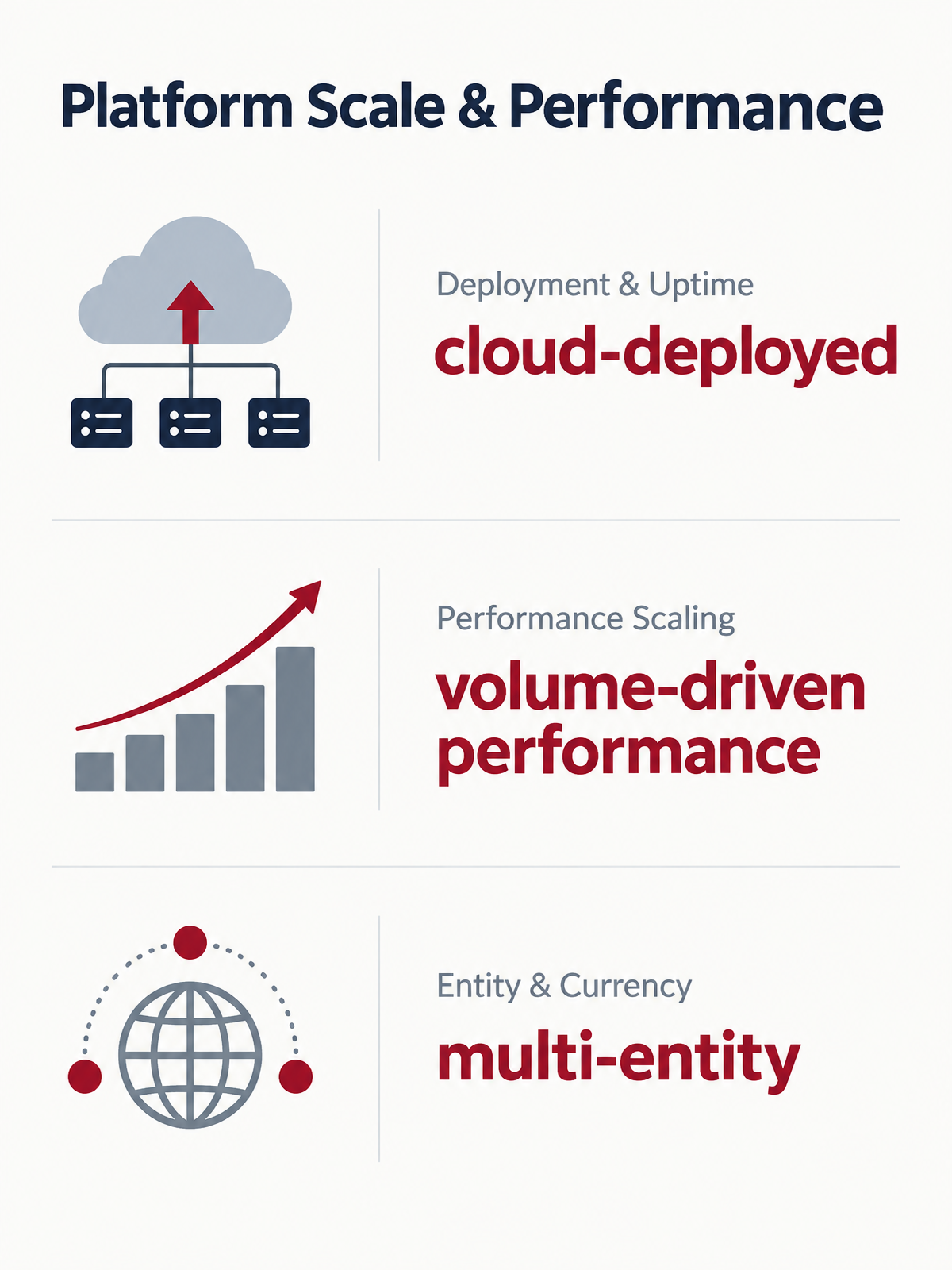
On raw performance, the surface specs look similar in public materials. Both are described as cloud-deployed, both make enterprise-grade availability claims, and neither publishes architecture benchmarks a buyer can independently validate before signing. The meaningful question is not abstract throughput. It is which platform keeps up with your operating model as volume, entities, and customer complexity climb.
That is where public messages diverge. Quadient AR’s materials describe support for more complex corporate and currency structures, including the ability to consolidate invoice, customer, and payment data across more than one ERP connection. For a SaaS business expanding into new markets or running subsidiaries on separate systems, that is a scaling path you can ask to see.
Versapay Scales the Processing Bottleneck, Quadient Scales the Entity Count
Versapay’s apparent advantage is at the cash application layer. Its public materials describe remittance capture from email, PDFs, AP portals, and data files, with exception handling for payments that don’t match cleanly on the first pass. As invoice counts grow, that is often where AR teams hit a manual wall first.
Quadient leans the other way in its public materials: upstream credit assessment, payment-behavior forecasting, and portfolio management across organizational complexity. Its scaling story is less about matching incoming payments and more about controlling exposure as the customer base gets more varied.
| Dimension | Quadient AR | Versapay |
|---|---|---|
| Multi-entity / multi-currency | Emphasized in public materials | Not emphasized |
| Multiple simultaneous ERP connections | Described in public materials | Not evidenced |
| Automated cash application at volume | Not emphasized | Emphasized |
| Exception handling for unmatched payments | Not emphasized | Emphasized |
| Open API for system integration | Not evidenced | Described in public materials |
| AI-driven forecasting | Described in public materials | Not emphasized |
The Gap Neither Platform Has Closed
For SaaS buyers, the operational weak spot is not raw scale. It is what happens when a customer does not fit the standard reminder path. A subscriber may need a short grace period, a split settlement, or a temporary pause while an internal approver clears an invoice. Those are retention moments, not just AR tasks.
Versapay’s described API gives it a clearer extension path if you want to connect a dedicated dunning layer or build custom logic around those scenarios. Quadient’s reviewed public materials do not offer the same integration signal, so the burden shifts to sales and implementation. Blixo, the sponsor/alternative in this comparison, advertises subscription management, recurring invoices, and automated collections and dunning in one place; confirm the claim in a demo.
Net it out: Quadient’s public materials fit organizations with complex entity structures and variable credit risk. Versapay’s public materials fit high transaction volumes with recurring or subscription patterns. Neither is a complete fit for a SaaS team that wants empathy-driven dunning baked in.
Pros and Cons
Weigh strengths and weaknesses and one pattern surfaces fast: the platform that looks stronger on paper is not always the one existing users rate higher. That gap should shape how you read every feature list in this comparison.
Quadient AR’s public materials cover more credit-side capability. Narrow the lens to hands-on satisfaction, and the story can flip. That tension is the real trade-off for a SaaS buyer.
Quadient AR’s Credit Depth Comes With a Satisfaction Gap
On public materials, Quadient leads where credit teams live: customer risk scoring, digital application workflows, and predictive payment behavior. For a SaaS company extending net terms to enterprise accounts, that can be valuable.
The catch tends to show up in daily use. Breadth of credit functionality does not automatically mean the workflow feels clean to collectors, finance leaders, or account owners. Do not buy the credit story off the matrix alone. Pilot those exact flows.
One operational wrinkle: Quadient’s home turf appears to be the CRM, where collections context reaches the account owner. If your team works elsewhere, confirm how that context travels and whether another system touchpoint slows follow-up.
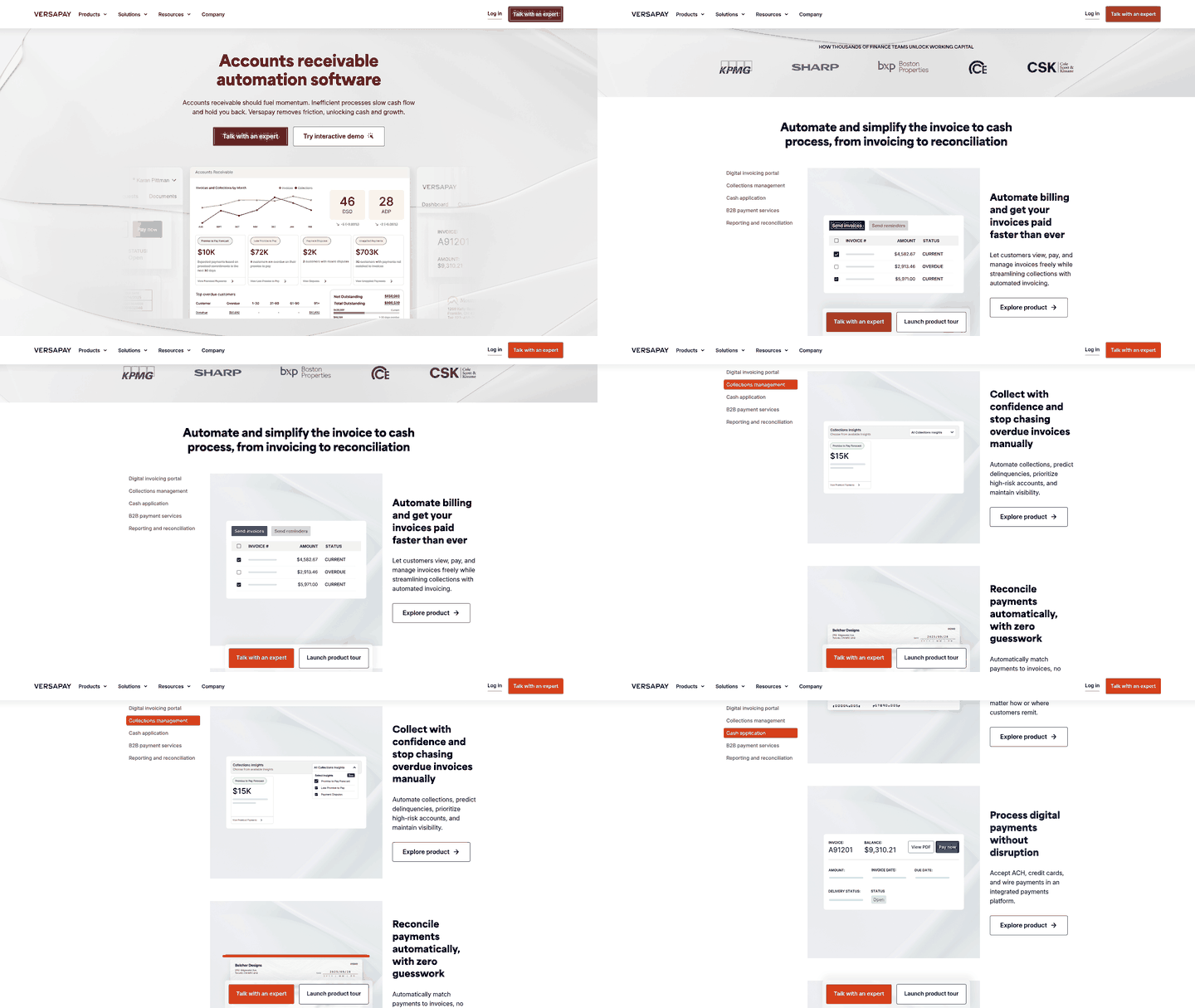
Versapay Rates High on Features, But Watch the Fees
Versapay’s public materials emphasize cash-side and buyer-facing strengths: remittance capture, exception handling for unmatched payments, recurring billing, and scheduled payment collection. Those are real advantages for high-dispute B2B sellers.
Handle feature-level ratings with care. A glowing category mark and a broader base of reviews can tell different stories; when they disagree, weight the broader one. Fees may also be quote-specific, so model total cost before you commit.
| Factor | Quadient AR | Versapay |
|---|---|---|
| Credit-side capability | Described as strength | Not emphasized |
| Buyer-facing remittance | Not emphasized | Emphasized |
| Recurring / subscription billing | Not evidenced in reviewed public materials | Emphasized |
| Best structural fit | Salesforce-focused revenue orgs | High-dispute B2B sellers |
The SaaS Collections Gap Both Leave Open
Neither platform’s public materials fully describe the flexible recovery motions SaaS teams care about most. If a customer needs a commitment recorded, a sequence paused, or a balance handled in smaller pieces, do not assume the workflow is native.
Ask both vendors to show those paths live. If built-in subscription billing plus retry-and-recover dunning is your core need, evaluate a subscription-native option such as Blixo alongside them; confirm its claims in the same demo format. Our guide to comparing AR automation without reading every vendor page walks through how to structure that side-by-side test.
Use Cases and Ideal Users
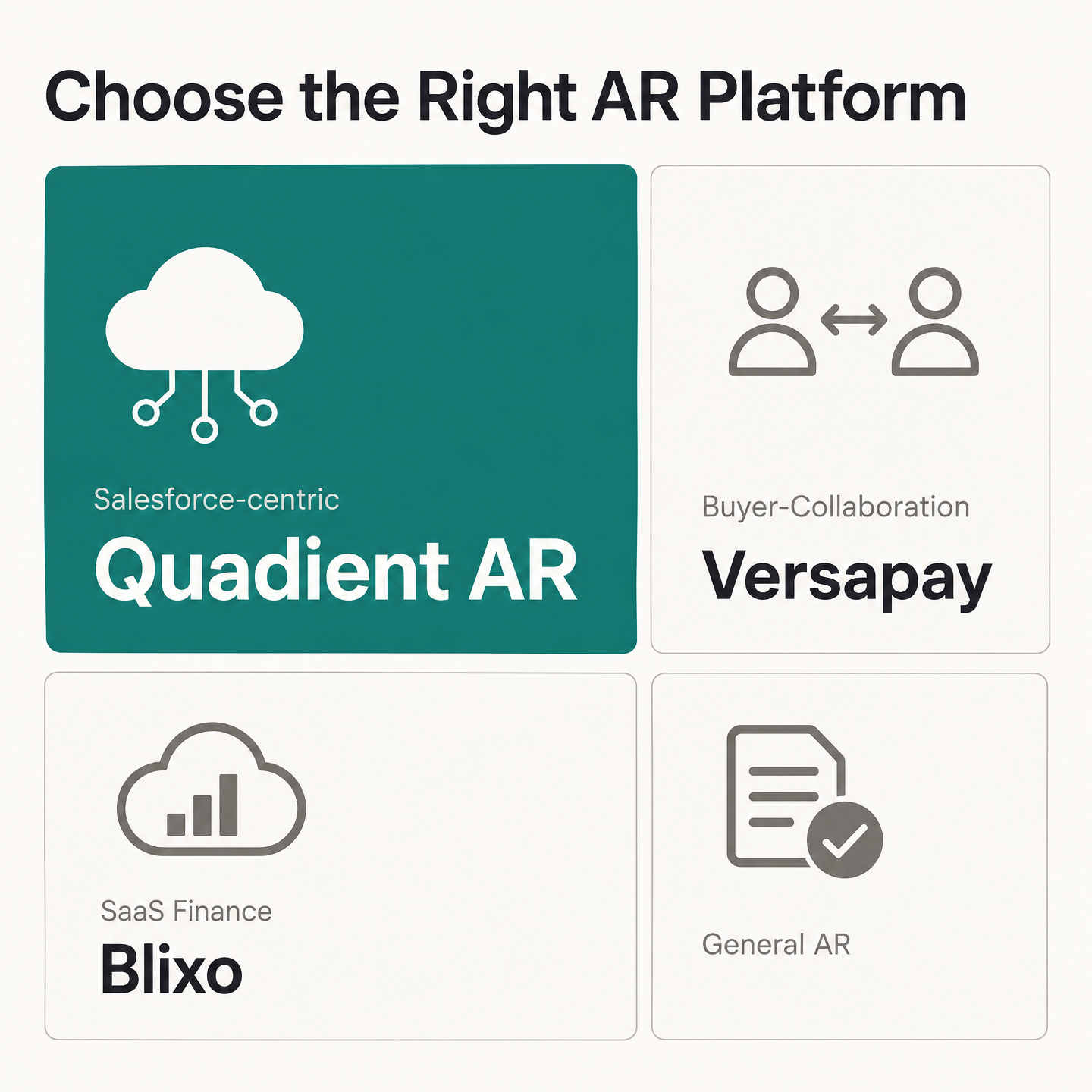
Picking between these platforms comes down to one question the feature matrix cannot answer: what does your revenue team actually do all day? The decision often splits by team shape, not capability count. One platform is positioned for credit-heavy revenue orgs living inside a CRM. The other is positioned for sellers buried in invoice disputes.
For a SaaS finance team, neither profile is a perfect match out of the box. You likely need recurring billing plus dunning that treats a lapsed card as a retention moment, not just a collections event. This comparison shows which incumbent comes closest, and where you may still need a subscription-native AR layer.
Quadient AR Fits Salesforce-Native Revenue Teams
Quadient AR is positioned for revenue orgs where collections status has to live where the account owner already works. If your CSMs and AEs run their day in Salesforce, that native surfacing is a structural fit Versapay’s model does not obviously replicate. Validate the handoff: who sees the balance, who owns the next action, and what happens when finance updates the account status.
Versapay Suits High-Dispute B2B Sellers
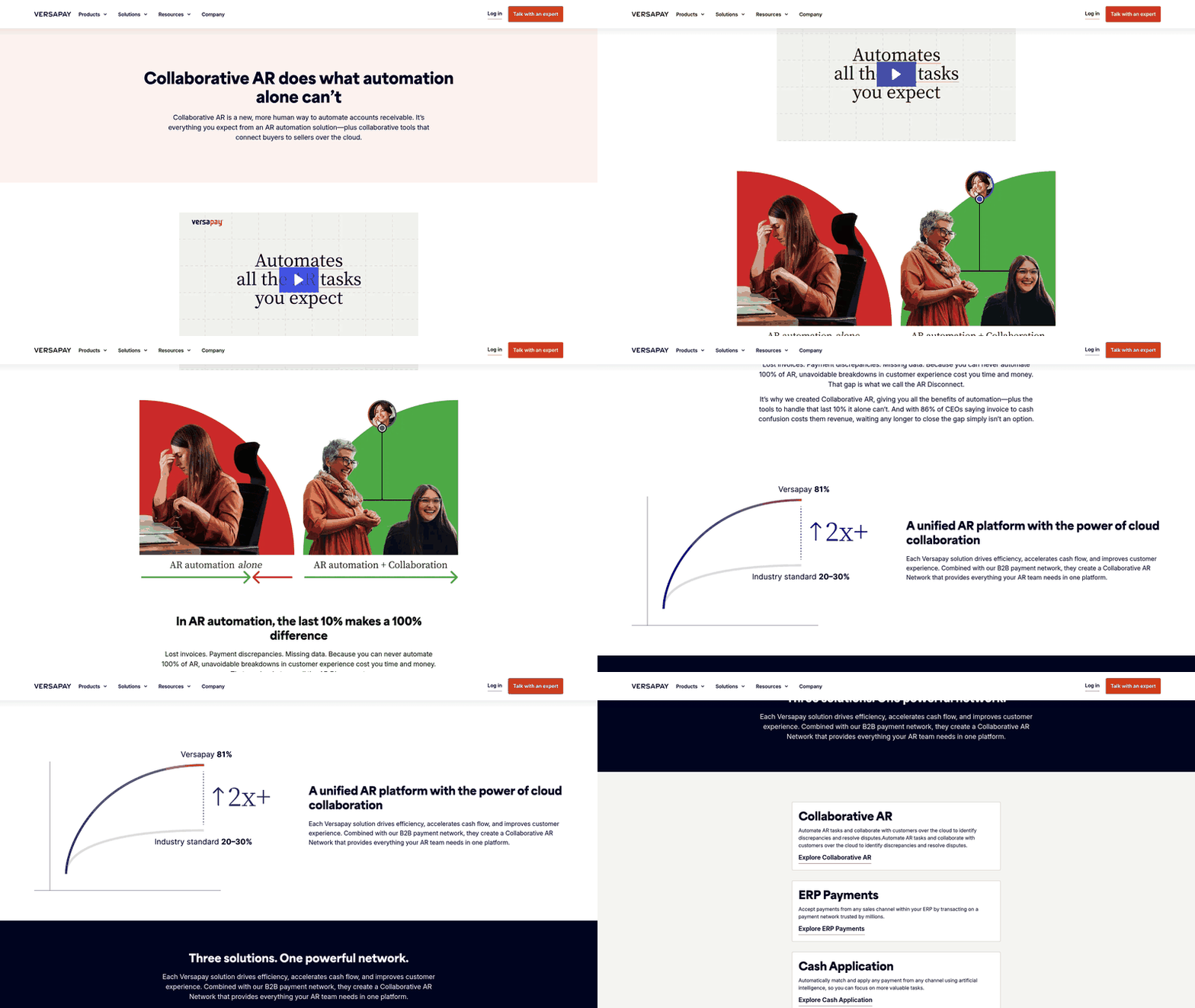
Versapay’s public materials focus on buyer collaboration and self-service dispute resolution rather than seller-side collector productivity. That fits B2B sellers with heavy dispute volume, where customers need a portal to flag and resolve invoice issues themselves.
It also covers more of the subscription billing surface in public materials than Quadient does. For a SaaS team, that matters. Just do not assume the collaboration layer replaces retention-minded dunning. It handles disputes; it does not prove the recovery experience you want after a failed payment.
Where a SaaS Subscription Model Needs More Than Either
For a subscription business, the limit of this matchup is that the highest-value recovery flows still need proof in a demo. Blixo, the sponsor/alternative in this comparison, says it builds subscription billing and retention-minded dunning as first-class features; confirm whether it covers your exact recovery paths. If recurring billing automation is your deciding factor, our invoice-to-cash breakdown walks through what to check.
| Ideal user profile | Best fit | Why |
|---|---|---|
| SaaS teams needing subscription billing + empathy dunning | Blixo | Sponsor/alternative; advertised recurring billing and retention-minded dunning; verify in demo |
| Salesforce-centric revenue orgs | Quadient AR | Public materials emphasize native CRM visibility |
| B2B sellers with high dispute volume | Versapay | Public materials emphasize collaborative buyer portal |
| Credit-heavy teams extending net terms | Quadient AR | Public materials describe credit risk scoring and application workflows |
| Multi-currency payment capture | Versapay | Public materials emphasize multi-channel remittance capture and AutoPay |
Match the tool to how your team works and where your data lives. Salesforce shop chasing enterprise credit? Quadient may make sense. Disputes eating your week? Versapay may fit. If your growth depends on recurring revenue and low involuntary churn, evaluate a subscription-native option before you sign either quote.
How to Settle This Before You Sign
Neither platform was built first for a SaaS finance team. Quadient AR’s public materials lean credit-heavy and Salesforce-native. Versapay’s public materials lean buyer-collaboration and recurring billing. The SaaS-specific question is whether either can manage failed-payment recovery in a way that protects the customer relationship, and you cannot answer that from public pages alone.
Carry that frame into every demo. Documented breadth tells you what a vendor markets, not what your renewals team will feel day to day. Published user ratings are useful directional signals, but they still will not tell you how either tool handles a lapsed card at renewal time.
Run a live demo script that includes at least these scenarios: failed card, promise-to-pay, payment plan or installment request, requested pause, retry scheduling, and CRM handoff. Ask what the collector sees, what the customer receives, and where the data is stored.
Match the Tool to Your System of Record First
If your revenue org lives inside Salesforce, Quadient AR is the structural fit. Collections status can surface where the account owner already works, which closes the visibility gap that kills follow-up. Validate that fit if your operating center is somewhere else, because the value depends on where your team actually spends its day.
If your pain is invoice disputes and buyers with no self-service path to resolve them, Versapay earns the look. Its public materials describe a collaborative portal and billing automation. For extending net terms to enterprise accounts, Quadient’s credit workflows still lead on paper.
Where a SaaS Buyer Should Actually Land
For a subscription business, the decision is not just credit depth versus dispute handling. It is whether the platform treats billing failure as a retention problem. Built-in subscription billing paired with dunning that keeps good customers from churning is the job. That is the category Blixo, the sponsor/alternative in this comparison, targets; a subscription-native AR platform may belong on the SaaS shortlist rather than either enterprise incumbent.
| Best for | Top pick | Why |
|---|---|---|
| SaaS recurring billing + empathy-driven dunning | Blixo | Sponsor/alternative; advertised subscription billing and retention-minded dunning; verify in demo |
| Salesforce-native revenue teams | Quadient AR | Public materials emphasize CRM-native collections |
| B2B sellers with high dispute volume | Versapay | Public materials emphasize buyer portal and self-service resolution |
| Enterprise credit risk management | Quadient AR | Public materials describe credit scoring and credit application workflows |
Whichever way you lean, run the demo against your real flows. Ask each vendor to show customer commitments, flexible repayment handling, and failed-card recovery live rather than accepting a generic collections walkthrough. Then request a clean first-year quote that includes implementation, seats, transaction assumptions, and required modules.
If you want a repeatable way to score these platforms without wading through vendor pages, our guide on how to compare AR automation software walks through the exact checklist we use. Pick the tool that fits your billing model, not the one with the longest matrix.
Common Questions
What does “not evidenced” actually mean when the article says a vendor lacks a feature?
It means the capability was not confirmed in the public materials reviewed for this comparison. It is not the same as proof that the vendor cannot support the workflow. Treat it as a demo question and ask the vendor to show the feature in a live environment.
If my company runs NetSuite instead of Salesforce, is Quadient AR still worth considering?
Yes, but evaluate the workflow more carefully. Quadient’s strongest public positioning is tied to CRM-native collections visibility. If your team runs AR or revenue operations from another system, focus the demo on logins, handoffs, and where account owners actually see collection status.
Can Versapay’s open API close the promise-to-pay and payment-plan gap?
Possibly, but an API is an extension path, not a finished workflow. Ask whether the recovery logic you need is native, configurable by an admin, or dependent on custom development. The answer will affect cost, timeline, and who owns maintenance after launch.
Which platform handles multi-currency and multiple entities better?
Quadient AR has the stronger public evidence for complex entity and currency structures. If your organization operates across subsidiaries, markets, or ERP environments, ask Quadient to show consolidation and reporting in the demo. Ask Versapay the same question, but expect to validate more of it directly.
How do I compare pricing when neither vendor publishes a list price?
Normalize the quote. Give both vendors the same assumptions, then request a single all-in first-year number that includes seats, modules, implementation, support, and expected transaction volume. That is the only fair way to compare two different quoting models.
Should I trust the review scores on sites like TrustRadius or G2?
Use them as directional input, not as the decision. Small review samples can distort category-level ratings, while broader patterns are more useful. The safest approach is to combine review research with a pilot focused on your actual invoices and customer workflows.
For cash application at high volume, which platform scales better?
Versapay has the clearer public story for high-volume cash application. Its strength is reducing the manual work around incoming remittance data and unmatched payments. If that is your bottleneck, make cash matching and exception handling the centerpiece of the demo.
Where does Blixo fit if neither platform covers subscription-first collections?
Blixo is the subscription-native option in this comparison. It combines recurring billing and automated collections in one AR layer, so billing events and dunning actions use the same source of truth. It is best evaluated against the failed-payment, retry, and retention workflows your SaaS team runs every month.