

The One-Page AR Summary CFOs Actually Read Before Approving Write-Offs

The Facts Up Front
- CFOs often approve write-offs in minutes, so the full order-to-cash picture needs to fit on one page or it goes unread.
- Under many accrual-based accounting frameworks, delayed write-offs can overstate balance-sheet assets and distort forecasting, working capital planning, and performance measurement.
- A 90-day balance from a healthy subscriber and one from a churned account can carry very different write-off odds. Aging buckets alone may not show the difference.
- Five columns commonly anchor the page: total AR outstanding, DSO, aging buckets, write-off risk score per account, and variance versus forecast.
- Aging buckets typically span current, 30, 60, 90, and 90+ days. Collection odds generally fall as receivables age.
- Misapplied payments can inflate apparent bad debt and trigger write-offs that reconciled cash-application data might have caught before approval.
- Full receivables audits often need line-level detail and supporting documentation. The one-page summary is not the right tool for that investigation.
Why a One-Page AR Summary Earns the Signature
The approval window is short. If the AR picture doesn’t fit on a single page, it may not get read. A one-page summary that condenses aging, exposure, and recommended write-offs into a single view is what often moves a decision forward.
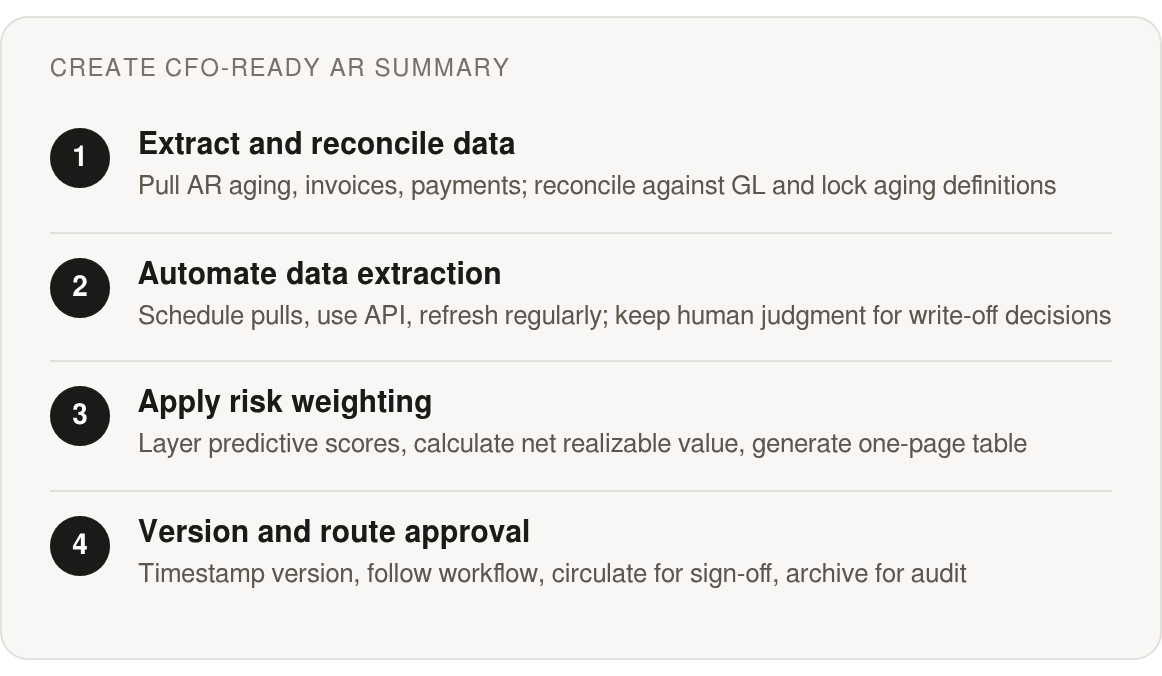
Finance leaders juggle audit readiness, board questions, and quarter-close deadlines at once. When AR data sits across spreadsheets and disconnected systems, the write-off conversation can stall. A focused summary puts the recoverable-versus-uncollectible split where a CFO can see it in one glance.
Where subscription records and transaction histories sit in one reconciled data layer, finance teams can work from current revenue figures and clean aging reports instead of reacting after billing mismatches reach the financial statements.

The Cost of Letting a Write-Off Wait
Delayed write-offs can distort the books. When uncollectible accounts receivable stay on the balance sheet, AR metrics may become unreliable. Forecasting, working capital planning, and performance measurement can all take the hit.
In many accrual-based accounting frameworks, expenses belong in the same period as the related revenue. Dragging a write-off past that window can overstate assets. The one-page summary exists to force the decision while it still matches the reporting period.
- Flag accounts crossing your uncollectibility threshold before period close so the write-off lands in the correct reporting period, not the next one.
- Show the recoverable-versus-doubtful split up front. A CFO needs the collectible balance separated from the lost cause immediately.
- Where jurisdictions allow it, tie each recommended write-off to a potential bad-debt tax note for the corporate tax planning team. Tax treatment varies by jurisdiction and should be confirmed.
Aging Tables Need Behavioral Signals
Pairing aging tables with behavioral indicators can reveal what calendar timelines conceal. An account with active platform logins may be a collections conversation. A canceled seat with bounced emails may be imminent loss. Standard aging columns can’t always tell those two apart.
Accounting conservatism generally requires organizations to avoid asset overstatement. When an unpaid invoice passes beyond realistic recovery, formal derecognition may be needed to keep portfolio valuations credible. Real-time usage or payment data can give finance teams a way to set objective thresholds for that transition.
- Use aging reports and AR analytics to sort receivables so the accounts most likely to require a write-off surface at the top.
- Surface cash-application mismatches before approval. Write-offs triggered by bad payment matching shouldn’t happen.
- Attach a single write-off total backed by reconciled data. The board needs a defensible number, not a raw aging table.
Where the One-Pager Is the Wrong Tool
Skip the condensed summary for a full receivables audit. Auditors often need line-level detail and supporting documentation, not a headline number.
The one-page format is for the approval decision, not the investigation behind it. Keep the detailed ledger and the summary as separate artifacts. If your CFO wants a deeper read, the guide on writing an AR summary your CFO reads in two minutes goes through the structure that serves both audiences.
What Goes on the Page
Every line on a one-page executive summary has to earn its place. Space is tight, and each metric should answer a write-off question a CFO can act on in seconds. If a number doesn’t move the recoverable-versus-uncollectible decision, it doesn’t belong.
Below is a column set worth building into any AR one-pager. It’s the condensed version: enough to justify a write-off, small enough to scan before the next meeting starts.
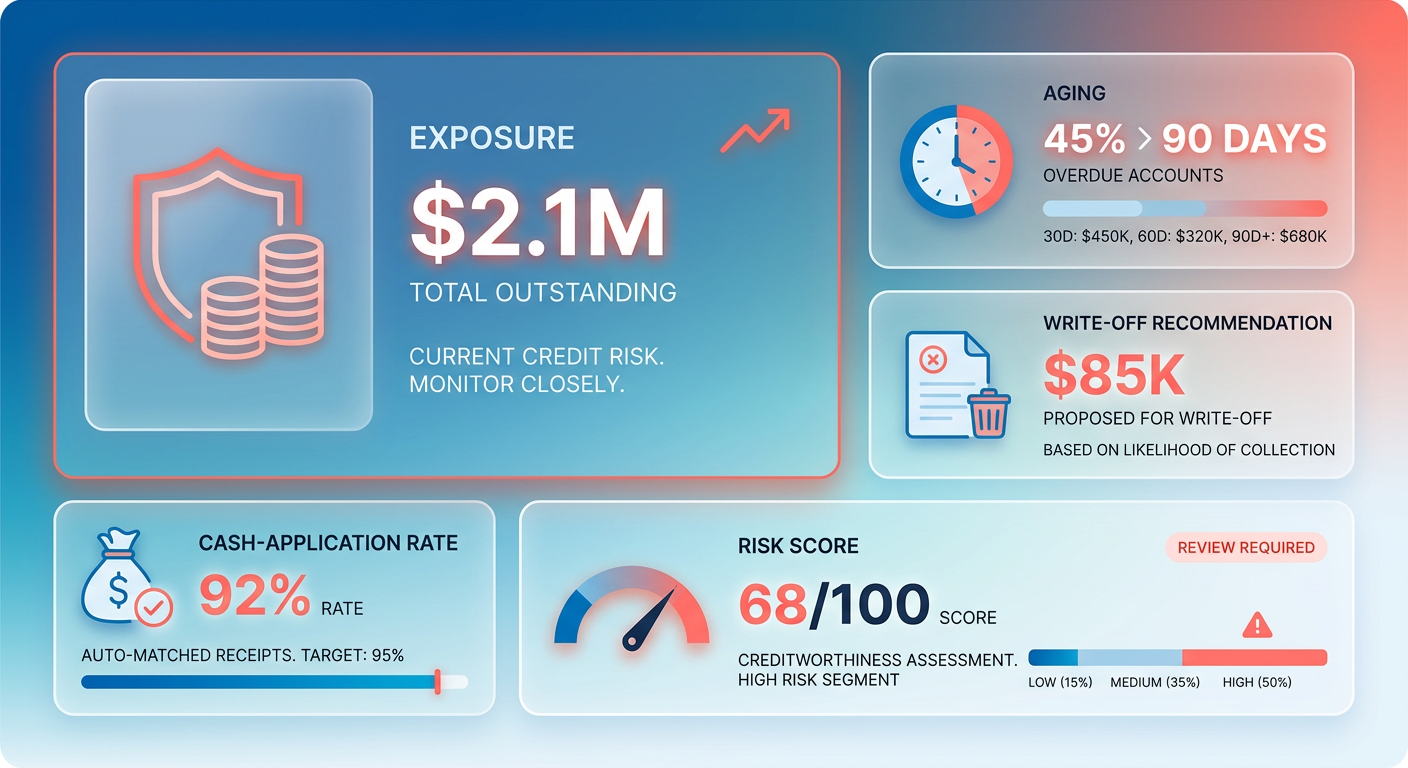
Five Columns a CFO Actually Reads
These five commonly anchor the page. Drop any one and the CFO may go hunting for context, which kills the two-minute review.
- Total AR outstanding, so the reader sees full exposure before drilling into what’s at risk.
- Days Sales Outstanding (DSO), the average time to collect. Rising DSO is an early signal that more balances may be drifting toward write-off territory.
- Aging buckets (current, 30, 60, 90, 90+ days). The older a receivable gets, the lower its odds of collection. Writing off an account generally happens when an invoice is deemed uncollectible, and aging is often the first evidence.
- Write-off risk score per account, weighting each balance by likelihood of non-payment. The CFO sees where the real danger sits.
- Variance versus forecast, comparing actual write-offs to what the model predicted. This column can build or break CFO confidence.
For example, a compact one-page summary built from those columns might look like this hypothetical illustration only:
| Account | Total AR | DSO | Aging bucket | Write-off risk score | Variance vs forecast | Recommended action |
|---|---|---|---|---|---|---|
| ExampleCo | $120,000 | 45 | 60 days | 72 | +4% | Hold |
| Beta LLC | $18,500 | 95 | 90+ days | 94 | -6% | Write off $18,500 |
| Gamma Inc. | $34,200 | 61 | 30 days | 58 | +1% | Escalate |
| Delta Ltd. | $7,300 | 128 | 90+ days | 89 | -2% | Hold pending cash application |
In this example, forecast bad debt was $22,000, actual recommended write-offs are $18,500, and the favorable period variance is $3,500. The CFO approval decision would be to approve the Beta write-off and hold Delta until the cash-application mismatch is reconciled.
Where available, underlying data can come from AR analytics that surface DSO, collections efficiency, and bad debt, plus aging reports and churn prediction that flag subscription cancellation patterns and payment anomalies. That can help build a risk-adjusted view before anything reaches sign-off.

Anchor on Net Realizable Value
A write-off isn’t just an internal decision. It appears in the financials, where auditors may expect to see the logic. Net realizable value is commonly used as the anchor: gross AR minus the amount you realistically expect to lose.
NRV can give the CFO the recoverable figure in plain terms and can give the auditor a defensible basis for the charge. When someone asks why an account was written off, the aging bucket plus the risk score plus the NRV line can tell the story on one row.
- Net realizable value per segment, so the write-off amount ties cleanly to what the balance is actually worth.
- Recommended action per flagged account (write off, escalate, hold). Analysis turns into a decision the CFO can approve inline.
Thresholds should be based on your own historical loss experience and reviewed periodically rather than copied from another portfolio.
Let Color Do the Triage
Color can carry real weight on a one-pager. Red marks accounts past 90 days with a high risk score, amber marks watchlist balances, green marks current. The CFO’s eye generally lands on red before a single number registers.
- Color-code rows by risk tier so high-danger accounts surface first.
- Flag payment pattern anomalies (missed autopay, a sudden slowdown, partial payments). These may be leading indicators of a coming write-off.
Operational throughput stats, like collector touchpoints or raw invoice counts, can dilute focus. Keep this document limited to valuation indicators that govern asset recoverability.
How to Build It Without the Last-Minute Scramble
Building a summary your CFO trusts starts with clean data, not formatting. Follow the stages in order: extract, validate, automate, then route for approval. Skip a stage and you may spend the write-off meeting defending your numbers instead of getting a signature.
Each stage feeds the next. Resist the urge to jump straight to the pretty table.
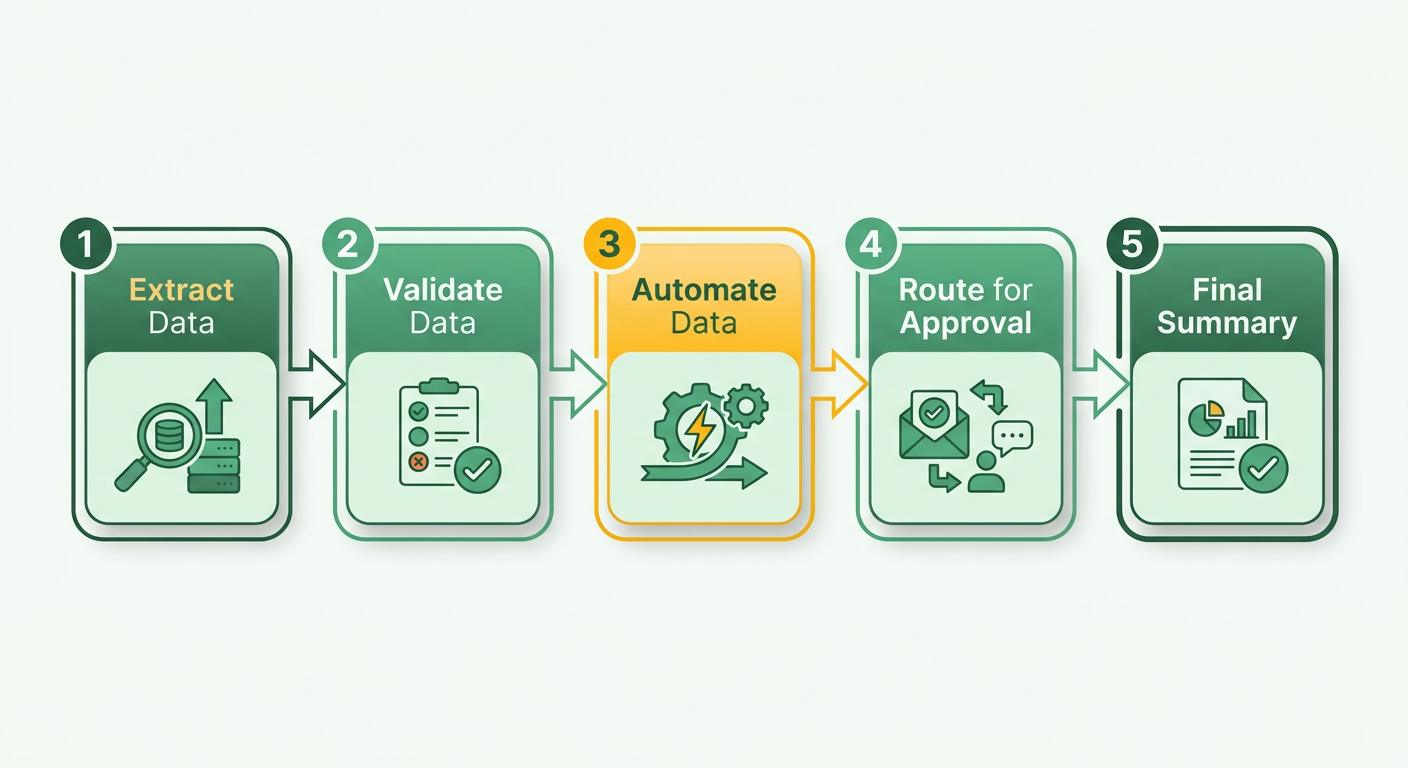
Extract and Reconcile First
The data stage determines whether the summary holds up under audit. Pull your AR aging, open invoices, and payment history from one source, then reconcile against the general ledger before a single number lands in the summary.
- Export the full AR aging report with invoice-level detail so you can drill from summary totals down to individual accounts if the CFO asks.
- Pull subscription and recurring-billing data separately. Churn-driven write-offs can behave differently from one-off invoice disputes.
- Reconcile exported balances against the GL close. That catches cash-application errors before they change what looks uncollectible.
- Lock aging buckets to one definition. Mismatched 90-day cutoffs between systems are a fast way to lose CFO trust.

Automate the Pull, Not the Judgment
Manual copy-paste is where stale data can creep in. Automate the extraction and refresh so the table always reflects the latest close, but keep the write-off recommendation a human decision.
- Schedule the AR data pull on a fixed cadence. The summary should never lean on last week’s numbers.
- Use an API or scheduled export to populate the table columns automatically. It can cut the report-build time manual assembly eats up.
- Where predictive scoring models are available, layer risk-weighting onto the raw aging. Any model should be validated against actual collection outcomes before it drives write-off decisions.
- Hold back any account with open payment matching investigations until remittance is verified.
Automated pipelines can remove hours of manual assembly during close and keep transcription errors out of leadership reviews.
Version and Route for Sign-Off
An unsigned summary sitting in an inbox doesn’t help. Build a lightweight approval trail so the CFO knows exactly which version they’re approving and when the underlying data was pulled.
- Timestamp every version with the close date and data-pull time. Nobody should approve a write-off against numbers that shifted overnight.
- Circulate through a defined approval workflow rather than email threads. That keeps a clean audit trail of who reviewed what.
- Note the specific write-off amount requested at the top, not in a footnote. The decision the CFO is signing off on should be unmistakable.
- Archive each approved version. Auditors get a clear record of the recommendation and the sign-off behind it.
Rigorous upstream validation keeps the final review moving without procedural delays.
Reading the Snapshot Like a CFO
Reading an executive summary report is a sequence, not a scan. A CFO doesn’t weigh every column equally. The eye often goes to aging first, then to the risk score, then to the number that separates a collection problem from a lost cause: the cash-application rate.
That order matters. High aging alone doesn’t justify a write-off. Neither does a low risk score in isolation. The write-off decision often lives in the interaction between the two, and a well-built summary puts that interaction on one line so you can act without a follow-up meeting.
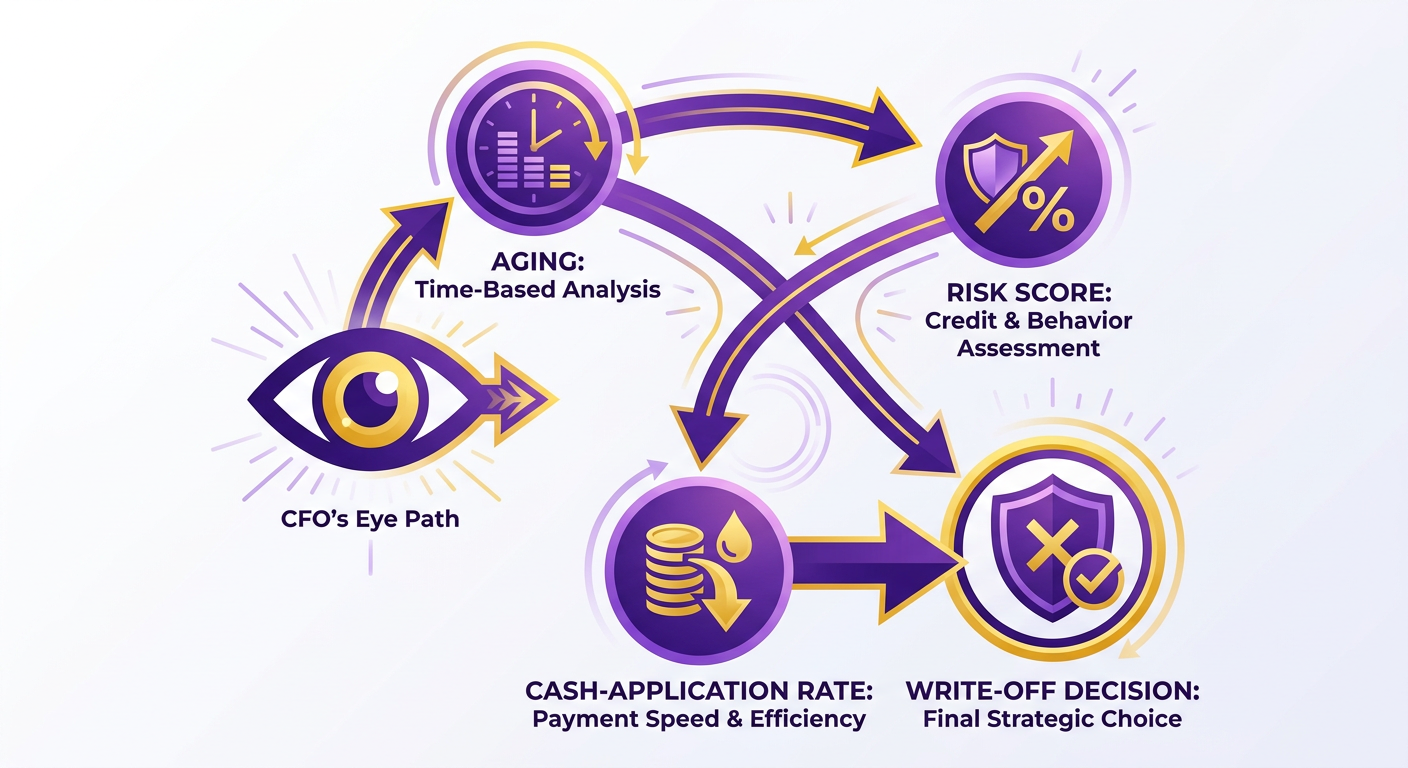
High Aging Plus a Falling Cash-Application Rate Is the Trigger
Read aging and cash-application rate as two dials. Aging tells you how long the money has been outstanding. Cash-application rate tells you how reliably payments are landing and clearing against invoices. When both move the wrong way at once, collectability may be impaired.
The combinations worth knowing before recommending a write-off:
- High aging, strong cash-application rate: hold, don’t write off. The customer pays, just slowly. This is a collections timing issue.
- High aging, falling cash-application rate: flag for write-off review. Payments have stopped clearing, and the account belongs in the review queue.
- Moderate aging, sharp risk-score spike: investigate the cause. A churn signal or disputed invoice can turn a current balance uncollectible faster than aging alone suggests.
Write-off versus write-down also belongs here. A write-off removes the full balance when recovery is realistically off the table. A write-down reduces carrying value when partial recovery is still likely. Reading the summary well means knowing which one the numbers support.
Variance Against Forecast Catches What Aging Misses
The strongest red flag is often not a single metric. It can be the gap between what your churn model forecast and what actually collected. When a segment keeps underperforming its forecast, that variance can signal possible write-offs before the aging buckets catch up.
Churn signals should be weighted alongside aging and cash-application data. A sharp churn signal with clean cash application often warrants hold or investigation, while churn plus falling cash application supports write-off review.
Monitoring behavioral shifts early can prevent surprises. Contract utilization drops or recurring billing failures multiply? Those accounts may warrant proactive review before balance aging formally lapses into delinquency.
- Include clear justification notes inline so audit trails reflect the business logic behind each uncollectibility determination.
- Where jurisdictions allow it, highlight potential bad-debt tax deductions tied to confirmed bad debt to help the corporate tax planning team.
- Where enterprise financial hubs are used, distribute the summary directly into those systems for routine approvals.
When settlement rates remain consistent, maintaining collections effort is usually preferable to an immediate balance sheet adjustment.
Where These One-Pagers Go Wrong
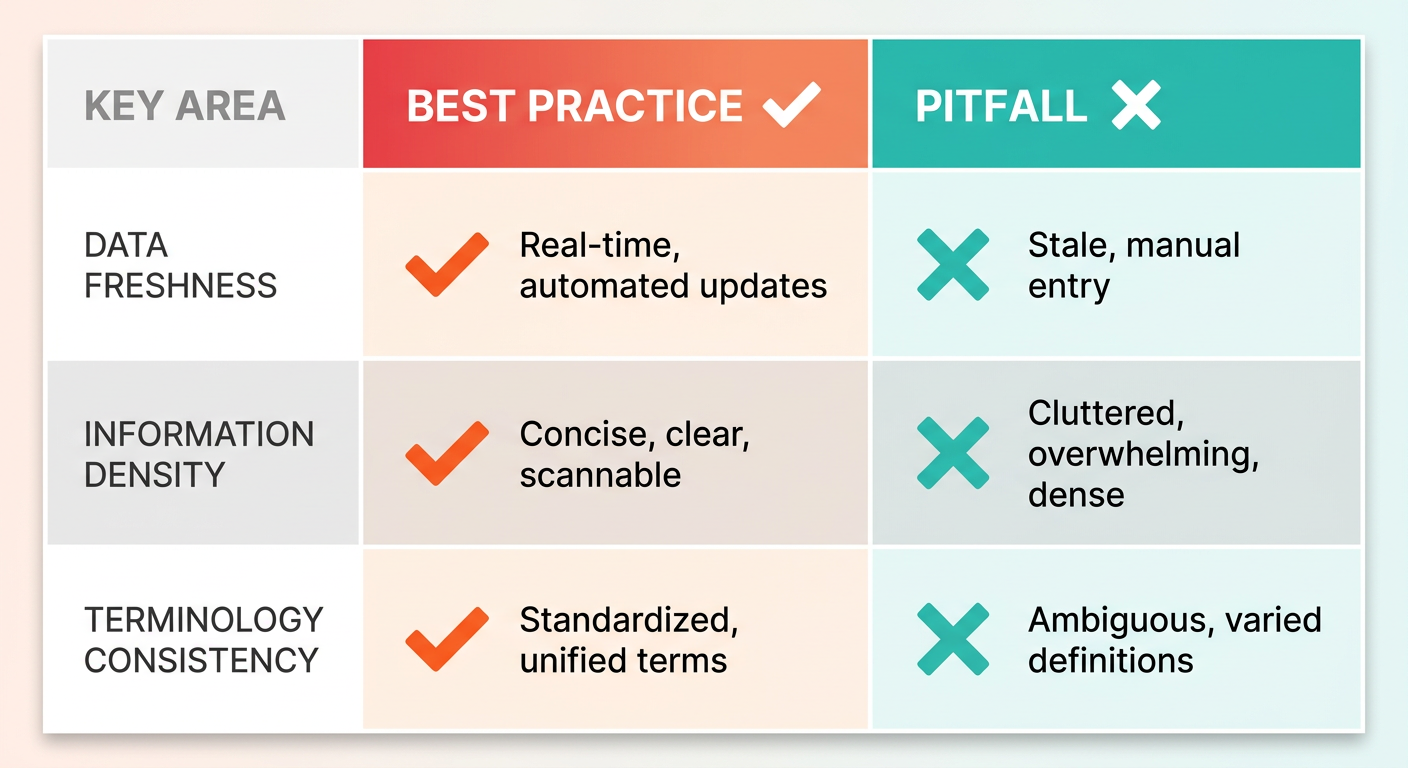
The fastest way to lose a CFO’s trust is to hand over a summary built on last week’s data. Write-off approvals can stall not because the numbers are wrong, but because nobody can say when they were last refreshed. Stale data can turn a two-minute review into an interrogation.
The pitfalls cluster around three habits: letting the page go stale, cramming in more than it can hold, and defining terms inconsistently. Get them right and the summary earns the signature. Get them wrong and it gets set aside for a follow-up meeting that never quite happens.
Stale Data Kills the Decision
A write-off forecast is only as good as its last sync. If the summary pulls from a subscription and payments source that updates continuously, the risk-weighted numbers can reflect reality rather than a snapshot from before the last billing cycle closed.
- Refresh the summary frequently during quarter-close and regularly otherwise. Close periods move fast, and a churn signal from yesterday can change today’s write-off math.
- Timestamp the data pull directly on the page. A CFO who sees “as of this morning” may sign faster than one left guessing.
- Reconcile against the general ledger before every refresh. Cash-application errors get caught before they distort the recoverable-versus-uncollectible split.
Overloading the Page Buries the Write-Off Total
The instinct to prove thoroughness by adding rows can break most AR one-pagers. Every extra metric competes with the risk-weighted write-off total for attention. Keep the page ruthless: if a line doesn’t change the approval, it goes to the appendix.
- Cap the summary at what fits on a single screen without scrolling. If the CFO has to hunt, the two-minute review may already be dead.
- Push detail into a linked drill-down, not the front page. The churn score belongs on the summary; the account-by-account math behind it does not.
- Add footnotes for assumptions baked into the forecast. Missing footnotes invite doubt.
Inconsistent Aging Definitions Fail Audits
Nothing sinks a write-off audit faster than two reports that define “90 days past due” differently. When one team ages from invoice date and another from due date, the same account can land in two buckets. Auditors often notice.
- Lock a single aging definition across every report and document it once. Consistency is what can let a write-off forecast survive audit scrutiny.
- Standardize the risk-score methodology so churn-weighted numbers mean the same thing quarter to quarter.
- Embed the one-pager in your broader order-to-cash reporting instead of running it standalone. When the summary shares definitions with O2C dashboards, the write-off number can reconcile automatically rather than by hand.
For smaller portfolios where ledger lines can be reviewed individually, lightweight schedules may work until transaction volume demands dedicated analytics automation. Need a longer walkthrough? The guide on writing an AR summary your CFO reads in two minutes goes through the structure in more detail.

FAQ
1. How often should I refresh a one-page AR summary if my receivables book is small and clean?
When managing a compact customer base with minimal transaction friction, a weekly or less frequent sync may capture sufficient movement without generating administrative overhead. More intensive sync intervals may become necessary as transaction volumes scale up or when finalizing period-end reporting.
2. What’s the difference between a write-off and a write-down on this summary?
A write-down adjusts an asset’s book valuation downward to mirror realistic recovery expectations while keeping the account active. A full write-off derecognizes the entire outstanding receivable from the balance sheet once recovery channels are exhausted.
3. Why shouldn’t I just write off every account that hits 90 days past due?
Calendar aging reflects elapsed time rather than customer intent or financial capacity. Enterprise buyers can follow elongated internal approval cycles or experience temporary dunning roadblocks that resolve without default, whereas disengaged accounts may require immediate loss provisioning.
4. Can I use the one-page summary during a full receivables audit?
External compliance reviews often require comprehensive transactional sampling, individual contract terms, and confirmation letters. The one-page executive brief is generally an approval vehicle for leadership rather than a repository for substantive audit testing.
5. How do misapplied payments end up triggering unnecessary write-offs?
When customer remittances sit in unallocated cash suspense accounts rather than clearing specific invoices, the ledger may treat active accounts as delinquent. Unless reconciliation teams clear unmatched deposits first, these phantom balances can appear uncollectible and risk erroneous derecognition.
6. Which metrics should I keep off the one-page summary?
Operational tracking numbers—such as team outreach volumes, average handle time per collector, and dunning email open rates—often clutter executive summaries. Keep the document focused on balance valuation, collectibility probability, and bottom-line exposure.
7. What does net realizable value add that aging buckets don’t?
Aging categorizes invoices by due date, while net realizable value can incorporate historical loss rates and risk provisions to estimate expected economic cash flow. This can give controllers a figure aligned with accounting standards.
8. How does Blixo help build a risk-adjusted AR view before sign-off?
Blixo can be configured to integrate billing pipelines, cash reconciliation, and churn monitoring into a central workflow. Where those data sources are connected, teams can use it to calculate risk-weighted totals and prepare executive overviews for sign-off.