

Quadient AR vs Versapay in 2026: Which Platform Fits Upper-Mid-Market O2C Workflows?

Methodology note
This version does not use a scored capability matrix or a fixed differentiator count. “Not evidenced” means the public documentation reviewed for this article did not confirm the capability; it is not a statement that the feature is absent. Vendor pricing, ERP connectors, and peer-review mentions change often, so confirm them in a demo and a written quote.
Key Takeaways
- Public documentation shows the two platforms overlap heavily on core AR and collections features, with a smaller set of differences concentrated in different parts of the order-to-cash cycle.
- Quadient AR’s public materials emphasize early-cycle credit management; Versapay’s public materials emphasize cash application and remittance capture.
- Neither vendor publishes list pricing. Some vendors quote by invoice volume; others use feature-tiered pricing. Ask for a written quote with your usage assumptions.
- Quadient AR’s documented strengths sit early in the cycle: credit scoring, digital credit applications, and payment-behavior forecasting.
- Versapay’s documented strengths sit later: multi-channel remittance capture and exception-handling workflows for unmatched payments.
- Both vendors list connectors for common ERPs such as Sage Intacct, NetSuite, and Dynamics 365; beyond that, the public lists differ. Confirm current connector coverage for your ERP.
- Public documentation for both vendors is thin on promise-to-pay tracking, payment plans, and root-cause dispute analytics—the workflows that can reduce post-invoice churn.
Strip it down: what this comparison really turns on
Quadient AR vs Versapay comes down to three questions: where each vendor’s public proof is strongest, which stage of your order-to-cash cycle leaks, and what a written quote looks like for your setup.
Quadient AR appears stronger before an invoice turns into a collection problem. Versapay appears stronger once payments and remittance data start landing. Pricing remains unconfirmed until each vendor hands you a full quote for your actual setup.
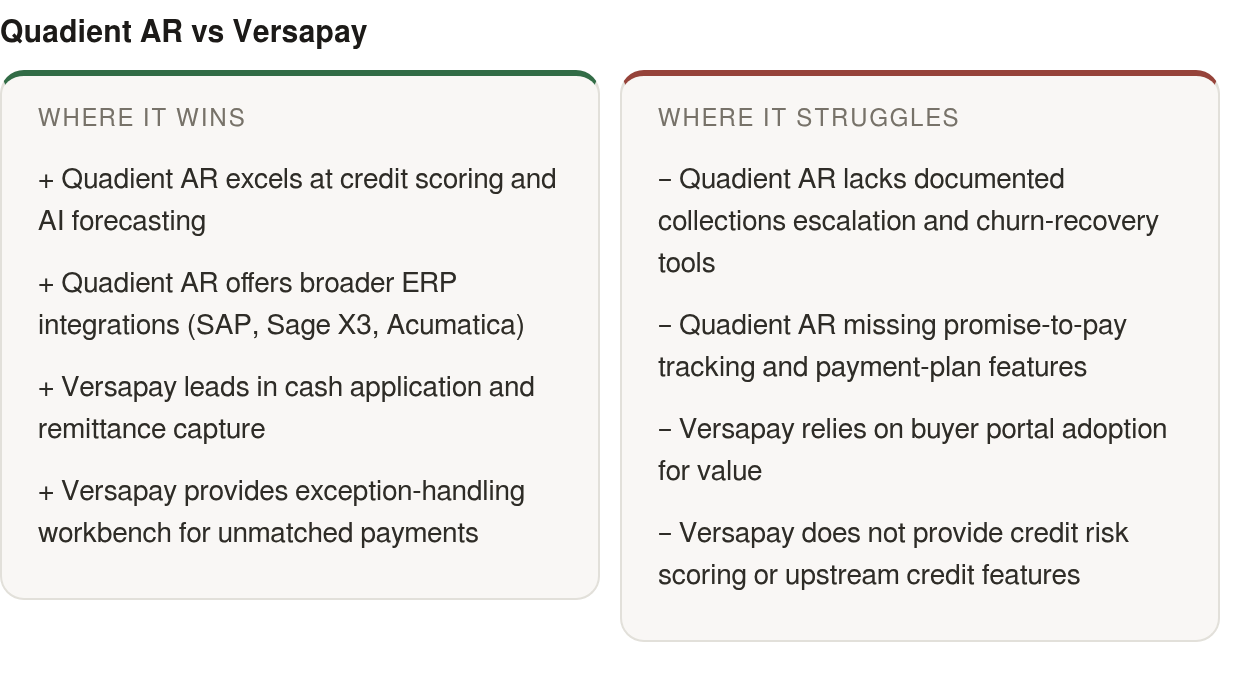
For upper-mid-market teams, the useful question isn’t who checks more boxes. It’s where those boxes fall in the order-to-cash cycle. Quadient AR looks stronger before an invoice turns into a collection problem. Versapay looks stronger once payments and remittance data start landing.
How Quadient AR and Versapay compare at a glance
| Factor | Quadient AR | Versapay | Blixo |
|---|---|---|---|
| Pricing | Quote-based; confirm whether feature-tier or volume-based | Quote-based; confirm current volume model | Published: Team $49.99/mo, Business $99.99/mo, Enterprise custom |
| Cycle coverage | Invoicing to payment | Invoicing to cash application | Invoicing, collections, cash application, subscriptions |
| Documented strengths | Credit scoring, AI payment forecasting | Remittance capture, exception handling | Includes Collections AI, Retention AI, Cash Application AI |
| ERP integrations | Public connector lists include SAP, Sage X3, Acumatica plus shared connectors | Public connector lists include Oracle Fusion Cloud plus shared connectors | QuickBooks, Xero, NetSuite, SAP, Dynamics |
ERP fit can narrow the field before a demo even starts. If one vendor lists a connector for your core finance system and the other doesn’t, that conversation may outweigh a small capability edge somewhere else. Still, verify whether a listed connector is native, marketplace-based, or implementation-dependent.
Where the two platforms actually differ
Quadient’s edge shows up in credit management and prediction: who gets credit, what their limit is, and how they’re likely to pay. Versapay’s public proof concentrates around matching payments to invoices and clearing cash-application exceptions.
One caveat belongs up top. When a capability is marked “not evidenced,” it means the research found no public documentation, not that the feature is confirmed missing. Read those cells as disclosure gaps and confirm them on a demo.
That matters because public documentation isn’t the same as operational depth. A vendor can describe more features and still hand your team more work after go-live.
What neither platform documents
The bigger open question isn’t which product wins more rows. It’s whether either one gives you real control once an invoice goes overdue, disputed, or at risk of churn.
Ask each vendor to show promise-to-pay tracking, installment plans, dispute root-cause analytics, and human escalation live. If those workflows are missing or manual, an overdue account can drift. For example, if a customer promises to pay in seven days and nobody logs the promise date, the follow-up may never happen. If an installment plan is not tied to a recorded schedule, a missed installment may not trigger a different workflow than a missed full payment. If a recurring dispute is not coded by root cause, the team may keep treating the symptom instead of the pricing, billing, or service issue behind it.
That stage is where deals quietly leak. A declined card or a stalled dispute becomes a cancellation when nobody handles it like a person. Blixo is built around that layer: Collections AI for automated collections, dunning, and chasing, plus Retention AI to help head off delinquent churn and declined payments.
Why look at these two at all
Most teams open a Quadient AR vs Versapay comparison by lining up feature lists side by side. Tempting, but it puts the cleanest-looking artifact first instead of the business problem.
The sharper question: which stage of your cycle leaks the most revenue? For subscription and usage-based billing, the riskiest moment usually lands after billing and before collection. A failed renewal charge. A silent dispute. A customer who stops replying. That’s where churn hides, and it’s the lens worth using here.
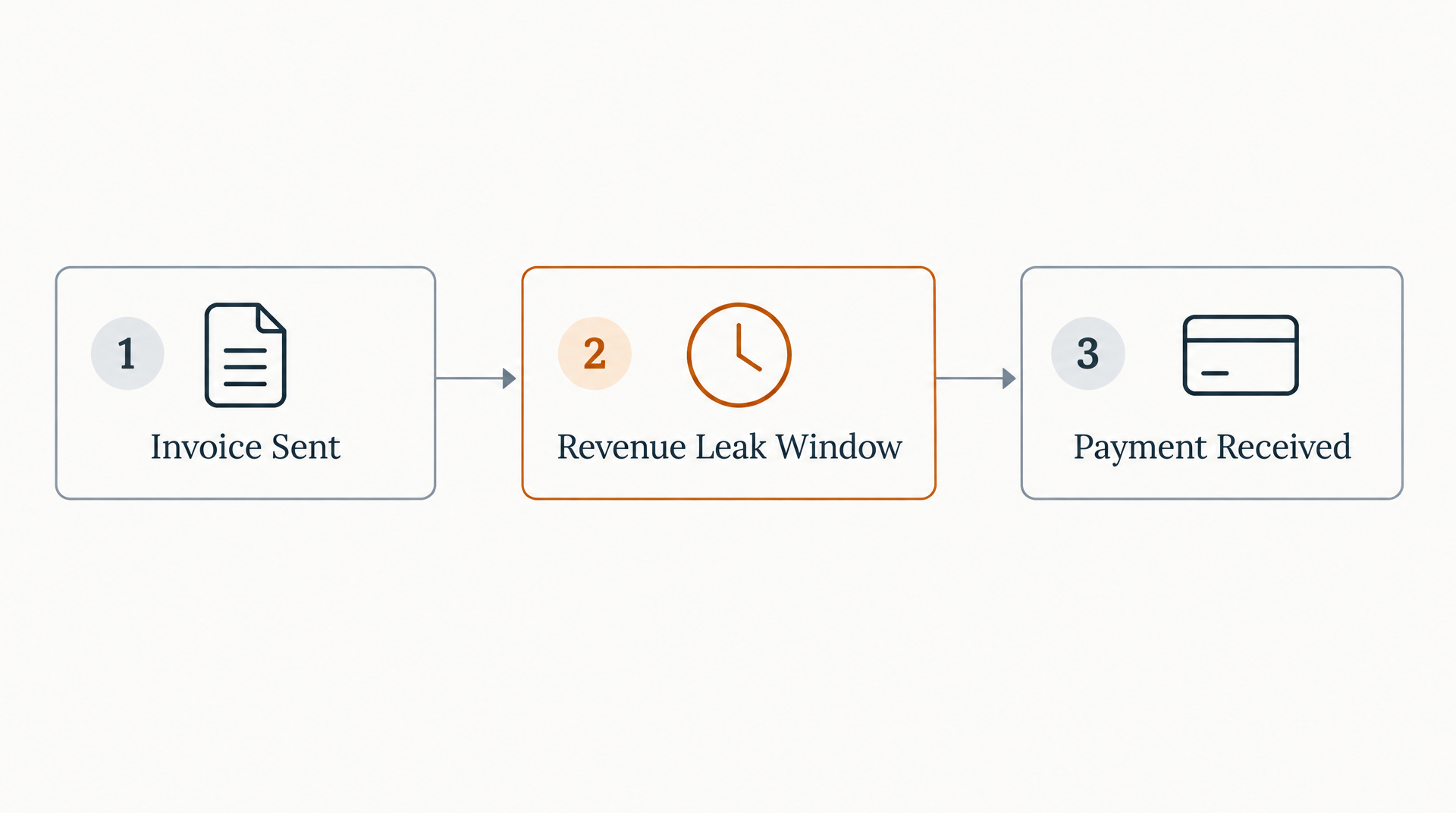
The handoff neither vendor documents well
The public materials thin out around the handoff from invoice management into account recovery. If your finance team needs written proof of how follow-up commitments, installment arrangements, or dispute patterns get handled, make that a formal demo requirement instead of an assumption.
Collections isn’t only a workflow problem. It’s a retention problem. If one of these capabilities anchors your churn defense, don’t settle for a verbal answer. Ask the vendor to show it live and put it in writing.
Paper strength versus what you’ll actually live with
Feature breadth and customer experience don’t always move together. A vendor can lead on documented capabilities and still trail on service, support, or deployment, the kind of gap that shows up in peer reviews rather than a feature grid.
Versapay’s collaborative AR model leans on customer participation. Easy for your AR team to deploy is not the same as easy for your buyers to adopt. And in the churn-risk window, buyer behavior is the variable you control least.
The practical read: Quadient AR tends to appeal when internal finance complexity is the driver, while Versapay tends to appeal when payment matching and customer collaboration are already priorities.
The selection factors that actually move churn
| Selection factor | Quadient AR | Versapay | Blixo |
|---|---|---|---|
| Deployment | Quote-based rollout | Requires buyer portal adoption | 100% web-based, no install |
| Documented strength | Credit scoring, AI forecasting | Cash application, remittance capture | Human-centric collections for the post-invoice window |
| Collections escalation | No integrated collections escalation in public docs | In-portal disputes | Collections AI: automated dunning & chasing |
| Pricing | Quote-based | Quote by invoice volume | See current pricing |
| Best fit | Credit-heavy AR teams | Buyer-collaborative workflows | Upper-mid-market SaaS fighting renewal churn |
Match the tool to your weakest stage. For the full method behind a shortlist like this, our guide on how to compare AR automation software walks through it without the vendor-page slog.
Feature Comparison
Feature counts don’t tell you where revenue leaks. Put Quadient AR and Versapay side by side on the capabilities that touch the period after billing, and the split gets more useful than a generic product grid.
The two document strength in different halves of the cycle. Versapay’s evidenced wins include recurring and subscription billing, AutoPay, electronic invoice delivery with embedded payment links, and surcharge management. Quadient’s wins land earlier: automated risk scoring, digital credit application workflows, and ongoing limit monitoring. A surface-level checklist can make the products look closer than they feel in practice.
Where each platform earns its keep
For subscription and usage-based SaaS, the churn-relevant capabilities sit in a narrow band. Here’s how the documented features line up.
| Capability | Quadient AR | Versapay | Blixo |
|---|---|---|---|
| Recurring / subscription billing | Not evidenced | Core strength | Supported |
| AutoPay / scheduled payments | Not evidenced | Core strength | Supported |
| Credit risk scoring & limits | Core strength | Not evidenced | . |
| Multi-channel collections outreach | Supported | Partial | Core strength |
| Integrated collections escalation | Not evidenced | Not evidenced | Core strength |
| Payment-behavior prediction | Core strength | Not evidenced | . |
In this table, “core strength” means the vendor’s public materials emphasized the capability. “Not evidenced” means this review did not find enough public documentation to confirm it. By “no integrated collections escalation,” we mean the public materials did not show a built-in workflow that automatically moves an overdue account into a collections sequence based on balance, risk, or promise-to-pay status.
Two rows matter most for renewals. Quadient AR’s documented value peaks before an account goes delinquent. Versapay’s collaborative model can help once a buyer uses the portal consistently, but the platform can’t force that behavior across every customer segment.
Documented breadth versus daily reality
Quadient documents more capabilities. That doesn’t automatically make it the smoother tool to run. Broad coverage and day-to-day ease of use are different things, and a longer feature list doesn’t guarantee a lighter operational load.
Compare current peer-review ratings, reference calls, and implementation scopes instead of treating a feature grid as the final answer. Deployment and support can vary by region and implementation.
The recovery layer that’s missing from both
The open space in this comparison is the recovery layer: what happens when an account isn’t cleanly paid, isn’t clearly lost, and isn’t yet escalated. That’s the window Blixo’s Collections AI and Retention AI work in, automating collections, dunning, and chasing across email, SMS, letters, and phone to head off delinquent churn and declined payments.
Treating the post-invoice, pre-payment window as a retention problem rather than a pure AR one is also why it helps to compare tools by the stage they cover, not the length of their feature list.
Use Cases and Ideal Users
The right call in a Quadient AR vs Versapay decision depends less on feature counts and more on where your order-to-cash process breaks down. Commercial terms differ, implementation scope differs, and the best-fit platform is usually the one that closes your most expensive constraint.
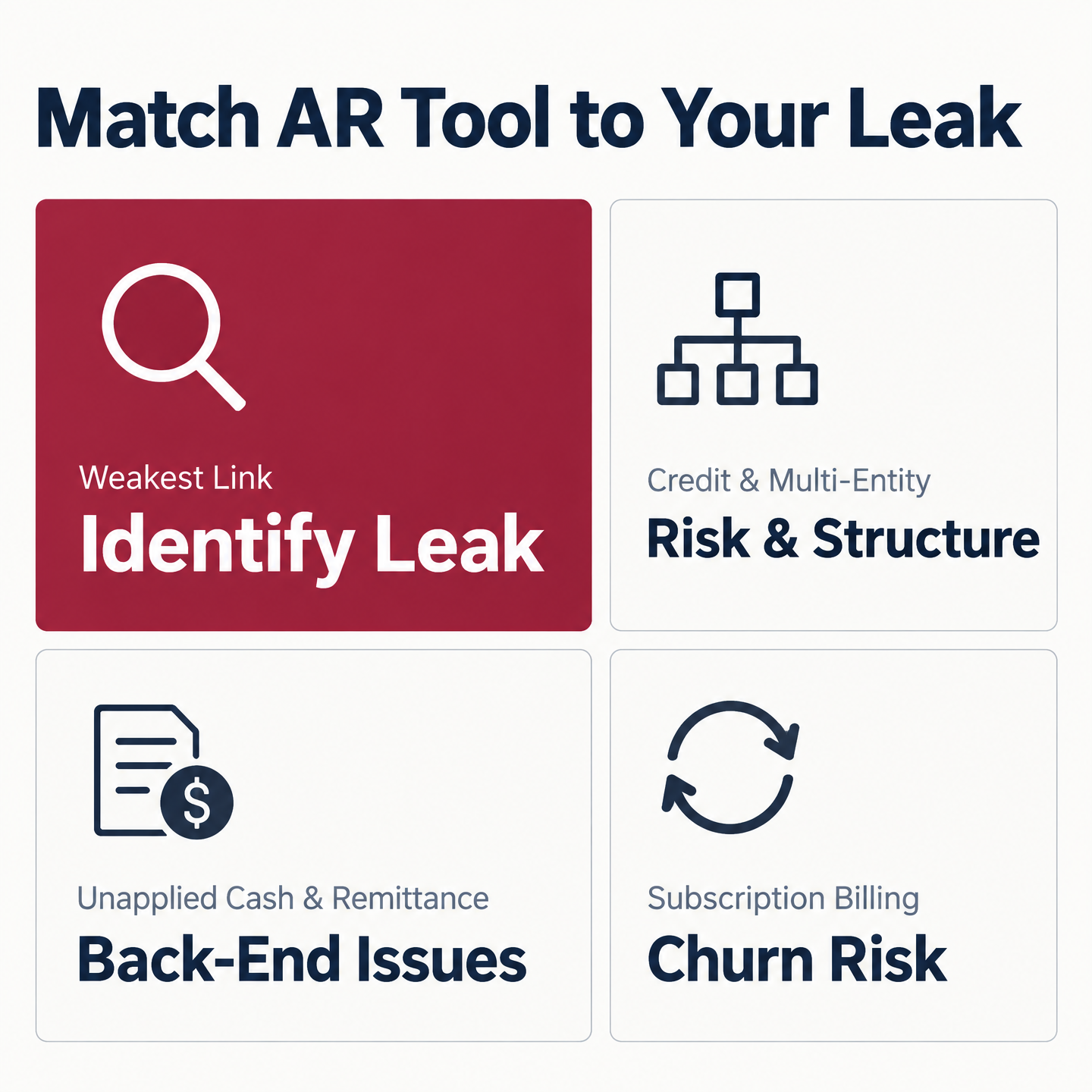
Name your weakest link first. If credit decisions and multi-entity complexity are where you struggle, one platform reads as the safer bet. If unapplied cash and messy remittance pile up on the back end, the other pulls ahead. That framing matters more than any headline capability grid.
Quadient AR fits credit-first, multi-entity finance teams
Reach for Quadient AR when the risk lives upstream. Its evidenced strengths cluster around who gets credit: automated risk scoring, digital credit application workflows, and ongoing limit monitoring. If your finance system is SAP, Sage X3, or Acumatica, check whether Quadient’s current native connector coverage is stronger for your stack.
The catch shows up later. Once an account goes quiet after invoicing, a credit-first system may not be enough to manage the relationship through payment recovery. For subscription billing, that handoff is often where a silent non-payer drifts toward churn.
Versapay fits cash-application volume, if customers adopt the portal
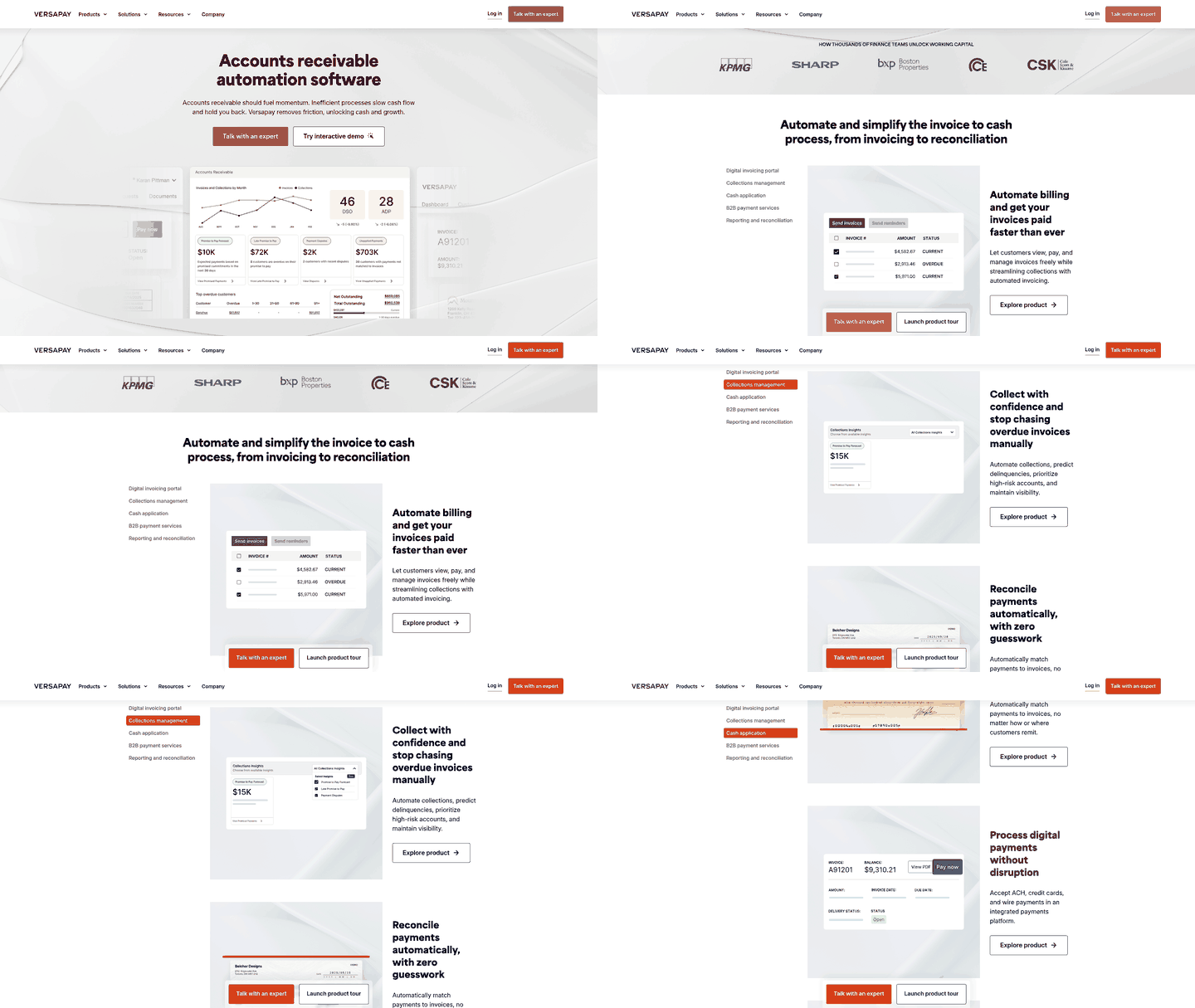
Choose Versapay when the bottleneck is getting money in and matched. Its public materials emphasize cash application, recurring billing, AutoPay, and electronic invoice delivery with embedded payment links. If Oracle Fusion Cloud is your ERP, check current connector status and integration depth.
The limit is behavioral. The collaborative AR portal only pays off if your customers actually log in and use it. Versapay can score well on internal deployment and support while its core value still hinges on external buyer adoption. Skip it if your customer base is unlikely to change how they pay.
Matching your weakest stage to the right buyer
For recurring-revenue companies, the buyer question isn’t a classic AR transformation. You’re not just asking, “Can this tool process more invoices?” You’re asking, “Can this tool keep a customer engaged when a payment fails?”
That’s the use case Blixo is built for. It layers human-centric, automated collections onto the post-invoice stage inside an all-in-one platform, so a failed renewal charge or a stalled dispute gets a real conversation before it turns into a cancellation.
| Ideal fit | Quadient AR | Versapay | Blixo |
|---|---|---|---|
| Primary strength | Credit risk and multi-entity setup | Cash application and portal payments | Post-invoice collections and churn recovery |
| Best for | Credit-first finance teams on SAP/Acumatica | High-volume B2B billing with engaged buyers | Upper-mid-market SaaS fighting renewal churn |
| Main trade-off | No integrated collections escalation in public docs | Value depends on customer portal adoption | All-in-one AR automation spanning invoicing, collections, and cash application |
Match the tool to your leak. Credit-heavy ledgers favor the first, remittance-heavy back offices favor the second, and recurring-revenue teams watching renewals should weight the collections stage hardest.
What I’d actually do with this decision
Each product solves a different part of order-to-cash, and neither is a universal answer for upper-mid-market SaaS. Pick one without mapping your leak first and you risk polishing one workflow while leaving the most expensive one exposed.
The exposed part is the stretch after the invoice ships and before the payment clears. A failed renewal, a quiet dispute, a stalled account. Any of those can become churn. This decision only pays off when you match each platform’s real strength to the stage that’s actually bleeding revenue.
Line each platform up against your weakest stage
Quadient AR earns its keep upstream, in credit decisions and multi-entity structure. Versapay earns its keep on the back end, pulling in messy remittance and clearing unapplied cash. Their strengths carry different operational risks: one may need a stronger downstream collections layer, the other depends on customers participating in the payment workflow.
There’s also the gap between paper and practice. Quadient documents more capabilities, but broader on paper doesn’t always mean smoother in the seat. Compare current peer reviews and reference calls before assuming the longer public feature list will be easier to run.
| Scenario | Best fit | Why |
|---|---|---|
| Credit-first, multi-entity, multi-currency AR | Quadient AR | Strongest evidenced credit scoring, limit monitoring, and subsidiary support |
| Back-end cash application and remittance cleanup | Versapay | Detached remittance capture and exception handling are documented core strengths |
| Post-invoice churn in subscription/usage billing | Blixo | Human-centric collections built for the renewal-to-payment window |
The capabilities both skip are the ones tied to churn
For SaaS finance leaders, the question that decides everything is how a platform behaves when a payment failure becomes a relationship problem. A clean invoice and a posted payment are easy to model. A customer who needs follow-up, flexibility, or dispute resolution is harder.
That’s the gap Blixo’s collections layer fills. When a renewal charge fails or a customer goes quiet, Collections AI runs the dunning and chasing, Retention AI works to prevent delinquent churn and declined payments, and Account Updater refreshes expired or renewed cards. That’s the part where feature-count leaders tend to stop short.
Get one all-in number, then decide
Whatever you shortlist, don’t compare feature grids first. Ask each vendor for the complete first-year cost of your implementation, rolled into one comparable figure. Then ask the harder question: which stage of my cycle bleeds the most, and does this tool actually close it? For upper-mid-market SaaS, that stage is usually the churn-risk window, and that’s the test any winner has to pass.
FAQ
My company runs Oracle Fusion Cloud. Does that alone point me toward one platform?
It may point you toward Versapay based on public connector lists, because Oracle Fusion Cloud appears in Versapay’s documented connector set and not in Quadient AR’s public list. Still, do not stop at the logo. Ask both vendors to show the exact integration path, supported objects, sync behavior, and implementation responsibilities for your environment.
Both vendors quote by volume. How do I actually compare their prices?
Neither vendor publishes list pricing, and pricing models can vary by deal. Give each vendor the same usage assumptions, user requirements, implementation scope, and support expectations. Then request one complete first-year figure that includes software, onboarding, integrations, and any required services. That is the only fair comparison.
Versapay’s portal scores well on deployment. Why isn’t that enough on its own?
Deployment measures your internal rollout. Portal value depends on customer behavior after rollout. If buyers keep paying through old habits, email threads, or manual remittance processes, the internal launch may look successful while the expected AR improvement stays limited.
If neither platform covers the post-invoice churn window, what should I look for?
Look for tools that help your team recover accounts before they cancel: automated follow-up, customer-sensitive escalation, payment recovery workflows, dispute handling, and card-refresh support. Blixo builds around this stage with Collections AI, Retention AI, and Account Updater for recurring-revenue teams.