

ERP Integration or Standalone AR Platform: Which Closes Books Faster

In short:
No benchmark isolates AR platform type as the driver of close speed. Automation and integration reduce close time—but those gains depend on implementation quality and whether the tool fits your billing model. For subscription businesses with usage-based or hybrid pricing, standalone AR platforms built for contract complexity often close books faster than ERP-native modules that break under those workflows. For companies with simpler invoicing and complex consolidation, ERP-integrated AR usually wins because fewer records move between disconnected systems.
What the benchmarks actually measure
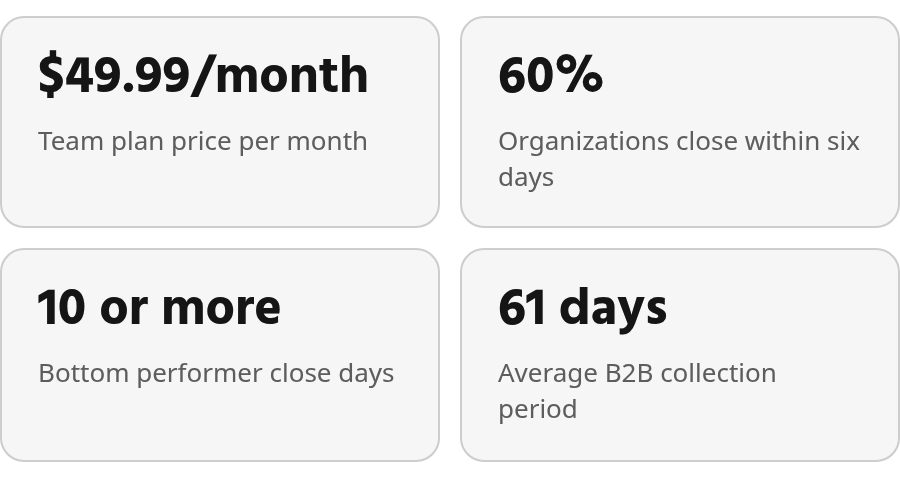
Public close-speed benchmarks track overall monthly-close duration. They do not isolate AR platform type as a variable. “Close” definitions vary—smaller teams call reconciling AP and AR in Excel a full close; scaled companies include accruals, prepaids, fixed assets, and variance analysis. Top performers close in five days or less. Bottom performers need 10 or more. The catch: neither published research nor industry surveys separate ERP-integrated AR from standalone AR when reporting these timelines.
The integration-versus-standalone comparison
| Dimension | ERP-Integrated AR | Standalone AR (Generic) | Blixo |
|---|---|---|---|
| Implementation time | Ranges from under one month for lightweight tools to several months for enterprise platforms | Varies widely; usage-based billing specialists report faster adoption than traditional systems | Public evidence not found—verify in demo |
| Pricing | Per-user SaaS to enterprise contracts with multi-year commitments; implementation costs add thousands to six figures | Varies; usage-based AR platforms structure pricing differently | Team plan $49.99/month (billed yearly, 2 users included); Business plan $99.99/month (billed yearly, 5 users included); Enterprise custom pricing |
| Reconciliation automation | Modern close platforms automate transaction matching and journal entries; degree varies by vendor | Standalone AR platforms automate cash application and reconciliation; specific rates vary by vendor and implementation | Public materials suggest automated cash application and reconciliation; scope should be verified in demo |
| Market fit | Close management platforms serve mid-sized to enterprise teams; ERP-native AR modules scale with company size and complexity | Usage-based and hybrid pricing specialists serve businesses where contract complexity exceeds generic ERP capabilities | Unlimited customers and invoices across all plans; public materials suggest fit for agencies, consultancies, SaaS, professional services—segment benchmarks not evidenced |
| Speed-to-close claims | Integrated financial operations platforms report close-time reductions when implementation quality and data cleanliness support automation | Standalone AR platforms serving subscription businesses report faster closes when contract complexity makes ERP-native AR impractical | Public speed-to-close data not found—automation gains should be validated against implementation timeline |
Industry research confirms top performers complete monthly consolidated statements in five days or less. Median performers need six. Bottom performers require 10 or more calendar days. Reducing close time from 10 days to five returns hours each month that finance teams currently spend validating data and chasing discrepancies. But many firms still rely on spreadsheets for critical processes, and some organizations do not complete their monthly close within six business days. Buying automation doesn’t guarantee faster closes. The gap exists because most tools assume clean, predictable data, and subscription businesses with usage-based pricing break that assumption every billing cycle.
Why fast book closing matters
Slow collections hurt twice: first when you wait for customer payments, then again when your team spends extra days reconciling those payments across disconnected systems. A slow close doesn’t just affect finance. It forces leadership to make decisions based on stale numbers, often far behind what’s actually happening in the business.
Automation cuts close time when it eliminates manual data transfers
Integration matters more than dashboards. When you remove the manual work of exporting data from one system, reformatting it in Excel, and uploading it elsewhere, the close speeds up. Finance teams gain time when matching, exception review, and reconciliations run as part of daily operations rather than waiting for the final week of the month.
Companies that moved reconciliation off spreadsheets and into always-on workflows consistently report shorter close cycles. The difference comes down to architecture. Teams that built integrated workflows between their expense, payroll, and accounting systems eliminated the manual transfers that ate up most of their close window.
Subscription AR creates a compounding reconciliation burden
Usage-based pricing multiplies the problem. Every contract with consumption tiers or hybrid billing generates a unique invoice each cycle. When Statsig automated their AR workflow with contract-first architecture, they reduced aged receivables and handled 3× their previous invoice volume without adding headcount. Cortex reduced overdue invoices by 50% using the same approach. Both companies had already tried generic AR automation. It broke down when pricing got variable and contracts got complex.
The bottleneck isn’t chasing invoices harder. It’s eliminating the fragmentation between where contract terms live, where usage data gets metered, and where invoices get generated. Standard ERP-integrated AR assumes fixed pricing and predictable schedules. Subscription businesses need AR systems that read contract terms, apply usage tiers automatically, and reconcile consumption against what was actually agreed to—not what someone manually re-keyed into a spreadsheet.
DSO matters, but so does the time your team spends reconciling disconnected data sources before collections can even start. Many firms still rely on spreadsheets for critical close processes because their tools do not talk to each other. Automated coding and categorization can reduce transactional finance work, but only when the automation connects directly to your GL and pulls real-time data instead of requiring manual exports.
ERP integration: how it accelerates or hinders closing books
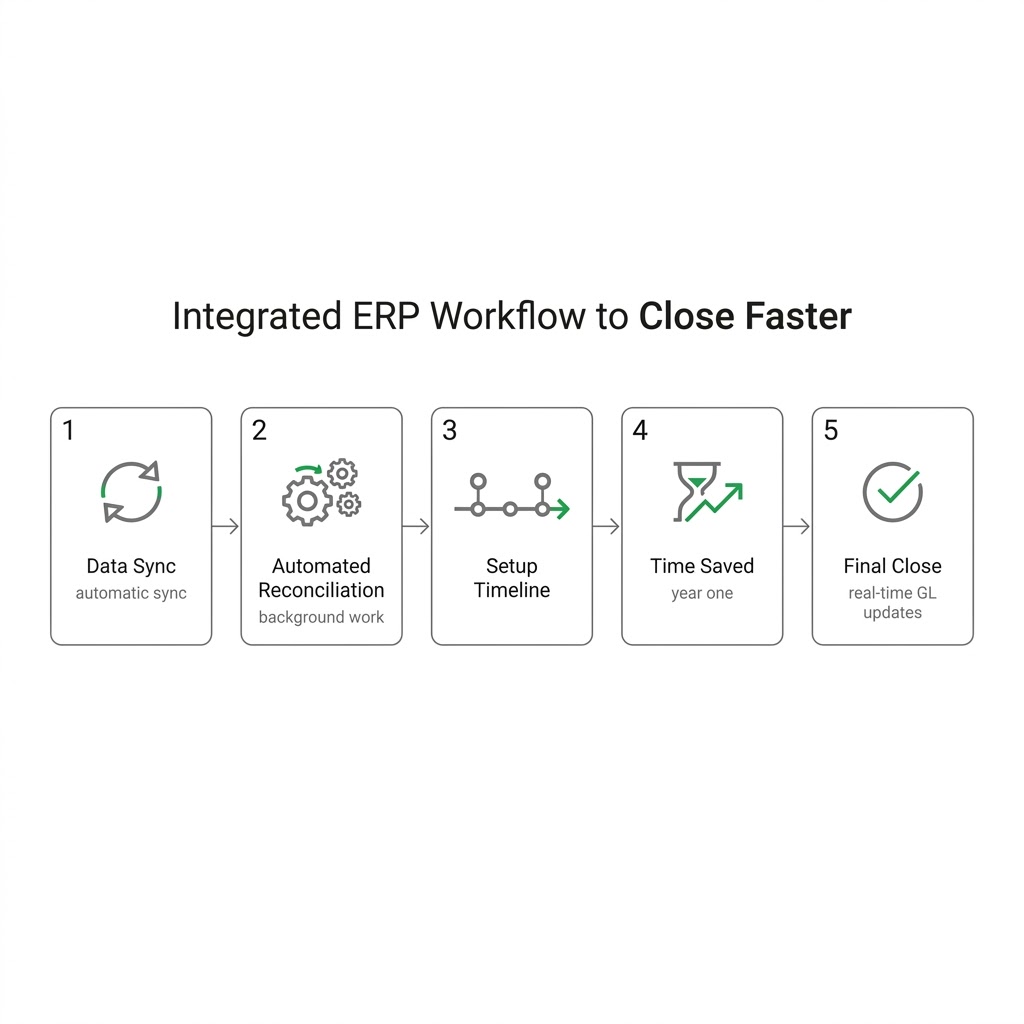
When your banking feed, payroll system, AP platform, and accounts receivable sync automatically into the general ledger, reconciliation shrinks from a multi-day scramble into background work that runs continuously. That’s the promise behind integrated ERP workflows.
But integration doesn’t automatically mean speed. Setup timelines matter more than marketing claims. For mid-market teams, implementation costs often exceed the time saved in year one.
When ERP-connected AR wins
ERP-native accounts receivable automation works best when invoices follow consistent rules and the organization has several entities to roll up. When the primary obstacle is consolidation or moving records between tools, keeping AR inside the ERP removes an entire layer of handoffs. Direct posting to the GL also reduces the batch work that makes period-end feel heavier than the rest of the month.
The most immediate benefit usually appears in organizations with standard invoice volume, centralized accounting controls, and reporting structures that depend on a single financial system.
Where standalone AR platforms close faster
Subscription businesses with usage-based or hybrid pricing hit a different wall. When revenue recognition depends on contract terms, usage meters, and invoice schedules that change mid-period, ERP-native AR modules struggle. The reconciliation complexity grows exponentially with invoice volume because the source of truth fragments across systems.
Contract-first AR architecture treats the contract as the system of record, not the invoice. Generic ERP posting can’t replicate that. For businesses with complex billing models—especially SaaS companies managing recurring billing, usage tiers, or mid-cycle changes—a standalone AR platform built for subscription management removes the manual work that keeps books open longer.
Integration accelerates close when it eliminates manual data transfers between systems. It hinders close when implementation drags on or when your business model requires AR logic the ERP wasn’t built to handle.
Standalone AR platforms: the speed-first promise
Standalone AR platforms promise to accelerate the close by automating invoice generation, payment matching, and collections. Their architectural advantage: they treat invoicing and collections as the center of gravity rather than appendages to a broader ERP system. For subscription businesses juggling variable pricing, blended contracts, and overage rules, this focus matters. When billing depends on consumption data and commercial terms buried in agreements, a system that starts with the contract can reduce the exceptions that otherwise land in accounting at month-end.
Some vendors in this category position themselves as automation leaders, claiming high rates of automated journal entries, transaction auto-matching, and anomaly resolution. Public materials for certain platforms describe event-driven architectures and AI-driven workflows designed to handle most close tasks autonomously, though specific performance thresholds should be verified in live demos.
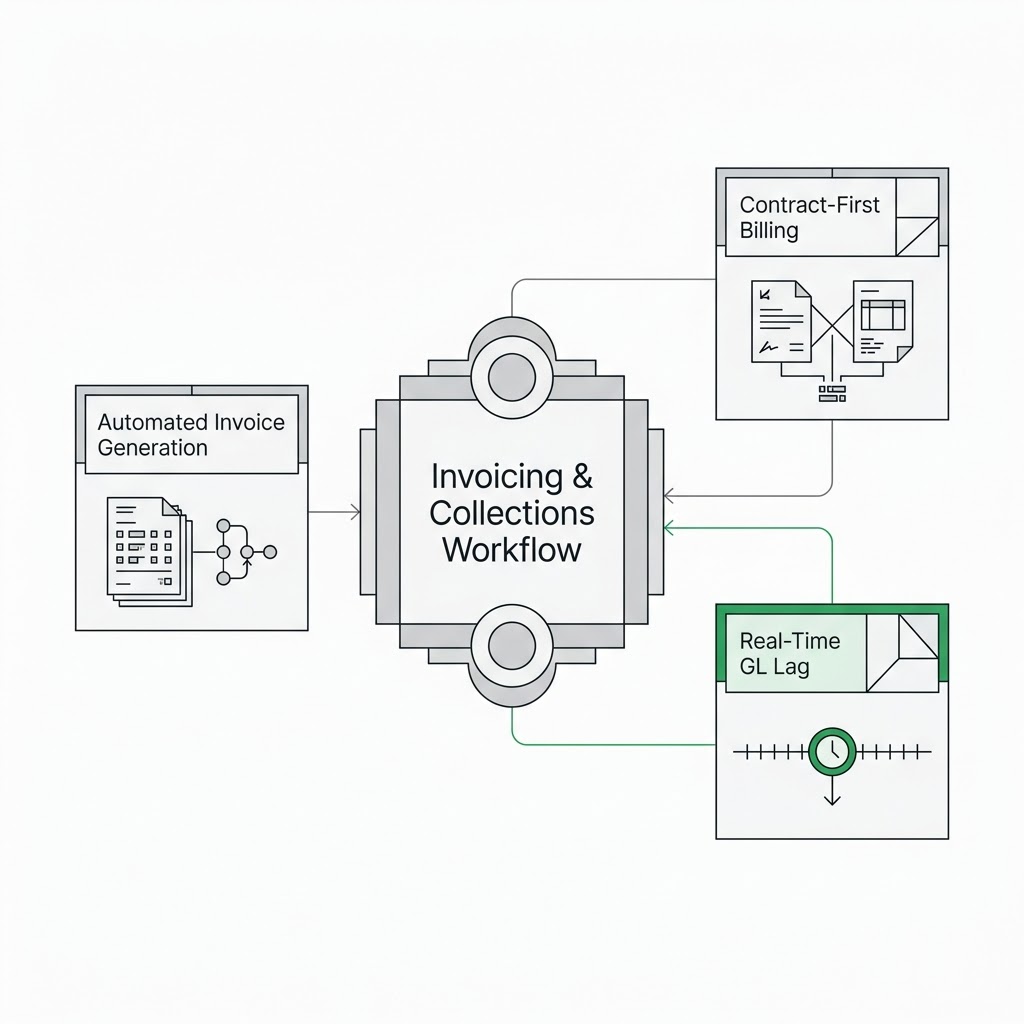
Other platforms take a different track. Instead of cleaning up reconciliation after invoices land in the ledger, they begin with the customer agreement. These systems use AI to interpret billing terms, create schedules, and trigger collections workflows that reflect the deal structure. That becomes important when one account combines a base subscription, overage charges, and milestone payments in the same relationship. Some vendors cite customer outcomes showing lower aged receivables and the ability to support larger invoice loads without expanding the finance team, though these results depend heavily on contract complexity and existing process maturity.
What you give up outside the ERP
Real-time GL updates disappear when AR lives in its own system. Instead of posting payments as they clear, you sync them nightly or weekly. That lag matters for teams that need live cash visibility to make intraday decisions. You also inherit a second integration layer. Your banking feed still flows into the ERP, but now AR data exports out, gets massaged in the standalone tool, then imports back. When that sync breaks—and integration failures happen—reconciliation grinds to a halt until someone fixes the mapping.
Governance splits across two systems. Approval workflows run in the AR platform; audit trails scatter between it and the ERP. Auditors chase documentation in both places, which stretches fieldwork timelines. For companies whose invoicing rules are stable and whose reporting structure is entity-heavy, that extra governance burden may outweigh the AR-specific speed benefits. For businesses where billing logic is the source of delay, the tradeoff can be worth it.
Blixo: a standalone AR platform built to close books fast
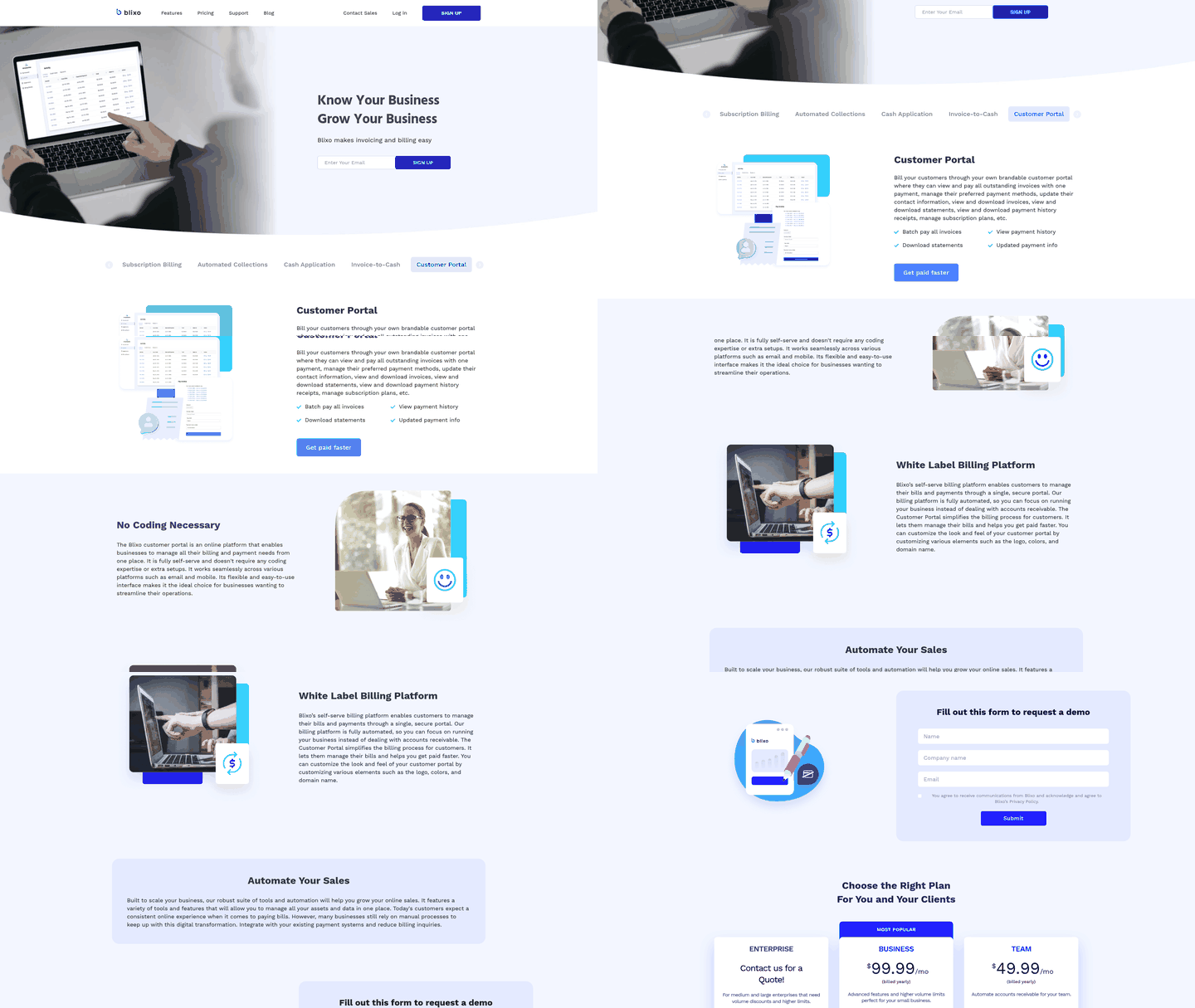
Blixo handles the invoicing, collections, cash application, and reconciliation workflows subscription businesses need. When invoices change every billing cycle because of usage-based pricing, tiered overages, or hybrid subscription models, you need a system that automates recurring billing and generates invoices automatically—not one that treats every invoice as a disconnected event requiring manual setup.
The approach eliminates the fragmented AR stack that creates slow closes. Most SaaS finance teams juggle separate tools for invoicing, payment matching, collections, and reconciliation. Each handoff introduces delay and reconciliation risk. Blixo brings that into a single workflow: automated recurring invoices, intelligent payment matching to open invoices, automated collections and dunning, and automatic reconciliation—all syncing to your accounting system.
What to verify in a demo
Ask to see the full workflow from invoice creation through close. Request a live walkthrough using sample scenarios that mirror your actual pricing complexity: subscription base plus usage tiers, milestone payments, credit adjustments, multi-currency billing. Reviewed documentation suggests Blixo handles automated invoicing, cash application with intelligent matching, and automated collections; verify in a demo how these capabilities handle your volume and invoice structure.
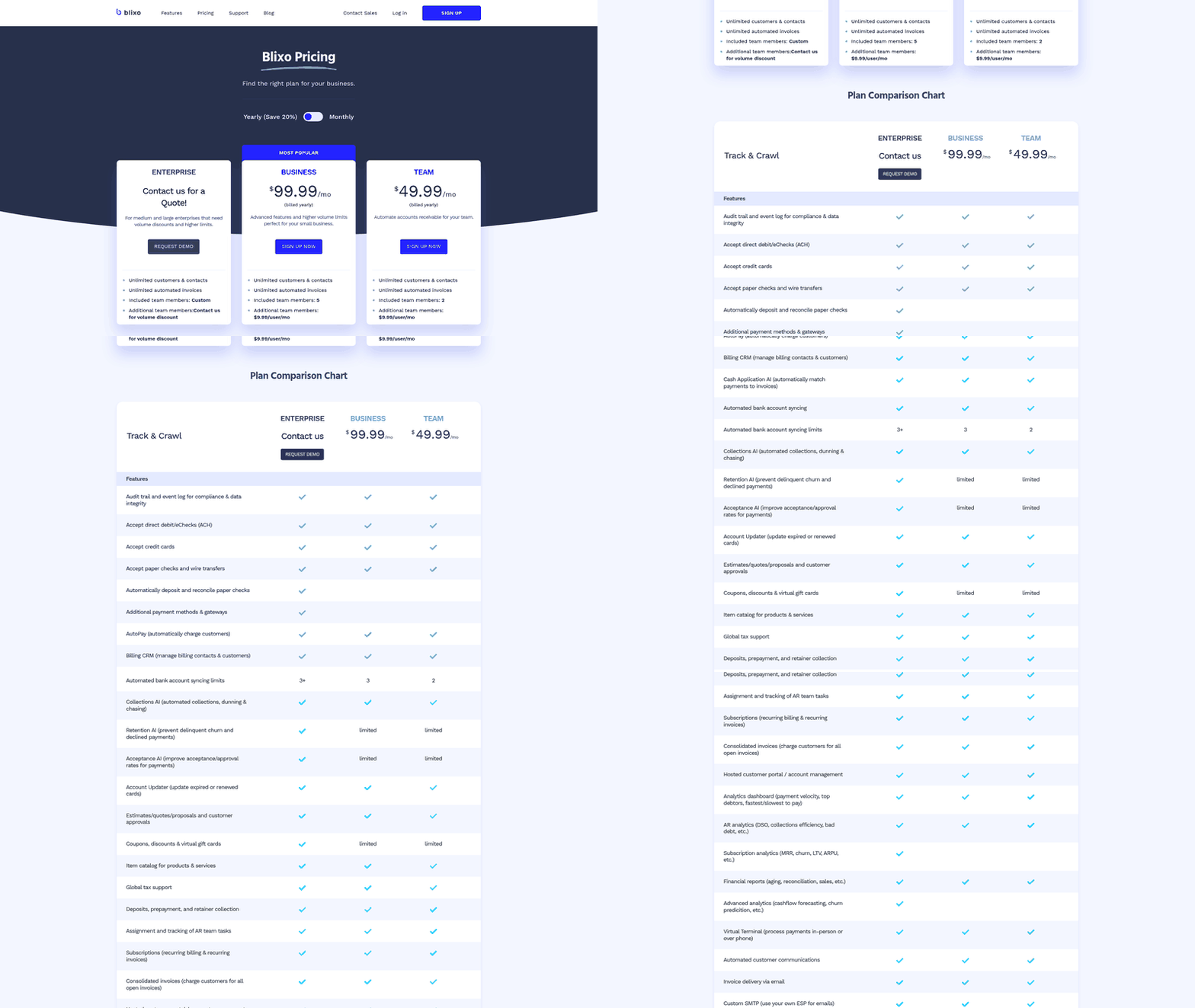
The demo should show automated accounts receivable processes handling volume without manual intervention. Research sources note that the average B2B company takes 61 days to collect payment. Modern AR automation can reduce transactional finance work by cutting low-value handoffs, matching work, and exception routing.
Integration and pricing context
Request Blixo-specific pricing and a comprehensive integration list directly during evaluation. What matters for close speed: your AR platform must sync bidirectionally with your ERP or accounting system. Public materials suggest Blixo integrates with QuickBooks and other accounting platforms. Direct accounting-system connectivity prevents the month-end process from turning into export files, upload templates, and mapping checks.
Evaluate any AR platform against your actual invoice volume trajectory and billing complexity. The right solution closes books faster because it automates the reconciliation work that previously required manual review, not because it adds another dashboard.
Head-to-head comparison grid
When AR automation reduces close time, the improvement shows up differently depending on where reconciliation bottlenecks lived before. For subscription businesses managing variable billing and mixed contract structures, standalone AR platforms that interpret the deal first can move faster than ERP-native modules designed around invoice posting. For organizations where the AR process is simple but the accounting structure is broad, ERP integration usually wins because the financial data already lives where reporting and consolidation happen.
Where each approach closes fastest
| Dimension | ERP-Native AR | Blixo | Representative Standalone (e.g., Tabs) |
|---|---|---|---|
| Close time reduction | Varies by workflow; fully integrated setups show the largest gains | Not publicly benchmarked; depends on usage-billing complexity | Varies by billing model and existing process maturity |
| Implementation effort | Enterprise tools can take months; mid-market ERP modules typically faster | Setup time depends on billing complexity and integration scope | Implementation time scales with contract and pricing model complexity |
| Total cost of ownership | Mid-market ERP modules range from entry-level pricing to six-figure enterprise licenses plus dedicated admin costs | Team tier supports small operations; Business tier scales to mid-market needs; Enterprise tier offers custom configurations | Per-user subscription; implementation cost scales with contract complexity |
| Data reconciliation load | Near-zero when operational transactions post to GL automatically; breaks down with complex pricing | Low for subscription and usage-based billing when automated invoicing handles contract terms | Low for usage-heavy models; high for multi-entity consolidation |
| Scalability | Handles multi-entity consolidation and inventory natively | Unlimited customers, unlimited automated invoices across all plans | Scales with contract volume but not built for multi-entity accounting |
| Best for | Companies with multiple legal entities, inventory, and straightforward invoicing | SaaS and subscription businesses, service companies, B2B commerce with recurring billing and collections challenges | B2B companies with complex recurring billing and high invoice volume |
Gaps the benchmarks don’t fill
Public research isolates automation and integration as close-time drivers but does not prove specific percentage improvements by platform category. Implementation quality matters more than platform type. If your hardest problem is rolling up entity data from spreadsheets, prioritize ERP connectivity. If the delay comes from translating commercial terms into billable events, prioritize an AR tool built around the contract. Validate speed claims in a live demo that replicates your invoicing model and entity structure.
Where to start this week
Before you invest in a new platform, run this evaluation framework. This is grounded in how accounts receivable automation affects month-end workflows across recurring billing businesses.
What matters most when choosing accounts receivable automation
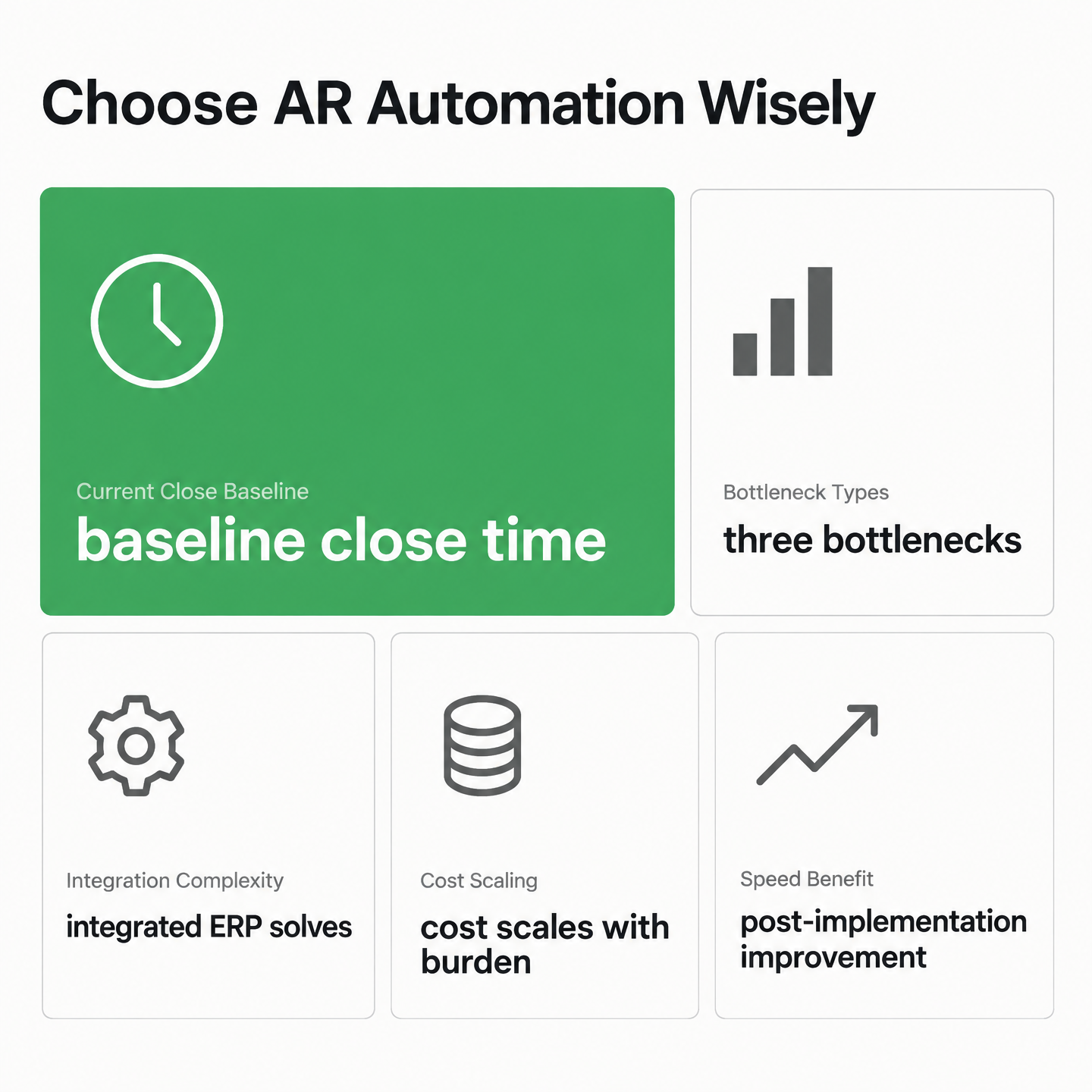
Start with your current close baseline. How long does it take now, and where does the time go? Most teams find their bottleneck lives in one of three places: spreadsheet-based reconciliation that takes multiple days at period-end, AR-to-GL data flows that require manual exports and reformatting, or invoice generation that changes every cycle because of usage-based pricing.
If your close is already fast and your billing rules are predictable, ERP-native AR typically wins. The same is true when the finance team spends most of its time assembling records across entities or maintaining reporting consistency inside a broader accounting environment. Direct ERP workflows remove delay at the source.
But if your contracts include usage-based pricing, hybrid subscriptions, or tiered overages, standalone AR platforms built for contract complexity can outperform ERP modules that treat each invoice as a separate posting event. The architectural difference matters: when the platform reads contract terms first, automated recurring invoices and intelligent payment matching eliminate the manual work that stretches close cycles.
Implementation timeline and total cost both scale with your reconciliation burden. Growing teams with high invoice volume and limited finance staff hit the capacity ceiling quickly. Automation that cuts transactional work matters more than feature depth. Document your current AR-to-GL workflow, identify which steps require manual intervention, and baseline your spreadsheet dependence before evaluating platforms.
Measure post-implementation improvement against your baseline close time. Track days to close, reconciliation auto-match rate, hours saved on manual tasks, exceptions flagged automatically, and whether you can close faster without adding headcount. Focus on clean reconciliations and minimal rework rather than speed alone.
Quick Questions and Straight Answers
If my ERP already has an AR module, why would I consider a standalone platform like Blixo?
Because the issue may not be whether your ERP can create invoices. It may be whether it can interpret the commercial logic behind those invoices without manual work. Blixo is worth evaluating when your finance team spends too much time translating customer agreements, usage data, credits, and recurring charges into billable records before reconciliation can even begin.
How long does it typically take to implement a standalone AR platform compared to ERP-integrated AR?
Implementation timelines vary widely based on billing complexity and integration scope rather than platform type. A cleaner evaluation question is: how many systems need to connect, how many billing rules need to be configured, and how much historical AR data must be migrated or matched? The platform that looks faster in a sales cycle can still slow down if your pricing model has edge cases the implementation team has not seen before.
What specific reconciliation tasks does AR automation actually eliminate?
Automation removes work such as invoice-to-payment matching, exception routing, coding repetitive transactions, and preparing AR data for the general ledger. The biggest operational gain is that finance teams spend less time proving that records agree and more time reviewing the relatively small set of items that truly need judgment.
Can a standalone AR platform handle multiple currencies and legal entities as well as an ERP?
Public materials for platforms like Blixo mention multi-currency billing, but entity consolidation is still an area where ERP systems tend to be stronger. Treat this as a demo requirement: ask the vendor to show how currency handling, entity mapping, approvals, and audit trails work from invoice creation through GL sync.
How do I know if my billing model is too complex for ERP-native AR?
Look for symptoms in the workflow, not just in the pricing page. If finance has to interpret contract language, adjust invoices manually, reconcile usage data outside the billing system, or maintain spreadsheets to bridge sales agreements and accounting records, the AR process has outgrown a generic setup. That is when a contract-first platform deserves a serious comparison against the ERP-native option.