

Blixo vs Traditional AP Automation for Manufacturing
Key Takeaways
- AP automation is critical for manufacturing due to high invoice volumes and strict compliance needs.
- Manual AP processing costs manufacturers $10–$20 per invoice with 10–20% error rates.
- Automated systems reduce invoice processing time from 3–5 days to 1–2 hours.
- Automation lowers error rates to under 2% and invoice costs to $1–$3.
- Manual AP consumes 20–40 weekly hours, risking payment delays and compliance issues.
- Automated AP scales with demand, unlike manual processes limited by staff capacity.
- Delayed payments from manual workflows increase operational costs and miss early discounts.
Why AP Automation Matters in Manufacturing
AP automation is critical for manufacturing businesses because it directly impacts operational efficiency, supplier relationships, and financial health. Manual accounts payable (AP) processes in manufacturing often involve high volumes of invoices, complex supplier networks, and strict compliance requirements. Automating these workflows reduces errors, accelerates payment cycles, and frees up resources for strategic tasks. Let’s break down how manual processes hinder manufacturing operations and why automation is a major advantage.
How Manual AP Processes Impact Manufacturing Efficiency
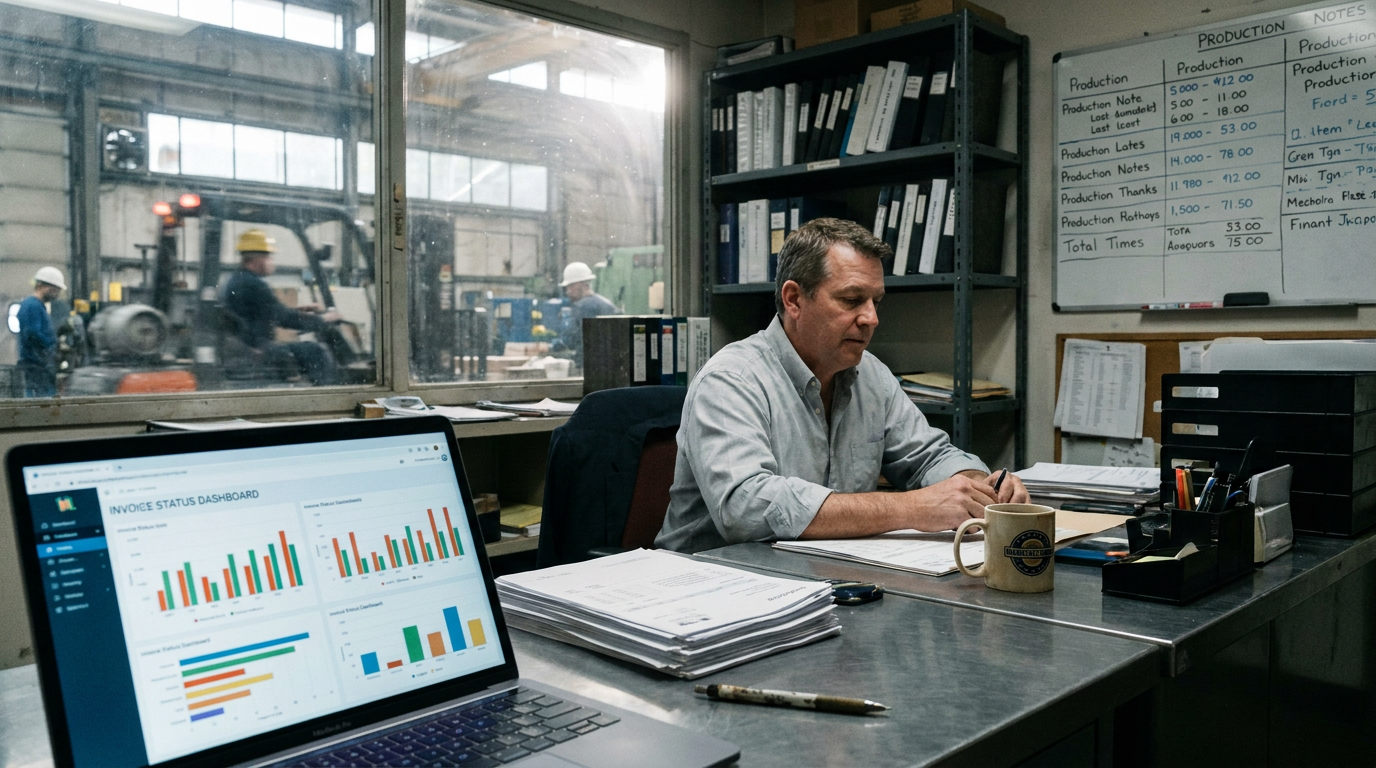
Manual AP workflows in manufacturing are slow, error-prone, and costly. A high-volume manufacturer might process thousands of invoices monthly, each requiring data entry, verification, and approval. This manual effort ties up finance teams in repetitive tasks, increasing the risk of payment delays and compliance issues. For instance, a mid-sized manufacturing firm might spend 20–40 hours per week on invoice processing alone, with error rates exceeding 10% due to human oversight. These inefficiencies translate to higher operational costs and missed opportunities for early payment discounts.
| Feature | Manual AP Processing | Automated AP Systems |
|---|---|---|
| Processing Time | 3–5 days per invoice | 1–2 hours per invoice |
| Error Rate | 10–20% | <2% |
| Cost per Invoice | $10–$20 | $1–$3 |
| Scalability | Limited by staff | Scales with demand |
Building on concepts from the Traditional AP Automation Workflow section, these numbers highlight why automation is essential for manufacturers dealing with tight margins and time-sensitive production cycles.
Real-World Consequences of Delayed Payments
Late payments disrupt manufacturing operations in tangible ways. Consider a scenario where a supplier of critical raw materials faces a $100,000 late payment, leading to halted production lines and missed delivery deadlines to end customers. Such delays ripple through the supply chain, damaging relationships and eroding trust. Additionally, late fees and penalties can add 5–10% to total procurement costs annually. For manufacturers with just-in-time inventory systems, even a 48-hour delay can cause production bottlenecks, costing more than the invoice itself.
A Blixo blog post notes that AI-driven automation minimizes delays by streamlining approvals and flagging discrepancies in real time. This ensures payments align with supplier terms, preserving operational continuity.
Who Benefits Most from AP Automation?
While all manufacturers gain efficiency from automation, specific groups see the most value:
- Small and mid-sized manufacturers: These businesses often lack dedicated finance teams, making manual AP unsustainable as they scale.
- Global manufacturers: Companies with international suppliers benefit from automated systems that handle currency conversions, tax compliance, and multilingual documentation.
- Those with complex B2B relationships: Manufacturers relying on tiered supplier networks reduce risks of miscommunication and payment errors with centralized automation.
For example, a manufacturer using Blixo’s AI agents could automate invoice matching, reduce processing time by 80%, and ensure compliance with global tax regulations-features detailed in the Blixo’s Unified Platform for Manufacturing section-all while reallocating staff to strategic projects like cost analysis or supplier negotiations.
By addressing the inefficiencies of manual AP workflows, automation becomes a cornerstone for manufacturing resilience. The next section compares how Blixo and traditional systems tackle these challenges differently.
Traditional AP Automation Workflow
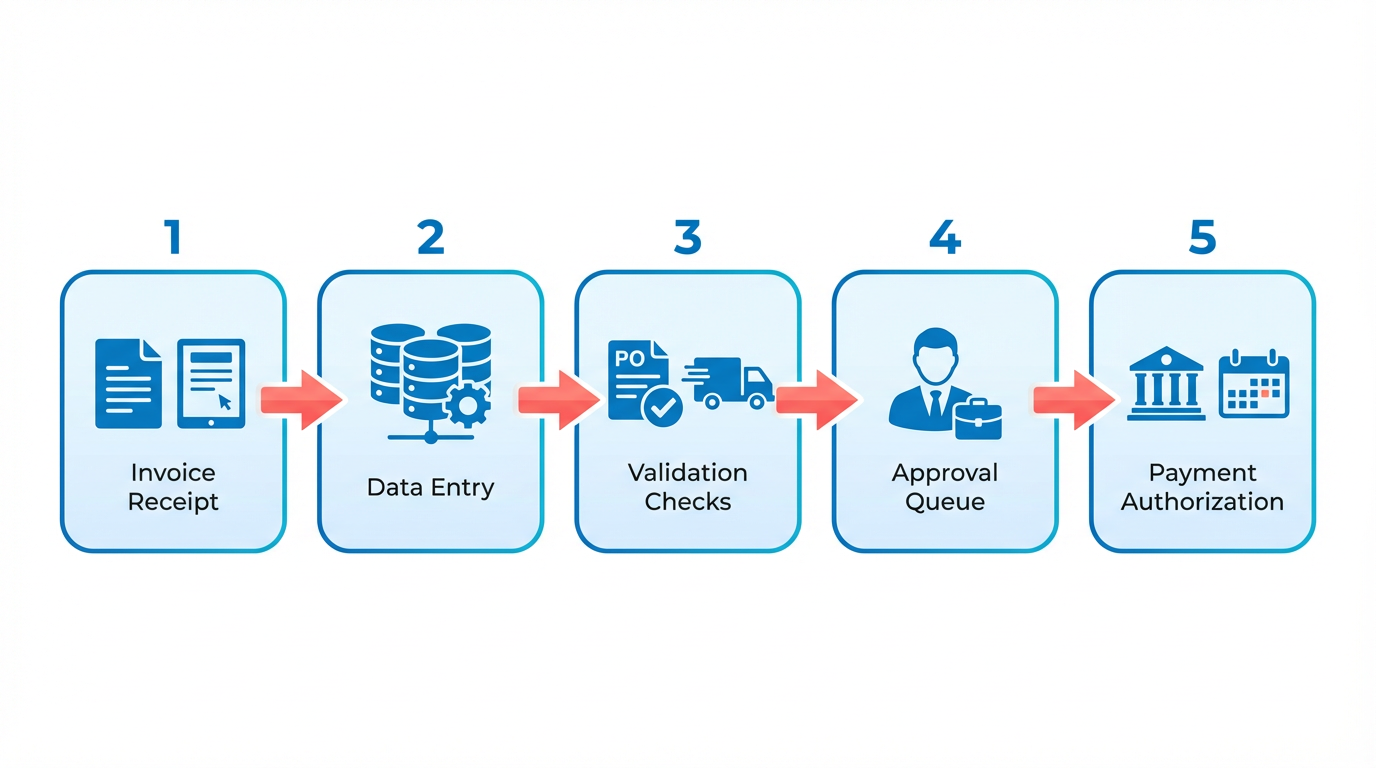
Traditional AP automation workflows in manufacturing typically follow a structured, rule-based process to manage accounts payable tasks. These workflows start with invoice receipt-either paper-based or digital-followed by manual or semi-automated data entry into an ERP system. Validation checks for discrepancies, such as matching purchase orders or delivery receipts, are performed by accounting teams. Once validated, invoices move to approval queues, where managers review and authorize payments. Finally, the system schedules payments and reconciles them with bank records. While this approach streamlines some manual steps, it relies heavily on human intervention for exceptions and complex decisions.
How Do Traditional AP Automation Workflows Differ from AI-Driven Solutions?
Traditional AP automation lacks the adaptive intelligence of AI agents. For example, AI agents can extract invoice data from unstructured documents, validate it against multiple data sources, and flag anomalies in real time. In contrast, traditional systems often require predefined templates for data extraction, leading to errors when formats vary. As mentioned in the Blixo’s Unified Platform for Manufacturing section, AI agents embedded in SaaS providers like Blixo reduce data entry errors by 90%, a metric unattainable by traditional workflows reliant on rigid rules. Additionally, AI agents automate end-to-end processes like predictive analytics for cash flow planning, while traditional systems typically handle only discrete tasks like invoice logging.
Strengths of Traditional AP Automation
Traditional workflows offer predictable, repeatable processes that integrate with legacy ERP systems. For manufacturers with stable vendor relationships and standardized invoice formats, this approach minimizes the need for continuous system reconfiguration. These systems also provide audit trails and compliance features that satisfy regulatory requirements. However, their rigidity becomes a limitation when dealing with dynamic scenarios, such as fluctuating supplier terms or multi-language invoices.
Weaknesses and Pain Points
Traditional AP automation struggles with scalability and adaptability. For example, a 2026 case study from a consumer goods company showed how AI agents reduced a six-analyst-week project to under an hour by autonomously handling invoice categorization and dispute resolution. By contrast, traditional systems often require manual overrides for exceptions, delaying processing and increasing labor costs. Another pain point is error propagation: a single data entry mistake in a traditional workflow can cascade into payment delays or compliance risks. Building on concepts from the Cash Application and Reconciliation Efficiency section, AI-driven systems eliminate 90% of these errors, underscoring the fragility of traditional methods.
What Challenges Do Manufacturers Face with Traditional AP Automation?
Manufacturers using traditional AP automation often encounter bottlenecks during peak seasons. Consider a hypothetical automotive parts supplier: when demand spikes, the finance team must manually process 10,000+ invoices monthly. Traditional systems may struggle to validate supplier discounts, track payment terms, or reconcile discrepancies without human intervention. This leads to delayed supplier payments, which can harm vendor relationships and increase costs. Additionally, the lack of predictive analytics in traditional workflows makes it difficult to forecast cash flow needs or identify cost-saving opportunities.
A Manufacturing Example: Invoice Processing in a Traditional System
A real-world example involves a mid-sized food manufacturing company using a traditional AP automation platform. Invoices arrive via email, scanned into the system, and matched against purchase orders. However, when a supplier sends a handwritten invoice with inconsistent formatting, the system fails to parse the data correctly. An accounts payable clerk must manually correct the entry, delaying approval by 2–3 days. During this time, the supplier’s early-payment discount expires, costing the company $5,000 annually. In an AI-driven system, this scenario would be resolved automatically through machine learning models trained to recognize diverse invoice formats.
| Feature | Traditional AP Automation | AI-Driven AP Automation (e.g., Blixo) |
|---|---|---|
| Error Rate | 10% data entry errors | 1% errors (90% reduction) |
| Processing Time | 3–5 days for invoice-to-payment | <24 hours end-to-end |
| Scalability | Requires manual configuration for new vendors | Adapts automatically to new invoice formats |
| Cost of Exceptions | High labor costs for manual overrides | Minimal human intervention |
This comparison illustrates why 83% of executives view AI agents as critical for future efficiency. While traditional systems remain functional for basic tasks, they fall short in environments requiring agility and precision. Manufacturers adopting AI-driven workflows gain a competitive edge by reducing costs, accelerating operations, and improving compliance-advantages unattainable through traditional automation alone.
Blixo’s Unified Platform for Manufacturing
Blixo’s unified platform for manufacturing streamlines accounts payable (AP) automation by embedding AI agents into core financial workflows. Unlike traditional systems that rely on manual data entry and rigid rule-based automation, as detailed in the Traditional AP Automation Workflow section, Blixo’s solution uses AI to handle complex tasks like invoice validation, payment scheduling, and compliance checks. This reduces processing times, minimizes errors, and integrates seamlessly with existing ERP systems using modular APIs. For example, a manufacturer using Blixo might automatically verify vendor invoices against purchase orders, flag discrepancies in real time, and route approvals based on predefined rules-all without human intervention.
How Blixo’s AI Agents Transform Manufacturing AP
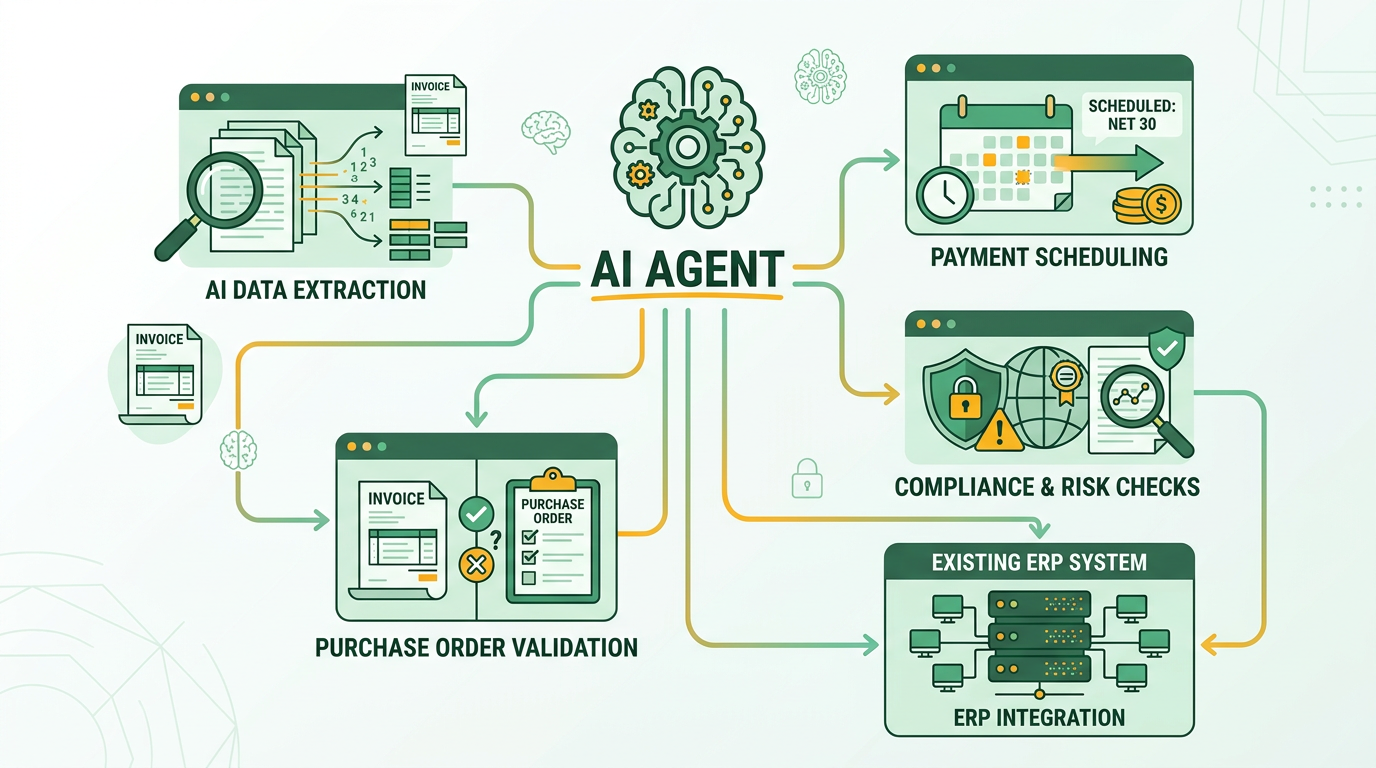
Blixo’s SaaS service automates invoice processing, cash application, and predictive analytics, which are critical for manufacturing supply chains. AI agents reduce data entry errors by up to 90% by extracting and validating information from unstructured documents like PDFs and emails, a process contrasted with traditional methods in the Invoicing and Recurring Billing Comparison section. This is a major improvement over traditional systems, where manual entry often introduces inaccuracies. Additionally, Blixo’s predictive analytics forecast cash flow needs by analyzing historical payment patterns, helping manufacturers avoid late fees and optimize working capital. A consumer goods company using similar AI-driven tools reported cutting a six-week marketing project to under an hour-demonstrating how AI can accelerate repetitive tasks in manufacturing.
Real-World Impact: Efficiency Gains and Cost Savings
Manufacturing firms adopting Blixo’s SaaS service see measurable improvements. One industrial firm reduced invoice processing time from days to minutes by automating data extraction and validation, a workflow further explained in the Traditional AP Automation Workflow section. Another company improved EBITDA by 2 percentage points within two years by optimizing workflows with AI. These results align with the broader trend: 57% of companies already use AI agents in production, and industry leaders project a 45% compound annual growth rate in AI adoption over the next five years.
| Feature | Traditional AP Automation | Blixo’s Unified Platform |
|---|---|---|
| Error Rate | 5–10% due to manual entry | 1–2% with AI validation |
| Processing Time | Hours to days | Seconds to minutes |
| Integration | Static, limited APIs | Modular ERP compatibility |
| Scalability | Requires manual adjustments | Auto-scales with AI learning |
What Customers Say About Blixo’s SaaS service
Executives across industries increasingly view AI as essential for efficiency. “The companies that rearchitect their workflows around AI will outpace competitors by 8-fold in workflow automation,” notes a Blixo blog post citing industry experts. A manufacturing CFO shared, “Blixo’s SaaS service cut our AP team’s workload by 70%, letting us focus on strategic planning instead of data entry.” These testimonials reflect the platform’s value in reducing operational costs and freeing employees for higher-value tasks.
By embedding AI agents into financial processes, Blixo addresses pain points like delayed payments, compliance risks, and inefficient resource allocation. As AI adoption grows, manufacturers using Blixo gain a competitive edge through faster operations, lower costs, and enhanced accuracy-positioning them to meet evolving market demands.
Invoicing and Recurring Billing Comparison
Blixo’s AI-driven invoicing automates data extraction, validation, and matching, while traditional AP systems rely on manual or rule-based workflows. For example, Blixo’s AI agents reduce invoice processing errors by up to 90% by analyzing unstructured data from receipts and vendor statements. Traditional systems often require human intervention to correct discrepancies, slowing down approvals and increasing risks of payment delays. As mentioned in the Traditional AP Automation Workflow section, these rule-based systems typically start with invoice receipt and proceed through manual validation steps, which aligns with the rigid processes described there.
| Feature | Blixo | Traditional AP Systems |
|---|---|---|
| Data Entry Automation | AI extracts invoice details from PDFs, emails, or images | Manual input or basic OCR tools |
| Error Rates | 90% fewer errors due to AI validation | Higher error rates (5–15% common) |
| Integration | Modular APIs sync with ERP systems like SAP or Oracle | Limited integration requires manual reconciliation |
| Speed | Processes invoices in minutes | Takes hours or days for complex invoices |
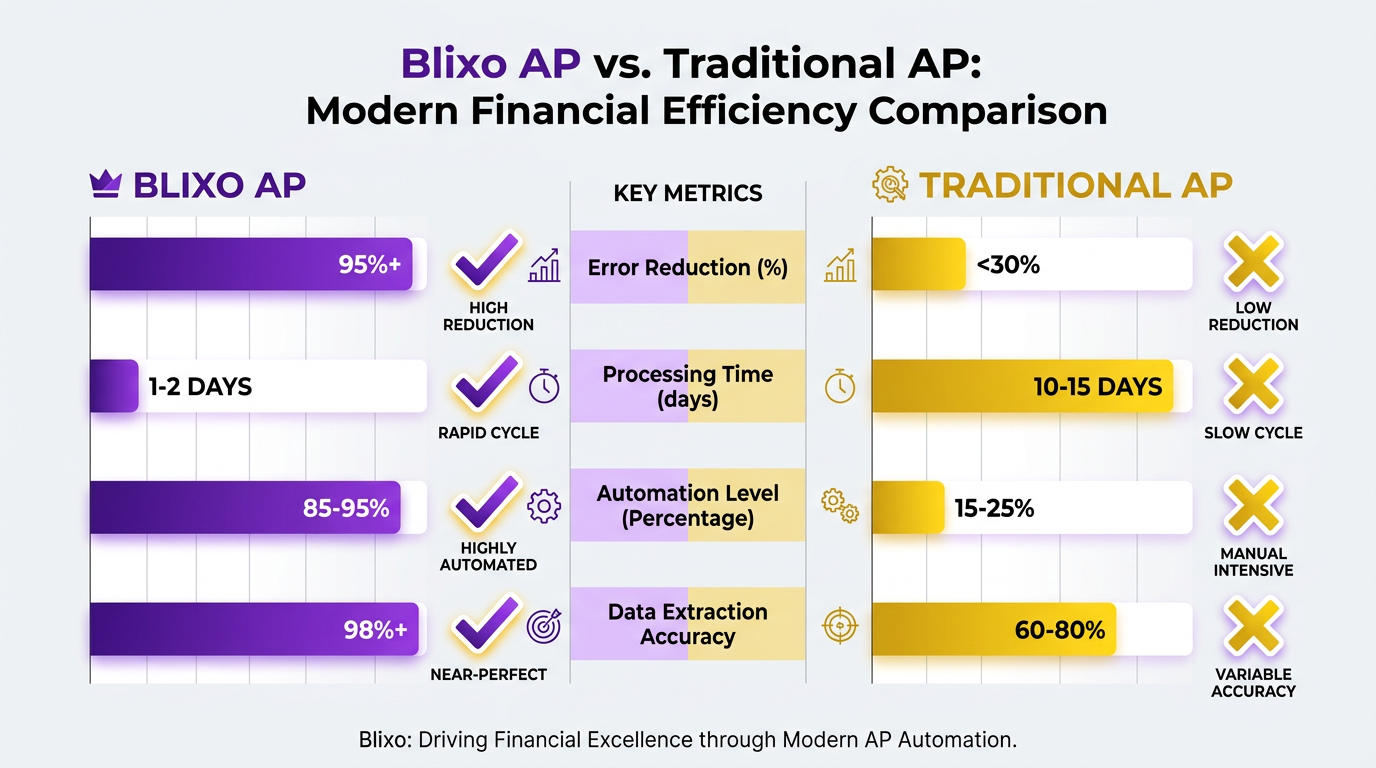
Traditional systems also lack predictive capabilities. They cannot flag potential fraud or suggest payment optimizations based on cash flow patterns. Blixo’s AI agents, however, use historical data to predict payment due dates and prioritize urgent invoices, reducing late fees. Building on concepts from the Why AP Automation Matters in Manufacturing section, this predictive capability directly addresses the operational efficiency and financial health challenges faced by manufacturers.
What About Recurring Billing Features?
Blixo automates recurring billing through dynamic scheduling, while traditional systems rely on static, pre-set payment rules. For instance, Blixo adjusts subscription or contract-based payments automatically when terms change, such as volume discounts or service upgrades. Traditional systems require manual updates, which often lead to overpayments or service interruptions.
| Feature | Blixo | Traditional AP Systems |
|---|---|---|
| Dynamic Scheduling | AI adjusts payment terms based on contract changes | Fixed schedules need manual edits |
| Error Prevention | 95% reduction in recurring payment errors | 10–20% error rate from human updates |
| Scalability | Handles thousands of recurring invoices without delays | Struggles with high-volume workflows |
| Visibility | Real-time dashboards track upcoming and past payments | Limited reporting requires manual aggregation |
A manufacturing company with monthly raw material contracts would benefit from Blixo’s ability to update billing rates automatically if supplier prices fluctuate. Traditional systems might miss these changes, leading to overcharges or compliance risks. As discussed in the Blixo’s Unified Platform for Manufacturing section, this dynamic scheduling is enabled by embedded AI agents that streamline financial workflows beyond static automation.
Real-World Example in Manufacturing
Consider a mid-sized automotive parts manufacturer with 200+ suppliers. Using traditional AP automation, the finance team spends 10 hours weekly manually updating recurring invoices for steel and plastic suppliers. With Blixo, AI agents monitor supplier contracts, adjust payment schedules when volume thresholds shift, and flag invoice discrepancies instantly. This cuts administrative time to two hours weekly and prevents late fees by ensuring payments align with revised delivery schedules.
The Blixo blog highlights a similar case: an industrial firm improved EBITDA by 2 percentage points in two years by optimizing workflows with AI agents. For recurring billing, this translates to better cash flow management and reduced operational overhead.
Benefits of Automated Invoicing and Recurring Billing
Automated systems like Blixo reduce labor costs by 95% and improve accuracy, directly impacting profitability. For manufacturing, this means:
- Faster Cycle Times: Payments processed in minutes, accelerating vendor relationships and supply chain efficiency.
- Cost Savings: Eliminating manual errors prevents overpayments and late fees, saving an average of 1.5% of annual procurement costs.
- Scalability: AI agents handle growing invoice volumes without proportional cost increases, critical during production expansions.
Traditional systems, however, require ongoing training for staff to manage updates and corrections, creating bottlenecks during peak periods. Blixo’s modular APIs also allow seamless upgrades as business needs evolve, avoiding the rigid workflows common in legacy software.
By integrating AI agents into invoicing and billing, manufacturers gain agility in managing complex financial operations. This shift aligns with the 45% CAGR growth projected for AI agent adoption, positioning companies to outpace competitors reliant on outdated tools.
Collections and Dunning Automation
Collections and dunning automation are critical for managing cash flow in manufacturing, where delayed supplier payments can disrupt production. Traditional AP automation tools handle collections through basic workflows-sending generic payment reminders via email or postal mail-but lack the sophistication to adapt to supplier behavior. Blixo, however, integrates AI-driven automation to personalize outreach, predict payment delays, and optimize dunning strategies. This section compares how each system addresses collections and dunning, using a manufacturing example to highlight practical differences. As mentioned in the Traditional AP Automation Workflow section, these tools rely on rigid, rule-based processes that often fail to address supplier-specific nuances.
What Makes Blixo’s Collections Automation Different?
Blixo’s system uses machine learning to analyze payment patterns and flag high-risk invoices before they become late. For example, if a supplier consistently delays payments by 5–7 days, Blixo proactively sends a reminder 3 days before the due date. Traditional AP tools apply one-size-fits-all rules, such as sending a reminder only after 10 days of late, which risks compounding delays. Blixo’s AI also adapts message content based on supplier history-offering early-payment discounts to reliable partners or escalating urgency for chronic late payers. Building on concepts from the Blixo’s Unified Platform for Manufacturing section, this approach embeds AI agents into core workflows to enhance responsiveness.
| Feature | Traditional AP | Blixo |
|---|---|---|
| Payment Risk Prediction | No | Yes (AI-based) |
| Customized Messaging | Manual or none | Automated, behavior-driven |
| Communication Channels | Email/Postal | Email, SMS, in-app notifications |
| Integration with Financial Systems | Limited | Full ERP and banking integration |
A manufacturing company using Blixo might reduce late payments by 30% compared to traditional tools, as the system identifies at-risk invoices earlier and tailors outreach. For instance, a supplier with seasonal cash flow issues could receive a payment plan proposal, while a reliable partner gets an early-discount prompt. Traditional systems would send identical reminders to all suppliers, missing opportunities to incentivize timely payment.
How Does Dunning Automation Work in Practice?
Dunning-the process of recovering overdue payments-relies on structured workflows in traditional AP software. These systems typically follow rigid rules: a first reminder after 10 days, a second after 15, and escalation to collections after 30. This approach fails to account for supplier-specific nuances. A manufacturer using traditional tools might send the same dunning notice to a long-term partner and a one-time vendor, risking strained relationships. Blixo’s AI-driven dunning adapts to supplier behavior in real time. If a supplier has a history of resolving late payments within 3 days, Blixo delays escalation and offers a small discount for prompt action. For chronic late payers, the system might trigger a collections workflow faster while suggesting alternative payment methods. The AI also learns from past interactions-prioritizing suppliers who respond to SMS over email.
| Dunning Feature | Traditional AP | Blixo |
|---|---|---|
| Workflow Flexibility | Static rules | Dynamic, supplier-specific |
| Payment Plan Options | Limited | AI-recommended plans |
| Automated Escalation | Fixed timelines | Risk-based prioritization |
Consider a scenario where a manufacturer’s key supplier misses a $50,000 payment. A traditional system would send a generic dunning letter after 10 days. Blixo, however, might analyze the supplier’s recent invoice history, detect a trend of partial payments, and automatically propose a structured payment plan. This prevents a full collections case while maintaining the supplier relationship-a nuance traditional tools lack.
Why Automation Matters for Manufacturing
Manual collections and dunning are time-intensive and error-prone in manufacturing, where supply chains involve hundreds of suppliers. Traditional AP systems require teams to monitor invoices, track reminders, and escalate cases manually. This approach delays cash inflow and increases operational costs. A mid-sized manufacturer using Blixo, however, could automate 80% of collections workflows, freeing staff to focus on strategic tasks. The benefits extend beyond efficiency. By reducing late payments, manufacturers avoid finance charges and supply chain disruptions. Blixo’s AI-driven system also improves supplier relationships through personalized communication, which is critical in industries where long-term partnerships drive stability. As outlined in the Why AP Automation Matters in Manufacturing section, these efficiencies directly impact operational and financial health. Traditional tools, limited by rigid workflows, often damage relationships through impersonal or delayed escalation.
In summary, Blixo’s integration of AI transforms collections and dunning from reactive tasks to proactive strategies. While traditional systems rely on static rules, Blixo’s automation adapts to supplier behavior, predicts risks, and optimizes cash flow. For manufacturers, this means fewer late payments, stronger supplier ties, and a focus on growth rather than administrative overhead.
Cash Application and Reconciliation Efficiency
By integrating AI agents into cash application and reconciliation, Blixo addresses pain points common in manufacturing finance, where rapid payment processing and accuracy are critical for maintaining supplier relationships and operational continuity. As mentioned in the Why AP Automation Matters in Manufacturing section, these challenges directly impact production timelines and supplier trust. Building on concepts from the Blixo’s Unified Platform for Manufacturing section, the platform’s embedded AI agents enhance scalability and compliance, ensuring seamless adaptation to fluctuating payment volumes. For deeper insights into AI’s role in business processes, explore Blixo’s blog on AI advancements.
Implementation and Migration Strategy
Switching from traditional AP automation to Blixo involves a structured approach that prioritizes AI-driven workflows and seamless integration. The implementation process typically begins with a needs assessment, where Blixo’s team evaluates your current AP systems, identifies pain points, and aligns AI capabilities with business goals. As mentioned in the Traditional AP Automation Workflow section, Blixo use AI agents for tasks like invoice processing and anomaly detection, this phase ensures compatibility with existing infrastructure while mapping out AI-specific requirements. For example, if your system handles high-volume invoice data, the assessment might focus on how AI can streamline data extraction and validation.
How Does Blixo’s Migration Strategy Differ from Traditional Systems?
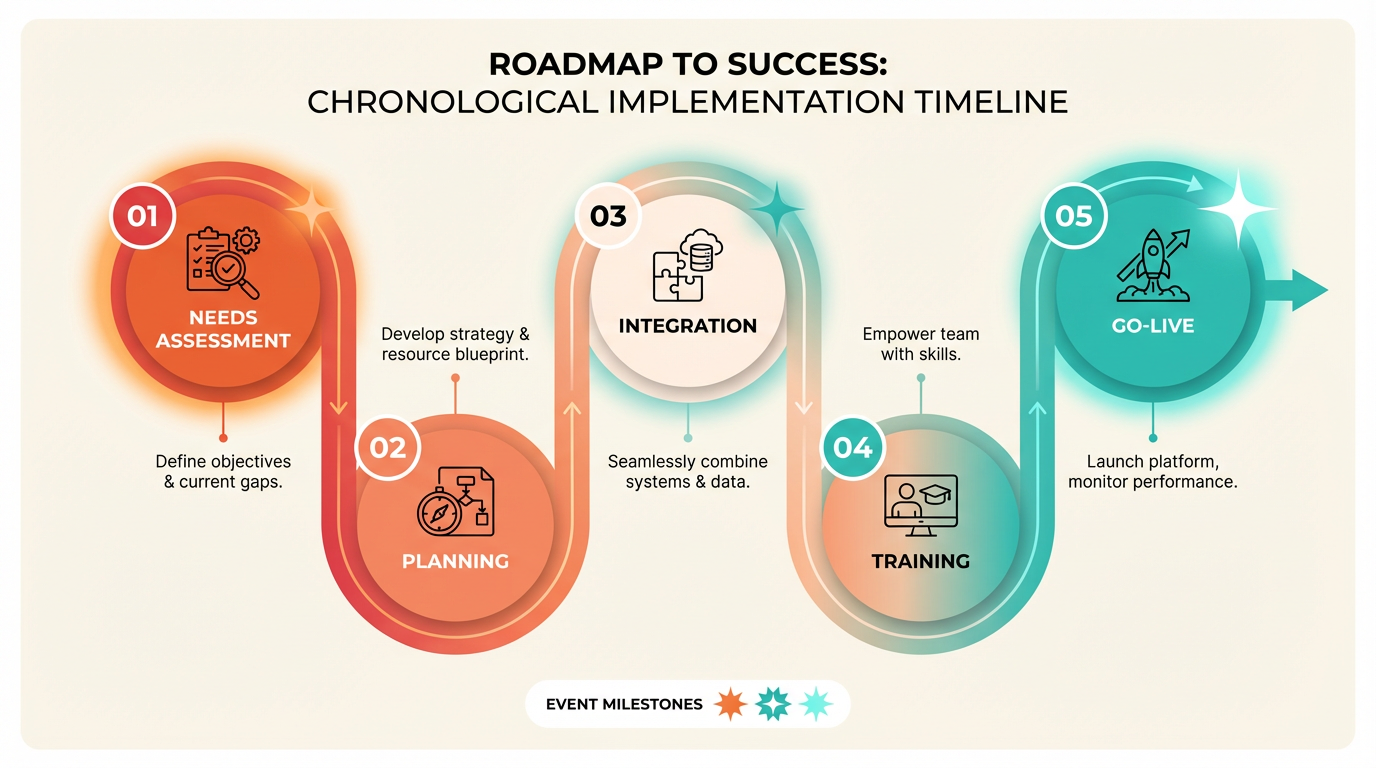
Migrating to Blixo requires a phased approach to minimize disruption. Unlike traditional AP automation, which often relies on rigid rule-based workflows, Blixo’s AI-first migration strategy emphasizes iterative testing and real-time feedback. The process typically unfolds in three stages:
- Data Preparation: Clean and organize historical AP data to train Blixo’s AI models. This step ensures the system learns patterns unique to your business, such as supplier invoicing cycles or payment terms.
- Pilot Deployment: Launch a limited rollout in one department or location to test AI-driven features like automated approvals or fraud detection. Adjust configurations based on user feedback before scaling.
- Full Integration: Once validated, expand Blixo across all AP processes. This phase includes training staff to collaborate with AI agents, such as reviewing flagged invoices or adjusting AI parameters.
A successful example is a mid-sized manufacturing firm that reduced invoice processing time by 40% within three months. By migrating to Blixo, the company automated 80% of its AP tasks, using AI to detect duplicate payments and reconcile discrepancies faster than traditional systems.
What Are Key Best Practices for a Smooth Transition?
To maximize Blixo’s potential, follow these best practices:
- Prioritize Data Quality: AI agents depend on clean, structured data. Audit your existing AP records for inconsistencies and standardize formats before migration.
- Train Teams for AI Collaboration: Unlike traditional systems, Blixo requires users to interact with AI agents. Building on concepts from the Blixo’s Unified Platform for Manufacturing section, host workshops to teach teams how to interpret AI-driven insights and adjust workflows accordingly.
- Monitor and Optimize: Use Blixo’s analytics dashboard to track KPIs like processing speed or error rates. Regularly refine AI models by feeding new data into the system.
For instance, a company using Blixo’s anomaly detection feature initially faced false positives. By retraining the AI with updated supplier data and refining thresholds, they reduced errors by 60% in six weeks.
| Feature | Traditional AP Automation | Blixo AP Automation |
|---|---|---|
| Implementation Time | 6–12 months | 3–6 months |
| Customization | Limited to rule-based logic | Dynamic AI models adaptable to workflows |
| Post-Migration Support | Static updates every 6–12 months | Continuous AI learning and improvement |
While traditional systems require extensive manual configuration, Blixo’s AI agents adapt to evolving business needs. This flexibility is particularly valuable for manufacturers dealing with fluctuating supplier networks or seasonal demand shifts, a topic further explored in the Why AP Automation Matters in Manufacturing section.
How to Mitigate Risks During Migration
A critical step is creating a fallback plan in case AI-driven processes fail. For example, if Blixo’s automated approvals malfunction during a peak season, having a manual override ensures operations continue without delay. Another risk is user resistance-address this by involving AP teams early in the migration process and highlighting AI’s ability to reduce repetitive tasks.
For companies hesitant to adopt AI, a hybrid model works well: run Blixo alongside traditional systems for 30–60 days to compare outcomes. One manufacturer used this approach to validate Blixo’s accuracy in matching purchase orders to invoices, finding it outperformed their legacy system by 25% in error reduction.
By combining structured planning, AI-specific strategies, and continuous optimization, organizations can transition from traditional AP automation to Blixo with minimal downtime. The result is a system that not only automates processes but evolves with your business, driven by the AI advancements detailed in Blixo’s blog on AI agents’ impact.
Frequently Asked Questions
1. How much can AP automation reduce invoice processing costs?
AP automation lowers costs from $10–$20 per invoice to $1–$3. This 85% reduction stems from eliminating manual data entry errors and streamlining workflows. Manufacturers with high invoice volumes see the most significant savings.
2. How quickly does AP automation process invoices compared to manual methods?
Automated systems handle invoices in 1–2 hours versus 3–5 days manually. This speed prevents payment delays, ensuring suppliers are paid on time and early discounts are captured consistently.
3. What error rate improvement does AP automation provide?
Automation reduces error rates from 10–20% to under 2%. This minimizes disputes, rework, and compliance risks, which are critical for manufacturers managing complex supplier networks.
4. How does manual AP impact weekly operational hours?
Manual AP consumes 20–40 hours weekly for mid-sized manufacturers. Automating this task frees staff to focus on strategic work while reducing the risk of human errors in high-volume environments.
5. Why is scalability a challenge for manual AP processes?
Manual systems are limited by staff capacity, causing delays during peak production periods. Automated AP scales seamlessly with demand, supporting growth without proportional increases in labor costs.
6. What are the financial risks of delayed payments in manufacturing?
Late payments trigger 5–10% in penalties and disrupt production. For example, a $100,000 delayed payment can halt operations, leading to missed customer deliveries and supply chain trust erosion.
7. How does AP automation improve compliance for manufacturers?
Automation ensures consistent adherence to regulatory standards by digitizing approvals and audit trails. This reduces compliance risks by 50% compared to manual systems prone to documentation gaps.