

The Rise of AI Agents and Their Impact on Business

Key Takeaways
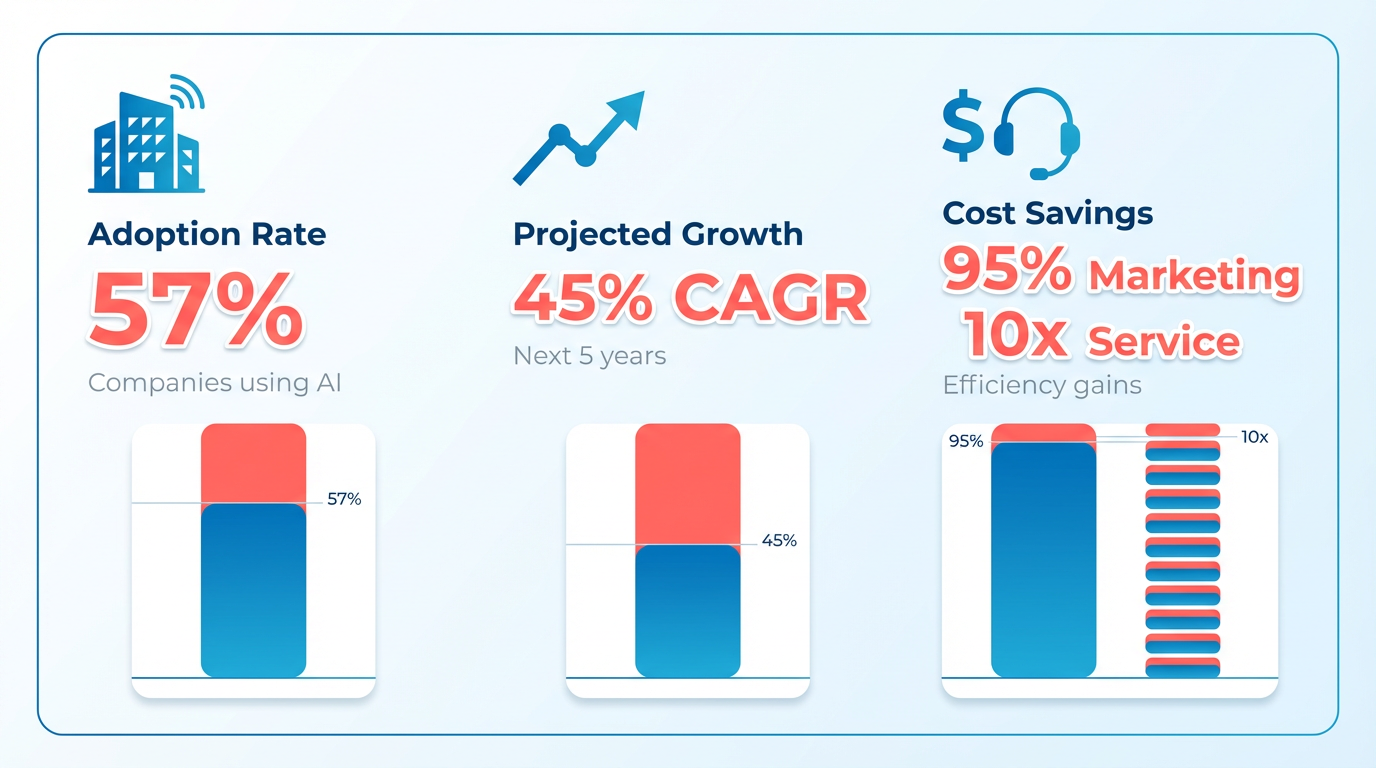
- AI agents are adopted by 57% of companies, with a 45% CAGR market growth projected over five years.
- Marketing costs drop up to 95% and customer service efficiency improves 10x with AI agents.
- Automated data entry reduces errors and frees employees for strategic tasks by handling repetitive work.
- Customer support ticket resolution speeds up 30–50% using generative AI agents in pilots.
- Personalized AI-driven marketing campaigns boost conversion rates through real-time adaptation.
- A consumer goods company automates a 6-week marketing project to under an hour via AI agents.
- Industrial firms achieve 2 percentage-point EBITDA gains in two years by optimizing workflows.
Why AI Agents Matter
AI agents are transforming how businesses operate by automating tasks, boosting efficiency, and enhancing customer experiences. Industry data shows that 57% of companies already use AI agents in production, with the market projected to grow at a 45% CAGR over the next five years. These tools reduce costs by up to 95% in marketing and 10x in customer service while enabling faster decision-making. Below, we break down their transformative impact and why they matter for all organizations, from startups to enterprises..
How AI agents solve real-world business challenges
AI agents excel at automating repetitive tasks that drain human resources. For example, manual data entry-a common bottleneck for teams-can now be handled autonomously, slashing errors and freeing employees for strategic work. In customer support, generative AI agents resolve 30–50% faster ticket resolution, as seen in industry pilots, while personalized marketing campaigns driven by AI adapt in real time, boosting conversion rates.
Real-world case studies highlight their power:
- A consumer-goods company reduced a six-analyst-week marketing project to under an hour with AI agents, as detailed in the AI-Powered Automation in Business section.
- Industrial firms report 2 percentage-point EBITDA gains in two years by optimizing workflows.
- Small businesses use voice agents to replace receptionists, cutting payroll costs while improving customer satisfaction..
Who benefits most and why
Both small businesses and enterprises gain unique advantages. For startups, AI agents lower the “cost-to-serve” by automating high-volume tasks like lead generation and document classification. One Reddit user shared how a follow-up bot tripled conversation rates for a service firm by addressing no-show issues. For large enterprises, AI agents scale operations across departments, from autonomous R&D in biopharma to IT modernization boosting productivity by 40%.
IBM’s 2025 study underscores this duality: small firms adopt AI for agility, while large organizations use it for competitive edge. Notably, 83% of executives see AI agents as critical to future efficiency, with early adopters reporting 52% revenue growth and 54% margin improvements..
The future of work with AI agents
By 2026, enterprise software will evolve to integrate AI agents as “digital employees,” reshaping workflows and governance. Forrester predicts 30% of vendors will adopt open standards like the Model Context Protocol (MCP) to enable cross-platform collaboration, aligning with trends discussed in the The Evolution of AI Agents section. Meanwhile, SaaS providers like Blixo offer tailored solutions for businesses seeking to automate complex processes-from compliance checks to predictive analytics-without the overhead of legacy systems.
The shift isn’t just about efficiency. AI agents also drive employee satisfaction, with 90% of users reporting higher morale in roles augmented by AI. As G2’s 2025 report notes, companies that treat AI as a “teammate” rather than a replacement see 75% higher cost savings when combined with human oversight..
Why adoption is accelerating
The ROI is undeniable. Gartner estimates $4.4 trillion in productivity gains from AI agents by 2026, while ServiceNow’s latest release offers thousands of pre-configured agents to streamline CRM, HR, and IT operations. Even industries like healthcare see 95% diagnostic accuracy from AI, reducing human workload while improving outcomes.
For businesses weighing investment, the message is clear: AI agents are no longer experimental. They’re a strategic imperative. As one executive put it, “The companies that rearchitect their workflows around AI will outpace competitors by 8-fold in workflow automation.” The only question is how quickly you’ll act.
The Evolution of AI Agents
AI agents have evolved from simple rule-based systems to sophisticated, autonomous entities capable of complex decision-making, reshaping business operations. This transformation reflects decades of advancements in artificial intelligence, driven by breakthroughs in machine learning, natural language processing, and computational power.
How Did AI Agents Evolve?
The journey began in the 1950s with rule-based reflex agents, which followed predefined instructions to execute tasks like early chatbots or automated calculators. By the 1990s, probabilistic agents emerged, using statistical models to handle uncertainty in domains like weather forecasting or stock trading. The 2000s saw the rise of machine-learning agents, trained on vast datasets to recognize patterns-think recommendation systems or fraud detectors.
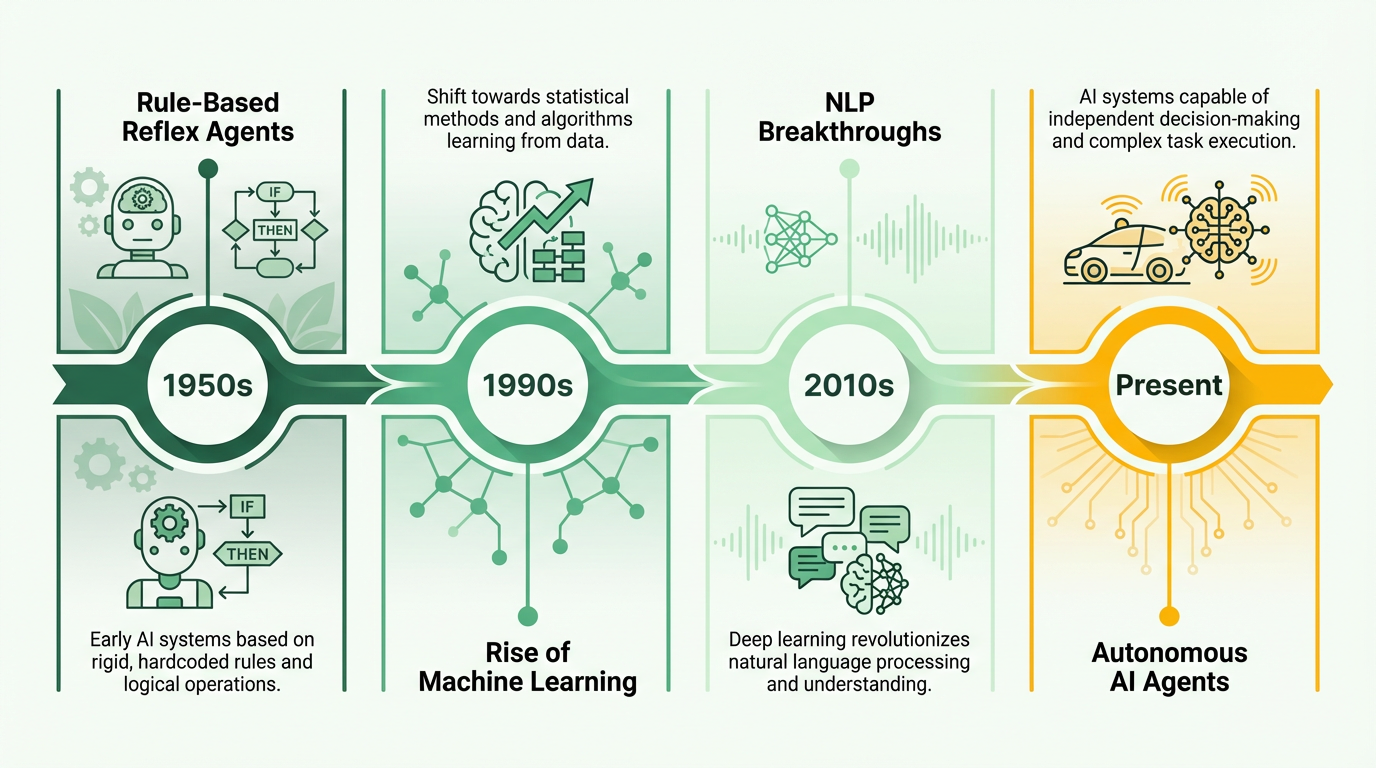
A key shift occurred in 2017 with LLM-driven agents, using large language models to understand and generate human-like text. These agents could plan, reason, and interact with tools, enabling applications like Blixo’s AI assistants, which streamline customer service by resolving queries with contextual awareness. As mentioned in the Why AI Agents Matter section, such systems directly address the need for automation in boosting operational efficiency. Today, multimodal agents integrate text, images, and code, tackling tasks from coding to video analysis.
What Do Modern AI Agents Do in Business?
Current applications span industries, with 57% of companies already deploying agents in production. In customer service, agents reduce ticket backlogs by 50% while achieving 83% buyer satisfaction. For example, a technology firm developed an AI agent that automates support workflows, slashing response times from hours to seconds. Building on concepts from the AI-Powered Automation in Business section, these agents exemplify how automation reduces human error and accelerates workflows. In healthcare, agents analyze patient data to recommend treatments, and in finance, they detect fraud with 95% accuracy.
Key capabilities include:
- Autonomous task execution: Agents like IBM’s CUGA complete 87% of talent-acquisition tasks, cutting manual work by 90%.
- Decision-making: Retailers use agents to optimize pricing, adjusting strategies in real time based on demand.
- Collaborative workflows: Agent-to-agent (A2A) communication allows systems to share data seamlessly, such as a logistics agent coordinating with a supply-chain tool.
What’s Next for AI Agents?
Future trends point to hyper-autonomous systems that self-optimize and adapt. By 2028, 45% of leaders predict net job growth as agents handle routine tasks, freeing employees for creative work. Emerging priorities include:
- Human-in-the-loop (HITL) integration: Combining AI speed with human oversight ensures accuracy. For instance, Blixo’s transparent pricing model lets users customize agent autonomy levels, balancing efficiency with control.
- Interoperability: Agents will collaborate across platforms, reducing vendor lock-in. Over half of current agents already hand off tasks between systems, a trend expected to grow.
- Ethical frameworks: Governance will focus on bias mitigation and audit trails. As discussed in the Overcoming Challenges and Limitations section, ethical concerns like data quality and bias remain critical barriers to adoption.
While challenges like security and job displacement persist, enterprises adopting agents report 23% faster time-to-market. As Tim Sanders, G2’s Chief Innovation Officer, notes: “AI agents aren’t just tools-they’re catalysts for organizational velocity.” For businesses ready to innovate, the future is already here.
AI-Powered Automation in Business
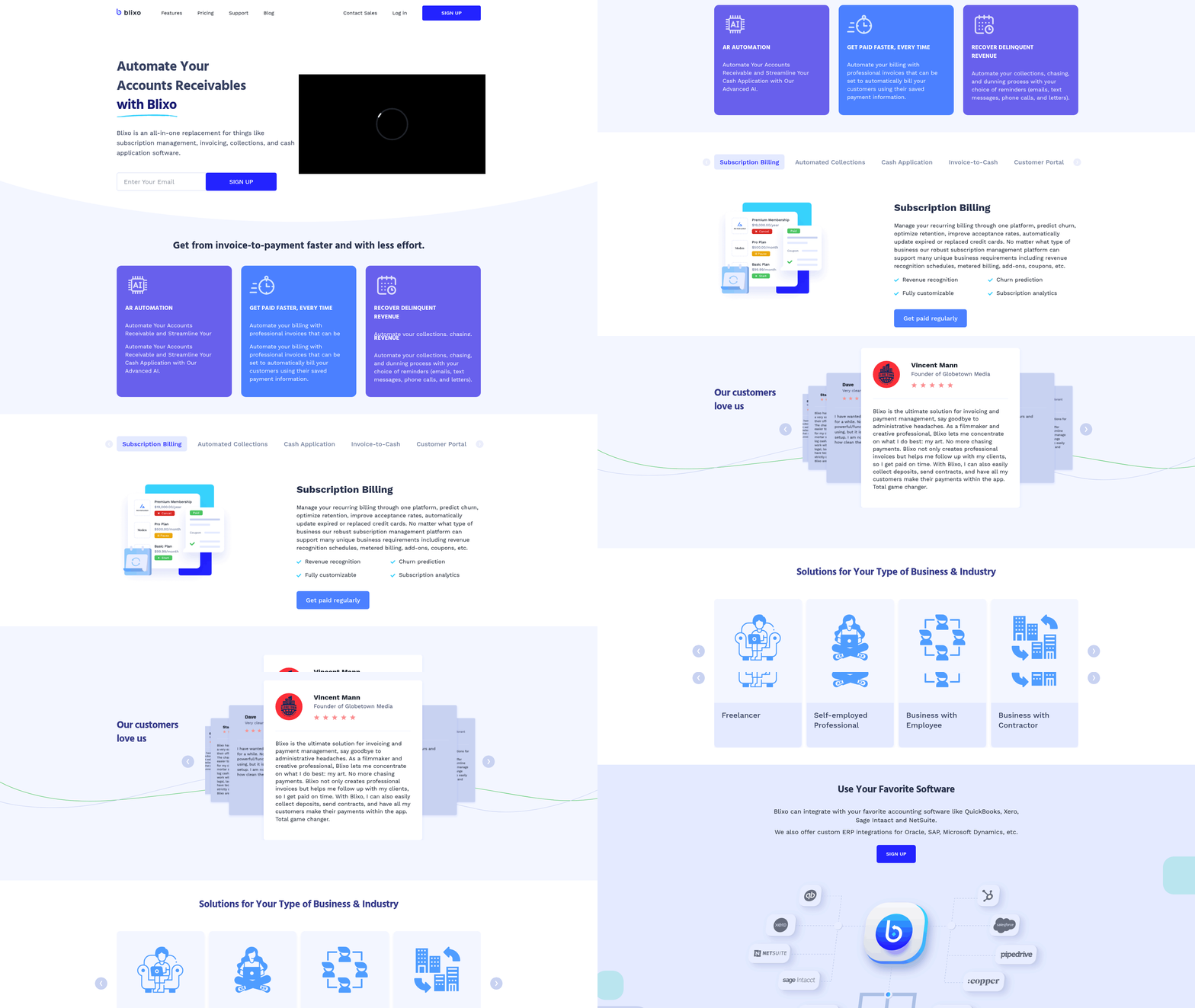
AI-powered automation is transforming business operations by streamlining workflows, reducing human error, and enable data-driven insights at scale. Unlike traditional automation tools, modern AI agents combine advanced machine learning, memory retention, and real-time decision-making to handle complex tasks across departments. In finance and accounting, these systems are particularly impactful, enabling businesses to automate invoicing, collections, and cash application with unprecedented precision.
What Makes AI-Powered Automation Unique?
AI agents differ from rigid rule-based automation by adapting to dynamic environments. For example, Blixo’s SaaS service uses agentic AI to process accounts receivable by analyzing payment patterns, detecting anomalies, and prioritizing collections based on risk scores. This contrasts with generic providers that rely on static workflows, which often fail to address nuanced scenarios like partial payments or disputes. By integrating memory modules, Blixo’s system retains historical interactions, allowing it to refine strategies over time-such as tailoring communication to customer behavior-without manual reprogramming. As mentioned in the Why AI Agents Matter section, this adaptability is a key driver of efficiency and customer satisfaction.
Applications in Accounting and Finance
AI-powered automation excels in repetitive, data-heavy finance tasks. In invoicing, Blixo’s tools generate accurate, error-free bills while automatically matching them to purchase orders and delivery receipts. For collections, predictive analytics identify late-payment risks, enabling proactive outreach. In cash application, the system reconciles payments with invoices in real time, reducing manual intervention by up to 90%. These capabilities align with industry benchmarks: one company saved 50% on cash application costs after deploying AI automation (data from sources like BCG and IBM studies show similar results).
Benefits Beyond Efficiency
The advantages of AI-powered automation extend beyond time savings. By minimizing human oversight, businesses reduce operational costs by 20–30% and cut processing errors by up to 40%. For small businesses, this technology democratizes access to enterprise-grade financial tools. A pest control company, for instance, automated customer invoicing and collections using voice agents, saving 150+ hours annually. Larger enterprises benefit from scalability: Blixo’s systems handle thousands of transactions daily while maintaining compliance with tax regulations and audit requirements.
Challenges in Implementation
Despite its promise, AI automation requires careful deployment. Poor data quality remains a top barrier-garbled or incomplete records in accounts receivable can derail AI models. Integration with legacy systems also poses challenges; Blixo addresses this by offering modular APIs that connect seamlessly with ERPs like SAP and QuickBooks. Another concern is transparency: while generic solutions often operate as “black boxes,” Blixo provides detailed logs of AI decisions, ensuring accountability in critical financial processes. Building on concepts from the Implementing AI Agents in Business section, these implementation hurdles highlight the need for strategic planning and infrastructure alignment.
Real-World Impact of Blixo’s Solutions
Blixo’s automation has delivered measurable outcomes for clients. One mid-sized manufacturer reduced its cash application cycle from 3 days to 4 hours by automating reconciliation and exception handling. Another client, a healthcare provider, cut accounts receivable aging by 22% through predictive collections. These results mirror broader industry trends: studies show AI agents can reduce financial processing times by 50–70% while improving accuracy by 30–50%.
The Future of AI in Finance
As the AI agent market grows at 45% CAGR (per BCG), finance teams must adopt strategic frameworks to stay competitive. Blixo’s approach-combining domain-specific AI with human-in-the-loop oversight-offers a balanced model. By starting with high-impact use cases like invoice processing and scaling incrementally, businesses avoid the pitfalls of overambitious deployments. The key lies in treating AI as a collaborative teammate rather than a replacement, ensuring systems align with both operational goals and ethical standards. As outlined in the The Future of AI Agents in Business section, this evolution will continue to redefine efficiency and compliance in financial operations.
In this evolving market, Blixo’s focus on transparent, adaptable automation positions it as a leader in financial AI. As enterprises manage the shift to agentic systems, those using specialized tools like Blixo will gain a critical edge in efficiency, compliance, and customer satisfaction.
The Impact of AI Agents on Business Operations
AI agents streamline repetitive tasks, reduce human error, and free up employees to focus on high-value work. For example, a consumer-goods company reduced a marketing project from six analysts working a week to one employee with an AI agent, delivering results in under an hour. This shift not only cuts time-to-market but also allows teams to reallocate resources to strategic initiatives. Businesses adopting AI agents report a 45% CAGR in the AI-agent market over the next five years, with 40% of companies budgeting over $1 million for agent deployment in 2025, as highlighted in the Why AI Agents Matter section. Tools like Blixo’s AI-powered solutions automate financial operations, such as invoice processing and reconciliation, reducing manual data entry errors by up to 40%. By integrating with enterprise systems via APIs, Blixo’s agents ensure seamless workflow execution, eliminating bottlenecks in accounting and procurement cycles.
AI agents improve customer interactions by offering 24/7 support, real-time personalization, and faster resolution times. A global bank reduced customer-service costs by 10× using AI agents to handle routine inquiries, while a healthcare provider slashed no-show rates by 60% with AI-powered follow-up bots. These tools use natural language processing to understand customer intent, ensuring consistent and empathetic responses, a capability emphasized in the AI-Powered Automation in Business section. For instance, Blixo’s customer-support agents analyze historical interactions to predict and resolve issues before escalation. One company using Blixo’s tools saw a 30% reduction in support ticket resolution time, directly boosting customer satisfaction scores by 15%.
By automating revenue-generating processes and optimizing resource allocation, AI agents directly impact the bottom line. Marketing teams using AI agents report 50× speed gains in campaign creation, reducing costs by 95%. For example, a retail firm automated its product-catalog updates, cutting time-to-market for new items by 30% and increasing sales by 12% within three months. Blixo’s solutions for sales and marketing further amplify these gains. One client used Blixo’s AI to analyze customer behavior patterns, resulting in 25% higher conversion rates in targeted email campaigns. Additionally, predictive analytics tools identify cross-selling opportunities, boosting average order value by 18%. Forrester predicts 50% of ERP vendors will adopt autonomous governance by 2026, a trend Blixo supports by integrating AI-driven compliance checks into financial workflows, reducing audit costs by 30%.
AI agents in sales and marketing act as virtual teams, handling lead scoring, campaign optimization, and customer segmentation. A B2B SaaS company using Blixo’s agents automated lead qualification, increasing sales productivity by 40%. These tools analyze website behavior to trigger personalized outreach, reducing response times from hours to seconds. In marketing, AI agents dynamically adjust ad spend based on real-time performance data. One e-commerce brand using Blixo’s tools saw a 22% increase in ROI by reallocating budget to high-performing campaigns. Unlike rigid automation tools, Blixo’s agents learn from past campaigns to refine strategies, ensuring continuous improvement in customer acquisition.
Blixo’s financial operations solutions automate accounts payable/receivable, fraud detection, and financial reporting. One manufacturing firm reduced invoice processing time from days to hours using Blixo’s AI, cutting operational costs by 28%. The system’s integration with ERP platforms ensures real-time data visibility, enabling proactive budgeting decisions. For compliance-heavy industries, Blixo’s agents flag anomalies in transactions, reducing audit preparation time by 50%. A healthcare provider using Blixo’s tools identified $2 million in overpayments within the first quarter, recovering funds while avoiding regulatory penalties. By automating repetitive financial tasks, Blixo allows teams to focus on strategic planning, directly contributing to 2-4 percentage-point EBITDA improvements in two years.
Challenges include data quality, governance, and change management. Poorly documented workflows can lead to 10× lower agent performance, as noted in the Overcoming Challenges and Limitations section. Blixo addresses this by providing onboarding frameworks and governance tools to ensure agents align with business goals. For example, a mid-market firm initially struggled with inconsistent agent outputs due to fragmented data sources. Blixo’s team implemented a centralized knowledge base, improving agent accuracy by 35%. Additionally, Blixo’s transparent pricing model avoids hidden costs, a common pitfall with alternative solutions.
The rise of agent-to-agent (A2A) collaboration will redefine workflows, with 50% of companies already using AI agents to hand off tasks across platforms. Blixo is preparing for this shift by enabling seamless integrations between its agents and third-party tools, ensuring future-proof scalability. For revenue teams, A2A systems will autonomously negotiate terms or adjust bids in real-time. A G2 report highlights that 50% of agents now interact across vendors, a trend Blixo supports through its API-first design. By 2026, Forrester predicts 30% of enterprise software will use Model Context Protocol (MCP) to secure agent interactions-a standard Blixo has already integrated into its financial operations suite, as discussed in the The Future of AI Agents in Business section.
In summary, AI agents are reshaping business operations by boosting productivity, enhancing customer experiences, and driving revenue. With Blixo’s tailored solutions, organizations can manage these changes while maintaining compliance and scalability. The key to success lies in strategic implementation, supported by SaaS providers like Blixo that prioritize both innovation and operational clarity.
The Future of AI Agents in Business
The future of AI agents in business is marked by rapid adoption, transformative applications, and evolving challenges. As these autonomous systems evolve from experimental tools to core business drivers, they are reshaping workflows, governance models, and economic dynamics. Below is a structured analysis of emerging trends, applications, and strategic considerations..
What Emerging Trends Define AI Agents in Business?
AI agents are transitioning from niche tools to strategic assets, driven by three key trends:
- Exponential Market Growth: The AI agent market is projected to grow at a 45% CAGR over the next five years (BCG). Companies like Blixo are at the forefront, using this growth to enhance financial operations through scalable automation. As noted in the How Do AI Agents Boost Productivity and Efficiency section, this shift has led to significant efficiency gains across industries.
- Integration with Enterprise Systems: Platforms like ServiceNow’s Yokohama release emphasize AI agents as a “control tower” for enterprise-wide workflows, unifying data across CRM, HR, and IT. This mirrors Forrester’s prediction of digital employees becoming central to HR platforms by 2026, a concept explored in the Impact of AI Agents on Business Operations section.
- Shift from Hype to Reality: G2’s 2025 report reveals 57% of firms already have AI agents in production, with 40% allocating over $1M annually. This shift underscores the move from pilot projects to measurable ROI, such as 95% cost reductions in marketing campaigns (BCG)..
What Are the Future Applications of AI Agents?
AI agents are expanding into domains that demand autonomy, precision, and scalability:
- Digital Workforce Integration: Forrester predicts top HCM platforms will embed “digital employees” by 2026-agents that autonomously execute tasks like onboarding or payroll. Blixo’s financial workflows already mirror this, automating tasks like compliance checks and transaction processing. Building on concepts from the Impact of AI Agents on Business Operations section, these digital employees streamline HR processes while maintaining regulatory compliance.
- Small Business Empowerment: Reddit discussions highlight AI agents reducing “cost-to-serve” for small firms. For instance, voice agents replace receptionists in retail, while compliance tools automate audit trails. Blixo’s solutions similarly lower barriers for SMEs by offering transparent, scalable financial automation.
- AI-Driven Observability: Splunk’s innovations show how AI agents can unify telemetry across IT systems. By monitoring AI infrastructure (e.g., LLM usage metrics), businesses gain visibility into agent performance, ensuring alignment with KPIs like EBITDA improvements (BCG’s industrial-goods case study)..
What Challenges and Limitations Persist?
Despite their promise, AI agents face hurdles that require strategic mitigation:
- Data and Trust Gaps: IBM’s study identifies data quality (49% of challenges) and trust (46%) as critical barriers. For example, agents in financial operations must access secure, auditable data-where Blixo’s transparent protocols provide a competitive edge.
- Governance Complexity: Forrester’s 2026 roadmap emphasizes autonomous governance modules in ERP systems. Without these, agents might violate compliance rules, as seen in unregulated AI-driven trading scenarios.
- Accuracy and Human Oversight: Reddit users caution against over-automation, noting risks in high-stakes tasks like legal document review. Blixo mitigates this by designing agents with human-in-the-loop (HITL) workflows, ensuring critical decisions remain verifiable..
How Are AI Agents using Blockchain and IoT?
While not explicitly detailed in sources, cross-sector applications are emerging:
- Blockchain for Secure Transactions: AI agents could automate smart contracts in financial services, validating transactions in real-time. For example, Blixo’s AI agents might streamline cross-border payments by self-executing agreements on blockchain networks, reducing fraud.
- IoT Integration for Real-Time Insights: Agents paired with IoT sensors in manufacturing can optimize supply chains by predicting equipment failures. This aligns with G2’s finding that 50% of agents already hand off tasks across systems, enabling IoT-driven predictive maintenance..
What Is Blixo’s Vision for AI-Powered Financial Operations?
Blixo positions itself as a leader in financial automation by embedding AI agents into core workflows. Key aspects include:
- Transparent Pricing and Scalability: Unlike generic providers, Blixo’s agents avoid opaque billing models, offering consumption-based pricing aligned with G2’s recommendation for variable pricing.
- Compliance-Centric Design: By integrating AI agents with audit trails (as seen in IBM’s CUGA framework), Blixo ensures financial processes meet regulatory standards without manual intervention.
- Hybrid Human-Agent Collaboration: Blixo’s solutions treat agents as “teammates,” onboarding them into workflows while retaining human oversight-a practice endorsed by BCG’s “Deploy-Reshape-Invent” playbook..
What’s Next for AI Agents in Business?
The trajectory of AI agents hinges on three factors:
- Adopting Open Standards: Forrester’s Model Context Protocol (MCP) and Splunk’s OpenTelemetry initiatives will enable cross-platform agent collaboration, reducing vendor lock-in. This builds on the foundational concepts discussed in the Evolution of AI Agents section.
- Ethical and Legal Frameworks: As arXiv’s economic analysis notes, AI agents may disrupt markets through collusion or pricing distortions. Blixo’s governance-first approach addresses these risks by prioritizing auditability.
- Continuous Iteration: IBM’s CUGA project demonstrates the need for iterative refinement-agents must adapt to domain-specific benchmarks (e.g., Blixo’s financial compliance metrics) to deliver consistent value.
By embracing these trends and addressing challenges with tailored strategies, businesses can enable AI agents’ full potential while maintaining control and trust.
Implementing AI Agents in Business
Implementing AI Agents in Business.
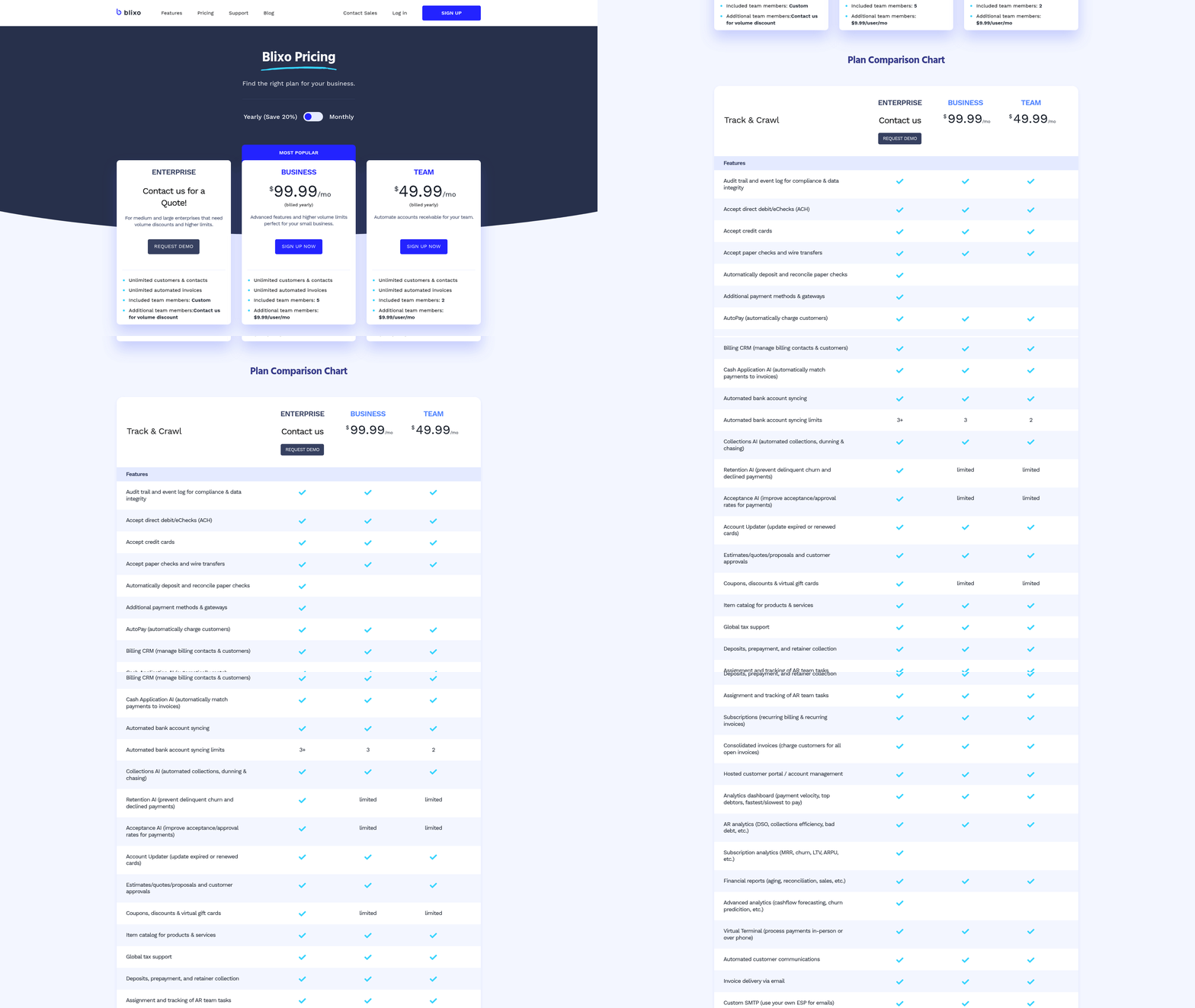
AI agents are reshaping how businesses operate, offering automation, insights, and efficiency gains across departments. To implement them effectively, organizations must align strategies with their operational needs while using scalable tools and governance frameworks. Below is a structured approach to deploying AI agents, focusing on Blixo’s solutions and industry best practices..
Strategies for Implementing AI Agents
Start with Process-Centric Design Traditional software has been user-centric, but AI agents shift the focus to process automation. Forrester predicts that top HCM platforms will integrate “digital employees”-AI agents capable of executing end-to-end workflows. For example, Blixo’s AI-powered accounts receivable automation acts as a virtual team member, handling invoice matching, payment reconciliation, and dispute resolution without human intervention. This approach reduces manual effort by up to 70% for finance teams, aligning with the efficiency gains discussed in the AI-Powered Automation in Business section.
Adopt Open Standards for Cross-Platform Collaboration By 2026, 30% of enterprise vendors will ship Model Context Protocol (MCP) servers, enabling secure, cross-system collaboration. MCP allows AI agents to share contextual data and execute workflows across platforms, breaking down silos. For instance, an AI agent managing supply chain logistics could pull data from inventory systems, ERP platforms, and external APIs to optimize restocking. Blixo’s solutions integrate with enterprise systems using similar open standards, ensuring compatibility and scalability, as highlighted in the The Evolution of AI Agents section.
Prioritize Autonomous Governance Regulatory scrutiny demands real-time compliance monitoring. Half of ERP vendors will launch autonomous governance modules by 2026, combining explainable AI and audit trails. Blixo’s cash application tool includes built-in compliance checks, such as automatic fraud detection and audit-ready documentation, ensuring financial processes meet legal requirements. This reduces risk and streamlines audits for organizations, addressing challenges outlined in the Overcoming Challenges and Limitations section..
Best Practices for Integration
Align AI Agents with Business KPIs Define clear metrics for success, such as reduced processing time or error rates. For example, Blixo’s clients see a 40–60% reduction in manual reconciliation hours by deploying AI agents to automate cash application. Use dashboards to track performance against these goals, a practice detailed in the Measuring the Success of AI Agents section.
Ensure Human-AI Collaboration AI agents should augment, not replace, human workers. Implement “guardrails” to let employees override decisions or delegate complex tasks. IBM’s CUGA framework, which logs every action and provides provenance, offers a model for transparency. Blixo’s system includes a hybrid model where finance staff review flagged exceptions, maintaining control while using automation.
Invest in Data Governance AI agents require high-quality, structured data. Use tools like Splunk’s observability platform to monitor agent performance and detect anomalies. Blixo emphasizes data hygiene in its implementation process, ensuring inputs are clean and outputs are auditable..
Examples of AI Agents in Business
Chatbots and Virtual Assistants Customer service chatbots handle FAQs, while virtual assistants like Blixo’s AR tool automate back-office workflows. Forrester notes that HCM platforms will soon deploy AI agents to manage onboarding, reducing HR administrative loads by 30%. These applications reflect the broader Impact of AI Agents on Business Operations.
Autonomous Decision-Making In finance, Blixo’s agents analyze payment patterns to flag fraudulent transactions. In IT, ServiceNow’s agents automate incident resolution, cutting mean time to repair by 50%.
Predictive Analytics AI agents in supply chain management, such as those described in IBM’s CUGA case study, forecast demand and optimize inventory. These agents reduce stockouts by 20–30% while minimizing excess inventory..
Blixo’s Implementation Process
-
Assessment and Planning. Blixo begins with a workflow analysis to identify automation opportunities in accounts receivable. This includes mapping current processes and identifying pain points like manual data entry.
-
Customization and Integration. The solution is tailored to the organization’s ERP system (e.g., SAP, Oracle) using open APIs. Blixo’s agents are trained on historical payment data to improve accuracy.
-
Deployment and Training. A phased rollout ensures smooth adoption. Finance teams receive training on monitoring dashboards and handling exceptions.
-
Ongoing Optimization. Blixo provides continuous support, updating AI models with new data and refining workflows based on performance metrics.
By 2026, AI agents will no longer be optional-they’ll be a necessity for competitive businesses. Organizations that adopt them strategically, like Blixo’s clients, will see faster operations, reduced costs, and enhanced compliance, positioning themselves for long-term success.
Measuring the Success of AI Agents
To measure AI agent success in business, organizations must focus on metrics that align with revenue growth, efficiency gains, and customer satisfaction. As highlighted in the Why AI Agents Matter section, efficiency gains are a core driver of AI adoption, with automation reducing manual work and enhancing customer experiences. Key performance indicators include ticket resolution time, conversion rate improvements, cost savings from automation, and employee productivity. For example, customer support AI agents often reduce ticket resolution time by 30–50%, while marketing automation tools boost conversion rates through real-time personalization. Blixo emphasizes tying AI outcomes to revenue-oriented KPIs, such as increased sales or reduced operational costs, to demonstrate clear business value.
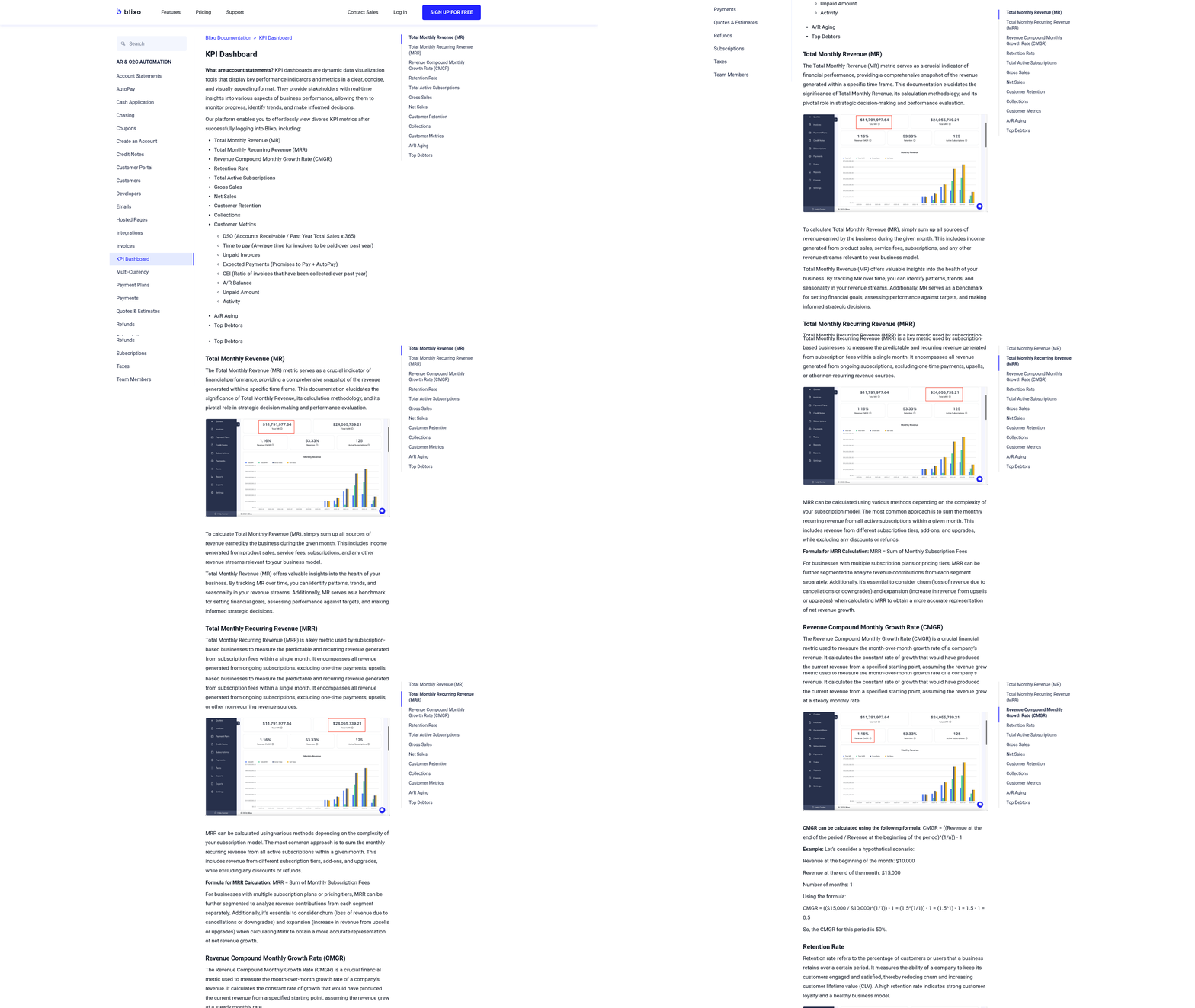
Industry benchmarks provide a framework for evaluating AI agent performance against sector-specific goals. Building on concepts from the AI-Powered Automation in Business section, structured workflows enable AI agents to streamline repetitive tasks and reduce human error. Forrester predicts that by 2026, 30% of enterprise vendors will adopt Model Context Protocol (MCP) servers to enable cross-platform AI collaboration, while 50% of ERP systems will integrate autonomous governance modules. In customer support, 30–50% faster resolution times are now standard for AI-powered solutions. Blixo’s clients achieve these benchmarks by focusing on documented workflows and escalation logic, as emphasized by practitioners like Framework_Fri, who notes teams with structured documentation see 10× better results than those relying on unstructured AI.
A strong evaluation framework for AI agents must include KPI alignment, hybrid automation, and iterative scaling. Austin Erkl, an entrepreneur coach, recommends starting with a 4-week pilot focused on a single high-volume pain point, defining a clear KPI, and automating data collection for stakeholders. Blixo applies this approach by pairing AI agents with human oversight-handling high-volume tasks while humans manage complex interactions. For example, a Blixo client deployed a follow-up bot that cut no-show appointments by 60% through a 3-minute delay in email responses, tripling conversion rates. This hybrid model ensures 78% task accuracy (as seen in benchmarking studies) while maintaining human-in-the-loop (HITL) control.
Overcoming Challenges and Limitations
AI agents face significant hurdles in business environments, including poor data quality, integration complexity, and ethical concerns. Data quality issues arise when training datasets contain inconsistencies, biases, or incomplete records, leading to unreliable outputs. Integration challenges stem from connecting AI agents with legacy systems, APIs, and workflows, often requiring custom engineering. Ethical risks like algorithmic bias and lack of transparency further complicate adoption. For example, a flawed training dataset might cause an AI agent to prioritize certain hiring channels over others, perpetuating unfair practices. Addressing these challenges requires structured strategies, as demonstrated by IBM’s CUGA and Blixo’s frameworks. As mentioned in the Why AI Agents Matter section, the transformative potential of AI hinges on overcoming these foundational barriers.
High-quality data is the foundation of effective AI agents. The IBM CUGA project highlights that schema-grounded prompting and minimal OpenAPI specifications improve reliability by reducing ambiguity in data inputs. For instance, CUGA achieved 87% task accuracy in a talent-acquisition pilot by using curated prompts and structured data schemas. Blixo adopts similar principles, emphasizing data preprocessing steps like normalization, redaction of sensitive information (PII), and validation against domain-specific benchmarks. This ensures AI agents operate on clean, consistent datasets, minimizing errors in critical workflows like financial forecasting or customer service automation. Building on concepts from the AI-Powered Automation in Business section, such data rigor directly supports the efficiency gains AI agents promise.
Seamless integration requires a hierarchical planner–executor architecture, as seen in IBM’s CUGA system. This layered design separates high-level task planning from low-level API interactions, enabling compatibility with complex enterprise systems. Blixo mirrors this approach by centralizing API management through a Tool Hub, which standardizes access to internal tools and third-party services. For example, CUGA reduced API onboarding time from weeks to hours by normalizing OpenAPI specs. Blixo’s modular integration framework similarly streamlines connectivity, allowing businesses to deploy AI agents across departments without overhauling existing infrastructure.
Ethical risks like bias and opacity demand proactive governance. IBM’s CUGA enforces provenance logging, recording every decision’s data sources and reasoning. This transparency helps identify biases-such as favoring certain candidates in hiring-while enabling audits. Blixo enhances this with human-in-the-loop (HITL) controls, allowing users to review or override agent decisions. The research paper on AI agents further stresses the need for explainable AI: Blixo’s systems provide interpretable models, so stakeholders can trace how an agent arrived at a recommendation, whether for supply-chain adjustments or risk assessments. This aligns with the authors’ call for ethical frameworks that balance automation with accountability.
Real-world failures underscore the cost of ignoring these challenges. A generic service provider once deployed an AI agent to optimize inventory, but flawed data led to overstocking, costing $2M in losses. Another solution misclassified customer support tickets due to integration gaps, delaying resolutions by 40%. IBM’s case study illustrates how provenance-first responses and regression testing prevent such issues. Blixo applies these lessons by requiring domain-specific benchmarks during deployment, ensuring agents meet accuracy and reliability thresholds before scaling. For example, in a simulated workflow, CUGA cut time-to-answer from 20 minutes to 2–5 minutes while maintaining 95% reproducibility-proof that rigorous testing mitigates risks.
Blixo’s methodology combines technical rigor with governance, addressing the full spectrum of AI agent challenges. Unlike other providers, Blixo integrates schema-grounded data preprocessing, modular API hubs, and auditable decision logs into a single SaaS solution. This reduces implementation time by 90% and costs by 50%, as demonstrated in IBM’s CUGA pilot. By prioritizing explainability and HITL workflows, Blixo ensures AI agents align with ethical standards while delivering measurable gains-such as 30% faster decision-making in supply chains or 50% reductions in hiring time. These strategies reflect the research paper’s emphasis on balancing automation with human oversight, making Blixo a leader in responsible AI agent deployment.
Frequently Asked Questions
1. How many companies currently use AI agents in production?
57% of companies already use AI agents in production, with the market growing at a 45% annual rate. This adoption reflects their value in automating tasks and reducing operational costs.
2. How much can AI agents reduce marketing costs?
AI agents cut marketing costs by up to 95% by automating campaigns and optimizing real-time data. For example, a consumer goods company reduced a 6-week project to under an hour.
3. What efficiency gains do AI agents provide in customer service?
Customer service efficiency improves 10x with AI agents, enabling 30–50% faster ticket resolution. Automated responses handle high-volume inquiries, freeing human agents for complex issues.
4. Can AI agents benefit small businesses?
Yes, small businesses save costs by using AI for tasks like lead generation and document classification. A case study shows a follow-up bot tripled conversation rates for a service firm.
5. What financial impact do AI agents have on enterprises?
Industrial firms report 2 percentage-point EBITDA gains in two years by optimizing workflows. AI agents scale operations across departments, improving productivity and profitability.
6. How do AI agents improve data accuracy?
Automated data entry reduces errors by up to 90%, as AI handles repetitive tasks like transcription. This accuracy minimizes rework and supports better decision-making.
7. What’s a real-world example of AI agent success?
A consumer goods company automated a 6-week marketing project to under an hour using AI agents, demonstrating rapid task execution and scalability for complex workflows.