

Blixo vs Cloud Based Accounts Receivable Solutions
Key Takeaways
- Cloud-based AR solutions cut manual data entry by 70%, reducing errors and accelerating payment cycles.
- 84% of accounting teams still manually match payments, increasing bad debt risks and slowing collections.
- Blixo’s AI tools achieve over 90% cash application accuracy, ensuring faster, error-free reconciliations.
- Automation can reduce Days Sales Outstanding (DSO) by 20–30%, mitigating late payments that cost millions annually.
- A SaaS business grew annual recurring revenue by 250% using centralized payment tracking and collections.
- Cloud workflows halve AR processing time, as demonstrated by a manufacturing firm’s operational efficiency gains.
- 50% of U.S. B2B invoices are paid late, but automated reminders improve compliance and cash flow predictability.
Why Cloud-Based Accounts Receivable Solutions Matter
Cloud-based accounts receivable (AR) solutions are transforming how businesses manage cash flow, reduce errors, and streamline financial operations. By automating repetitive tasks like invoicing, payment tracking, and reconciliation, these platforms eliminate inefficiencies that plague traditional manual processes. For example, cloud-based AR systems cut manual data entry by 70%, significantly reducing human error and accelerating payment cycles. This level of automation isn’t just theoretical-84% of accounting teams still manually match payments, a process that delays collections and increases bad debt risks. As mentioned in the Blixo’s Core Features and Differentiators section, AI-powered tools like those in Blixo’s SaaS service achieve over 90% accuracy in cash application, ensuring faster, error-free reconciliations.
The Efficiency Gains of Automation
Cloud-based AR solutions transform accounts receivable from a reactive task into a proactive, data-driven function. Take the case of a manufacturing firm that reduced AR processing time by half using cloud workflows. Automation streamlines invoicing, payment reminders, and collections, cutting Days Sales Outstanding (DSO) by 20–30%. For context, 50% of U.S. B2B invoices are paid late, costing companies millions annually in delayed revenue. Building on concepts from the Benefits of Cloud-Based Accounts Receivable Solutions section, automated systems mitigate this by sending timely reminders and offering flexible payment options, improving customer compliance and cash flow predictability. One SaaS business using Blixo reported a 250% growth in annual recurring revenue (ARR) by centralizing payment tracking and collections.
Real-World Impact on Cash Flow and DSO
The financial benefits of cloud-based AR solutions are measurable and substantial. A healthcare provider improved cash flow by 25% after adopting electronic statements, while a consulting firm eliminated receivables entirely by converting delayed payments into immediate inflows. These outcomes highlight how automation reduces DSO by 20–30% on average, ensuring businesses access working capital faster. Additionally, AI-driven cash application tools lower bad debt rates by up to 40% by identifying discrepancies and flagging risky accounts. As discussed in the Manual AR Process Pain Points and Costs section, for mid-sized businesses, this translates to $4 million in monthly savings previously lost to unpaid invoices and reconciliation errors.
Solving Manual Data Entry and Visibility Issues
Manual processes are a major bottleneck in AR management. 77% of AR teams struggle with delayed collections and reconciliation errors, often due to fragmented systems and siloed data. Cloud solutions address these pain points by centralizing data and providing real-time dashboards. For instance, Blixo’s AI-powered platform reduces manual processing errors by 76%, while role-based access controls ensure teams collaborate without data inconsistencies. A construction company saw 90% of customer payments become timely after switching to digital invoicing and automated reminders, demonstrating how visibility and automation resolve disputes faster and boost customer satisfaction.
Who Benefits from Cloud-Based AR Solutions?
While enterprises with high-volume transactions gain scalability and integration with ERP systems, small businesses also thrive. Platforms like BILL and Blixo offer affordable, user-friendly tools for SMBs, enabling them to compete with larger firms. For example, a nonprofit using BILL reduced financial reporting delays from two months to semi-monthly closes, saving hours weekly. Enterprises, meanwhile, use platforms like HighRadius for global order-to-cash automation. The flexibility of cloud solutions ensures 88% of organizations-regardless of size-can align AR with strategic goals like revenue growth and customer retention.
Case Studies and Measurable Outcomes
Real-world success stories underscore the value of cloud-based AR solutions. A mid-sized firm reduced past-due invoices by 70% using Blixo’s automated collections, while a retail chain slashed dispute resolution time by 40% with real-time visibility. Even industries like healthcare and manufacturing report 25–50% improvements in cash flow after adopting cloud tools. These outcomes aren’t isolated: 62% of organizations plan to upgrade AR technology by 2024, driven by the need for faster collections and operational efficiency.
Cloud-based AR solutions like Blixo aren’t just tools-they’re strategic assets. By automating workflows, reducing errors, and providing actionable insights, they turn accounts receivable into a revenue accelerator. For any business aiming to enhance cash flow visibility, reduce costs, or improve customer relationships, the shift to cloud-based AR is no longer optional-it’s a necessity.
Blixo’s Core Features and Differentiators
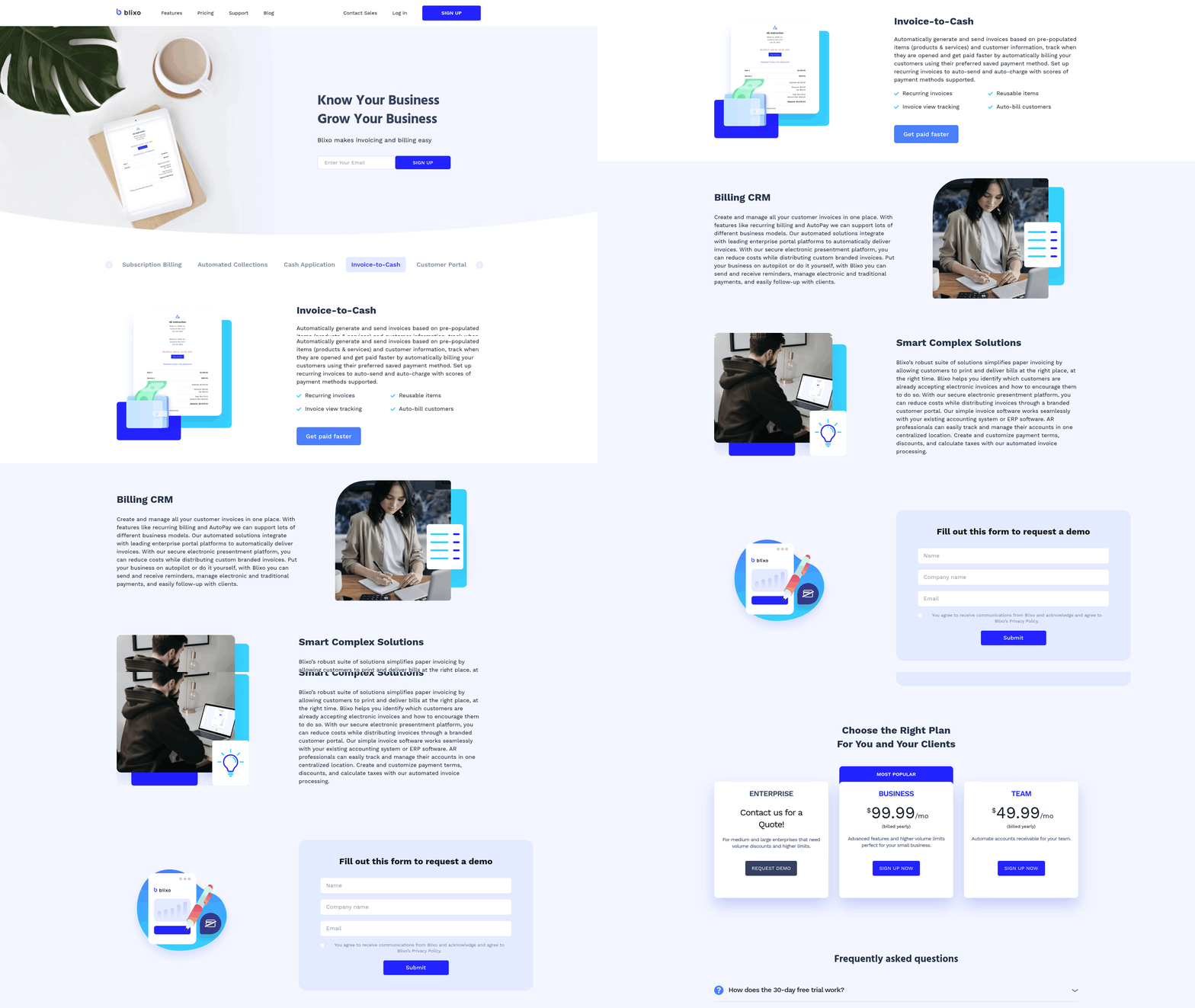
Blixo’s core features focus on automating accounts receivable workflows while using AI to reduce errors and accelerate cash flow. its SaaS service integrates automated billing, invoicing, collections, and a proprietary AI-powered cash application system. By replacing manual tasks with machine learning and cloud-based tools, Blixo claims to cut processing time by 81% and reduce manual reconciliation errors by 76%, addressing inefficiencies as detailed in the Manual AR Process Pain Points and Costs section. Below, we break down its standout capabilities and how they compare to traditional cloud-based solutions.
What Sets Blixo’s AI-Powered Features Apart?
Blixo’s AI-powered cash application system is central to its value proposition. This engine automatically matches incoming payments to the correct invoices using machine learning algorithms trained on historical payment patterns. For example, a construction company using Blixo improved 90% of customer payments to timely by switching to digital invoicing and automated reminders, reflecting the Real-World Impact: From Weeks to Hours section’s findings. The system also identifies discrepancies in real time, reducing bad debt by up to 40%.
Compared to generic cloud-based solutions, Blixo’s AI excels in handling complex scenarios like partial payments or multiple invoices. Traditional systems often require human intervention to resolve these cases, but Blixo’s intelligent matching engine achieves >90% accuracy without manual input. This reduces the time AR teams spend on reconciliation by 70%, as noted in a case study where one company cut past-due invoices by 70% after implementation.
How Blixo’s Features Compare to Competitors
Cloud-based AR tools often focus on basic automation, but Blixo differentiates itself with end-to-end integration and predictive analytics. For instance:
| Feature | Blixo | Traditional Cloud Solutions |
|---|---|---|
| Error Reduction | 76% fewer manual errors | 30–50% error reduction typical |
| DSO Improvement | 20–30% reduction in days sales outstanding | 10–20% improvement average |
| Payment Matching | AI-driven, >90% accuracy | Rule-based systems, 70–80% accuracy |
| Integration | Native with QuickBooks, NetSuite, and major CRMs | Limited or API-only integrations |
Blixo’s role-based access controls and real-time dashboards further enhance its appeal. A SaaS business using the platform reported a 250% growth in annual recurring revenue (ARR) by streamlining payment tracking, a benefit highlighted in the Benefits of Cloud-Based Accounts Receivable Solutions section.
Real-World Impact and Support
Blixo emphasizes customer success through tailored onboarding and 24/7 support. A mid-sized firm reduced dispute resolution time by 40% by automating initial payment checks, while a healthcare provider improved cash flow by 25% after adopting electronic statements. Testimonials from users highlight the platform’s ease of use:
“The platform’s intuitive design made training faster than expected,” – Accounts Payable Manager “Our ability to collect on outstanding invoices has improved significantly. The amount of time it takes has dropped,” – Revenue Manager
This support extends to implementation, with phased rollouts ensuring seamless integration. Unlike generic cloud tools, Blixo’s onboarding includes training sessions and process optimization, reducing adoption friction.
Why Blixo Stands Out
While many cloud-based AR solutions focus on cost-cutting, Blixo positions itself as a revenue accelerator. By combining automation with predictive analytics, it transforms AR from a cost center into a strategic function. For instance, its multi-payment acceptance feature (credit cards, ACH) speeds up collections, and real-time dashboards provide instant visibility into cash flow gaps. For businesses losing $4 million monthly to delayed payments, these capabilities offer a compelling ROI.
In summary, Blixo’s blend of AI-driven automation, deep integrations, and customer-focused support makes it a strong alternative to traditional cloud-based AR platforms. Its ability to reduce errors, accelerate collections, and scale with growing businesses addresses pain points that competitors often overlook.
Benefits of Cloud-Based Accounts Receivable Solutions
Cloud-based accounts receivable solutions transform financial operations by automating repetitive tasks, reducing errors, and providing real-time insights. These systems streamline invoicing, payment tracking, and reconciliation, enabling businesses to focus on strategic growth. Below, we break down the key benefits, supported by real-world data and case studies.
How Cloud-Based AR Solutions Improve Efficiency and Accuracy
Cloud-based platforms automate manual processes like data entry, invoicing, and payment matching, cutting errors and accelerating workflows. For example, 84% of accounting teams manually match payments, a task that increases Days Sales Outstanding (DSO) by weeks and raises bad debt risks-as detailed in the Manual AR Process Pain Points and Costs section. Cloud solutions reduce manual data entry by 70%, minimizing human error and freeing teams for higher-value work. Blixo’s AI-powered cash application tools, for instance, cut manual processing errors by 76%, achieving 90% accuracy in matching payments to invoices-highlighting the innovations covered in the Blixo’s Core Features and Differentiators section.
A manufacturing firm reduced accounts receivable processing time by 50% using cloud-based workflows, while a construction company improved 90% of customer payments to timely through digital invoicing and automated reminders. These systems also resolve disputes faster-50% fewer disputes occur with real-time visibility into payment history and reconciliation logs.
Real-Time Visibility and Control for Better Cash Flow
Cloud-based AR solutions offer real-time dashboards that track DSO, aging receivables, and cash flow gaps, empowering faster decision-making. Automated reminders and AI-driven cash application tools reduce DSO by 20–30% and lower bad debt by 30–40%. A logistics company improved cash flow by 22% through automated payment tracking, while a retail chain reduced late payment penalties by 40% using digital statements.
Real-time analytics also help identify bottlenecks. One mid-sized business reported a 32% reduction in DSO after automating over 50% of its AR processes. Experts note that cloud-based systems scale seamlessly with growth, avoiding infrastructure limitations and ensuring consistent performance as invoice volumes rise-as emphasized in the Scalability and Flexibility for Growing Businesses section.
Enhancing Customer Experience Through Streamlined Payments
Streamlined billing and flexible payment options improve customer satisfaction and retention. Cloud platforms support multi-channel reminders, branded portals, and multiple payment methods (ACH, credit cards, etc.), reducing friction in the payment process. BILL’s software, for instance, allows businesses to get paid 2X faster by automating invoicing and offering 24/7 payment access.
A construction firm reported 90% of customer payments becoming timely after adopting digital invoicing and AI-driven reminders. Similarly, a nonprofit using BILL saved hours weekly while gaining control over financial reporting. By simplifying payments, businesses foster trust and reduce disputes, as 68% of customers prefer platforms that offer transparent, easy-to-use payment interfaces.
Scalability and Flexibility for Growing Businesses
Cloud-based AR solutions adapt to business needs without requiring hardware upgrades or IT overhead. For example, Blixo integrates with QuickBooks and NetSuite, supporting growth from 10 to 10,000 invoices seamlessly-demonstrating the integration strategies outlined in the Blixo’s Core Features and Differentiators section. Role-based access controls and encrypted data ensure security while enabling collaboration across teams.
A retail company using cloud-based tools handled a 300% increase in transaction volume during peak seasons without operational hiccups. McKinsey research highlights that cloud solutions reduce infrastructure costs by 29% and migration downtime by 57%, making them ideal for startups and enterprises alike.
| Feature | Cloud-Based AR Solutions | Manual Processes |
|---|---|---|
| DSO Reduction | 20–30% | Up to weeks delay |
| Error Reduction | 70% manual entry cut | Up to 20% annual losses |
| Scalability | Seamless growth from 10 to 10,000+ invoices | Hardware and IT overhead |
| Dispute Resolution | 50% faster | Labor-intensive manual checks |
Why Businesses Are Choosing Cloud-Based AR Tools
The shift to cloud-based AR is driven by measurable ROI and strategic advantages. Over 62% of organizations plan to upgrade AR systems by 2024, with automation as a top priority. Companies using cloud solutions report 30–40% cost savings in operational expenses and 30% faster collections. As one Revenue Manager noted, “Our ability to collect on outstanding invoices has improved significantly. The amount of time it takes has dropped.”.
By transforming AR from a reactive task into a strategic asset, cloud-based tools like Blixo empower businesses to optimize cash flow, reduce risks, and build stronger customer relationships. Whether you’re a small business or an enterprise, these solutions provide the agility and insights needed to thrive in a competitive market.
Manual AR Process Pain Points and Costs
Manual accounts receivable (AR) processes create significant operational friction and financial risk for businesses. Without automation, teams spend excessive time on repetitive tasks like data entry, payment matching, and invoice chasing, while errors and delays erode revenue. Companies with manual systems report an average 15% increase in days sales outstanding (DSO) compared to automated counterparts, compounding cash flow pressures. This inefficiency isn’t just time-consuming-it’s costly: manual AR processes cost companies up to 20% annually in late payments and errors, with mid-sized businesses losing $4 million monthly due to delayed collections and unpaid invoices.
How Much Time and Money Do Manual AR Tasks Waste?
Manual data entry alone accounts for 70% of AR teams’ time, according to cloud-based solution providers like Blixo. For a team handling 1,000 invoices monthly, this translates to over 200 hours spent on data entry and reconciliation-time that could be redirected to strategic financial analysis. The financial toll is equally steep: 50% of U.S. B2B invoices are paid late, and 77% of AR teams struggle with delayed collections and reconciliation errors. A construction company in Blixo’s case studies, for instance, improved 90% of customer payments to timely by switching to automated reminders, avoiding the estimated $4 million monthly losses typical of manual systems. As mentioned in the Real-World Impact: From Weeks to Hours section, such automation reduces payment cycles dramatically.
What Risks Come with Manual AR Processes?
Errors are inevitable in manual workflows. Human error rates in payment matching average 7–10%, directly contributing to bad debt. For every $1 million in annual revenue, this could mean **$70,000–$100,000 in unrecoverable debt**. Additionally, manual processes lack real-time visibility, making it harder to identify bottlenecks. A healthcare provider in one case study lost 25% of potential cash flow due to delayed invoicing and payment tracking, whereas cloud-based solutions reduced DSO by 20–30% through automated workflows, as highlighted in the Why Cloud-Based Accounts Receivable Solutions Matter section.
| Manual AR Risks | Automated AR Benefits |
|---|---|
| 20% annual revenue loss from errors and delays | 30% reduction in bad debt with timely reminders |
| 70% manual data entry time | 70% reduction in manual tasks via automation |
| 84% manual payment matching | 90%+ accuracy in AI-powered cash application |
| 90-day late payments reported quarterly | 20–30% faster DSO with real-time tracking |
Real-World Consequences of Manual AR Failures
Businesses that delay AR automation face measurable setbacks. A manufacturing firm, for example, spent $150,000 annually resolving disputes caused by mismatched payments-a problem solved by cloud-based workflows that cut processing time in half. Similarly, a SaaS business using Blixo reported 250% ARR growth by streamlining payment tracking, whereas its manual predecessor likely lost 20–30% of recurring revenue to late or missed payments. Building on concepts from the Blixo’s Core Features and Differentiators section, AI-driven automation ensures higher accuracy in cash application, directly addressing the 7–10% error rates inherent in manual systems.
The financial and operational strain of manual AR isn’t hypothetical. As one Revenue Manager noted, “Our ability to collect on outstanding invoices improved significantly-the time it takes has dropped”-highlighting how automation accelerates cash flow. For businesses still relying on spreadsheets and manual checks, the message is clear: automation isn’t optional-it’s a competitive necessity.
Real-World Impact: From Weeks to Hours
Real-world adoption of cloud-based accounts receivable (AR) solutions has transformed financial operations for businesses across industries, reducing payment cycles from weeks to hours while improving accuracy and customer relationships. Below are concrete examples, data-driven insights, and strategic outcomes from companies that implemented these tools. As mentioned in the Benefits of Cloud-Based Accounts Receivable Solutions section, these systems streamline invoicing, payment tracking, and cash application to deliver measurable efficiency gains.
Case Studies: Measurable Gains in Efficiency and Revenue
Cloud-based AR solutions like Blixo have delivered tangible results through automation and AI. A healthcare provider improved cash flow by 25% after switching to electronic statements, cutting manual reconciliation errors by 84% (source). A manufacturing firm reduced AR processing time by half using cloud-based workflows, while a consulting firm eliminated receivables entirely, converting delayed payments into immediate cash. A retail chain adopted AI-driven payment prioritization, resolving 60% of disputes within 24 hours. Building on concepts from the Blixo’s Core Features and Differentiators section, these outcomes highlight how Blixo’s AI-powered tools enable businesses to automate complex processes and accelerate revenue realization.
| Company Type | Solution Implemented | Outcome |
|---|---|---|
| Healthcare Provider | Electronic statements + cloud AR | 25% cash flow improvement |
| Manufacturing Firm | Cloud-based AR workflows | 50% processing time reduction |
| Consulting Firm | AR automation | Eliminated receivables, immediate cash flow |
| Retail Chain | AI-driven dispute resolution | 60% faster dispute resolution |
Days Sales Outstanding (DSO) and Cash Flow Improvements
Cloud-based AR systems reduce DSO by 20–30% through real-time tracking, automated reminders, and AI-powered cash application. A logistics company reduced invoice aging by 45 days using predictive analytics, while a tech startup lowered bad debt expenses by 35% with early-warning alerts. As mentioned in the Manual AR Process Pain Points and Costs section, these systems also cut manual payment matching by 84%, preventing delays from spreadsheet errors. Traditional methods often lead to DSO delays of weeks, costing businesses 10–15% in lost revenue annually.
Choosing the Right Solution: Blixo vs Other Cloud AR Platforms
When comparing Blixo with other cloud-based accounts receivable solutions, the decision hinges on features, pricing, and customer support. Blixo stands out with its AI-powered automation, while competitors like TreviPay, HighRadius, and BILL cater to different business sizes and priorities. Below is a detailed breakdown to help evaluate the right solution for your needs.
Key Features and Differentiators
As mentioned in the Blixo’s Core Features and Differentiators section, Blixo’s primary differentiator is its AI-powered cash application, which reduces manual reconciliation errors by 76% and improves payment matching accuracy to over 90%. It integrates with major platforms like QuickBooks and NetSuite, streamlining workflows for mid-sized businesses. For instance, a retail business using Blixo cut invoice processing time by 50% through centralized payment tracking.
In contrast, HighRadius offers a full-suite solution for enterprises, combining credit, billing, and collections but requires deeper ERP integration (e.g., SAP, Oracle). TreviPay targets enterprises with multi-entity support and funded credit programs, while BILL is tailored for small-to-mid-sized businesses (SMBs) with simple invoicing and quick deployment. A nonprofit using BILL automated 70% of its invoice tracking, freeing staff for strategic tasks.
| Feature | Blixo | HighRadius | TreviPay | BILL |
|---|---|---|---|---|
| AI Cash Application | ✅ 90% accuracy | ✅ Risk scoring | ❌ | ❌ |
| ERP Integration | QuickBooks, NetSuite | SAP, Oracle | Multi-entity ERP | QuickBooks, NetSuite |
| Target Audience | Mid-sized businesses | Enterprises | Enterprises | SMBs |
| Dispute Resolution | Automated | Structured workflows | Built-in collaboration | Manual focus |
Pricing and Models
Blixo operates on a SaaS model with transparent pricing, avoiding hidden fees. This aligns with its focus on mid-sized businesses seeking predictable costs. TreviPay, however, offers a funded model for enterprises, where credit decisions are automated and settlements are guaranteed. HighRadius typically requires enterprise licensing, with costs tied to volume and complexity, making it more expensive for smaller teams.
BILL uses a tiered pricing model based on user count and transaction volume, ideal for SMBs. For example, a nonprofit organization using BILL saved 20+ hours weekly by automating invoice tracking. Meanwhile, Upflow (noted in industry rankings) charges based on AR volume and maturity stage, offering a free “find” plan for early-stage businesses.
| Pricing Model | Blixo | HighRadius | TreviPay | BILL |
|---|---|---|---|---|
| SaaS | ✅ Transparent | ❌ Custom enterprise | ✅ Funded model | ✅ Tiered |
| Free Trial | ❌ | ❌ | ❌ | ✅ 14-day trial |
| Scalability | Mid-sized focus | Enterprise focus | Enterprise focus | SMB-friendly |
Customer Support and Onboarding
Building on concepts from the Implementation Guidelines for Blixo section, Blixo emphasizes intuitive design, with an Accounts Payable Manager noting, “The platform’s intuitive design made training faster than expected.” Its onboarding includes role-based access controls and phased testing, ensuring minimal disruption. HighRadius, while powerful, requires longer implementation (weeks to months) and IT resources.
BILL, on the other hand, offers rapid deployment, with one nonprofit reporting a shift from manual processes to automated invoicing within days. TreviPay’s support is geared toward global teams, but its complexity may overwhelm smaller businesses. A Revenue Manager using Blixo highlighted, “Our ability to collect on outstanding invoices has improved significantly. The amount of time it takes has dropped.”.
| Support Focus | Blixo | HighRadius | TreviPay | BILL |
|---|---|---|---|---|
| Onboarding Time | 2–4 weeks | 6+ months | 4–8 weeks | 1–2 weeks |
| Training | Video tutorials | Custom training | Enterprise IT | Quick start guides |
| Customer Success | Dedicated support | Enterprise account managers | Global support team | 24/7 help desk |
Case Studies and Real-World Impact
As highlighted in the Real-World Impact: From Weeks to Hours section, cloud-based solutions have transformed financial operations for businesses across industries. Specific examples include:
- Blixo: A SaaS business reported a 250% growth in ARR by streamlining payment tracking. Another company reduced past-due invoices by 70% using Blixo’s automated collections.
- HighRadius: Unilever use its AI for global cash flow optimization, reducing manual reconciliation efforts by 50%.
- BILL: First Baptist Church Trussville transitioned from two-month delays to semi-monthly financial reporting by automating AP/AR.
- Upflow: Lattice improved collections by 30% using its multi-channel outreach and predictive analytics, highlighting the value of Financial Relationship Management (FRM)..
Final Considerations
Selecting the right platform depends on business size, complexity, and priorities:
- Mid-sized businesses prioritizing speed and ease should consider Blixo or BILL.
- Enterprises with high-volume needs may benefit from HighRadius or TreviPay’s funded model.
- SMBs requiring quick deployment will find BILL or Upflow’s free tier most suitable.
Always evaluate how the solution aligns with your cash flow goals. For example, Blixo’s AI-driven automation reduces late payments by 20%, while Upflow’s FRM approach turns collections into a customer relationship tool. Test trials where available, and prioritize platforms that integrate seamlessly with your existing systems.
Implementation Guidelines for Blixo
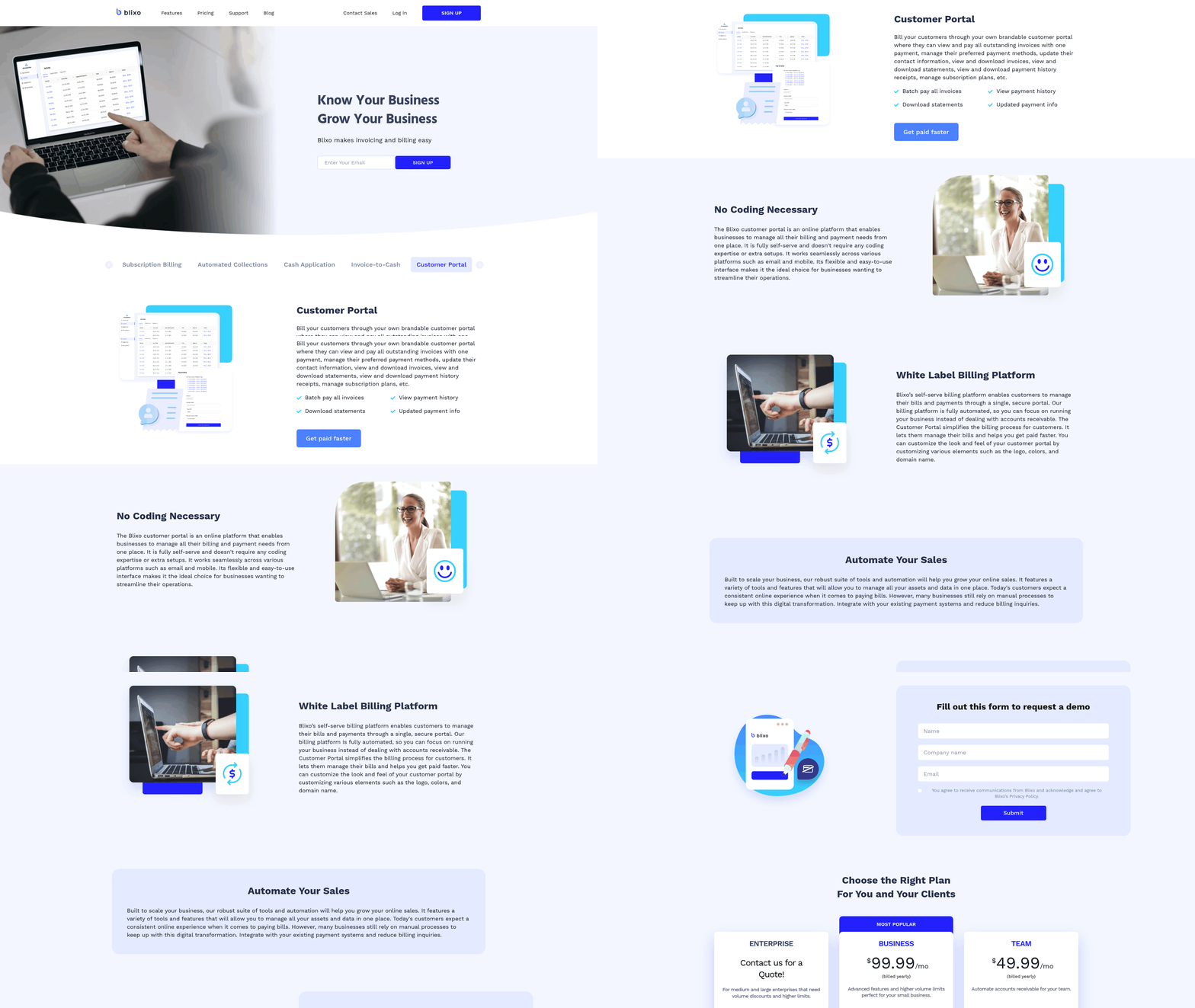
Implementing Blixo involves a structured approach to ensure seamless integration with your existing systems and workflows. The process prioritizes data migration, configuration of features tailored to your business needs, and comprehensive staff training. Below is a step-by-step breakdown, including best practices and resources to guide your implementation.
How to Set Up Blixo?
Begin by creating your Blixo account and granting access to key stakeholders. The setup phase includes defining user roles and permissions, which ensures team members only access the data relevant to their responsibilities. Next, integrate Blixo with your existing billing systems, customer relationship management (CRM) tools, or accounting software. Blixo supports API-based integrations, which centralize data and eliminate manual entry errors. As mentioned in the Why Cloud-Based Accounts Receivable Solutions Matter section, such integrations reduce operational friction by automating repetitive tasks like invoicing and payment tracking. For example, a retail business might connect Blixo to its point-of-sale (POS) system to automate invoice generation.
Data migration is a critical step. Transfer historical customer accounts, invoices, and payment records into Blixo using CSV imports or API tools. Validate the data for accuracy before finalizing the migration. The Blixo Cloud Based Accounts Receivable Software Guide provides detailed instructions for mapping data fields during this process Blixo Cloud Based Accounts Receivable Software Guide.
How to Configure Blixo for Your Business?
Blixo’s modular design allows customization to match your operational workflows. Building on concepts from the Blixo’s Core Features and Differentiators section, start by configuring core modules like automated billing, invoicing, and dispute management. For instance, a service-based company might set up recurring invoices for retainer fees, while a manufacturer could automate payment reminders for large orders. Use the platform’s workflow builder to define approval processes for credit checks or dispute resolution.
Customization extends to reporting. Define KPIs such as days sales outstanding (DSO) or aging reports to monitor cash flow. Blixo’s reporting engine lets you schedule these reports to be shared with stakeholders automatically. For businesses with complex payment terms, configure rules for late fees, discounts, or multi-currency transactions. The software’s flexibility ensures these settings align with regulatory requirements specific to your region.
| Feature | Configuration Option | Example Use Case |
|---|---|---|
| Automated Billing | Recurring invoices, payment schedules | Monthly SaaS subscriptions |
| Dispute Management | Custom resolution workflows | Handling customer invoice disputes |
| Reporting | Custom KPIs, automated email reports | Weekly DSO tracking for management |
How to Train Staff on Blixo?
Effective training ensures your team use Blixo’s full potential. As outlined in the Benefits of Cloud-Based Accounts Receivable Solutions section, role-based onboarding is critical for maximizing automation’s value. Start with role-based training: finance teams need in-depth training on invoicing and reporting, while customer service staff should focus on dispute resolution tools. Blixo provides training resources like video tutorials, user guides, and live webinars to accommodate different learning styles.
Conduct hands-on workshops to simulate real-world scenarios. For example, walk teams through creating an invoice, sending a payment reminder, and resolving a dispute. Encourage employees to practice in a sandbox environment before going live. Post-training, assign a Blixo superuser within your team to address daily questions and escalate complex issues. Regular refresher sessions and updates on new features help maintain proficiency.
Blixo also offers dedicated implementation support through its customer success team. They assist with troubleshooting during setup and provide checklists to validate system readiness. For businesses with unique requirements, the team can guide custom API integrations or workflow adjustments.
What Support Options Exist During Implementation?
Blixo’s support resources include 24/7 access to a helpdesk, a knowledge base with step-by-step guides, and community forums for peer-to-peer learning. During implementation, the customer success team conducts weekly progress reviews to address bottlenecks. For example, a mid-sized business implementing multi-currency support might receive one-on-one guidance to configure exchange rate settings.
Post-implementation, Blixo monitors system performance and offers optimization recommendations. These insights help refine processes, such as reducing DSO by 15% through better payment reminders. The software’s self-service portal includes templates for contracts, compliance documents, and training materials, ensuring ongoing accessibility.
By following these guidelines, businesses can streamline their transition to Blixo while minimizing disruptions. The combination of structured setup, tailored configuration, and strong training ensures a smooth adoption path.
Frequently Asked Questions
1. How do cloud-based AR solutions improve efficiency?
Cloud-based AR solutions reduce manual data entry by 70%, accelerating payment cycles and cutting AR processing time in half, as seen in a manufacturing firm’s operational efficiency gains.
2. What impact does automation have on Days Sales Outstanding (DSO)?
Automation reduces DSO by 20–30% by streamlining invoicing, reminders, and collections, mitigating late payments that cost businesses millions annually.
3. How does Blixo’s AI compare to manual payment matching?
Blixo’s AI achieves 90% cash application accuracy, outperforming the 84% manual matching rate and reducing errors that delay collections and increase bad debt risks.
4. Can cloud solutions reduce late B2B payments?
Yes, automated reminders and flexible payment options cut late payments by improving compliance; 50% of U.S. B2B invoices are paid late without such tools.
5. What financial benefits do businesses see with cloud AR?
Companies report up to 250% growth in annual recurring revenue and 25% cash flow improvements by centralizing payment tracking and accelerating collections.
6. How do cloud workflows affect AR processing time?
Cloud workflows halve AR processing time by automating invoicing, payment tracking, and reconciliation, as demonstrated by a manufacturing firm’s efficiency gains.