

18 AR Tools Promise Automation. Three Actually Close Your Books.

Key Takeaways
- Of 18 AR tools we looked at, only three connect billing schedules to revenue recognition and help you close the books.
- Most AR automation stops after chasing invoices and applying cash. Revenue recognition and the close go back to your accountant.
- HighRadius, Esker, and Billtrust are strong at collections and cash application, but they assume an enterprise integration stack.
- If you bill on recurring or usage-based schedules, the deciding factor is whether a tool links billing to revenue recognition, not how well it duns.
- HighRadius and Esker both scored 4.6 out of 5 on Gartner, from 148 and 71 ratings respectively.
- Blixo combines subscription billing, AI cash application, and reconciled real-time revenue data, starting at $49.99/month on the Team plan.
- Gartner treats deep integration and analytics as “optional.” For smaller service and subscription businesses, that is backwards.
Quick Summary
Most AR automation stops at the end of the workflow. It chases invoices and applies cash, then hands you off to your accountant for the hard part: recognizing revenue and closing the books. Only a handful connect subscription billing to reconciled revenue data, so your close does not stall.
We looked at a broad range of AR platforms. The enterprise-rated leaders (HighRadius, Esker, Billtrust) are strong at collections and cash application. But if you run recurring or usage-based billing, the deciding factor is whether the tool links billing schedules to revenue recognition, not how hard it hammers overdue accounts.
Which AR tool fits your business?
It depends on your size and billing model. Gartner treats deep integration and analytics as “optional” because it assumes an enterprise baseline. For smaller service and subscription firms, integration depth is the whole ballgame. That gap in assumptions matters when you choose.
| Tool | Best For | Starting Price | Key Strength | Watch-Out |
|---|---|---|---|---|
| Blixo | SaaS & subscription billing + AR in one | Standard subscription tiers | Subscription billing, AI cash application, and reconciled real-time revenue data in one place | Newer than legacy names |
| HighRadius | Enterprise AR teams | Custom quote | AI capture, classification, credit risk scoring; top-tier enterprise rating | May be too complex for smaller firms |
| Esker | Multi-channel invoice delivery | Custom quote | Workflow automation, intelligent payment matching, real-time dashboards; highly rated by peers | Enterprise-oriented pricing |
| Billtrust | Unified billing + payment acceptance | Custom quote | Electronic invoice delivery, multi-format payments; 4.3/5 (147 ratings) | May not focus on proposal-linked workflows |
| Ignition | Service firms (proposals to payment) | Tiered subscription | Connects proposals, pricing, billing, and collection into one flow | Built around fixed-fee service billing |
What do the ratings actually tell you?
A high peer score does not mean the tool fits your business. High scores for enterprise platforms signal that enterprises are happy, not that a 30-person shop will be. Ignition’s own analysis flags one of these same tools as potentially too complex for smaller firms.
The peer-review comments do point to real wins: lower DSO, better automation rates, cleaner customer communication. Those are worth having. But one in 10 invoices runs more than 30 days overdue in service-based businesses, and chasing them faster only solves half the problem.
The enterprise leaders optimize the invoice-to-cash tail well. None of the sources credit them with connecting subscription billing to revenue recognition. That gap is where the books get stuck for recurring-revenue businesses.
When to skip the enterprise options
Smaller SaaS or subscription businesses under a few hundred employees should look past the legacy platforms. The enterprise polish comes with enterprise complexity and custom-quote pricing you do not need yet.
Pick a tool that ties recurring billing, cash application, and revenue data together instead. That lets you close the month without hand-keying journal entries. Blixo does exactly that. Automatic cash application, an intelligent matching engine, and a QuickBooks integration keep recurring billing and reconciled revenue data connected in one place, so the workflow stays intact from invoice to reconciled close.
Alternative 1 - Featured
Most AR tools optimize the end of the workflow. We built our platform to connect the front of subscription billing to the back of automated cash application and reconciliation, so subscription and SaaS teams stop stalling at the close.
That difference matters more than most accounts receivable automation buyers realize. Traditional platforms focus heavily on dunning and digital delivery, but they often skip native ledger reconciliation. For a recurring-revenue business, that gap is where month-end breaks down.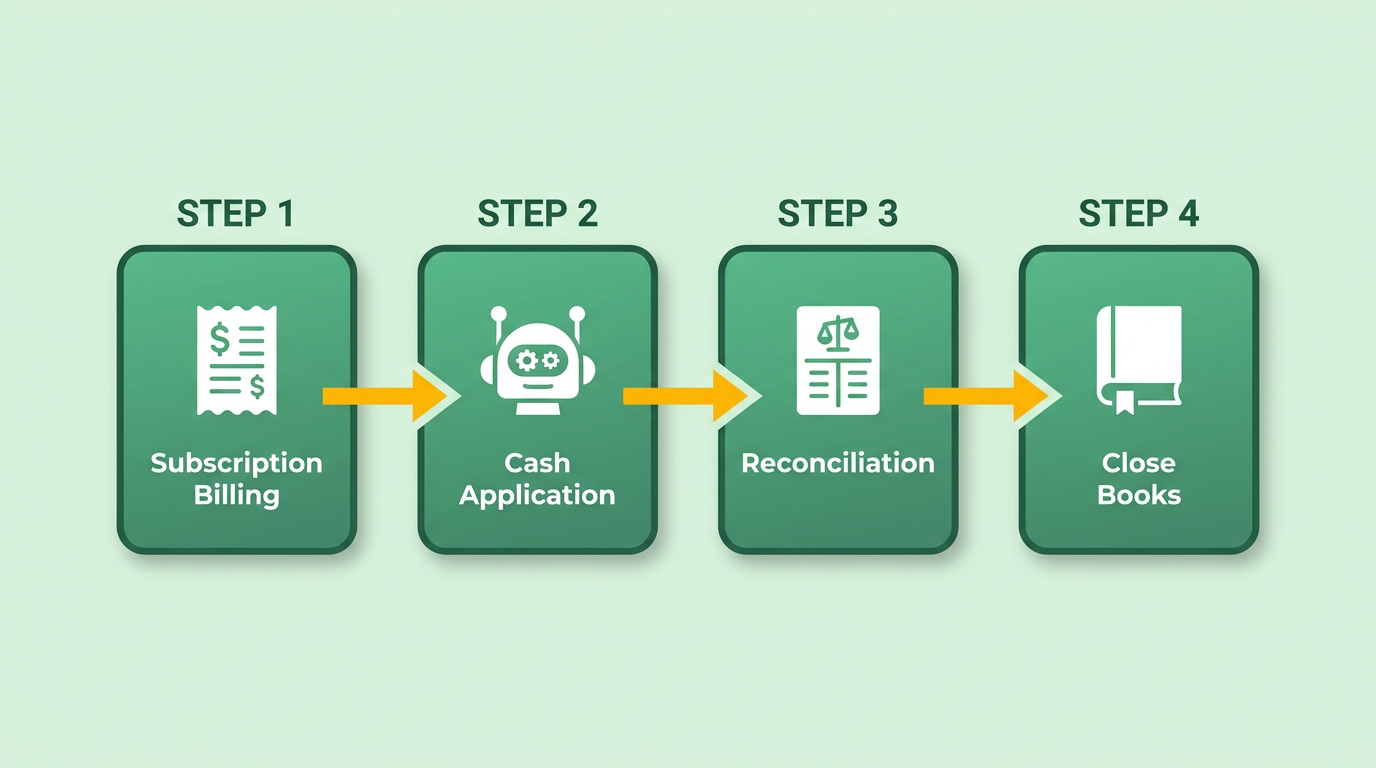
What makes our approach different?
The short version: our Cash Application AI matches payments to invoices and reconciles them automatically, so your ledger stays current when you close. No manual matching. No spreadsheet bridge between billing and payments.
The problem we kept seeing: slow or inconsistent customer payments stall service businesses every month. The enterprise tools chase those late invoices well. But chasing cash is only half the job when you bill on recurring or usage-based schedules.
For subscription models, the deciding factor is not how hard a tool duns overdue accounts. It is whether payments flow automatically from the billing engine into reconciled records. That is where we focus. We handle the invoice-to-cash workflow end to end, then keep your books in sync so the numbers are ready when your controller sits down to close.
Who is this built for?
Best for SaaS and subscription businesses running recurring or usage-based billing that want to close faster without manual cash application.
Integration depth is where smaller firms win or lose. A deep sync with tools like QuickBooks matters more than basic compatibility. We sync recurring invoices to QuickBooks without manual journal entries, which is the piece most collections-first tools leave to your accountant.
When to skip us: if you run a high-volume enterprise AR shop across multiple ERPs and your revenue model is flat and simple, the enterprise leaders may fit you better. HighRadius earns its strong reputation for a reason. But that same depth reads as over-engineered for a lean subscription team, and it still will not automatically reconcile your payments for you.
How does it compare?
| Tool | Best For | Collections | Automatic Cash Application | Peer Rating |
|---|---|---|---|---|
| Blixo | SaaS / subscription billing | Yes | Yes | New entrant |
| HighRadius | Enterprise AR teams | Yes | No | Enterprise favorite |
| Esker | Multi-channel enterprise AR | Yes | No | Highly rated |
| Billtrust | Unified billing & payments | Yes | No | Well-reviewed |
Pricing note: the enterprise vendors above quote by seat and transaction volume, which climbs fast for growing teams. Our plans include unlimited customers and unlimited automated invoices, with team members bundled into each tier. The Business plan covers up to 5 users, with additional users at $9.99/user/month.
The growth argument is simple. As your subscriptions and usage tiers multiply, so does the manual reconciliation burden. A tool that only chases invoices leaves that work on your desk. We close the loop with automatic cash application so your books keep pace with your billing.
Alternative 2
HighRadius is a dominant invoice-to-cash platform on Gartner Peer Insights. It’s the tool enterprise AR teams reach for when they need AI-driven cash application and collections at scale. For subscription businesses trying to close faster, though, the fit is more complicated than that rating implies.
Enterprise reviewers love it. But industry analyses frequently point out that the platform’s feature set can overwhelm smaller operations. A high peer score reflects enterprise satisfaction. It does not tell a 30-person SaaS company whether the same tool will feel over-engineered for their accounts receivable automation needs.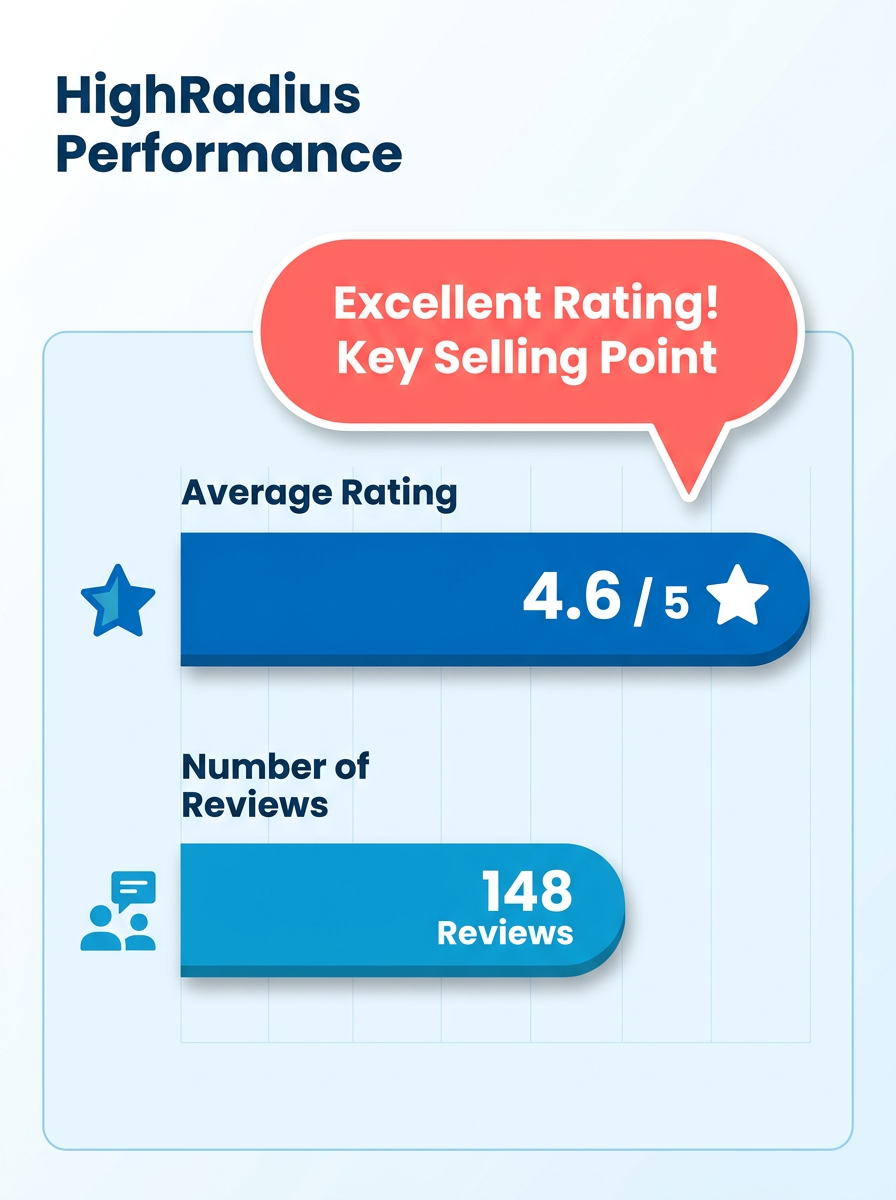
What does HighRadius do well?
HighRadius is built for orchestration: AI-driven capture, classification, and prioritization of receivables, plus policy-driven rules and a layer that connects multiple ERPs. It publishes operational outcomes like reduced DSO and higher automation rates, and its peer reviewers back those claims.
If you run a large finance team across several ERP systems, this is a serious contender. The AI handles deductions, disputes, and credit-risk scoring without a controller touching each account. That is real value when your invoice volume runs into the tens of thousands.
The strength is depth on the end of the workflow, and Gartner’s ratings confirm enterprise teams see the payoff.
Where does it fall short for subscription businesses?
None of our sources credit HighRadius with connecting subscription billing schedules to revenue recognition. It optimizes invoice-to-cash, then hands the close back to your accounting team for manual revenue rec.
That is the exact gap where recurring-revenue teams stall. When your billing engine and your reconciled revenue data do not talk, someone rebuilds the bridge every month with journal entries. For usage-based or tiered subscription models, that manual work compounds fast.
So HighRadius is excellent if you are a large enterprise closing books on high invoice volume across many ERPs. Skip it if you are a lean SaaS team and revenue recognition is your bottleneck. The complexity buys you power you will not use, and it still leaves the close problem unsolved.
HighRadius vs. Blixo at a glance
| Factor | HighRadius | Blixo |
|---|---|---|
| Gartner peer rating | Top-tier enterprise score | Not rated on Peer Insights |
| Core strength | Enterprise cash application & collections | Subscription billing linked to reconciliation |
| Revenue recognition link | Requires manual ledger adjustments | Cash Application AI reconciles from the billing engine |
| Ideal user | Large multi-ERP finance teams | SaaS & subscription businesses |
| Complexity | High (may over-serve smaller firms) | Built for recurring-revenue close |
Best for enterprise AR teams with heavy invoice volume and multiple ERPs who need proven collections automation and can staff the close separately.
The rating is earned. Match it to your size and billing model before you commit. If your close stalls at revenue rec rather than collections, a platform that ties recurring invoices to reconciled data will move the needle more than a top dunning engine. Blixo’s Cash Application AI matches payments to invoices and reconciles in real time from the billing engine, so subscriptions, invoicing, and reconciled revenue data all live in one place.
Alternative 3
Billtrust unifies billing, invoicing, payment, and cash application in one place. For a business drowning in paper invoices and mixed payment formats, that consolidation is real. But the fit for subscription and SaaS teams comes with a catch worth naming.
Evaluations of the platform indicate its design does not prioritize proposal-linked workflows. In practice, its accounts receivable automation shines at the invoice-to-cash tail, not the process where subscription billing schedules feed revenue recognition. For recurring-revenue teams, that front-to-back link is the part that actually closes your books faster.
What does Billtrust do well?
Billtrust is built for high-volume, multi-format invoicing. Its strengths are electronic invoice delivery, accepting payments in many formats, and analytics that give AR teams visibility into aging and cash flow. If your customers pay by check, ACH, and card in roughly equal measure, that flexibility saves real hours.
It handles collections automation well, too, which matters when late payments tie up working capital. Reviewers consistently cite reduced DSO and better customer communication as the payoff. That is the enterprise sweet spot Billtrust was designed for.
Where does it fall short for SaaS?
Billtrust optimizes the tail, but the sources do not credit it with connecting billing schedules to reconciled revenue data. For a usage-based or recurring model, that leaves your accountant doing manual journal entries at month-end.
Enterprise-grade systems often assume a dedicated IT department is already managing the complex data pipelines. For a mid-sized SaaS company on Xero or QuickBooks, integration depth is not optional. It is the deciding factor. Billtrust was not built to make that link its core job, so the close still stalls where it always has.
Pricing and ideal user
Billtrust uses custom enterprise pricing, so expect a sales conversation rather than a self-serve signup. That alone tells you who it is for.
Ideal user: mid-market to enterprise finance teams with high invoice volume across mixed payment channels, especially those less dependent on recurring-billing revenue recognition. Skip it if you are a small subscription business whose close breaks at revenue rec. The tool will not solve the problem you actually have.
How does Billtrust compare?
| Tool | Gartner Rating | Core Strength | Subscription Billing → Rev Rec Link | Best For |
|---|---|---|---|---|
| Blixo | Not rated on Gartner | Integrated subscription billing + AR automation | Yes, native | SaaS/subscription teams closing books faster |
| Billtrust | Highly rated | Unified billing, invoicing, payment, cash application | Not a focus | High-volume multi-format invoicing |
| HighRadius | Top-tier enterprise score | AI cash application & collections orchestration | Not a focus | Large enterprise AR teams |
| Esker | Strong peer score | Workflow automation, multi-channel delivery | Not a focus | Mid-to-large AR automation |
The pattern across all three enterprise leaders is the same. They win at the collections tail. None connects subscription billing to reconciled revenue, which is the piece we built our platform around. If your close stalls at manual revenue recognition, that connection is what you are actually shopping for. Blixo pairs subscription management with Cash Application AI and automatic reconciliation so your revenue data stays a single source of truth in real time.
Alternative 4
Esker earns strong peer reviews for teams that want workflow automation and multi-channel invoice delivery in one system. For subscription and SaaS businesses focused on accounts receivable automation that speeds up the close, though, the fit needs a closer look.
Esker’s reputation reflects satisfaction from AR teams who value its agentic AI and real-time dashboards. But that praise tells you about collections and payment matching. It does not tell you whether the tool links your subscription recognition, which is the part that actually stalls a recurring-revenue close.
What does Esker do well?
Esker is built for workflow automation and multi-channel delivery: it combines intelligent payment matching, agentic AI, and real-time dashboards to move invoices out and cash in across many formats.
Reviewers consistently highlight the real-time visibility. If your team juggles paper, email, and portal-based invoices, Esker consolidates that mess into one flow. Its payment matching cuts the manual work of tying receipts to open invoices.
The dashboards give you live aging and cash-flow views. For an AR lead who wants fewer surprises at month-end, that is genuine value.
Where does Esker fall short for SaaS teams?
Esker optimizes the invoice-to-cash tail, not the billing-to-revenue front. Effective automation should connect billing schedules through to payment collection and reconciled revenue, not just chase invoices.
In practice, Esker matches payments well, but the sources do not credit it with wiring subscription billing into automated revenue recognition. For a usage-based SaaS company, that missing front-to-back link is where the close still breaks.
Standard industry benchmarks often prioritize basic dunning and digital delivery over deep ledger synchronization. For smaller subscription teams, integration depth with QuickBooks or Xero is not optional. It is the deciding factor. Blixo handles recurring billing and recurring invoices alongside automated payment matching, with QuickBooks Online included on all plans and Xero available through customer support, closing exactly the gap Esker leaves open.
Esker at a glance
| Tool | Best For | Key Strength | Watch-Out |
|---|---|---|---|
| Esker | Multi-channel invoice delivery | Agentic AI, payment matching, dashboards | No sourced billing-to-revenue link |
| Blixo | Subscription billing to reconciled revenue | Automated payment matching, recurring billing sync | Newer to the enterprise AR category |
Pricing: Esker does not publish standard pricing in these sources, so scope it against your invoice volume and channel mix during a demo.
Ideal user: a mid-market or enterprise finance team with high invoice volume across mixed formats, where multi-channel delivery and payment matching are the priority.
Skip Esker if your bottleneck is revenue recognition, not collections. The sources point to billing-to-revenue automation as the real close accelerator, and that is where a subscription-native platform pulls ahead.
Alternative 5
Ignition rounds out this list as the tool built for service firms that live in proposals, not just invoices. It connects proposals, pricing, billing schedules, and payment collection into one workflow. For agencies and consultancies chasing scope-linked payments, that front-to-back design is why it earns a spot.
Here is what makes it different from the enterprise leaders. The Gartner-rated tools optimize the invoice-to-cash tail. Ignition starts earlier, at the proposal, and carries the agreed scope through to collection. That matters when a significant share of invoices run chronically late, a problem that hits professional services especially hard.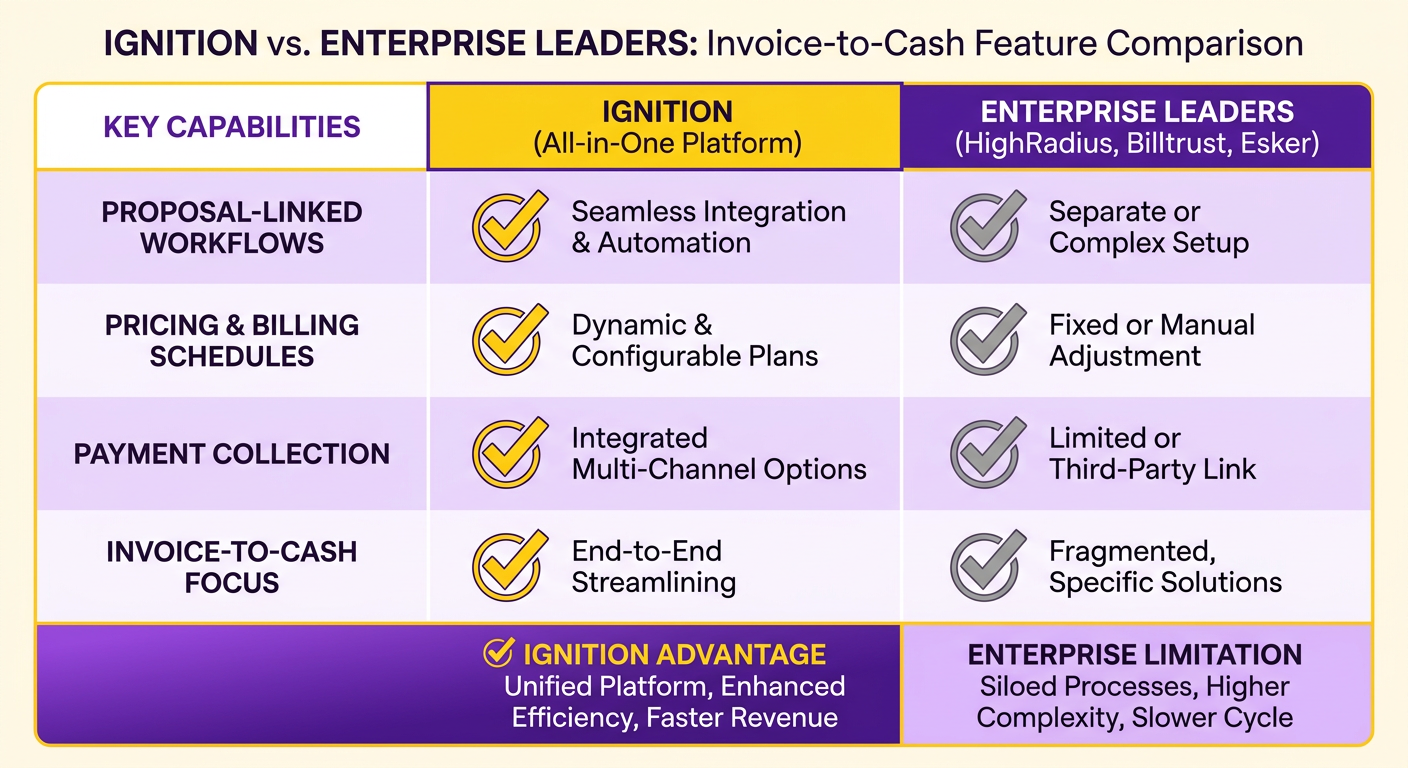
What is Ignition best at?
Ignition is built for proposal-to-payment automation. It links what a client agreed to buy directly to what gets billed and collected, so fixed-fee and value-based engagements do not drift out of sync. For retainers and ongoing work, its recurring billing keeps the schedule running without manual re-entry.
The integration story is worth weighing. Ignition’s own guidance argues that integration depth with accounting systems like Xero or QuickBooks matters more than surface-level compatibility. That is a fair read for small firms, where a shallow sync creates more reconciliation work than it removes.
Enterprise frameworks may treat deep accounting sync as a secondary feature. Smaller firms find it essential. For a 20-person consultancy, integration depth is the deciding factor, not a nice-to-have.
Where does Ignition fall short for subscription teams?
Ignition is tuned for service scopes, not subscription revenue schedules. Its strength is proposal-linked billing. It does not carry the same weight for usage-based tiers or the revenue recognition step that stalls a SaaS close. If your billing is metered rather than scope-based, the fit gets thinner.
That is the gap we designed our own platform around. Ignition connects proposals to payment. Blixo connects automated cash application and reconciled real-time revenue data, with an intelligent matching engine that ties payments to invoices. With integrations for QuickBooks, Xero, NetSuite, and more, teams running recurring invoices get a single source of truth for their revenue data.
Skip Ignition if you run pure usage-based billing. It shines for agencies and consultancies with defined scopes. It is the wrong tool for a metered SaaS product.
Ignition at a glance
| Tool | Best For | Core Strength | Watch-Out |
|---|---|---|---|
| Blixo | Subscription & SaaS teams | Billing schedules linked to reconciled revenue data | Less suited to one-off service proposals |
| Ignition | Service firms with fixed-fee scopes | Proposal-to-payment workflow | Not focused on usage-based revenue recognition |
Ideal user: agencies, consultancies, and dev shops that quote scoped work and want the proposal, billing, and collection steps in one system. If your revenue lives in signed proposals, Ignition fits. If it lives in subscription tiers and usage meters, look at a platform built for recurring revenue instead.
Our rating: 4/5 for service firms, 2.5/5 for subscription businesses. The score splits by billing model, which is exactly the point of this roundup.
Alternative 6
Microsoft Dynamics 365 Finance closes out this roundup as the ERP-native option for teams that want AR automation living inside a full finance suite. Gartner lists it among the top trending invoice-to-cash products, alongside Workday and Oracle Fusion Cloud ERP. For large organizations already standardized on Microsoft, that pull is real. For a lean SaaS or subscription team, it needs a harder look.
The trade-off: you are buying an ERP first and AR automation second. That is a lot of platform to stand up before a single invoice gets chased.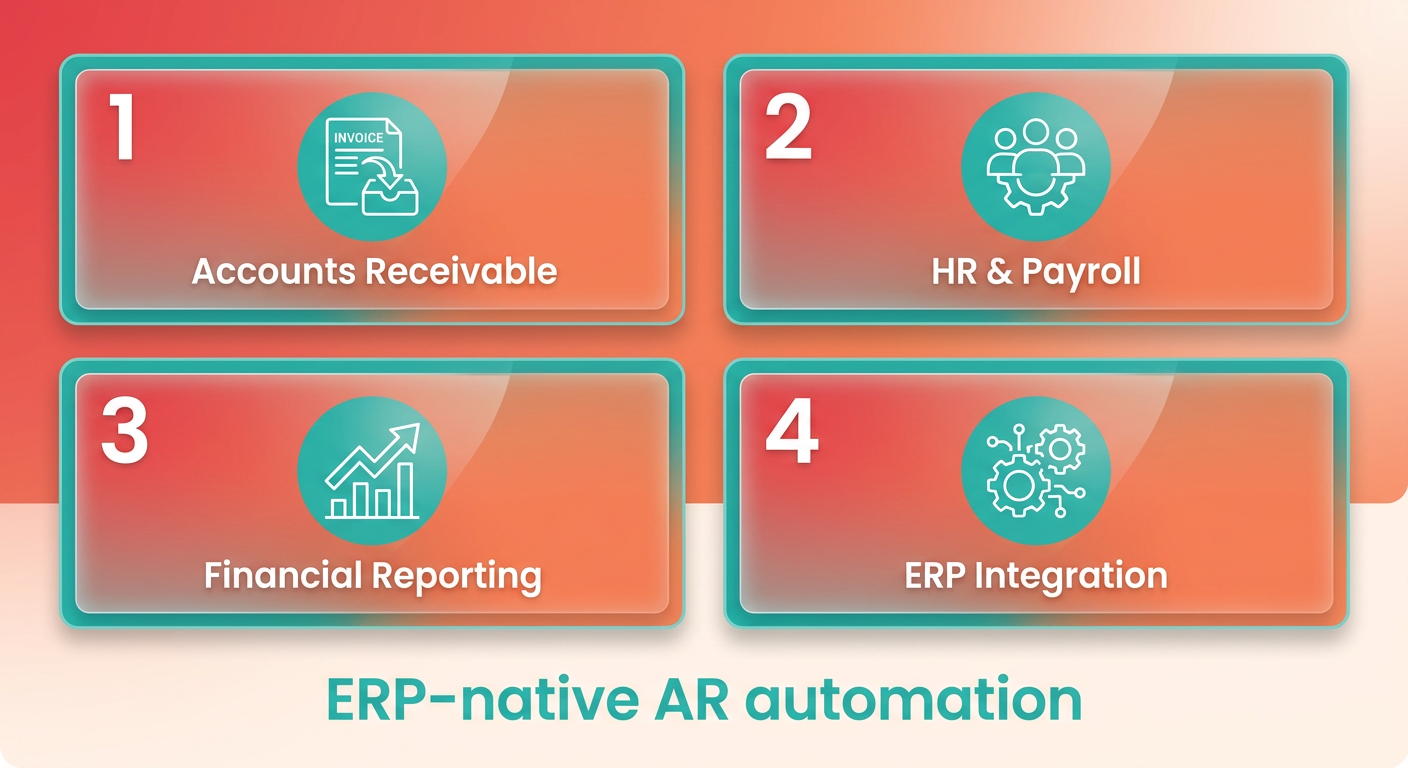
What is Dynamics 365 Finance best at?
Dynamics 365 Finance is built for enterprises that want AR inside their system of record. It handles collections, payment application, and cloud delivery, the two features Gartner treats as mandatory for any invoice-to-cash tool. The payoff is a single ledger where AR data already sits next to your GL.
That matters most when you run multiple ERPs or entities. The platform handles complex multi-ERP transaction processing and advanced analytics well, which is valuable for global conglomerates but significant overhead for smaller teams.
The trade-off shows up on the revenue recognition side. Even inside a full ERP, connecting recognized revenue is configuration work, not a default. For usage-based models, that is exactly the part that stalls your close.
Who should skip it?
Skip Dynamics 365 Finance if you are a small SaaS team without a Microsoft ERP already in place. The value depends on being deep in the Microsoft ecosystem. If you run on Xero or QuickBooks, integration depth matters more than raw feature count, and standing up a new ERP just to get AR automation is backwards.
For growing businesses, the enterprise leaders in this list perform brilliantly, but they demand heavy deployment before a single invoice gets chased. Blixo takes the opposite approach: an all-in-one platform that automates invoicing, collections, cash application, and subscription management without standing up an ERP. That is why teams on lighter accounting stacks often lean on Blixo’s QuickBooks and Xero integrations rather than adopt a full ERP.
Summary comparison
| Tool | Best For | Accounting Integration | Rating |
|---|---|---|---|
| Blixo | SaaS & subscription teams automating AR | QuickBooks, Xero, and more | Featured |
| Dynamics 365 Finance | Enterprises on Microsoft ERP | Native ledger | Top trending (Gartner) |
| HighRadius | Enterprise AR orchestration | Not native | Top-tier enterprise score |
| Esker | Multi-channel invoice delivery | Not native | Strong peer score |
| Billtrust | High-volume mixed invoicing | Not native | Highly rated |
Pros: true system-of-record AR, strong multi-entity handling, deep Microsoft integration.
Cons: heavy to deploy, revenue recognition requires configuration, over-engineered for small subscription teams.
If you are already committed to Microsoft’s finance stack, Dynamics 365 is a natural fit. If you are a growing subscription business measuring success by how fast you get paid, an all-in-one AR platform beats ERP breadth every time.
Alternative 7
Workday Financial Management earns a spot on Gartner’s top-trending invoice-to-cash list, sitting alongside Oracle Fusion Cloud ERP and Microsoft’s finance suite. It’s the pick for large organizations that run HR, payroll, and financials in one system and want AR living inside that same ledger. For a lean SaaS or subscription team, the fit is a stretch worth naming.
Workday belongs in the same tier as the other enterprise suites Gartner tracks: deep, unified, and built for organizations with real finance-team headcount. That depth is the whole pitch. It is also why a 40-person recurring-revenue business rarely needs it. You are standing up a full financial platform to solve an accounts receivable automation problem that a focused tool handles faster.
What is Workday Financial Management best for?
Workday Financial Management is built for large enterprises unifying finance and HR in one platform. It treats AR as one piece of a broader ledger, with the collections and cash-application depth Gartner’s enterprise reviewers reward. If you already run Workday for payroll, adding AR keeps everything in one system.
That unification is the strength. When your financials, headcount, and AR share one data model, you skip the sync headaches that plague bolted-together stacks. Gartner’s peer reviewers consistently flag reduced DSO and better automation rates from tools at this tier.
The catch is scope. Standard definitions of AR automation focus on invoice delivery and basic collection. Workday’s deep, unified ledger goes far beyond that, but it requires a full platform commitment.
Does Workday handle subscription revenue recognition?
Workday manages revenue recognition inside its accounting suite, but that capability comes bundled with the full ERP. You do not buy it as a standalone AR layer. For subscription teams, the question is not whether the feature exists. It is whether you need an entire finance platform to get it.
Enterprise suites perform well, but none of the sources credit them with linking subscription recognition in a way a small team can stand up quickly. Blixo connects billing directly, acting as a bridge so cash application and reconciliation do not stall your close. With built-in subscription management, recurring invoice generation, and a QuickBooks integration on every plan, a lean team can automate the AR work without deploying a full ERP.
Skip Workday if you run recurring billing under a mid-market finance team. The value lands when you are consolidating finance and HR across a large org, not when you need AR automation that speeds up a subscription close.
Workday at a glance
| Attribute | Detail |
|---|---|
| Best for | Large enterprises unifying finance and HR |
| Gartner status | Top-trending invoice-to-cash product |
| Core strength | Unified ledger, deep automation |
| Pros | One data model, strong automation, enterprise-grade depth |
| Cons | Heavy to deploy, over-engineered for lean teams, revenue recognition bundled inside full ERP |
| Pricing | Enterprise quote-based (not published) |
| Our take | Right for large multi-function orgs; overkill for a 40-person SaaS team |
A high enterprise rating tells you nothing about SMB fit. Workday satisfies large finance teams. A recurring-revenue business is usually better served by a tool that links billing to the close without the ERP overhead.
Alternative 8
Oracle Fusion Cloud ERP rounds out the enterprise tier on Gartner’s top-trending invoice-to-cash list, sitting alongside Workday and Microsoft’s finance suite. It’s the pick for global organizations that already run Oracle across their financial stack and want AR automation living inside that same ledger. For a lean SaaS or subscription team, the honest answer is that it’s more platform than you need.
Oracle earns its trending status because it treats receivables as one module in a deep, unified financial system. That depth is the whole draw for a Fortune 500 finance department. It’s also why a 50-person recurring-revenue business rarely needs it. You’re committing to a full ERP program to solve an accounts receivable problem a focused tool handles in a fraction of the time.
What is Oracle Fusion Cloud ERP best at?
Oracle Fusion Cloud ERP is built for large, multi-entity organizations that want AR inside a complete financial suite. It handles collections, payment application, and reporting as part of a broader ledger, with the multi-ERP reach and analytics Gartner flags as high-value.
That breadth pays off when you’re consolidating across regions, currencies, and business units. If your finance team has real headcount and complex intercompany accounting, Oracle’s unified model keeps everything in one place.
Where does it fall short for subscription teams?
It optimizes the invoice-to-cash tail, not the workflow where subscription billing feeds revenue recognition. Standard AR automation benchmarks rarely account for the complexity of linking billing schedules directly to recognized revenue.
For subscription businesses, the enterprise suites and the focused AR tools split at the same seam. Both are strong on collections. Neither connects your reconciled revenue data out of the box. That front-to-back link is why we built Blixo the way we did. Blixo ties recurring billing directly to Cash Application AI and automatic reconciliation, giving you a single source of truth so the close does not wait on manual journal entries.
Comparison snapshot
| Tool | Best For | Strength | Watch-out |
|---|---|---|---|
| Blixo | Subscription & SaaS teams closing books faster | Billing-to-reconciliation link, Cash Application AI | Not built for non-recurring enterprise ERP needs |
| Oracle Fusion Cloud ERP | Large multi-entity organizations | Deep unified financial suite, multi-ERP reach | Heavy program to stand up; no billing-to-recognition link |
Pricing and ideal user
Oracle doesn’t publish flat pricing. Deals are quoted per organization based on modules, users, and implementation scope, which signals the commitment level involved.
Ideal user: a large enterprise already standardized on Oracle, with a finance team ready to run an ERP rollout. Best for enterprise: yes, if you’re consolidating global entities. Best for budget: no, the implementation cost alone rules out most lean teams.
Final verdict
Oracle Fusion Cloud ERP is a strong enterprise receivables option inside a much larger financial system. If you already live in Oracle, keeping AR there makes sense.
But if you run recurring or usage-based billing and your real bottleneck is a close that stalls on revenue recognition, an ERP is the wrong tool. You would stand up a whole platform to solve a problem a focused, billing-connected tool closes faster.
Frequently Asked Questions
1. If HighRadius has the highest peer rating, why is not it the top recommendation for every business?
A top-tier rating from enterprise reviewers signals corporate satisfaction, not universal fit. Industry analyses frequently note that the platform’s extensive feature set can overwhelm smaller operations. For a lean SaaS team where revenue recognition is the bottleneck, that enterprise depth buys power you will not use.
2. What does “connecting billing to revenue recognition” actually mean in practice?
It means payments flow automatically from your billing engine into reconciled records without manual journal entries at month-end. Collections-first tools chase invoices and apply cash, then hand the close to your accountant. A connected tool keeps recurring billing and reconciled revenue data in sync, so your books stay current.
3. I run a service agency with fixed-fee proposals, not subscriptions. Which tool fits better?
Ignition suits service firms, connecting proposals, pricing, billing, and collection into one flow. It is highly optimized for service-oriented workflows but less effective for recurring subscription models. If your revenue lives in signed proposals, Ignition fits. If it lives in usage meters or subscription tiers, a recurring-revenue platform pulls ahead.
4. Why does Gartner call integration and analytics “optional” if the article says they matter so much?
Standard industry frameworks often assume an enterprise IT infrastructure is already in place to handle data synchronization. Consequently, basic benchmarks focus primarily on invoice delivery and collection, leaving deep ledger integration as an advanced capability. For a 40-person SaaS company on QuickBooks or Xero, integration depth is the deciding factor that determines whether your close stalls.
5. How does Blixo’s pricing model differ from the enterprise vendors?
Enterprise vendors like HighRadius, Esker, and Billtrust quote by seat and transaction volume, climbing fast as teams grow. Blixo offers flat-rate entry-tier pricing with unlimited customers and automated invoices, while its mid-tier plans bundle multiple users with a low fixed cost for additional team members.
6. Does faster collections alone solve the month-end close problem?
While accelerating collections helps cash flow, it does not address the underlying accounting bottlenecks. Chasing invoices faster does not address revenue recognition. When your billing engine and reconciled revenue data do not connect, someone still rebuilds the bridge with manual journal entries every month.
7. Is Microsoft Dynamics 365 Finance a good AR-only solution?
Dynamics 365 Finance treats AR as one module inside a full ERP, handling collections, payment application, and cloud delivery. For teams already standardized on Microsoft, that is valuable. But you’re buying an ERP first and AR automation second, which is a lot of platform to stand up for a lean subscription team.