

Why Subscription Billing Costs Are Skyrocketing
Key Takeaways
- Subscription billing is projected to hit $1.5 trillion by 2025, and the pricing complexity that comes with it drags real operational cost behind it.
- Manual billing eats labor. A thousand invoices can burn 250 hours a month just on creation and follow-ups.
- Pay-as-you-go platforms charge around 0.7% of billing volume. High-volume businesses hit fixed fees north of $5,750 a month.
- Automated tools like Stripe’s Metronome can cut billing labor by 50% or more by handling usage tracking and invoicing.
- Manual retries and support work quietly leak revenue.
- Usage-based billing needs real-time tracking and invoicing. Manual systems can’t do this well.
- Dynamic tiers, prorated charges, and multi-currency invoicing pile complexity onto growing teams.
Why billing costs sneak up on you
Billing costs hit cash flow and operations directly, and they get worse as you grow. The subscription market is expanding because customers want flexible pricing, usage-based models, recurring payments. Fine. But that flexibility introduces friction underneath, where invoicing, retries, and support quietly consume hours. The point of optimizing billing isn’t just saving money. It’s stopping revenue leakage and scaling without your admin costs scaling right alongside.
What’s actually driving the cost up
Subscription models got complicated. You’re now juggling dynamic pricing tiers, prorated charges, and multi-currency invoicing, all of which strain a manual workflow. Billing platform pricing reflects that complexity: entry-level tiers are cheap, then enterprise fees for automated retries and customer portals get steep fast. Usage-based billing makes it worse, because it needs real-time tracking that legacy systems can’t process without errors. For SMBs, that shows up as late payments, annoyed customers, and a team stuck doing admin instead of building anything.
Where the hidden labor lives
Overhead climbs fast when you handle billing without modern tools. Failed-payment retries are a good example, one company cut its collections labor by 50% after switching to automated retries with machine learning. So the rising cost isn’t only the platform fee. It’s the invisible labor of running payments by hand.
Who gets the most out of fixing this
SMBs, by a wide margin. Big enterprises have dedicated finance teams. Smaller companies run billing on spreadsheets and duct-taped tools, which means errors and delayed cash. A digital entertainment startup cut revenue leakage by 30% after moving to a platform with built-in automation. Companies running usage-based models without automation face the opposite risk: overcharging customers, or missing revenue entirely. Clean up the workflow and you get to put people back on customer acquisition and product work instead of chasing invoices.
The savings aren’t just for big players
A B2B software provider cut its collections time by 40% with automated reminders and a self-service portal. A music streaming service dropped late payments by 25% using dynamic invoicing rules tied to user behavior. None of this is exclusive to enterprise. If you handle recurring payments, automation stops being a cost center and starts being a way to reclaim time, cut errors, and keep customers happy. For SMBs that means faster cash and the ability to grow without piling on admin.
When your pricing doesn’t match reality
How misaligned pricing quietly costs you
Misaligned pricing happens when your billing model doesn’t reflect what customers actually use or get. A flat-rate subscription for a tool with variable usage underpays you from light users and feels like a rip-off to heavy ones. Either way you end up doing manual work to reconcile it, custom invoices, dispute resolution, all labor. A cloud storage provider charging one fixed fee regardless of data volume risks both: customers who feel overcharged for barely using it, and customers who underuse what they paid for. That mismatch drives churn or an unsustainable revenue model.
The hidden cost of manual pricing adjustments
When tiers or usage rules aren’t automated, admin overhead balloons. A developer API service tracking API calls by hand spends hours every month reconciling usage logs, applying discounts, issuing prorated invoices. That delays cash and raises error rates, which feeds late payments and frustration. Smart retries and automated reminders help, but if your pricing rules don’t match customer behavior in the first place, even good tools can only do so much.
How automation ties pricing to value
Automation closes the gap by making billing dynamic and usage-driven. Usage-billing engines track and invoice variable pricing automatically, so customers pay for exactly what they consume. Fewer disputes, fewer late payments, no manual reconciliation. Analytics sharpen it further: read the usage patterns and you can design tiers that match real value. Maybe a mid-tier plan for moderate users, which captures more revenue without alienating the lighter ones. The result is pricing that scales with demand and needs far fewer ad hoc fixes.
Does this actually hold up
A SaaS provider on manual billing spent 20% of its finance team’s time on invoicing and collections. After automating usage tracking and moving to tiered pricing, that dropped by 70%, and the freed time went to support and product. Platforms with rule-based pricing engines report up to 40% fewer disputes when usage thresholds are transparent and adjusted dynamically. That’s not just operational tidiness, it’s more predictable cash flow for a small business.
Realign pricing with automation and data, and you cut the labor-heavy, error-prone workflows that erode margins. Next step is evaluating tools that do this without a mess of integrations.
Value perception: what they pay vs. what they feel they got
How pricing shapes demand
Pricing sets expectations. When the cost feels out of line with the value, retention slides. Manual billing tends to force static pricing that ignores real usage, so low-usage customers underpay and high-usage ones feel gouged. Automation lets you adjust pricing to actual consumption, keeping cost aligned with perceived value.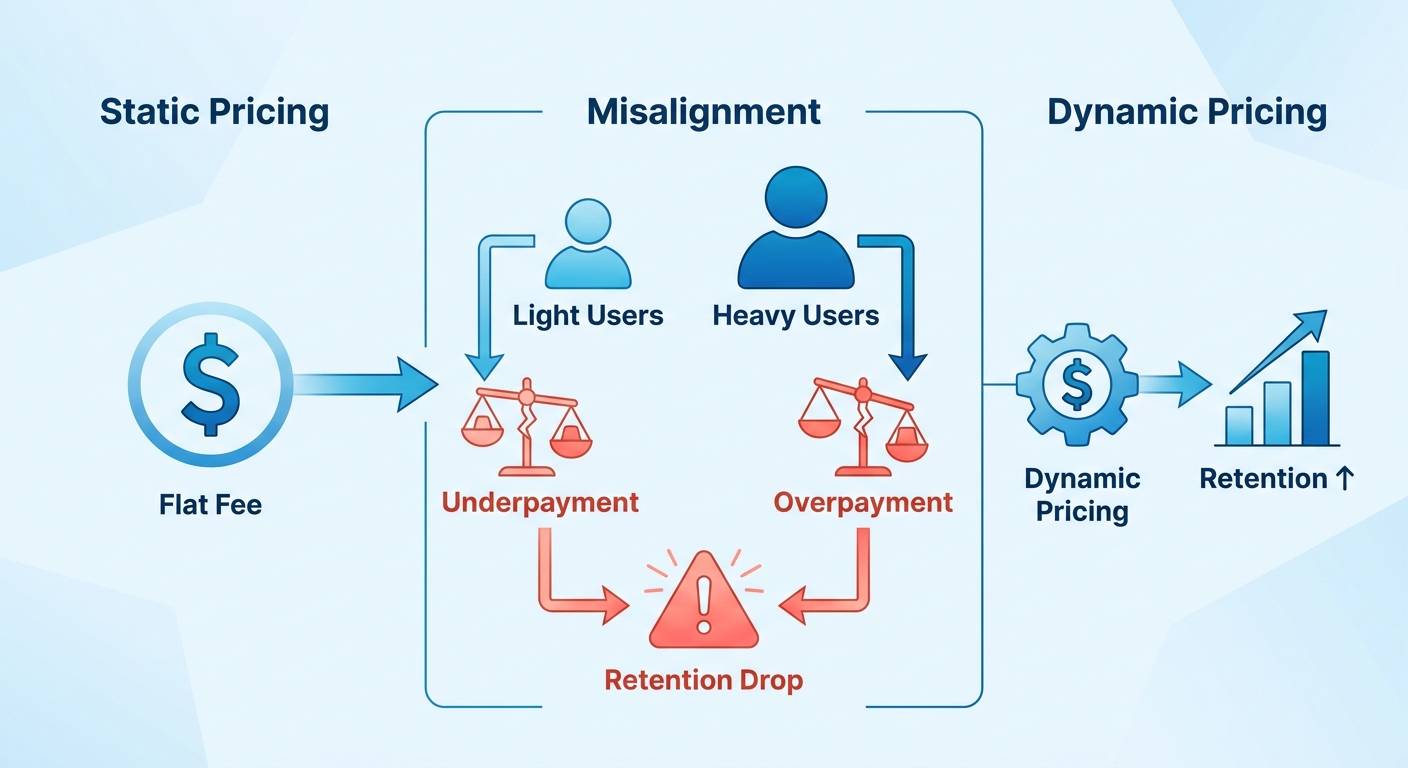
A SaaS provider on manual invoicing charging one flat fee runs into the usual split: light users think it’s too expensive, heavy users feel they’re paying for capacity they don’t touch. Tiered or usage-based adjustments fix that by charging for actual use. Fewer disputes, better retention.
Strategies that align price with value
Automation turns pricing from guesswork into a data problem. Start by mapping behavior to usage metrics, login frequency, feature adoption, storage consumption, and build tiers off that. Transparent billing dashboards let customers see how usage connects to cost, which kills the renewal-time surprise.
Then there’s predictive invoicing. Automated systems read historical data to forecast when usage shifts, then nudge customers toward the right tier before the bill lands. That prevents leakage from underpaying customers and stops you overcharging people who don’t need premium. Pricing that feels fair and scales with willingness to pay.
How customer feedback steers pricing
Feedback loops matter, and manual systems are slow at them. By the time you notice churn from pricing complaints, it’s already too late to adjust. Automation folds feedback in as it happens, flagging recurring tickets about confusing invoices or tracking NPS against pricing changes.
That data drives the next move. If users keep questioning a usage-based model, you can test alternatives, like a hybrid plan blending a flat fee with optional add-ons. Treat pricing as an ongoing conversation, not a signed contract. Automate both billing and feedback analysis and you stay agile, turning customer input into pricing that holds demand without gutting margins.
The takeaway
Value perception lives in the gap between what customers pay and what they receive. Manual billing creates blind spots, rigid pricing, delayed feedback, opaque invoices, and all three erode trust while inflating hidden labor. Automation closes the gaps: aligns pricing to usage, clarifies cost, bakes customer insight into decisions. For a subscription business this isn’t only about setting prices. It’s about making every dollar reflect the value customers actually feel.
Picking a pricing model that won’t bleed you
The three core models
To control cost, weigh flat-rate, tiered, and usage-based. Each carries different baggage:
- Flat-rate: One fixed fee, no matter the usage. Easy to run, but you undercharge heavy users and overcharge light ones.
- Tiered: Customers pick a package that matches expected usage. Predictable and flexible, but it needs frequent manual adjustment.
- Usage-based: Charges tied to actual consumption, like per API call. Scales with revenue, but demands automation to track and invoice accurately.
Chargebee’s usage-based model charges per API call and suits variable workloads, while fixed plans fit established businesses. Usage-based keeps gaining ground as billing middleware kills the manual invoicing for variable consumption.
How automation cuts the labor
Manual pricing means teams handling disputes, retries, and custom invoices, roughly 5–10 hours a week for a mid-sized SMB. Automation trims that:
- Automated invoicing: Real-time systems generate accurate invoices for fluctuating usage, cutting errors by 60% versus manual.
- Dynamic tier adjustments: Systems auto-upgrade or downgrade customers between tiers based on usage, avoiding manual pricing slips.
- Self-service portals: Customers view charges, change plans, or dispute fees without pinging support.
One company running usage-based billing with automation cut manual cash application hours by 75% and moved that staff to growth work.
What should decide your model
It comes down to usage predictability, churn risk, and how much operational bandwidth you actually have.
| Model | Cost Structure | Labor Impact (Manual vs. Automated) | Scalability | Automation Benefits |
|---|---|---|---|---|
| Flat-rate | Fixed monthly fee | High (disputes over fairness) | Low | Limited-best with static customer needs |
| Tiered | Predictable per-tier fees | Moderate (manual tier adjustments) | Medium | Automate tier shifts to cut labor |
| Usage-based | Variable per consumption | Very high (manual tracking) | High | AI-driven invoicing reduces 80% of labor |
Time/effort estimates:
- Flat-rate: 1–2 hours/week resolving billing disputes by hand.
- Tiered: 3–5 hours/week adjusting tiers during growth.
- Usage-based (automated): 1 hour/week for anomaly monitoring.
Difficulty ratings:
- Flat-rate: Low. Easy to implement, risky for long-term scaling.
- Tiered: Medium. You have to balance tier thresholds.
- Usage-based: High. It lives or dies on your automation tools.
Match the model to your automation capability and you dodge the hidden labor while making cash flow more predictable.
The billing problems that quietly pad your costs
Manual cash application is a labor sink
Cash application, matching payments to invoices, drains SMB labor, especially on high-volume recurring billing. Without automation, staff burn hours reconciling payments, which delays cash and introduces errors. A business processing hundreds of invoices a month can spend 15+ hours weekly matching transactions by hand, and misallocated funds turn into customer disputes or compliance headaches. Automated systems sync payments to invoices in real time, roughly halving reconciliation time and speeding up revenue recognition.
Why manual systems leak revenue
Manual billing has no visibility into payment failures or overlapping subscriptions, and those blind spots cost money. Stale payment details cause failed transactions, and each unresolved case runs $50–$400 in lost revenue depending on the tier. Manual tracking also misses overlapping subscriptions, where a customer pays multiple fees for the same thing. A mid-sized software provider added automated fraud detection and subscription audits and recovered $85,000 in revenue it hadn’t even known it was losing. Manual processes just don’t protect income streams.
What late payments really cost
Late payments break cash flow and drag teams into reactive firefighting, manual follow-ups, collections. SMBs on manual systems lean on rigid retry schedules that don’t adapt to how customers actually pay, which drives churn and admin cost. Smarter retries lower collections cost and improve retention by taking the friction out of the payment attempt.
How automation plugs the holes
Automated billing handles these three ways:
- No more manual reconciliation: AI-driven matching cuts human error and posts payments faster.
- Better retries: Dynamic retry logic adapts to customer behavior, lifting success rates without generating complaints.
- Real-time insight: Analytics surface recurring leakage, like unprocessed partial payments, so you can target the fix.
For SMBs, this flips billing from a reactive cost center into a revenue tool. Platforms built for recurring models scale without losing precision, which is what long-term financial planning actually needs.
What I’d actually do to cut billing costs
Automate cash application and collections and you cut both operational cost and late fees. Manual processes create the inefficiency; automation uses machine learning to clean up reconciliation. Here’s where I’d start.
Automate cash application first
Manual cash application means teams reconciling payments daily, which raises errors and delays cash. Automated systems match payments to invoices instantly, so reconciliation speeds up and the workload drops. Billing platforms with workflows built for variable pricing cut the manual overrides for fluctuating charges, which lowers both misallocated revenue and admin overhead.
For teams handling 500+ invoices a month, automation can halve reconciliation time. For genuinely low-volume cycles, manual workflows can still make sense if the automation cost outruns the savings. Do the math before you buy.
Get smart about collections
Failed payments and late fees inflate cost. Adaptive retry systems use behavioral data to time payment attempts better, like rescheduling for periods of higher account liquidity, which cuts chargebacks and penalties.
Tailored dunning beats one-size-fits-all. A digital backup service using AI-driven alerts, push notifications for irregular payers, email reminders for the reliable ones, saw a 15% lift in on-time payments. Match the message to the customer.
Personalize billing to lower churn
Misaligned pricing breeds disputes and manual invoicing. Tiers based on usage frequency or feature access line up cost with value and cut billing support requests. A project management tool offering discounted annual plans to consistently active teams dropped refund requests by 12%.
Automation also enables flexible adjustments. An e-learning platform reads engagement data to recommend upgraded plans for active users, boosting retention while shedding admin work. For unpredictable usage, automated invoicing tracks accurately without manual oversight, so you don’t over- or undercharge.
These moves cut operational friction, tie pricing to actual behavior, and make revenue more predictable, all without leaning on billing systems that should’ve been retired years ago.
Frequently Asked Questions
1. What’s the biggest hidden cost of manual subscription billing?
The primary hidden costs stem from the intensive administrative labor required to manually reconcile accounts and track down failed transactions. Without automated systems, teams spend significant time on repetitive data entry, while unaddressed payment failures lead to compounding revenue leakage.
2. How do automated tools like Stripe’s Metronome cut costs?
Automated billing tools streamline usage tracking and invoicing by instantly syncing consumption data with billing engines. They also accelerate collections by utilizing dynamic retry logic and self-service customer portals, which minimizes the need for manual outreach.
3. What’s the main challenge for SMBs in choosing a pricing model?
SMBs struggle to balance flat-rate simplicity with usage-based scalability. Misaligned models risk undercharging heavy users or overcharging light ones, increasing disputes and churn.
4. Why do usage-based models require automation?
Manual tracking of real-time usage, prorated charges, and multi-currency invoicing is error-prone and delays revenue. Automation ensures accurate billing and prevents revenue leakage.
5. How does customer feedback shape pricing decisions?
Feedback loops via automated billing dashboards flag pricing confusion or dissatisfaction, enabling businesses to adjust tiers or introduce hybrid models that align with perceived value.
6. What’s the cost impact of misaligned pricing tiers?
Misaligned tiers force finance teams to spend significant time manually adjusting invoices and resolving customer disputes. This operational friction leads to revenue leakage and higher churn, whereas automation ensures billing scales dynamically with actual consumption.
7. What’s the most effective way to reduce late payments?
Implementing adaptive retry systems that schedule payment attempts based on customer transaction history is highly effective. Combining this with tailored dunning strategies, such as targeted notifications based on payment patterns, significantly reduces outstanding balances.