

When to Issue a Credit Note: 7 Cases Finance Teams Handle Wrong
The Short Version
When a finalized invoice charges more than a customer actually owed, issue a credit note for the difference. Don’t edit or delete the original. Changing a finalized invoice can break the audit trail you’ll need for tax compliance. Depending on your agreement and the customer’s payment status, the credit can go back as a refund or sit on the account as an offset against a future charge.
This comes up constantly in SaaS billing: the invoice already landed in their AP team’s inbox, and you can’t recall it. The credit note is how you make the correction official without pretending the original never happened.
Where the Real Compliance Risk Lives
The risk isn’t customer confusion. It’s your books.
In many tax systems, a refund processed without a matching credit note leaves the original invoice standing as the valid tax record on both sides of the transaction. Some jurisdictions impose filing deadlines for credit notes, which means the timing of the correction can be just as consequential as the document itself. Miss the window, and the original invoice stays the official record regardless of what you actually charged — and your accounts may not reconcile. For finance teams running high-volume billing corrections, that exposure accumulates fast.
Why a Refund Alone Isn’t Enough
A credit note keeps a finalized invoice defensible when tax authorities or auditors review the transaction. It records why the customer no longer owes the full invoiced amount and ties that change back to the source invoice.
That connection matters operationally. A refund moves money. The credit note explains the accounting adjustment. Without a traceable link between the original charge and the corrected balance, you end up with ledger entries that don’t point to a source document — which is exactly the kind of gap that surfaces during reviews.
For SaaS businesses, this is especially messy because billing changes can touch several systems at once: usage data, subscription plans, discount records, tax settings, payment history. A credit note gives the team one formal document that connects the correction to the invoice that generated it.
Filing Deadlines Are Real
Tax authorities don’t only care whether the credit note exists. They may also require it to be issued within a defined period after the underlying billing change. The specifics vary by region, so confirm the requirements that apply to your business with a local tax advisor.
Retention is a separate obligation. Keep the credit note alongside the related invoice and supporting documentation for the period required by the relevant authority. Holding only a refund confirmation leaves out the explanation for why the taxable amount changed.
A practical control: treat credit note creation as part of the correction workflow rather than paperwork to handle later. Whoever approves the refund or balance adjustment should confirm the document has been created, dated, and linked to the source invoice before closing the correction.
The Billing Errors That Actually Require One
The most common trigger is a finalized invoice that overstated what the customer owed — wrong rate, incorrect quantity, omitted discount, or a line item that should never have been there. The original invoice stays in place. The credit note records the reduction.
The amount of the note should correspond to the difference between what was invoiced and what was actually owed. If an invoice went out for $1,000 but the correct charge was $900, the credit note is $100. That credit can be refunded or applied against another balance on the account.
The Workflow for Handling an Overcharge
The reference to the original invoice isn’t optional. It’s what lets anyone reviewing the account understand which transaction changed and why. It also prevents the correction from looking like an unexplained drop in accounts receivable.
Don’t use a new invoice to disguise the adjustment, and don’t alter the finalized document to make the figures look correct. A separate credit note keeps both the original billing event and the correction on record, cleanly and separately.
Subscription Adjustments: Downgrades, Prorations, and Usage Fixes
Subscription billing produces a recurring set of situations where credit notes come into play. A customer moves to a lower plan mid-cycle. A usage feed gets corrected after invoicing. A promotional term wasn’t reflected when the bill generated.
The finance team’s job is to establish the corrected amount and identify which invoice it relates to. The credit note records that adjustment independently of whatever subscription change or usage correction caused it. That separation matters when you’re trying to reconcile plan history against billing history — they often don’t line up cleanly on their own.
Don’t leave a credit sitting without an owner. Assign someone to it, document the expected treatment, and identify the invoice or payment event that will clear it. An unapplied credit with no owner can show up as a balance at period close that nobody can explain.
If you’re issuing a refund, record it against the credit note. If the customer has a near-term recurring charge and hasn’t paid yet, applying the credit to a specific future invoice may save an unnecessary cash movement. Either way, document the decision so the account can be traced from correction to resolution.
Returns, Refunds, and Faulty Goods: The Product-Side Credit Note
Product businesses use credit notes too, but the surrounding workflow looks different from a SaaS billing correction. A damaged shipment, an approved return authorization, or a restocking assessment may need to be confirmed before any financial adjustment gets made.
For a physical return, finance typically needs input from warehouse or customer-service teams: whether the goods were received, whether the return met the agreed terms, and which items or quantities qualify for the reduction. The credit note should reflect the approved outcome of that process, not an assumed refund.
The document principle stays the same. The original sale stays in the transaction history. The credit note records the amount being reversed or reduced. Supporting evidence, such as a return record, inspection result, or authorization, travels with it.
Tying Off the Downstream Actions
The credit note documents the adjustment. It doesn’t automatically complete every downstream action. Finance may still need to release a payment, update the customer’s account, notify AR, or loop in the returns team.
For a product return, confirm that the approved quantity and condition match what was credited. For a subscription or service correction, verify that the credited lines correspond to the right plan, usage period, or discount. These checks catch a second error while you’re still resolving the first one.
Once everything is settled, retain the supporting documentation with the note. The next person who looks at the account, whether an auditor or a new AP contact, needs enough context to understand both the original charge and why it was reduced.
Set Up the Credit Note Workflow Before You Need It Under Pressure
A reliable process comes down to a short sequence:
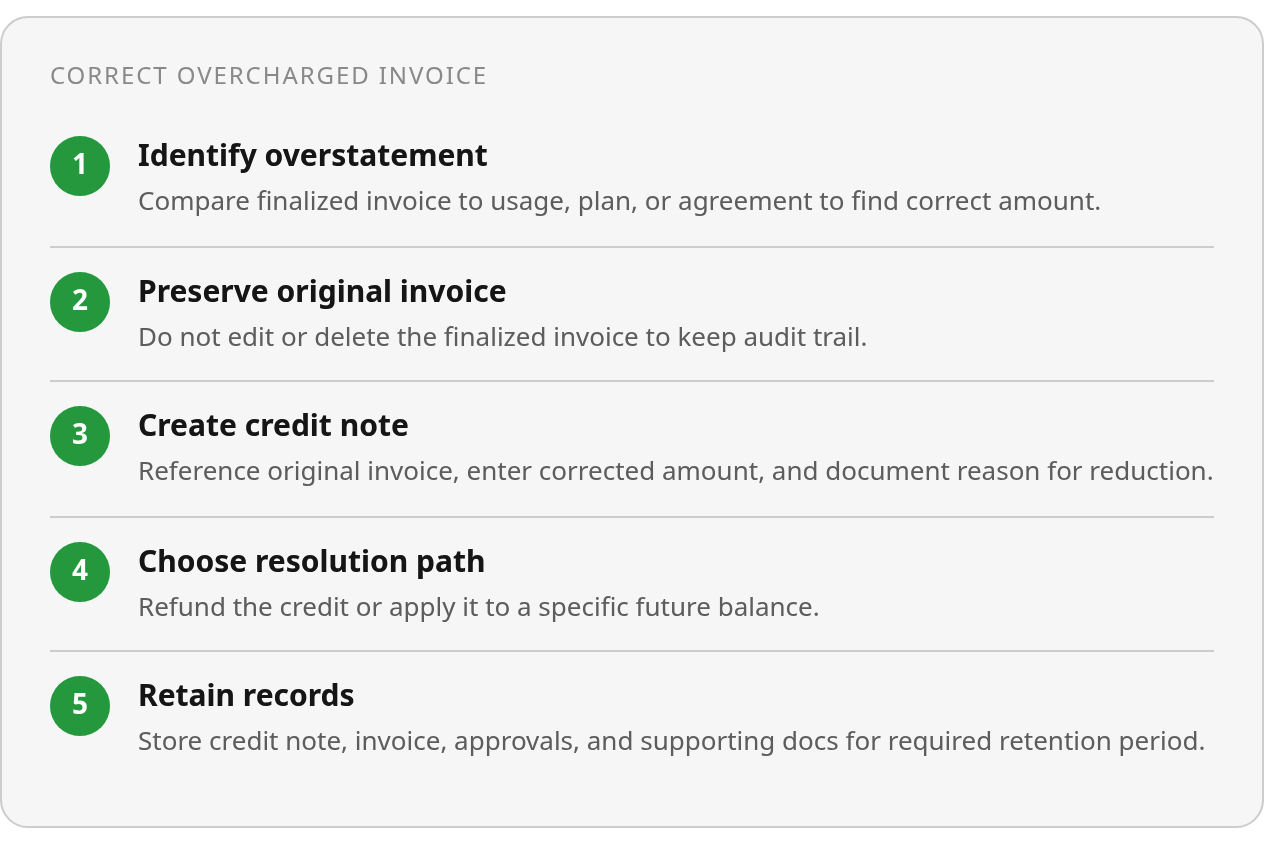
- Identify the overstatement. Compare the finalized invoice against the usage data, plan record, or service agreement that shows what the customer should have owed.
- Preserve the original invoice. Don’t edit or delete it.
- Create the credit note. Reference the source invoice, enter the corrected amount, and document the reason.
- Choose the resolution path. Refund the customer or apply the credit to a clearly identified future balance.
- Retain the records. Store the note, invoice, approval, and supporting documents for the period required by the applicable rules.
Each step is a control point. Step one validates the amount. Step two protects the audit history. Steps four and five make sure a credit doesn’t float indefinitely in the customer ledger.
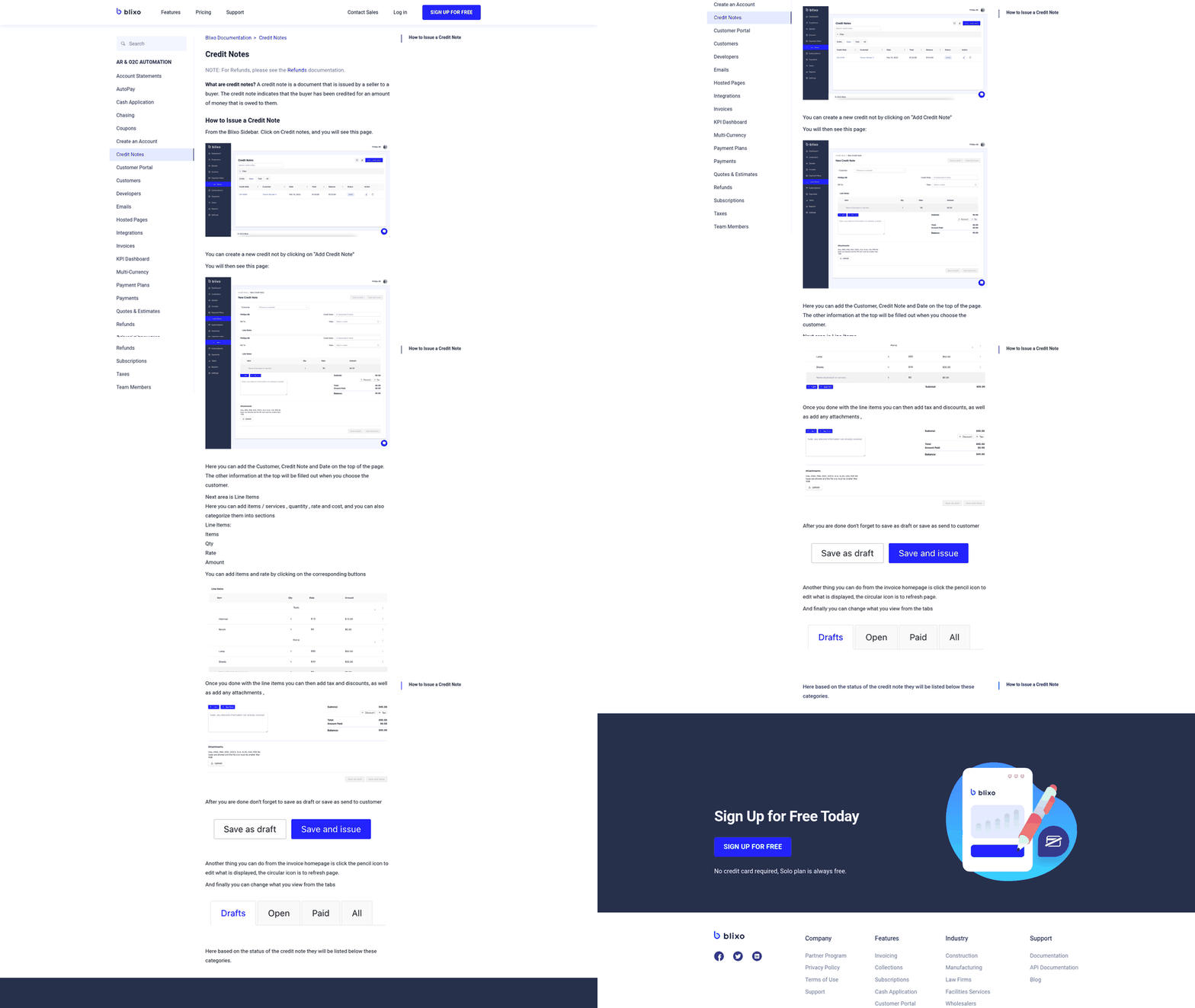
Credit note workflows vary by billing system. If your team needs automated credit application or matching, confirm those capabilities before committing.
Frequently Asked Questions
Which billing mistakes usually justify a credit note?
An invoice that includes an incorrect rate, quantity, discount, usage amount, or line item may require a credit note when the customer has been charged too much. The document should reflect the specific difference and identify the invoice affected. If the problem is a broader contract or service dispute, resolve the underlying approval question before calculating the adjustment.
Can a credit note be used when the customer has not paid the invoice?
Yes. The credit note can reduce the amount still owed without requiring a cash refund. The accounts receivable team should apply it to the relevant open balance and make sure the customer receives an updated explanation of what remains payable.
What information should a credit note contain?
It should identify the customer, include its own date and reference details, link back to the original invoice, state the reason for the adjustment, and show the affected lines or amount. Where relevant, include tax and discount information and retain any supporting approval or source record.
Why should the original invoice remain on file?
The original invoice records what was first billed. The credit note records the later correction. Keeping both documents allows a reviewer to follow the transaction from the initial charge through the adjustment instead of seeing only a changed balance with no explanation.
What should finance teams do with an unapplied credit?
Assign the credit to a refund or to a specific future invoice, and record who is responsible for completing that action. A credit left without an identified destination can create uncertainty in accounts receivable and make period-end reconciliation harder.