

What is RPA in Automation for Accounts Receivable

Key Takeaways
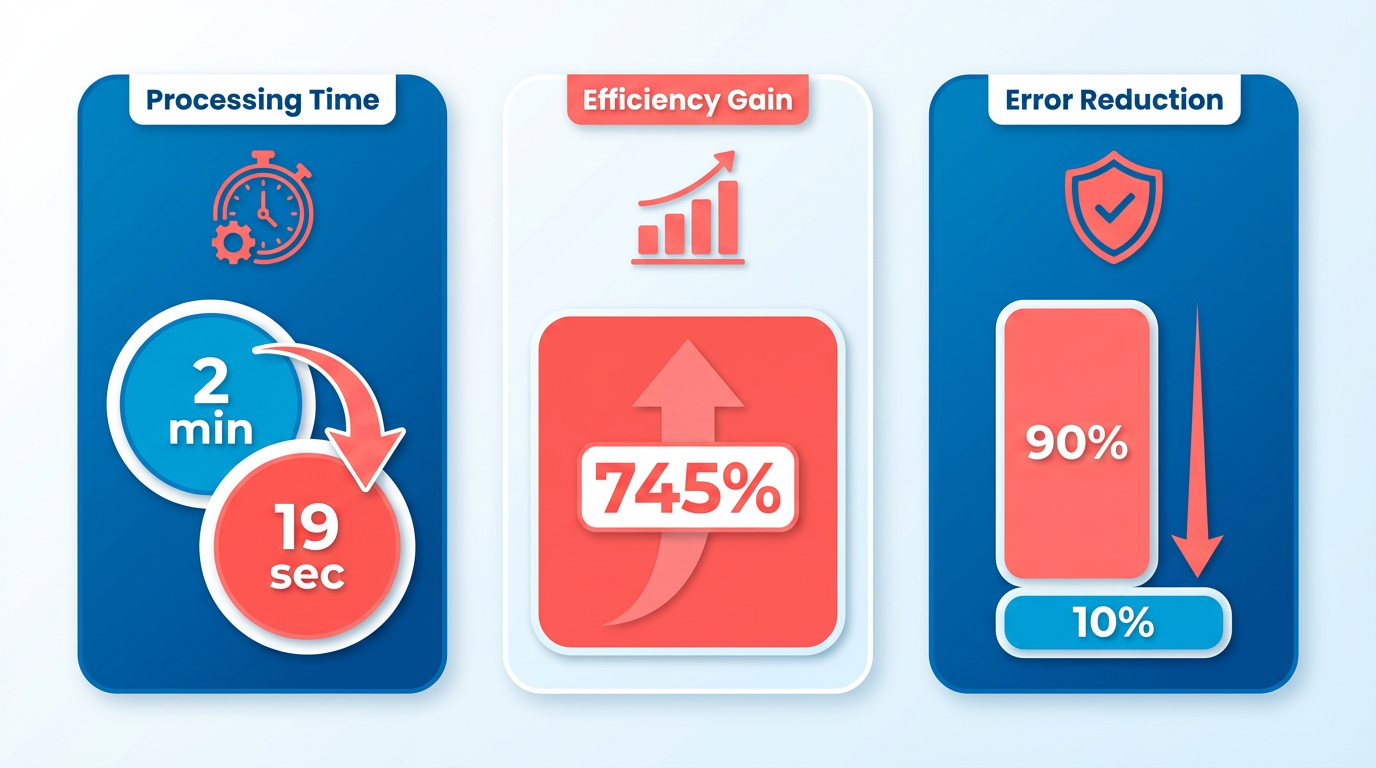
- RPA reduces invoice processing time from 2 minutes to 19 seconds, achieving a 745% efficiency gain.
- RPA cuts human error rates by up to 90%, minimizing disputes and ensuring accurate financial records.
- A healthcare provider boosted revenue by 60% by cutting collections time from 30 to 5 days using RPA.
- RPA automates AR tasks like invoice processing, payment reconciliation, and aging report generation.
- RPA improves cash flow and customer satisfaction by accelerating AR workflows and reducing errors.
- Real-world examples show RPA delivers measurable ROI across industries by streamlining AR operations.
- By eliminating manual data entry, RPA transforms AR from a time-consuming function into a strategic operation.
Why RPA Matters in Accounts Receivable
RPA addresses these pain points by automating repetitive tasks, reducing errors, and accelerating workflows. For a foundational understanding of how RPA operates in AR, refer to the Introduction to RPA in Accounts Receivable section. By streamlining AR processes, RPA not only boosts operational efficiency but also improves cash flow and customer satisfaction.
One study found that RPA can reduce invoice processing time from 2 minutes per task to just 19 seconds, achieving a 745% efficiency gain. These efficiency improvements align with broader benefits detailed in the Benefits of RPA in Accounts Receivable section. Additionally, RPA cuts human error rates by up to 90%, minimizing disputes and ensuring accurate financial records.
The ROI of RPA in AR is well-documented. A healthcare provider automated charge capture and claim processing, cutting collections time from 30 days to 5 days and boosting revenue by 60%. These outcomes are echoed in the Real-World Examples of RPA in Accounts Receivable section, which highlights similar successes across industries.
Introduction to RPA in Accounts Receivable
RPA is a technology that uses software “bots” to mimic human actions in digital systems, automating repetitive, rule-based tasks. In accounts receivable (AR), RPA streamlines processes like invoice processing, payment reconciliation, and aging report generation. By eliminating manual data entry and reducing errors, RPA transforms AR from a time-consuming function into a strategic, efficiency-driven operation. This rule-based automation ensures consistency and accuracy, reducing the risk of human error, as detailed in the Benefits of RPA in Accounts Receivable section.. RPA in AR automates tasks that traditionally require manual effort, such as matching invoices to purchase orders, posting payments, and identifying discrepancies. Unlike traditional workflows, RPA operates across systems without requiring changes to existing infrastructure, making it ideal for companies using legacy ERP platforms like SAP or Oracle. For example, a bot can extract data from an invoice PDF, validate it against a purchase order, and update the accounting system-all in seconds. This seamless integration aligns with the challenges discussed in the Challenges and Limitations of RPA in Accounts Receivable section.. RPA solutions fall into two categories: attended and unattended. Attended bots work alongside humans, assisting with tasks like data entry in real-time. Unattended bots, by contrast, run autonomously, handling high-volume tasks such as overnight batch processing of payments. Hybrid models combine both, allowing for seamless transitions between human and machine workflows. This flexibility is critical for addressing the integration complexities mentioned in the RPA Implementation in Accounts Receivable section.. RPA’s impact in AR is vast. Consider invoice processing: Bots can scan incoming invoices, extract line items, and flag discrepancies in real-time. One company reported a 745% efficiency gain by automating invoice validation, cutting processing time from 2 minutes 41 seconds to 19 seconds. Payment reconciliation is another area where RPA shines. Bots match incoming payments to open invoices, automatically applying funds and generating alerts for mismatches. This reduces Days Sales Outstanding (DSO) by accelerating cash application. Additionally, RPA automates aging report generation, providing real-time visibility into outstanding receivables and enabling proactive collections. For instance, a bot can send payment reminders based on predefined schedules, improving customer satisfaction and reducing late fees. These applications are further illustrated in the Real-World Examples of RPA in Accounts Receivable section.. The benefits of RPA are measurable. Studies show RPA can reduce processing time by 50–80% and cut human errors by up to 90%. Faster invoice cycles and automated reconciliation also lower DSO, improving cash flow. For example, one firm reduced its AR cycle time by 50–70% using RPA for cash application. Beyond efficiency, RPA frees finance teams from repetitive tasks, allowing them to focus on strategic analysis and customer relationships.. While RPA offers significant advantages, implementation hurdles exist. Integration with legacy systems can be complex, requiring custom workflows to bridge gaps between ERPs and AR platforms. Data security is another concern, as bots handle sensitive financial information. Change management is also critical-teams must adapt to new workflows and upskill in RPA tools. Despite these challenges, structured planning and phased rollouts mitigate risks.. RPA is reshaping accounts receivable by turning manual, error-prone tasks into automated, data-driven processes. From accelerating invoice cycles to minimizing reconciliation delays, its benefits are clear. However, success depends on careful planning, integration strategies, and a focus on employee training. As adoption grows-70.3% of companies already use RPA in finance-the technology will continue to redefine AR as a strategic asset. For organizations ready to embrace automation, RPA offers a pathway to operational excellence and competitive advantage. The Best Practices for RPA Implementation in Accounts Receivable section outlines strategies for achieving these outcomes.
RPA Implementation in Accounts Receivable
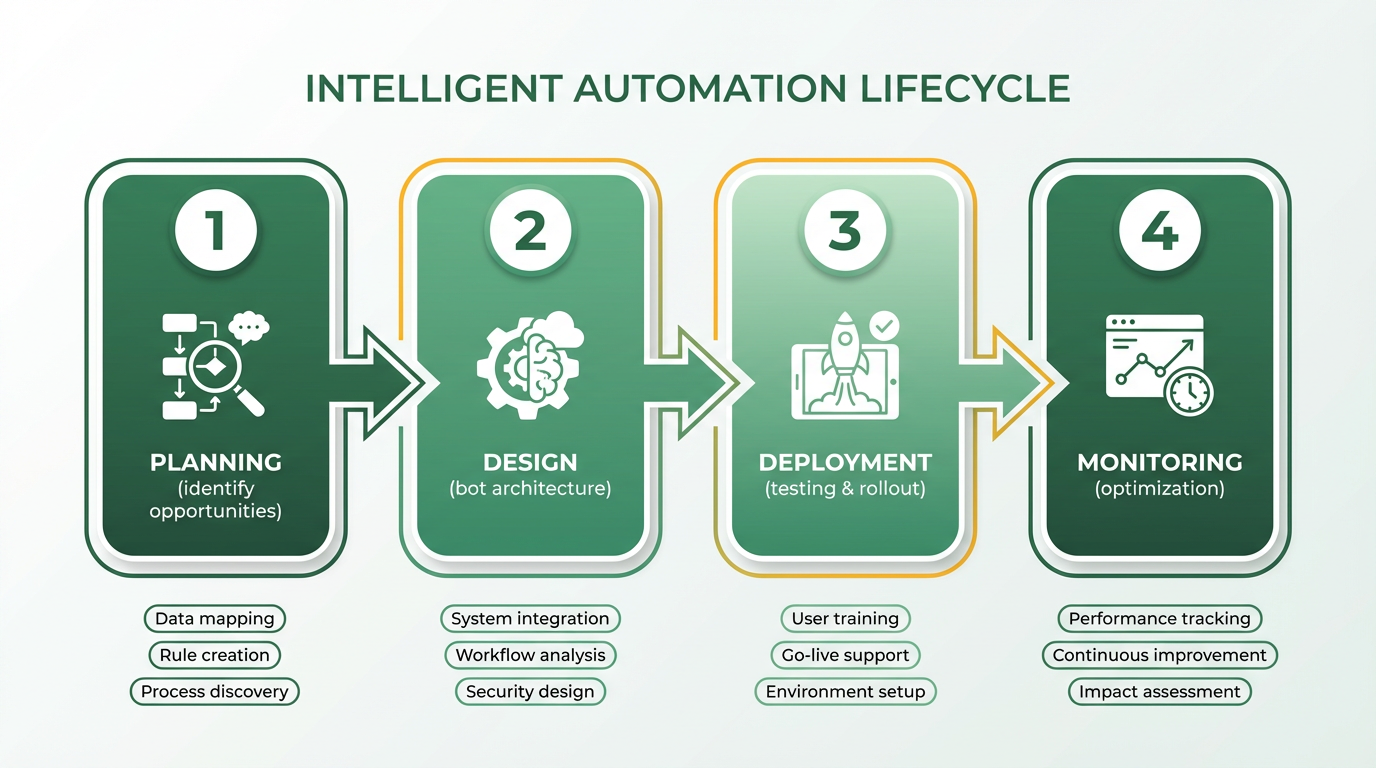
Implementing Robotic Process Automation (RPA) in accounts receivable (AR) requires a structured approach to ensure efficiency, scalability, and measurable outcomes. Below is a step-by-step guide covering planning, design, deployment, and post-implementation phases, supported by technical insights and anonymized case studies..
Planning Phase: Identifying Automation Opportunities
What to prioritize? Focus on repetitive, high-volume tasks like payment matching, invoice processing, and exception resolution.
- Assess Feasibility.
- Map AR workflows to identify bottlenecks (e.g., manual invoice reconciliation, delayed payment follow-ups).
- Evaluate process complexity: RPA excels in rule-based tasks with minimal human judgment.
- Example: One company reduced invoice processing time by 70% by automating data entry and matching rules.
- Define Objectives.
- Set KPIs such as Days Sales Outstanding (DSO), error rates, and cost per invoice.
- Align automation with business goals like improving cash flow or reducing manual workloads. As mentioned in the Benefits of RPA in Accounts Receivable section, these KPIs directly contribute to operational efficiency.
- Technical Readiness.
- Audit existing systems (e.g., ERP, payment gateways) for integration compatibility.
- Ensure data quality: Clean, standardized data reduces errors in RPA execution..
Design Phase: Creating a Blueprint for RPA
How to structure automation? Build a scalable framework with modular components.
- Blueprint Development.
- Define workflows for bots:
- Automated Payment Upload: Bots ingest bank or payment gateway data to populate AR systems.
- Matching Rules: Configure logic to match payments to invoices based on reference numbers, dates, and amounts.
- Exception Handling: Design grids to flag mismatches (e.g., duplicate payments) and route to human review.
- Software Selection.
- Choose RPA platforms with AR-specific features (e.g., customizable matching rules, multi-company support).
- Technical Insight: Bots should integrate with accounting systems via APIs or screen scraping, ensuring real-time data flow. Building on concepts from the Challenges and Limitations of RPA in Accounts Receivable section, ensuring compatibility is crucial for successful integration.
- Pilot Testing
- Start with a small process (e.g., payment reconciliation) to validate performance.
- Example: A service provider reduced manual intervention in exception resolution by 80% during a pilot phase..
Post-Implementation Phase: Monitoring and Maintenance
How to sustain success? Continuously refine automation based on feedback and evolving needs.
- Performance Monitoring.
- Track KPIs like DSO, error rates, and processing time.
- Use analytics to identify underperforming workflows (e.g., recurring exceptions).
- Iterative Optimization.
- Update bot logic to adapt to new payment methods or regulatory changes.
- Example: A provider reduced DSO by 25% by refining matching rules after three months of monitoring.
- Scalability Planning.
- Expand automation to additional AR functions (e.g., credit limit checks, dispute resolution).
- Technical Insight: Cloud-based RPA architectures support growing transaction volumes without infrastructure overhauls..
Key Considerations for Long-Term Success
- Change Management: Address resistance by involving AR teams early in the design process. As outlined in the Best Practices for RPA Implementation in Accounts Receivable section, early stakeholder involvement is a foundational step.
- Compliance: Ensure bots adhere to data privacy laws (e.g., GDPR) and internal audit protocols.
- Vendor Support: Partner with a provider offering transparent pricing and post-deployment support (e.g., Blixo).
By following this roadmap, organizations can transform AR from a manual, error-prone function into a streamlined, data-driven process. The result? Faster payment cycles, reduced operational costs, and a foundation for future AI-driven automation.
Benefits of RPA in Accounts Receivable
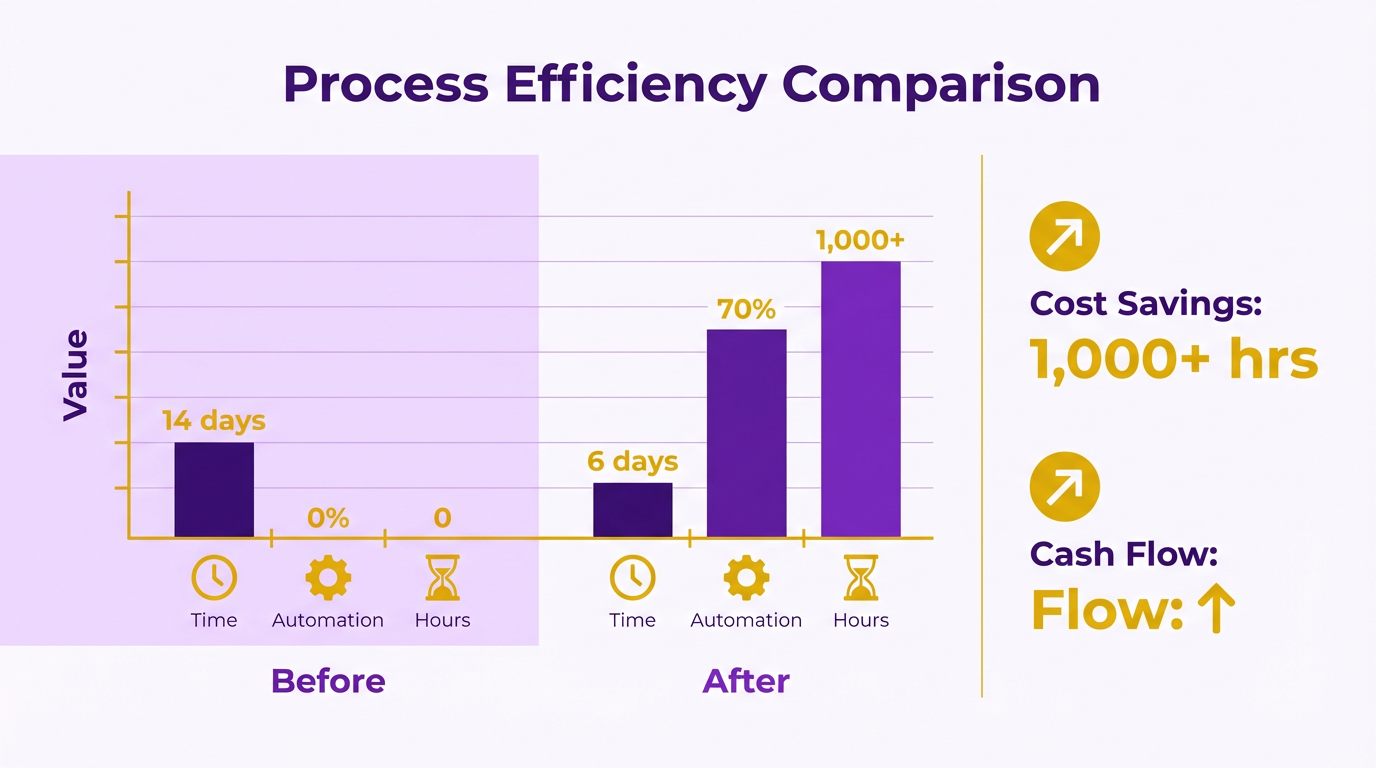
How RPA Boosts Efficiency in Accounts Receivable. RPA eliminates repetitive, manual tasks in accounts receivable, slashing processing times and freeing staff for strategic work. By automating invoice matching, payment reconciliation, and aging report generation, RPA reduces hours of manual effort. For instance, one company automated 70% of its invoice submissions, cutting processing time from two weeks to six days and saving over 1,000 person-hours annually. Automation ensures tasks like data entry and payment tracking are completed in minutes rather than hours, allowing finance teams to focus on analyzing cash flow and resolving complex disputes. As outlined in the RPA Implementation in Accounts Receivable section, successful automation hinges on aligning workflows with business objectives.
Reducing Errors and Enhancing Accuracy
Manual data entry in AR processes is prone to mistakes, leading to misapplied payments and disputes. RPA minimizes human error by consistently following predefined rules, such as matching payment amounts to open invoices. Studies show automation reduces data entry errors by up to 90%, directly lowering invoice disputes. For example, one healthcare provider reported a 25% decrease in days sales outstanding (DSO) after implementing RPA, largely due to fewer errors in payment matching. Accuracy improvements also strengthen internal controls, ensuring compliance with financial reporting standards.
Cost Savings and Resource Optimization
RPA significantly lowers operational costs by reducing labor for high-volume tasks and minimizing errors that require rework. BillingParadise highlights that automation cuts labor costs by streamlining workflows and reducing manual interventions. One organization saw a 15–20% drop in operating expenses after deploying RPA, with savings tied to faster processing and fewer staff hours spent on corrections. Additionally, resource allocation improves as teams shift from repetitive tasks to value-added activities like customer relationship management and financial forecasting. As noted in the Why RPA Matters in Accounts Receivable section, these savings directly address the inefficiencies of manual AR processes.
Real-World Impact of RPA in AR
Businesses across industries report tangible benefits from RPA adoption. A medical manufacturing firm automated invoice processing using RPA, reducing processing time by 70% and saving 1,000+ hours yearly. Another healthcare provider achieved a 60% revenue increase by accelerating collections and improving payment accuracy. These examples underscore how scalable automation transforms AR from a cost center into a strategic asset, enhancing cash flow and operational agility. As highlighted in the Real-World Examples of RPA in Accounts Receivable section, such case studies demonstrate consistent ROI across sectors.
Why RPA Outperforms Traditional Methods
Unlike manual processes or generic software, RPA adapts to evolving workflows and integrates seamlessly with existing systems like ERP platforms. For example, UiPath’s bots can extract data from emails, PDFs, and portals, ensuring compatibility with diverse document formats. This flexibility contrasts with traditional tools that require rigid input structures. Intelligent automation also learns from exceptions, improving over time-unlike static rule-based systems that demand frequent updates. By combining speed, accuracy, and adaptability, RPA offers a sustainable solution for modern AR challenges. As explained in the RPA Implementation in Accounts Receivable section, these capabilities are critical for overcoming integration challenges during deployment.
Challenges and Limitations of RPA in Accounts Receivable
The challenge grows when multiple departments rely on disjointed tools-such as separate systems for invoicing, payment tracking, and customer databases-requiring RPA to synchronize data across silos. This complexity increases setup time and costs. As mentioned in the Introduction to RPA in Accounts Receivable section, RPA bots operate within existing digital systems, making integration with fragmented infrastructure particularly demanding. Unlike generic providers, Blixo addresses this by offering pre-built integration templates for common accounting software, reducing manual configuration.
…
Without proactive maintenance, small issues-like a bot misreading a new invoice layout-can snowball into widespread errors. Building on concepts from the Best Practices for RPA Implementation in Accounts Receivable section, organizations must embed ongoing monitoring into their automation strategies to adapt to evolving processes. Blixo’s maintenance framework includes real-time dashboards and machine learning-driven anomaly detection, minimizing manual intervention.
…
Security concerns arise because RPA bots handle sensitive financial data, making them targets for cyberattacks. As highlighted in the Why RPA Matters in Accounts Receivable section, the efficiency gains of automation must be balanced with rigorous safeguards to protect data integrity. Blixo mitigates these risks by embedding zero-trust security models into its RPA architecture, ensuring data remains protected at every interaction point.
…
As companies expand, their RPA infrastructure must scale to handle increased transaction volumes and more complex workflows. A global e-commerce platform found its initial RPA setup couldn’t process surging payment reconciliations during peak seasons, leading to bottlenecks. Building on concepts from the RPA Implementation in Accounts Receivable section, effective scaling requires not only additional bots but also strategic resource allocation and workflow optimization. Cloud-based RPA solutions, like those offered by Blixo, allow businesses to dynamically adjust resources based on demand, reducing both costs and downtime.
Real-World Examples of RPA in Accounts Receivable
This example aligns with findings from the AICPA-CIMA webcast, which highlights RPA’s ability to eliminate repetitive tasks while improving operational efficiency, as detailed in the Benefits of RPA in Accounts Receivable section.
…DSO improved by 15 days, accelerating cash flow, a key focus area discussed in the Why RPA Matters in Accounts Receivable section.
Start Small, Scale Strategically: Begin with high-volume, rule-based tasks (e.g., invoice matching) to prove ROI before expanding, a strategy emphasized in the Best Practices for RPA Implementation in Accounts Receivable section.
Future of RPA in Accounts Receivable
The future of RPA in accounts receivable (AR) is being reshaped by advancements in artificial intelligence (AI), machine learning (ML), and hybrid automation strategies. These technologies are not just enhancing existing RPA capabilities but also enable new applications like predictive analytics, natural language processing, and self-learning systems. Below is a structured exploration of emerging trends, their implications, and challenges ahead..
What Emerging Trends Are Driving RPA in AR?
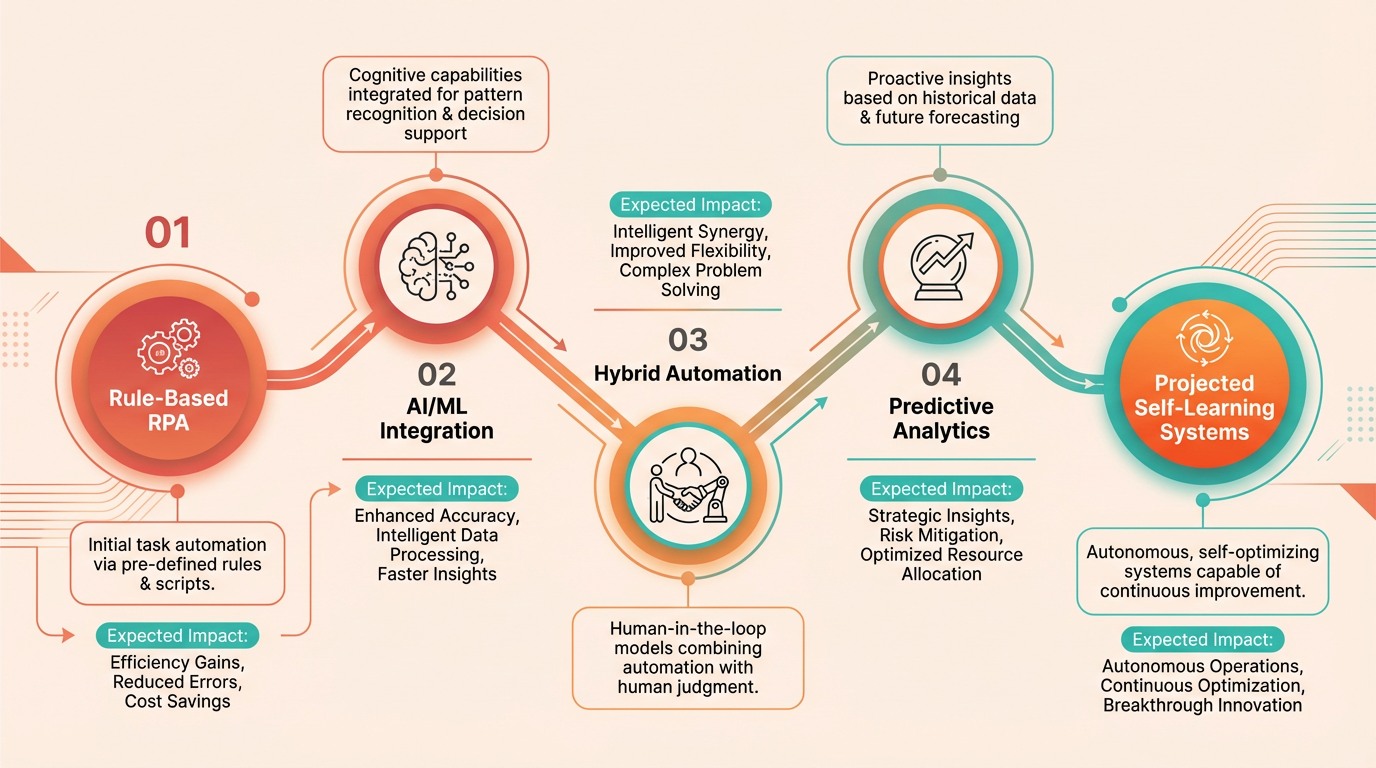
The most significant trend is the integration of generative AI (GenAI) with traditional RPA. While RPA excels at structured tasks like invoice matching and cash application, GenAI addresses unstructured data-such as email inquiries, handwritten notes, or ambiguous payment terms-through natural language understanding. For example, GenAI-powered optical character recognition (OCR) now achieves 90–95% accuracy on receipts, drastically reducing manual review time. Combined with RPA, this hybrid model automates end-to-end processes, from parsing unstructured data to applying predictive analytics for cash-flow forecasting. As mentioned in the Introduction to RPA in Accounts Receivable section, RPA’s foundation in rule-based automation complements GenAI’s flexibility, enabling seamless workflow automation.
Another trend is the rise of self-learning systems. Machine learning algorithms embedded in RPA tools can analyze historical payment patterns to predict delays or defaults, enabling proactive collections. For instance, one company reduced AR turnover days by using GenAI to flag high-risk accounts before payment deadlines, a task that previously required manual intervention..
How Will RPA Evolution Transform AR Workflows?
Future RPA applications will focus on predictive automation and context-aware decision-making. Consider an AR system that not only reconciles transactions but also forecasts liquidity gaps by analyzing macroeconomic trends and customer behavior. Such capabilities require RPA to work alongside AI models trained on vast datasets. For example, RPA bots could automate routine reconciliations while GenAI handles complex tasks like interpreting ambiguous contractual terms or generating personalized payment reminders via email.
Another shift is toward conversational automation. Generative AI enables chatbots to resolve customer disputes or answer payment-related queries in real time. A hybrid RPA-GenAI system could route structured requests (e.g., payment status checks) to RPA for instant processing while escalating unstructured issues (e.g., a customer disputing an invoice due to a missing delivery) to GenAI for nuanced resolution. This reduces reliance on human agents for repetitive tasks while ensuring complex cases receive contextual analysis..
What Challenges Will RPA Face in the Future?
Despite its promise, emerging trends pose challenges. Data privacy and compliance remain critical concerns, especially as GenAI processes sensitive customer information. Unlike rule-based RPA, generative models can produce unpredictable outputs, requiring rigorous validation. For example, a GenAI chatbot might misinterpret a customer’s request, leading to errors in payment terms. Human oversight is still necessary, particularly in regulated industries.
Integration complexity is another hurdle. Combining RPA with GenAI demands strong infrastructure and interoperability between legacy systems and new AI models. Smaller organizations may struggle with the upfront investment, though SaaS providers like Blixo offer scalable solutions that minimize customization costs. Building on concepts from the RPA Implementation in Accounts Receivable section, integration complexity is another hurdle. Unlike generic providers, Blixo prioritizes seamless integration with existing AR workflows, ensuring minimal disruption during deployment..
What Real-World Examples Highlight These Trends?
Businesses are already adopting hybrid RPA-GenAI models. One organization automated 80% of its AR processes using RPA for invoice matching and cash application while deploying GenAI to analyze unstructured data like scanned receipts and customer emails. This reduced processing time by 50–70% and cut manual exceptions by 40%. Another example involves predictive analytics: by training ML models on historical payment data, a company improved its cash-flow accuracy by 30%, enabling better financial planning.
These cases underscore a key takeaway: the future of RPA in AR lies not in replacing human expertise but in augmenting it. By automating deterministic tasks and delegating ambiguous scenarios to intelligent systems, organizations can achieve a balance of efficiency and adaptability..
What Lies Ahead?
The next frontier for RPA in AR includes autonomous process optimization, where AI continuously refines workflows based on performance data. For example, an RPA system might adjust reconciliation rules dynamically as payment patterns evolve. Additionally, advancements in multimodal AI-processing text, images, and speech-will further streamline tasks like document classification and voice-based payment confirmations.
However, success hinges on strategic implementation. Companies must prioritize use cases where RPA’s strengths align with business goals while investing in training to manage hybrid systems. For organizations seeking a partner that combines RPA maturity with AI innovation, solutions like Blixo provide a roadmap for future-proofing AR operations without compromising control or compliance.
Best Practices for RPA Implementation in Accounts Receivable
What Makes Planning the Most Critical Step?
Planning sets the foundation for successful RPA implementation in accounts receivable. Start by mapping your current workflows to identify repetitive, rule-based tasks like invoice processing, payment reconciliation, or customer communication. Prioritize these tasks based on volume, error rates, and time spent. For example, one company reduced invoice processing time by 40% by automating data entry and validation. As mentioned in the Why RPA Matters in Accounts Receivable section, manual processes are prone to errors, making automation critical for accuracy and efficiency.
Conduct a feasibility assessment to evaluate technical readiness. Check if your systems support integration with RPA tools and if your data is structured consistently. Involve stakeholders early to align automation goals with business priorities. A gap analysis will highlight areas where RPA can deliver the most value.
How Should You Design Your RPA Implementation?
Create a detailed blueprint outlining automation processes, including triggers, data sources, and output formats. Use flowcharts to visualize each step and define error-handling rules. For instance, design workflows that flag mismatched invoice amounts or delayed payments for human review. Building on concepts from the RPA Implementation in Accounts Receivable section, select tools that support both unattended and attended automation to address varying process complexity.
Select RPA software that matches your scalability needs. Look for tools with built-in analytics to track performance metrics like processing speed and error rates. Ensure the platform supports both unattended bots for batch processing and attended bots for hybrid tasks requiring user input.
What Steps Ensure Smooth Deployment?
Begin with a pilot project to test automation in a controlled environment. Start with a single process, like payment reminders, and measure outcomes against KPIs such as resolution time and customer satisfaction. Iterate based on feedback before scaling.
Conduct rigorous testing to validate accuracy. Simulate edge cases, such as incomplete customer data or late payments, to ensure the system handles exceptions. Train finance teams to collaborate with bots and intervene when necessary.
How Do You Maintain RPA Systems Post-Implementation?
Monitor performance continuously using dashboards that track metrics like task completion rates and system uptime. Schedule regular audits to update automation rules as business needs evolve. For example, adjust bots to accommodate new payment methods or regulatory changes. As highlighted in the Future of RPA in Accounts Receivable section, staying proactive about technological advancements ensures long-term relevance and efficiency.
Establish a feedback loop with users to identify pain points. One company improved bot efficiency by 30% after addressing user-reported delays in report generation. Regularly update software to use new features and security patches.
Can You Share Examples of Successful RPA Adoption?
A medium-sized business automated its accounts receivable reconciliation process, cutting manual effort from 30 hours weekly to under 5. The system reduced errors by 65% and freed staff to focus on customer disputes. Another organization integrated RPA with its customer portal, enabling real-time payment tracking and reducing invoice query calls by 50%.
What Common Pitfalls Should You Avoid?
Skipping workflow analysis leads to automating the wrong tasks. One team wasted resources automating low-impact data entry instead of prioritizing high-volume invoice processing. Avoid over-automation by reserving complex decision-making for human teams. Ensure cybersecurity protocols are in place to protect sensitive financial data.
By following these steps, you can align RPA with strategic goals while maximizing efficiency and accuracy in accounts receivable operations.
Frequently Asked Questions
1. What is RPA in accounts receivable?
RPA uses software bots to automate repetitive AR tasks like invoice processing and payment reconciliation. It reduces manual effort, errors, and processing time, improving efficiency and accuracy in managing receivables.
2. How much time does RPA save in invoice processing?
RPA reduces invoice processing time from 2 minutes to 19 seconds, achieving a 745% efficiency gain by automating data entry and verification tasks. This significantly accelerates accounts receivable workflows.
3. Can RPA reduce human errors in AR processes?
Yes, RPA cuts human error rates by up to 90%, minimizing disputes and ensuring accurate financial records. Automated processes eliminate manual data entry mistakes and enforce consistent rules.
4. What are real-world benefits of RPA in AR?
A healthcare provider reduced collections time from 30 to 5 days using RPA, boosting revenue by 60%. The technology streamlines workflows, improves cash flow, and enhances customer satisfaction.
5. What ROI can businesses expect from RPA in AR?
RPA delivers measurable ROI by cutting processing costs, accelerating cash flow, and reducing errors. Businesses report up to 60% revenue increases and 745% efficiency gains in accounts receivable operations.
6. Which AR tasks does RPA automate?
RPA automates invoice processing, payment reconciliation, aging report generation, and customer communications. These tasks are handled by bots, freeing staff for strategic work and reducing manual intervention.
7. How does RPA improve cash flow?
RPA accelerates accounts receivable workflows by automating payment tracking and collections, reducing delays. This ensures faster invoice processing and quicker cash receipt, improving overall liquidity and operational efficiency.