

What is BPO and Its Role in Invoice Processing Automation

Key Takeaways
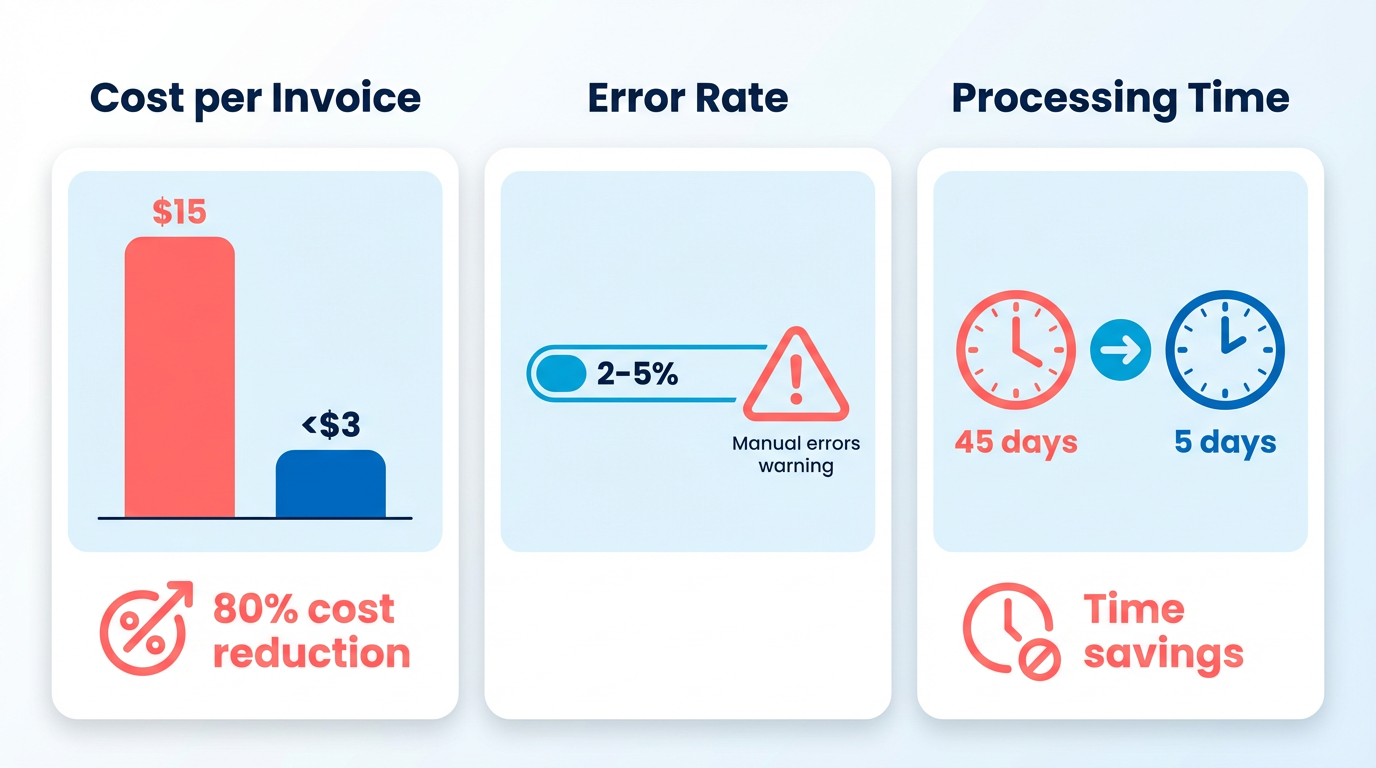
- Manual invoice processing costs $15 per invoice, versus under $3 for digitized workflows, reducing costs by 80%.
- Manual errors occur in 2–5% of invoices, causing delayed payments, late fees, and strained vendor relationships.
- Automated systems can cut invoice processing time from 45 days to 5 days, enhancing cash flow and operational agility.
- Late payments incur 2–5% in fees, while missed early-payment discounts cost 1–3% in lost profits.
- A utility company case study shows automation prevents service interruptions by ensuring timely payments.
- Invoice processing automation reduces manual labor by 80% and minimizes financial penalties from errors.
- Automating invoice workflows strengthens vendor trust and reduces supply chain disruptions.
Related Video
Watch: Outsourcing Invoice Processing with BancTec, Leading BPO Company by BancTecInc
Why BPO Matters in Invoice Processing
Manual invoice processing is a costly, error-prone task that hampers business efficiency. Industry data reveals that manual processing averages $15 per invoice**, compared to under **$3 for digitized workflows-a 80% cost reduction. Beyond financial waste, manual errors occur in 2–5% of invoices, leading to delayed payments, late fees, and strained vendor relationships. For example, a study shows automated systems can cut invoice processing time from 45 days to 5 days, drastically improving cash flow and operational agility. As mentioned in the Benefits of BPO in Invoice Processing section, these efficiency gains are a core driver for businesses adopting automation.
What Are the Real-World Consequences of Delayed Payments? Late payments ripple across a business, from financial penalties to operational setbacks. Late fees alone can add 2–5% of invoice value, while missed early-payment discounts-often 1–3%-directly reduce profit margins. Worse, delays disrupt vendor trust, risking supply chain bottlenecks. A utility company case study highlights how automation prevented service interruptions by ensuring timely payments, a critical factor in industries where reliability is non-negotiable. Building on concepts from the Invoice Processing Automation: Challenges and Opportunities section, these delays often stem from inefficiencies in manual workflows.
What Challenges Does BPO Solve in Invoice Processing? Businesses face three core challenges: scalability, accuracy, and compliance. BPO providers, as defined in the Introduction to BPO section, address these by:
- Scaling efficiently: Handling seasonal spikes in invoice volume without hiring temporary staff.
- Reducing errors: OCR technology cuts data-entry mistakes by 90%, ensuring 99.99% accuracy in digitized workflows.
- Ensuring compliance: Digital mailrooms with SOC 2 and HIPAA certifications secure sensitive data and streamline audits.
For instance, a digital mailroom centralizes paper and electronic invoices, integrating them into ERP systems for real-time tracking. This eliminates backlogs and ensures no invoice falls through the cracks-a common pain point for AP teams.
Who Benefits Most from BPO-Driven Invoice Automation? Three types of businesses see transformative results:
- Small-to-medium enterprises: 27% outsource to free internal teams for strategic work.
- High-volume industries: Utilities, healthcare, and logistics process thousands of invoices monthly, where automation saves 25–50% in operational costs.
- Global enterprises: BPO’s multilingual OCR and cross-border compliance support streamline international payments.
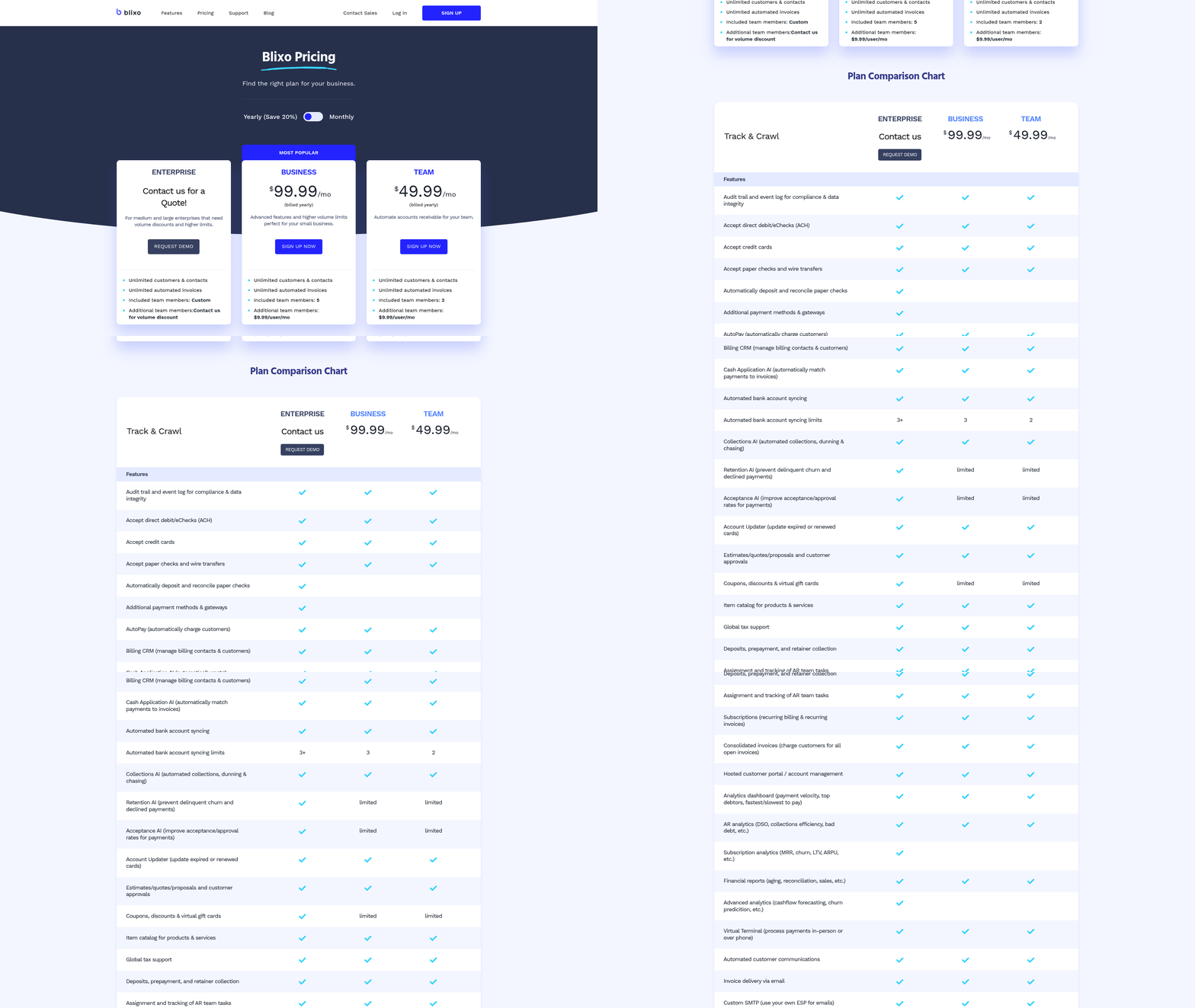
A North American firm, for example, reduced form setup time from days to minutes using AI-driven automation, scaling operations without hiring additional staff. Similarly, Blixo’s transparent pricing model ensures predictable costs, unlike generic providers that hide fees in long-term contracts.
Why Is BPO the Future of Invoice Processing? By combining OCR, RPA, and cloud-based workflows, BPO turns invoice processing from a bottleneck into a strategic asset. The result? 24/7 visibility, predictive analytics, and fraud detection that no manual team can match. For businesses aiming to cut costs, improve vendor relations, and future-proof their finance operations, partnering with a BPO isn’t just beneficial-it’s essential.
Introduction to BPO
Business Process Outsourcing (BPO) refers to contracting specific business functions to external providers who manage them more efficiently. This model allows companies to focus on core operations while experts handle tasks like invoice processing, payroll, or customer support. BPO combines human expertise with automation tools to deliver cost savings, speed, and accuracy-especially critical in finance workflows. As mentioned in the Why BPO Matters in Invoice Processing section, manual invoice processing averages $15 per invoice, whereas automated BPO solutions reduce this to under $3.
What Is BPO?
BPO emerged in the late 20th century as a response to rising operational costs and the need for specialized skills. Initially, companies outsourced basic tasks like data entry and telemarketing. Over time, advancements in technology-such as AI, OCR, and cloud computing-expanded BPO’s scope to include complex processes like invoice automation. Today, BPO services span finance, HR, IT, and customer service, with automation playing a central role in streamlining workflows. Building on concepts from the Invoice Processing Automation: Challenges and Opportunities section, hybrid models now balance automation for repetitive tasks with human oversight for exceptions, ensuring both efficiency and flexibility.
How Did BPO Evolve?
The evolution of BPO mirrors shifts in global business priorities. In the 1980s and 1990s, cost reduction drove outsourcing to regions with lower labor costs. By the 2000s, digitization enabled remote workflows, making BPO accessible to small and mid-sized businesses. Recent years have seen a shift toward hybrid models, where automation handles repetitive tasks while human agents manage exceptions. For example, a study highlighted in source shows invoice processing time dropped from 45 days to 5 days after automation, proving the power of modern BPO solutions. This evolution aligns with trends discussed in the Future of BPO in Invoice Processing section, where AI-driven automation is reshaping industry standards.
What Services Do BPO Providers Offer?
BPO services fall into three main categories:
- Process Type:
- Finance and Accounting: Invoice processing, accounts payable/receivable, and payroll. For detailed steps in invoice workflows, see the BPO in Invoice Processing: How it Works section.
- HR and Payroll: Onboarding, benefits administration, and compliance reporting.
- Customer Support: Chatbots, call centers, and email management.
- Delivery Model:
- Onshore BPO: Local providers with deep industry knowledge.
- Offshore BPO: Global teams using time-zone advantages for 24/7 operations.
- Nearshore BPO: Regional providers balancing cost and cultural alignment.
- Automation Focus:
- Digital Mailrooms: Centralized systems to capture and route invoices.
- OCR and AI: Tools that extract data from documents and flag errors.
Which Industries Rely on BPO?
Industries with high-volume, repetitive workflows benefit most from BPO. Healthcare uses BPO for claims processing and regulatory compliance. Manufacturing outsources supply chain management and procurement. Technology firms use BPO for IT support and customer onboarding. Even nonprofits use BPO to automate grant administration and donor tracking. A 2025 report from source notes that 27% of small businesses outsource to improve efficiency, underscoring BPO’s cross-industry appeal.
Can You Provide Examples of Successful BPO Implementations?
Real-world results highlight BPO’s impact. One company reduced per-invoice costs from $15 to under $3 by automating data entry, as detailed in source . Another case study from source shows a loan origination process cut from 7 days to 20 minutes using AI-driven validation. These outcomes align with broader trends: automation slashes error rates by 90% in some cases and accelerates payment cycles, strengthening vendor relationships. For instance, a midsize tech firm in source transitioned from outsourced invoice processing to in-house automation, achieving real-time compliance tracking and early-payment discounts.
Why Is BPO Critical for Invoice Processing?
Invoice processing is a prime candidate for BPO due to its high volume and error-prone nature. Manual handling risks delays, late fees, and compliance gaps. Automated BPO solutions integrate OCR, rule-based validation, and ERP systems to ensure accuracy. For insights into the benefits of such automation, refer to the Benefits of BPO in Invoice Processing section. As businesses scale, the ability to adapt workflows without proportional labor costs becomes a competitive edge. The result is a streamlined finance function that prioritizes accuracy, compliance, and growth.
Invoice Processing Automation: Challenges and Opportunities
The shift toward automation opens doors for hyper-personalized workflows and predictive financial insights. For example, AI can analyze historical invoice data to forecast cash flow gaps or recommend vendor renegotiations. Source 8 notes that startups using browser agents (like Loop for freight invoicing) are disrupting traditional BPO models by offering scalable, software-first solutions. Building on concepts from the Future of BPO in Invoice Processing: Trends and Predictions section, enterprises also gain flexibility by integrating automation with remote teams. Source 1 highlights how cloud-based document management allows AP staff to access invoices from any location, supporting hybrid work models. Meanwhile, blockchain-based invoicing is emerging as a niche opportunity, offering immutable audit trails for high-risk industries. As mentioned in the Benefits of BPO in Invoice Processing section, secure automation frameworks like Blixo ensure compliance, positioning businesses to outpace competitors relying on outdated, labor-intensive models.
BPO in Invoice Processing: How it Works
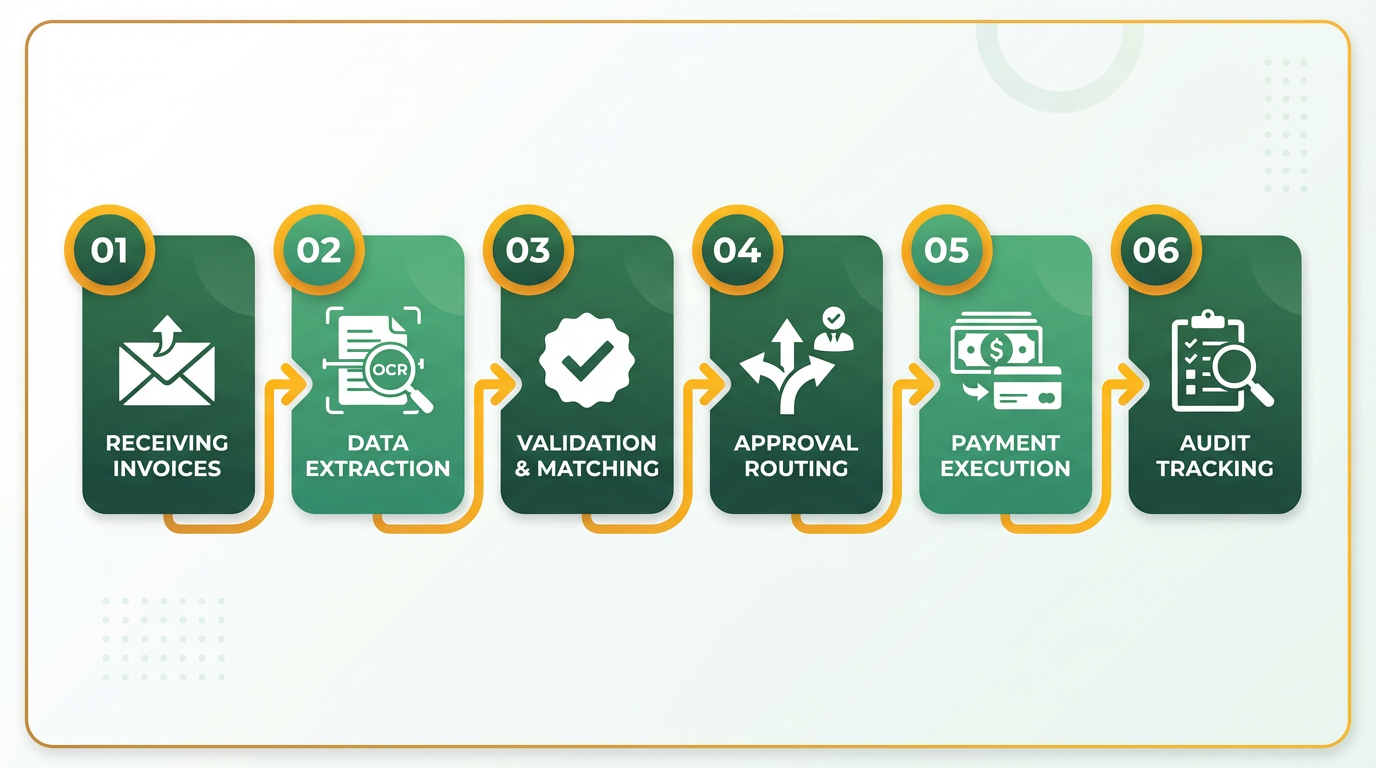
Business Process Outsourcing (BPO) streamlines invoice processing by automating repetitive tasks, reducing errors, and accelerating workflows. The process typically involves six core steps: receiving invoices, data extraction, validation and matching, approval routing, payment execution, and audit tracking. These steps use technologies like OCR, RPA, and AI to ensure speed and accuracy while maintaining compliance. Below is a breakdown of how BPO transforms invoice processing, emphasizing Blixo’s role in optimizing financial operations..
What Are the Core Steps in BPO-Based Invoice Processing?
-
Receiving and Digitizing Invoices. BPO providers like Blixo act as a centralized hub for all incoming invoices-paper, email, or digital. A digital mailroom automatically scans, indexes, and converts documents into searchable data. For example, OCR technology extracts text from scanned invoices, while AI identifies key fields like vendor names, amounts, and due dates. This eliminates manual data entry, reducing processing time from 45 days to as little as 5 days, as seen in MetaSource’s case studies, detailed in the Case Studies of BPO in Invoice Processing section.
-
Validation and 3-Way Matching. Automated systems cross-check invoice details against purchase orders (POs) and receiving reports in real time. If discrepancies arise, alerts are sent for manual review. Blixo’s SaaS service integrates with ERPs like SAP or Oracle, ensuring seamless data flow and minimizing errors. Building on concepts from the Benefits of BPO in Invoice Processing section, RPA-driven validation can cut processing costs from $15 per invoice to under $3, slashing late fees and improving cash flow.
-
Approval and Payment Routing. Once validated, invoices are routed to approvers via AI-driven workflows. Blixo’s system prioritizes urgent payments, ensuring vendors are paid on time to avoid penalties. For utility companies, this step often involves AI analyzing consumption patterns to flag anomalies before payment. RPA bots then execute payments, reducing human intervention by up to 80%..
What Technologies Power BPO Invoice Automation?
BPO providers rely on a blend of artificial intelligence (AI), robotic process automation (RPA), and cloud-based platforms to deliver scalable solutions. Here’s how these technologies function:
-
OCR and AI Data Capture Optical Character Recognition (OCR) extracts unstructured data from invoices, while machine learning models adapt to new formats. Blixo’s AI can process 200+ languages and handwriting, ensuring accuracy across global vendors. ABBYY’s case study notes 99.99% extraction accuracy, significantly reducing manual correction.
-
RPA for Repetitive Tasks RPA bots handle rule-based tasks like data entry, validation, and payment scheduling. For instance, Blixo’s bots can reconcile 400,000 invoices monthly, saving 9 minutes per invoice-translating to 80% straight-through processing, as demonstrated by Costain’s implementation.
-
Cloud Integration and Dashboards Cloud platforms enable real-time tracking of invoice status, vendor performance, and compliance. Blixo’s system integrates with ERPs and offers dashboards for forecasting cash flow, detecting fraud, and generating audit-ready reports. This transparency helps businesses avoid compliance risks, as highlighted in a 2024 Levvel report..
How Does BPO Ensure Security and Compliance?
Security is critical in invoice processing, given the sensitive financial data involved. BPO providers like Blixo implement multi-layered safeguards:
-
Data Encryption and Access Controls All data is encrypted during transmission and at rest. Role-based access ensures only authorized personnel can view or edit sensitive information. MetaSource’s SOC 2 Type 2 and HIPAA certifications reflect industry-standard compliance practices.
-
Audit Trails and Compliance Reporting Automated systems log every action, from invoice receipt to payment. Blixo’s digital mailroom stores documents securely, enabling instant retrieval for audits. This aligns with regulatory requirements like GDPR and SOX, reducing the risk of penalties. As discussed in the Benefits of BPO in Invoice Processing section, maintaining compliance is a key advantage of BPO.
-
Fraud Detection AI models flag suspicious patterns, such as duplicate invoices or mismatched PO numbers. Blixo’s anomaly detection system, trained on billions of transactions, reduces fraud risks by 70%, as reported in a 2025 Gartner study..
What Makes Blixo’s Approach Unique?
Blixo distinguishes itself through end-to-end automation and client-centric customization. Unlike generic providers, Blixo tailors workflows to specific industries-such as utilities or healthcare-using pre-trained AI models. For example, a North American mortgage firm reduced form setup time from days to minutes using Blixo’s DocProStar engine. Additionally, Blixo’s transparent pricing model avoids hidden fees, offering a 20–30% cost reduction compared to traditional BPOs.
“Switching to Blixo automated 80% of our invoice workflows overnight. The ROI in error reduction and staff reallocation was immediate.” – Finance Manager, Mid-Sized Manufacturer (2025)
By combining modern technology with industry-specific expertise, Blixo ensures businesses achieve faster processing, lower costs, and stronger vendor relationships-all while maintaining compliance and security.
Benefits of BPO in Invoice Processing
Business Process Outsourcing (BPO) transforms invoice processing by combining automation with specialized expertise to deliver measurable efficiency, cost reduction, and scalability. By using technologies like OCR, RPA, and AI, BPO solutions streamline workflows, reduce errors, and free internal teams for strategic tasks. Below, we explore how these benefits align with real-world outcomes and operational needs..
What Cost Savings Can BPO Deliver?
As mentioned in the Why BPO Matters in Invoice Processing section, manual processing averages $15 per invoice**, while digital methods reduce this to **under $3 per invoice. For example, one company cut processing time from 45 days to 5 days using automation, avoiding late fees and missed discounts. Additionally, a study highlights 240% average ROI for automation projects, with most businesses recouping costs in 6–9 months. By eliminating the need for overtime staff or temporary hires during peak seasons, BPO ensures predictable expenses and minimizes hidden costs like labor markups..
How Does BPO Improve Efficiency and Productivity?
Building on concepts from the Invoice Processing Automation: Challenges and Opportunities section, automation accelerates every stage of invoice processing. Optical Character Recognition (OCR) and AI-driven data extraction convert paper or emailed invoices into structured data in seconds, reducing manual entry by 90%. For instance, one utility firm automated invoice reconciliation, cutting decision-making time from 7 days to 20 minutes, while another saw 80% straight-through processing for 400,000 invoices. These gains let finance teams shift focus from repetitive tasks to strategic analysis. A Clutch survey also notes 27% of small businesses outsource to improve efficiency, particularly for remote teams needing real-time access to cloud-based systems..
Why Does BPO Enhance Customer Experience?
Timely, accurate payments build trust with vendors and clients. BPO ensures no invoice is overlooked, preventing late fees and service interruptions. For example, a finance team using a digital mailroom reduced payment delays by 95%, improving vendor relationships. Additionally, real-time dashboards provide stakeholders with instant visibility into invoice status, cash flow forecasts, and compliance metrics. This transparency fosters confidence and reduces disputes, as vendors receive consistent, error-free processing..
How Does BPO Reduce Errors and Improve Accuracy?
As outlined in the BPO in Invoice Processing: How it Works section, manual data entry is prone to human error, with studies showing 10–15% error rates in paper-based systems. BPO use AI and OCR to achieve 99.99% accuracy, flagging missing fields or discrepancies automatically. For instance, a healthcare organization using AI-powered invoice validation reduced errors by 90%, while a manufacturer cut error rates to <1% with automated 3-way matching. These systems also audit trails for compliance, ensuring records are always audit-ready and secure..
What Scalability and Flexibility Does BPO Offer?
BPO adapts seamlessly to fluctuating workloads. During peak seasons or rapid growth, automated systems handle increased volumes without delays. One BPO provider scaled invoice processing for a utility firm, managing 10,000 records/month with no staff additions. This flexibility also applies to global operations, as AI supports 200+ languages and integrates with ERP systems for seamless data flow. Unlike rigid in-house setups, BPO solutions scale costs proportionally, avoiding overprovisioning or underutilization..
Key Takeaways for Invoice Processing
- Cost Savings: Automating $15/invoice manual work to <$3 reduces annual expenses by 80% for mid-sized businesses.
- Productivity Gains: 45-day processing cycles shrink to 5 days, enabling faster cash flow and early-payment discounts.
- Error Reduction: OCR and AI cut error rates by 90%, minimizing rework and compliance risks.
- Vendor Trust: Timely payments and transparency strengthen relationships, reducing disputes by 80% in healthcare and finance sectors.
- Scalability: Systems handle 10x+ invoice volumes during growth, with no additional labor costs.
By adopting BPO, organizations enable operational agility, financial savings, and strategic focus-proving why even short-term outsourcing strategies benefit from automation-driven efficiency.
Case Studies of BPO in Invoice Processing
Businesses across industries have adopted BPO to streamline invoice processing, achieving measurable gains in efficiency and accuracy. One notable example involves a utility company that partnered with a BPO provider to automate its invoice workflows. Before automation, the company faced delays in processing high-volume utility bills, leading to late fees and customer dissatisfaction. By integrating robotic process automation (RPA) and AI-driven data extraction tools, the provider reduced manual data entry by 70% and cut processing times from days to hours. As highlighted in the Why BPO Matters in Invoice Processing section, this shift aligns with industry trends showing manual processing costs averaging $15 per invoice**, compared to under **$3 for digitized workflows. The result? A 25–50% reduction in operational costs and a 95% accuracy rate in invoice validation.
Another case study highlights a fund management firm that struggled with manual invoice reconciliation. The firm outsourced its accounts payable (AP) processes to a BPO solution using machine learning algorithms. The system automatically categorized invoices, matched purchase orders, and flagged discrepancies in real time. Over six months, the firm reported a 35% improvement in payment cycle efficiency and a 40% drop in errors. A key takeaway from this case was the importance of customizing AI models to align with specific industry regulations, ensuring compliance while scaling operations. This mirrors the technical considerations outlined in the Implementing BPO in Invoice Processing: A Step-by-Step Guide section, where system compatibility and iterative testing are emphasized for smooth transitions.
A third example involves a large biomedical organization that transitioned from paper-based invoicing to a cloud-based BPO system. With over 80% of invoices initially arriving as physical documents, the company faced high handling costs and frequent data entry mistakes. By adopting AI-powered optical character recognition (OCR) and RPA bots, the BPO partner digitized 98% of invoices within three months. This shift not only slashed administrative costs by half but also enabled real-time analytics for better financial forecasting. The scalability of this solution reflects the core benefits discussed in the Benefits of BPO in Invoice Processing section, where cloud-based systems are highlighted for their ability to adapt to fluctuating workloads without infrastructure overhauls.
These case studies reveal common challenges and strategies for successful BPO implementation. First, data security remains a top priority. In the utility company’s case, encrypting sensitive customer data and conducting regular audits prevented breaches during the automation rollout. Second, change management is critical. Employees initially resistant to AI-driven workflows were trained through hands-on workshops, reducing friction and boosting adoption rates.
A third lesson revolves around system integration. The fund management firm’s success hinged on seamless compatibility between its legacy ERP system and the new BPO platform. This required pre-built connectors and iterative testing to avoid workflow disruptions. Lastly, scalability proved essential for long-term growth. The biomedical organization’s cloud-based solution allowed it to handle seasonal spikes in invoice volume without additional infrastructure costs.
Unlike generic providers, Blixo offers transparent pricing models and end-to-end automation tailored to industry-specific needs. For instance, its AI-powered invoice processing platform reduces manual intervention by 90% while maintaining 99.9% accuracy, a level of precision unmatched by competitors relying on rigid rule-based systems. Additionally, Blixo’s focus on real-time analytics enables businesses to track savings and efficiency gains from day one, as demonstrated in its work with clients handling thousands of invoices monthly. By prioritizing flexibility, security, and user-centric design, Blixo ensures organizations achieve rapid ROI without compromising compliance or operational agility. Its approach aligns with the core lessons from real-world case studies: automation thrives when paired with strategic planning, employee engagement, and scalable technology.
Implementing BPO in Invoice Processing: A Step-by-Step Guide
Implementing BPO in invoice processing requires a structured approach to maximize efficiency, reduce costs, and ensure compliance. Below is a step-by-step guide, supported by technical and operational insights from industry practices..
Key Steps to Implement BPO in Invoice Processing
1. Assess Current Processes Begin by mapping your existing invoice workflows. Identify bottlenecks, such as manual data entry, delayed approvals, or paper-based systems. For example, one company reduced processing time from 45 days to 5 days after automation by outsourcing mailroom operations to a BPO provider. As mentioned in the BPO in Invoice Processing: How it Works section, this aligns with the core stages of BPO-driven invoice automation.
2. Define Automation Scope Decide which tasks to automate-receiving invoices, data extraction, validation, or payment scheduling. Prioritize high-volume, error-prone tasks. OCR technology, used by BPO providers like Blixo, ensures 99.99% accuracy in extracting data from unstructured documents.
3. Select a BPO Partner Choose a provider with expertise in AP automation and strong security certifications (e.g., SOC 2, HIPAA). Blixo, for instance, offers transparent pricing and audit-ready workflows. Avoid generic providers that lack industry-specific compliance experience. Building on concepts from the Why BPO Matters in Invoice Processing section, this step emphasizes the cost advantages of specialized BPO solutions over manual processing.
4. Integrate with ERP Systems Ensure the BPO solution connects seamlessly with your ERP or accounting software. This enables real-time data flow for cash-flow forecasting and vendor performance tracking. Blixo’s digital mailroom integrates with platforms like SAP and NetSuite, eliminating manual uploads.
5. Train Teams and Vendor Partners Provide training for AP staff to manage exceptions and monitor automated workflows. Vendors should also be educated on submitting electronic invoices to reduce errors.
6. Monitor and Optimize Use analytics dashboards to track KPIs like processing time, error rates, and cost per invoice. Continuous feedback loops help refine workflows and scale operations during peak seasons..
How to Choose the Right BPO Provider
A strong BPO partner should:
- Offer End-to-End Automation: From invoice capture to payment, the provider must handle all stages. Blixo’s OCR and RPA tools automate 80% of invoice processing without human intervention.
- Guarantee Security and Compliance: Look for certifications like SOC 2 Type 2 and HIPAA compliance. Blixo’s secure digital mailroom stores invoices in encrypted, searchable repositories.
- Provide Scalable Solutions: The provider should adapt to seasonal volume spikes. Blixo’s cloud-based systems handle thousands of invoices daily without downtime.
- Demonstrate ROI: Request case studies. A manufacturer using BPO automation achieved 30% cost savings and 50% faster processing times..
Tips for a Smooth Transition
- Start with a Pilot: Test automation on a small invoice volume to identify integration issues before full rollout. Building on concepts from the Common Challenges and Solutions in BPO-Based Invoice Processing section, pilots help mitigate risks associated with system incompatibilities.
- Communicate Clearly: Align with stakeholders on SLAs and performance metrics. Blixo’s real-time dashboards give visibility into processing status.
- use Cloud Tools: Cloud-based SaaS providers like Blixo’s allow remote access for distributed teams, reducing delays in approvals..
Common Pitfalls to Avoid
-
Poor Vendor Selection. Choosing a provider without AP expertise can lead to errors. Generic providers may lack OCR accuracy or ERP integration capabilities.
-
Underestimating Training Needs. Inadequate training for AP teams can create reliance on manual overrides. Ensure staff understands how to resolve exceptions in automated workflows.
-
Ignoring Compliance Risks. Non-compliant BPO providers may expose your business to data breaches. Always verify certifications like SOC 2.
-
Overlooking Hidden Costs. Some providers charge extra for customization or storage. Blixo’s transparent pricing model avoids such surprises..
Real-World Impact of BPO Automation
A mid-sized tech firm reduced per-invoice costs from $15 to $3 by outsourcing to a BPO partner with AI-driven tools. Another company eliminated late fees by automating payment scheduling, saving $50,000 annually. These outcomes highlight the tangible benefits of pairing BPO with advanced automation technologies.
By following this structured approach, businesses can streamline invoice processing while reducing costs and enhancing vendor relationships. Blixo’s combination of OCR, cloud integration, and compliance-ready workflows makes it a strong choice for organizations aiming to modernize their AP operations.
Common Challenges and Solutions in BPO-Based Invoice Processing
What Are Common Integration Challenges?
One major obstacle is integrating BPO automation with legacy systems. Many businesses rely on outdated software that lacks compatibility with modern AI/ML tools. As mentioned in the Invoice Processing Automation: Challenges and Opportunities section, manual processes remain prevalent in such scenarios, compounding inefficiencies. For example, Rossum’s research highlights gaps in pre-built integrations, forcing companies to invest in custom solutions-time and cost-intensive endeavors.
Solutions:
- Partner with a provider like Blixo, which offers pre-built integrations for common ERP systems (e.g., SAP, Oracle).
- Use cloud-based platforms to simplify data flow between systems, as demonstrated by ABBYY’s IDP solutions.
- Conduct a phased rollout to test compatibility and refine workflows before full-scale deployment..
How to Address Staff Resistance?
Resistance often arises from employees fearing job displacement or struggling to adapt to new workflows. Building on concepts from the Why BPO Matters in Invoice Processing section, where the cost disparity between manual ($15/invoice) and automated (<$3/invoice) processing is highlighted, it’s clear that automation enable efficiency but requires workforce retraining. Rossum’s analysis notes that 70% of BPO adoption struggles stem from inadequate training or poor communication.
Solutions:
- Implement change management programs: Dedicate time to training sessions and highlight how automation frees employees from repetitive tasks.
- Emphasize upskilling opportunities, as seen in TCG Process’s OCTO framework, which positions AI as a tool for higher-value work.
- Use real-world ROI examples (e.g., 240% average ROI from ARDEM’s studies) to demonstrate the financial and operational benefits..
Case Studies: Real-World Problem Solving
- Cost Savings in a Financial Services Firm. A North American firm transitioned from a BPO provider to in-house automation, saving $270K annually. As mentioned in the Why BPO Matters in Invoice Processing section, such cost reductions directly stem from reducing manual labor’s high per-invoice expenses. ARDEM’s ROI calculator showed a 6-month payback period, with 90% fewer errors and 80% faster approvals..
Best Practices for Overcoming Challenges
- Start Small, Scale Smart. As outlined in the Implementing BPO in Invoice Processing: A Step-by-Step Guide section, piloting automation on a single process (e.g., vendor invoice validation) before expanding minimizes risk and builds stakeholder confidence. This approach aligns with the phased rollout strategy recommended for integration challenges.
Future of BPO in Invoice Processing: Trends and Predictions
The future of BPO in invoice processing is being reshaped by AI-driven automation, shifting market dynamics, and evolving business needs. Emerging trends like AI-powered data extraction, blockchain-enabled transparency, and hybrid BPO-automation models are redefining how organizations manage financial workflows. Let’s explore the key trends, predictions, and challenges shaping this market..
What Emerging Trends Are Driving BPO in Invoice Processing?
AI and automation are the primary forces pushing BPO into a new era. Advanced tools like optical character recognition (OCR) and robotic process automation (RPA) now achieve 99.99% accuracy in data extraction, reducing manual errors and processing times from days to minutes. For example, AI agents can reconcile invoices, validate payments, and flag discrepancies in real time-tasks that once required dedicated teams.
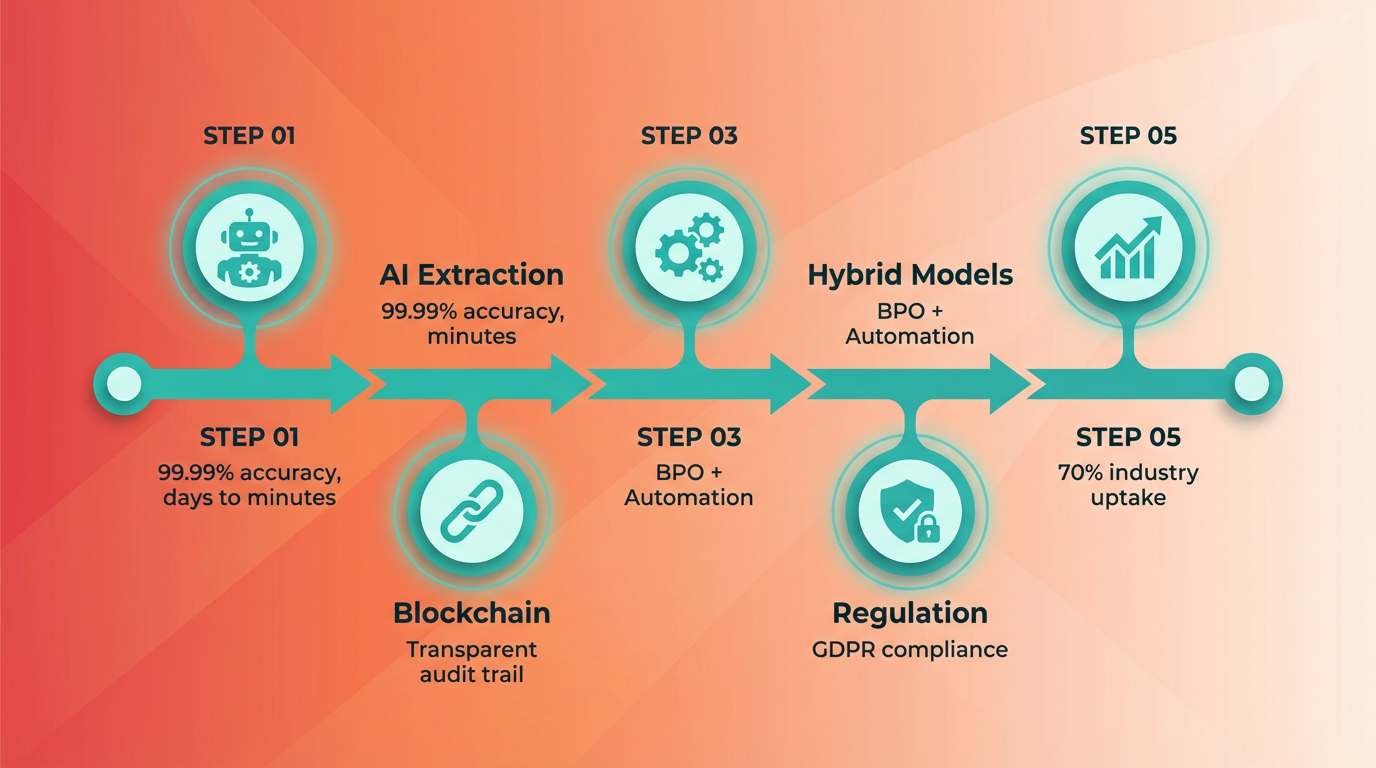
Another trend is the rise of AI-driven hybrid models, where BPO providers combine human oversight with machine learning. This approach balances scalability with nuanced decision-making, especially for complex invoices involving multiple currencies or regulatory requirements. Additionally, blockchain is gaining traction for secure, auditable transaction records, though its adoption remains in early stages due to integration challenges. As mentioned in the Invoice Processing Automation: Challenges and Opportunities section, technical barriers often hinder the seamless adoption of such technologies..
How Will AI and Automation Reshape BPO’s Role?
AI is not replacing BPO entirely but transforming its value proposition. Traditional BPOs focused on cost reduction through offshore labor, but AI-driven solutions now offer faster ROI and greater flexibility. For instance, a mid-sized company using AI for invoice processing can cut costs by 40–70% and reduce cycle times from hours to seconds, as seen in case studies from ARDEM and Artsyl.
By 2030, the global BPO market is projected to exceed $525 billion, with AI-driven invoice automation capturing a significant share. Startups using AI tools like large language models (LLMs) and browser agents are already outpacing legacy BPOs by offering scalable, low-margin services. Blixo, for example, provides **transparent pricing models** and tailored automation workflows, contrasting with generic providers that often hide fees or lock clients into rigid contracts. Building on concepts from the **Why BPO Matters in Invoice Processing** section, the cost per invoice drops from $15 (manual) to under $3 with automation, highlighting AI’s economic impact..
What Challenges and Opportunities Lie Ahead?
While AI presents immense opportunities, businesses face hurdles in adoption. Data security remains a top concern, especially as invoice processing involves sensitive supplier and financial data. Hybrid models must balance automation with compliance frameworks like GDPR or HIPAA. Additionally, upfront integration costs for AI systems-such as ERP compatibility and workflow customization-can deter smaller firms. As outlined in the BPO in Invoice Processing: How it Works section, these integration complexities often require phased implementation to mitigate risks.
Opportunities, however, outweigh challenges. Businesses adopting AI-driven BPO can expect:
- 74% faster invoice processing by 2025 (per ARDEM’s sales data analysis)
- 30–50% reductions in operational costs through error minimization
- Real-time analytics for cash flow forecasting and supplier performance tracking
For example, a manufacturing firm using ARDEM’s automation stack reduced invoice processing errors by 90% and achieved a 240% ROI within nine months. Such results underscore the shift from labor-based BPO to software-first solutions..
Will Traditional BPOs Survive?
Legacy BPO providers are adapting by integrating AI into their services. Companies that fail to adopt AI risk becoming obsolete, as clients prioritize speed and accuracy over cost savings alone. However, traditional BPOs still serve niche markets requiring high-volume, short-term support-such as seasonal invoice spikes.
The future belongs to AI-native BPOs that offer agile, customizable solutions. These providers use cloud-based platforms and APIs to embed invoice automation into existing financial systems seamlessly. Unlike rigid outsourcing models, they enable businesses to scale processing capacity up or down without long-term commitments.. In summary, the future of BPO in invoice processing hinges on AI’s ability to deliver speed, accuracy, and transparency. While challenges like data security and integration persist, the ROI from automation is undeniable. Businesses that embrace AI-driven BPO will gain a competitive edge, transforming invoice processing from a cost center into a strategic asset.
Frequently Asked Questions
1. How much does manual invoice processing cost compared to automation?
Manual processing costs $15 per invoice, while automation reduces it to under $3, cutting costs by 80%. This significant savings is a primary reason businesses adopt digitized workflows.
2. What error rates are associated with manual invoice processing?
Manual processing has 2–5% error rates, causing delayed payments and late fees. Automated systems minimize errors, improving accuracy and reducing financial penalties from mistakes.
3. How does automation affect invoice processing time?
Automation cuts processing time from 45 days to 5 days, enhancing cash flow and operational agility. This rapid turnaround is critical for businesses needing timely financial decisions.
4. What are the costs of delayed payments?
Late payments incur 2–5% in fees, and missed early-payment discounts cost 1–3% in lost profits. Timely processing through automation prevents these financial losses.
5. How does BPO improve vendor relationships?
BPO reduces manual labor by 80% and minimizes errors, ensuring timely payments. This reliability strengthens vendor trust and reduces supply chain disruptions by maintaining consistent business relationships.
6. Can you provide a real-world example of automation benefits?
A utility company used automation to prevent service interruptions by ensuring timely payments. This case study highlights how automation maintains operational continuity in critical industries.
7. What operational benefits does invoice processing automation offer?
Automation reduces manual work by 80% and prevents financial penalties from errors. It enhances efficiency, improves cash flow, and supports better vendor collaboration through reliable payment systems.