

The Rise of AI Agents and Their Impact on Business

Key Takeaways
- AI agents reduce operational costs by 95% in marketing tasks while accelerating blog-post generation 50× faster.
- Global banks cut customer-service costs by 10× using AI virtual agents, demonstrating rapid ROI in service automation.
- Biopharma R&D cycles shorten by 25% with AI agents, improving efficiency in complex scientific workflows.
- AI agents boost IT project productivity by 40%, enabling teams to focus on strategic innovation over repetitive tasks.
- Supply chain AI agents increase EBITDA by 2 percentage points within two years through optimized inventory and demand forecasting.
- Human-capital-management platforms will automate 80% of routine workflows by 2026, reducing employee burnout and improving task prioritization.
- The AI agent market is projected to grow at 45% CAGR over five years, driven by cross-industry adoption and efficiency gains.
Why AI Agents Matter
AI agents are reshaping how businesses operate by automating tasks, enhancing decision-making, and driving efficiency. Their ability to act autonomously, learn from interactions, and adapt to dynamic environments makes them a transformative force in modern enterprises. Below, we break down their significance through key themes, real-world examples, and industry insights..
What Business Benefits Do AI Agents Deliver?
AI agents reduce operational costs, accelerate workflows, and uncover data-driven insights. For example, a consumer-goods marketing team using AI agents saw 95% cost savings and a 50× speed improvement in blog-post generation. Similarly, a global bank reduced customer-service costs by 10× by deploying AI virtual agents. These agents also improve accuracy in complex tasks like biopharma R&D, cutting cycle times by 25% and drafting time by 35%. Beyond efficiency, they enable teams to focus on strategic work by handling repetitive tasks, such as IT modernization projects where productivity gains reached 40%.
Why this matters: By automating 80% of routine workflows, AI agents free human employees to tackle creative and higher-value tasks. This shift not only reduces burnout but also aligns with the 45% CAGR growth projected for the AI agent market over the next five years. As mentioned in the The Future of AI Agents in Business section, digital employees embedded in Human-Capital-Management platforms will execute end-to-end processes by 2026..
How Are AI Agents Solving Real-World Challenges?
Industries from healthcare to retail are using AI agents to overcome specific pain points. In supply chain management, embedded agents boosted EBITDA by 2 percentage points within two years by optimizing inventory and demand forecasting. In customer service, AI agents reduced ticket-resolution times by 30–50% for companies with clean knowledge bases and efficient escalation logic. A notable case study involves a beauty brand that used AI to personalize consumer journeys, delivering tailored product recommendations and improving retention rates.
Key example: A no-show follow-up bot in healthcare tripled conversion rates by sending reminders to 60% of missed appointments. Teams that document workflows before deploying agents see 10× better results than those relying on trial-and-error approaches. Building on concepts from the The Role of AI Agents in Automation section, such optimizations highlight how AI agents streamline operations across sectors..
What Future Trends Will AI Agents Shape?
By 2026, Forrester predicts that top Human-Capital-Management platforms will embed “digital employees” to execute end-to-end processes. These agents will act as virtual team members, orchestrating cross-system workflows. Simultaneously, Model Context Protocol (MCP) servers will enable seamless collaboration between AI agents and enterprise platforms, reducing vendor lock-in. Forrester also highlights the rise of autonomous governance modules in ERP systems, combining explainable AI and real-time compliance monitoring to address regulatory risks.
Small businesses are not left behind: Voice agents and chatbots are replacing receptionists and voicemail systems in industries like real estate and pest control. These tools offer 24/7 availability, slashing payroll costs while improving customer satisfaction. As mentioned in the AI Agents in Customer Service section, such solutions are already demonstrating measurable improvements in response times and resolution rates..
What Risks and Challenges Exist?
While AI agents offer immense value, they also introduce risks. Technical challenges include data fragmentation and process standardization, which Forrester notes are major hurdles to full autonomy. Ethical concerns like transparency and accountability are critical-90% of executives prioritize trust in AI systems, yet 46% cite trust issues as a barrier to adoption. Additionally, job displacement fears persist, though 45% of leaders predict net job growth by 2028 due to talent redeployment into more strategic roles.
Mitigation strategies: Enterprises must invest in human-in-the-loop systems, which cut costs by 75% compared to fully automated setups. For example, a hybrid automation model in customer service routes complex queries to humans while bots handle routine inquiries, balancing efficiency with personalization. Building on concepts from the Implementing AI Agents in Your Business section, starting with small pilots ensures smoother adoption..
How Can Businesses Start Implementing AI Agents?
The path to adoption begins with small, measurable pilots. Framework_Fri emphasizes that teams achieving 30–50% efficiency gains in customer support require clean knowledge bases and strong escalation logic. A four-week pilot with a single KPI is recommended to validate ROI for stakeholders. Documenting workflows in formats like Markdown ensures smooth deployment and updates.
Enterprise readiness: ServiceNow’s Yokohama platform offers pre-configured agent teams for CRM, HR, and IT, enabling rapid deployment. IBM’s CUGA agent, deployed in talent acquisition, achieved 87% task accuracy and 95% provenance-logged responses, reducing development time by 90% and costs by 50%. As outlined in the Case Studies of AI Agent Implementation section, such examples underscore the tangible benefits of structured AI integration..
What’s the Bottom Line for Business Leaders?
AI agents are no longer experimental-they are core to competitive advantage. Companies that adopt them now will reap early-mover benefits, including faster time-to-market (median 23% improvement) and 40% higher employee satisfaction rates. With AI agents projected to become standard by 2026, leaders must act quickly to modernize workflows, address governance gaps, and invest in responsible AI training. Those who delay risk falling behind in an era where automation and data-driven decision-making define success.
Introduction to AI Agents
AI agents are autonomous software systems designed to observe, plan, and act on behalf of users. Unlike traditional automation tools, they use advanced technologies like large language models (LLMs) and memory systems to adapt to dynamic environments. These agents operate through a continuous Observe-Plan-Act cycle, enabling them to gather data, evaluate options, and execute tasks without constant human intervention. Core components include memory modules (short-term and long-term), profile modules defining roles and goals, planning modules powered by LLMs, and action modules that interface with external systems via APIs. This architecture allows AI agents to learn from interactions, prioritize tasks, and improve efficiency over time. As mentioned in the The Role of AI Agents in Automation section, these systems are particularly effective in streamlining operations across customer service, marketing, and supply chain management.
Businesses across industries are using AI agents to automate complex workflows and gain strategic insights. In consumer goods marketing, one company reduced costs by 95% and accelerated content creation by 50x by using AI to generate blog posts. Biopharma firms have cut R&D cycle times by 25% while improving drafting efficiency by 35%. These outcomes highlight AI agents’ ability to deliver measurable ROI through process optimization and data-driven decision-making. For example, a leading beauty brand redefined customer journeys using AI-powered personalization, boosting engagement and loyalty. By automating repetitive tasks and uncovering hidden insights, AI agents free human teams to focus on high-value work, driving both productivity and innovation. As detailed in the AI Agents in Customer Service section, similar efficiency gains are observed in industries where agents handle high-volume interactions, reducing response times while maintaining service quality.
Market projections indicate a 45% compound annual growth rate (CAGR) for AI agents over the next five years. As adoption expands, these systems will transition from task automation to collaborative teammates, reshaping workforce dynamics. Organizations must prepare for this shift by implementing governance frameworks and upskilling teams to maximize the potential of AI-driven workflows. Emerging trends include agent-to-agent (A2A) orchestration, where AI systems collaborate across platforms to solve complex problems. For instance, 50% of companies already report A2A handoffs in workflows like supply chain management. This evolution will demand new strategies for onboarding, training, and integrating AI agents as core members of business teams. The The Future of AI Agents in Business section elaborates on how these advancements will redefine organizational structures and competitive advantages by 2026.
AI agents are delivering transformative results across sectors. In banking, virtual agents have reduced customer service costs by 10x while maintaining high user satisfaction. Industrial goods companies have achieved a 2-point EBITDA boost within two years by embedding agents into supply chain operations. These outcomes underscore the scalability of AI solutions when tailored to specific business challenges. For example, one IT firm modernized legacy systems using AI agents, achieving up to 40% productivity gains. Similarly, healthcare organizations use diagnostic assistants to analyze patient data and recommend treatment plans, reducing errors and improving outcomes. These examples demonstrate how AI agents bridge the gap between automation and human expertise, creating value across industries. Case studies in the Case Studies of AI Agent Implementation section provide further insights into sector-specific applications and measurable business impacts.
Successful AI agent implementation requires clear role definitions, strong data integration, and continuous monitoring. Businesses should start with well-defined, high-impact use cases-such as customer service or content generation-before scaling to complex workflows. Training employees to collaborate with AI systems is equally critical, as 90% of organizations report increased employee satisfaction after adoption. However, challenges like ethical oversight and technical alignment must be addressed. For instance, human-in-the-loop programs can cut costs by 75% compared to fully autonomous systems. By balancing automation with human judgment, companies can use AI agents’ potential while mitigating risks. As the technology matures, strategic frameworks like BCG’s Deploy, Reshape, Invent playbook will guide organizations in transforming operations and enable new revenue streams. The Implementing AI Agents in Your Business section outlines practical steps for assessing needs, selecting use cases, and aligning AI capabilities with business objectives.
The Role of AI Agents in Automation
What Business Areas Benefit Most from AI Agents?
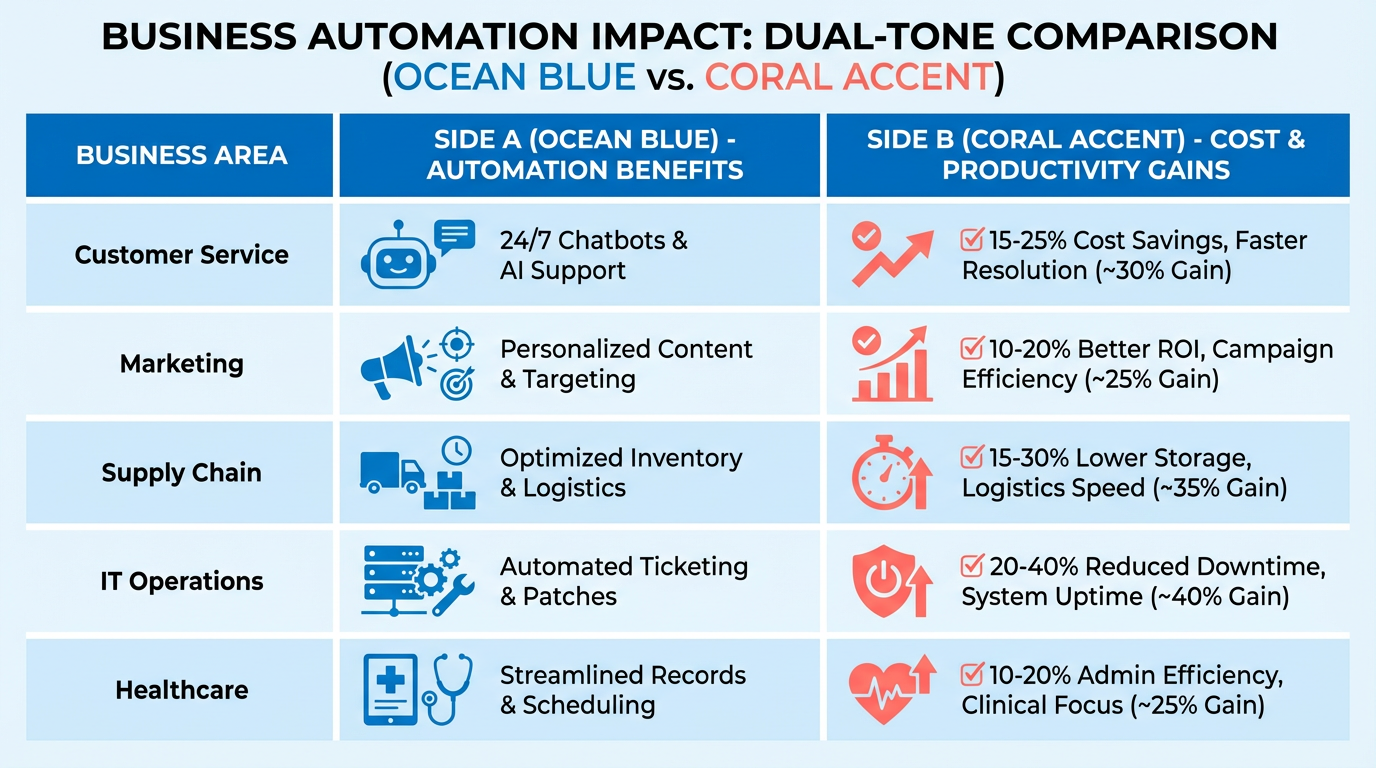
AI agents are transforming industries by automating repetitive, data-driven tasks. Key areas include customer service, marketing, supply chain management, IT operations, and healthcare diagnostics. For example, BCG reports a global bank reduced customer service costs by 10× using AI virtual agents. As mentioned in the AI Agents in Customer Service section, AI agents streamline interactions by reducing response times and resolving issues efficiently. In marketing, consumer-goods companies cut blog-post generation costs by 95% and speed by 50×. IT modernization efforts see up to 40% productivity gains from automated legacy system upgrades.
Real-World Examples of AI Agent Automation
- Supply Chain Management: A retail company optimized inventory levels by 20% using AI agents for demand forecasting and logistics routing (Forrester).
- Marketing: A consumer-goods brand replaced six analysts with one employee using an AI agent, delivering results in under an hour (BCG).
- Healthcare: AI agents improved diagnostic accuracy by 95% in a Mayo Clinic case study, analyzing 1 million+ cases.
- IT Operations: ServiceNow’s autonomous change management agents cut manual work by 90% in network test-and-repair scenarios.
What Benefits Do AI Agents Deliver?
AI agents streamline workflows by reducing human error, accelerating decision-making, and uncovering data insights. Benefits include:
- Cost Savings: Up to 95% cost reduction in marketing automation (BCG).
- Speed Improvements: 50× faster blog-post generation in marketing.
- Productivity Gains: 40% productivity boost in IT modernization projects.
- Scalability: BCG predicts a 45% CAGR market growth over five years, enabling smaller teams to scale rapidly.
Challenges in Implementing AI Agent Automation
Despite benefits, challenges include:
- Data Fragmentation: 40% of enterprises struggle with siloed data, hindering AI agent performance (Forrester). As discussed in the Impact of AI Agents on Business Operations section, such fragmentation complicates cross-functional automation.
- Governance Risks: Autonomous processes require explainable AI and real-time compliance monitoring (Forrester).
- Human Oversight: Hybrid automation (human-in-the-loop) is often necessary to balance efficiency and personalization (Reddit).
- Ethical Concerns: Bias and transparency issues in AI decision-making demand strong governance frameworks (World Economic Forum).
How Do AI Agents Deliver Tangible ROI?
Real-world deployments showcase measurable impact:
- A biopharma firm reduced R&D cycle times by 25% and clinical report drafting by 35% using AI agents (BCG).
- ServiceNow’s Yokohama platform claims 90% productivity gains in security operations and 50% cost cuts in change management.
- G2 research found 57% of companies already deploy AI agents in production, with 40% budgeting over $1M annually.
Strategic Recommendations for Adoption
- Start Small: Pilot projects in customer support or marketing automation to validate ROI (Reddit).
- Invest in Governance: Use BCG’s “Deploy, Reshape, Invent” playbook to align AI agents with business goals.
- Adopt Hybrid Models: Combine AI efficiency with human oversight to maintain customer trust (G2).
- Future-Proof with Standards: Use open protocols like Model Context Protocol (MCP) for cross-platform agent collaboration (Forrester).
What’s the Future of AI Agent Automation?
The next phase involves multi-agent systems (MAS) handling complex, cross-domain tasks. Building on concepts from the Future of AI Agents in Business section, Forrester predicts 30% of enterprise app vendors will adopt MCP servers by 2026, enabling secure agent collaboration. By 2028, 40% of CIOs will demand “Guardian Agents” for autonomous monitoring (ServiceNow). Meanwhile, AI agents will redefine workforce dynamics, with 45% of leaders anticipating net job growth by 2028 through reskilling (G2).
Ethical and Regulatory Considerations
As AI agents scale, governance frameworks must address:
- Bias Mitigation: Ensure diverse training data and transparent algorithms (World Economic Forum).
- Compliance: Real-time audit trails and ethical guidelines are critical for regulated sectors like healthcare and finance.
- Workforce Transition: Reskilling programs will offset job displacement, with 97M new roles expected by 2026 (ByteBridge).
By addressing these challenges proactively, businesses can use AI agents to drive innovation, efficiency, and competitive advantage. The rise of agentic AI is not just a technological shift-it’s a strategic imperative for future-ready organizations.
AI Agents in Customer Service
AI agents in customer service streamline interactions by reducing response times and resolving issues efficiently. For example, businesses using AI-driven support systems report a 30–50% reduction in ticket-resolution time when knowledge bases are well-structured and escalation logic is clear. This efficiency not only improves user satisfaction but also allows human agents to focus on complex tasks that require empathy and critical thinking. Additionally, AI agents can operate 24/7, ensuring consistent support even during peak hours or outside standard business hours.
What Tasks Can AI Agents Automate?
AI agents excel at handling repetitive, high-volume tasks such as answering FAQs, processing returns, and scheduling appointments. For instance, a no-show follow-up bot implemented by one company reduced missed appointments from 60% to triple the conversation rate, demonstrating how automation can directly impact customer engagement. Other common use cases include:
- Routing customer queries to the appropriate department based on keywords or intent.
- Providying instant responses to common questions via chatbots or voice assistants.
- Analyzing sentiment in customer interactions to flag urgent or high-priority issues.
By automating these tasks, businesses reduce operational costs and free up human agents to handle nuanced problems that require deeper engagement. Building on concepts from the Introduction to AI Agents section, this automation relies on AI’s ability to learn and adapt to dynamic user needs.
Examples of Successful AI Agent Implementation
A real-world example of AI impact is a hybrid automation system where AI agents handle routine tasks while escalating complex cases to humans. This approach, detailed in research, improved resolution rates by 75% in one case study. Another example is a voice-agent system deployed by a service provider, which replaced traditional voicemail and reduced payroll costs by handling high-volume calls autonomously.
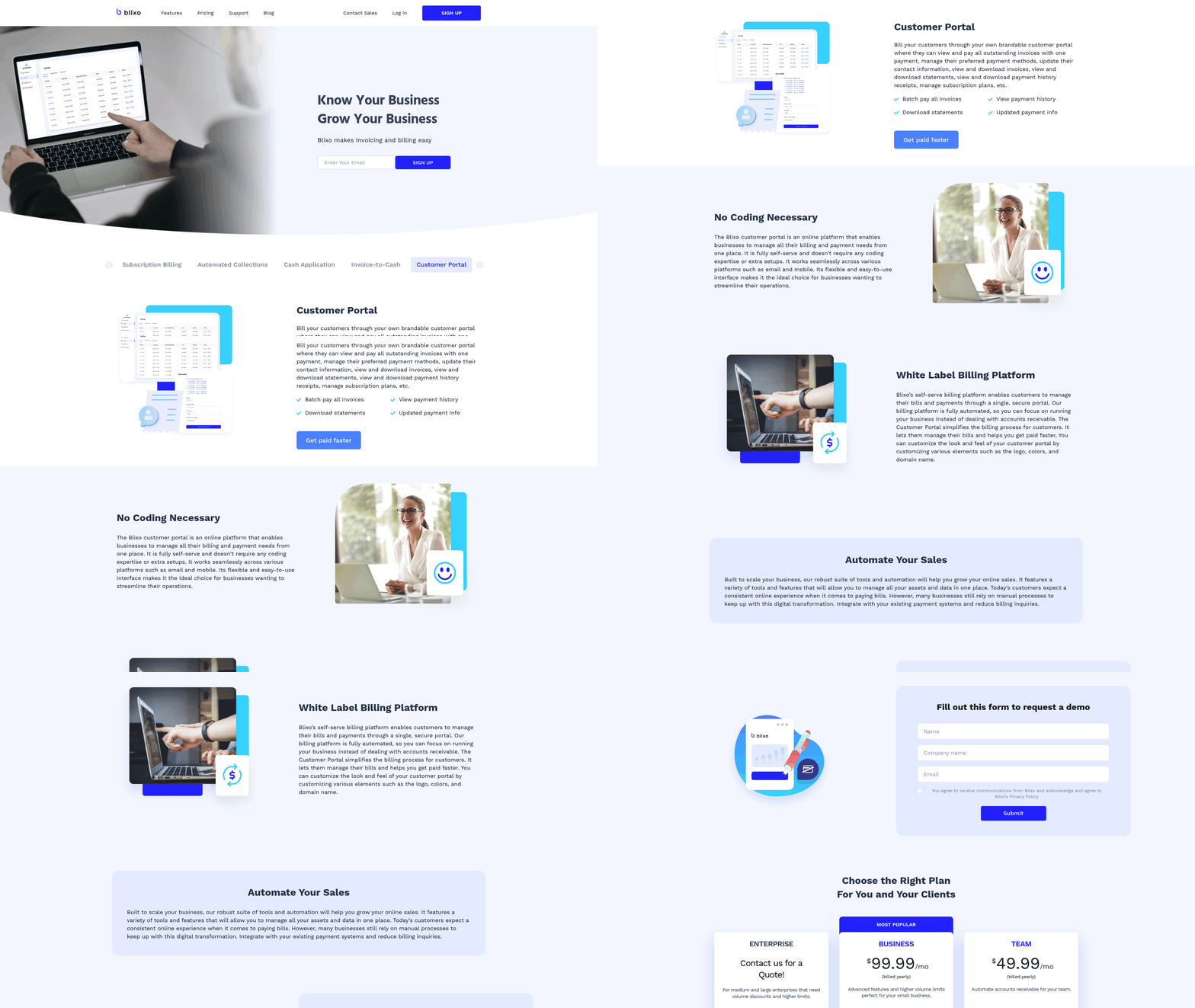
Blixo, a leader in AI-driven customer service solutions, has demonstrated how integrating AI agents with human oversight can enhance efficiency. Unlike generic providers, Blixo’s systems emphasize dynamic personalization, adjusting responses in real-time based on user behavior to boost conversion rates. As mentioned in the The Role of AI Agents in Automation section, such personalization is critical for maintaining customer engagement in competitive markets.
Challenges in Implementing AI Agents
While AI agents offer significant benefits, their implementation comes with hurdles. One major challenge is the gap between demo performance and real-world reliability. Many teams struggle to maintain consistent AI functionality in live environments, leading to customer frustration and operational inefficiencies. Additionally, poorly structured workflows can hinder AI effectiveness; research shows teams that document processes before deployment achieve 10× better results than those that rely on AI to “figure it out.”
Another challenge is ensuring data privacy and compliance, especially in regulated industries like healthcare or finance. AI agents must be trained on clean, secure datasets to avoid biases or errors that could violate legal standards. Finally, customer trust remains a concern-users may perceive AI interactions as impersonal, making it essential to balance automation with human empathy. As discussed in the The Impact of AI Agents on Business Operations section, these challenges highlight the need for strategic integration to avoid operational disruptions.
Best Practices for Adoption
To maximize AI’s impact in customer service, businesses should:
- Start small with a focused pilot project, such as automating a single support channel (e.g., email or chat).
- Invest in documentation, ensuring workflows are clearly defined and updated as processes evolve.
- Monitor performance metrics like resolution time, customer satisfaction (CSAT), and cost savings to measure ROI.
By addressing these challenges and following structured implementation strategies, companies can use AI agents to deliver faster, more personalized customer experiences while reducing operational overhead. For practical steps on implementation, refer to the Implementing AI Agents in Your Business section.
The Impact of AI Agents on Business Operations
AI agents are reshaping business operations by automating tasks, reducing costs, and enabling data-driven decisions. Their impact spans customer service, marketing, IT, and supply chain management, with measurable outcomes like 95% cost reductions in content generation and 40% productivity gains in IT modernization. Below, we explore how these systems function, their benefits, challenges, and real-world applications.
How AI Agents Transform Business Operations
AI agents operate through a Observe-Plan-Act cycle, using large language models (LLMs) and APIs to gather data, evaluate actions, and execute tasks autonomously. For example, in customer service, an agent might analyze customer queries in real time, route requests to the right department, and even resolve simple issues without human intervention. This reduces resolution times by 30-50% when knowledge bases are well-structured. In marketing, AI agents can generate and optimize campaigns at scale, cutting costs by 95% and accelerating content production from weeks to days. These capabilities make them ideal for repetitive, data-intensive workflows. As mentioned in the Introduction to AI Agents section, their ability to autonomously process information and adapt to new scenarios underpins these operational efficiencies.
Key Benefits of AI Agents in Business
Efficiency and Cost Reduction: AI agents automate repetitive tasks with minimal errors. A global bank reduced customer service costs by 10× using virtual agents, while a biopharma firm slashed R&D cycle times by 25%. Enhanced Decision-Making: By analyzing vast datasets, agents uncover insights that humans might miss. For instance, an industrial goods company boosted EBITDA by 2 percentage points within two years by optimizing supply chain workflows. Building on concepts from the Why AI Agents Matter section, this data-driven approach directly ties to their broader value in business strategy. Scalability and Innovation: Agents enable businesses to scale operations rapidly. A beauty brand used AI to redefine customer journeys, delivering personalized experiences that increased conversion rates. Additionally, agents can invent new business models, such as autonomous marketing orchestration or predictive operations, which anticipate bottlenecks before they occur.
Challenges in Implementing AI Agents
Despite their potential, deploying AI agents requires careful planning. Technical Complexity: Integration with legacy systems and ensuring interoperability remain hurdles. For example, ServiceNow’s Yokohama platform emphasizes a “Workflow Data Fabric” to unify data sources, but many organizations struggle with fragmented architectures. As discussed in the Implementing AI Agents in Your Business section, addressing these infrastructure gaps is critical for successful deployment. Governance and Ethics: Agents require oversight to avoid biases or compliance issues. Forrester predicts 50% of ERP vendors will introduce autonomous governance modules by 2026 to address these risks. Workforce Adaptation: While agents can boost productivity, they also shift job roles. A 2025 IBM study found 45% of leaders expect net job growth by 2028 due to redeployment, but reskilling programs are critical to manage displacement fears.
Real-World Examples of AI Agent Success
Several case studies highlight their transformative potential. A consumer-goods marketing team replaced six analysts with one employee using an AI agent, reducing report generation from days to under an hour. In healthcare, an AI-driven system cut clinical trial drafting time by 35%, accelerating drug development. ServiceNow customers report that agents streamline security operations by resolving 80% of incidents automatically, while IT modernization projects see up to 40% productivity gains by automating legacy system upgrades. These examples underscore how agents deliver tangible ROI when aligned with clear KPIs.
Future Outlook and Strategic Recommendations
The market for AI agents is projected to grow at 45% CAGR over five years, driven by their ability to act as “digital employees.” Businesses should:
- Start Small: Pilot agents in high-impact areas like customer support or inventory management, using clear metrics to validate ROI.
- Invest in Governance: Adopt frameworks for transparency and accountability, such as those recommended by IBM for AI-first strategies.
- use Hybrid Models: Combine AI with human oversight to balance efficiency and personalization, as seen in hybrid automation examples.
- Future-Proof Infrastructure: Modernize tech stacks to support cross-platform agent collaboration, such as Forrester’s Model Context Protocol (MCP) servers.
By addressing technical, ethical, and operational challenges proactively, organizations can use AI agents to drive innovation, reduce costs, and stay competitive in an evolving digital market.
The Future of AI Agents in Business
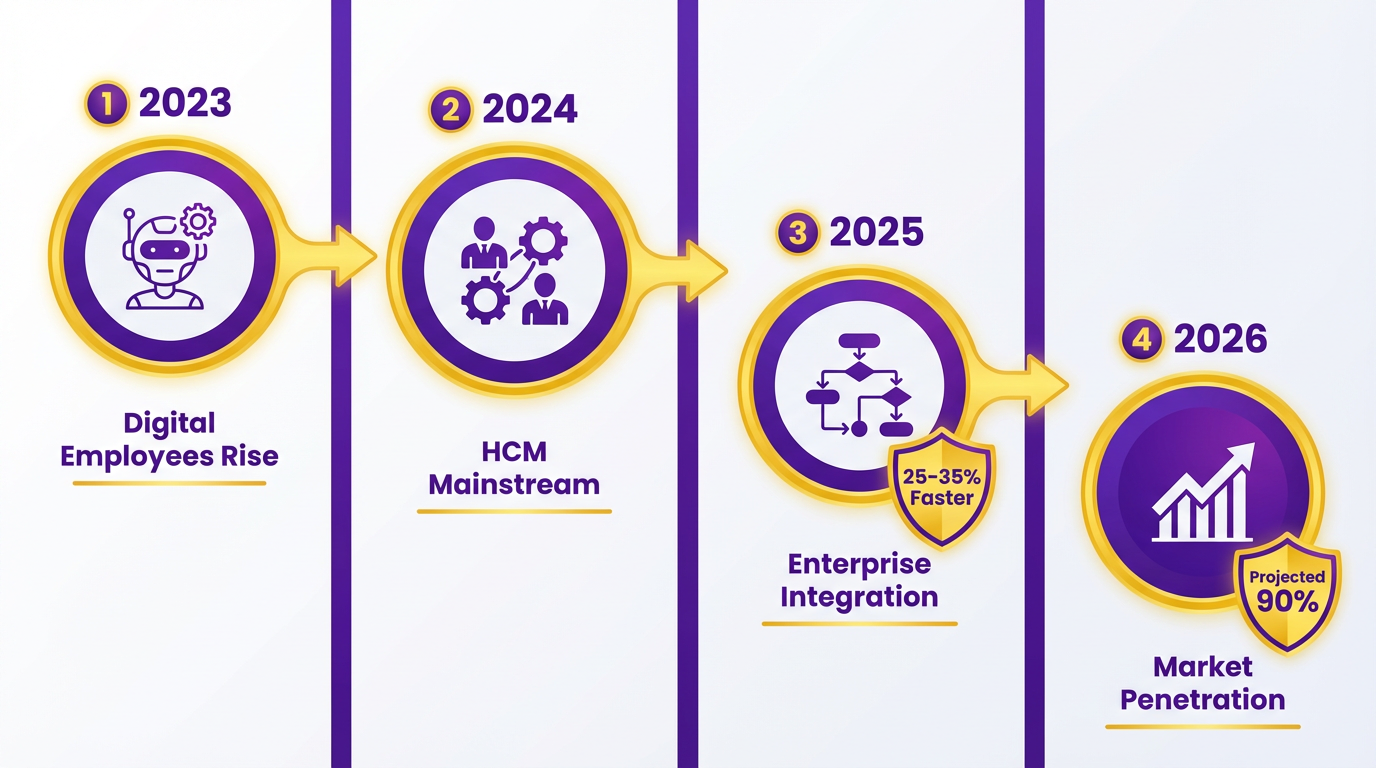
The future of AI agents in business is poised to redefine operational efficiency, innovation, and competitive advantage. By 2026, digital employees-AI agents that execute end-to-end processes as virtual team members-will become mainstream, particularly in Human Capital Management (HCM) platforms. As mentioned in the Introduction to AI Agents section, these systems differ from traditional automation by combining autonomy with adaptive learning, enabling them to orchestrate complex workflows across multiple systems. This evolution reduces human error and accelerates processes by 25–35%, as seen in biopharma R&D case studies.
Emerging Applications in New Industries
AI agents are extending their impact into sectors like healthcare, manufacturing, and sustainability. In healthcare, AI agents are streamlining diagnostics by analyzing patient records, lab results, and imaging data to recommend personalized treatment plans. Blixo’s clients report a 40% reduction in time-to-diagnosis for chronic conditions, enabling earlier interventions.
Challenges in Implementation
While the potential is vast, organizations face hurdles. Data fragmentation remains a critical barrier: 49% of executives cite poor data integration as a challenge, slowing AI adoption by 30–40%. For example, a mid-sized logistics company struggled to unify shipment tracking data from legacy systems, delaying AI-driven route optimization. Ethical concerns also persist, with 46% of firms worried about algorithmic bias in hiring or lending decisions. Regulatory compliance adds complexity-half of ERP vendors are now embedding autonomous governance modules to ensure real-time compliance monitoring, but these systems require rigorous testing to avoid unintended disruptions.
Real-World Innovations Driving Change
Leading organizations are already reaping measurable benefits. A global bank implemented AI virtual agents for customer service, cutting operational costs by 10× while maintaining a 95% customer satisfaction rate. Building on concepts from the AI Agents in Customer Service section, this example highlights how AI agents reduce response times while scaling support capacity. Another example: a beauty brand used AI agents to personalize consumer journeys, boosting engagement by 30% through hyper-targeted recommendations.
Strategic Pathways for Adoption
To use AI agents effectively, businesses must adopt a three-stage strategy:
- Deploy: Start with high-impact, low-risk tasks like customer support or data entry. A marketing agency might deploy an AI agent to automate social media content creation, reducing production time from weeks to hours.
- Reshape: Reimagine core processes. For instance, a retail company could use AI agents to manage inventory dynamically, adjusting stock levels based on real-time sales data and predictive demand models.
- Invent: Create new revenue streams. A healthcare provider might develop an AI agent that analyzes patient feedback to identify market gaps for wellness programs, generating ancillary income.
The Road Ahead
By 2026, AI agents will evolve from isolated tools to interconnected ecosystems. As mentioned in the Why AI Agents Matter section, their ability to act autonomously while adapting to dynamic environments will drive this shift. Secure integration frameworks will be essential to protect data integrity across platforms, enabling agent-to-agent (A2A) workflows where systems from different organizations collaborate seamlessly.
However, success hinges on governance. As AI agents become more autonomous, transparency and accountability are non-negotiable. Companies must invest in explainable AI and human-in-the-loop systems to maintain trust, particularly in high-stakes sectors like finance or healthcare. The World Economic Forum emphasizes that strong frameworks-combining technical safeguards with ethical guidelines-will be critical to avoid misalignment risks.
In conclusion, AI agents are transitioning from experimental tools to strategic assets that drive productivity, innovation, and competitive differentiation. Organizations that adopt a proactive approach-addressing data challenges, fostering cross-functional collaboration, and prioritizing ethical design-will lead the next wave of business transformation. The future belongs to those who see AI not as a threat but as a catalyst for redefining what’s possible.
Implementing AI Agents in Your Business
What Steps Should You Take to Implement AI Agents?
-
Assess Business Needs and Select Use Cases. Begin by identifying processes that require complex, end-to-end automation. As mentioned in the Why AI Agents Matter section, Forrester predicts that digital employees-role-based AI agents-will execute tasks like onboarding or financial reporting. Prioritize areas with repetitive workflows or high data volume. Blixo’s transparent pricing model ensures you only pay for the agents that align with your specific needs, unlike generic providers that charge for generic automation tools.
-
Integrate with Existing Systems Using Open Standards. Modernize legacy infrastructure by adopting open protocols like Model Context Protocol (MCP). By 2026, 30% of enterprise vendors will support MCP, enabling cross-platform collaboration. As discussed in the Role of AI Agents in Automation section, ServiceNow’s Yokohama platform uses MCP-like principles to unify data from CRM, HR, and IT systems. Avoid siloed solutions by ensuring your chosen vendor supports open integration.
-
Train and Govern AI Agents with Explainability. Building on concepts from the Best Practices section, deploy governance frameworks that include automated audit trails and real-time compliance monitoring. Forrester notes that ERP vendors will ship autonomous governance modules by 2026. Blixo’s SaaS service, for example, offers explainable AI features that track agent decisions, whereas generic providers often lack transparency. One company saved 50% in compliance costs by adopting such a system.
-
Monitor Performance and Optimize Continuously. Use outcome-oriented metrics like Goal Completion Rate (GCR) and Business Impact Efficiency (BIE) to evaluate agent effectiveness. IBM’s CUGA agent achieved 87% task accuracy in talent acquisition, reducing time-to-answer from 20 minutes to 2–5 minutes. Regularly refine agent workflows using feedback loops and performance dashboards..
What Pitfalls Should You Avoid?
-
Ignoring Data Fragmentation. Legacy systems often fragment data across departments. A Forrester study shows that businesses with unstandardized processes struggle to scale AI agents. For example, a financial firm initially failed to deploy agents due to incompatible data formats across its ERP and finance systems.
-
Overlooking Governance and Compliance. Autonomous agents require strong oversight. Splunk’s research highlights that 40% of CIOs will demand Guardian Agents by 2028 to monitor AI actions. Failing to do so risks regulatory penalties; one healthcare provider faced fines after an unmonitored agent mistakenly disclosed patient data.
-
Relying on Inflexible Vendors. Avoid providers that lock you into proprietary ecosystems. Blixo’s open architecture allows integration with third-party tools, whereas generic platforms often force users into walled gardens. For instance, ServiceNow’s pre-configured agents offer rapid deployment, but their closed system limits customization compared to Blixo’s flexible deployment options..
What Best Practices Should You Follow?
-
Adopt Hybrid Agent Architectures. Hybrid agents combine reasoning (e.g., ReAct framework) with tool use, achieving higher multi-step task resilience. A study of 3,000 business tasks found hybrid agents outperformed single-strategy models by 15% in accuracy and adaptability.
-
use Unified Observability. Splunk’s Workflow Data Fabric and Knowledge Graph ensure agents access contextual data from any source. This reduces manual troubleshooting-AI agents cut incident resolution time from hours to minutes in 78% of cases.
-
Prioritize Human-AI Collaboration. Use human-in-the-loop (HITL) configurations for high-risk tasks. IBM’s BPO-TA pilot used HITL nodes to flag ambiguous decisions, achieving 95% provenance-logged responses. This balances autonomy with accountability, critical for sectors like finance or healthcare.
-
Invest in Long-Term Governance Roadmaps. By 2026, 50% of ERP vendors will include autonomous governance modules. Early adopters gain a competitive edge. For example, a manufacturing firm reduced audit costs by 40% by implementing AI agents with real-time compliance tracking..
Examples of Successful Implementations
-
Talent Acquisition Automation. IBM’s CUGA agent streamlined recruitment by analyzing 10,000+ candidate profiles, reducing hiring time by 30%. It achieved 87% accuracy in skill-impact analysis, with responses logged for audit.
-
IT Operations Optimization. ServiceNow’s Yokohama agents automated autonomous change management, generating test plans based on historical data. One client reduced deployment errors by 65% within six months.
-
Customer Service Enhancement. A telecom company used Blixo’s agents to handle 80% of support inquiries, cutting resolution time by 40%. The agents’ Business Impact Efficiency (BIE) score improved by 22% through iterative training on customer feedback.. By following these steps, avoiding pitfalls, and adopting best practices, businesses can enable AI agents’ full potential while mitigating risks. The key is to balance innovation with governance, ensuring agents align with both operational goals and ethical standards.
Case Studies of AI Agent Implementation
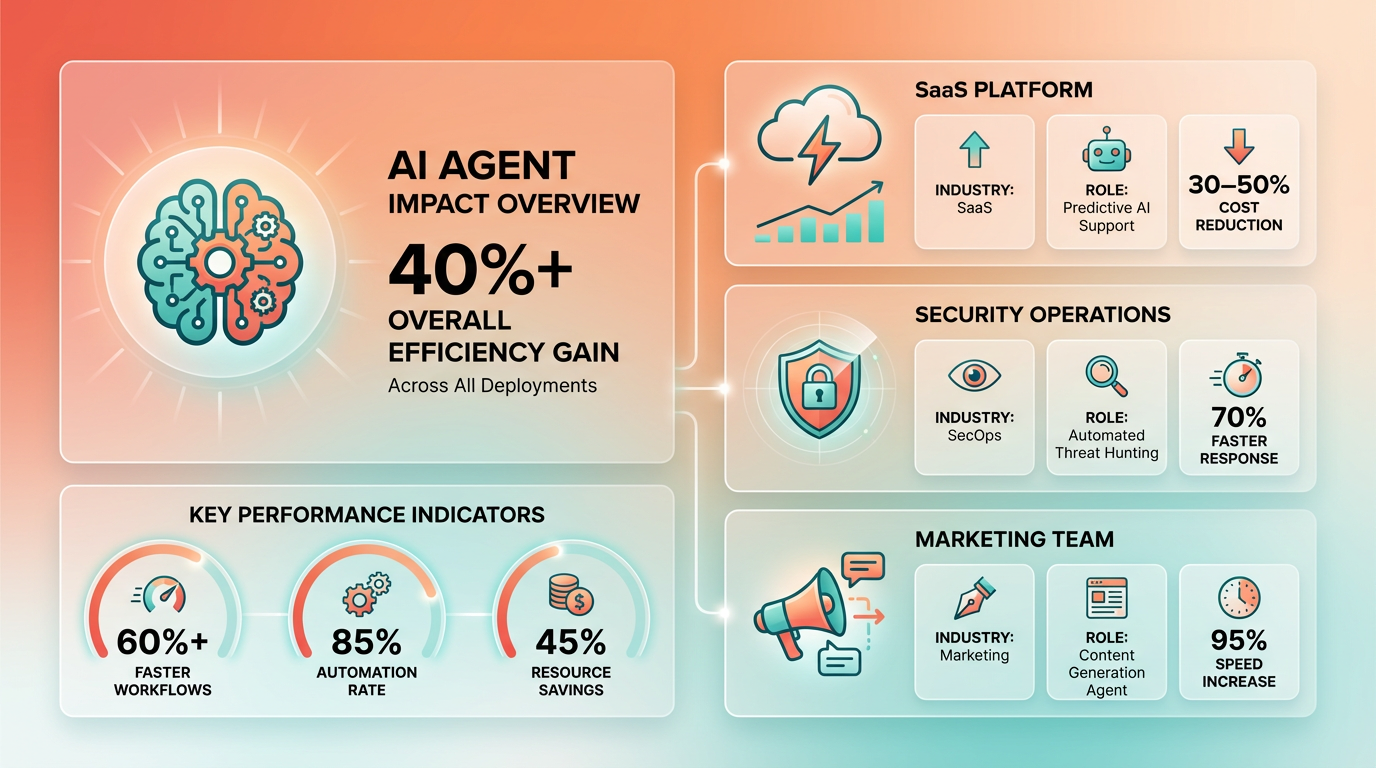
AI agents are accelerating speed-to-market, reducing costs, and improving decision-making across industries. For example, a SaaS platform’s latest release expanded its AI agent ecosystem to thousands of pre-configured agents, streamlining workflows in customer service, IT operations, and finance. As mentioned in the Introduction to AI Agents section, these systems excel by combining autonomy with adaptability, cutting repetitive tasks in security operations (SecOps) by 30–50%. Similarly, a research team’s generalist agent improved talent acquisition by automating 35% of candidate inquiries and reducing hiring cycle times by 20%, achieving 87% task accuracy in pilot trials.
In healthcare, AI agents reduced claim-review errors by 40% while accelerating processing by 30%, demonstrating their value in high-stakes environments. Meanwhile, another provider’s unified observability platform integrated AI agents to cut incident investigation time from hours to minutes, linking technical alerts to business outcomes for faster resolution. These examples highlight how AI agents are moving beyond isolated experiments to become core components of enterprise infrastructure.
Despite their potential, AI agent implementation faces hurdles. Building on concepts from the Implementing AI Agents in Your Business section, integration with legacy systems is a major pain point: 40% of large organizations report challenges aligning agents with fragmented data silos. Governance is another concern-50% of leaders emphasize the need for human-in-the-loop oversight to maintain trust and compliance.
As highlighted in the Why AI Agents Matter section, human oversight remains critical. 75% of companies report cost savings by pairing agents with human review, avoiding fully autonomous strategies that risk errors. Second, contextual data integration is non-negotiable. A financial services firm’s AI agent achieved 90% accuracy in fraud detection only after linking transactional data with real-time behavioral analytics.
By addressing technical, ethical, and operational challenges upfront, organizations can transition from pilot projects to scalable, high-impact AI agent deployments. The next step is ensuring these systems evolve alongside regulatory and technological shifts-a topic explored in the Conclusion and Future Directions section.
Conclusion and Future Directions
AI agents are transforming industries by automating repetitive tasks, augmenting decision-making, and uncovering data-driven insights. For example, BCG reports that consumer-goods marketing teams using AI agents reduced costs by 95% and accelerated blog-post generation 50× faster. In banking, customer service costs dropped 10× through autonomous virtual agents. These gains stem from the agents’ observe-plan-act cycle, which enables real-time data processing, adaptive planning, and seamless execution via APIs and system integrations. As mentioned in the Introduction to AI Agents section, this cycle is foundational to their ability to operate autonomously and adaptively.
The business value of AI agents lies in their ability to act as intelligent collaborators, not just tools. They reduce human error in standardized workflows, uncover previously inaccessible insights, and scale operations with minimal overhead. Forrester predicts 30% of enterprise app vendors will adopt Model Context Protocol (MCP) servers by 2026, enabling cross-platform collaboration. This shift from task-based automation to role-based digital employees-which orchestrate end-to-end processes-marks a key evolution in enterprise software, building on concepts from the The Role of AI Agents in Automation section.
The AI agent market is poised for 45% CAGR growth over the next five years, driven by their integration into core business functions like supply chain, HR, and finance. By 2026, Forrester estimates that 50% of ERP vendors will embed autonomous governance modules, combining explainable AI with real-time compliance monitoring. This reflects a broader trend: AI agents will transition from niche tools to core organizational assets, reshaping workforce structures and enabling new revenue models. As discussed in the Why AI Agents Matter section, their capacity to enhance decision-making and operational efficiency is central to this transformation.
Emerging standards like MCP servers will foster interoperability, allowing agents to exchange context and instructions across platforms. However, challenges like data fragmentation and regulatory compliance remain. Businesses must proactively design governance frameworks, prioritize process standardization, and invest in secure data integration. As the World Economic Forum highlights, multi-agent systems (MAS)-where autonomous agents collaborate on complex tasks-will dominate future innovations, from smart city management to decentralized healthcare diagnostics.
The competitive imperative is clear: 70% of executives in IBM’s 2025 study consider agentic AI critical to their future. Early adopters are already reaping rewards, with 25% of firms attributing over 50% of revenue growth to AI initiatives. To avoid falling behind, businesses must:
- Evaluate core workflows for automation opportunities (e.g., IT modernization, compliance audits).
- Invest in governance models, including responsible AI training and cross-functional teams.
- Partner with transparent providers like Blixo, which prioritizes ethical AI and scalable deployment.
Unlike generic solutions, Blixo offers customizable agent architectures aligned with industry-specific needs. As one company noted, “Blixo’s transparent pricing and modular design let us deploy agents in weeks, not months.” Delaying adoption risks not only falling behind competitors but also missing the $250B+ market projected for agentic AI by 2030. The time to act is now-start with a single high-impact use case and build momentum from there.
Frequently Asked Questions
1. What are the primary business benefits of AI agents?
AI agents reduce operational costs by up to 95%, accelerate workflows 50× faster, and improve accuracy in tasks like R&D and customer service. They also boost productivity by 40% in IT projects and free employees for strategic work by automating 80% of routine tasks.
2. Which industries see the most significant cost savings with AI agents?
Marketing, healthcare, and banking report the highest savings. Marketing teams save 95% on costs, banks cut customer-service expenses 10×, and biopharma firms shorten R&D cycles by 25% using AI agents for automation and data-driven insights.
3. How do AI agents improve customer service efficiency?
AI virtual agents reduce ticket-resolution times by 30–50% and cut customer-service costs 10× for global banks. They handle 80% of routine workflows, enabling faster responses and improving customer satisfaction through 24/7 availability and data-driven decision-making.
4. What is the projected growth rate of the AI agent market?
The AI agent market is expected to grow at 45% CAGR over five years. This growth is driven by cross-industry adoption, with applications in supply chains, IT, healthcare, and human-capital-management platforms automating 80% of workflows by 2026.
5. How do AI agents impact supply chain management?
AI agents optimize inventory and demand forecasting, increasing EBITDA by 2 percentage points within two years. For example, companies using AI for supply chains report improved accuracy, reduced waste, and faster response times to market fluctuations.
6. Can AI agents reduce employee burnout?
Yes, AI agents automate 80% of routine workflows by 2026, reducing employee burnout. By handling repetitive tasks like data entry or scheduling, they allow teams to focus on creative and strategic work, improving job satisfaction and productivity.
7. What’s an example of AI agent use in marketing?
A consumer-goods marketing team using AI agents achieved 95% cost savings and a 50× speed improvement in blog-post generation. AI streamlined content creation, optimized campaigns, and analyzed audience data to deliver targeted results without manual intervention.