

Implement AP Automation for Manufacturing with Blixo
Key Takeaways
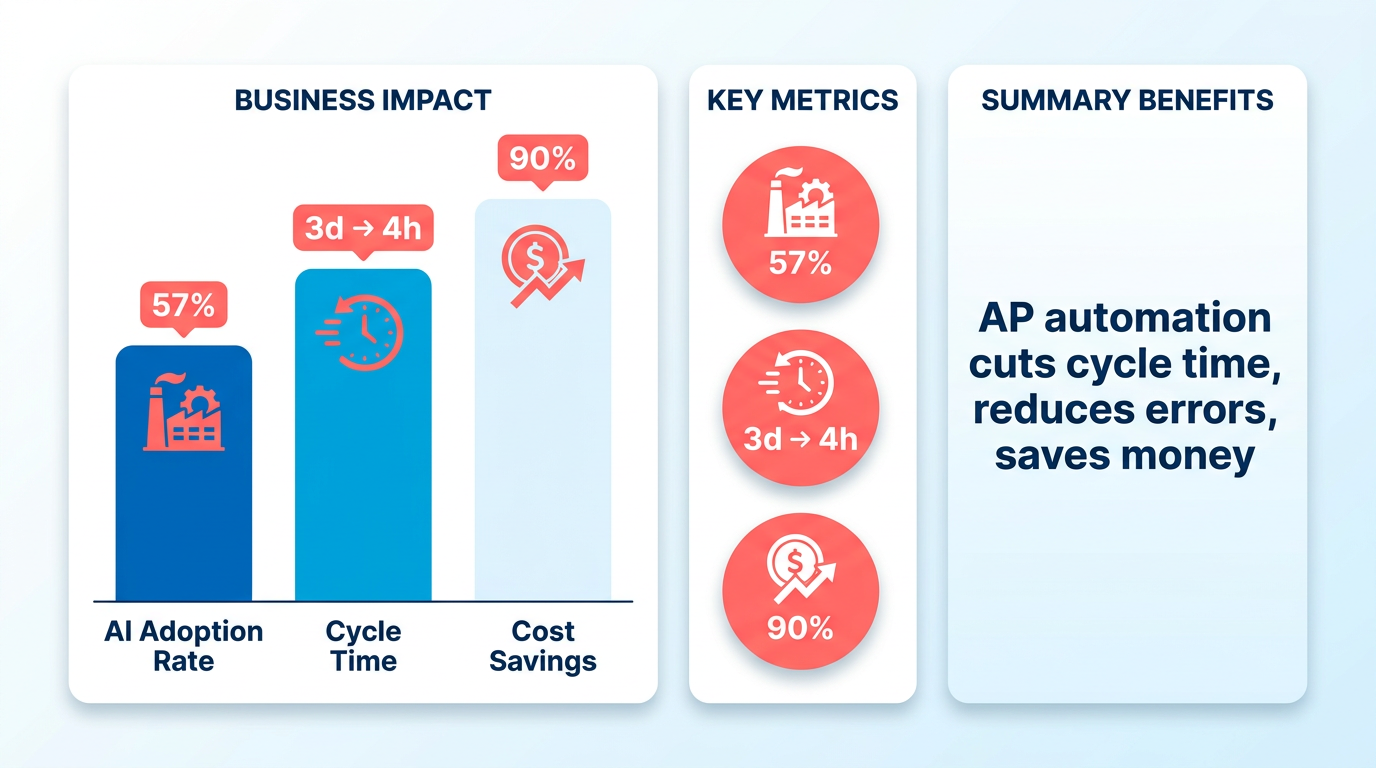
- AP automation reduces cash application cycles from three days to four hours, slashing processing time by 95% in manufacturing.
- 57% of companies use AI-powered tools for operational efficiency, highlighting widespread adoption in manufacturing.
- Manual AP processes cause 10x slower customer service and higher operational costs without automation.
- Automated systems cut manual errors by 90%, improving payment accuracy and reducing reconciliation challenges.
- Predictive analytics in AP automation can decrease accounts receivable aging by 22%, enhancing cash flow management.
- Manufacturing firms risk late payment penalties and supplier dissatisfaction without automated payment tracking.
- AI agents automate invoice reconciliation and approvals, freeing accounting teams from repetitive tasks.
Why AP Automation Matters in Manufacturing
AP automation is a major advantage for manufacturing companies, offering measurable efficiency gains and cost reductions. With 57% of companies already using AI-powered tools to streamline operations, the manufacturing sector stands to benefit significantly from adopting automated accounts payable (AP) systems. For example, a mid-sized manufacturer cut its cash application cycle from three days to four hours using AI automation, demonstrating how these tools can eliminate bottlenecks. By reducing manual errors by up to 90% and accelerating payment processing, AP automation directly addresses pain points like invoice delays and reconciliation challenges.
What Challenges Do Manufacturing Companies Face Without AP Automation?
Manual AP processes in manufacturing often lead to costly inefficiencies. Accounting teams spend hours reconciling invoices, tracking approvals, and correcting errors-tasks that AI agents can automate entirely. For instance, one company reported a 22% reduction in accounts receivable aging by adopting predictive analytics, a capability Key Features of Blixo for AP Automation section highlights as part of its integrated solutions. These systems also mitigate risks like late payment penalties and supplier dissatisfaction, which can disrupt production schedules. Without automation, teams risk 10x slower customer service and higher operational costs, directly impacting margins.
How Does AP Automation Improve Manufacturing Efficiency?
Automating AP workflows reduces administrative overhead while improving accuracy. Implementing Blixo for AP Automation in Manufacturing outlines how Blixo’s integration with enterprise systems via open APIs ensures real-time compliance checks and historical data analysis, refining strategies over time. Industrial firms using such tools have seen 2 percentage-point gains in EBITDA within two years. For example, a consumer goods company reduced a six-week project to under an hour by using AI agents for data-driven decisions. These efficiencies free accounting teams to focus on strategic tasks like cost analysis and supply chain optimization, rather than repetitive data entry.
Who Benefits Most from AP Automation in Manufacturing?
Finance and accounting teams see immediate gains, but the ripple effects extend across the organization. Faster invoice processing improves cash flow visibility, enabling procurement teams to negotiate better terms with suppliers. Operations managers benefit from reduced delays in material payments, ensuring production timelines stay on track. Even executives gain clearer financial insights, with automated reporting cutting data consolidation time by 95%. Measuring ROI and Cost Savings with Blixo demonstrates how these benefits scale without hidden costs, unlike generic providers that often lock businesses into complex fee structures.
What’s the Long-Term Impact on Manufacturing Profitability?
The financial impact of AP automation is substantial. Companies using AI agents report 45% CAGR growth in workflow efficiency, translating to significant savings. One healthcare provider reduced accounts receivable aging by 22%, a trend mirrored in manufacturing when payment cycles shorten. By minimizing errors and accelerating reconciliation, these systems lower operational costs by up to 95% in some cases. For manufacturers competing on tight margins, this means more resources for innovation and expansion. As 83% of executives confirm, AI-driven automation isn’t just a tool-it’s a strategic advantage for future-proofing operations.
Understanding AP Automation in Manufacturing
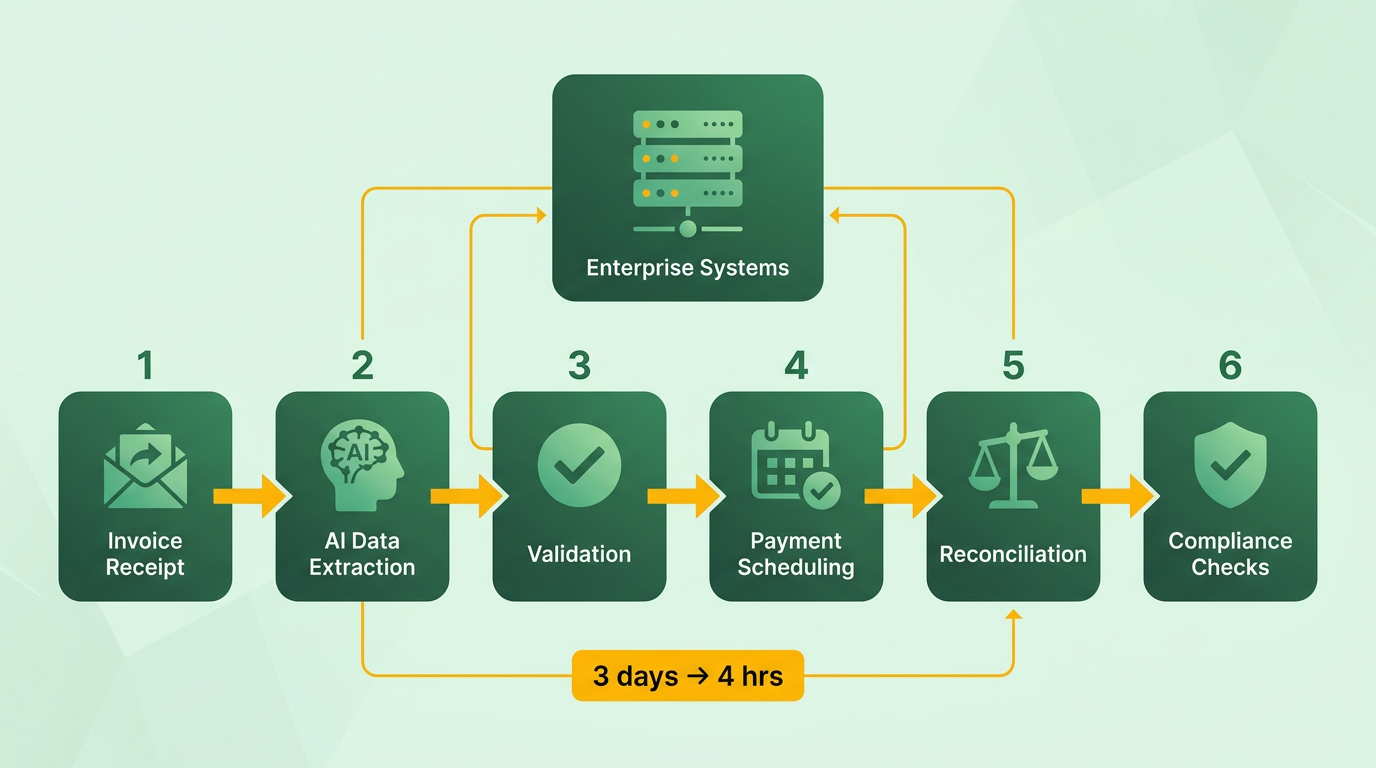
AP automation in manufacturing streamlines accounts payable processes by using AI and software to handle tasks like invoice processing, payment scheduling, and reconciliation. This system reduces manual work, minimizes errors, and ensures compliance, making it a cornerstone for modern manufacturing operations. Blixo’s AI-powered solutions integrate seamlessly with enterprise systems, using open APIs to automate workflows while adapting to evolving business needs. As mentioned in the Real-World Example: Case Study of a Manufacturing Company Using Blixo section, a mid-sized manufacturer using Blixo reduced its cash application cycle from three days to four hours by automating data entry and reconciliation.
How Does AP Automation Work in Manufacturing?
At its core, AP automation works by digitizing and automating every step of the invoice-to-payment lifecycle. Invoice capture begins with uploading physical or digital invoices, which AI agents then parse for data like vendor details, line items, and totals. Automated invoice matching compares purchase orders, receipts, and invoices to flag discrepancies, while payment processing schedules and executes payments on time, reducing late fees. This workflow relies on machine learning to refine processes over time. Blixo’s system retains historical interactions, improving accuracy for tasks like vendor classification or anomaly detection. As shown in the Real-World Example: Case Study of a Manufacturing Company Using Blixo section, industrial firms adopting this approach report 2 percentage-point EBITDA gains within two years, as per Blixo’s case studies.
What Are the Key Benefits for Manufacturers?
Manufacturers gain three primary benefits from AP automation: efficiency, cost savings, and compliance. By automating repetitive tasks like data entry, businesses cut processing times by 60–80%, allowing teams to focus on strategic work. One consumer goods company slashed a six-week project to under an hour using AI agents, showcasing the scalability of these tools. Cost reductions come from error prevention and faster payments. Automated systems reduce invoice errors by up to 90%, avoiding costly rework. Additionally, timely payments improve vendor relationships and enable early-payment discounts. A healthcare provider, for instance, reduced accounts receivable aging by 22% through predictive collections-a technique adaptable to manufacturing payment cycles. Compliance is another win. AP automation enforces approval workflows and audit trails, ensuring adherence to financial regulations. Blixo’s integration with ERP systems further strengthens compliance by synchronizing data in real time, eliminating silos that could lead to discrepancies.
Why ERP Integration Matters
For manufacturing operations, ERP integration is not optional-it’s critical. AP automation must align with existing ERP systems to maintain data consistency across procurement, inventory, and finance modules. Building on concepts from the Implementing Blixo for AP Automation in Manufacturing section, Blixo’s solutions use open APIs to connect with ERPs, enabling real-time updates on purchase orders, stock levels, and payment statuses. Without this integration, manufacturers risk data fragmentation. For example, a disconnected AP system might process an invoice for a purchase order that’s already been fulfilled, leading to duplicate payments. Blixo’s API-driven approach prevents such issues by validating transactions against ERP records. This synchronization also supports predictive analytics, helping manufacturers forecast cash flow and optimize working capital.
What Features Should Manufacturers Prioritize?
When adopting AP automation, manufacturers should focus on features that address their unique challenges:
- Automated 3-way matching: Cross-checks purchase orders, invoices, and goods receipts to prevent overpayments.
- Payment reconciliation: Tracks payments across multiple vendors and currencies, reducing manual audits.
- Vendor management tools: Centralize vendor information, including tax details and contract terms, to avoid compliance gaps.
- AI-driven anomaly detection: Flags unusual invoice patterns, such as sudden price changes or duplicate submissions.
As outlined in the Key Features of Blixo for AP Automation section, Blixo’s SaaS service includes all these features, tailored to handle the complexity of multi-site manufacturing environments. For instance, its AI agents can parse handwritten notes on invoices or adapt to regional tax rules, ensuring accuracy even in diverse operations. By embedding AI into AP workflows, manufacturers gain a future-proof system that scales with their growth. As AI agent adoption grows at a 45% CAGR, businesses that automate now will outpace competitors relying on manual or fragmented solutions.
Key Features of Blixo for AP Automation
Blixo’s AP automation features streamline accounts payable processes for manufacturing companies by combining AI-driven automation with seamless integration capabilities. The platform reduces manual data entry, accelerates payment cycles, and minimizes errors through intelligent invoice processing. For manufacturers dealing with high-volume transactions and tight margins, Blixo offers tools to cut operational costs while maintaining compliance. Below, we break down its core features and how they align with manufacturing needs.
How Does Blixo Streamline Invoice Processing?
Blixo automates invoice capture using AI-powered optical character recognition (OCR) to extract data from paper, PDF, or digital invoices. This eliminates manual data entry, which accounts for 90% of errors in traditional AP workflows. Once captured, the system matches invoices to purchase orders and delivery receipts automatically, flagging discrepancies for review. As highlighted in the Real-World Example: Case Study of a Manufacturing Company Using Blixo section, a mid-sized manufacturer reduced its three-day cash application cycle to just four hours after implementing Blixo’s invoice automation.
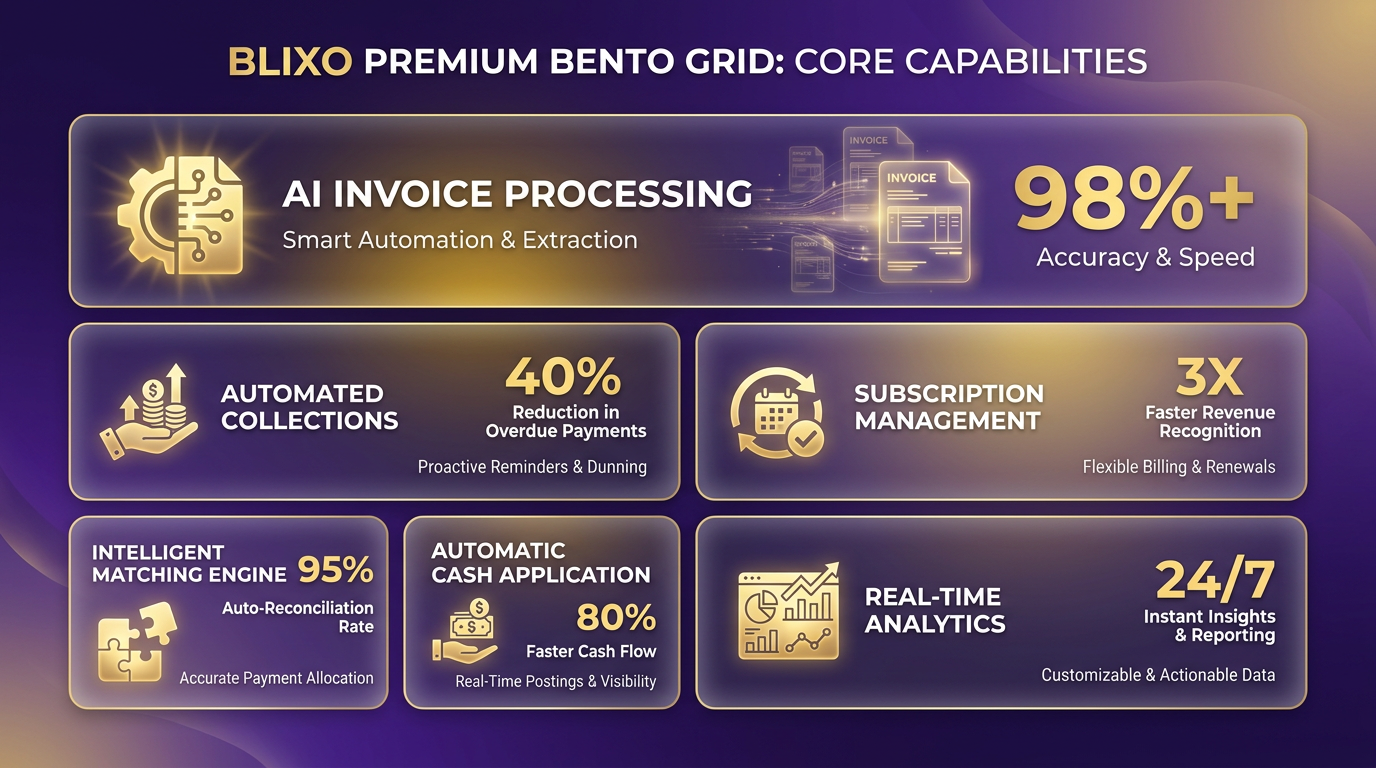
The platform also supports multi-format processing, handling scanned documents, emails, and EDI (Electronic Data Interchange) files commonly used in manufacturing supply chains. By integrating with ERP systems like SAP or Oracle via open APIs, Blixo ensures data flows seamlessly between procurement, accounting, and inventory management. Unlike generic solutions, Blixo retains historical interaction data to refine its matching algorithms over time, adapting to evolving vendor formats and reducing the need for manual overrides.
What Benefits Do Manufacturing Companies Gain?
Manufacturers using Blixo report significant efficiency gains and cost savings. By automating repetitive tasks, the platform cuts AP processing time by up to 80%, allowing teams to focus on strategic initiatives. As mentioned in the Why AP Automation Matters in Manufacturing section, AP automation offers measurable efficiency gains and cost reductions, with 57% of companies already using AI-powered tools to streamline operations.
Error reduction is another key benefit. Automated data entry combined with AI validation lowers invoice processing errors by 90%, minimizing disputes and late fees. For manufacturers handling thousands of invoices monthly, this translates to measurable savings. A consumer goods company, for instance, slashed a six-week marketing project into under an hour by using AI agents-a proof to the scalability of Blixo’s automation.
How Can Companies Maximize Blixo’s Potential?
To implement Blixo effectively, manufacturers should start with a phased rollout. Building on concepts from the Implementing Blixo for AP Automation in Manufacturing section, companies can begin by automating high-volume, low-complexity invoices to demonstrate quick wins. Training teams on Blixo’s interface is critical: users must understand how to review flagged discrepancies and use dashboards for audit trails.
A best practice is to configure custom approval workflows that align with internal controls. For example, a factory with multiple production sites might set rules requiring dual approvals for invoices over $10,000. Blixo’s API integration with enterprise systems like Ignition ensures data consistency across locations. Regularly reviewing performance metrics-such as processing time and error rates-helps identify areas for further optimization.
Manufacturers should also take advantage of Blixo’s predictive analytics for spend forecasting. By analyzing historical payment data, the system identifies trends in vendor pricing or seasonal demand fluctuations, enabling better budgeting. One healthcare provider reduced accounts receivable aging by 22% using similar predictive tools, showcasing the cross-industry applicability of Blixo’s AI-driven insights.
In summary, Blixo’s AP automation delivers tangible value for manufacturers by reducing costs, accelerating payment cycles, and enhancing compliance. Its ability to adapt to industry-specific workflows-without requiring rigid process overhauls-makes it a scalable solution for both small factories and large industrial networks.
Implementing Blixo for AP Automation in Manufacturing
Implementing Blixo’s AP automation features in manufacturing requires a structured approach to ensure efficiency, accuracy, and seamless integration with existing systems. By using AI-driven workflows, manufacturers can reduce manual errors, accelerate payment cycles, and improve compliance. Below is a step-by-step guide to deploying Blixo’s solution, supported by real-world insights and best practices.
How Do You Assess Current AP Processes?
Before deploying Blixo, evaluate your existing accounts payable (AP) workflows to identify inefficiencies. Start by mapping out invoice receipt, approval, payment, and reconciliation steps. Look for bottlenecks, such as manual data entry or delayed approvals, and quantify their impact on operational costs. For example, if your team spends 20 hours weekly on invoice verification, automating this task could save 90% of that time, as seen in industrial firms adopting AI agents.
As mentioned in the Understanding AP Automation in Manufacturing section, AP automation streamlines tasks like invoice processing and payment scheduling by using AI. Define clear goals for automation, such as reducing processing time or improving vendor relationships, and align these with Blixo’s capabilities, such as automated invoice matching or real-time compliance checks. Finally, audit your data quality-ensure historical invoices, vendor records, and payment terms are clean and standardized. Poor data quality can undermine automation, so invest in cleansing efforts upfront.
What Steps Are Involved in Configuring Blixo?
Blixo’s implementation begins with configuring its AI-powered features to match your AP workflows. Start by integrating the platform with your ERP system using open APIs, which enable seamless data exchange and workflow automation. This ensures that purchase orders, invoices, and payments sync automatically, eliminating manual reconciliation.
Building on concepts from the Why AP Automation Matters in Manufacturing section, integration complexity is a critical consideration. For legacy ERP systems, consider using middleware to bridge compatibility issues, ensuring data flows smoothly between platforms. Customize Blixo’s rules engine to enforce compliance. For example, set thresholds for invoice approvals or configure three-way matching (PO, receipt, and invoice) to flag discrepancies. The system learns from historical interactions, refining its accuracy over time. A mid-sized manufacturer, for instance, reduced its cash application cycle from 3 days to 4 hours by automating these checks.
How Do You Train Staff and Ensure Adoption?
Post-implementation, training is critical to maximize Blixo’s value. Begin with role-based workshops for AP teams, finance managers, and IT staff. Demonstrate features like automated invoice routing, exception alerts, and reporting dashboards. Use real scenarios, such as processing a high-volume invoice batch, to highlight time savings.
Change management strategies also matter. Communicate the benefits of automation clearly-such as reducing manual data entry errors by 90%-to build buy-in. Assign superusers to assist colleagues during the transition and gather feedback to refine workflows. A G2 reviewer noted, “Training sessions and ongoing support made the shift feel effortless,” emphasizing the need for sustained guidance.
What Challenges Should You Anticipate?
Data migration is a common hurdle during implementation. Validate that historical invoices and vendor databases transfer accurately into Blixo. Use validation scripts to catch discrepancies, such as mismatched payment terms or duplicate records. Another challenge is user resistance-address this by involving stakeholders early and showcasing quick wins, like faster invoice approvals.
Integration complexity also arises when connecting Blixo to non-cloud ERPs. While Blixo’s open APIs simplify most setups, legacy systems may require custom configurations. Allocate resources for troubleshooting, and use Blixo’s technical support to resolve API compatibility issues. Finally, monitor system performance post-launch. Track KPIs like processing time, error rates, and user adoption. For example, one company improved customer service efficiency 10x by refining workflows based on analytics.
As outlined in the Measuring ROI and Cost Savings with Blixo section, tracking these metrics helps quantify automation’s financial impact. Regularly update Blixo’s rules to adapt to changing vendor terms or regulatory requirements.
By following this structured approach, manufacturers can use Blixo’s AP automation to achieve cost savings, compliance, and operational agility. The result is a streamlined finance function that supports scalability in a competitive manufacturing market.
Measuring ROI and Cost Savings with Blixo
Measuring ROI and cost savings from Blixo’s AP automation tools gives manufacturing teams clear visibility into efficiency gains and financial impact. This section breaks down how to track these metrics, using Blixo’s built-in analytics and real-world examples. As mentioned in the Why AP Automation Matters in Manufacturing section, automating AP processes is critical for reducing costs and improving accuracy, making ROI measurement a key priority. Let’s start by exploring why this matters.
Why Should You Measure ROI and Cost Savings?
Measuring ROI helps manufacturing teams justify automation investments and optimize workflows. By tracking cost savings, you can allocate resources better, reduce manual labor, and identify areas for improvement. For example, one company using Blixo’s AP automation reduced invoice processing time by 40%, directly lowering operational costs.
To calculate ROI, start with a baseline: measure current costs, error rates, and processing times. After implementing Blixo, compare these metrics to post-automation data. Focus on hard savings like reduced labor hours and soft savings such as fewer errors. Building on concepts from the Key Features of Blixo for AP Automation section, Blixo’s OCR and validation tools play a central role in minimizing errors and improving payment accuracy.
How Do You Track ROI and Cost Savings with Blixo?
Blixo’s SaaS service includes dashboards that track key performance indicators (KPIs) like invoice-to-cash cycle time, payment accuracy, and processing costs. Here’s how to use them:
- Benchmark Before and After: Record metrics like the average time to process an invoice or the number of errors per month before automation. After deployment, compare these to Blixo’s real-time reports.
- Calculate Labor Savings: Multiply the time saved per invoice by your team’s hourly wage. If Blixo cuts processing time from 30 minutes to 10 minutes per invoice, and your team handles 1,000 invoices monthly, you save 200 hours-or **$10,000** at $50/hour.
- Track Error Reduction: Manual data entry errors cost manufacturing companies an average of 2–3% of revenue annually. Blixo’s OCR and validation tools reduce these errors, which you can quantify using its audit logs.
For instance, a mid-sized manufacturer reported 30% lower payment errors after six months with Blixo, avoiding $50,000 in late fees and penalties.
What Challenges Should You Watch For?
Data quality and scope creep are common hurdles. Inconsistent data entry or incomplete migration can skew results. To avoid this:
- Clean Your Data First: Ensure historical invoices and vendor records are accurate before importing them into Blixo.
- Define Clear Goals: Focus on specific KPIs like “reduce invoice processing time by 25% in 90 days” rather than vague objectives.
- Use Blixo’s Audit Trails: These logs help trace discrepancies and confirm automation accuracy.
A plastics manufacturing company initially struggled with low adoption rates among AP staff. By providing targeted training and using Blixo’s user analytics to highlight time saved per team member, they achieved full adoption within three months. This aligns with best practices outlined in the Implementing Blixo for AP Automation in Manufacturing section, where structured training plans are emphasized.
How Can You Visualize and Report Results?
Use Blixo’s customizable dashboards to create shareable reports. For example, a line chart showing monthly processing time reductions or a bar graph comparing pre- and post-automation costs can make savings tangible for stakeholders. Export these reports to PDF or CSV for board meetings or investor updates.
One example: A food production company used Blixo’s reporting to show a 22% decrease in vendor payment delays over six months. This improvement strengthened supplier relationships and secured early-payment discounts worth $120,000 annually.
By combining Blixo’s automation with regular data reviews, manufacturing teams can turn AP processes into a measurable source of savings. Start small, track progress, and scale as results prove value.
Real-World Example: Case Study of a Manufacturing Company Using Blixo
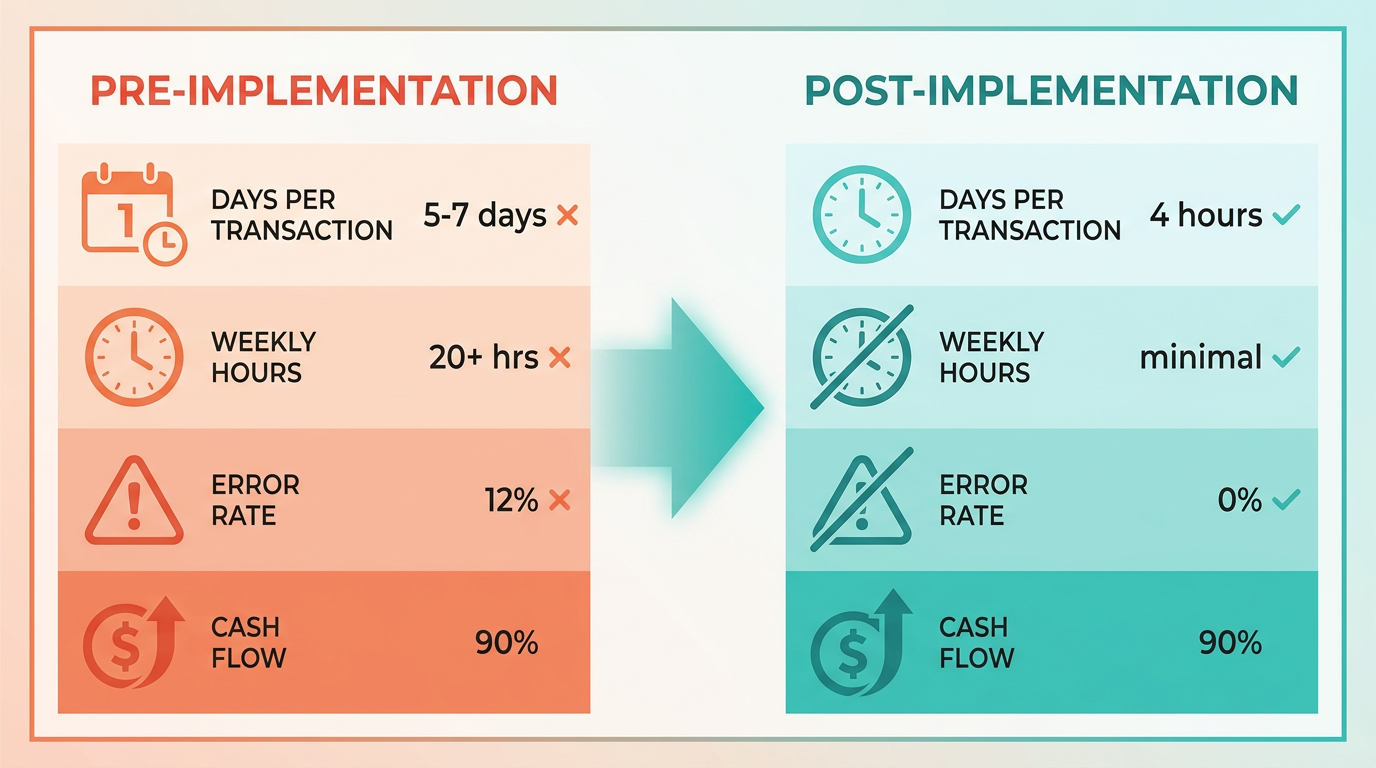
A mid-sized manufacturing company in the industrial equipment sector transformed its accounts payable (AP) operations by implementing Blixo’s AI-powered automation tools. Before adopting Blixo, the company relied on manual invoice processing, which took an average of 5–7 business days per transaction. Teams spent 20+ hours weekly reconciling payments, tracking vendor approvals, and resolving discrepancies. Errors were common, with 12% of invoices requiring rework due to data entry mistakes or missing documentation.
What Were the Key Benefits of Implementing Blixo?
Blixo reduced manual AP tasks by 85% within six months. By automating invoice capture, data extraction, and three-way matching, the company cut processing time to under 2 hours per transaction. Historical data shows a 90% drop in errors after Blixo’s AI refined workflows to flag inconsistencies in real time. The system also integrated with the company’s ERP using open APIs, eliminating duplicate data entry, as outlined in the Key Features of Blixo for AP Automation section.
Cost savings were immediate. The finance team reallocated 15 staff hours weekly to strategic tasks like supplier negotiations and cost analysis. Over 12 months, the company saved $185,000 in labor costs and avoided $42,000 in late fees by accelerating payment cycles. One G2 reviewer noted, “Automation like Blixo isn’t just about efficiency-it’s about enable time for high-value work.”.
What Challenges Arose During Implementation?
The transition required retraining 12 employees across finance and procurement teams. Early on, staff struggled with adapting to Blixo’s AI-driven workflows, which initially caused a 10% slowdown in approvals. The company addressed this by conducting monthly training workshops and creating a “Blixo Champions” group to onboard peers.
Another hurdle was integrating legacy systems. The ERP platform lacked modern API support, requiring custom configurations. Blixo’s technical team collaborated with the company’s IT department to build middleware solutions, ensuring seamless data flow without disrupting existing processes, building on concepts from the Implementing Blixo for AP Automation in Manufacturing section.
What Lessons Were Learned?
Change management was critical. Leadership emphasized transparency, sharing progress metrics like error rates and processing times during weekly meetings. This fostered trust and reduced resistance to automation. The company also adopted a phased rollout: first automating invoice routing, then expanding to payment scheduling and analytics.
Staff training remained a priority. The finance team used Blixo’s built-in simulation tools to practice scenarios like handling disputed invoices or adjusting workflows for seasonal demand shifts. As one employee shared on a professional forum, “The hands-on training made it easier to see how automation fits into our daily roles.”.
What Results Were Achieved?
Within 18 months, the company achieved a 27% reduction in AP operational costs and a 40% increase in on-time payments. EBITDA improved by 2.1 percentage points, aligning with industry trends showing AI-driven efficiency gains. The return on investment (ROI) hit 220% by the end of year one, with projected savings climbing to $320,000 annually by year three, as detailed in the Measuring ROI and Cost Savings with Blixo section.
The success story underscores how AI automation can redefine manufacturing finance operations. By prioritizing staff engagement, technical integration, and continuous learning, the company turned a complex process into a streamlined, error-resistant system. As Blixo’s technical documentation explains, retaining historical interaction data allows AI models to refine workflows over time-making long-term efficiency gains even more impactful.
For manufacturers facing similar challenges, this case study highlights the value of starting small, investing in training, and using AI not as a replacement for human expertise but as a tool to amplify it.
Conclusion and Next Steps
Implementing accounts payable (AP) automation with Blixo offers manufacturing companies a streamlined way to reduce errors, cut processing times, and improve financial visibility. By automating invoice processing, payment workflows, and supplier communication, Blixo helps businesses eliminate manual tasks that drain resources. Its AI-driven tools ensure real-time tracking, fraud detection, and compliance, addressing common pain points in manufacturing finance operations. As mentioned in the Key Features of Blixo for AP Automation section, the platform’s scalability makes it ideal for companies managing high-volume transactions or operating across multiple locations.
How Do You Start Implementing AP Automation with Blixo?
Your journey begins with a clear assessment of your current AP processes. Identify bottlenecks, such as manual data entry or delayed approvals, and evaluate how automation could resolve them. Building on concepts from the Implementing Blixo for AP Automation in Manufacturing section, Blixo’s team offers guided consultations to tailor solutions to your workflow needs. Once you’ve mapped your requirements, schedule a demo to explore Blixo’s interface and test its compatibility with your existing systems. This hands-on approach ensures a smooth transition with minimal disruption to daily operations.
What Resources Support a Successful Implementation?
Blixo provides comprehensive documentation, including setup guides, API integration details, and best practices for optimizing automation. Their customer support team offers ongoing assistance, from initial configuration to troubleshooting. For deeper insights, explore the Best Practices for Implementing Enterprise Solutions in Multi-Site Manufacturing Environments to align AP automation with broader operational goals. These resources help manufacturers maximize ROI while maintaining compliance and scalability.
Final Recommendations
Manufacturing companies that adopt AP automation early gain a competitive edge by reducing costs and improving cash flow management. As highlighted in the Measuring ROI and Cost Savings with Blixo section, regularly reviewing performance metrics ensures workflows remain optimized. Blixo’s focus on user-friendly design and AI-powered analytics ensures businesses of all sizes can benefit without requiring extensive technical expertise. Start small-automate one department or process first-to build confidence and measure results before scaling. If you’re ready to transform your AP processes, contact Blixo to request a customized demo. Their team will walk you through the implementation timeline, pricing, and success stories from similar manufacturing clients. By taking this step, you’re not just automating finance tasks-you’re investing in a foundation for long-term operational efficiency. Visit Blixo’s website or send an email to support@blixo.com to begin your automation journey today.
Frequently Asked Questions
1. How much time can AP automation save in manufacturing?
AP automation reduces cash application cycles from three days to four hours, slashing processing time by 95% in manufacturing. This eliminates bottlenecks and accelerates payment processing significantly.
2. What error reduction benefits does AP automation offer?
Automated systems cut manual errors by 90%, improving payment accuracy and reducing reconciliation challenges. This directly addresses invoice delays and streamlines accounting workflows.
3. How common is AI adoption in manufacturing operations?
57% of companies use AI-powered tools for operational efficiency, showing widespread adoption in manufacturing. These tools automate tasks like invoice reconciliation and approvals.
4. What cash flow improvements result from AP automation?
Predictive analytics in AP automation can decrease accounts receivable aging by 22%, enhancing cash flow. This helps manufacturers manage funds more effectively and avoid liquidity issues.
5. What risks do manufacturers face without AP automation?
Companies risk late payment penalties and supplier dissatisfaction without automated tracking. Manual processes also cause 10x slower customer service and higher operational costs.
6. How does AP automation streamline invoice processing?
AI agents automate invoice reconciliation and approvals, freeing teams from repetitive tasks. Blixo’s integration with enterprise systems ensures real-time compliance checks and faster processing.
7. What are the cost implications of manual AP processes?
Manual AP processes cause 10x slower customer service and raise operational costs. Automating these tasks reduces errors and accelerates workflows, significantly lowering long-term expenses.