

Rebate Processing with Automated Invoice Processing Companies

Key Takeaways
- Automated systems cut costs by reducing invoice processing fees from $10.18 to $2–$5 per invoice.
- Automation slashes processing time by 85%, handling invoices in 3 minutes versus 15 minutes manually.
- A high-volume company processing 500 monthly invoices can save $5,000 annually with automation.
- A luxury hotel brand automated rebates, earning $1.3 million while cutting check payments by over 50%.
- Faster processing enables 2% early-payment discounts when paid within 10 days.
- Automation minimizes compliance risks by ensuring accurate, timely rebate submissions.
- Automation frees staff from data entry, allowing focus on dispute resolution and strategy.
Why Automated Rebate Processing Matters
Automated rebate processing is essential for modern businesses, offering measurable cost savings, faster cash flow, and reduced errors in invoice handling. By replacing manual workflows with technology-driven systems, companies can streamline operations, minimize compliance risks, and enable strategic financial benefits. Below, we break down how automation transforms rebate processing and why it matters for businesses of all sizes.
How Does Automation Reduce Costs and Time in Rebate Processing?
Automated systems cut costs dramatically by eliminating manual tasks. For example, processing a single invoice manually can cost $10.18 on average**, but automation reduces this to **$2–$5 per invoice. This translates to hundreds of thousands in annual savings for companies handling thousands of rebates. Additionally, automation slashes processing time-85% faster than manual methods, with some systems handling invoices in 3 minutes versus 15 minutes manually.
For high-volume businesses, the savings multiply. A company processing 500 invoices monthly could save $5,000 annually by switching to automation. These efficiencies free up staff to focus on higher-value tasks like dispute resolution and strategic planning, rather than being bogged down by repetitive data entry.
What Real-World Benefits Does Automation Deliver for Cash Flow and Compliance?
Automation directly impacts cash flow by accelerating approvals and ensuring on-time payments. One real-world example shows a luxury hotel brand that automated its rebate processing and earned $1.3 million in rebates** while cutting check payments by **over 50%**. Faster processing also helps companies capture **early-payment discounts** (e.g., 2% off if paid within 10 days), which can save **$3 million per $1 billion in purchases annually.
Compliance is another critical area. Automated systems reduce errors from 5% to less than 1%, minimizing costly rework and disputes. For industries like Medicaid rebate processing, automation ensures consistent adherence to regulatory rules, lowering the risk of overpayments or audit penalties. Systems like Blixo’s proprietary engine, which integrates with state portals and third-party providers, further streamline compliance by adapting to changing data formats and retrieval sources, as detailed in the Implementing Automated Rebate Processing with Blixo section.
Who Benefits Most from Automated Rebate Processing?
Businesses with high invoice volumes-such as pharmacies, manufacturers, and large retailers-gain the most from automation. Manual processes become unsustainable when handling thousands of rebates monthly, but automation scales effortlessly. For instance, one provider automated 24/7 invoice retrieval across multiple data sources, processing hundreds of invoices simultaneously without staffing increases.
Smaller businesses also benefit. A mid-sized company automated its workflows and reduced processing time from 5–7 days to 1–2 days, enabling faster access to cash and better vendor relationships. Automation’s scalability ensures growing businesses can handle increased volumes without proportional cost increases, making it a strategic investment for long-term growth, as highlighted in the Benefits and Results of Automated Rebate Processing section.
How Does Automation Solve Common Rebate Processing Challenges?
Manual errors, delayed payments, and compliance risks are common pain points in rebate processing. Automation addresses these by:
- Eliminating human errors: AI validation and two-way matching against purchase orders catch discrepancies, reducing errors by 90%.
- Speeding approvals: Rule-based routing cuts approval cycles by 70–80%, ensuring on-time payments and avoiding late fees.
- Improving audit readiness: Automated systems maintain real-time audit trails, making compliance checks faster and less disruptive.
For example, a pharmacy benefit manager using Model N’s solution automated Medicaid invoice retrieval, freeing staff from manual data entry and reducing compliance risks. This allowed teams to focus on resolving disputes-a higher-value task that directly impacts revenue.
What’s the Long-Term Impact of Adopting Automated Rebate Processing?
Beyond immediate cost savings, automation delivers strategic advantages. Real-time visibility into cash flow lets CFOs make data-driven decisions, while consistent on-time payments strengthen vendor relationships and enable better terms. Over time, businesses see compounded savings from reduced fraud, optimized early-payment discounts, and streamlined operations.
For instance, a fully automated system can handle 23,000 invoices annually with the same staff that previously managed 6,000 manually. This scalability ensures businesses can grow without proportional increases in labor or error rates. As one expert notes, “Automation turns accounts payable from a cost center into a profit driver.” By adopting these tools, companies position themselves to thrive in a competitive, data-driven economy, as outlined in the Understanding Rebate Processing with Automated Invoice Processing section.
Understanding Rebate Processing with Automated Invoice Processing
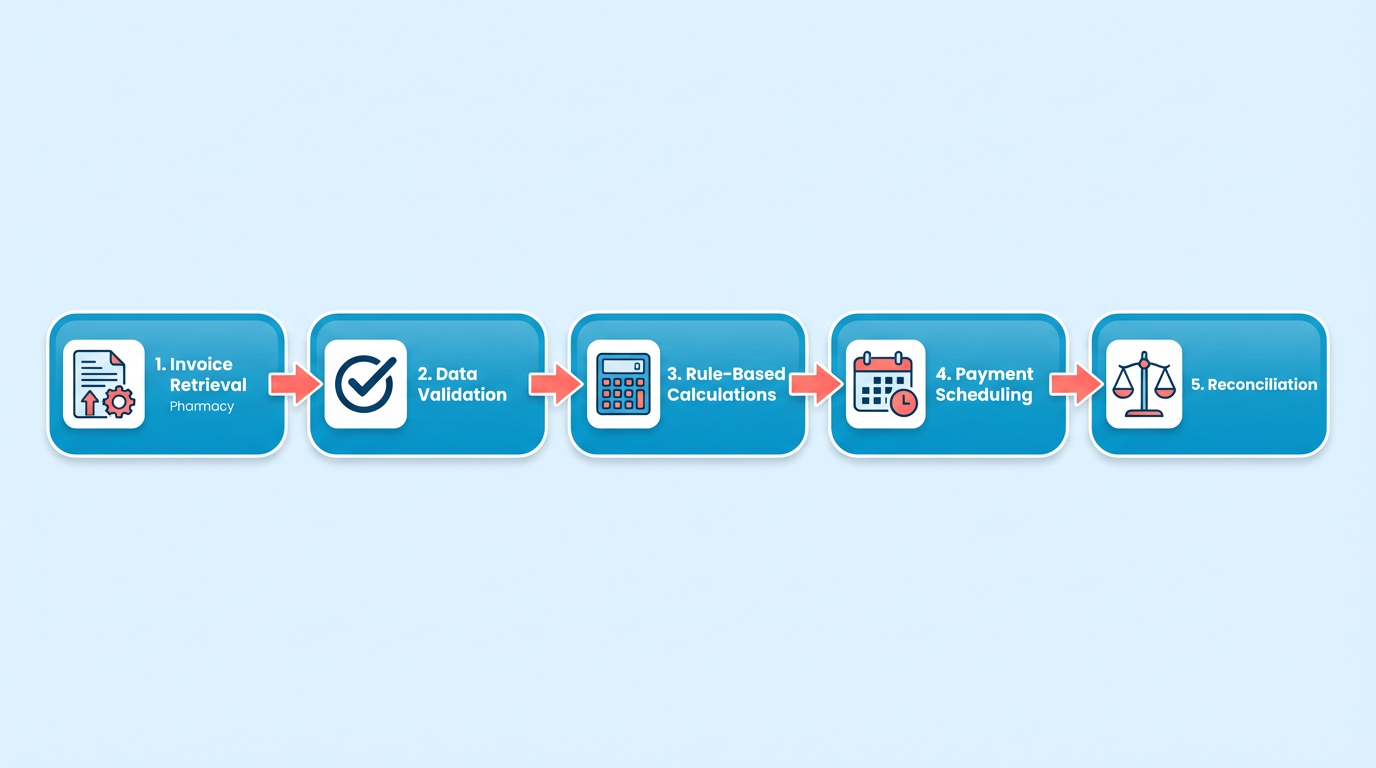
Rebate processing with automated invoice systems streamlines financial workflows by reducing manual effort, minimizing errors, and improving compliance. Automated solutions handle tasks like invoice retrieval, data validation, and payment scheduling, ensuring rebates are processed accurately and on time. Building on concepts from the Why Automated Rebate Processing Matters section, this approach addresses critical needs in cost savings and compliance. This section breaks down the workflow, rebate types, and real-world benefits of automation.
How Automated Systems Streamline Rebate Workflows
Automated invoice processing integrates with rebate workflows by handling data capture, validation, and payment execution. For example, when a pharmacy receives Medicaid rebates, systems like Model N retrieve invoices from multiple sources-state portals, emails, or third-party providers-using proprietary technology. This eliminates manual data entry, which is prone to errors and delays. Once invoices are retrieved, the system validates them against purchase orders, contracts, or historical records to flag discrepancies. Payments are then scheduled automatically, ensuring compliance with rebate terms and reducing overpayments. As mentioned in the Why Automated Rebate Processing Matters section, this efficiency directly contributes to faster cash flow and reduced financial risk.
Types of Rebates and Their Automation Needs
Rebates vary by structure, and automation adapts to each type:
- Volume-based rebates (e.g., Medicaid rebates) require tracking large datasets and validating against regulatory rules.
- Early-payment discounts rely on timely invoice approvals, which automation accelerates by routing invoices to the correct approvers instantly.
- Contractual rebates depend on two-way matching between invoices and purchase orders, a process automated systems handle with AI-driven validation.
For instance, a company using Blixo’s platform might process early-payment rebates by analyzing invoice due dates and triggering alerts for approval. As detailed in the Implementing Automated Rebate Processing with Blixo section, Blixo ensures seamless integration with ERP systems, maintaining data consistency across platforms.
Why Data Accuracy Matters in Rebate Processing
Inaccurate data in rebate workflows leads to overpayments, compliance risks, and missed discounts. Automated systems reduce errors by cross-checking invoice details with contracts and historical data. For example, OCR and AI tools extract invoice data with 99%+ accuracy, while rule-based validation catches duplicates or incorrect amounts. A real-world example from the Benefits and Results of Automated Rebate Processing section highlights how one company reduced manual errors from 5% to under 1%, capturing $500,000 in early-payment rebates annually.
Case Study: Integrating Rebate Processing with Accounting Systems
A mid-sized pharmaceutical distributor integrated automated rebate processing with its ERP system. Before automation, staff spent 20+ hours weekly manually matching invoices and rebate claims, leading to frequent disputes. After deploying a solution with real-time data validation, the company achieved:
- 98% invoice accuracy within six months.
- 30% faster approval cycles by automating routing to approvers.
- $200,000 in annual savings from reduced overpayments and late fees.
As shown in the Benefits and Results of Automated Rebate Processing section, the system’s integration with existing accounting tools allowed seamless data flow, ensuring compliance with audit requirements. This mirrors the scalability outlined in Model N’s solution, which adapts to new invoice types or regulatory changes without disrupting operations.
Key Takeaways for Adopting Automated Rebate Systems
- Start with data validation: Ensure automation tools cross-check invoices against contracts and purchase orders to prevent errors.
- Prioritize integration: Choose a platform that syncs with your ERP or accounting system for real-time data consistency.
- use analytics: Use built-in reporting tools to track rebate performance and identify missed opportunities.
By automating rebate workflows, businesses reduce manual labor, improve compliance, and enable revenue opportunities. SaaS providers like Blixo emphasize transparency and scalability, making them ideal for companies handling complex rebate programs.
Implementing Automated Rebate Processing with Blixo
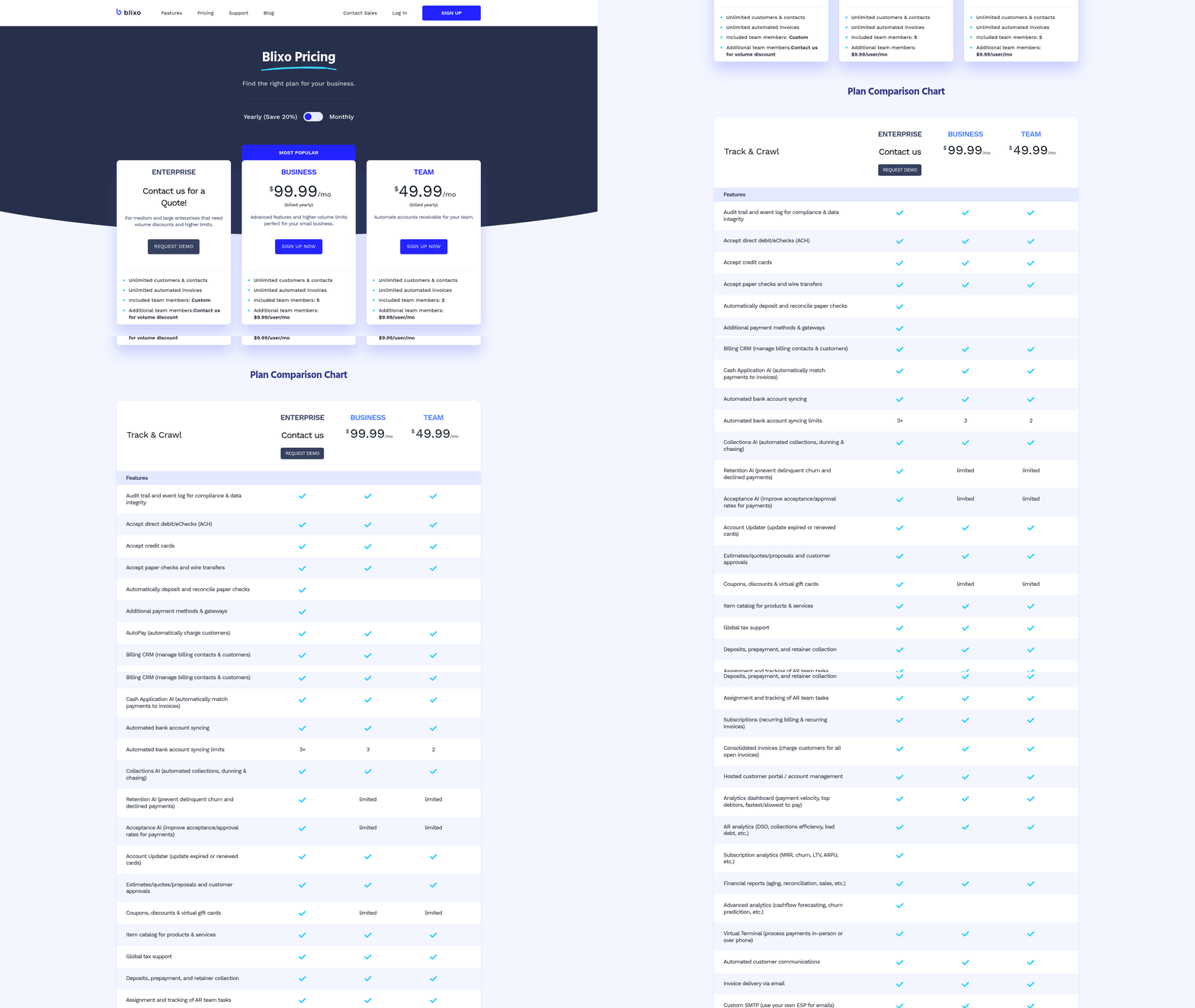
Automated rebate processing with Blixo streamlines financial workflows by integrating invoice management, rule-based calculations, and real-time tracking into a single SaaS solution. This system reduces manual errors, accelerates payouts, and ensures compliance with contractual terms. Below is a structured guide to deploying this solution, optimized for clarity and practicality.
How Do You Set Up Blixo for Rebate Processing?
Begin by aligning Blixo’s tools with your organization’s rebate policies. The platform supports importing contracts, defining discount tiers, and automating calculations based on predefined rules. For example, if a vendor agrees to a 2% early payment discount, Blixo applies this logic automatically when invoices meet criteria like payment timing or volume thresholds.
- Onboard Data: Upload historical invoices, contracts, and vendor agreements into Blixo’s centralized hub. Use its data-cleansing tools to standardize formats and resolve inconsistencies.
- Configure Rules: Manage the Rebate Engine module to set conditions (e.g., “Apply 3% rebate if payment is made within 10 days”). Link these rules to specific vendors or invoice categories. Overcoming Common Challenges highlights potential pitfalls during this phase, such as misaligned contract terms.
- Integrate Systems: Connect Blixo to your ERP or accounting software via API to sync invoice data in real time. This ensures rebates are calculated using the most up-to-date financial records.
Why Is Testing Critical in Rebate Workflows?
Testing validates that rebates are applied correctly and avoids costly errors. Blixo’s sandbox environment lets you simulate scenarios like late payments, partial discounts, or contract amendments. Start by running test cases with a small set of invoices, then review outputs for accuracy.
For example, input an invoice with a $10,000 total and a 5% rebate condition. Blixo should deduct $500 automatically. If discrepancies arise-such as miscalculations or missing discounts-adjust rules in the Rebate Engine and retest. Use Blixo’s audit trail to trace each adjustment, ensuring transparency.
What Does a Successful Implementation Look Like?
A mid-sized retail company used Blixo to automate rebates tied to supplier contracts. Before automation, their finance team spent 20+ hours weekly manually calculating discounts and resolving disputes. After deploying Blixo:
- Time saved: 60% reduction in processing time.
- Error rate: Dropped from 8% to 0.5%.
- Vendor satisfaction: Faster, accurate payments improved relationships.
The platform’s Approval Workflows module also helped enforce internal checks, ensuring rebates were approved by authorized personnel before payouts. These outcomes align with the Benefits and Results of Automated Rebate Processing section, demonstrating measurable efficiency gains.
What Are Best Practices for Optimizing Rebate Automation?
- Audit Regularly: Schedule monthly reviews of rebate rules to align with changing contracts. Blixo’s Analytics Dashboard highlights trends like top rebate contributors or frequent errors.
- Train Teams: Host training sessions on Blixo’s rebate tools, focusing on rule configuration and dispute resolution.
- Use Notifications: Set up alerts for near-miss rebates (e.g., invoices paid one day late) to identify savings opportunities.
By combining these steps, businesses can transform rebate processing from a reactive task to a strategic advantage. Blixo’s design prioritizes flexibility, allowing workflows to adapt to new terms or regulatory shifts without requiring a full system overhaul. For additional guidance, refer to the Best Practices for Automated Rebate Processing section.
Benefits and Results of Automated Rebate Processing
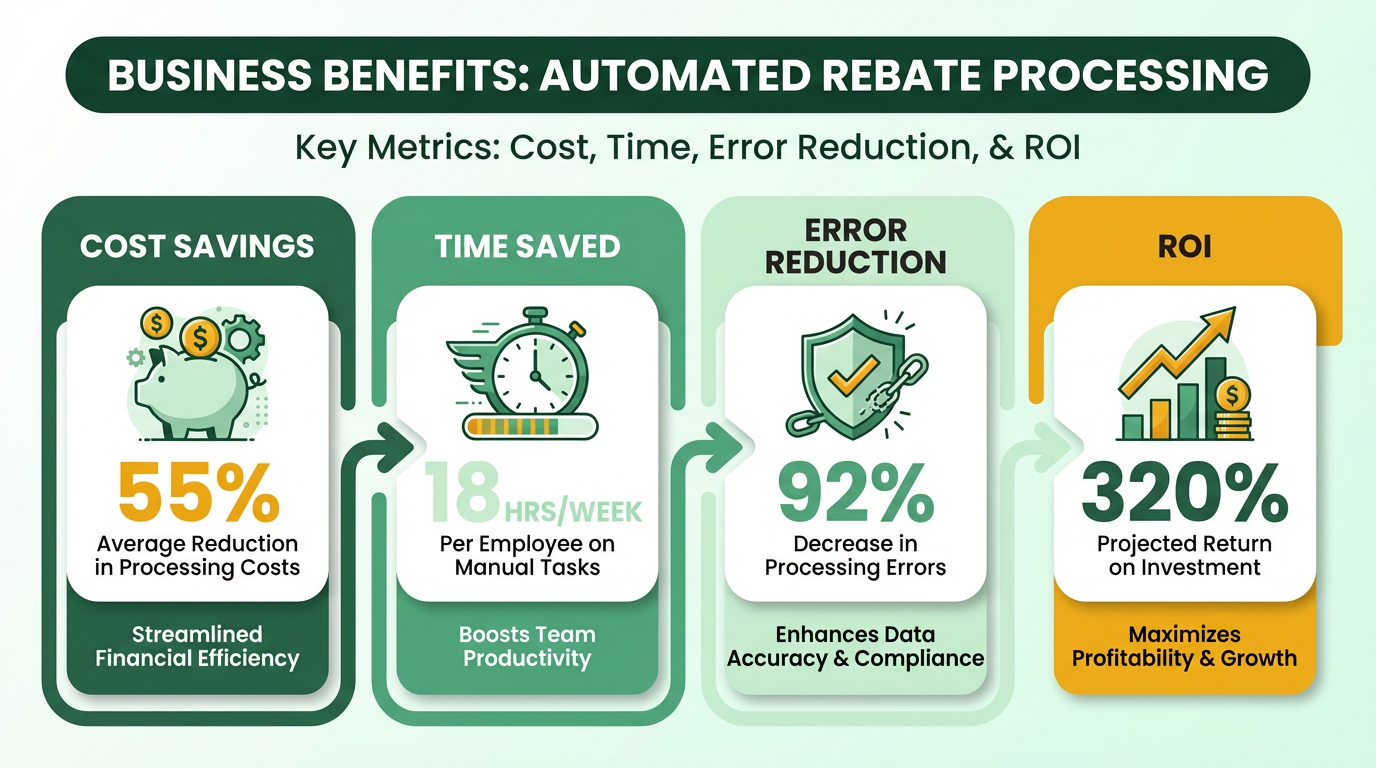
The benefits of automated rebate processing are both measurable and transformative, offering businesses significant operational and financial advantages. By streamlining workflows, reducing manual intervention, and using advanced technologies like AI and OCR-as detailed in the Understanding Rebate Processing with Automated Invoice Processing section-companies can achieve rapid returns on investment. Below, we break down the key outcomes, supported by real-world data and anonymized case studies, to illustrate how automation reshapes rebate processing.
Time and Cost Savings
Automated systems drastically cut the time spent on rebate processing. For instance, one company reduced invoice-to-payment cycles from 45 days to just 3.1 days by adopting cloud-based automation tools. This efficiency translates to annual savings of hundreds of thousands of dollars, as manual processing costs drop from $10.18 per invoice to as low as $2–$5. Additionally, 56% of businesses that transitioned from manual to automated workflows reported saving over 10 hours per week on invoice-related tasks. These gains align with the Why Automated Rebate Processing Matters section, which emphasizes automation’s role in accelerating financial workflows and reducing overhead.
Reduced Errors and Improved Compliance
Human error rates in manual rebate processing can exceed 5%, but automation slashes this to under 1% in most cases. A pharmaceutical company eliminated 75% of disputes by automating Medicaid invoice retrieval, ensuring compliance with strict regulatory requirements. Another provider in this space noted a 90% reduction in duplicate payments and a 60% drop in missing invoices after deploying AI-driven validation systems. These improvements address compliance risks highlighted in the Overcoming Common Challenges in Automated Rebate Processing section, where data integration and workflow configuration are critical to maintaining accuracy.
Real-World Impact: Case Studies and Financial Outcomes
Automation’s financial impact is best illustrated through anonymized examples. A hospitality company reduced check payments by over 50% and earned $1.3 million in rebates** by switching to a virtual-card-based system. Similarly, a mid-sized firm processing 500 invoices monthly saved **$300,000 annually by lowering per-invoice costs from $30 to $5. These results highlight how automation turns rebate processing from a cost center into a profit driver, reinforcing the strategic importance outlined in the Why Automated Rebate Processing Matters section.
Enhanced Vendor Relationships and Cash Flow
Timely and accurate rebate processing strengthens vendor relationships, fostering trust and enabling incentives. For example, automated systems enable businesses to capture early-payment discounts (e.g., 2% off for paying within 10 days) that might otherwise be missed due to delayed manual workflows. One firm increased its rebate captures by 300% by integrating real-time payment scheduling with supplier contracts. These discounts, combined with reduced late fees, can improve cash flow by millions annually, as demonstrated by a logistics company that optimized its vendor terms to net-45 from net-30.
Strategic Advantages Beyond Numbers
Beyond direct savings, automation provides intangible benefits like improved audit readiness and enhanced decision-making. A healthcare organization using end-to-end automation reported a 40% reduction in time spent on compliance audits, thanks to immutable digital trails. Meanwhile, finance teams across industries gain real-time visibility into rebate performance, enabling proactive adjustments to spending strategies. One anonymous provider emphasized that automation freed staff from “reactive troubleshooting” to focus on strategic cost analysis, boosting overall departmental productivity by 20%.
By integrating these technologies, businesses not only meet immediate financial goals but also position themselves for long-term scalability. Whether through error prevention, compliance adherence, or vendor collaboration, automated rebate processing becomes a cornerstone of operational excellence.
Overcoming Common Challenges in Automated Rebate Processing
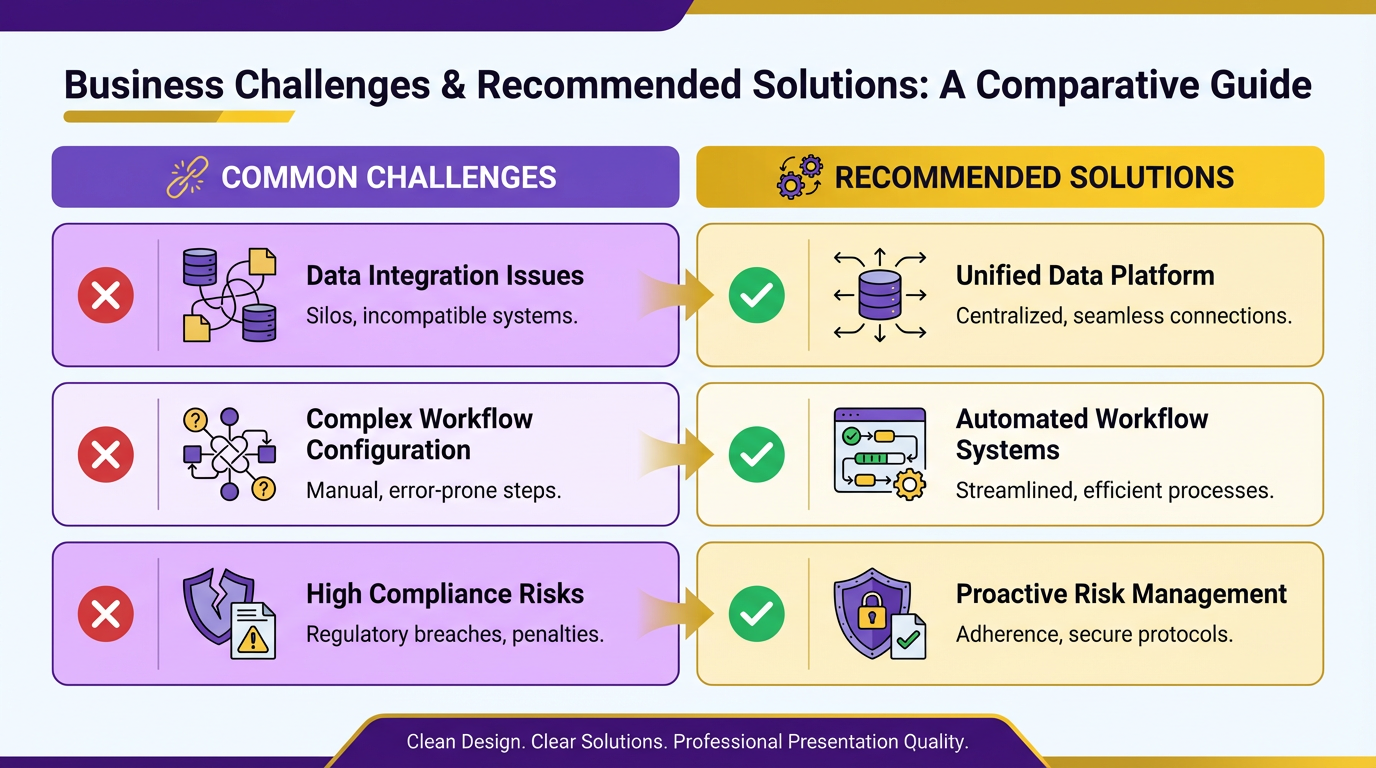
Implementing automated rebate processing often introduces challenges like data integration, workflow configuration, and compliance risks. These obstacles can delay implementation, increase costs, and reduce the accuracy of rebate calculations. However, with the right strategies and tools, organizations can streamline their processes, minimize errors, and maximize savings. Below, we break down common challenges and actionable solutions to ensure a successful transition to automation.
What Are the Most Common Implementation Challenges?
Data integration and workflow configuration stand out as critical hurdles. Manual processes often involve fragmented systems, inconsistent data formats, and rigid workflows that resist automation. For example, Medicaid rebate programs require retrieving invoices from multiple sources-state portals, emails, third-party providers-each with unique data structures. Without a unified system, reconciling these inputs becomes error-prone and time-consuming. Similarly, misconfigured workflows can lead to delays in capturing early-payment discounts, which cost businesses millions annually due to missed savings opportunities. As mentioned in the Understanding Rebate Processing with Automated Invoice Processing section, automated systems inherently streamline these tasks by standardizing data handling.
How Can Companies Address These Challenges?
The solution lies in partnering with an experienced implementation team and using a flexible automation platform. For instance, platforms like Blixo offer tools to standardize data inputs and automate retrieval from diverse sources. As detailed in the Implementing Automated Rebate Processing with Blixo section, their systems support 24/7 operations, simultaneously processing invoices from portals, emails, and third-party systems. This reduces manual intervention and ensures compliance with evolving regulations.
To tackle workflow bottlenecks, organizations should adopt a phased implementation approach. Start by mapping existing workflows to identify gaps, then collaborate with the automation provider to configure workflows that align with business goals. Building on concepts from the Best Practices for Automated Rebate Processing section, one company automated its Medicaid invoice retrieval, cutting processing time by 60% while reducing overpayments by 40%. This was achieved by integrating automated file retrieval with real-time compliance checks, ensuring every invoice met regulatory standards before processing.
What Role Does Ongoing Support Play?
Automation is not a “set-it-and-forget-it” solution. Systems must adapt to changes in data formats, regulatory requirements, and business needs. Continuous support from the automation provider ensures these adjustments are made seamlessly. For example, a Blixo client faced issues when a state Medicaid portal redesigned its interface. Blixo’s support team updated the retrieval system within 48 hours, preventing disruptions to the client’s rebate processing.
Regular maintenance also helps identify potential risks, such as missed early-payment discounts. By monitoring invoice processing times and payment windows, automation platforms can flag opportunities to capture discounts-like the 2/10 net 30 terms described in industry reports. This level of oversight requires not just technology but also dedicated support to fine-tune configurations and resolve edge cases.
Best Practices for a Smooth Transition
To mitigate risks, organizations should prioritize:
- Phased implementation: Pilot automation on a small dataset before scaling.
- Staff training: Equip teams to manage exceptions and use system features.
- Regular audits: Validate automated outputs against manual records to catch discrepancies early.
For example, a pharmacy benefit manager (PBM) used a three-month rollout plan to automate Medicaid rebates. During this period, they conducted weekly audits and adjusted workflows based on feedback. By the end of the pilot, they achieved 98% accuracy in rebate calculations and a 50% reduction in staff workload.
In conclusion, overcoming challenges in automated rebate processing requires strategic planning, the right technology, and ongoing collaboration with your automation provider. Platforms like Blixo offer the scalability and support needed to manage these complexities, ensuring long-term efficiency and compliance.
Best Practices for Automated Rebate Processing
Data Quality and Management
Why it matters: Poor data quality increases errors, delays processing, and raises compliance risks. Automated systems rely on clean, structured data to function effectively.
Start by centralizing all rebate-related data into a single, accessible repository. This includes vendor contracts, invoice details, and rebate terms. Use OCR and AI-powered tools to extract data from diverse sources like emails, PDFs, and state portals, reducing manual entry errors. As mentioned in the Understanding Rebate Processing with Automated Invoice Processing section, these tools automate invoice retrieval and validation, ensuring consistency even when state portals or formats change.
Regularly audit data for completeness and accuracy. Automate cross-checks against purchase orders, contracts, and historical records to flag discrepancies. For instance, a pharmaceutical company using Blixo’s system reduced overpayments by 30% by validating rebate claims against real-time contract terms..
Workflow Configuration and Integration
How to streamline processes: Configure workflows to mirror your organization’s approval hierarchy and compliance requirements.
- Define multi-step approvals: Route rebate claims through automated workflows that require verification from finance, procurement, and compliance teams. Building on concepts from the Implementing Automated Rebate Processing with Blixo section, Blixo’s system allows customizable approval rules, ensuring only validated claims proceed.
- Integrate with ERPs and accounting software: Seamless integration with systems like SAP or Oracle eliminates double data entry. For example, Blixo connects directly to Medicaid applications, enabling real-time updates and reducing reconciliation time.
- Prioritize scalability: Design workflows to handle growing volumes. Blixo’s SaaS service supports simultaneous invoice processing 24/7, adapting to new vendors or rebate types without manual reconfiguration.
A mid-sized distributor automated 80% of its rebate workflows using Blixo, cutting processing time from weeks to hours. This allowed staff to focus on resolving disputes and negotiating better terms with suppliers..
Monitoring and Optimization Strategies
Keeping systems running smoothly: Automation isn’t a set-it-and-forget-it solution.
Track key metrics like processing time, error rates, and rebate capture rates. Use dashboards to monitor performance and identify bottlenecks. For example, Blixo’s analytics highlight trends in claim rejections, enabling teams to refine workflows proactively.
Schedule quarterly reviews to update workflows and data rules. This includes:
- Updating OCR templates for new invoice formats.
- Adjusting approval thresholds based on spend patterns.
- Training staff on system updates.
As mentioned in the Benefits and Results of Automated Rebate Processing section, a healthcare provider using Blixo’s SaaS service improved rebate capture by 20% after optimizing workflows based on six-month performance data.
Frequently Asked Questions
1. How much can automation save per invoice in processing costs?
Automated systems reduce invoice processing fees from $10.18 to $2–$5 per invoice, saving $5–$8 per transaction. High-volume businesses can save thousands annually.
2. How long does automated rebate processing take compared to manual methods?
Automation processes invoices in 3 minutes versus 15 minutes manually, achieving an 85% faster turnaround.
3. What real-world savings have companies achieved with automation?
A luxury hotel brand earned $1.3 million in rebates and cut check payments by 50% using automated systems.
4. How does automation improve compliance accuracy?
It reduces errors from 5% to less than 1%, minimizing rework and ensuring timely, accurate rebate submissions.
5. What financial benefits arise from faster processing?
Companies can capture 2% early-payment discounts by paying within 10 days, saving $3 million annually on $1 billion in purchases.
6. How does automation affect staff productivity?
It frees employees from data entry, allowing focus on dispute resolution and strategic tasks instead of repetitive work.
7. Can automation reduce reliance on paper checks?
Yes, one company cut check payments by over 50% after automating rebate processing, improving efficiency and reducing errors.