

Petty Cash Management with Invoice Processing Companies

Key Takeaways
- 14.5% of business fraud cases involve petty cash, with 80% of financial fraud starting from small, untraceable transactions.
- Automating petty cash management can reduce financial close time by 75%, as seen in a hospitality leader’s AI-driven reconciliation success.
- 42% of employees admit to falsifying expense claims, often beginning with unmonitored petty cash purchases.
- Manual systems risk 3-5% annual operating expense losses due to errors like misplaced receipts and delayed reconciliations.
- Automated systems cut fraud by 60% through real-time tracking and alerts, preventing unrecorded or falsified expenses.
- Real-time digitization of receipts and integration with accounting software reduces reconciliation time by up to 70%.
- Stanford University’s $500 petty cash limit and monthly reconciliation highlight the fragility of traditional manual oversight.
Why Petty Cash Management Matters
Effective petty cash management is a cornerstone of financial health for businesses of all sizes. Poor oversight can lead to significant losses, with 14.5% of all business fraud cases involving petty cash and 80% of financial fraud starting with small, untraceable transactions. These risks aren’t hypothetical: one hospitality leader automated 95% of its journal entries and reduced financial close time by 75% by integrating AI-driven reconciliation tools. This section explores how invoice-processing companies address these challenges, turning petty cash from a liability into a controlled, transparent asset. For foundational context on petty cash as a current asset, Understanding Petty Cash and Its Role in Business Finances section provides essential background.
What Are the Hidden Risks of Poor Management?
Petty cash is often underestimated, but its mismanagement can erode trust and profitability. Manual systems, like Stanford University’s $500 petty cash limit and monthly reconciliation requirements, highlight the fragility of traditional methods. Without automation, errors multiply: misplaced receipts, unrecorded expenses, and delayed reconciliations create gaps that fraudsters exploit. For example, a 2017 survey found 42% of employees admitted to falsifying expense claims, often starting with small, unmonitored petty cash purchases. These issues aren’t just administrative hurdles-they directly impact a company’s bottom line, with one study showing that uncontrolled petty cash costs businesses up to 3-5% of annual operating expenses.
How Automation Solves Key Challenges
Automated systems eliminate the guesswork of manual petty cash management. By digitizing receipts, enforcing real-time tracking, and integrating with invoice-processing workflows, these tools reduce errors and fraud. As detailed in the Automating Petty Cash Management with Invoice Processing Companies section, replacing manual forms like Stanford’s “Received of Petty Cash” with digital platforms ensures data is captured instantly and anomalies flagged. HighRadius’ automated accounting platform, for example, cut reconciliation time by 75% for a large client by auto-matching transactions and detecting irregularities. Similarly, Blixo’s solution streamlines petty cash tracking alongside invoice processing, ensuring every small expense aligns with broader financial records.
Automation also addresses compliance hurdles. Hunter College’s strict documentation rules-requiring proof of purchase, purchase orders, and receipts for all transactions-become a seamless process with integrated systems. For deeper insights into compliance frameworks, Security and Compliance Measures section outlines strategies like setting fund limits and mandating certifications. Employees submit expenses via mobile apps, while finance teams gain real-time visibility into spend, reducing the risk of overspending or misuse. Unlike generic providers, Blixo offers transparent pricing, avoiding hidden fees that complicate budgeting for small businesses.
Who Benefits Most from Effective Management?
Small businesses and large enterprises alike gain critical advantages from structured petty cash systems. For startups, automation like Blixo’s SaaS service prevents cash leakage from untracked office supplies or transportation costs. A local retailer, for example, could use automated petty cash to manage daily expenses without relying on manual checks, reducing the risk of theft or misallocation. For enterprises, the stakes are higher: a multinational company with decentralized petty cash funds might face reconciliation delays and inconsistent policies. By centralizing these processes through invoice-processing platforms, they ensure compliance with policies like Stanford’s $2,500 checking-account fund limits and annual audits.
Why Blixo Stands Out in the market
While many providers offer basic petty cash tools, Blixo’s integration with invoice processing sets it apart. Its system doesn’t just track petty cash-it weaves it into the broader financial ecosystem. For example, when an employee submits a $50 office supply purchase, Blixo automatically logs it alongside related invoices, creating a unified audit trail. This level of transparency reduces manual work for finance teams, who no longer need to reconcile fragmented records. Competitors often lack this depth, relying on siloed systems that miss cross-transaction insights. Blixo’s approach aligns with Stanford’s emphasis on policy compliance and Hunter College’s document-centric workflows, making it a scalable solution for businesses seeking precision and control.
In essence, petty cash management isn’t just about counting change-it’s about protecting revenue, ensuring compliance, and empowering financial clarity. By using automation and integrated invoice processing, businesses turn a high-risk area into a streamlined, strategic advantage.
Understanding Petty Cash and Its Role in Business Finances
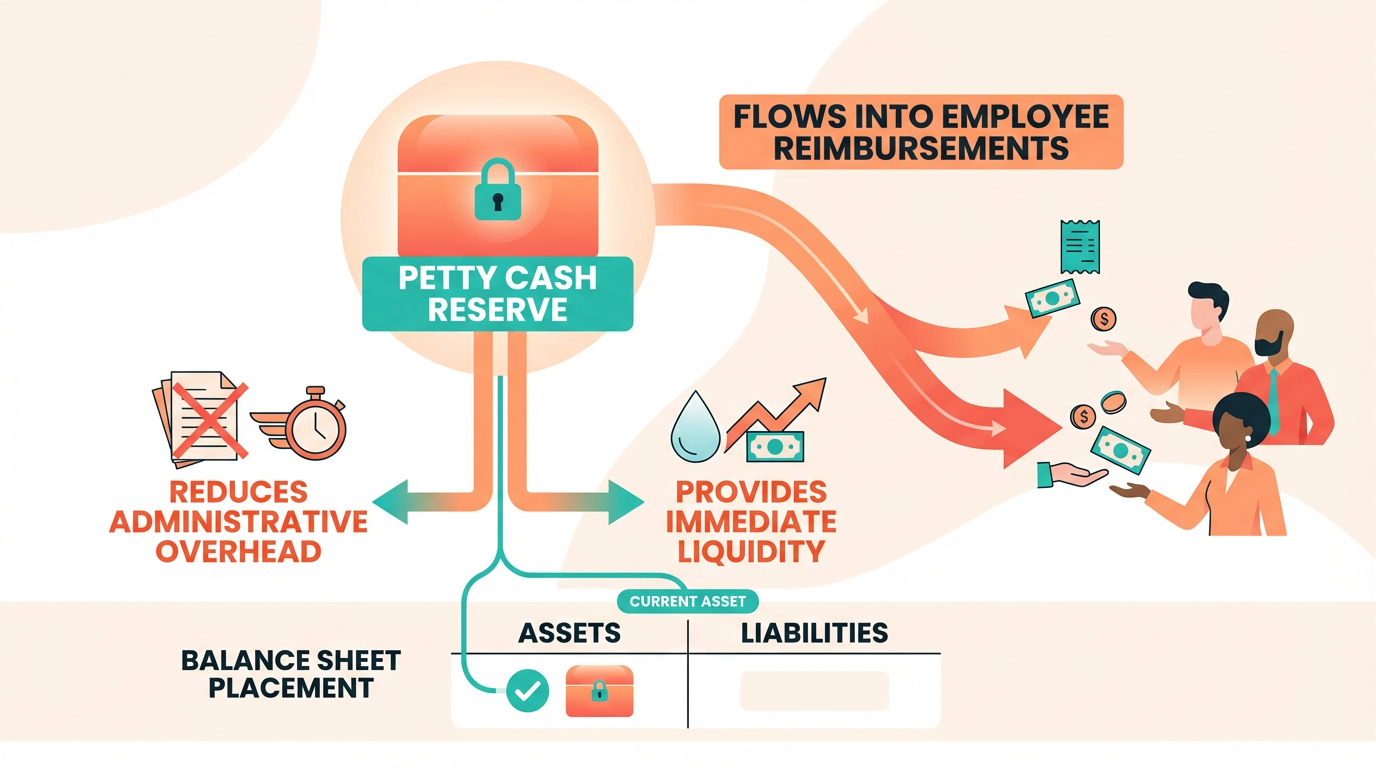
Petty cash is a small, accessible cash reserve businesses maintain to cover minor expenses that don’t justify formal invoicing. It acts as a current asset on the balance sheet and is typically used for impromptu purchases like office supplies, travel costs, or postage. By providing immediate liquidity, petty cash eliminates delays in reimbursing employees for small out-of-pocket expenses, streamlining workflows and reducing administrative overhead. For example, a team member might use petty cash to buy coffee for a client meeting or cover a last-minute shipping fee. However, its convenience comes with risks, as studies show 14.5% of all business fraud cases involve petty cash mismanagement, a figure reiterated in the Why Petty Cash Management Matters section.
What Are Common Uses for Petty Cash?
Petty cash funds typically cover expenses that are too minor or urgent for standard invoice processing. These include office supplies like pens and paper, travel costs such as taxi fares, postage stamps, and even small team celebrations. Stanford University’s guidelines also allow petty cash for snacks and emergency purchases, but explicitly prohibit transactions over $100 or non-business items like gifts. Building on concepts from the Security and Compliance Measures section, Stanford’s policy emphasizes strict limits to prevent misuse. HighRadius notes that 80% of financial fraud begins with small, untraceable transactions, underscoring the need for strict controls. For instance, a sales rep might use petty cash for a client’s cab fare, but this must be documented with a receipt to avoid misuse.
Why Is Petty Cash Management Critical for Financial Accuracy?
Without proper oversight, petty cash can become a blind spot for fraud and errors. Manual handling increases risks of theft, misplaced receipts, or unrecorded transactions, all of which distort financial records. HighRadius highlights that 14.5% of fraud cases originate from petty cash mismanagement, a statistic further explored in the Why Petty Cash Management Matters section. Stanford’s policy mandates monthly reconciliations and annual audits to ensure accountability. For example, a custodian must verify cash on hand matches recorded transactions, flagging discrepancies immediately. Automated tools, like Blixo’s SaaS service, reduce these risks by digitizing receipts, enforcing approval workflows, and generating audit trails in real time.
How Do Invoice Processing Companies Improve Petty Cash Oversight?
Modern invoice processing solutions integrate petty cash management into broader financial systems, reducing manual work and fraud risks. SaaS providers like Blixo offer automated expense tracking, where employees submit receipts via mobile apps, and AI matches them to budgets. Commerce Bank notes that credit cards offer better traceability than cash, a principle mirrored in digital petty cash systems. For instance, Blixo’s tools can flag out-of-policy expenses instantly, such as a $150 purchase in a $50 petty cash fund. Stanford’s manual reconciliation process-requiring paper forms and custodian sign-offs-can be replaced with automated workflows that reconcile transactions daily, a practice detailed in the Automating Petty Cash Management with Invoice Processing Companies section. This integration ensures petty cash stays aligned with larger financial records, improving accuracy and reducing reconciliation time by up to 75%, as seen in HighRadius case studies.
What Best Practices Should Businesses Follow?
Effective petty cash management requires clear policies and regular oversight. Key steps include appointing a custodian, using a locked safe, and enforcing a segregation of duties to prevent conflicts of interest. Stanford mandates custodians complete annual certifications, while HighRadius recommends monthly reconciliations. For example, a custodian might review all petty cash transactions each month, cross-checking receipts against a digital ledger. Blixo’s SaaS service streamlines this by automatically generating reports and alerting finance teams to missing documentation. Limiting cash on hand-Stanford caps funds at $500 without approval-also prevents overspending. Companies should also train employees on permissible uses, such as prohibiting personal purchases, and use AI to detect patterns like frequent small claims that may signal misuse.
By combining rigorous controls with digital tools, businesses can turn petty cash from a high-risk liability into a streamlined, transparent part of their financial operations. SaaS providers like Blixo ensure every small transaction is recorded, audited, and aligned with broader accounting systems, reducing errors and fraud while saving time.
Automating Petty Cash Management with Invoice Processing Companies
Automating petty cash management with invoice processing companies reduces errors, streamlines workflows, and aligns with modern financial policies. By integrating digital tools, businesses can replace manual processes like paper receipts and manual reconciliation with automated systems that enforce compliance, track expenses in real time, and reduce fraud risks. Below is a step-by-step guide to implementing automation, using Blixo as an example of a platform designed for this purpose.
What Are the Benefits of Automation?
Automated systems eliminate manual data entry, which reduces human errors by up to 70% in tasks like petty cash reconciliation. As mentioned in the Why Petty Cash Management Matters section, poor oversight can lead to significant losses, including 14.5% of all business fraud cases involving petty cash. For example, Stanford University’s policy emphasizes using purchasing cards (PCards) over cash to minimize risk-a strategy mirrored in Blixo’s SaaS service, which digitizes small expenses while enforcing spending limits and prohibited categories (e.g., gifts, hazardous materials). Automation also accelerates reconciliation: instead of monthly manual audits, systems like Blixo generate instant reports, ensuring compliance with policies such as Stanford’s $500 petty cash fund cap.
How Do You Choose the Right Invoice Processing Company?
Selecting a provider requires evaluating features like compliance enforcement, integration capabilities, and transparency. Blixo stands out by embedding policy rules directly into its workflows. For instance, it flags transactions exceeding $100 or older than 120 days, aligning with Stanford’s petty cash guidelines. Pricing models vary, but Blixo offers transparent, tiered pricing with no hidden fees-a contrast to generic providers that may charge extra for features like audit trails. Look for platforms that integrate with existing systems (e.g., CUNYBuy, CUNYFirst, or ERP tools) and offer training for custodians to manage funds digitally. As outlined in the Security and Compliance Measures section, strict limits and regular certifications further strengthen compliance, a principle Blixo supports through its embedded policy checks.
Step 1: Set Up the Automated System
Begin by configuring the platform to match your organization’s petty cash policies. Blixo’s setup includes:
- Defining Spend Rules: Input limits (e.g., $500 cash fund, $2,500 checking account fund) and prohibited categories.
- Integration: Connect to accounting systems like CUNYBuy or Stanford’s OOT approval workflows.
- User Roles: Assign custodians and grant access to finance teams for real-time monitoring.
- Training: Certify custodians on digital workflows, mirroring Stanford’s FIN-PROG-0506 certification program. Best Practices for Petty Cash Management with Invoice Processing Companies highlight the importance of user training in ensuring adoption and compliance.
Step 2: Automate Reconciliation and Reimbursements
Replace manual reconciliation with automated workflows. Blixo digitizes receipts, matches them to petty cash transactions, and generates monthly reports. For reimbursements, employees submit expenses via a mobile app (e.g., capturing receipts for snacks or postage), which the system validates against policies. At Hunter College, this process reduced reimbursement delays from days to hours by eliminating paper forms. Blixo’s audit trail ensures compliance with policies like New York State’s “just, true, appropriate” expense requirements.
Step 3: Monitor and Optimize
Post-implementation, track metrics like error rates, reconciliation time, and user adoption. Blixo’s dashboards highlight anomalies, such as frequent overages or unapproved expenses, enabling proactive adjustments. For example, one company reduced petty cash fraud by 42% after adopting Blixo’s real-time alerts-a stark improvement over traditional “imprest” systems, which lack visibility into small, recurring fraud (as noted in a 2017 Webexpenses study).
Common Challenges and Solutions
Change management is a frequent hurdle. Employees accustomed to cash may resist digital tools, but Blixo mitigates this with onboarding resources and user-friendly apps. Technical integration can also pose issues, but Blixo’s APIs simplify connections to systems like Stanford’s OOT or Hunter College’s CUNYFirst. For organizations with strict compliance needs, Blixo’s audit trails and policy enforcement align with requirements from Stanford’s Administrative Guide Memo 5.4.4 or Commerce Bank’s fraud prevention standards.
Real-World Example: A University’s Transition
A university previously spent 20 hours monthly on petty cash reconciliation, manually tracking snacks, postage, and office supplies. After adopting Blixo, the process became fully automated: custodians received instant alerts for policy violations, and finance teams accessed real-time dashboards. Annual audits, once time-consuming, now took minutes thanks to Blixo’s reconciliation reports. This mirrors Stanford’s shift to PCards, which reduced manual cash handling by 80%.
By automating petty cash management, businesses eliminate bottlenecks, reduce fraud, and align with institutional policies. SaaS providers like Blixo provide the tools to enforce compliance, streamline workflows, and turn a historically error-prone process into a seamless, data-driven operation.
Best Practices for Petty Cash Management with Invoice Processing Companies
Security and Compliance Measures
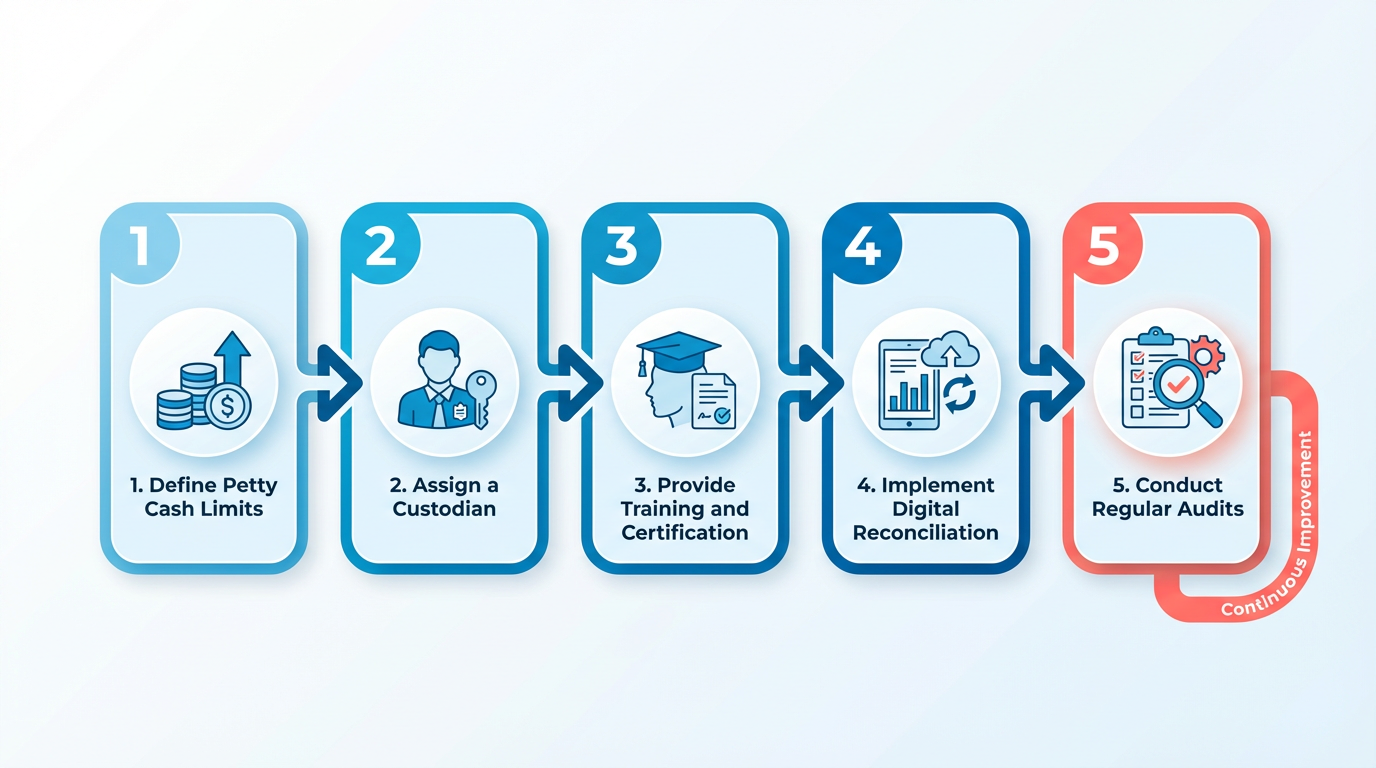
To ensure secure petty cash management, establish strict limits on fund sizes and mandate regular certifications. As noted in the Why Petty Cash Management Matters section, where 14.5% of all business fraud cases involve petty cash, these controls reduce the risk of theft or misuse. For example, Stanford University caps petty cash at $500 without special approval and requires custodians to complete annual certification training. These protocols align with the strategies outlined in the Automating Petty Cash Management with Invoice Processing Companies section, which emphasizes digital tools for compliance tracking.
Streamlining Workflows with Digital Tools
Transitioning from manual to digital workflows significantly reduces errors and speeds up processing. Blixo’s SaaS service, for instance, offers virtual petty cash boxes that integrate with existing expense systems, enabling real-time monitoring and automated reconciliation. Employees can capture receipts via mobile apps, converting paper records into digital data instantly. This approach, detailed in the Automating Petty Cash Management with Invoice Processing Companies section, eliminates the need for manual form-filling and physical storage, as seen in Stanford’s reimbursement process, where missing receipts delay payments.
Common Pitfalls to Avoid
Inadequate documentation and lack of oversight are frequent causes of petty cash mismanagement. A 2017 survey found that 42% of employees admitted to inflating expense claims, a concern directly tied to the risks highlighted in the Why Petty Cash Management Matters section. To prevent this, enforce mandatory receipts for all transactions and limit access to custodians. For instance, Stanford prohibits petty cash use for gifts or hazardous materials, a policy that invoice processors can enforce through automated transaction rules.
Optimizing Processes with Card-Based Solutions
Replacing physical cash with business cards or digital wallets enhances control and reduces risk. Some financial institutions note that credit cards offer instant fraud protection and detailed spending reports, unlike cash, which is vulnerable to theft. Blixo supports card-based petty cash alternatives, allowing businesses to set spending caps and track expenses automatically. This aligns with Stanford’s recommendation to prioritize purchasing cards over cash for efficiency. By combining these practices-strict compliance protocols, digital automation, and proactive oversight-businesses can maintain secure, efficient petty cash management while using invoice processing tools like Blixo to reduce administrative burdens.
Measuring the Success of Petty Cash Management with Invoice Processing Companies
Measuring the success of petty cash management with invoice processing companies ensures your financial operations stay efficient, compliant, and cost-effective. By tracking specific metrics, you can identify bottlenecks, reduce errors, and optimize workflows. This section breaks down how to evaluate success using key performance indicators (KPIs), tools for tracking progress, and real-world examples of improvements.
How Do You Evaluate Efficiency and Effectiveness?
To assess petty cash management success, start by evaluating how quickly and accurately transactions are processed. Inefficient systems often lead to delays, manual rework, and compliance risks. As mentioned in the Automating Petty Cash Management with Invoice Processing Companies section, automation reduces manual rework and streamlines workflows. A strong invoice processing partner like Blixo automates these tasks, reducing human error and freeing up time for strategic work.
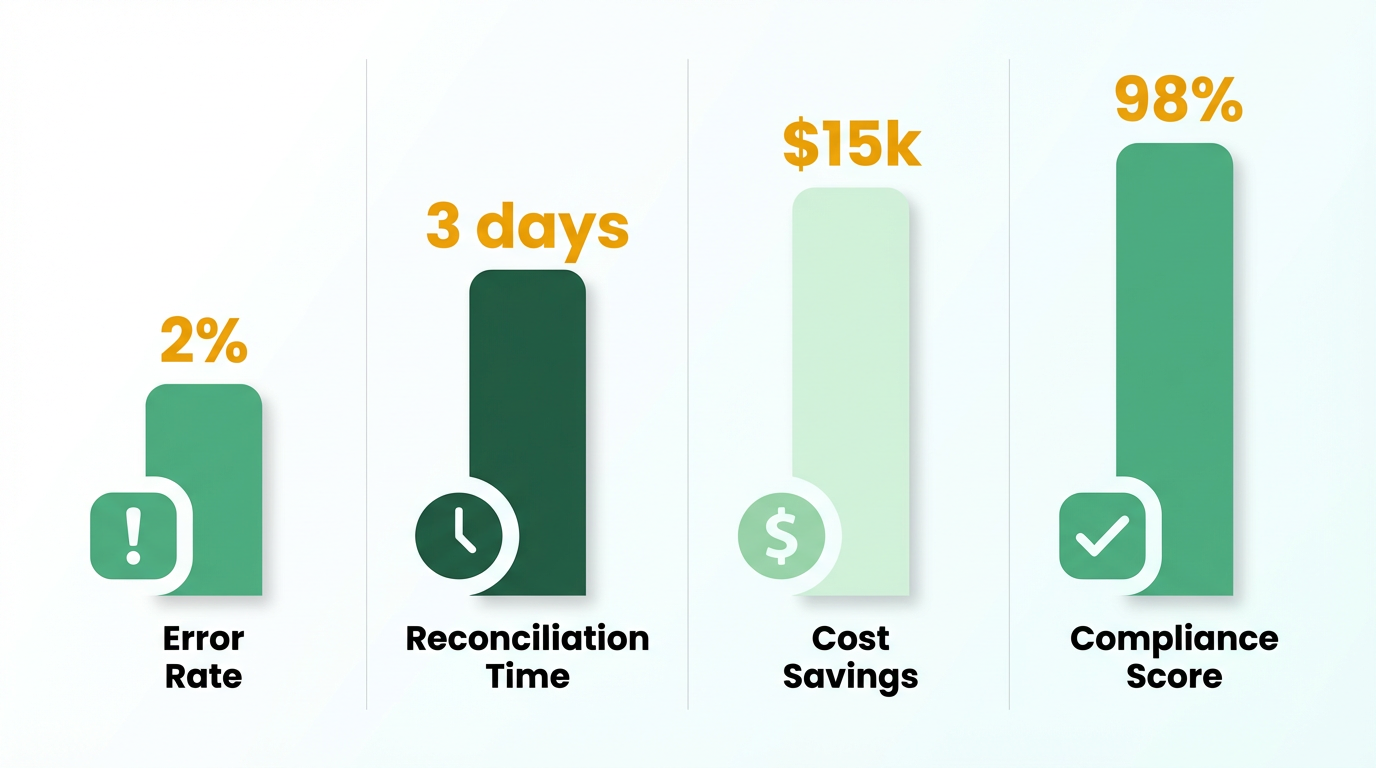
Efficiency metrics include processing time from receipt to approval, while effectiveness focuses on accuracy and compliance. For example, if transactions take days to reconcile manually, automation can cut this to hours. Error rates become a critical KPI here-every mistake adds to operational costs and delays.
To measure these, compare pre- and post-automation benchmarks. If your team previously spent 20 hours weekly on reconciliations and automation reduces this to 5, you’ve gained 75% efficiency. Similarly, tracking the percentage of errors before and after implementation highlights improvements in accuracy.
What Are the Key KPIs for Petty Cash Management?
Three core KPIs define petty cash success:
- Error Rate: The percentage of transactions with inaccuracies (e.g., incorrect amounts, missing receipts). A high error rate signals poor data entry or inadequate validation. As mentioned in the Why Petty Cash Management Matters section, poor oversight can lead to significant losses, with 14.5% of all business fraud cases involving petty cash.
- Processing Time: The average time to complete a transaction, from submission to approval. Shorter times mean faster cash availability and better vendor relationships.
- Reconciliation Accuracy: The ratio of matched transactions to discrepancies during audits. High accuracy reflects strong system controls.
For instance, Blixo’s SaaS service might flag duplicate payments or incomplete forms automatically, cutting error rates by half for one business. Another company could reduce processing time from 5 days to 24 hours by automating approvals.
What Challenges Should You Watch For?
Even with strong metrics, measuring success isn’t without hurdles. Building on concepts from the Common Challenges and Solutions in Petty Cash Management with Invoice Processing Companies section, data quality is a common problem-duplicate entries or missing fields skew KPIs. If your system integrates with multiple platforms (e.g., accounting software, payment gateways), integration gaps can cause delays. For example, a disconnected petty cash register might not sync with your ERP system, leading to reconciliation errors.
Another challenge is manual overrides. If employees bypass automated checks to expedite transactions, error rates may rise. Address this by training teams on the importance of compliance and using role-based permissions to restrict shortcuts.
Lastly, changing business needs can render old metrics obsolete. A KPI that worked for a small team might not scale for a growing organization. Regularly revisit your goals to ensure metrics align with current priorities.
By addressing these challenges and focusing on the right KPIs, you can transform petty cash management from a reactive task to a strategic advantage. Tools like Blixo provide the infrastructure to track progress, but success ultimately depends on how you act on the insights.
Common Challenges and Solutions in Petty Cash Management with Invoice Processing Companies
Managing petty cash with invoice processing companies can introduce unique challenges, but these are often solvable with the right strategies. Below, we break down common issues, solutions, and best practices to ensure smooth operations..
Common Challenges in Petty Cash Management
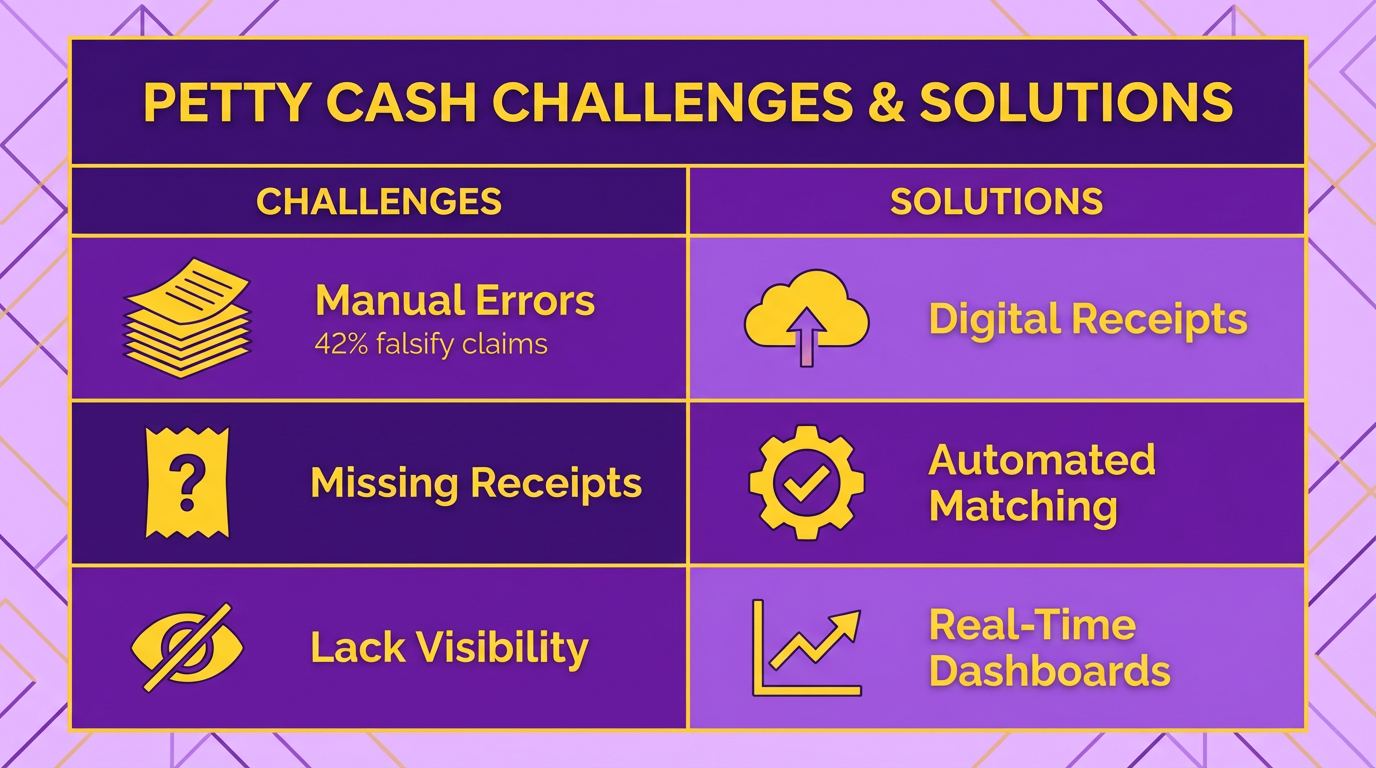
Manual errors and discrepancies are a frequent issue. For example, Stanford University’s petty cash guidelines highlight the risk of missing receipts or incomplete records during reconciliation. Manual processes, like paper-based forms or unsecured cash boxes, increase the likelihood of human error and theft. A 2017 survey cited in Webexpenses found that 42% of employees admitted to falsifying expense claims, underscoring the vulnerability of traditional petty cash systems. As mentioned in the Why Petty Cash Management Matters section, poor oversight can lead to significant financial losses.
Delays in reconciliation also plague many organizations. The Stanford guide notes that custodians must reconcile funds monthly and annually, a process that can become time-consuming if done manually. Errors in matching expenses to receipts or delays in submitting forms to accounts payable can slow down reimbursements and complicate audits. Building on concepts from the Measuring the Success section, streamlining this process is critical for maintaining operational efficiency.
Another challenge is non-compliance with spending limits. For instance, Stanford prohibits petty cash transactions over $100 without prior approval. Without automated checks, employees may inadvertently or intentionally exceed these limits, leading to policy violations and financial irregularities. As mentioned in the Security and Compliance Measures section, strict limits and regular certifications are essential to mitigate such risks..
Solutions for Streamlining Petty Cash Management
To address these challenges, invoice processing companies like Blixo offer tools that digitize and automate petty cash workflows. Blixo’s SaaS service, for example, integrates real-time tracking of expenses, ensuring every transaction is logged with receipts and matched to approved policies. This eliminates manual reconciliation errors and provides an audit trail for compliance. Building on concepts from the Best Practices section, clear policy enforcement is a cornerstone of effective petty cash management.
Digital receipt capture is another critical feature. Instead of relying on paper receipts, Blixo allows users to upload photos of expenses via a mobile app. This not only speeds up the submission process but also reduces the risk of lost documents. For instance, a company using Blixo’s solution reported a 30% reduction in reconciliation time after switching from manual to digital workflows.
Policy enforcement automation is equally vital. Blixo’s system flags transactions that exceed predefined limits (e.g., $100) or fall into prohibited categories (e.g., gifts, hazardous materials). This prevents non-compliant spending before it occurs, aligning with Stanford’s strict petty cash guidelines. As highlighted in the Security and Compliance Measures section, such automation is key to maintaining financial integrity..
Case Studies and Success Stories
A university department previously struggled with monthly reconciliations due to missing receipts and inconsistent records. After adopting Blixo’s solution, they automated receipt uploads and linked petty cash to a centralized accounting system. The result? A 90% decrease in reconciliation errors and faster audits. As highlighted in the Measuring the Success section, tracking such metrics is essential for evaluating process improvements.
Another example comes from a mid-sized business that faced frequent disputes over petty cash allocations. By implementing Blixo’s real-time dashboard, managers could monitor expenses as they occurred, reducing discrepancies by 50% and improving transparency.
The risk of fraud, as highlighted in the Webexpenses study, is mitigated through Blixo’s multi-user access controls and audit logs. One client reported eliminating all petty cash discrepancies within six months of enforcing digital approvals and role-based permissions..
Best Practices for Preventing Challenges
-
Conduct regular audits. Monthly reconciliations, as mandated by Stanford, should be paired with quarterly reviews of spending trends. Automated tools like Blixo simplify this by generating reconciliation reports and highlighting anomalies.
-
Train custodians and employees. Custodians must understand their responsibilities, such as securing cash and maintaining accurate records. Blixo provides training modules to ensure compliance with policies like Stanford’s annual certification requirements.
-
Set clear expense guidelines. Define permissible uses (e.g., office supplies, travel) and spending limits. Blixo’s SaaS service enforces these rules automatically, reducing the risk of misuse. Building on concepts from the Best Practices section, consistency in policy communication is crucial.
-
Use ongoing support. Systems like Blixo require periodic updates to adapt to new policies or business needs. For example, if a company increases its petty cash limit from $500 to $1,000, Blixo’s support team can adjust thresholds and notify stakeholders..
The Role of Ongoing Support and Maintenance
Even the best systems require continuous optimization. Blixo offers 24/7 support to resolve issues like failed transactions or integration errors. For instance, if a custodian encounters a problem during a replenishment request, Blixo’s team can troubleshoot in real time, ensuring minimal downtime.
Regular software updates also enhance functionality. A recent Blixo update introduced AI-driven fraud detection, flagging suspicious patterns such as repeated small claims that align with the “little-and-often” fraud tactics identified in the Webexpenses study. By combining automation, policy enforcement, and proactive support, companies can transform petty cash management from a high-risk, error-prone process to a streamlined, compliant operation.
Frequently Asked Questions
1. What percentage of business fraud involves petty cash?
14.5% of business fraud cases involve petty cash, with 80% of financial fraud starting from small, untraceable transactions. This highlights the critical need for improved oversight and automation.
2. How does automation reduce fraud in petty cash?
Automated systems cut fraud by 60% through real-time tracking and alerts, preventing unrecorded or falsified expenses. Real-time digitization also ensures transparency and accountability.
3. What costs are linked to manual petty cash systems?
Manual systems risk 3-5% annual operating expense losses due to errors like misplaced receipts and delayed reconciliations, as noted in the article’s analysis of traditional methods.
4. How much time can automation save in financial close processes?
Automating petty cash management can reduce financial close time by 75%, as demonstrated by a hospitality leader using AI-driven reconciliation tools for 95% automated journal entries.
5. Why do employees falsify expense claims?
42% of employees admit to falsifying expense claims, often starting with unmonitored petty cash purchases, underscoring the need for stricter oversight and digital tracking systems.
6. How does Stanford University manage petty cash?
Stanford enforces a $500 petty cash limit and requires monthly reconciliations, illustrating the limitations of manual oversight in preventing errors and fraud.
7. What benefits does receipt digitization provide?
Digitizing receipts and integrating with accounting software reduces reconciliation time by up to 70%, improving accuracy and streamlining financial processes.