

Leading Smart Invoicing Platforms in 2026 Compared

Key Takeaways
- Smart invoicing tools in 2026 fall into three camps: free unlimited tools, paid AI automation, and collections-first systems.
- About 59% of small businesses have invoices at least 30 days overdue. They carry an average of $17.7K in unpaid revenue.
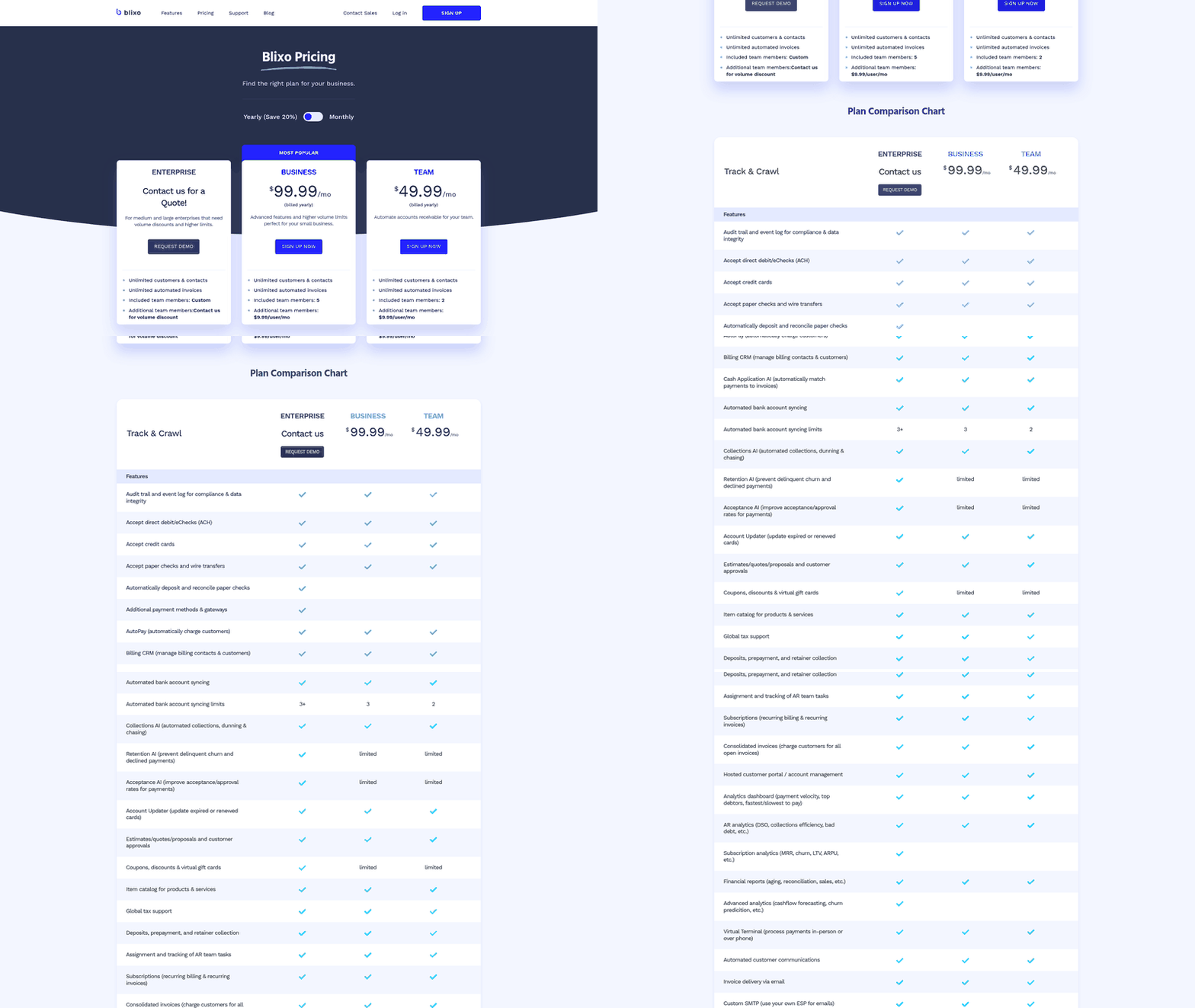
- Blixo starts at $49.99/month and targets mid-market SaaS with automated collections and AI cash application.
- BILL costs $49 per user monthly and achieves 99% accuracy with AI-driven invoice coding for AP automation at scale.
- Tipalti costs $99/month and processes global payables across 200-plus countries and 120-plus currencies.
- Stripe Billing uses usage-based pricing and supports international SaaS billing in over 135 currencies and 25 languages.
- Zoho Invoice provides full-featured invoicing at no monthly cost for freelancers and small teams.
The three camps, at a glance
The leading smart invoicing platforms in 2026 fall into three camps:
- Free unlimited-invoicing tools for simple needs.
- Paid AI automation for volume and global compliance.
- Collections-first platforms for businesses losing cash through unpaid invoices.
Choose the camp that matches your problem, not the brand.
Most reviews stop at invoice creation. The bigger money leak sits downstream. Outstanding receivables linger, restrict working capital, and force manual follow-up. That gap often determines whether a platform delivers value.
Which one fits your business?
The right choice depends on volume, complexity, and where cash gets stuck. Free tools work for freelancers and simple billing. Paid AI platforms suit higher volumes and global compliance needs. Collections-focused tools help when overdue invoices create the bottleneck.
| Platform | Starting Price | Best For | Standout Feature |
|---|---|---|---|
| Blixo | $49.99/mo | Mid-market SaaS with collections pain | Human-friendly automated collections and AI cash application |
| BILL | $49/user/mo | AP automation at scale | AI invoice coding at 99% accuracy |
| Tipalti | $99/mo | Global payables | Payments in 200+ countries and 120+ currencies |
| Airwallex | Varies | Cross-border invoicing | Multi-currency settlement in 20+ currencies |
| Stripe Billing | Usage-based | International SaaS billing | 135+ currencies and 25 languages |
| Zoho Invoice | Free | Freelancers and small teams | Full features at no monthly fee |
| NetSuite | Custom | Enterprise and complex billing | Single source of truth across finance |
Free vs. paid: where’s the actual line?
The threshold is volume and complexity, not company size. Free tools such as Zoho Invoice, Wave, and Square offer unlimited invoicing at no monthly cost. Payment processing fees still apply. They save about 3–4 hours monthly on administration, which is useful but modest.
Paid AI platforms earn their price differently. BILL has processed over 1.3 billion documents and codes invoices at 99% accuracy. Tipalti clients report up to an 80% reduction in AP workflow time. For high volumes or tax compliance across 60+ countries, that cost can pay for itself quickly.
Going cross-border? Airwallex settles in local currencies and avoids forced FX conversion. This can save up to 3% in exchange fees. Authentic Vacations cut $10k monthly in FX costs this way. For domestic teams, that feature may add unused cost.
What’s missing from every comparison?
Collections. Every platform above focuses on the pre-payment side: generation, currency, and integrations. None seriously addresses what happens after an invoice goes unpaid.
That is the unclaimed category. Reducing administrative work saves hours. Recovering receivables recovers thousands. For mid-market SaaS, unpaid invoices can also drive churn when follow-up feels cold or robotic.
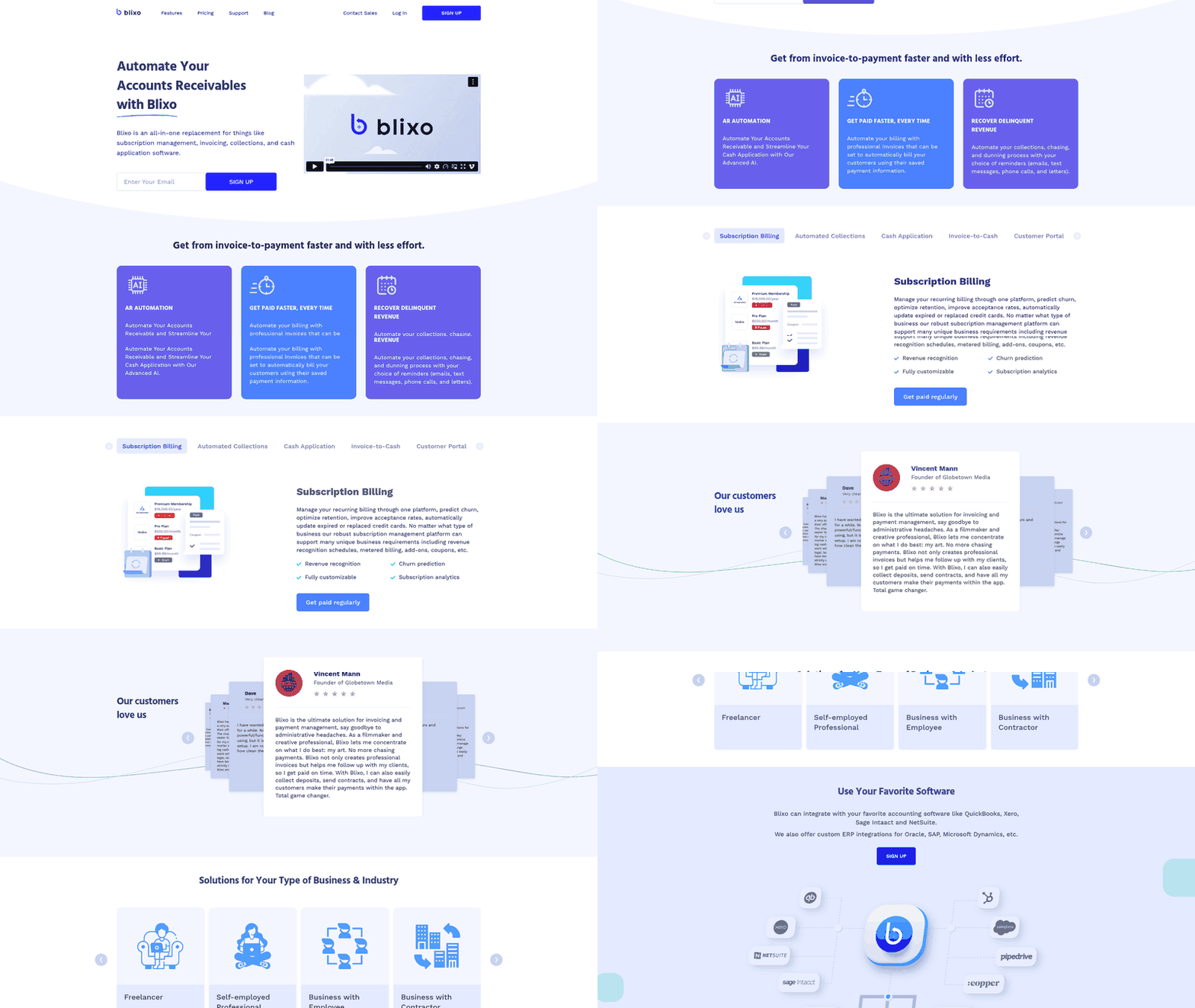
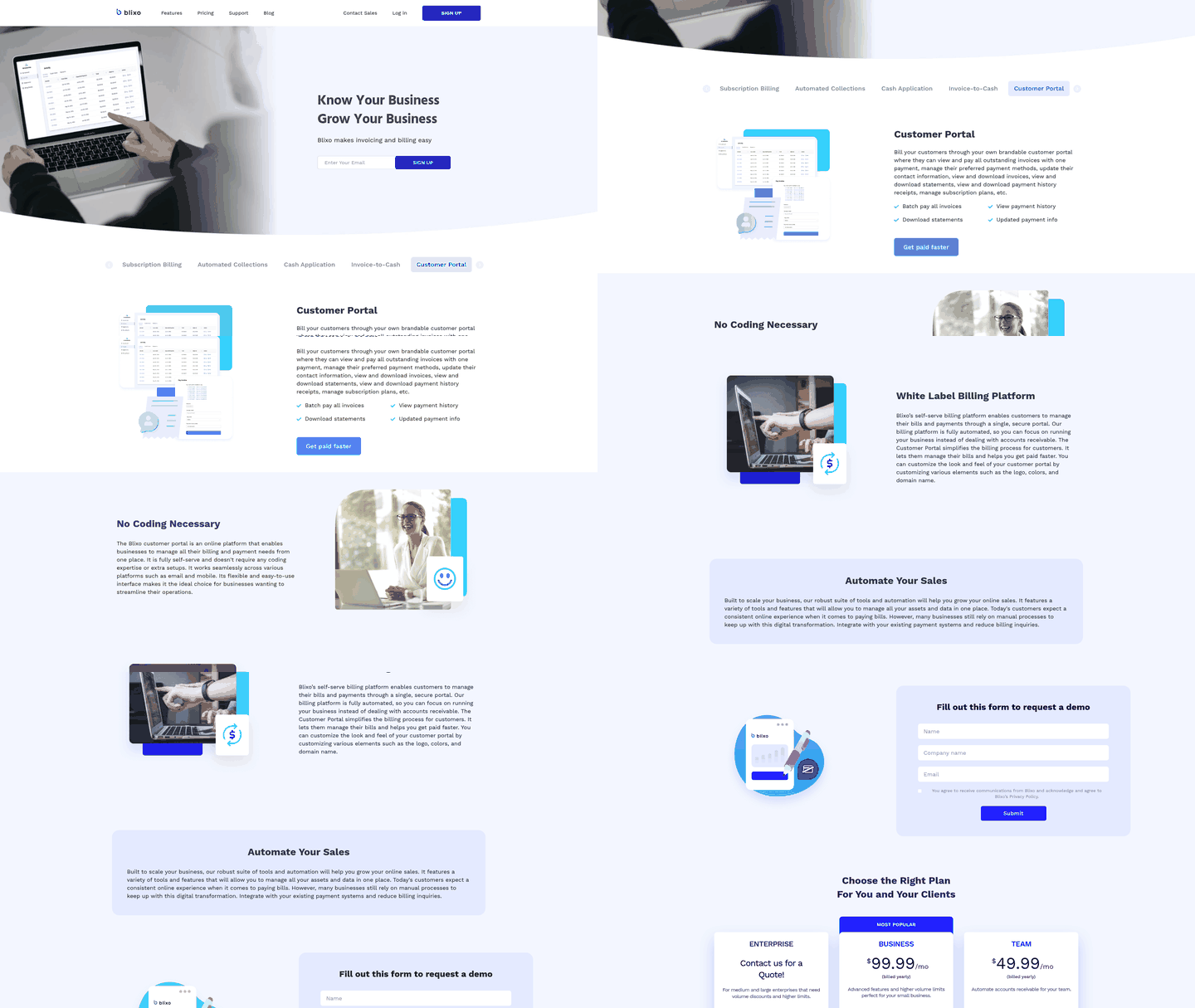
A collections-first approach changes the calculation. Blixo automates reminders across email, text, phone, and letters. It applies AI cash application through a matching engine and offers a brandable self-service portal. These tools make payment follow-up more relationship-friendly.
If overdue invoices are your bottleneck, that focus matters more than another currency or template.
Blixo replaces separate invoicing, cash application, and collections tools with one platform built to get you paid faster.
Why these options are worth a look
Choosing among the leading smart invoicing platforms in 2026 starts with one question: where does your cash get stuck? Most buyers focus on invoice creation. The larger leak sits downstream, in receivables that nobody follows up on effectively.
That distinction matters more than brand. The global e-invoicing market is expected to reach $60.9 billion by 2032, up from $13.5 billion in 2023. This growth is driving investment in automation, currency handling, and integrations. Little of that investment addresses unpaid invoices.
What should you actually optimize for?
Optimize for your biggest financial leak, not your administrative annoyance. Basic automation streamlines billing setup. The larger drain is the cost of unrecovered funds. Saving minutes during invoice creation feels productive. Recovering aged receivables affects your bottom line.
The industry emphasizes time savings, but recovered revenue is often more valuable. Reducing reminder work helps, while securing outstanding balances supports payroll. For subscription businesses, poorly timed payment demands can also alienate clients and turn delays into cancellations.
Free tools or paid AI platforms?
Evaluate operational bottlenecks rather than headcount. Free unlimited invoicing works for freelancers and simple billing. Paid AI platforms become worthwhile with higher volume, complex billing, or global compliance needs.
The sources disagree on this point. One group favors free tools such as Wave, Square, Zoho, and Bluevine. Another argues that quality automation deserves its price. It points to automated approval routing and line-item tax coding, which manual workflows cannot match at scale.
Both positions work for different businesses. Complexity matters more than employee count. A small team with hundreds of recurring international subscriptions needs advanced automation. A larger enterprise with a dozen domestic clients may manage with basic tools.
Domestic or cross-border?
Geography determines your most important features. International settlement can involve forced FX conversion and delays from reconciling payments across banks. Local-currency settlement can reduce both problems. Domestic teams may value ERP and accounting compatibility more than currency wallets.
G2 users report high satisfaction with integrations: 88% for accounting, 89% for payments, and 85% for ERP connectivity. Domestic teams should weigh those figures heavily. Cross-border teams should prioritize currency handling.
| Selection Factor | Free Invoicing Tools | Paid AI Automation | Collections-First (Blixo) |
|---|---|---|---|
| Best for | Freelancers and simple billing | High volume and global compliance | Mid-market SaaS with overdue revenue |
| Core strength | Free unlimited invoices | AI coding and tax compliance | Human-friendly collections that cut churn |
| Where it falls short | Limited collections depth | Reminders treated as an afterthought | Overkill for one-off invoices |
Every platform on this list handles the pre-payment side well. The main difference is what happens after the due date. That is the lens we would use to shortlist platforms.
For a deeper feature-by-feature breakdown, see our guide to the best smart invoicing platforms in 2026 for faster payments.
Feature comparison
The leading smart invoicing platforms in 2026 cluster around three feature areas: AI-driven automation, cross-border currency handling, and integration depth. Most reviews score tools on these areas. Few evaluate collections, where mid-market SaaS companies can lose money.
This year’s pre-payment features are strong and increasingly common. Post-payment features remain limited. That is the axis worth watching.
What do the top platforms actually offer?
Invoice creation has high feature parity, while downstream capabilities remain thin. Most tools generate invoices and accept cards. Fewer automate recurring billing, local tax calculation, and ledger synchronization together. That downstream automation creates the clearest difference.
Separate baseline features from real differentiators. Invoice templates, card acceptance, and basic tax fields appear on nearly every platform. They reveal little about fit. More useful features include automated ledger reconciliation, multi-entity consolidation, and native dunning. Those capabilities separate the platforms.
Cross-border vs. domestic?
Choose cross-border tools for FX-heavy revenue. Choose domestic-first tools for workflow and ERP fit. Multi-currency wallets and local-rail payouts help when international payments erode margins. Domestic-first tools help when approval routing and ERP writeback cause friction.
The sources disagree here as well. International-first vendors emphasize currency complexity. Domestic-focused platforms prioritize deep ledger synchronization. Choose the axis that matches your revenue map, not the longest feature list.
Free unlimited-invoicing tools such as Wave, Square, and Zoho suit freelancers with simple billing. Paid platforms earn their fees when billing structures or global compliance requirements become more complex.
Where does the feature gap actually sit?
Every platform above focuses on what happens before payment. Few address what happens afterward. Reminder sequences often become a compliance checkbox. This remains the unclaimed category, which is why Blixo centers collections on a human experience.
For mid-market SaaS, a clumsy collections email can delay cash and damage the customer relationship. Recovering receivables while preserving goodwill matters more than saving minutes during invoice generation. Blixo automates outreach across multiple channels and gives collectors tools to prevent delinquencies and support best practices.
Match the tool to your financial leak. Invoice creation is largely solved. Collections is not.
Pros and cons
Every platform has strengths and weaknesses. For mid-market SaaS, the key trade-off is not features versus price. It is whether the tool helps before payment or after it. Most 2026 platforms stop at “invoice sent.”
Pre-payment tools are capable and crowded. The post-payment gap is where recoverable revenue can disappear.
Which platforms win on speed and automation?
Paid AI platforms lead in processing speed and global compliance. Tipalti automates tax compliance and multi-currency routing for international payables. This reduces manual processing. BILL uses machine-learning coding to reduce data entry for high invoice volumes. These platforms suit throughput bottlenecks.
Free tools offer a different advantage. Wave, Square, Zoho, and Bluevine provide unlimited invoicing without monthly fees. You pay processing fees instead. Bluevine charges 2.9% + $0.60 per card and 1% for ACH. These tools simplify basic billing but lack workflows for systematic overdue-account recovery.
The trade-off is straightforward: basic automation reduces administrative work, while active collections protect revenue. For subscription businesses, thoughtful post-due follow-up also helps protect customer lifetime value.
Where does cross-border fit in?
Choose FX-focused tools when you bill internationally. Airwallex settles multiple currencies into a unified wallet. It avoids forced USD conversion and helps international businesses protect margins. This matters most with significant cross-border volume.
Domestic businesses may not need that depth. Paying for unused currency features wastes spend. A US-only agency may gain more from strong QuickBooks synchronization than euro settlement.
The sources conflict because they address different needs. Airwallex emphasizes international complexity. Other platforms focus on domestic accounting integrations. Geography should determine which priority wins.
What’s the real weakness across all of them?
Traditional tools often struggle after an invoice goes unpaid. They generate, remind, and reconcile, but their follow-up sequences can rely on rigid, robotic messages. Those messages may annoy customers you want to retain.
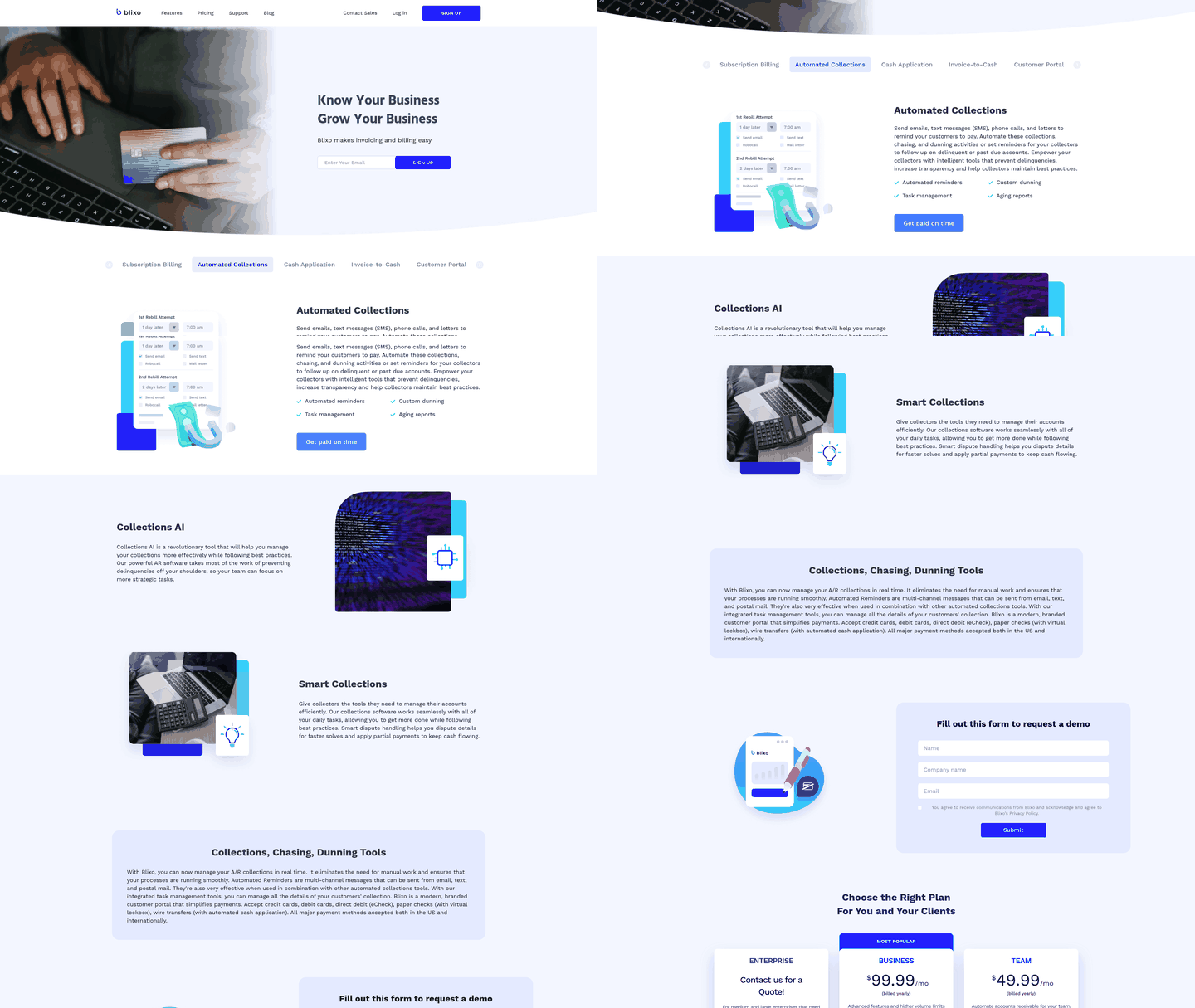
Blixo’s Collections AI addresses this gap. It automates tailored, multi-channel outreach and uses predictive retention features to help prevent involuntary churn and resolve declined payments. For mid-market SaaS, rigid dunning may recover one invoice while risking renewal. A flexible, relationship-focused approach aims to secure both.
The trade-off is clear. Blixo focuses on accounts receivable, not AP-side payables. Teams focused only on outbound vendor payments may find better-fit tools elsewhere. Blixo fits when cash is stuck downstream and collections emails risk churn.
Use cases and ideal users
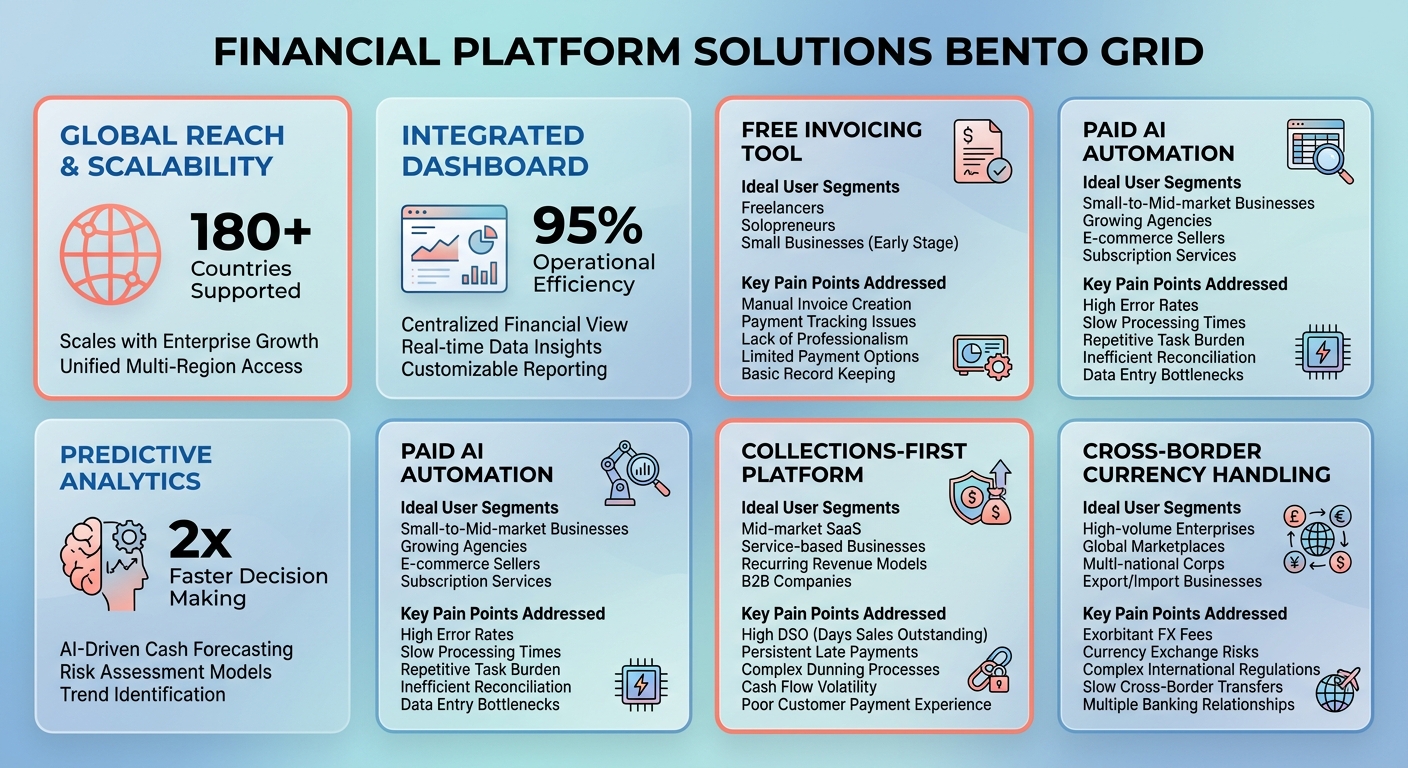
The right platform depends on where cash gets stuck, not headcount. Free unlimited-invoicing tools fit straightforward domestic operations. Paid platforms suit high volume and cross-border billing. Collections-first platforms fit businesses losing revenue after invoices go out.
That last group receives less attention in 2026 reviews. Here is who each type serves.
Who should use a free invoicing tool?
Freelancers and small businesses with simple, low-volume billing are good candidates. If you send a few invoices monthly and get paid on time, Zoho Invoice, Wave, and Square may cover your needs. The administrative savings are modest, but overhead stays low.
Scale is the main limitation. Zoho Invoice is fully free but connects its best integrations to Zoho products. If billing is simple and mostly domestic, paid tiers may not be necessary.
Who needs paid AI or cross-border platforms?
High-volume operations and cross-border companies benefit most. The sources split into two camps. One says free tools meet small-business needs. The other says platforms such as BILL and Tipalti justify their costs through automated coding and multi-country compliance.
Focus on complexity rather than company size. Processing hundreds of invoices or settling multiple currencies can justify paid automation. Airwallex holds balances in multiple global currencies and lets you pay suppliers in their local currency. This helps avoid bank markups on currency conversions. For international billing, those savings can become meaningful.
For mid-market and enterprise finance teams that need one source of truth across billing and reporting, NetSuite fits. Domestic teams may value ease of use and ERP fit more than currency handling.
Which platform fits mid-market SaaS with overdue revenue?
A collections-first platform fits businesses losing cash after invoices go out. Most tools optimize the pre-payment side. Few address aging invoices and stalled follow-up. Late payments can damage cash flow, delay payroll, or postpone vendor payments.
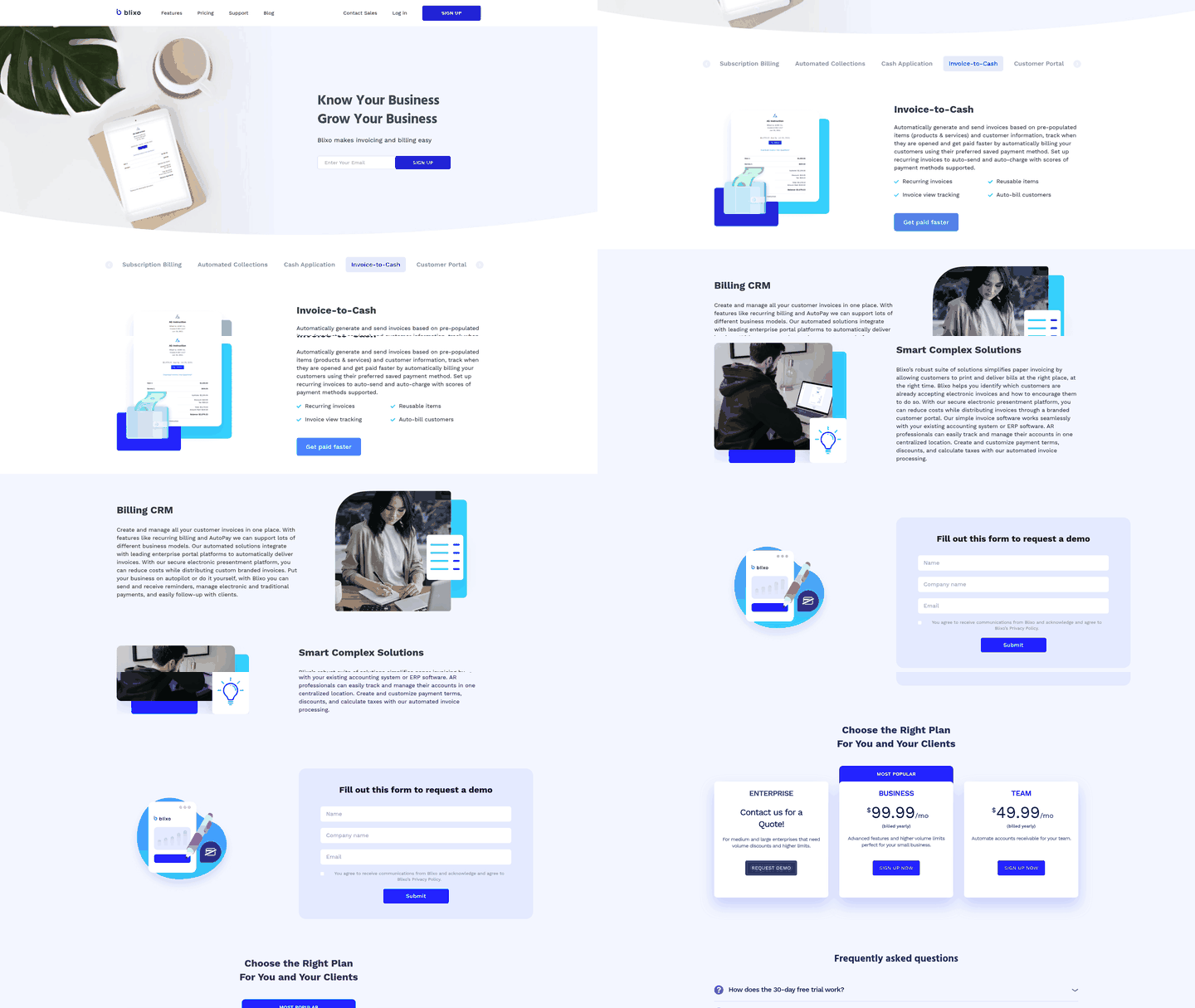
Blixo turns post-invoice collections into a collaborative process. It uses automated multi-channel reminders, custom dunning schedules, and churn-prevention features. These capabilities matter for mid-market SaaS, where rigid outreach can alienate long-term clients. If uncollected receivables and lost customers are the problem, faster invoice creation will not solve it.
| Use Case | Best Fit | Why |
|---|---|---|
| Simple, low-volume billing | Free tools (Zoho, Wave, Square) | Unlimited invoicing and no monthly fee |
| High-volume AP automation | BILL, Tipalti | AI coding and global compliance |
| Cross-border settlement | Airwallex | Multi-currency wallet and no forced FX |
| Complex mid-market finance | NetSuite | Single source of truth |
| Overdue revenue and churn risk | Blixo | Human-friendly collections |
Match the tool to your financial leak, and the ROI follows. If collections are the problem, Blixo automates chasing, dunning, and cash application. This helps recover delinquent revenue without manual work.
What I’d actually recommend
Choose based on the problem you need to solve. Free unlimited tools handle simple billing. Paid AI platforms show their value at scale or across borders. Collections-first tools address overdue receivables.
Most reviews overlook that final category. They score generation, automation, and currency handling. The pre-payment side is strong: setup takes minutes, templates populate automatically, and reminders run on schedule. However, research shows that the average B2B invoice is still paid late. DSO extends beyond 40 days for many mid-market firms. The tools ranked first still neglect unpaid invoices.
Which platform should you actually choose?
Find your cash-flow bottleneck. A free tool works for simple billing and timely payments. A paid AI platform suits high volume or global billing. A collections-first platform fits revenue lost after invoices are sent.
| Scenario | Best fit | Why |
|---|---|---|
| Post-invoice churn and slow-paying customers | Blixo | Human-friendly dunning that recovers cash without damaging relationships |
| Freelancers and simple, low-volume billing | Zoho, Wave, Square | Unlimited invoicing and no monthly fee |
| High AP volume and domestic workflow | BILL, NetSuite | AI coding and deep ERP integration |
| Cross-border settlement | Airwallex, Stripe | Multi-currency wallets and 135+ currencies |
Blixo wins one row, and that is intentional. It is not the cheapest tool or the broadest currency handler. Its strength is the downstream gap: turning overdue follow-up into a calm experience that helps keep mid-market SaaS customers subscribed.
Why the collections gap matters most
Uncollected receivables cost thousands. Administrative savings buy back hours. Some sources recommend free unlimited tools for small businesses. Others recommend paid AI platforms for compliance and scale. Both approaches stop at “invoice sent.”
Operational scale determines whether you should pay for a platform. Neither approach explains how to recover stuck cash. Automating invoice creation saves time. Recovering aged receivables protects earned revenue. For subscription businesses, respectful payment follow-up can help prevent churn.
Where to start
Start with your largest leak. Send a few invoices each month? Use a free tool. Manage cross-border AP? Choose the compliance engine. See a growing pile of 30-plus-day invoices and related churn? The answer is better collections, not faster invoicing.
Blixo addresses that problem with automated collections, chasing, and dunning through multi-channel outreach. It also includes churn-prevention features and a matching engine for automatic payment reconciliation. Choose the camp that fixes your leak, not the one with the longest feature list.
Frequently Asked Questions
1. Do free invoicing tools like Zoho or Wave charge any hidden costs?
Free invoicing tools charge no monthly subscription fee, but payment processing fees still apply. You can invoice unlimited clients for free. However, you pay transaction fees when customers pay by credit card or bank transfer.
2. Can I use one platform for both accounts payable and accounts receivable?
Most platforms specialize in one side. BILL and Tipalti focus on AP automation and vendor payments. Blixo focuses on accounts receivable and collections. Teams focused only on outbound vendor payments may find better-fit tools than Blixo.
3. How do I know if I’ve outgrown a free invoicing tool?
Operational complexity matters more than employee count. A paid platform may be necessary for high invoice volumes, multi-currency transactions, or complex tax rules. Larger companies with simple, low-volume billing can often remain on a basic tier.
4. Does saving admin time actually improve my cash flow?
Basic automation reduces administrative work but does not solve every cash-flow bottleneck. Saving time on invoice generation helps. Recovering outstanding receivables has a more direct effect on your bottom line. Collections recovery often provides a higher return than administrative streamlining.
5. Why do collections emails risk losing customers for SaaS businesses?
Rigid or aggressive payment reminders can alienate subscription customers. They may lead to voluntary cancellations and damage long-term relationships. Blixo automates polite, multi-channel outreach designed to secure balances while preserving customer goodwill.
6. Which platform should I pick if I bill internationally?
International businesses should prioritize multi-currency settlement and local payout rails. These features can help avoid foreign exchange markups. Domestic companies may benefit more from accounting integrations and automated approval workflows than global currency wallets.
7. Is Blixo the right choice for every business type?
Blixo fits mid-market SaaS companies with overdue revenue and churn risk. It may be excessive for one-off or simple invoices. It focuses on receivables rather than AP-side payables. If cash gets stuck after invoices are sent, its collections-first approach fits. Otherwise, another tool may serve you better.