

3 Prerequisites Before You Automate Subscription Billing Without Breaking Revenue Accounting
3 Prerequisites Before You Automate Subscription Billing

Key Takeaways
- Automated subscription billing systems that run independently from collections and cash application create unbilled receivables and corrupt deferred revenue schedules.
- Failed payments break revenue accounting by recording income you never collected while ASC 606 schedules treat uncollected charges as guaranteed revenue.
- Smart dunning with automated retry logic recovers failed charges before they corrupt revenue recognition, operating as an accounting fix rather than just a retention tool.
- Billing automation requires three integrated layers—invoicing, collections workflow, and cash application—in one closed loop to preserve accounting integrity.
- Most companies treat subscription billing as purely an invoicing problem, ignoring the downstream accounting consequences when payments fail to clear.
- Payment failures can create DSO numbers that misrepresent reality because the billing system records receivables that may never materialize into actual cash.
- Automated payment update workflows that handle expired cards and declined charges help prevent subscription lapses while keeping the general ledger aligned with actual collections.
Related Video
Watch: How to Build a Subscription Billing & Revenue Recognition Platform | Step-By-Step Guide by Intellivon
What You Need to Know First
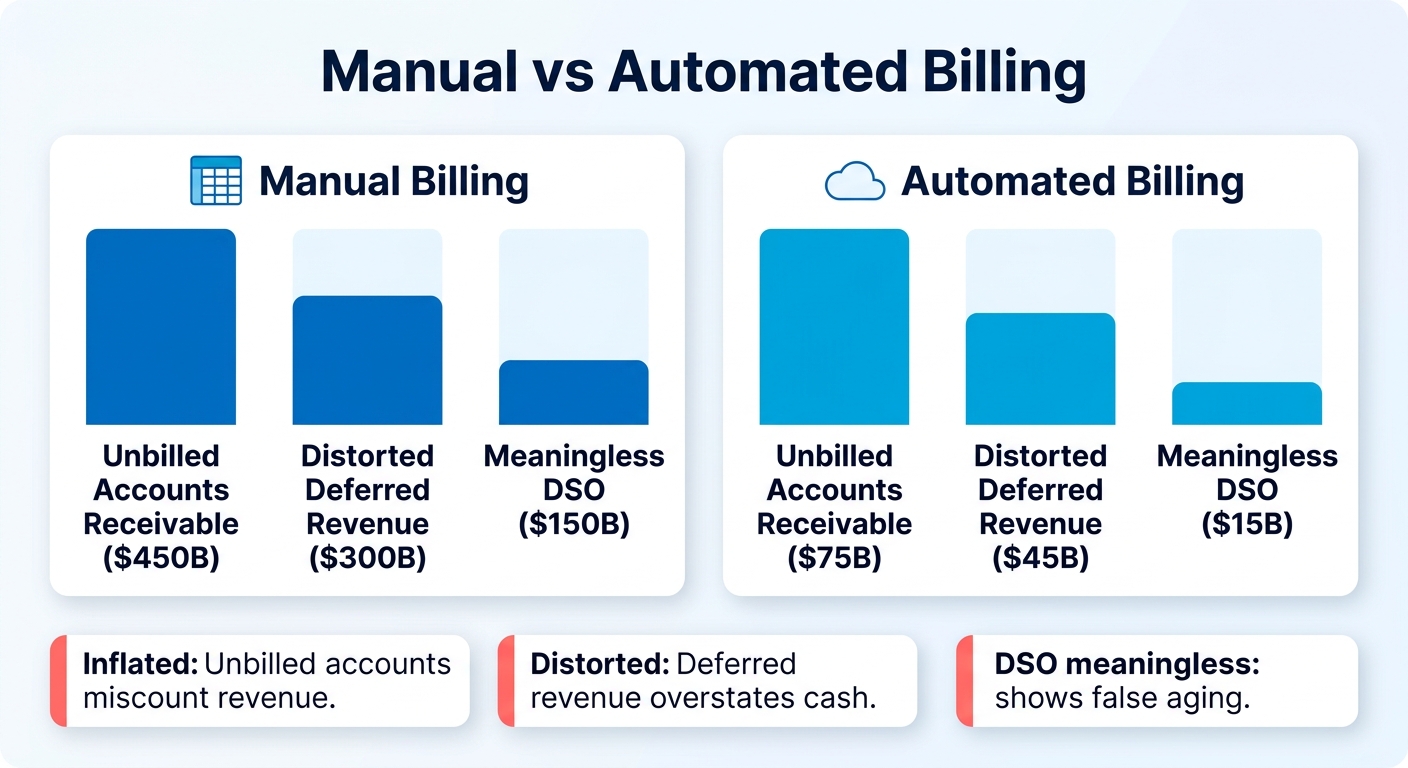
Automating subscription billing without breaking revenue accounting means your billing system, collections workflow, and cash application engine must operate as one closed loop. When these three components run independently, you can end up with unbilled accounts receivable, distorted deferred revenue schedules, and DSO numbers that don’t reflect reality.
Most businesses treat automatic subscription billing as an invoicing problem. They set up recurring charges, assume payments will clear, and move on. But when a payment fails, the entire accounting chain can break. Your billing system records revenue you haven’t collected, your GL shows receivables that may never arrive, and your ASC 606 recognition schedule treats uncollected charges as if they’re guaranteed income.
The Three Prerequisites That Preserve Accounting Integrity
Your billing automation must include these three layers to keep revenue data accurate.
Automated collections with smart dunning catches failed payments before they corrupt your books. Automated retry logic and payment update workflows can push through declined charges, prompt customers to update expired credit cards, and send reminders so customers can fix their payment info before a subscription lapses. Recovering those failed charges is a revenue recognition fix. Every failed charge that goes unresolved creates a phantom receivable in your deferred revenue schedule, and ASC 606 doesn’t care whether you eventually collect it. The standard requires you to recognize revenue when performance obligations are satisfied, but if the customer never pays, your recognition schedule was wrong from day one.
Cash application automation ensures payments match the correct invoices in real time. Manual matching introduces lag, and lag means your revenue subledger doesn’t reflect actual cash position. When your billing system auto-charges a subscription but your accounting team manually applies payments days later, you’re running two versions of truth. One version lives in your billing platform, the other in your ERP, and neither matches the bank account. Intelligent matching engines that connect payments to invoices at the envelope and item level can eliminate this drift.
Revenue subledger integration turns your billing ledger into the single source of truth for both feature access control and ASC 606 compliance. Your billing system should produce clean journal entries that feed directly into your general ledger, not raw transaction logs that require manual interpretation. The same double-entry ledger that governs which customers can access your product is the ledger your auditors will review. If those two ledgers diverge, you’re either giving away product or recognizing revenue you didn’t earn.
Why the Standard Billing-Only Approach Fails
Billing automation without collections automation can create a silent revenue leak. Your system generates invoices, charges payment methods, and records revenue. But when cards expire, accounts close, or charges decline, the automation stops. Someone has to manually retry the payment, email the customer, or write off the receivable. During that gap, your revenue recognition schedule assumes the subscription is active and paid, and your books show deferred revenue that doesn’t exist.
This gap is why unbilled AR builds up. Your billing system knows a charge failed, but your accounting system doesn’t update the recognition schedule until someone manually intervenes. The longer that intervention takes, the more your reported revenue diverges from collected cash. You may be able to skip this prerequisite if you’re running a low-volume operation and manually review every failed payment promptly. Otherwise, the manual reconciliation overhead can outpace your team’s capacity quickly.
Why Automation Matters
Manual subscription billing doesn’t just slow you down. It can quietly undermine your revenue accounting. When finance teams rely on spreadsheets to track recurring charges, they can create unbilled accounts receivable that sit unrecognized for weeks, leaving the general ledger showing revenue that hasn’t been collected and a Days Sales Outstanding (DSO) metric that loses meaning. Integrated billing and collections systems reconcile what was billed with what was actually collected, closing the gap between recognized revenue and cash received.
The problem compounds when you consider scale. As subscription models grow in volume, traditional revenue assurance practices can struggle to detect anomalies in high-velocity transaction streams. Your billing team might process thousands of subscription renewals each month, but without automated reconciliation between your billing system, payment gateway, and revenue subledger, you’re flying blind. Every failed payment that gets manually logged creates another entry that needs manual correction in your ASC 606 recognition schedule.
Who Actually Benefits from Billing Automation
Finance teams see the most immediate relief. When subscription billing is automated, the monthly scramble to reconcile invoices against cash receipts shrinks. Your accounting team stops spending the first week of each month hunting down discrepancies between what was billed and what was paid. Companies above a certain revenue threshold are generally required to use accrual accounting for revenue recognition, and manual processes can struggle to maintain the audit trail required for compliance at that volume.
The operational benefits extend beyond finance. Customer success teams benefit because automated dunning workflows can handle failed payments without human intervention. Retry logic that automatically prompts customers to update expired cards and retries declined payments can help reduce involuntary churn. In many cases customers don’t even realize a payment failed because the system resolved it before they noticed.
What Breaks When Billing Runs Alone
The failure point isn’t the billing automation itself. It’s treating automatic subscription billing as if it operates in isolation. Your billing system generates an invoice and records revenue. But if that payment fails, your revenue recognition schedule doesn’t automatically adjust. You’ve recognized revenue you didn’t collect, your deferred revenue balance is overstated, and your cash flow forecast is wrong.
We see this play out in month-end close cycles. Finance teams that connect automated revenue recognition directly to their revenue subledger often report reduced close times and fewer audit corrections. The automation has to span the entire order-to-cash cycle. When billing, collections, and cash application operate as disconnected systems, you end up manually reconciling them anyway.
Real-time revenue assurance has become important for subscription businesses because traditional revenue assurance practices can be inadequate for detecting anomalies in high-velocity transaction ecosystems. Your billing system might process a renewal correctly, but if the payment gateway returns a soft decline that your collections workflow doesn’t catch, that revenue never materializes. An accounting-led approach to anomaly detection—monitoring for deviations between contractual obligations and realized cash—only works when your billing, collections, and accounting systems share the same source of truth.
The Revenue Leakage Nobody Tracks
Unbilled accounts receivable is the silent killer. When mid-cycle upgrades require manual proration calculations, finance teams often defer the billing adjustment to the next cycle. That creates a gap where services were delivered but revenue wasn’t recognized. Multiply that across hundreds of subscription modifications per month and you’re looking at revenue leakage that doesn’t show up in standard reports.
Usage-based pricing makes this harder. If your billing system can’t automatically mediate usage data—converting raw consumption events into accurate invoices—you’re either under-billing customers (revenue leakage) or over-billing them (disputes and refunds). Automated revenue management that handles usage data ingestion, proration logic, and ASC 606 compliance as a single integrated workflow reduces the manual reconciliation that creates reporting gaps.
The larger point: automation matters because subscription revenue accounting requires recognizing income as services are delivered, not when customers pay. For example, a $1,200 annual subscription would be recognized as $100 per month over 12 months. If your billing system doesn’t automatically create that deferred revenue schedule, and your collections system doesn’t automatically adjust it when payments fail, you’re manually reconstructing your revenue position every month. That’s not just inefficient. It’s a compliance risk.
Prerequisite 1: Aligning Subscription Contracts with Accounting Systems
Misaligned contracts and accounting systems create a silent revenue leak. When your subscription terms live in one system and your recognition rules live in another, the numbers drift apart. Your automatic subscription billing engine charges customers on schedule, but if the contract’s performance obligations aren’t mapped to your accounting rules, you can recognize revenue you haven’t earned and defer revenue you should have booked.
The fix starts with treating the contract as the source of truth for both billing and recognition. Automated subscription billing only preserves accounting integrity when the same contract data drives the invoice, the collections trigger, and the revenue subledger. Recurring billing collects money, subscription management handles plan changes and customer preferences, and the revenue subledger produces clean journal entries for ASC 606. These are three distinct layers, and conflating them is where alignment breaks.
What Happens When Contracts and Accounting Systems Don’t Match
Your billed amounts and your recognized revenue can tell two different stories, distorting deferred revenue and understating or overstating income.
ASC 606’s five steps hinge on one thing: performance obligations stated explicitly in the contract. Miss that mapping, and a three-year software license paid upfront can get treated as current-period income instead of being deferred and recognized across 36 months. That’s a liability recorded as revenue. Regulators have scrutinized SaaS revenue recognition, and companies that fail to defer prepayments properly can face enforcement action.
- Map every contract’s performance obligations to a recognition schedule before the first charge fires, so billing and accounting draw from identical terms.
- Confirm your deferred revenue is treated as a liability until service is delivered, not booked as income on payment.
- Set recognition rules per pricing model. Tiered plans with feature enable require allocation across performance obligations; consumption-based pricing recognizes as metered events occur and get invoiced.
How Do You Keep Alignment Automated Instead of Manual
Your contract terms feed a shared ledger that both bills the customer and generates ASC 606 journal entries, removing the spreadsheet reconciliation step entirely.
Structuring the accounting layer at the database level, rather than bolting it on at month-end, supports compliance. An immutable double-entry record documents the exact reason behind every balance change, providing the clear audit trail that regulatory reviews demand.
- Use a shared ledger so contract changes, mid-term upgrades, and cancellations flow to recognition automatically.
- Keep immutable transaction history rather than overwriting balance fields, so every recognition adjustment traces back to a contract event.
- Tie collections into the same loop. Failed dunning is a cash-application failure that can quietly corrupt deferred revenue schedules if it never reaches your accounting layer.
Automated recognition first shortens the retrospective close and cuts audit corrections. The higher-value end state is continuous revenue assurance, where alignment is verified as transactions happen, not weeks later. If your subscription base is small and static, faster close is enough. Once plan changes and usage billing pile up, real-time alignment becomes more important.
Prerequisite 2: Implementing Accurate Proration and Mid-Cycle Billing
Proration breaks more revenue accounting than almost any other billing event. When a customer upgrades mid-month, downgrades on day 12, or adds seats on a Tuesday, your automatic subscription billing engine has to split the charge, recalculate the deferred revenue schedule, and hand the collections layer an accurate number to pursue. Miss any one of those, and your ASC 606 recognition can drift from what you actually earned.
Most teams treat proration as an invoice-math problem. It isn’t. A prorated upgrade changes the performance obligation, which changes what you recognize and when. Automated subscription billing only stays clean when the proration calculation, the collections trigger, and the revenue subledger all read from the same event.
Why Is Mid-Cycle Proration So Hard to Get Right
Mid-cycle changes create partial periods that manual processes handle inconsistently. A finance team calculating proration in spreadsheets may round differently each time, book the wrong deferred revenue split, and leave the collections side chasing a stale figure.
The root issue is timing precision. For example, a customer who upgrades from a $100/month plan to a $300/month plan on day 15 owes roughly $100 for the first half and $150 for the second half, but only if your system calculates exact days remaining. Round to the nearest week, and you can introduce an error that compounds across hundreds of accounts. Revenue recognition is about when a performance obligation is satisfied with a customer, and a mid-cycle upgrade satisfies a new obligation on a new timeline.
The proration number and the recognition number are the same number, computed once. If they’re computed twice in two systems, they will disagree.
- Confirm your billing engine handles mid-cycle proration automatically, not through manual credit notes that bypass the recognition schedule.
- Verify every proration event writes a matching journal entry to the revenue subledger so recognized revenue tracks the actual partial period.
- Check that upgrades, downgrades, and add-ons each map to distinct performance obligations rather than a single flat adjustment.
How Does Proration Connect Billing to Collections
A prorated charge is only real once it’s collected. The gap between invoicing a partial charge and actually receiving it is where many recognition errors hide. If the collections layer doesn’t recover a failed prorated charge, that uncollected amount can quietly distort your deferred revenue.
When payment methods fail on these mid-cycle adjustments, the resulting collection gap directly impacts the ledger. Automated outreach to resolve declined cards helps keep the recognition schedule honest and prevents uncollected proration from quietly turning into unbilled AR.
- Set dunning and retry logic to fire the moment a prorated charge fails, before it ages into the next cycle.
- Reconcile every prorated invoice against actual cash received, so recognized revenue never runs ahead of collections.
- Audit that partial-period credits and refunds reverse cleanly in both the ledger and the collections queue.
What Should Your Proration Tooling Do
Select systems that unify transaction records across your operational and financial tools. When a single ledger tracks both service delivery and financial bookings, proration ceases to be a reconciliation headache at month-end.
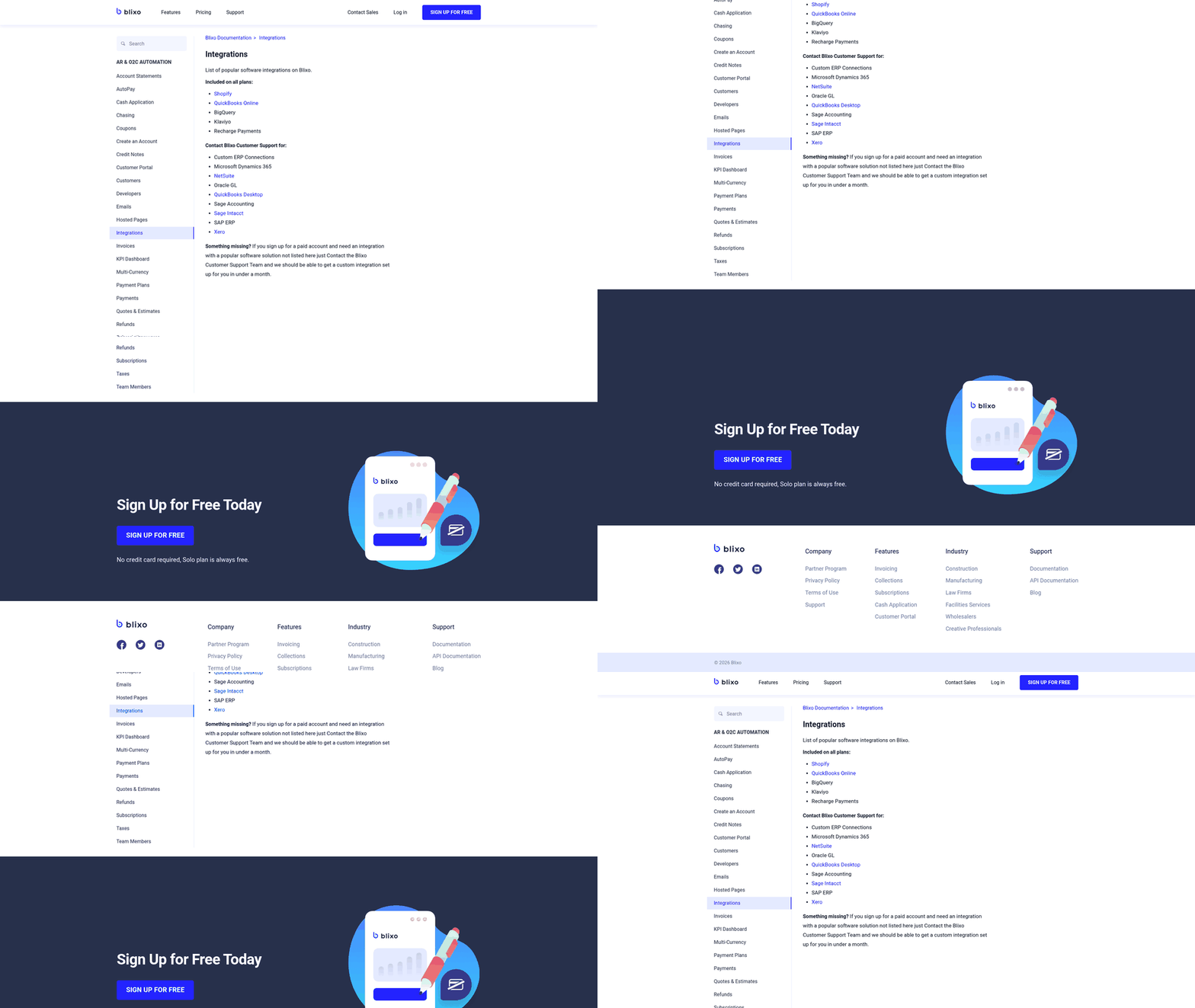
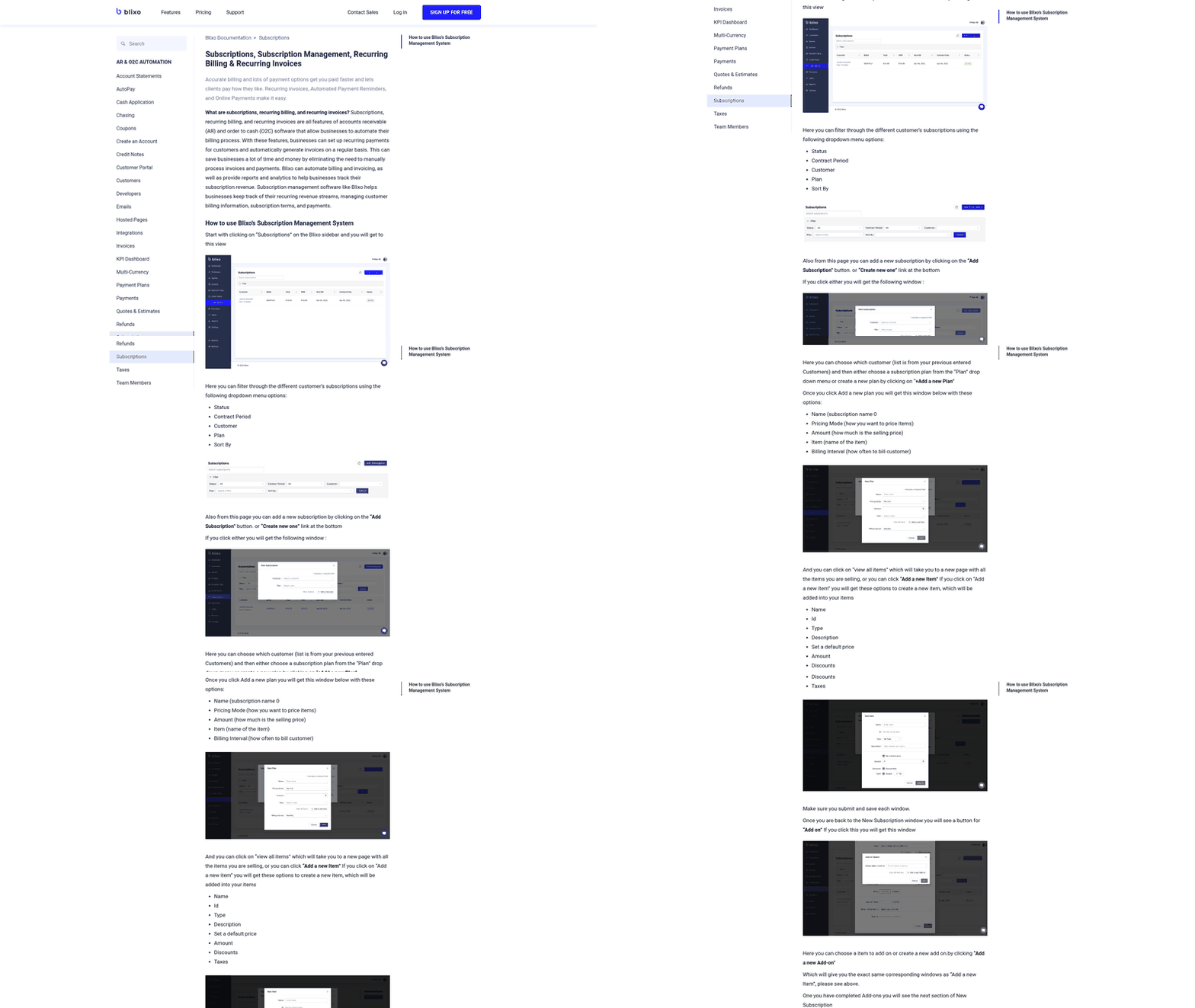
Blixo automates recurring billing and integrates with accounting platforms like QuickBooks, Xero, Sage Intacct, and NetSuite to keep your ledger reconciled. For teams building out automated collections and dunning alongside recurring charges, check that your systems update together.
Prerequisite 3: Establishing a Revenue Subledger for ASC 606 Compliance
When your billing engine charges a customer, that transaction needs to land in a structured ledger that feeds both your collections workflow and your ASC 606 recognition schedule. Without a revenue subledger, you’re left with a billing system that knows what you charged, an accounts receivable report that knows what you’re owed, and a general ledger that treats both as separate universes. The gap between them is where unbilled AR hides, deferred revenue schedules drift, and compliance audits turn hostile.
We see this break in practice when a customer upgrades mid-cycle. The billing system prorates the charge and sends an invoice. Collections retries the payment when the card fails. But if the revenue subledger doesn’t receive a unified event stream from both systems, your recognition logic runs on stale contract data. You might recognize revenue for a tier the customer left three weeks ago, or defer income you’ve already earned because the subledger never logged the upgrade. A revenue subledger built into the billing automation layer reduces that drift by treating every billing event—charge, retry, refund, proration—as an immutable ledger entry that updates the recognition schedule in the same transaction.
What ASC 606 Requires from Your Revenue Subledger
ASC 606 sets out a five-step framework: identify the contract, identify performance obligations, determine the transaction price, allocate that price, and recognize revenue as obligations are satisfied. The subledger is where steps four and five live. It holds the running allocation of each contract’s price across its performance obligations and posts the earned portion on the schedule those obligations dictate. If the customer downgrades or cancels, the subledger adjusts the remaining deferred balance and recalculates what you’ve earned to date. Without automated integration, that adjustment happens manually, often weeks after the event, leaving your financials out of sync with the actual services delivered.
The accounting rules also require accrual consistency: you recognize revenue when you satisfy the obligation, not when you collect payment. That distinction becomes operational chaos when your collections layer runs independently. A payment retry weeks after the invoice date doesn’t change when you earned the revenue, but it does change whether the deferred balance should still sit in liabilities or move to bad debt. The subledger needs real-time visibility into both the billing event and the payment outcome to apply the correct treatment. Integrating automated revenue management so the subledger updates recognition schedules immediately as payment retries succeed or fail—rather than waiting for manual reconciliation—can reduce audit corrections and speed month-end close.
Building the Subledger into Your Billing Automation
A robust architecture designs the subledger directly at the database layer, using immutable, double-entry records to log every charge, credit, and adjustment. Storing a single running balance in a user table hides the history of why balances change, making it hard to reconstruct the performance obligations you satisfied. A transaction ledger that records each event separately lets you trace revenue recognition back to the original contract terms, which is exactly what an ASC 606 audit demands.
We recommend integrating the subledger with your collections automation so failed payments trigger recognition adjustments without manual intervention. When a dunning workflow retries a declined card and succeeds, the subledger should log the successful charge and update the deferred revenue schedule in the same operation. When the retry exhausts all attempts, the subledger should flag the unbilled AR and move the deferred balance to a separate liability account or bad debt reserve, depending on your accounting policy. That closed-loop integration is how billing and collections can support ASC 606 compliance while improving financial reporting accuracy—every billing event flows into the subledger, and every collections outcome updates the recognition schedule.
Tools and Best Practices for Revenue Subledger Management
-
Use a strongly consistent relational database for your subledger to ensure data integrity and support audit trails. Document-based or key-value stores can make it harder to enforce accrual consistency across related transactions.
-
Log every billing event as an immutable ledger entry rather than updating balances in place. This approach preserves the history needed to reconstruct performance obligations during an audit.
-
Integrate the subledger with your dunning and cash application workflows so payment retries and declines automatically adjust deferred revenue schedules. Manual reconciliation introduces lag that distorts recognition timing.
-
Align recognition policies with your contract performance obligations by mapping each subscription tier and add-on to a specific revenue category in the subledger. This helps you recognize revenue as obligations are satisfied, not just when invoices go out.
-
Run regular compliance checks to verify that recognized revenue matches fulfilled performance obligations. Automated systems reduce errors, but periodic audits catch edge cases like contract modifications or pricing exceptions that require manual review.
For businesses automating subscription billing at scale, the subledger can become the central nervous system that connects product access, collections, and revenue recognition. When those three layers read from the same ledger, your financials reflect what you actually earned, not just what you billed.
Implementation and Next Steps
Rolling out automation successfully comes down to sequencing. Turn on automatic subscription billing, then wire collections and cash application into the same event stream before you trust a single number in your GL. The mistake we see most often is teams flipping the billing switch first and treating collections as a cleanup task later.
Automated billing only protects your revenue accounting if the collections layer runs in the same loop. Blixo’s automated collections send emails, text messages, phone calls, and letters to recover delinquent revenue, while its intelligent matching engine applies cash automatically, so the two layers stay connected. Unresolved payment failures directly distort the deferred-revenue schedule your recognition depends on.
How Should You Sequence the Rollout
Start with the data layer, not the invoice. Build the audit trail first, then layer billing, collections, and recognition on top of the same records.
- Design an immutable, double-entry record before writing any invoice logic. Updating a single balance column is risky because it erases the history of why a balance changed, and that history is exactly what your ASC 606 audit needs.
- Standardize your product catalog and pricing rules so proration, dunning, and recognition all read from one definition. Fragmented catalogs are a common root cause of mismatched charges downstream.
- Connect the payment gateway last. The gateway only collects money; the real work lives in the billing engine that decides what to charge and when to retry.
What Should You Monitor After Go-Live
Watch two metrics that expose whether billing and collections are actually reconciled: DSO and involuntary churn rate. When these move together, your billed revenue and collected cash are staying in sync.
- Track DSO weekly, not monthly. A rising DSO after automation often means dunning retries aren’t feeding back into your cash-application records.
- Monitor involuntary churn as a revenue-accounting signal, not just a retention stat. Failed payments that slip through dunning can inflate your recognized revenue against cash you’ll never see.
- Run regular reconciliation between the revenue subledger and the GL. Automated journal entries still need periodic audits to confirm recognition timing holds up.
What Pitfalls Trip Up Most Teams
The common failures are structural, not technical. They come from treating billing as a checkout flow instead of the system that connects product access, finance, and compliance.
- Don’t bolt recognition onto your month-end close. Build it at the database layer so the same ledger serves both operational tracking and financial compliance.
- Don’t skip usage mediation if you bill on consumption. Raw events have to convert into accurate invoices before they hit collections, or you’ll chase the wrong amounts.
- Skip full automation if your billing lives across disconnected spreadsheets today. Fix the source-of-truth problem first, or you’ll just automate the drift faster.
If you’re moving from manual autopay setups, Blixo’s dunning and chasing tools handle card updates and customer notifications automatically. Get the loop closed, and your billing engine becomes the central nervous system your finance team can actually trust.
Frequently Asked Questions
Q: What is automated subscription billing?
Automated subscription billing is a system that automatically charges customers on a recurring schedule, manages payment collection, and updates accounting records without manual intervention. It handles invoice generation, payment processing, retry logic for failed payments, and revenue recognition in one integrated workflow.
Q: How does ASC 606 affect subscription billing?
ASC 606 requires businesses to recognize revenue when performance obligations are satisfied, not when payment is received. For subscription businesses, this means revenue must be deferred and recognized over the subscription period. Automated systems track these performance obligations and adjust recognition schedules when customers upgrade, downgrade, or cancel.
Q: What happens when a subscription payment fails?
When a payment fails, your billing system records revenue you haven’t collected, creating unbilled accounts receivable. Without automated dunning and retry logic, these failed payments can distort your deferred revenue schedule and inflate your reported revenue. Smart retry workflows can attempt to collect the payment and update recognition schedules based on the outcome.
Q: Why do I need a revenue subledger separate from my general ledger?
A revenue subledger tracks the detailed allocation of contract prices across performance obligations and updates earned revenue as those obligations are satisfied. Your general ledger only sees the summary journal entries. The subledger provides the audit trail useful for ASC 606 compliance and helps keep your billing events, collections outcomes, and revenue recognition synchronized.
Q: How does proration affect revenue recognition?
Mid-cycle subscription changes create partial periods that require precise proration calculations. Each prorated charge represents a change in performance obligations, which changes what revenue you recognize and when. If your proration calculation and revenue subledger aren’t synchronized, you can recognize revenue that doesn’t match the actual service period delivered.
Q: What’s the difference between billing automation and collections automation?
Billing automation generates invoices and charges payment methods on schedule. Collections automation handles what happens when payments fail: retry logic, dunning workflows, payment method updates, and customer notifications. Both must run in the same loop to preserve revenue accounting integrity—billing automation alone can create phantom receivables when payments fail.
Q: How long does it take to implement automated subscription billing?
Implementation time depends on your starting point. If you’re migrating from spreadsheets with inconsistent contract terms, expect a longer effort to standardize your product catalog, build the revenue subledger, and integrate billing with collections. If you already have clean contract data and an accounting system that supports automation, implementation is typically faster.
Q: Can I automate subscription billing if I have usage-based pricing?
Yes, but you need usage mediation as part of your billing automation. Raw consumption events must be converted into accurate invoices before they reach collections. Without automated mediation, you’ll either under-bill customers (revenue leakage) or over-bill them (disputes and refunds). The mediation layer should feed the same revenue subledger that handles your subscription charges.
References
[1] ASC 606 Revenue Recognition Standard (FASB) [2] Accrual Accounting Requirements for Revenue Recognition [3] Revenue Assurance Best Practices for Subscription Businesses [4] Blixo Billing and Collections Platform