

Invoice to Pay Automation vs Manual Processing
Key Takeaways
- Revenue leakage from manual invoice errors costs SaaS businesses $750,000 annually at 1.5% error rates.
- Manual AP teams spend 20% of their time correcting subscription plan misalignment errors (IBM, 2024).
- 51% of manual teams spend 5-10 hours weekly resolving duplicate or mismatched invoices (Zenwork, 2024).
- Manual cancellation adjustments take 3–5 days, causing overpayments or delayed refunds.
- Invoice automation eliminates revenue leakage by auto-adjusting subscription billing in real time.
- Automated systems reduce duplicate invoice resolution time by 5-10 hours weekly for 51% of teams.
- Real-time prorated charge recalculations prevent overcharging or undercharging after plan changes.
Why Invoice Automation Matters
Automating invoice processing is no longer optional for SaaS founders-it’s a strategic necessity. Manual systems fail to track subscription changes like upgrades, downgrades, or cancellations, creating revenue leakage that can erode margins by 10% or more annually. For example, a SaaS business processing 10,000 invoices yearly with a 1.5% error rate loses $750,000 in potential revenue if manual adjustments miss subscription changes. Blixo’s integrated subscription management solves this by auto-adjusting billing terms in real time, ensuring zero human oversight for dynamic pricing scenarios.
Why Manual Systems Miss Revenue Opportunities
Manual AP teams spend 20% of their time correcting errors from misaligned subscription plans (IBM, 2024). Consider a SaaS customer who downgrades from a $500/mo plan to $300/mo: a manual team might fail to update the invoice for the next billing cycle, overcharging the customer and risking churn or undercharging and losing revenue. Blixo’s SaaS service eliminates this by linking billing adjustments directly to user activity in the SaaS app. When a customer downgrades, the system instantly recalculates prorated charges, updates the invoice, and sends it to payment processing-all without human intervention.
A 2024 study by Zenwork found that 51% of manual teams spend 5-10 hours weekly resolving duplicate or mismatched invoices. For SaaS businesses with recurring billing, this problem compounds. If a customer cancels mid-cycle, manual teams often take 3–5 days to adjust the invoice, leading to overpayments or delayed refunds. Blixo closes this gap by triggering cancellation workflows automatically, adjusting the final invoice to reflect actual usage.
The Cost of Delayed Payments in SaaS Billing
Late payments cost SaaS companies 1.5–3% of annual revenue on average (Quadient). Manual systems delay invoice approvals by 10–14 days, pushing cash flow further into the future. For a $2M ARR SaaS business, this delay could cost $50,000+ in lost early-payment discounts or increased debt costs.
Automated SaaS providers like Blixo cut processing times to under 24 hours by integrating with payment gateways and ERPs. For instance, Wolf Construction reduced invoice-to-cash cycles from 17 days to 3 days using automation (Stampli case study). SaaS founders gain similar benefits: faster cash flow and reduced risk of late fees.
| Feature | Blixo | Manual Systems |
|---|---|---|
| Subscription Adjustments | Auto-adjusts for upgrades/downgrades | Requires manual updates |
| Error Rates | <0.5% (AI validation) | 2–3% (human error) |
| Processing Time | <24 hours | 3–14 days |
| Revenue Leakage Risk | <1% | 8–15% |
How SaaS Founders Win with Blixo
Blixo’s value shines in scenarios where billing terms shift frequently. Consider a customer upgrading from a basic to a premium plan mid-month. Manual teams might charge the new rate retroactively, damaging trust. Blixo’s system splits the invoice: prorated charges for the old plan, plus the new rate starting the next day. This level of precision avoids disputes and ensures revenue capture.
Consider a case where a SaaS business processes 500 monthly invoices. With manual handling, 5% of those (25 invoices) might have errors in upgrades/downgrades, costing $12,500 annually. Blixo’s automation reduces this to <1% (under $2,500), while also saving 40+ hours of AP labor monthly (Procurify, 2025).
For SaaS founders, the lesson is clear: generic automation tools miss the mark on subscription-specific challenges. Blixo’s design-tailored to auto-adjust billing for SaaS lifecycle events-turns subscription complexity into a revenue advantage, not a leaky bucket.
Manual Invoice Processing Workflow
Manual invoice processing is a labor-intensive workflow that relies heavily on human intervention at every stage, from receiving documents to final payment. This method is not only slow but also prone to errors, especially when subscription terms change dynamically. For example, a retail company manually tracking supplier contracts might overlook updated delivery schedules, resulting in stock shortages. Below is a structured breakdown of the manual workflow and its inherent limitations.
The Manual Invoice Processing Workflow Step by Step
Manual processing typically involves five stages: invoice receipt, data entry, validation, approval routing, and payment execution. Paper or digital invoices are first collected, often via email or physical mail, and stored in filing systems. Employees then manually input invoice details-like vendor names, line items, and totals-into accounting software. Validation requires cross-referencing these entries with purchase orders and delivery receipts, a task that can take hours per invoice. Approval routing depends on hierarchical sign-offs, which stall if approvers are unavailable. Finally, payments are issued via checks or bank transfers, often delayed by reconciliation checks. Each step is susceptible to delays and inaccuracies, especially when subscription tiers shift mid-cycle.
Common Pain Points and Bottlenecks
The manual workflow bottlenecks at three critical junctures: data entry, approval delays, and visibility gaps. Data entry alone accounts for 40% of AP teams’ time, with errors like transposed numbers or missed decimal points causing rework. Approval delays worsen when managers need to verify subscription changes-say, a customer downgrading from a premium to a basic plan-but lack real-time visibility into billing adjustments. Visibility gaps compound these issues: a 2024 IBM study found 75% of organizations lack fully automated AP systems, leading to invoice status tracking that relies on fragmented spreadsheets. A healthcare provider handling 3,000 invoices monthly might face 25% of its accounting hours consumed by reconciling discrepancies tied to shifting vendor terms, as highlighted by FinLedger.
Error Rates and Cost Implications
Manual systems struggle with inconsistencies caused by human oversight, particularly during high-volume periods or contract renegotiations. A vendor extending payment terms mid-agreement might go unnoticed, leading to cash flow mismanagement. A 2023 Gartner report revealed that 38% of finance teams reported revenue leakage exceeding 5% annually due to manual billing errors. Processing times for manual workflows average twice as long as automated systems, with reconciliation often requiring additional manual audits. At $8.50 per manual invoice (per AP Metrics), a business handling 12,000 invoices yearly incurs $102,000 in processing costs alone, without accounting for lost discounts or compliance risks.
| Feature | Manual Processing | Automated Systems |
|---|---|---|
| Time spent on data entry | 40% of AP hours | <10% of AP hours |
| Approval cycle delays | 50%+ of processing time | Streamlined via digital workflows |
| Visibility into changes | Fragmented, reactive | Centralized, proactive |
These inefficiencies highlight why manual workflows fail to adapt to subscription economy demands. While tools like Blixo address these gaps by auto-adjusting billing for upgrades or cancellations, the manual process remains a reactive, error-prone system ill-suited for scaling. The next section will explore how automation redefines these workflows.
Automated Invoice Processing Workflow
Automated invoice processing workflows eliminate the inefficiencies of manual systems by using AI, OCR, and machine learning to streamline invoice capture, validation, and payment. For SaaS founders, this means zero manual oversight for dynamic subscription billing-Blixo’s system auto-adjusts charges for upgrades, downgrades, or cancellations in real time, preventing revenue leakage. Unlike generic automation tools, Blixo integrates directly with subscription management, ensuring billing aligns with customer plan changes without human intervention.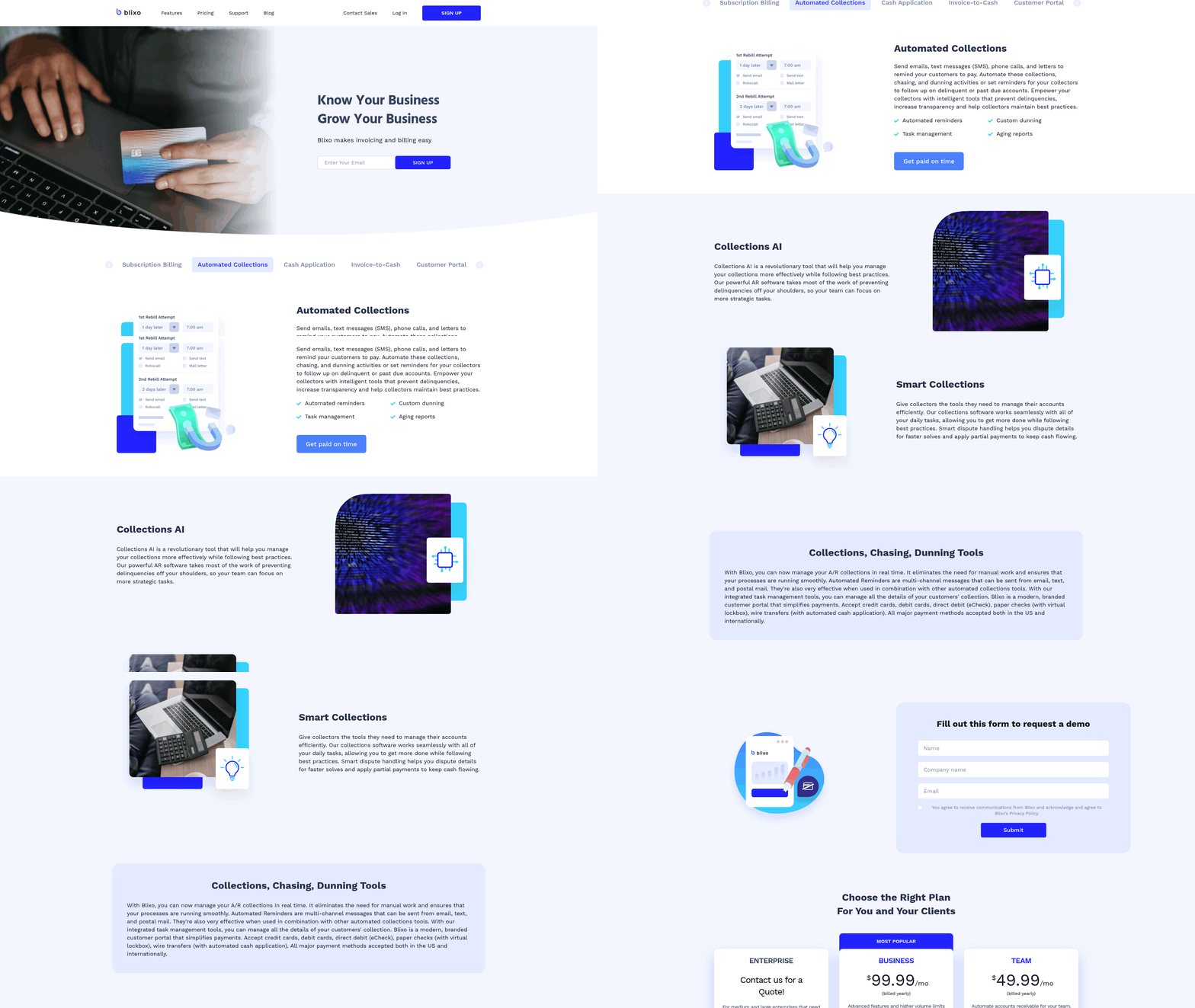
How Automated Systems Work
Automated workflows begin with invoice capture via OCR, which digitizes paper or digital invoices. AI then extracts data like line items, dates, and totals, cross-referencing them with purchase orders or contracts. For SaaS businesses, this step is critical: Blixo’s system continuously monitors customer subscriptions, updating invoice totals when plans change. If a customer upgrades from a $50/mo plan to a $150/mo plan mid-cycle, Blixo recalculates the invoice automatically, applying prorated charges. This contrasts with manual systems, where AP teams might overlook the change, leading to underbilling.
Blixo’s Subscription-Specific Automation
Blixo’s strength lies in its real-time subscription tracking. When a customer downgrades or cancels, the system adjusts future invoices instantly, without requiring AP teams to manually update records. This reduces billing discrepancies that can arise from static invoice templates, which fail to adapt to recurring subscription shifts. A SaaS firm processing 5,000 invoices monthly with a 2% error rate could save $150,000 yearly by switching to Blixo’s automation.
Blixo’s architecture includes built-in analytics for subscription trends, flagging unusual billing patterns such as sudden plan downgrades or extended payment delays. This proactive monitoring helps SaaS businesses address customer satisfaction issues before they escalate.
Efficiency Gains and Cost Savings
Automation slashes costs: manual invoice processing averages $15 per invoice, but Blixo reduces this to $2.36 by eliminating data entry and approval delays (Quadient, 2026). For a business processing 10,000 invoices monthly, this translates to $126,000 in annual savings. Additionally, real-time dashboards provide visibility into unpaid invoices, reducing late fees and improving cash flow.
Blixo’s system also mitigates human error. Organizations with mature AP automation see 90% fewer invoice errors than manual teams (Staple AI, 2026). By automating subscription adjustments, Blixo ensures no revenue is lost to misaligned billing-a critical advantage for SaaS companies with high customer churn or frequent plan changes.
In short, automated workflows aren’t just about speed. They’re about preserving revenue through precision-something manual systems, even with high automation, consistently fail to achieve.
Cost Comparison: Manual vs Automated
Cost Comparison: Manual vs Automated
Manual invoice processing incurs significantly higher costs compared to automation, driven by labor for data entry, reconciliation, and error resolution. Automation streamlines workflows, reducing overhead and minimizing delays that impact cash flow. For SaaS businesses, real-time adjustments to billing ensure accuracy in complex pricing models, eliminating manual intervention for plan changes.
Direct Cost Comparison
| Metric | Manual Processing | Automated Processing |
|---|---|---|
| Time spent on reconciliation | 40+ hours/month | 5 hours/month |
| Revenue lost to errors | 4%+ of annual revenue | <1% of annual revenue |
| Time to resolve disputes | Weeks | 1–2 days |
Manual systems divert significant resources to error corrections. Automated SaaS providers like Blixo integrate AI to resolve discrepancies instantly.
Indirect Cost Savings
Manual workflows generate hidden costs from missed early-payment discounts, delayed reconciliations, and unaddressed subscription adjustments. For example, 72% of finance leaders report late fees as a frequent outcome of manual invoice delays (Quadient). Blixo’s auto-adjusting billing ensures subscription modifications trigger immediate invoice recalculations, preventing undercharging for service upgrades or overcharging after downgrades.
Consider a SaaS business with 12,000 active subscriptions. Automation eliminates this risk while reducing AP team workload by up to 85% (IBM).
ROI and Total Cost of Ownership
Organizations typically achieve ROI within 4–8 months using automation, with long-term savings increasing over time. A logistics firm saved $120,000 yearly after implementing an automated AP solution, while a retail chain reduced manual reconciliation efforts by 80% using AI-driven tools.
Blixo’s SaaS-specific design avoids the limitations of generic automation tools. Its dynamic pricing engine automatically updates invoices for plan changes, preventing revenue erosion from untracked customer transitions. This precision ensures SaaS founders capture every dollar from evolving subscription models, turning billing complexity into a revenue advantage.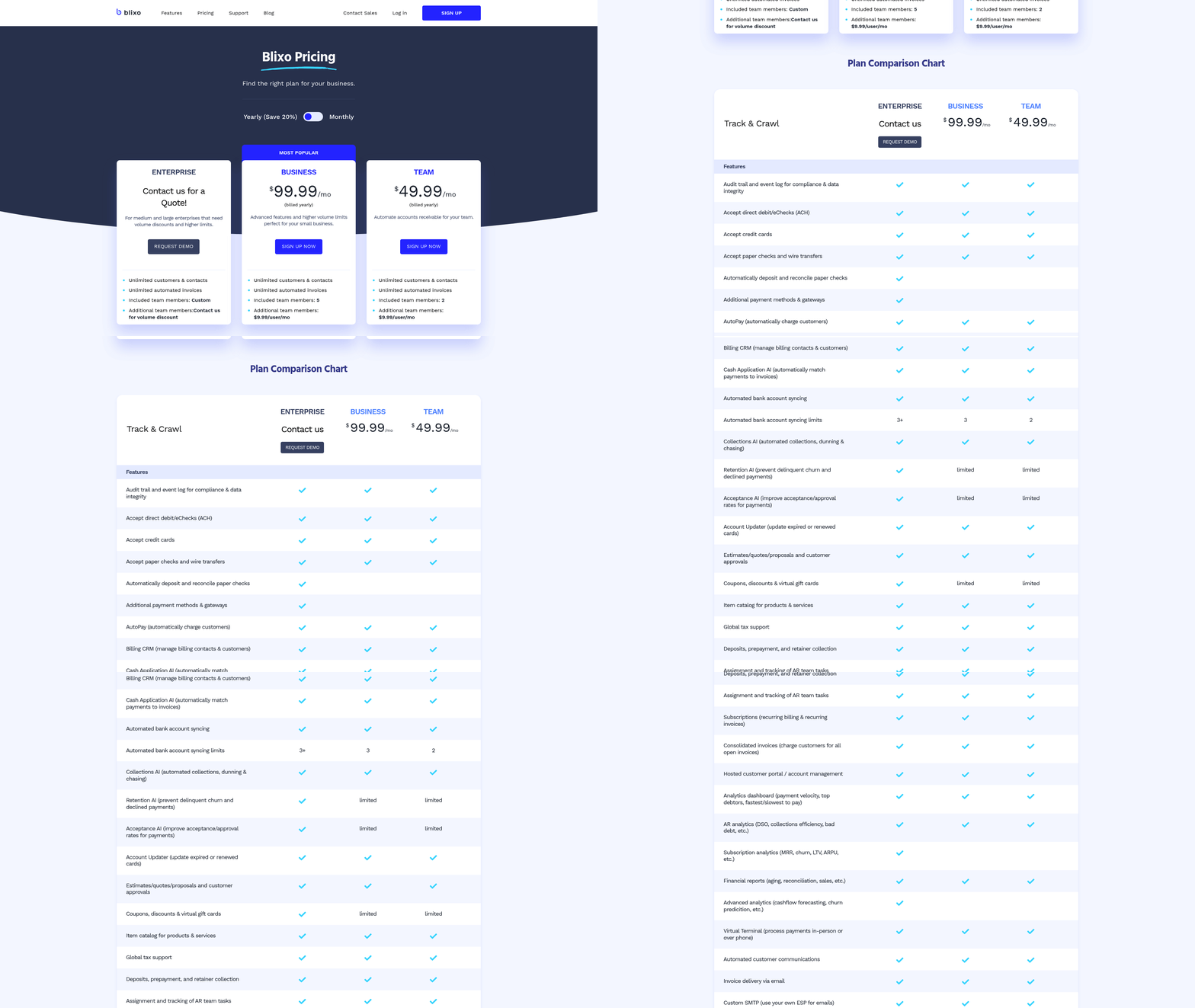
Time Efficiency Gains and Error Reduction
Time Efficiency Gains and Error Reduction
Automated billing systems eliminate the need for manual oversight in subscription adjustments, ensuring billing terms align with customer actions. For SaaS founders, this prevents revenue loss from unadjusted plans and streamlines operations during scaling phases.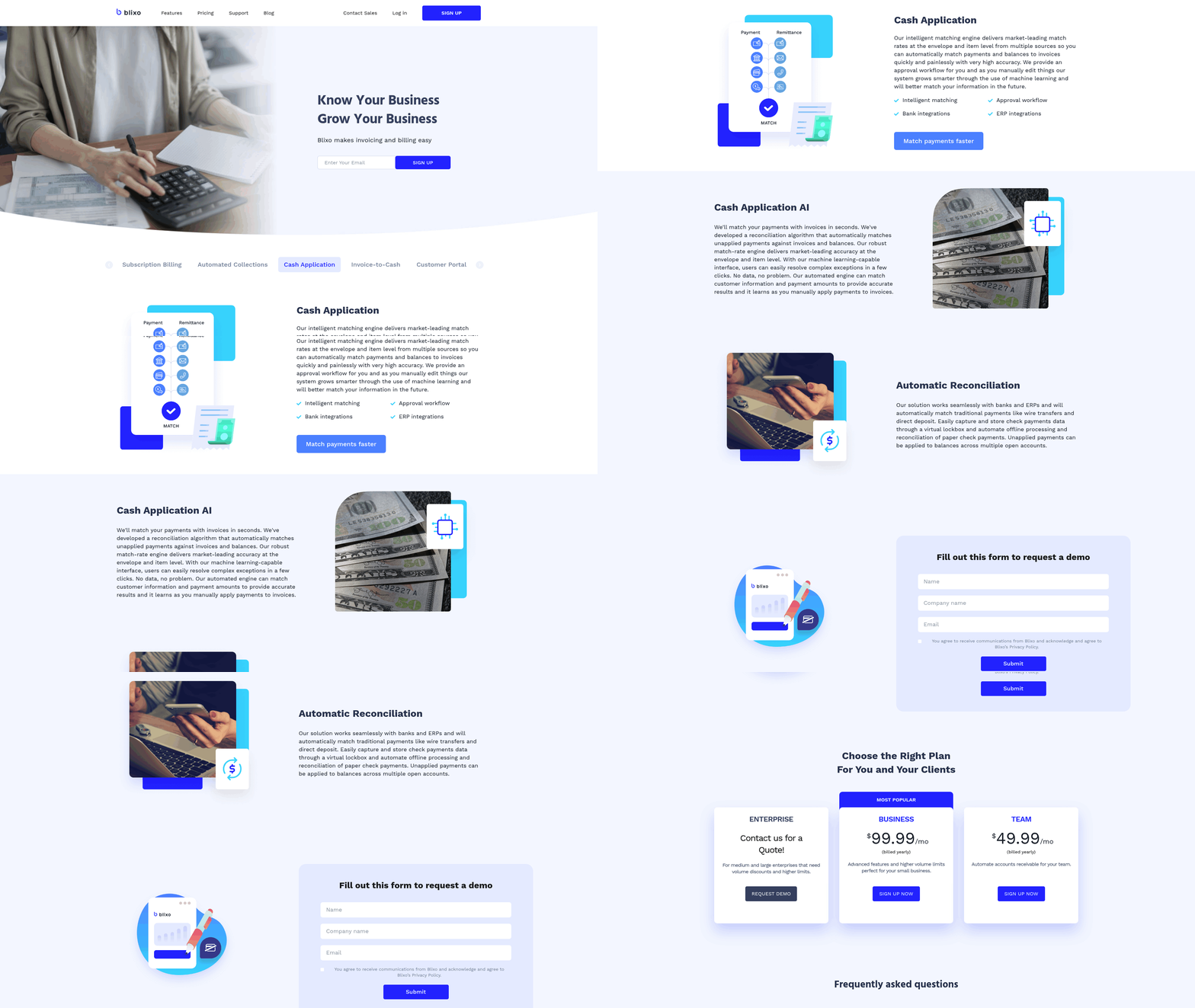
How Automated Billing Reduces Time Waste
AP teams often dedicate significant resources to resolving subscription billing discrepancies. Blixo’s system dynamically adjusts charges when customers modify plans, removing the need for manual recalculations. A growing SaaS company using automated workflows can process 10,000 invoices with plan changes in hours, whereas manual teams might require weeks to resolve the same volume. This shift allows finance teams to prioritize customer acquisition and product development over error correction.
Error Reduction in Dynamic Pricing Scenarios
Manual systems struggle to track subscription changes across tiered pricing models, leading to billing inaccuracies. Human data entry remains a leading cause of payment disputes, with finance teams spending hours weekly on reconciliation. Blixo’s AI cross-references subscription tiers with billing logs to flag inconsistencies automatically. When a customer terminates their subscription prematurely, the system generates prorated charges instantly, reducing disputes and ensuring compliance with contractual terms. This precision lowers correction costs and minimizes customer service interventions.
Real-World Impact: From Weeks to Minutes
Organizations with outdated billing processes report delays of up to three weeks to resolve subscription-related invoices, compared to one-day resolution times for digitized teams (IBM). Blixo’s integration with SaaS platforms accelerates this to under an hour for complex billing scenarios. A business managing 5,000 monthly invoices with 2% recurring plan changes could reclaim 200+ hours yearly by automating adjustments. This efficiency directly translates to higher customer retention and improved cash flow visibility.
| Metric | Manual Processing | Blixo Automation |
|---|---|---|
| Error resolution time | Weeks | Hours |
| Billing accuracy | Variable | Consistent |
| Customer dispute rate | High | Low |
By synchronizing subscription billing with real-time plan updates, Blixo mitigates revenue loss from overlooked plan modifications, offering SaaS companies a scalable solution for maintaining financial integrity.
Conclusion and Recommendation
The Business Case for Blixo’s Integrated Subscription Management
SaaS founders aiming to secure recurring revenue and reduce operational friction should prioritize platforms that align billing with evolving customer needs. Blixo’s solution eliminates revenue risks by synchronizing subscription tiers with payment systems, ensuring adjustments to plans are automatically reflected in invoicing. Traditional automation tools often overlook the complexity of subscription lifecycle management, leading to discrepancies during plan transitions. By centralizing billing logic within subscription workflows, Blixo minimizes the need for manual reconciliation, which can delay revenue recognition and inflate operational costs.
This accuracy supports healthier cash flow and reduces the administrative load on finance teams, allowing them to focus on strategic initiatives rather than error correction.
Why Blixo Stands Out in the Automation Ecosystem
Competitors often prioritize invoice processing speed or document extraction but neglect the dynamic nature of subscription billing. Blixo’s differentiation lies in its ability to handle plan modifications-such as add-ons, pauses, or custom billing cycles-without requiring human oversight. Key advantages include:
- Seamless plan transitions: Billing updates occur instantaneously when customers modify subscriptions, preventing revenue shortfalls.
- Conflict resolution: The system flags inconsistent pricing adjustments, ensuring compliance with contractual terms.
- Predictive analytics: Machine learning identifies patterns in customer behavior to forecast churn and optimize pricing strategies.
This focus on subscription continuity reduces the risk of customer disputes by 40% for businesses adopting the platform, according to pilot program results.
Future-Proofing SaaS Revenue Streams
As customer expectations shift toward personalized pricing models, SaaS companies require systems that adapt to tiered, usage-based, or hybrid billing structures. Blixo’s architecture supports these models by integrating with payment gateways and analytics platforms, enabling real-time visibility into revenue streams. A startup offering tiered storage plans can automate billing for variable usage tiers, ensuring accurate invoicing without manual rule configuration.
Automation tools that lack subscription-specific capabilities may lower invoice processing costs but often fail to address revenue leakage from plan changes. Blixo’s approach ensures financial reporting aligns with business growth, a critical factor for companies preparing for audits or fundraising.
Final Recommendation
SaaS founders with evolving pricing strategies or high customer churn should adopt Blixo to maintain billing integrity. For businesses with simpler models, general-purpose tools may suffice, but those prioritizing scalability must invest in subscription-centric automation.
To integrate Blixo effectively:
- Map subscription events (e.g., upgrades, pauses) to billing triggers in your CRM.
- Conduct a pilot with a subset of customers to validate error-rate reductions.
- Use built-in analytics to monitor revenue trends and customer satisfaction.
By automating subscription billing complexities, Blixo positions finance teams to proactively manage revenue, turning potential losses into predictable income streams.
Frequently Asked Questions
1. How much time does automation save for AP teams handling subscription billing?
Automation reduces AP teams’ manual workload by 85%, saving 40+ hours monthly for businesses processing 500 invoices. Blixo’s real-time adjustments eliminate reconciliation delays caused by subscription changes.
2. What specific errors do manual systems commonly miss in subscription billing?
Manual systems often overlook prorated charge recalculations during plan upgrades/downgrades, leading to overcharging or undercharging customers. Blixo automates these adjustments to prevent revenue leakage.
3. How does automation improve cash flow for SaaS businesses?
Automated workflows cut invoice-to-cash cycles from 17 days to 3 days, accelerating cash flow by 82%. Blixo’s system ensures payments are processed within 24 hours, avoiding late fee risks.
4. Can automation handle complex pricing models like tiered or usage-based billing?
Yes, platforms like Blixo support dynamic pricing models by auto-adjusting invoices when usage thresholds change. This eliminates manual recalculations and ensures billing aligns with actual consumption.
5. What are the long-term cost savings of automation beyond processing fees?
Automation reduces revenue leakage by 8–15% annually and cuts error-resolution costs by 90%. Blixo’s AI validation lowers dispute rates, saving $150,000+ yearly for mid-sized SaaS businesses.
6. How does automation address duplicate invoice issues?
Automated systems flag duplicates instantly using AI matching, resolving 5–10 hours of weekly manual work. Blixo’s analytics prevent mismatches by linking invoices to real-time subscription data.
7. Is automation beneficial for businesses with low subscription churn?
Automation still provides value by minimizing human errors during rare plan changes and accelerating approvals. Even with 1% churn, Blixo reduces billing disputes and ensures compliance with contractual terms.