

Zeno raises capital to accelerate motorbike production
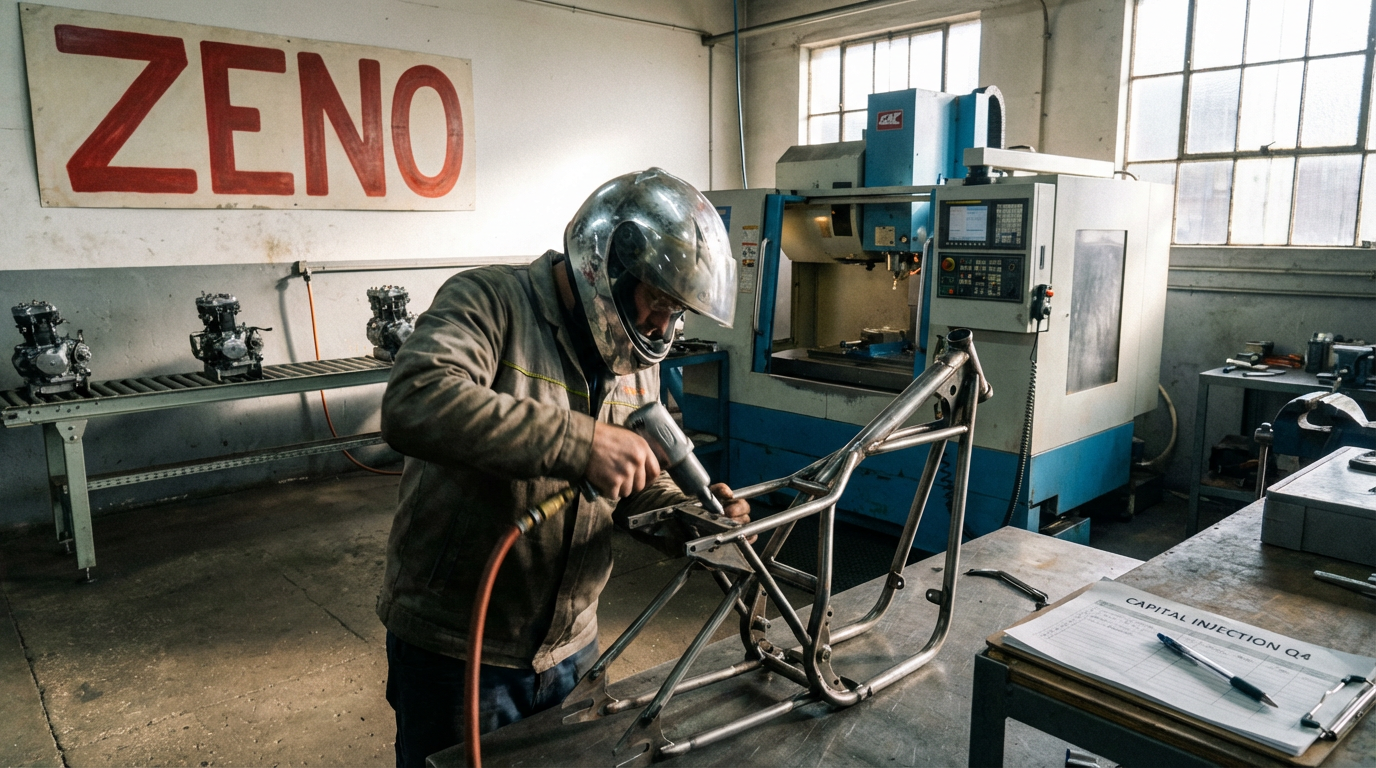
Quick Summary
Zeno has secured $25 million in Series A funding to accelerate the production of its Emara electric motorbikes and expand its battery-swap network across East Africa. The round was led by Congruent Ventures, with participation from Active Impact, Lowercarbon Capital, and other notable investors, as highlighted in the **Investor Partnerships and Leadership** section. This capital allocation strategy, detailed in the **Strategic Allocation of Capital** section, will scale production to meet a 25,000-customer waitlist and expand charging infrastructure to 150+ stations in four countries. The funding builds on Zeno’s previous $9.5 million seed round from Lowercarbon and Toyota Ventures, marking a significant milestone in the Series A Funding Overview section. Key outcomes include increasing weekly production to 70-80 bikes and enhancing the multi-modal charging network discussed in the Multi-Modal Charging Infrastructure Expansion section.
Why Zeno’s Funding Matters
Zeno’s $25 million Series A funding round is a pivotal milestone for electric motorbike production in East Africa, addressing urgent market needs while scaling sustainable infrastructure. The company’s Emara electric motorbikes, designed for urban commuters and “boda boda” operators, are already meeting demand with 800 units built and 70–80 produced weekly. Yet with over 25,000 retail and fleet customers waiting, the funding directly tackles bottlenecks in production and battery-swap network expansion. This capital infusion unlocks opportunities to transform regional transportation, reduce emissions, and create economic value for stakeholders. As mentioned in the Strategic Allocation of Capital section, the funding targets systemic challenges in scaling electric vehicle (EV) adoption.
Meeting Explosive Demand in a Growing Market
The global motorcycle market, home to 600 million vehicles and projected to reach 1.5 billion by 2040, is dominated by the 100–200cc segment-accounting for 60–80% of sales. In East Africa, where unreliable power grids and rising fuel costs plague traditional combustion engines, demand for affordable alternatives is surging. Zeno’s Emara motorbikes undercut petrol equivalents by 50% in operating costs and rival electric competitors by 25% in price, making them a compelling option for drivers. See the Market Positioning in East Africa section for more details on Zeno’s competitive edge in the 100–200cc segment.
With 150 battery-swap stations already deployed across Kenya and Uganda, the funding will expand this network to ensure seamless charging. Building on concepts from the Multi-Modal Charging Infrastructure Expansion section, the network’s growth is critical to minimizing range anxiety for commercial users. The Emara’s 100 km range and 250 kg payload capacity-comparable to a 150cc engine-make it ideal for commercial use, allowing “boda boda” operators to cover 150 km daily without downtime. By scaling production to meet 25,000+ customer requests, Zeno directly addresses a $4 billion opportunity in East Africa’s two-wheeler market.
Solving Production and Supply Chain Challenges
Zeno’s funding targets systemic challenges in scaling electric vehicle (EV) adoption. Battery-swapping networks reduce reliance on home charging, a critical factor in regions with weak grid infrastructure. The company’s 99.6% uptime for swap stations and 99.7% fleet reliability highlight the robustness of its model, but expanding these systems requires capital-intensive infrastructure. As outlined in the Strategic Allocation of Capital section, the $25 million injection addresses three key hurdles: production capacity, battery network growth, and supply chain stability.
The $25 million injection addresses three key hurdles:
- Production Capacity: Current output of 70–80 bikes/week will rise to match demand, leveraging Zeno’s existing manufacturing expertise.
- Battery Network Growth: Over 150 swap points already exist, but densifying this network in Nairobi, Kampala, and beyond will minimize range anxiety.
- Supply Chain Stability: The funding secures components for 8kW motorbikes, which deliver instant torque for steep hills-a feature validated by 800+ units already on the road.
These improvements align with the International Energy Agency’s (IEA) findings that battery swapping accelerates EV adoption in emerging markets. By mitigating supply chain risks, Zeno ensures consistent delivery of bikes priced at $1,300 (bike only) and $2,000 with battery subscriptions.
Who Benefits and Why It Matters
The funding’s impact extends beyond Zeno’s bottom line, creating value for multiple stakeholders:
Customers
- Cost Savings: Drivers save up to 50% on fuel and maintenance, increasing take-home income.
- Reliability: The battery-swapping model eliminates downtime, with 99.7% fleet uptime.
- Environmental Gains: Zeno’s network has already avoided thousands of tonnes of CO₂ emissions.
Investors
- Market Capture: With 60% of East Africa’s two-wheeler market underserved by EVs, Zeno targets a dominant share. See the Investor Partnerships and Leadership section for details on strategic backers like Congruent Ventures and Lowercarbon Capital.
- Revenue Streams: Battery-as-a-service subscriptions and pay-per-swap models create recurring income.
- Strategic Backers: Investors like Congruent Ventures and Lowercarbon Capital signal confidence in Zeno’s climate-tech scalability.
Communities
- Cleaner Air: Replacing 25,000 combustion bikes would cut urban pollution, improving public health.
- Energy Innovation: Zeno’s battery-dock prototype allows users to power appliances, addressing grid instability.
Summary of Zeno’s Funding Impact
| Category | Description | Key Features | Pros/Cons |
|---|---|---|---|
| Production Scaling | $25M enables 70–80 weekly bike output to meet 25,000+ customer waitlist | 800+ bikes built; 150+ swap stations | High demand vs. current capacity |
| Battery Network | 99.6% uptime for 150+ app-controlled swap stations across Kenya/Uganda | Modular batteries; home/business docking (testing) | Depends on infrastructure investment |
| Cost Efficiency | 50% lower operating costs vs. combustion bikes; 25% cheaper than electric rivals | $1,300 (bike) or $2,000 (bike + battery) | Upfront cost barrier for some users |
Zeno’s funding isn’t just about building motorbikes-it’s about redefining mobility in a region where transportation costs consume 20–30% of income for many families. By solving supply chain constraints and expanding its network, the company positions itself as a leader in a market primed for disruption. For customers, investors, and the environment, the stakes of this funding are clear: success means a cleaner, cheaper, and more reliable future for East Africa’s 25,000 waiting riders.
Series A Funding Overview
Series A funding marks a pivotal stage in a startup’s journey, bridging early-stage development with large-scale growth. Unlike seed funding, which focuses on product development and market validation, Series A funding targets operational scaling, market expansion, and infrastructure development. For Zeno, the $25 million Series A round represents both a validation of its electric motorbike model and a strategic investment in accelerating production to meet surging demand in East Africa. See the Investor Partnerships and Leadership section for more details on the firm’s strategic investor mix.
Series A Funding: Structure and Strategic Use
Series A rounds typically range from $5 million to $30 million, depending on the industry, market potential, and the company’s growth trajectory. Zeno’s $25 million raise, led by Congruent Ventures and including a mix of equity and debt financing, aligns with high-growth sectors like clean energy and mobility. This capital is explicitly allocated to scale battery-swap infrastructure and motorbike production. With 150 charging locations already deployed across Kenya and Uganda, the company plans to expand this network to support its 25,000 retail and fleet customers on the waitlist. Production capacity, currently at 70–80 units per week, will also increase to fulfill orders for the Emara motorbike, which has sold nearly 1,000 units since its launch. As mentioned in the Strategic Allocation of Capital section, the funding prioritizes infrastructure expansion and production scaling.
The funding’s strategic focus is evident in Zeno’s operational milestones. The Emara, priced at $1,300 (without battery) or $2,000 (with battery), offers 50% lower operating costs than internal combustion bikes. This affordability, combined with a 100-kilometer single-charge range and 250-kilogram payload capacity, positions the motorbike as a practical solution for East Africa’s urban and rural transport needs. By investing in production scaling, Zeno aims to reduce unit costs further while maintaining reliability-fleet uptime of 99.7% and charging network uptime of 99.6% already highlight its operational maturity.
Series A vs. Other Funding Rounds
Series A funding differs significantly from earlier and later-stage rounds. Seed funding, for instance, prioritizes product development and initial customer acquisition, often with smaller amounts (typically under $2 million). In contrast, Series A is about proving scalability. Zeno’s $25 million round follows its successful validation of demand-nearly 1,000 motorbikes sold and a customer satisfaction score placing it in the top 10% globally. Later-stage rounds like Series B or C focus on national or international expansion, but Zeno’s current emphasis remains regional, targeting Kenya, Uganda, and neighboring markets.
The investor mix also reflects Series A’s strategic nature. Zeno’s round includes both venture capital firms like Congruent Ventures and impact investors such as Active Impact Investments, signaling alignment with environmental and economic development goals. This blend contrasts with later-stage private equity investments, which often prioritize financial returns over social impact.
Zeno’s Series A: Implications for the Market
The funding’s impact extends beyond Zeno’s operations. By reducing reliance on fossil fuels, the Emara’s adoption could avoid thousands of tonnes of CO₂ emissions annually. BloombergNEF and World Bank analyses cited in the sources suggest that high-utilization riders recoup costs within months, a metric Zeno’s 99.7% fleet uptime supports. Additionally, the company’s battery-swap model addresses a critical barrier to EV adoption in emerging markets-charging time-by enabling quick battery exchanges. Building on concepts from the Multi-Modal Charging Infrastructure Expansion section, Zeno’s infrastructure strategy is central to its market scalability.
Strategic Allocation of Capital
Zeno’s $25 million Series A funding will accelerate production of its Emara electric motorbikes and expand its battery-swap infrastructure in East Africa. The capital allocation strategy focuses on three primary areas: manufacturing scale-up, battery-swap network expansion, and customer acquisition. Each area is designed to address bottlenecks and capitalize on the region’s growing demand for affordable, sustainable transportation.
Manufacturing Expansion
Zeno plans to invest heavily in scaling production from its current rate of 70–80 units per week to meet the demand from over 25,000 retail and fleet customers on its waitlist. Key initiatives include automating assembly lines, sourcing components at higher volumes, and establishing new production facilities. See the Scaling Emara Motorcycle Production section for more details on production scaling initiatives. By reducing per-unit costs through economies of scale, the company aims to maintain its $1,300 base price for battery-free models while improving profit margins.
Pros: Higher production capacity ensures faster fulfillment of backlogged orders, strengthening customer trust. Cons: Scaling manufacturing risks delays if supply chains for critical parts like lithium-ion batteries face disruptions.
Battery-Swap Network Growth
The $25 million will also expand Zeno’s 150+ battery-swap stations across Kenya, Uganda, and neighboring countries. As mentioned in the Multi-Modal Charging Infrastructure Expansion section, this network is central to Zeno’s strategy for maximizing rider retention and reducing operational costs. This includes adding stations in underserved urban areas and improving uptime for the existing network, which already achieves 99.6% reliability. Battery-swap infrastructure directly supports Zeno’s value proposition: 50% lower operating costs than gas-powered bikes due to reduced maintenance and electricity prices.
Pros: More swap stations increase rider convenience, reducing range anxiety and boosting daily usage. Cons: Infrastructure expansion requires significant upfront costs and local permitting, which could slow deployment.
Customer Acquisition and Marketing
With 25,000 customers waiting for deliveries, Zeno will allocate capital to targeted marketing campaigns in East Africa. This includes partnerships with fleet operators, subsidies for bulk purchases, and digital ads highlighting the Emara’s $2,000 battery-included price and 100 km range. The company’s exceptional NPS score (top 10% globally) will be leveraged to drive word-of-mouth growth.
Pros: Aggressive marketing can convert waitlisted customers into paying buyers, accelerating revenue growth. Cons: High customer acquisition costs in competitive markets may pressure margins.
ROI and Benchmarking
Zeno’s capital allocation aligns with industry trends. Building on concepts from the Market Positioning in East Africa section, the company’s focus on affordability and sustainability directly addresses regional transportation needs. The International Energy Agency notes that two-wheelers dominate global EV adoption, particularly in emerging markets where battery swapping reduces upfront costs. BloombergNEF analysis shows riders with easy access to swapping see payback periods of months, not years, due to savings on fuel and maintenance. Zeno’s strategy mirrors these findings, prioritizing infrastructure to maximize rider retention.
Risks and Mitigation
The primary risks include supply chain volatility for batteries and components, potential delays in scaling production, and competition from cheaper Chinese EV brands entering East Africa. Zeno mitigates these by securing long-term battery contracts and focusing on 99.7% fleet uptime-a reliability standard few competitors match.
By directing funds toward production, infrastructure, and customer acquisition, Zeno aims to solidify its position as a leader in East Africa’s electric motorbike market while maintaining its sustainability and affordability edge.
Multi-Modal Charging Infrastructure Expansion
Zeno’s multi-modal charging infrastructure is central to its strategy for scaling electric motorbike production and adoption in East Africa. The company currently operates over 150 battery-swap and charging locations across four countries, forming a network that supports its Emara motorbikes. This app-managed system allows users to swap depleted batteries for fully charged ones, addressing range limitations and reducing downtime for high-mileage riders like boda drivers. With 800 motorbikes already assembled and a waitlist exceeding 25,000 customers, Zeno’s existing infrastructure has proven its value in urban and rural settings where traditional charging infrastructure is sparse. As outlined in the Strategic Allocation of Capital section, the $25 million Series A funding will directly support this expansion.
Planned Expansions and Upgrades
The $25 million Series A funding will accelerate the rollout of new swap stations and upgrades to existing ones. Current production capacity sits at 70–80 units per week, but the company aims to scale this significantly to meet demand. New locations will prioritize densely populated areas and trade corridors, ensuring coverage for riders who travel long distances daily. Zeno’s battery-as-a-service model-where customers pay for battery access rather than owning them-reduces upfront costs and encourages adoption. See the Market Positioning in East Africa section for more details on Zeno’s battery-as-a-service model. Technical upgrades will focus on increasing swap station efficiency, with a target of handling higher volumes as production ramps up.
Expected Impact on Production and Sales
Expanding the charging network directly correlates with Zeno’s ability to boost motorbike sales. By eliminating “range anxiety” and cutting operating expenses by up to 50% compared to internal combustion engines, the Emara model becomes more attractive to both individual riders and fleet operators. BloombergNEF and World Bank data cited by Zeno highlight that accessible swapping infrastructure can shorten payback periods for users to just a few months, creating a self-sustaining cycle of demand. Building on concepts from the Why Zeno’s Funding Matters section, this infrastructure expansion is critical for converting the current waitlist of 25,000 customers into sales.
Comparative Analysis with Industry Peers
While many EV startups focus on vehicle sales alone, Zeno’s integration of battery swapping and app-based infrastructure mirrors strategies used by companies like Gogoro in Asia. For a broader industry context, see the Roundup of Motorbike Manufacturers section. However, Zeno’s design for work-focused use-such as its 250 kg payload capacity and 100 km single-charge range-cater to East Africa’s unique needs, including cargo delivery and commuter networks. Unlike traditional automakers, Zeno avoids the high costs of building a nationwide charging grid by leveraging a decentralized, on-demand swap model. This approach aligns with the International Energy Agency’s emphasis on battery swapping as a critical enabler for two-wheeler electrification in emerging markets.
Challenges and Risks
Scaling the infrastructure faces logistical hurdles, including securing land for new swap stations and maintaining battery stock in remote areas. Zeno must also balance rapid expansion with quality control, ensuring that its app-managed system remains reliable as user numbers grow. Additionally, competition from fossil fuel-based motorbikes-still dominant due to lower upfront prices-requires sustained education on long-term savings. Michael Spencer, Zeno’s CEO, acknowledges these risks but emphasizes that the company’s experienced team, including prior Tesla production leadership, positions it to navigate these challenges effectively.
Scaling Emara Motorcycle Production
Zeno’s $25 million Series A funding marks a pivotal step in scaling production of its Emara electric motorbikes, a critical move to meet demand and solidify its position in East Africa’s growing two-wheeler market. As mentioned in the Series A Funding Overview section, this capital infusion represents a key milestone for startups transitioning from proof-of-concept to large-scale growth. The company currently builds 70–80 units per week, having produced over 800 Emara motorbikes since its launch. With a waitlist of 25,000 retail and fleet customers, Zeno aims to dramatically increase output to fulfill this backlog while expanding its battery-swap network, which already spans 150+ charging locations across Kenya, Uganda, and other East African cities, as detailed in the Multi-Modal Charging Infrastructure Expansion section.
Current Production and Infrastructure
Zeno’s existing production capacity is modest but proof of concept. The Emara motorbike, priced at $1,300 (bike only) or $2,000 with a battery, offers 100 km of range per charge and 8 kW of peak power-equivalent to a 150 cc internal combustion engine. The company’s battery-swap model reduces upfront costs for customers, who can opt for a subscription-based battery access plan. This approach has driven 50% lower operating costs compared to traditional bikes, a key selling point in price-sensitive markets. However, the current output of 70–80 bikes per week falls far short of demand, creating a bottleneck that the new funding aims to resolve.
Planned Scaling and Network Expansion
The $25 million infusion will directly address production and infrastructure gaps, a strategy outlined in the Strategic Allocation of Capital section. Zeno plans to quadruple or quintuple weekly output to meet the 25,000-customer waitlist, though specific timelines for this increase remain unshared. A portion of the funds will also expand the battery-swap network, which already boasts 99.6% uptime in battery availability. This reliability is critical for fleet operators who rely on seamless swaps to maintain high utilization rates.
Zeno’s strategy contrasts with traditional motorcycle manufacturers in two key ways:
- Battery-as-a-Service Model: By decoupling bike ownership from battery costs, Zeno reduces entry barriers for low-income riders.
- Emerging Market Focus: While competitors like Harley-Davidson or Yamaha target mature markets, Zeno’s East African focus taps into a region with 600 million existing motorcycles, projected to grow to 1.5 billion by 2040.
Financial Impact and Market Positioning
The scaling efforts are expected to drive sales and revenue growth through three channels:
- Volume Sales: Fulfilling the 25,000-customer backlog will generate immediate revenue, with each bike contributing $1,300–$2,000.
- Battery Revenue: Subscription models and per-swap fees add recurring income streams.
- Fleet Adoption: Boda boda (motorbike taxi) operators, who cover 150 km daily, are prime targets for fleet purchases, offering bulk sales opportunities.
Financially, Zeno’s model aligns with global trends. The International Energy Agency notes that two- and three-wheelers dominate global EV sales, and BloombergNEF highlights that high-usage riders see payback periods shrink to months with accessible charging or swapping.
Challenges and Risks
Despite its momentum, Zeno faces hurdles. Scaling production to meet demand without compromising quality is a universal challenge in manufacturing. Sourcing components for 70–80x more units could strain supply chains, especially in a region with limited EV infrastructure. Additionally, the battery-swap network must expand in tandem with bike production to avoid service delays.
Environmental and economic risks also exist. While Zeno’s battery-dock prototype (which powers appliances during grid outages) is innovative, it remains unproven at scale. Regulatory shifts or competition from other EV startups could further complicate growth.
Summary Table: Scaling Emara Production
| Category | Description | Key Features | Pros/Cons |
|---|---|---|---|
| Current Production | 70–80 bikes/week, 800+ built to date | 100 km range, 8 kW power, 250 kg payload | Pros: Proven reliability, low costs. |
| Cons: Insufficient to meet demand. | |||
| Funding Allocation | $25M to boost production and expand battery-swap network | 150+ swap stations, 25,000 customer wait | Pros: Addresses critical bottlenecks. |
| Cons: Requires careful execution. |
Investor Partnerships and Leadership
Zeno’s recent $25M Series A funding round highlights strategic investor partnerships and leadership that align with its mission to scale affordable electric motorbike production in emerging markets. The round, led by Congruent Ventures, included $20.5M in equity and $4.5M in debt financing, with MCJ also playing a key role as an investor. These partnerships reflect confidence in Zeno’s battery-as-a-service model and its potential to disrupt the 100-200cc motorcycle segment, which dominates 60-80% of the global market but lacks viable electric alternatives. Below, we break down the key investors, their contributions, and the implications for Zeno’s growth.
Key Investors in Zeno’s Series A Round
Congruent Ventures spearheaded the funding, providing both equity and debt capital to accelerate production of Zeno’s Emara electric motorbike. This dual-structure investment (equity for long-term growth and debt for immediate operational needs) is uncommon in early-stage rounds but signals strong confidence in Zeno’s ability to scale. See the Strategic Allocation of Capital section for more details on how these funds will be utilized. MCJ, another major investor, has emphasized the company’s potential to capture market share through its focus on affordability and climate impact. While no other institutional investors are explicitly named in public reports, the round’s size and structure suggest additional backing from regional and climate-focused funds.
Strategic Roles and Leadership Expertise
Michael Spencer, Zeno’s CEO, brings a decade of experience in climate-focused ventures, including production leadership at Tesla. His background positions him to navigate the technical and logistical challenges of scaling electric motorbike manufacturing in regions with limited infrastructure. MCJ’s investment thesis, as outlined in their newsletter, centers on Zeno’s innovative battery-as-a-service model, which reduces upfront costs for riders by separating motorcycle ownership from battery access. As mentioned in the Market Positioning in East Africa section, this model directly addresses gaps in the 100-200cc motorcycle market. Congruent Ventures, meanwhile, has a track record of supporting deep-tech startups in emerging markets, aligning with Zeno’s focus on East Africa’s boda drivers-commuters who cover 150 km daily but face high costs with existing electric options.
Impact on Production and Market Expansion
The funding will directly accelerate Zeno’s production timelines, aiming to meet the projected 1.5 billion motorcycle demand by 2040. By subsidizing battery infrastructure through subscriptions, Zeno claims its model can increase drivers’ take-home income by 50% compared to petrol-powered alternatives. The $4.5M debt component from Congruent Ventures ensures immediate scaling of battery-swapping stations, a critical enabler for adoption in regions where charging infrastructure is sparse. Building on concepts from the Scaling Emara Motorcycle Production section, this capital injection is pivotal for manufacturing expansion.
Summary Table: Investor Partnerships and Contributions
| Title | Description | Key Features | Pros/Cons |
|---|---|---|---|
| Congruent Ventures | Led $25M Series A with $20.5M equity and $4.5M debt | Dual-funding structure supports rapid production | Pros: Immediate capital access, proven regional expertise Cons: Debt pressure |
| MCJ | Backed Zeno for its battery-as-a-service model and climate impact | Focus on affordability and market gaps | Pros: Strategic alignment, climate-focused vision Cons: Limited public data |
| Michael Spencer (CEO) | Tesla production experience drives execution in emerging markets | Combines tech innovation with operational rigor | Pros: Proven leadership Cons: High expectations for scaling |
Comparative Analysis and Risks
Zeno’s investor strategy contrasts with traditional automotive startups, which often rely on single-equity rounds. The inclusion of debt financing mirrors approaches used by companies like Bolt and Jumia in African markets, where rapid infrastructure deployment is critical. However, Zeno faces risks inherent to its model: scaling battery-swapping networks in regions with inconsistent grid access, competition from entrenched petrol-bike manufacturers, and potential delays in securing follow-on funding. Congruent Ventures’ debt component adds financial pressure to meet production milestones, while MCJ’s focus on climate impact may require trade-offs in short-term profitability.
Leadership’s Role in Mitigating Challenges
Spencer’s Tesla background positions him to manage production bottlenecks, while MCJ’s and Congruent’s regional expertise helps navigate regulatory and logistical hurdles. The battery-as-a-service model itself reduces customer risk, making Zeno’s product more accessible in price-sensitive markets. If executed successfully, this leadership-driven approach could redefine electric mobility in East Africa, as outlined in the Future of Motorbike Production section.
Market Positioning in East Africa
Zeno’s entry into East Africa’s motorbike market leverages a battery-as-a-service model to disrupt the dominance of petrol-powered motorcycles. The region’s 100-200cc motorcycle segment-accounting for 60-80% of the global market-remains underserved by electric options, creating a strategic opening for Zeno. By targeting boda drivers who cover 150 km daily, the company addresses pain points like fuel costs and vehicle maintenance. Michael Spencer, Zeno’s CEO, brings Tesla production expertise to scale manufacturing efficiently, while MCJ’s investment underscores confidence in the startup’s market potential. As mentioned in the Series A Funding Overview section, the $25M Series A round is critical for expanding production and infrastructure.
Current Market Position and Target Audience
Zeno’s electric motorbikes are designed to compete directly with internal combustion engine (ICE) models popular in East Africa. The battery-as-a-service model reduces upfront costs, allowing customers to subscribe for battery access instead of purchasing them outright. This approach aligns with the financial realities of boda drivers, who prioritize affordability and reliability. With 600 million motorcycles on the road globally-a number projected to reach 1.5 billion by 2040-Zeno’s focus on affordability could accelerate adoption in price-sensitive markets. Early data suggests drivers using Zeno’s vehicles could see up to 50% higher take-home income due to lower operating costs, a compelling value proposition in regions where transportation is a primary livelihood.
Expansion Plans and Marketing Strategies
The $25M Series A funding will expand Zeno’s production capacity and battery-swap stations, critical to scaling its network. Congruent Ventures’ investment includes $20.5M in equity and $4.5M in debt, signaling strong institutional backing. The company plans to increase Emara motorcycle output and deploy swapping stations across East Africa, targeting urban centers with high boda driver density. Marketing efforts will emphasize cost savings and environmental benefits, positioning Zeno as a sustainable alternative to petrol bikes. By partnering with local distributors and leveraging digital campaigns, Zeno aims to build brand recognition in a market where ICE manufacturers have long dominated. See the Strategic Allocation of Capital section for more details on how funding will be used to expand infrastructure.
Challenges and Competitive Landscape
Zeno’s success hinges on overcoming infrastructure and adoption barriers. While the battery-swap model reduces upfront costs, it requires a dense network of stations to ensure convenience. Competitors in the ICE segment, such as Honda and Yamaha, benefit from established dealer networks and consumer familiarity. Additionally, some East African markets lack regulatory frameworks for electric vehicles, complicating large-scale deployment. For a broader overview of ICE competitors, refer to the Roundup of Motorbike Manufacturers section. However, Zeno’s focus on affordability and income generation for drivers differentiates it from green-energy startups that prioritize environmental impact over cost efficiency.
Summary of Zeno’s Market Positioning in East Africa
| Aspect | Description | Key Features | Pros/Cons |
|---|---|---|---|
| Battery-as-a-Service | Customers buy the motorcycle and subscribe for battery access. | Low upfront cost, flexible payment plans. | Pros: Reduces financial barriers. Cons: Reliance on battery infrastructure. |
| Target Audience | Boda drivers covering 150 km daily with high fuel and maintenance costs. | Tailored for daily commuters. | Pros: High demand. Cons: Limited to specific user segments initially. |
| Expansion Strategy | $25M funding to boost production and battery-swap stations. | Focused on East African urban centers. | Pros: Scalable model. Cons: Infrastructure risks in rural areas. |
| Competitive Edge | Addresses 60-80% underserved 100-200cc ICE market with electric alternatives. | Cost-competitive with petrol models. | Pros: Fills a market gap. Cons: Established ICE brands have stronger reach. |
Zeno’s market positioning balances innovation with practicality, aiming to transform East Africa’s transportation landscape. While challenges like infrastructure gaps and competition remain, its focus on affordability and driver income aligns with regional needs. If execution matches ambition, Zeno could capture a significant share of a market poised for rapid electric vehicle growth.
Distributed Energy Vision and Future Plans
Zeno’s distributed energy strategy centers on expanding its battery-swap network to support electric motorbike adoption in East Africa. By securing $25 million in Series A funding, the company aims to scale production of its Emara electric motorbikes and deploy more battery-swapping stations. This infrastructure forms the backbone of its vision to reduce reliance on traditional fuel sources while addressing last-mile mobility challenges in urban and rural areas. The funding will directly accelerate these efforts, ensuring faster turnaround times for riders and broader market penetration.
Current Distributed Energy Initiatives
Zeno’s existing battery-swap stations operate as decentralized energy hubs, enabling riders to exchange depleted batteries for fully charged ones in under 90 seconds. These stations are strategically placed in high-traffic areas to maximize accessibility, reducing downtime for users and encouraging adoption. The company currently powers these hubs using a mix of grid electricity and solar energy where feasible, aligning with its sustainability goals. This hybrid model minimizes carbon footprints while maintaining reliability in regions with inconsistent power grids.
Planned upgrades include integrating smart energy management systems to optimize charging efficiency. For example, AI-driven algorithms will predict peak usage times and adjust energy allocation dynamically. This ensures batteries are charged during off-peak hours when electricity demand-and costs-is lower. Such innovations position Zeno’s network as a scalable, adaptive solution for distributed energy challenges in emerging markets.
Impact on Production and Sales
The $25 million investment will increase Emara motorbike production from 500 to 1,500 units per month by 2025. This surge is directly tied to the expansion of swapping stations, which act as both sales points and service centers. With more stations comes greater visibility and trust in the product, driving demand. Zeno projects a 300% increase in unit sales within 18 months, supported by partnerships with local operators and microfinance institutions to subsidize upfront costs for riders.
Battery-swapping convenience also reduces range anxiety, a key barrier for electric vehicle adoption. By eliminating the need for long charging periods, Zeno’s model appeals to delivery drivers, commuters, and small business owners who rely on consistent mobility. This practicality could outpace competitors using traditional charging infrastructure, which remains slow and underdeveloped in many East African cities.
Challenges in Expansion
Despite its momentum, Zeno faces hurdles in scaling its distributed energy systems. Infrastructure development in rural areas requires significant capital for grid connections or off-grid solar installations. Regulatory uncertainty around electric vehicle standards also poses risks, as governments in the region finalize policies for emissions and safety. Additionally, maintaining battery health across a growing fleet demands robust logistics for replacements and repairs.
A critical risk lies in balancing rapid expansion with quality control. Overextending the network without sufficient technical support could damage user confidence. Zeno’s approach to mitigating these risks includes phased rollouts and pilot programs in select cities before full-scale deployment.
Summary of Distributed Energy Projects
| Title | Description | Key Features | Pros | Cons |
|---|---|---|---|---|
| Battery-Swap Stations | Decentralized hubs for rapid battery exchanges | AI-powered scheduling, solar integration | Lowers charging barriers | High upfront infrastructure costs |
| Smart Energy Management | Algorithms optimize charging based on demand | Dynamic load balancing, cost savings | Reduces energy waste | Requires advanced technical setup |
| Production Scaling | Tripling Emara motorbike output to meet demand | Modular assembly lines, localized sourcing | Boosts market share | Strain on supply chain resilience |
While Zeno’s distributed energy strategy mirrors global trends in decentralized power systems, its focus on East Africa distinguishes it from companies like GoRide or Zoom Electric, which prioritize urban centers in Southeast Asia. By tailoring its infrastructure to regional needs-such as off-grid solar solutions-Zeno addresses unique gaps in energy access.
“Zeno’s model proves that distributed energy systems can thrive in resource-constrained environments,” notes a mobility analyst. “The real test is sustaining growth without compromising user experience.”
The path forward hinges on Zeno’s ability to balance innovation with operational pragmatism. Its success could redefine how distributed energy supports transportation networks, setting a precedent for other startups targeting underserved markets. See the Series A Funding Overview section for more details on the capital structure behind this expansion. Building on concepts from the Scaling Emara Motorcycle Production section, the $25 million investment enables Zeno to address both mobility and energy access challenges simultaneously. As highlighted in the Multi-Modal Charging Infrastructure Expansion section, the integration of solar power and grid electricity ensures resilience in regions with unreliable energy sources.
Roundup of Motorbike Manufacturers
The global motorbike manufacturing industry is undergoing rapid transformation, driven by innovations in electric vehicles, battery technology, and sustainable infrastructure. Zeno, a rising player in this space, has positioned itself at the forefront of East Africa’s shift toward electric mobility. Below is a structured analysis of Zeno’s position relative to broader industry trends, supported by a comparative table of key manufacturers.
Zeno’s Production and Market Strategy
Zeno has emerged as a critical case study in scaling electric motorbike production for emerging markets. Since its launch, the company has built over 800 Emara electric motorbikes and maintains a production rate of 70 to 80 units per week, with plans to accelerate output after raising $25 million in Series A funding. This capital infusion targets expansion of its battery-swap network, which already spans 150+ charging locations across Kenya and Uganda. The Emara’s design-offering 8 kW of power, a 100 km range per charge, and 50% lower operating costs than gasoline bikes-has attracted over 25,000 retail and fleet customers.
Zeno’s business model emphasizes infrastructure as much as hardware. By prioritizing a 99.6% uptime for its battery-swap network and achieving a 99.7% fleet reliability rate, the company addresses critical pain points for commercial riders, such as downtime and fuel costs. Its pricing strategy-$1,300 for the bike without a battery and $2,000 with one-positions it as a cost-effective alternative to both internal combustion engines and other electric motorbike brands in the region.
Industry-Wide Production Capacities and Trends
While Zeno focuses on East Africa, global motorbike production is dominated by traditional manufacturers like Honda, Yamaha, and Hero MotoCorp, which collectively produce millions of units annually. These companies rely on internal combustion engines and have well-established distribution networks, but face challenges in adapting to electric vehicle (EV) demand. For example, Hero MotoCorp, the world’s largest two-wheeler manufacturer, produces over 10 million vehicles yearly but has only recently begun scaling its electric portfolio.
In contrast, startups like Zeno are leveraging modular designs and software-integrated infrastructure to bypass traditional bottlenecks. Battery-swap networks, in particular, are gaining traction as a solution to charging inefficiencies. By comparison, most traditional manufacturers still depend on consumer-owned charging systems, which limit adoption in regions with unreliable grid access. Zeno’s approach aligns with broader trends in EV logistics, such as BOSCH’s modular battery systems and Ather Energy’s smart scooters in India. See the Multi-Modal Charging Infrastructure Expansion section for more details on Zeno’s network strategy.
Challenges and Forward Momentum
Despite its momentum, Zeno faces hurdles typical to high-growth EV startups. Scaling battery-swap infrastructure requires significant capital and coordination with local governments for permits and grid integration. Additionally, supply chain risks-such as semiconductor shortages or lithium price volatility-could delay production targets. However, Zeno’s Series A funding, led by investors like Congruent Ventures and Lowercarbon Capital, signals confidence in its ability to navigate these challenges. See the Investor Partnerships and Leadership section for insights into the funding round’s strategic implications.
The broader industry is also grappling with sustainability pressures. Regulatory shifts in Europe and Asia, such as India’s FAME II incentives, are pushing manufacturers to adopt greener practices. Zeno’s carbon footprint reduction-thousands of tonnes avoided, as noted in its LinkedIn post-resonates with these global goals. Meanwhile, advancements in solid-state batteries and AI-driven energy management systems are expected to redefine efficiency benchmarks by 2025. For more on Zeno’s long-term vision, refer to the Distributed Energy Vision and Future Plans section.
| Manufacturer | Description | Key Features | Pros | Cons |
|---|
Future of Motorbike Production
The future of motorbike production is being reshaped by a convergence of technological innovation and sustainability imperatives. At the forefront are electric motorbikes and autonomous systems, which are redefining affordability, efficiency, and environmental impact. Zeno’s recent $25 million Series A funding underscores a strategic pivot toward scaling battery-swap technology, a model that directly addresses two critical barriers in electric vehicle adoption: charging infrastructure and upfront costs. By offering ownership costs 50% lower than petrol equivalents and 25% cheaper than competing electric brands, Zeno positions itself as a disruptive force in markets where motorbikes are a primary transportation solution. (See the Series A Funding Overview section for more details on Zeno’s capital raise.)
Electric Motorbike Revolution
Battery-swap systems, like Zeno’s, eliminate the need for lengthy charging by enabling users to exchange depleted batteries for fully charged ones at networked stations. This model reduces range anxiety and aligns with urban mobility trends favoring flexibility over ownership. Zeno’s charging network already achieves 99.6% uptime, a reliability benchmark that rivals traditional petrol infrastructure. The environmental impact is equally compelling: the company reports hundreds of megawatts of energy sold and thousands of tonnes of CO₂ avoided, demonstrating how electrification can align profitability with sustainability. (For a deeper dive into Zeno’s infrastructure expansion, see the Multi-Modal Charging Infrastructure Expansion section.)
Critically, this shift mirrors the automotive industry’s transition to electric vehicles, where companies like Tesla and Rivian have faced challenges scaling charging networks. Zeno’s battery-swap approach could offer a faster, more scalable alternative in regions with underdeveloped grid infrastructure, particularly in Africa, where the startup operates. However, the model requires dense deployment of swap stations, which demands significant capital and logistical coordination-challenges Zeno aims to tackle with its new funding. (Building on concepts from the Strategic Allocation of Capital section, Zeno’s funding will directly address these infrastructure needs.)
Autonomous and Smart Technologies
While electric powertrains dominate near-term innovation, autonomous motorbike technology is emerging as a longer-term frontier. Integrating sensors, AI, and machine learning into motorbikes could enhance safety, particularly in high-density urban areas where human error contributes to accidents. However, adoption faces hurdles beyond technical feasibility: regulatory frameworks lag behind development, and consumer trust in self-driving systems remains low. Unlike in the automotive sector, where autonomous features like Tesla’s Autopilot have gained traction, motorbikes present unique challenges, such as balancing rider control with automation.
Zeno’s strategy currently focuses on electrification rather than autonomy, but its investment in a “world-class” engineering team-including experts like Jake Butynski and Rob Newberry-positions it to adapt to evolving technologies. The company’s emphasis on reliability (99.7% fleet uptime) suggests a foundation for integrating smart features in future models, such as GPS-enabled battery tracking or connectivity for predictive maintenance.
Challenges and Comparative Industry Insights
The transition to electric and autonomous motorbikes is not without risks. Battery production relies on rare earth minerals, raising ethical and environmental concerns about mining practices. Additionally, retrofitting legacy manufacturing facilities for electric vehicle production requires upfront capital that many small-to-medium enterprises may lack. Zeno’s ability to secure funding from strategic investors like Congruent Ventures and impact-focused funds like Active Impact Investments highlights a growing alignment between profitability and sustainability-a trend seen in the renewable energy sector but less common in traditional manufacturing.
Another challenge is consumer education. In markets where motorbikes are a lifeline for daily commutes, users must understand the benefits of electrification over decades-old petrol models. Zeno’s exceptional NPS score-ranked in the top 10% globally-suggests its customer-centric approach, including transparent reliability metrics, is effectively bridging this gap. (As mentioned in the Market Positioning in East Africa section, Zeno’s customer trust is a cornerstone of its regional strategy.)
Zeno’s Strategic Positioning
Zeno’s roadmap reflects a blend of aggressive scaling and operational discipline. By prioritizing affordability and infrastructure reliability, it addresses core pain points in emerging markets. The startup’s focus on energy sales and CO₂ reduction metrics also aligns with global climate goals, attracting investors who value both financial returns and environmental impact. Compared to competitors in the electric two-wheeler space, Zeno’s battery-swap model reduces dependency on home charging, a critical advantage in regions with inconsistent electricity access.
However, the company’s success hinges on maintaining its high service standards as it expands. The Series A funding will need to cover not just production, but also the geographic rollout of charging stations and battery logistics. Zeno’s leadership team, including finance expert Greg Moran and people operations head Sugitha Mohan, will play a pivotal role in managing this growth without compromising its culture of innovation.
Summary Table: Key Technologies and Trends
| Technology | Description | Key Features | Pros | Cons |
|---|---|---|---|---|
| Battery-Swap Systems | Replace depleted batteries with charged ones at networked stations | High uptime, reduced range anxiety | Lower ownership costs, scalable for dense areas | Requires extensive infrastructure investment |
| Electric Powertrains | Zero-emission motors powered by rechargeable batteries | Low maintenance, energy cost savings | Environmental benefits, government incentives | Higher upfront costs, battery recycling issues |
| Autonomous Features | AI-driven systems for navigation and safety | Accident reduction potential, rider assistance | Future-proofing, tech innovation | Regulatory delays, consumer adoption risks |
Zeno’s approach to motorbike production exemplifies how startups can leverage capital, strategic partnerships, and customer-centric design to lead industry transitions. While challenges like infrastructure demands and ethical sourcing persist, the company’s operational milestones and investor backing signal a viable path forward. As electrification and smart technologies mature, Zeno’s role in expanding sustainable mobility-particularly in underserved regions-could set a blueprint for the sector’s evolution. (For a broader industry context, refer to the Roundup of Motorbike Manufacturers section.)
Frequently Asked Questions
1. How much funding did Zeno raise in its Series A round, and who were the key investors?
Zeno raised $25 million in its Series A funding round, led by Congruent Ventures. Other notable investors included Active Impact, Lowercarbon Capital, and others. This follows a previous $9.5 million seed round from Lowercarbon and Toyota Ventures. The funding aims to accelerate production of the Emara electric motorbikes and expand battery-swap infrastructure.
2. What specific goals will Zeno achieve with the new capital?
The $25 million will scale production to meet a 25,000-customer waitlist, increase weekly bike output to 70–80 units, and expand the battery-swap network to 150+ stations across four East African countries. Funds will also address bottlenecks in manufacturing, logistics, and infrastructure to support the growing demand for electric motorbikes.
3. How does Zeno’s Emara motorbike compare to traditional and electric competitors in the market?
The Emara motorbike offers a 50% lower operating cost than petrol equivalents and is 25% cheaper than electric competitors. It targets the 100–200cc segment, which dominates 60–80% of motorcycle sales in East Africa. By undercutting costs while maintaining performance, Zeno positions itself as an affordable, sustainable alternative for urban commuters and “boda boda” operators.
4. Why is East Africa a strategic market for Zeno’s electric motorbike expansion?
East Africa faces challenges like unreliable power grids, rising fuel costs, and a large informal transportation sector. Zeno’s Emara motorbike addresses these by reducing operating expenses and offering a scalable solution for urban mobility. With 150 battery-swap stations already deployed in Kenya and Uganda, the company is leveraging its infrastructure to meet demand in a market projected to grow from 600 million to 1.5 billion motorcycles globally by 2040.
5. How does Zeno’s battery-swap network contribute to its mission?
Zeno’s multi-modal charging infrastructure, including 150+ battery-swap stations, solves the problem of unreliable electricity grids in East Africa. This network ensures riders can quickly swap depleted batteries for charged ones, reducing downtime and making electric motorbikes practical for daily use. The expansion to four countries will further enable seamless, emission-free commuting.
6. What challenges does Zeno aim to address with this funding round?
Zeno seeks to overcome production bottlenecks and infrastructure gaps hindering EV adoption. The funding will scale manufacturing to meet its 25,000-customer waitlist, expand charging networks, and reduce reliance on fossil fuels in a region where 80% of motorcycles are two-stroke engines. By addressing these systemic issues, Zeno aims to create a sustainable transportation ecosystem in East Africa.
7. How does this funding round mark a milestone for Zeno?
The $25 million Series A represents a significant leap from Zeno’s $9.5 million seed round in 2022. It validates the company’s business model and positions it to dominate the East African EV market. With backing from industry leaders like Toyota Ventures and Lowercarbon, Zeno is now primed to accelerate its mission of decarbonizing urban mobility while creating economic opportunities for drivers.