

Oura expands with gesture recognition startup

Quick Summary
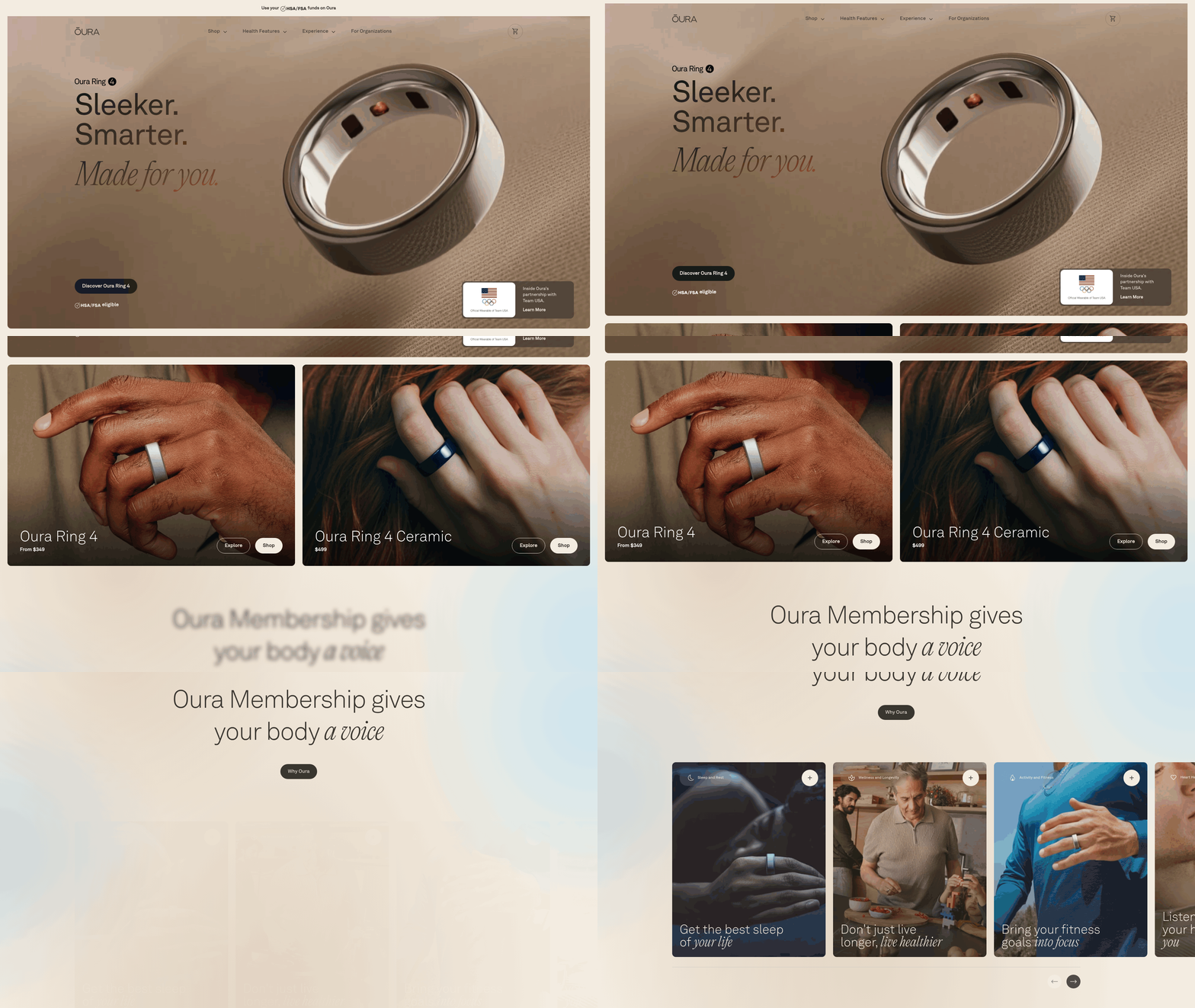
Oura’s acquisition of Doublepoint marks a pivotal expansion into gesture-based wearable technology, positioning the company to redefine user interaction with smart devices. By integrating advanced hand-movement recognition, Oura aims to transform its smart rings into intuitive, ambient AI tools. Below is a structured overview of the key elements of this strategic move, followed by an analysis of its implications.
Quick Summary Table
| Title | Description | Key Features | Pros/Cons |
|---|---|---|---|
| Acquisition Overview | Oura acquires Doublepoint, a Helsinki-based gesture-recognition startup. | - AI-driven biometric gesture tech - Integration of voice + gesture controls |
Pros: Strategic talent acquisition, $11B valuation boost Cons: Financial terms undisclosed |
| Gesture Tech Breakthrough | Enables control via subtle hand movements using sensors and machine learning. | - Low-power sensor fusion - Micro-gesture detection - Ambient operation |
Pros: Natural UI, faster interactions Cons: Potential accuracy challenges in crowded environments |
| Integration Roadmap | Planned integration into Oura Ring 4 and future devices by 2026. | - Voice + gesture hybrid interface - Privacy-first ambient AI |
Pros: Aligns with 2026 $1.5B revenue forecast Cons: Hardware upgrades may delay rollout |
| Market Positioning | Targets 51% growth in smart ring shipments and 5.5M+ active Oura users. | - First-mover advantage in gesture-controlled wearables - Cross-platform AR/VR compatibility |
Pros: Strong sales trajectory Cons: High competition in wearable AI space |
| Comparison to Existing Solutions | Outperforms touch/voice-only wearables with intuitive, hands-free controls. | - Subtle gestures vs. bulky motion controls - Biometric contextual awareness |
Pros: Reduces UI friction Cons: Limited third-party app support currently |
Acquisition Highlights
Oura’s $11 billion valuation (2025) and 5.5 million smart rings sold underscore its dominance in the wearable market. The acquisition of Doublepoint-a startup with four AI-focused founders-adds expertise in biometric gesture recognition, enabling devices to interpret small hand movements. Financial terms were not disclosed, but the deal accelerates Oura’s “ambient AI” vision, blending health monitoring with seamless gesture- and voice-based interactions. See the Strategic Benefits for User Interaction section for more details on how this enhances user experiences.
Technology and Integration Roadmap
Doublepoint’s technology relies on sensor fusion (accelerometers, gyroscopes) and machine learning to detect micro-gestures, such as pinching or swiping in mid-air. This complements Oura’s existing continuous health tracking, allowing users to adjust settings or navigate menus without physical touch. The integration is expected to debut in the Oura Ring 4, with broader ambient AI features (e.g., gesture-controlled smart home commands) slated for 2026. Building on concepts from the Integration into Oura Smart Rings section, this roadmap emphasizes hands-free interaction through advanced sensor data.
Market Implications
The smart ring market shipped 51% more units in 2025, per IDC, with Oura leading the segment. By adding gesture controls, the company differentiates itself from competitors like Fitbit or Apple Watch, which rely on touch or voice. Analysts predict this move could drive $1.5 billion in sales by 2026, leveraging the 5.5 million active Oura users as an immediate adopter base. However, challenges include ensuring gesture accuracy in diverse environments and expanding beyond health-focused use cases into productivity or AR/VR domains. As mentioned in the Why Gesture Recognition Matters section, this shift reflects broader trends in intuitive, AI-driven user interfaces.
Why Gesture Recognition Matters
The wearable technology market continues to evolve rapidly, with gesture recognition emerging as a transformative force in user interaction. As devices become smaller and more integrated into daily life, traditional input methods like touchscreens or buttons often fall short-especially for wearables like smart rings or smartwatches. Gesture recognition bridges this gap by enabling intuitive, hands-free control. Oura’s acquisition of Doublepoint, a gesture-recognition startup, underscores this shift. By integrating advanced hand-motion detection into its AI-driven smart ring, Oura aims to redefine how users interact with wearable technology. This section explores why gesture recognition is becoming essential, supported by real-world applications and the challenges it addresses. As mentioned in the Oura’s Expansion Strategy section, this acquisition marks a pivotal step in Oura’s broader vision to lead wearable AI innovation.
Enhancing Accessibility and User Experience
Gesture recognition removes physical barriers, making technology more accessible to diverse users. For individuals with motor impairments or limited dexterity, traditional touch-based interfaces can be frustrating or impossible to use. Gesture recognition offers an alternative, allowing users to navigate devices with simple hand movements. Similarly, professionals in high-stakes environments-such as surgeons, factory workers, or first responders-benefit from hands-free operation, reducing the risk of contamination or distraction. In these scenarios, gesture-based interactions improve efficiency and safety.
The technology also enhances everyday convenience. Imagine adjusting your smartwatch’s brightness with a flick of your wrist or skipping a song without fumbling for buttons. These subtle interactions streamline user experiences, particularly on compact devices where screen space and physical controls are limited. By reducing cognitive load, gesture recognition makes wearable technology more intuitive, encouraging broader adoption. See the Strategic Benefits for User Interaction section for more details on how gesture recognition addresses these usability challenges.
Expanding Beyond Wearables: Gaming, Education, and More
While wearables remain a key focus, gesture recognition’s potential spans industries. In gaming, it enables immersive experiences by translating real-world movements into on-screen actions. Virtual reality (VR) and augmented reality (AR) systems already leverage this technology, allowing players to grasp, throw, or manipulate objects with natural gestures. For example, a user might “swipe” to deflect a digital attack in a VR combat game, creating a more engaging experience than traditional controllers.
Education is another promising field. Interactive tools powered by gesture recognition can transform classrooms, enabling students to explore 3D models of historical artifacts or molecular structures through hand motions. This tactile learning approach caters to kinesthetic learners and fosters deeper engagement. Similarly, remote workers could use gesture-based presentations to annotate slides or navigate documents without touching a keyboard.
Challenges and the Road Ahead
Despite its promise, gesture recognition faces hurdles. Accuracy remains a concern, particularly in detecting subtle or complex motions. Environmental factors like lighting or background noise can also disrupt sensors. However, advancements in machine learning and sensor technology are addressing these issues. Startups like Doublepoint-acquired by Oura-specialize in refining gesture algorithms to work reliably in real-world conditions. Building on concepts from the Gesture Recognition Technology Overview section, these innovations highlight the role of AI and sensor fusion in overcoming technical barriers.
Cost is another barrier. High-precision systems often require specialized hardware, which can inflate device prices. Yet, as the technology matures, economies of scale are likely to drive costs down, making gesture recognition more accessible.
Summary of Key Applications
| Title | Description | Key Features | Pros/Cons |
|---|---|---|---|
| Wearable Navigation | Enables hands-free control of smart rings and watches | Gesture-based scrolling, tapping | Pros: Improved accessibility, convenience Cons: Potential accuracy issues |
| Gaming Interactions | Translates hand movements into in-game actions | Real-time motion tracking, immersive UX | Pros: Enhanced engagement Cons: Requires compatible hardware |
| Educational Tools | Interactive 3D learning modules via gestures | Visual and tactile learning methods | Pros: Boosts student engagement Cons: High initial setup costs |
“Using Oura’s new gesture features, I can check my vitals without fumbling-perfect during workouts.” – Fitness Enthusiast
By addressing these challenges and expanding into new domains, gesture recognition is poised to shape the future of human-device interaction. As Oura integrates Doublepoint’s expertise, the smart ring becomes not just a health tracker but a gateway to seamless, intuitive technology. For users seeking accessibility, professionals demanding efficiency, and industries pursuing innovation, this shift marks a significant step forward.
Oura’s Expansion Strategy
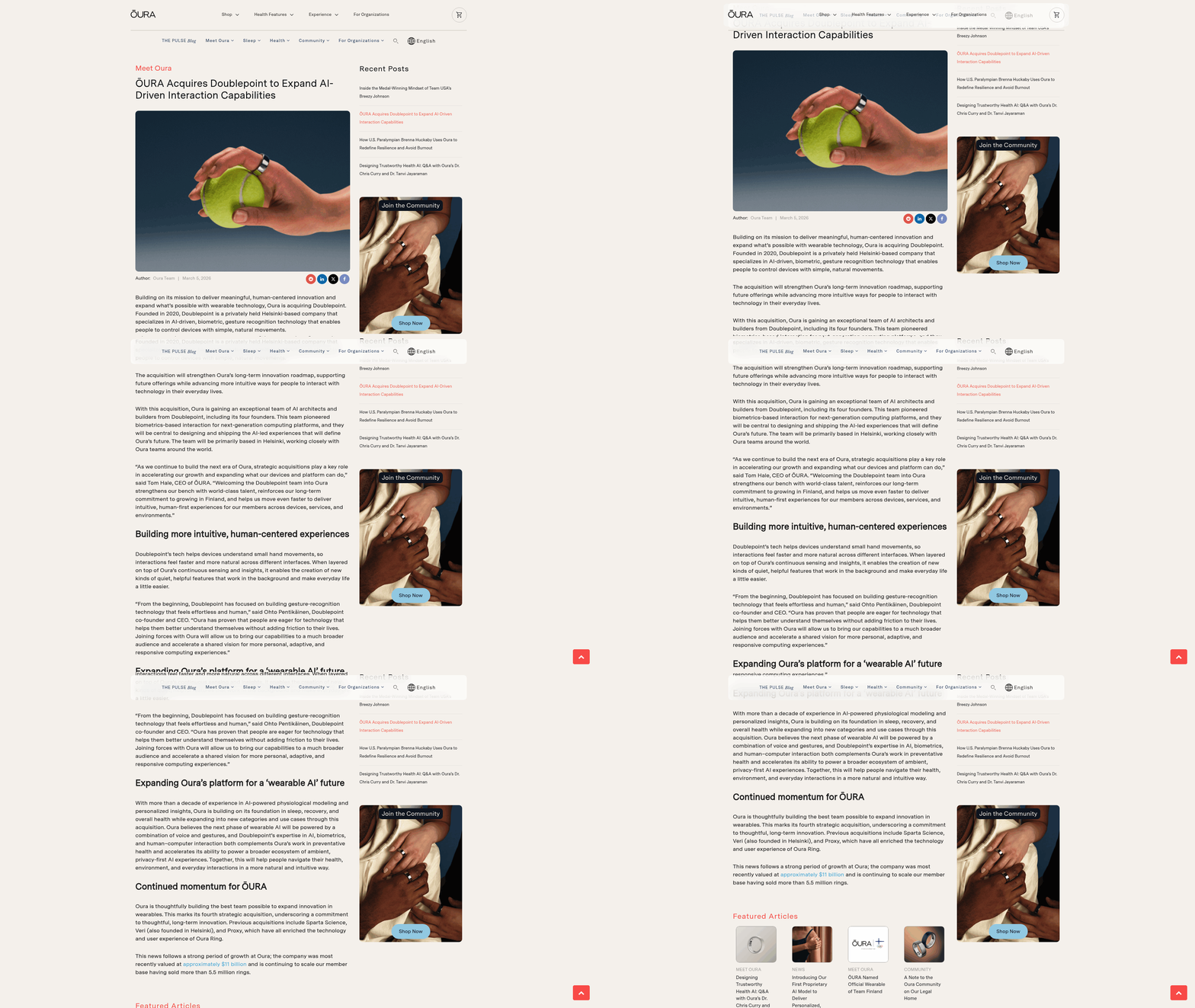
Oura’s acquisition of Doublepoint, a Helsinki-based gesture-recognition startup, marks a pivotal step in its expansion strategy, positioning the company to lead the next wave of wearable AI innovation. By integrating Doublepoint’s AI-driven gesture technology with Oura’s existing smart rings, the company aims to create seamless, ambient experiences where users control devices through natural hand movements and voice. This move builds on Oura’s history of strategic acquisitions, including Sparta Science, Veri, and Proxy, each designed to enhance its hardware and data analytics capabilities. With a valuation of $11 billion in 2025 and 5.5 million rings sold (up from 2.5 million in June 2024), Oura is leveraging this acquisition to solidify its dominance in a rapidly growing market. See the Integration into Oura Smart Rings section for more details on how this technology is implemented.
Strategic Integration of Gesture Recognition
Doublepoint’s technology enables devices to interpret subtle hand gestures using biometric data and AI, such as detecting finger taps or wrist flicks to control connected devices. This complements Oura’s existing focus on health metrics like sleep tracking and heart rate, expanding its rings into “ambient AI” platforms that operate discreetly in the background. CEO Tom Hale emphasized that the acquisition accelerates Oura’s roadmap for human-first interactions, combining gesture and voice controls to simplify user experiences. For example, a user might adjust music volume with a wrist twist or answer a call with a thumb flick, eliminating the need for direct screen interaction. Building on concepts from the CEO Tom Hale on Future of HCI section, this approach reflects Oura’s vision for intuitive, hands-free interactions.
Market Impact and Competitive Positioning
The acquisition aligns with explosive growth in the smart ring market, which saw a 51% increase in shipments in 2025. Oura’s forecasted revenue of $1.5 billion by 2026 hinges on its ability to differentiate from competitors like Fitbit and Whoop, which focus primarily on fitness tracking. By embedding gesture controls, Oura moves beyond health monitoring into general-purpose wearable computing, a space currently dominated by smartwatches. This shift mirrors Apple’s strategy with the Apple Watch, which evolved from a fitness device into a multifunctional hub. The Implications for Wearable Device Evolution section discusses how gesture recognition is reshaping user expectations in this sector.
Summary Table: Key Aspects of Oura’s Strategy
| Title | Description | Key Features | Pros | Cons |
|---|---|---|---|---|
| Acquisition Strategy | Expansion through targeted purchases of AI and biometric tech startups. | Integration of Doublepoint’s gesture recognition. | Accelerates innovation, adds talent pool. | High integration costs, potential cultural clashes. |
| Gesture Recognition Tech | AI-powered hand movement detection layered with Oura’s health sensors. | Subtle controls for devices, ambient AI experiences. | Enhances user convenience, differentiates product. | Relies on precise sensor calibration. |
| Market Growth Projections | Targets $1.5B revenue by 2026, capitalizing on 51% smart ring market growth. | 5.5M rings sold as of 2025; $11B valuation. | Strong sales trajectory, leadership in niche. | Intense competition, dependency on tech adoption. |
Long-Term Vision and Talent Expansion
Oura’s acquisition also strengthens its talent pool, bringing Doublepoint’s four founders and AI experts into its Helsinki office. This team will collaborate with global researchers to refine ambient AI features, such as automatically adjusting a smartwatch’s brightness based on hand gestures or silencing notifications during meetings. As CEO Hale noted, the move ensures “intuitive, human-first experiences” by combining Doublepoint’s gesture expertise with Oura’s physiological data. However, retaining this talent amid Finland’s competitive tech landscape will be critical.
While the acquisition’s financial terms remain undisclosed, the strategic payoff is clear: Oura is positioning itself as a leader in ambient computing, where devices adapt seamlessly to user behavior. For consumers, this means smarter rings that anticipate needs-like adjusting a thermostat with a wave or silencing a phone during a workout. For investors, it signals confidence in a $1.5 billion revenue milestone and a 51% market growth trajectory.
The risks of missteps-such as poor integration or user resistance to new interaction models-are real, but Oura’s track record of innovation and financial strength suggests a calculated bet. By embedding gesture recognition into its ecosystem, the company isn’t just enhancing its product; it’s redefining how humans interact with technology in everyday life.
Gesture Recognition Technology Overview
Gesture recognition technology transforms physical movements into digital commands, enabling intuitive human-computer interaction. At its core, this technology relies on machine learning and computer vision to interpret gestures. Sensors capture motion data, while algorithms analyze spatial patterns, shapes, and sequences. For example, a smart ring like Oura’s might use accelerometers and gyroscopes to detect hand movements, pairing this data with AI models trained to recognize specific gestures. As mentioned in the Integration into Oura Smart Rings section, these rings combine sensor data with AI to enable hands-free interactions. The system continuously learns from user behavior, refining accuracy over time.

Principles of Gesture Recognition
The foundation lies in capturing and processing data from sensors such as cameras, depth sensors, or wearable accelerometers. These devices generate raw input-coordinates, angles, or velocity-which is then filtered to remove noise. Computer vision techniques identify key points, like fingertips or facial landmarks, while machine learning models classify these patterns into predefined gestures. For instance, a hand-raising motion might be labeled as a “volume increase” command in a media player. Training these models requires vast datasets of labeled gestures, often collected through user interactions or synthetic simulations.
Types of Gesture Recognition
Hand Tracking
Hand tracking focuses on interpreting finger and palm movements. It often uses depth-sensing cameras or wearable sensors to map 3D hand positions. This technology powers VR controllers and smartwatches, allowing users to pinch, swipe, or rotate objects mid-air. A key advantage is its precision in detecting fine motor actions, though lighting conditions and occlusions can reduce reliability.
Facial Recognition
Facial recognition analyzes expressions, head movements, or eye gaze. Systems use infrared cameras or front-facing sensors to detect micro-expressions, translating them into commands like “smile to capture a photo.” While effective for accessibility tools (e.g., controlling devices for users with mobility impairments), it faces challenges in distinguishing subtle gestures and respecting privacy concerns.
| Type | Description | Key Features | Pros/Cons |
|---|---|---|---|
| Hand Tracking | Detects finger, palm, and wrist movements | High precision, works in 3D space | Pros: Responsive for gaming; Cons: Requires clear line of sight |
| Facial Recognition | Interprets expressions and head gestures | Non-contact, supports accessibility | Pros: Hands-free; Cons: Limited to visible faces |
Applications and Innovations
The wearables sector has seen rapid adoption, with Oura integrating gesture tech into its smart ring to let users control devices with subtle hand motions. In gaming, gesture recognition enhances VR experiences by enabling natural interactions, such as grabbing virtual objects. Education tools use it for interactive learning, like anatomy apps where students manipulate 3D organs with hand gestures.
Recent advancements focus on improving accuracy and power efficiency. Startups like Doublepoint, now part of Oura, specialize in lightweight AI models that run on edge devices, reducing latency. As detailed in the Oura’s Expansion Strategy section, this acquisition marks a pivotal step in integrating gesture recognition into wearable AI innovation. These models can distinguish between similar gestures-like a wave versus a flick-with over 90% accuracy in lab settings. However, real-world performance varies due to environmental factors, such as ambient light or user movement.
Benefits and Limitations
The primary benefit is hands-free interaction, ideal for scenarios where touching screens is impractical, like cooking or surgery. Gesture tech also enhances accessibility, offering alternative input methods for users with disabilities. However, limitations persist: current systems often struggle with complex or ambiguous gestures, leading to false positives. Power consumption remains a hurdle for battery-dependent devices, and user fatigue can occur if repetitive motions are required.
The current state of the field is marked by hybrid approaches combining multiple sensor types. For example, Oura’s acquisition of Doublepoint aims to merge hand-tracking data with contextual AI, allowing the ring to adapt gestures based on user context-like silencing a phone during a meeting with a raised hand. Building on concepts from the Why Gesture Recognition Matters section, these innovations highlight the growing importance of intuitive, hands-free interfaces in wearable technology. While these innovations push the boundaries of usability, widespread adoption will depend on solving challenges around cost, accuracy, and user education.
“The integration of gesture recognition into Oura’s ring makes everyday tasks seamless-no more fumbling for my phone,” - Tech Enthusiast (Wearable User)
As companies refine algorithms and hardware, gesture recognition is poised to become a cornerstone of intuitive, accessible technology. Its evolution will hinge on balancing innovation with practicality, ensuring gestures remain intuitive and reliable across diverse use cases.
Integration into Oura Smart Rings
Oura Health’s integration of gesture recognition technology into its smart rings hinges on combining advanced sensor data with artificial intelligence to enable intuitive, hands-free interactions. By acquiring Doublepoint Technologies, a startup specializing in gesture recognition, Oura aims to layer gesture-based controls onto its existing biometric sensors. This system relies on a blend of inertial measurement units (IMUs) and machine learning algorithms to detect subtle hand movements, translating them into actionable commands. The integration prioritizes “ambient AI”-features that operate discreetly in the background without disrupting user activities. For further technical details on the underlying technology, see the Gesture Recognition Technology Overview section.
Technical Integration and Hardware Requirements
The Oura smart ring already houses sensors for tracking heart rate, temperature, and sleep patterns. To support gesture recognition, the hardware must process additional motion data from the user’s hand and wrist. Doublepoint’s technology enhances this by using low-power accelerometers and gyroscopes to capture micro-movements, such as finger taps or hand swipes. These sensors work in tandem with Oura’s existing biometric system, creating a unified data pipeline for health and interaction insights.
On the software side, Doublepoint’s AI models interpret motion data in real time. The system is designed to run on-device processing to minimize latency and preserve privacy. This approach ensures that gestures like scrolling through a phone or adjusting smart home devices happen seamlessly, without requiring constant connectivity to a smartphone. As mentioned in the CEO Tom Hale on Future of HCI section, CEO Tom Hale emphasized that the acquisition accelerates Oura’s ability to deliver “intuitive, human-first experiences,” blending gesture controls with health insights.
New Features and User Benefits
Gesture-based controls expand the smart ring’s utility beyond passive health tracking. For example, users could answer calls, skip music tracks, or take photos with a simple hand motion. These features are particularly beneficial for scenarios where touching a phone is impractical, such as during workouts or while cooking. Doublepoint’s demo at CES 2026 showcased how even small hand gestures-like a thumb flick-can trigger commands, highlighting the system’s sensitivity and precision.
Accessibility improvements are another key benefit. Users with limited dexterity may find gesture controls easier to execute than voice commands or physical buttons. For instance, a person with arthritis could navigate their smart devices using customizable gestures, tailored to their comfort level. Oura’s focus on “quiet” features also means these interactions remain unobtrusive, avoiding the need for loud voice commands or bulky wearable controllers.
Power Efficiency and Market Positioning
A critical concern with adding gesture recognition is power consumption. Oura’s current rings last up to seven days on a single charge, but integrating motion sensors and AI processing could strain battery life. However, Doublepoint’s technology is optimized for low-power performance, using efficient algorithms to minimize energy use. Oura’s roadmap suggests this balance will be maintained, ensuring the ring remains practical for daily wear.
Compared to existing gesture-based wearables-like smartwatches with motion controls-Oura’s ring form factor offers distinct advantages. Its compact design allows for continuous, unobtrusive tracking, while the integration of health data creates a holistic user experience. As discussed in the Industry Context: Shift to AI-Driven Interaction section, the wearable device market is evolving rapidly, with Oura’s valuation of $11 billion underscoring its leadership. By merging gesture recognition with health insights, the company aims to redefine how users interact with wearable technology.
Summary Comparison Table
| Feature | Description | Key Benefits | Pros/Cons |
|---|---|---|---|
| Gesture Controls | Enable hands-free interactions via hand movements | Enhances convenience and accessibility | Pros: Intuitive, discreet Cons: May require learning |
| Ambient AI Integration | Combines health data with gesture recognition for seamless experiences | Delivers personalized, non-intrusive AI | Pros: Privacy-focused Cons: Complexity in implementation |
| Power Efficiency | Optimized algorithms and low-power sensors reduce battery drain | Maintains long battery life | Pros: Up to 7-day battery life Cons: Additional features may increase power use |
Oura’s acquisition of Doublepoint positions it to lead the next evolution of wearable tech, offering users a blend of health insights and intuitive controls. As the company continues refining this integration, the focus remains on creating devices that adapt to human behavior-rather than the other way around.
Strategic Benefits for User Interaction
Oura’s integration of gesture recognition technology through its acquisition of Doublepoint introduces a range of strategic benefits for user interaction. By eliminating the need for physical buttons, voice commands, or touchscreens, gesture-based systems streamline workflows and open new possibilities for accessibility and engagement. Below, we break down the key advantages, supported by real-world applications and comparisons to existing interaction methods..
Improved User Experience: Efficiency and Intuitiveness
Gesture recognition reduces cognitive load by aligning interactions with natural movements. For example, a user might adjust their smart ring’s display by swiping in the air, bypassing the need to navigate menus. This hands-free approach increases efficiency, especially in environments where physical contact with devices is impractical.
The technology also supports multitasking. Imagine a chef using hand gestures to control a kitchen appliance while their hands are occupied, or a mechanic accessing data from a wearable without pausing work. By minimizing interruptions, gesture-based systems enhance productivity.
A key feature of this approach is its adaptability. Doublepoint’s expertise allows for customizable gestures, enabling users to define motions tailored to their preferences. This flexibility ensures the technology feels intuitive rather than intrusive. For a deeper understanding of how gesture recognition functions, see the Gesture Recognition Technology Overview section.
Pros:
- Faster interaction speeds
- Reduced reliance on physical interfaces
- Context-aware controls for dynamic environments
Cons:
- Learning curve for gesture mappings
- Potential for misinterpretation in low-light or cluttered settings.
Accessibility and Inclusivity: Expanding User Reach
Gesture recognition supports users with disabilities who may struggle with traditional interfaces. For individuals with limited mobility, predefined gestures can replace complex touch or voice actions. Similarly, users with hearing impairments benefit from visual, silent interactions.
This technology also bridges gaps in accessibility for aging populations. A senior user might activate health monitoring features with a simple hand motion, avoiding the need to remember voice commands or manipulate small buttons.
By prioritizing inclusivity, Oura positions its devices as tools for broader adoption. The integration of Doublepoint’s technology aligns with the company’s mission to make health tracking accessible to diverse user groups. As mentioned in the Why Gesture Recognition Matters section, this shift reflects a broader industry trend toward more inclusive design..
Applications Across Industries: Healthcare and Education
The potential applications of gesture recognition extend beyond consumer wearables. In healthcare, surgeons could use gesture-controlled wearables to access patient data without touching screens, maintaining sterility during procedures. For patients, gesture-based systems might simplify tasks like adjusting pain management devices or monitoring vital signs.
In education, gesture recognition could transform interactive learning. A teacher might control a digital whiteboard with hand movements, while students engage with 3D models through motion-based navigation. This approach fosters immersive, hands-on learning experiences without the need for traditional input devices.
Oura’s blog highlights how the acquisition aims to enhance AI-driven interaction, suggesting future integrations with healthcare professionals and educators. By embedding gesture controls into its smart ring, the company is positioning itself to disrupt these sectors. Building on concepts from the Implications for Wearable Device Evolution section, this technology redefines how industries leverage wearable innovation..
Comparison to Existing Interaction Methods
Voice commands and touchscreens remain dominant interaction methods, but gesture recognition offers distinct advantages. Voice commands risk privacy issues in public spaces and require clear audio input. Touchscreens demand physical contact, which can be impractical in certain settings. Gesture-based systems, by contrast, enable silent, contactless interaction.
However, no single method is universally superior. For instance, voice commands excel in hands-free scenarios like driving, while touchscreens provide precise control for detailed tasks. The strategic value of gesture recognition lies in its ability to complement existing methods rather than replace them.
A hybrid approach-combining gestures with voice or touch-could maximize usability. For example, a user might navigate a smart ring’s interface with gestures but rely on voice commands for complex queries. This layered strategy ensures flexibility across use cases..
Summary Table: Strategic Benefits of Gesture Recognition
| Title | Description | Key Features | Pros/Cons |
|---|---|---|---|
| Improved User Experience | Reduces cognitive load and increases efficiency through intuitive gestures | Customizable motions, hands-free control | Pros: Faster interaction; Cons: Learning curve |
| Accessibility and Inclusivity | Supports users with disabilities and aging populations | Silent, non-contact interaction | Pros: Wider accessibility; Cons: Requires gesture calibration |
| Healthcare and Education Apps | Enables sterile environments for healthcare and interactive learning scenarios | Context-aware controls, multi-user support | Pros: Industry-specific solutions; Cons: Integration complexity |
| Comparison to Voice/Touch | Offers silent, contactless alternatives to existing interaction methods | Hybrid compatibility with voice/touch | Pros: Privacy, hygiene; Cons: Context-dependent effectiveness |
Real-World Impact and Future Outlook
By acquiring Doublepoint, Oura is not just enhancing its smart ring-it’s building a foundation for future innovations. For example, the technology could enable real-time emotion tracking through micro-gestures, offering deeper health insights. In a workplace setting, gesture-based controls might streamline tasks for remote teams using augmented reality interfaces.
While challenges like gesture accuracy and user training remain, the strategic benefits are clear. Gesture recognition empowers users to interact with technology in ways that feel natural, inclusive, and efficient. As Oura continues to integrate this technology, the focus will likely shift toward refining contextual awareness and expanding industry partnerships.
For a deeper dive into Oura’s acquisition strategy, explore their official blog post here.
CEO Tom Hale on Future of HCI
Tom Hale, CEO of Oura, envisions a future where human-computer interaction (HCI) becomes seamless, intuitive, and deeply integrated into daily life. In interviews and strategic announcements, he emphasizes that gesture recognition will play a pivotal role in this evolution, enabling users to interact with devices through natural movements rather than relying on screens, buttons, or voice commands. By acquiring Doublepoint, a gesture-recognition startup specializing in AI-driven hand-tracking technology, Oura aims to redefine how users engage with wearable devices like its flagship smart ring. As mentioned in the Oura’s Expansion Strategy section, this acquisition marks a pivotal step in Oura’s broader mission to lead the next wave of wearable AI innovation. Hale often draws parallels to how touchscreens replaced physical keyboards, predicting that gesture-based interfaces will similarly disrupt traditional interaction models.
Gesture Recognition as the Next Frontier
Oura’s acquisition of Doublepoint underscores Hale’s belief that gesture recognition will unlock new applications in health monitoring, productivity, and immersive computing. For instance, users might adjust their smart ring’s settings with a flick of the wrist or navigate virtual environments using hand signals, eliminating the need for direct screen interaction. The technology also opens possibilities for context-aware interactions, where gestures trigger specific actions based on the user’s environment or physiological data. Imagine a scenario where a raised hand pauses music during a workout, while the same gesture silences notifications during a meeting-personalized through the ring’s AI. Building on concepts from the Gesture Recognition Technology Overview section, Doublepoint’s proprietary algorithms reduce latency and improve accuracy in complex scenarios, aligning with Oura’s mission to deliver health tech that “feels invisible.”
Hale acknowledges challenges, such as ensuring accuracy in diverse lighting conditions or distinguishing intentional gestures from everyday motions. However, he highlights Doublepoint’s proprietary algorithms as a solution, which reportedly reduce latency and improve gesture recognition in complex scenarios. This focus on reliability aligns with Oura’s broader mission to deliver health tech that “feels invisible,” as Hale puts it, blending into users’ routines without friction.
Strategic Roadmap and Market Position
Oura’s roadmap includes integrating Doublepoint’s technology into future iterations of its smart ring, with plans to expand into enterprise and healthcare sectors. Hale hinted at partnerships with AR/VR developers to create hybrid interfaces where gesture controls complement headset-based systems. While competitors like Apple and Fitbit prioritize voice and app-centric interactions, Oura differentiates itself by targeting micro-interactions-small, precise gestures that enhance accessibility for users with speech or mobility limitations. See the Strategic Benefits for User Interaction section for more details on how these micro-interactions improve user accessibility and precision.
The wearable market could see a significant shift as gesture tech matures. Analyst Sune Alstrup noted in a LinkedIn post that Oura’s move positions it to capture a niche focused on “subtle, health-driven interactions,” whereas broader competitors might lag in adopting such specialized features. However, Hale remains cautious about overpromising, stressing that success depends on balancing innovation with user privacy and data security.
Comparative Landscape and Future Predictions
When compared to competitors, Oura’s approach contrasts sharply with companies relying on voice assistants or bulky wearables. For example, while Meta’s AR headsets emphasize full-hand tracking via external cameras, Oura’s ring offers a compact, always-on solution. Hale argues that this form factor is critical for continuous health monitoring, as the ring can detect physiological signals like heart rate variability alongside gestures.
Looking ahead, Hale predicts that by 2026, 30% of smart wearables will incorporate gesture recognition, driven by advancements in AI and miniaturization. He envisions a future where users manage tasks like adjusting smart home devices or sending messages with minimal physical effort, creating a “layered” interaction model that combines voice, touch, and gesture. For health applications, the integration could enable real-time feedback during physical therapy or stress management, leveraging the ring’s existing biometric sensors. As
Implications for Wearable Device Evolution
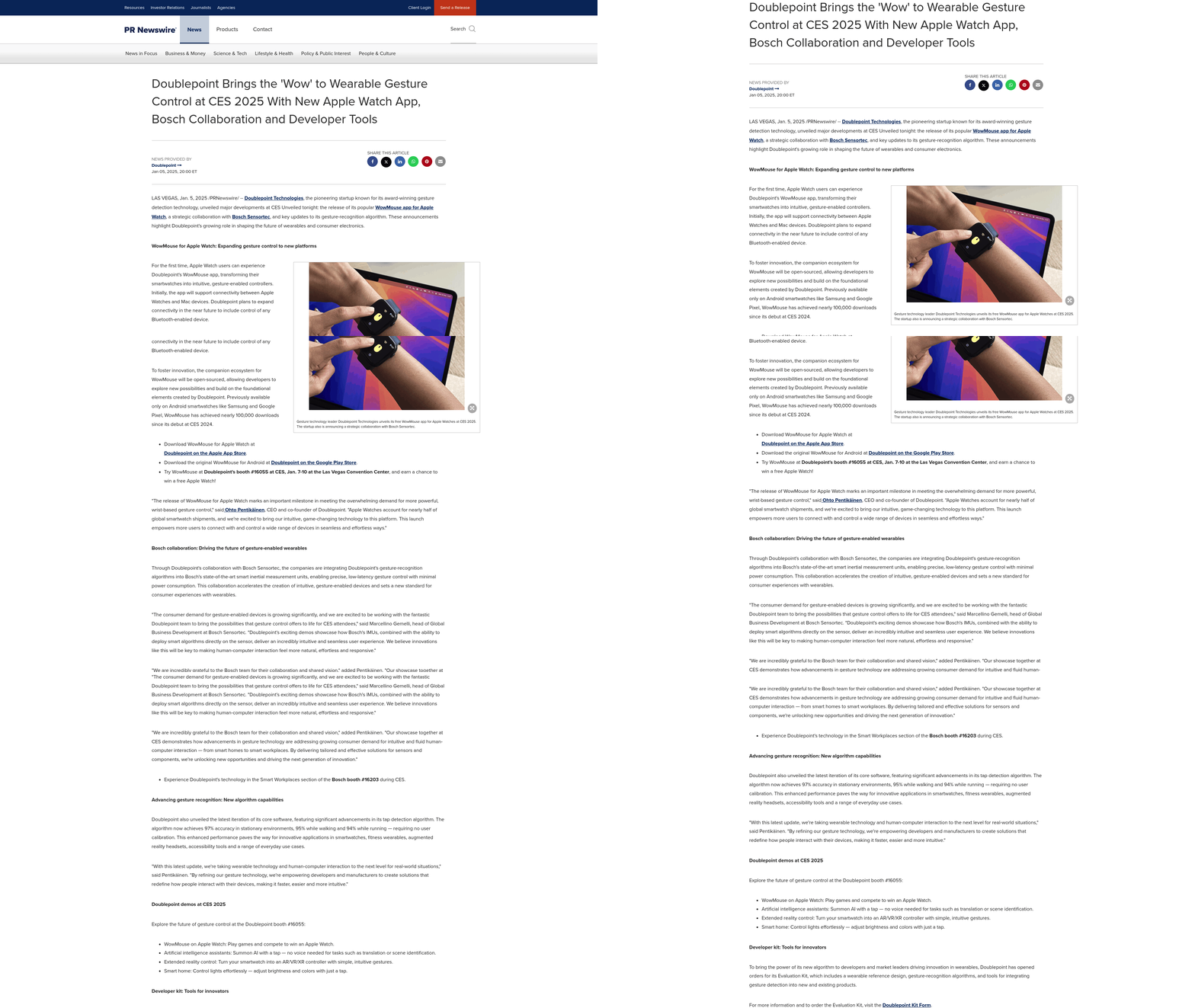
A key implication of gesture recognition technology is its potential to redefine user interaction with wearable devices. By integrating hand gesture controls, companies like Oura are shifting focus from passive health tracking to active, intuitive interfaces. Oura’s acquisition of Doublepoint enables its smart ring to detect micro-gestures using existing sensors like accelerometers and gyroscopes. This approach reduces reliance on touchscreens or voice commands, streamlining interactions for users in motion. For example, Doublepoint’s WowMouse technology, demonstrated in smartwatches, lets users scroll or click by swiping in the air-a capability now poised for ring-based wearables, as detailed in the Integration into Oura Smart Rings section.
Emerging Trends in Wearable User Experience
Gesture recognition prioritizes accessibility and inclusivity, particularly for users with limited mobility. Oura’s rings, already sold to over 2.5 million customers, could now allow users to adjust settings or answer calls with hand movements, eliminating the need for small touchscreens. This aligns with a broader industry trend: wearables evolving from data collectors to multimodal interaction hubs, a concept explored in depth in the Strategic Benefits for User Interaction section. Experts note that combining gestures with voice commands, as Oura envisions, could create seamless hands-free workflows. For instance, a user might ask, “What’s my heart rate?” while raising a hand to silence a notification-a dual-action workflow that minimizes cognitive load.
However, challenges persist. Unlike smartwatches with larger sensors, rings face limitations in detecting complex gestures due to their compact form. Doublepoint’s algorithms must run locally on battery-powered devices, requiring optimization to balance power consumption and responsiveness. Early adopters of Oura’s rings have praised their discretion, but gesture-based interactions might lack the tactile feedback of buttons or touchscreens.
Technological Innovations and Market Positioning
Gesture recognition opens new avenues for wearable features, such as proximity-based triggers or context-aware commands, concepts discussed in the Why Gesture Recognition Matters section. Imagine a smart ring that activates a fitness app when it detects a running motion or pauses music during a hand-raising gesture. These capabilities position Oura to compete with smartwatches in productivity and entertainment sectors. Valued at $2.55 billion, the company’s acquisition of Doublepoint signals confidence in its ability to outpace rivals like Fitbit or Apple in niche markets.
The technology also enables wearables to serve as universal controllers. Doublepoint’s work with WowMouse shows how gestures can replace traditional input devices-a concept extendable to smart home automation or AR/VR environments. In healthcare, gesture-enabled wearables could let surgeons navigate medical data without contaminating sterile fields. Educators might use them to create interactive learning modules, where students manipulate 3D models via hand motions.
Despite these opportunities, market adoption hinges on user education. Many consumers unfamiliar with gesture tech may perceive it as gimmicky. Oura’s success will depend on demonstrating tangible use cases beyond novelty, such as integrating gestures into existing health workflows.
Comparative Analysis and Future Projections
| Title | Description | Key Features | Pros/Cons |
|---|---|---|---|
| Oura Smart Ring | Gesture-controlled health tracker | Micro-gesture detection, voice + gesture hybrid | Compact, discreet; limited gesture complexity |
| Smartwatches (Apple, Fitbit) | Gesture alternatives | Larger sensors, touchscreen interfaces | Versatile gestures, but bulkier and less discreet |
| WowMouse (Doublepoint) | Gesture-based pointer control | Works with existing wearables | Proven usability, but depends on external devices |
Industry watchers estimate that gesture tech could drive a 15-20% increase in wearable market growth over the next three years, fueled by hybrid interaction models. Yet, adoption will vary by sector. Healthcare and education, with their high demand for sterile or interactive environments, may adopt it faster than consumer fitness markets.
In conclusion, Oura’s integration of gesture recognition marks a pivotal shift toward wearables as ambient computing interfaces. By leveraging Doublepoint’s sensor algorithms and focusing on low-power, real-time processing, the company is setting a benchmark for next-generation wearables. As the technology matures, expect to see more competitors experiment with hybrid input methods, blurring the line between wearable devices and immersive digital ecosystems.
“This acquisition transforms Oura from a health tracker into a platform for AI-driven interaction,” says an industry analyst quoted in the ŌURA Acquires Doublepoint blog. Such sentiment underscores the transformative potential of gesture recognition in redefining wearable technology.
Financial Terms and Deal Structure
Oura’s acquisition of Doublepoint remains shrouded in financial ambiguity, as the company has not disclosed the purchase price or payment structure for the Helsinki-based gesture recognition startup. This lack of transparency contrasts with recent high-profile deals in the wearable tech sector, where firms like Fitbit and Whoop have revealed detailed terms. However, contextual clues from Oura’s financial trajectory offer insight. With a valuation of approximately $11 billion** in late 2024 and forecasts of **$1.5 billion in 2026 revenue, the deal likely reflects a mid-sized strategic acquisition rather than a transformative takeover. Analysts speculate that the payment structure may involve a mix of cash and equity, a common approach in tech M&A to align incentives between acquirers and founders. Doublepoint’s four co-founders joining Oura suggests retention components, though specifics remain unconfirmed.
Deal Structure and Ownership Rights
While exact terms are undisclosed, the integration of Doublepoint’s technology into Oura’s product roadmap indicates a full acquisition rather than a minority stake. Ownership rights likely favor Oura, granting exclusive access to Doublepoint’s AI-driven gesture recognition IP. This aligns with Oura’s strategy to dominate ambient AI experiences, as noted by CEO Tom Hale: “Strategic acquisitions play a key role in accelerating our growth.” As mentioned in the CEO Tom Hale on Future of HCI section, this philosophy underscores Oura’s vision for seamless human-computer interaction. The deal may also include non-compete clauses to prevent Doublepoint’s team from joining rivals, a standard safeguard in tech acquisitions. Unlike stock-based deals, which can dilute existing shareholders, Oura’s $11 billion valuation provides flexibility to absorb the acquisition cost without significant equity dilution.
Industry Comparisons and Valuation Context
The absence of disclosed terms limits direct comparisons, but industry benchmarks offer context. For example, Apple’s acquisition of LuxVue in 2014 (reportedly $300–$400 million) and Amazon’s purchase of Misfit in 2015 ($50 million) highlight how wearable tech deals vary widely based on IP value and market potential. Doublepoint’s focus on biometric gesture recognition-a niche but high-growth segment-suggests a valuation premium. Given the smart ring market’s 51% shipment growth in 2025 (IDC data), Oura’s move positions it to capture a larger share of this expanding niche. Competitors like Apple and Fitbit, which have yet to integrate gesture controls, may face pressure to respond with similar acquisitions or in-house R&D, though their larger budgets could offset any first-mover advantage. See the Why Gesture Recognition Matters section for more details on the transformative role of this technology in wearable markets.
Financial Impact and Risk Factors
The acquisition’s financial impact hinges on two variables: revenue growth and integration costs. Oura’s smart ring sales have doubled in 2024 (5.5 million units), and gesture controls could accelerate this trend by differentiating their product in a crowded market. However, the technology’s success depends on user adoption of voice-plus-gesture interactions, a behavior shift that may take years to materialize. On the cost side, integrating Doublepoint’s AI models into Oura’s existing hardware requires R&D investment, potentially affecting short-term profitability. Building on concepts from the Integration into Oura Smart Rings section, this process will demand close alignment of sensor data and machine learning models to ensure seamless functionality. Additionally, competition from established players could force price cuts or marketing spend to maintain market share.
| Factor | Description | Key Features | Pros/Cons |
|---|---|---|---|
| Purchase Price | Undisclosed, but likely mid-size relative to Oura’s $11B valuation | Flexible structure (cash/stock mix) | Pros: Avoids equity dilution; Cons: Unclear ROI |
| Payment Method | Rumored mix of cash and equity | Retention bonuses for Doublepoint team | Pros: Aligns incentives; Cons: No public data |
| Market Positioning | Targets $1.5B+ revenue by 2026 via smart ring growth | Leverages 51% shipment growth (IDC 2025) | Pros: High growth potential; Cons: Competitive pressure |
| Integration Costs | Requires R&D to merge gesture tech with existing hardware | Biometric and motion sensor integration | Pros: Enhances product ecosystem; Cons: Near-term expenses |
Strategic Risks and Mitigation
The primary risk lies in integration complexity. Doublepoint’s biometric gesture recognition relies on motion and skin-contact sensors, which must harmonize with Oura’s existing ring design. Delays in hardware updates or software bugs could alienate users. Market risks include user resistance to gesture-based interactions, a behavior not yet mainstream. Competitors may also accelerate their own AI wearable strategies, as seen in Apple’s rumored AR/VR headset projects. To mitigate these risks, Oura must prioritize user education and demonstrate tangible benefits, such as hands-free control in high-noise environments.
In conclusion, while the financial terms of the Doublepoint acquisition remain opaque, the deal aligns with Oura’s broader vision of ambient AI. By leveraging Doublepoint’s expertise, Oura aims to solidify its leadership in a market poised for rapid expansion. Investors will closely monitor how integration costs and revenue synergies unfold-not just in 2026, but in the years following as gesture recognition becomes a standard wearable feature.
Industry Context: Shift to AI-Driven Interaction
The shift toward AI-driven interaction is reshaping how users engage with technology, driven by the demand for seamless, intuitive, and privacy-conscious interfaces. Gesture recognition, once a niche innovation, is now central to this evolution, offering a hands-free alternative to traditional methods like voice commands and touch screens. This transition is particularly evident in wearables, where companies like Oura are leveraging AI-powered gesture technology to create ambient computing experiences. By integrating micro-gesture detection into devices like smart rings, the industry is moving toward interactions that blend into daily life without requiring active user input. See the Integration into Oura Smart Rings section for more details on how this technology is implemented in wearable form factors.
The Rise of AI-Driven Interaction
The wearable technology market is at the forefront of this shift, with biometric gesture recognition emerging as a key differentiator. Oura’s acquisition of Doublepoint highlights a broader industry trend: combining AI with ultra-low-power sensors to enable natural, context-aware interactions. Doublepoint’s technology, which uses accelerometers and gyroscopes to detect hand movements, exemplifies how wearables can interpret subtle gestures-such as a flick of the wrist or a pinch of the fingers-without requiring physical buttons or screens. This approach aligns with the growing emphasis on privacy-first design, as gestures avoid the audio or visual exposure associated with voice commands or camera-based systems. Building on concepts from the Gesture Recognition Technology Overview section, these innovations rely on machine learning to translate motion data into actionable commands.
Industry forecasts underscore the urgency of this shift. The smart ring market alone saw a 51% surge in shipments in 2025, according to IDC, while Oura projects $1.5 billion in sales by 2026. These figures reflect not only consumer demand but also the potential for gesture-based AI to expand beyond fitness tracking into domains like healthcare and education. For instance, a surgeon could adjust medical imaging with hand motions during procedures, or a teacher might navigate digital lesson plans without touching a device-a scenario made possible by the precision of modern gesture algorithms. As mentioned in the Oura’s Expansion Strategy section, this strategic move positions Oura to lead in the next wave of wearable AI innovation.
Gesture vs. Voice and Touch: A Comparative Edge
Gesture recognition isn’t replacing existing interaction methods but complementing them. Voice commands remain dominant for hands-free tasks, yet they struggle in noisy environments and risk privacy breaches. Touch screens, while precise, require physical contact and screen visibility. Gesture tech bridges these gaps by offering contextual flexibility. Consider a user in a hospital: they might use voice to ask for a patient’s chart, touch to zoom in on a scan, and gestures to navigate menus sterility requires. This hybrid model is central to Oura’s strategy, as CEO Tom Hale emphasized: “Combining voice and gesture will accelerate ambient, privacy-first AI experiences.”
The technical hurdles are significant. Doublepoint’s algorithms must run locally on battery-powered devices like Oura’s ring, relying on minimal processing power. This constraint pushes innovation in edge AI, where lightweight models interpret motion data in real time. The result is a user experience that feels effortless-something Ohto Pentikäinen, Doublepoint’s founder, described as “effortless and human,” emphasizing the startup’s focus on micro-gestures that require no conscious effort from the user.
Applications Across Industries
The versatility of gesture recognition extends far beyond consumer wearables. In healthcare, it enables clinicians to interact with electronic health records (EHRs) without breaking sterile technique, reducing errors and saving time. In education, students could manipulate 3D models in virtual classrooms using hand motions, enhancing engagement. Retail and manufacturing also stand to benefit: workers might control inventory systems with gestures, minimizing downtime caused by typing or swiping.
| Interaction Method | Description | Key Features | Pros | Cons |
|---|---|---|---|---|
| Gesture Recognition | Uses motion sensors to detect hand movements | Low power, privacy-focused, hands-free | Natural in sterile or mobile settings | Limited by sensor range and gesture complexity |
| Voice Commands | Speech-to-text for device control | High accuracy in controlled environments | Fast and intuitive | Privacy risks, background noise interference |
| Touch Screens | Physical interaction via taps/swipes | Precise, widely supported | Familiar user experience | Requires line-of-sight and physical contact |
The Road Ahead
With the smart ring market projected to grow exponentially, Oura’s move signals a strategic pivot toward ambient computing-where devices anticipate needs and respond with minimal input. The integration of gesture tech into wearables isn’t just about novelty; it’s about redefining the relationship between humans and machines. As Doublepoint’s technology matures, expect to see more applications in sectors where unobtrusive interaction is critical, from remote work to industrial automation. The challenge for competitors will be matching this level of integration while addressing the technical and ergonomic limitations of gesture-based systems.
For users, the shift means devices that adapt to their behavior rather than forcing them to adapt to interfaces. For the industry, it’s a race to refine AI models that can interpret human intent with the same nuance as a hand signal in a crowded room. Oura’s acquisition of Doublepoint is less a bold experiment and more a calculated step in a market where the next frontier is quiet, helpful technology-one gesture at a time.
Roundup of Gesture Recognition Tools and Technologies
Gesture recognition technology has evolved from a niche innovation to a mainstream interaction method, with applications spanning healthcare, gaming, automotive, and consumer electronics. The integration of gesture control into wearables, like Oura’s acquisition of Doublepoint (as detailed in the Oura’s Expansion Strategy section), highlights the industry’s shift toward seamless, hands-free user experiences. This section explores existing tools and technologies, compares their strengths and weaknesses, and evaluates their potential to reshape how users interact with devices.
Overview of Existing Tools and Technologies
Gesture recognition systems fall into two primary categories: hardware-based and software-driven solutions. Hardware tools often use sensors, cameras, or specialized wearables to detect hand movements, while software solutions rely on machine learning algorithms to interpret gestures from existing devices like smartphones or smart rings.
Oura’s acquisition of Doublepoint exemplifies the hardware-software hybrid approach. By embedding Doublepoint’s gesture-recognition technology into its smart ring (see the Integration into Oura Smart Rings section for technical details), Oura enables users to control devices through subtle hand motions. This integration leverages low-profile sensors and AI to track finger movements with high precision, eliminating the need for bulky accessories. Meanwhile, standalone hardware like the Myo armband (developed by Thalmic Labs) uses electromyography sensors to detect muscle activity, offering robust gesture detection but requiring users to wear a visible band.
Camera-based systems, such as Microsoft’s Kinect or Leap Motion, rely on visual data to map gestures in 3D space. These tools excel in environments where users need to interact with large screens or virtual interfaces but often struggle with accuracy in low-light conditions or when users wear gloves. Software-only solutions, like Apple’s HandPose framework, utilize smartphone cameras to infer gestures, making them cost-effective but limited by the device’s processing power and camera quality.
Reviews and Comparisons
The choice of gesture recognition technology depends on use case requirements. Hardware solutions like the Myo armband offer high accuracy and low latency, making them ideal for industrial or medical applications where reliability is critical. However, their bulkiness and cost can deter everyday consumers. Camera-based systems provide immersive experiences for gaming or virtual reality but demand significant computational resources, which may drain battery life on mobile devices.
Oura’s approach with Doublepoint strikes a balance between portability and functionality. By integrating gesture sensors into a ring-a device users already wear-Oura minimizes user friction. The technology supports gestures like swiping and pinching, which are intuitive for controlling smartwatches or phones. However, its limited gesture vocabulary compared to full-arm motion systems may restrict its use in complex tasks like 3D modeling.
“The ring’s seamless design makes it my go-to for quick interactions while cooking or exercising.” – Tech Enthusiast
A critical tradeoff across tools is privacy versus convenience. Camera-based systems risk exposing user movements to third parties, while wearable sensors collect biometric data locally. Oura addresses this by prioritizing on-device processing, aligning with growing consumer demand for data security.
Applications and Industry Impact
The potential applications of gesture recognition are vast. In healthcare, surgeons use gesture-controlled interfaces to access patient data without touching contaminated surfaces. Automotive companies like BMW integrate gesture controls into infotainment systems, allowing drivers to adjust settings with a flick of their fingers. Retailers experiment with gesture-based virtual try-ons, reducing the need for physical inventory.
The market’s growth is driven by advancements in AI and sensor miniaturization, as outlined in the Industry Context: Shift to AI-Driven Interaction section. As these technologies mature, gesture recognition is poised to become a cornerstone of human-computer interaction, enabling more intuitive and natural user experiences across industries.
Frequently Asked Questions
1. What is the primary reason Oura acquired Doublepoint?
Oura acquired Doublepoint to integrate advanced gesture recognition technology into its wearable devices, enhancing user interaction with smart devices. This strategic move aims to position Oura as a leader in ambient AI by combining biometric health monitoring with intuitive, hands-free controls. The acquisition also strengthens Oura’s R&D capabilities, leveraging Doublepoint’s expertise in AI-driven gesture tech for a $11 billion valuation boost.
2. How does Oura’s gesture recognition technology work?
Oura’s gesture recognition uses low-power sensor fusion and machine learning to detect subtle hand movements and micro-gestures. The technology operates ambiently, interpreting motions like swipes or pinches without requiring physical contact. This is achieved through advanced algorithms that contextualize gestures based on the user’s environment and biometric data, enabling natural interactions with devices like the Oura Ring 4.
3. When will gesture control be available in Oura products?
Gesture control is planned for integration into the Oura Ring 4 and future devices by 2026. However, hardware upgrades may delay the rollout. The company is prioritizing seamless integration with existing health-tracking features while ensuring accuracy and energy efficiency, aligning with its 2026 revenue forecast.
4. How does Oura’s gesture tech compare to competitors like touch or voice-controlled wearables?
Oura’s gesture tech offers a hands-free, intuitive interface that reduces reliance on touch or voice, which can be intrusive or impractical in certain settings. Unlike bulky motion controllers, Oura’s micro-gesture detection works with minimal movement, making it more discreet. However, it currently lacks third-party app support and may face accuracy challenges in crowded environments.
5. What privacy measures are in place for gesture-controlled devices?
Oura emphasizes a “privacy-first ambient AI” approach, ensuring gesture data is processed locally on the device rather than being transmitted to external servers. The company also employs contextual awareness to filter irrelevant motions and prevent unintended interactions, addressing concerns about unauthorized tracking or data leaks.
6. Why didn’t the article disclose the financial terms of the Doublepoint acquisition?
The article states that financial terms were not disclosed, which is common in acquisitions to protect sensitive information or due to confidentiality agreements. However, the deal is highlighted as a strategic talent acquisition, with Doublepoint’s four AI-focused founders bringing expertise to accelerate Oura’s $11 billion valuation growth.
7. What are the potential drawbacks of gesture-controlled wearables?
While gesture control offers a natural user interface, challenges include ensuring accuracy in environments with overlapping hand movements and potential user fatigue from frequent micro-gestures. Additionally, the technology may require hardware upgrades, which could increase costs or delay adoption. Competitors in the wearable AI market also pose a risk to Oura’s first-mover advantage.