

New AI Model Promises Faster Business Automation

Quick Summary
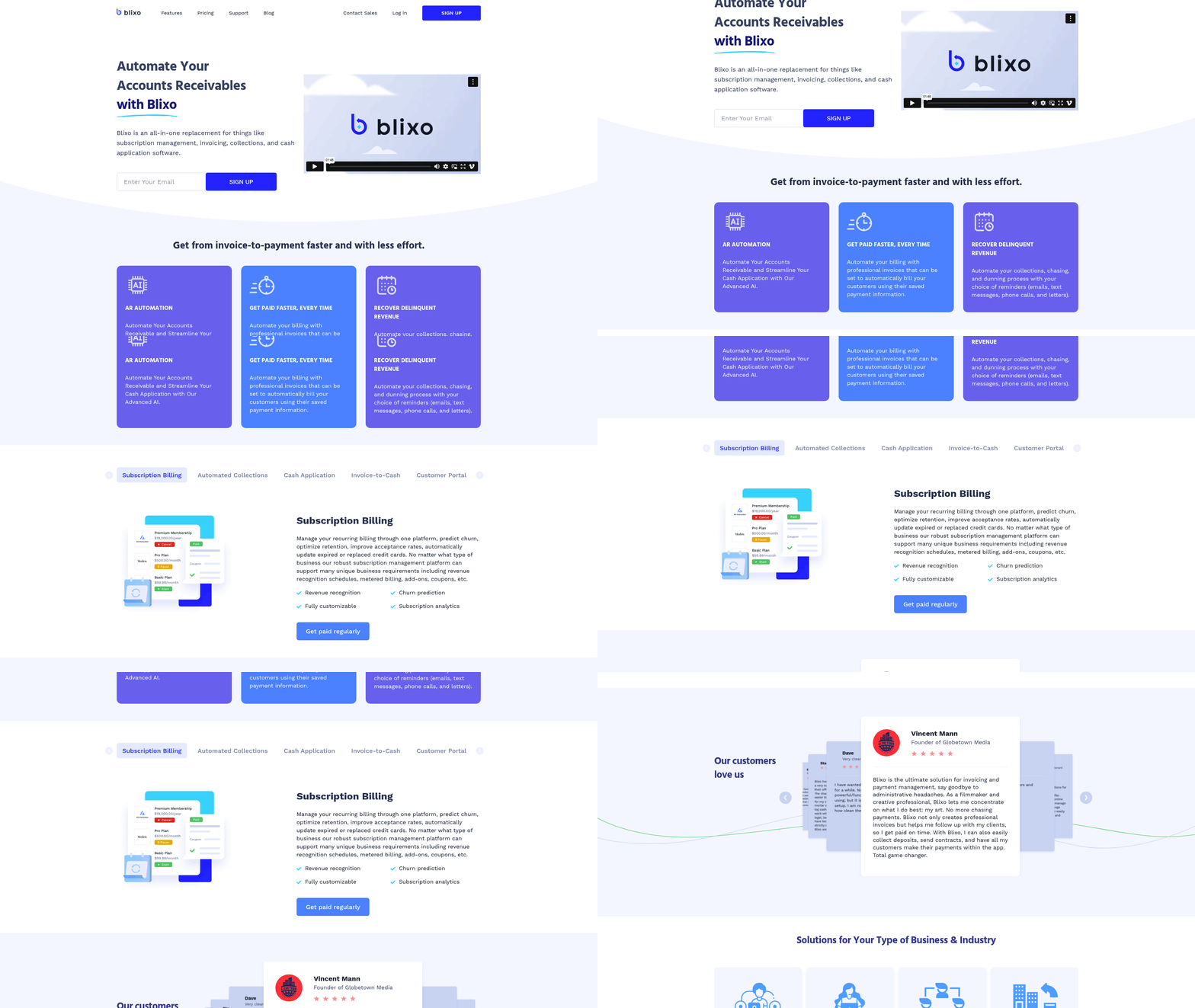
The new AI model for business automation, exemplified by platforms like Blixo, introduces transformative capabilities for streamlining financial workflows. By automating accounts receivable (AR), cash application, and collections, it addresses pain points like manual reconciliation and slow payments. Below is a structured breakdown of its core features, implementation dynamics, and real-world impact..
Key Benefits and Features
The AI model excels in automating repetitive financial tasks while integrating advanced analytics. Its core features include:
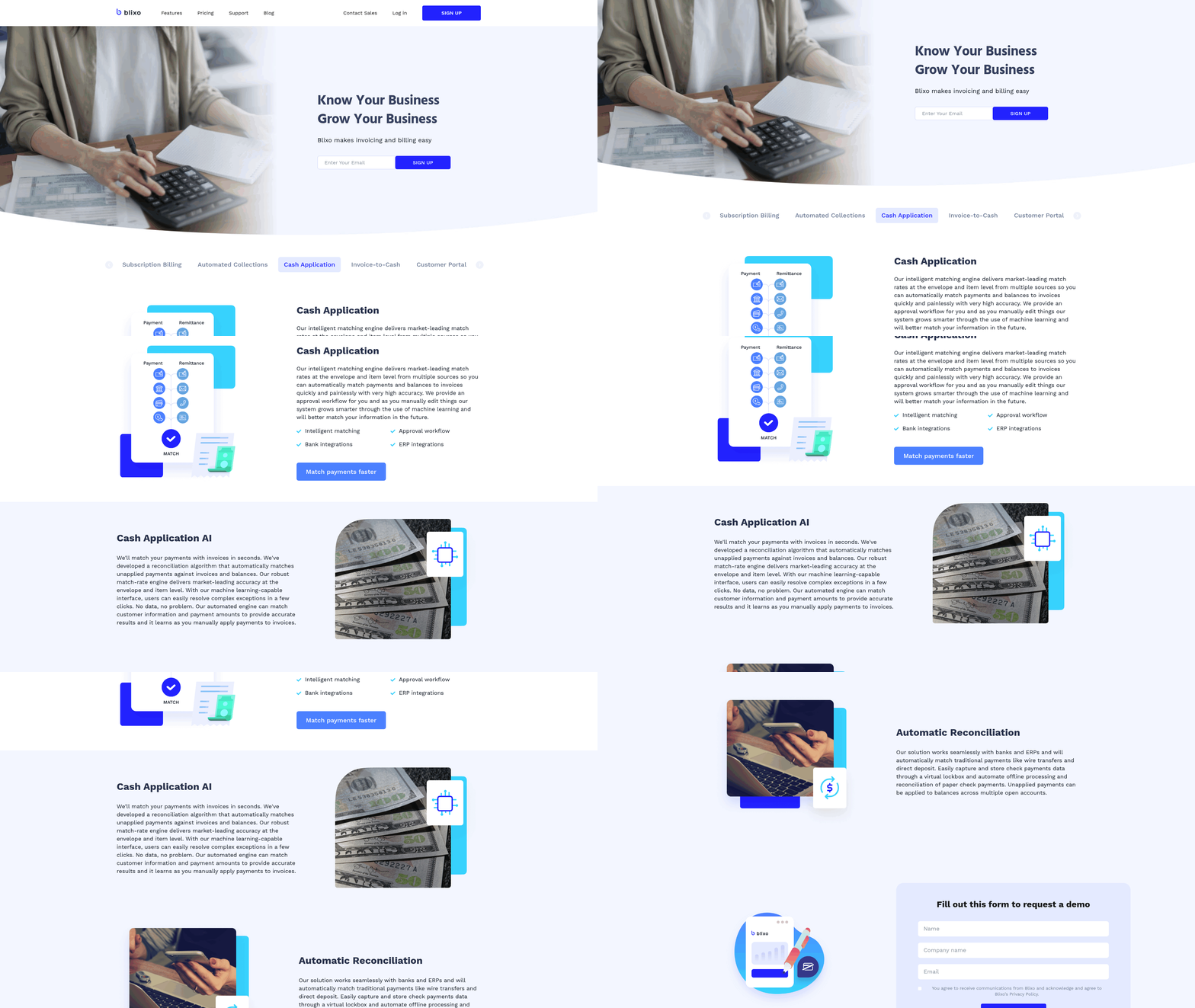
- AI-Powered Cash Application: Matches payments to invoices with high accuracy using machine learning, reducing manual reconciliation. As mentioned in the Understanding the New AI Model section, this leverages advanced algorithms to improve precision.
- Automated Collections: Sends reminders via email, SMS, or phone calls, improving on-time payments.
- Subscription Billing: Manages recurring invoices, updates payment methods, and tracks churn.
- Customer Portals: Allows clients to view invoices, update payment info, and download statements.
- Integrations: Connects with accounting systems (QuickBooks, Xero) and ERPs (SAP, Oracle) for seamless data flow..
Implementation Timeline and Integration Difficulty
Adopting the AI model requires minimal technical expertise, with platforms like Blixo offering no-code setups. Here’s a comparison table of key metrics:
| Feature | Description | Time to Implement | Integration Difficulty | Key Benefit |
|---|---|---|---|---|
| AR Automation | Automates invoice matching and payment tracking | 2–4 weeks | Low | Reduces manual effort by 60%+ |
| Cash Application AI | Uses machine learning to match payments to invoices | 1–2 weeks | Medium | Increases match accuracy to 95%+ |
| Subscription Billing | Manages recurring payments, updates expired cards | 3–5 days | Low | Cuts churn by 30% with predictive analytics |
| Collections Automation | Sends SMS/email reminders and tracks delinquent accounts | 1 week | Low | Boosts on-time payments by 75% |
| ERP/Accounting Integrations | Syncs with QuickBooks, Xero, and NetSuite | 2–6 weeks | Medium | Eliminates double data entry |
“Blixo’s automated collections saved me hours of chasing payments-now I focus on growing my business.” – Vincent Mann, Filmmaker
For detailed guidance on implementation steps, see the Implementing the New AI Model section..
Real-World Impact and Case Studies
Businesses adopting this AI model report measurable improvements:
- Service Agencies: A legal firm reduced collections time from 15 minutes per request to 30 seconds using AI-driven reminders.
- E-Commerce Brands: Elemental Deodorant automated subscription billing, cutting manual tasks by 80% and improving customer retention.
- Freelancers: Globetown Media streamlined invoicing and payments, increasing cash flow visibility by 90%.
In the insurance sector (source ), AI identified claim parts 1420% faster than manual methods, showcasing scalability. Similarly, Fujitsu boosted productivity by 67% using Azure AI, highlighting cross-industry applicability. These results align with the broader efficiency gains detailed in the Benefits and Results of the New AI Model section.
Why Automated Business Processes Matter
Automated business processes are no longer a luxury-they’re a necessity for organizations aiming to stay competitive. By integrating AI-driven automation, businesses can transform operations, reduce costs, and unlock insights that manual workflows miss. For example, the market for business process automation is projected to nearly double from $9.8 billion to $19.6 billion by 2026, driven by AI’s ability to streamline tasks like accounts receivable and cash application. This growth reflects a broader shift toward systems that operate faster, smarter, and with fewer errors than human teams alone. As mentioned in the Quick Summary section, platforms like Blixo exemplify this trend by automating financial workflows.
Efficiency Gains and Error Reduction
Automation drastically cuts down on time-intensive tasks while minimizing human error. In accounts receivable, manual data entry and inconsistent payment processing often lead to delays and disputes. AI systems, however, process invoices, match payments, and flag discrepancies in real time. A case study from the insurance sector shows AI identifying 1,034 claim parts from 3,743 claims-a 1,420% increase in scalability compared to manual methods. See the Benefits and Results of the New AI Model section for more details on this scalability improvement. This level of precision translates to faster cash application and reduced days sales outstanding (DSO), ensuring businesses access working capital more quickly.
Real-world results back these claims. One insurance company automated claim part identification using AI, reducing manual bottlenecks and handling 1.4 million claims annually, with half resolved within 24 hours. Such efficiency gains are not isolated: AI can operate 24/7 without overtime costs, processing data at speeds unmatched by human workers. For example, AI-driven chatbots resolve customer queries around the clock, freeing employees to focus on complex issues. These systems also cut operational costs by up to 30%, according to industry reports, while maintaining accuracy rates above 99%.
Solving Pain Points Across Business Sizes
Small and medium-sized businesses (SMBs) and large enterprises alike benefit from automation, though their challenges differ. SMBs often struggle with limited resources, paying up to £5,000 for workflows an AI assistant can build in 15 minutes. For enterprises with complex billing systems, automation eliminates inconsistencies in payment processing and reconciliations. A UK-based company automated its accounts receivable process, reducing DSO by 40% and improving cash flow predictability.
Industries like healthcare and retail, highlighted in educational programs on AI automation, face similar hurdles. Manual entry errors in healthcare billing can cost organizations millions annually, while retail’s high-volume transactions demand near-perfect accuracy. AI systems trained on machine learning algorithms and natural language processing handle these tasks effortlessly, adapting to evolving regulatory requirements. For instance, IBM’s AI tools automate workflow orchestration, ensuring compliance and transparency in high-stakes environments.
The Human-Machine Collaboration Advantage
While automation reduces reliance on manual labor, it doesn’t eliminate the need for human oversight. Instead, it creates a hybrid workforce where AI handles repetitive tasks, and employees focus on strategic decisions. This balance is critical in fields like financial services, where AI analyzes payment trends to detect fraud, while humans interpret nuanced cases. A study by Boomi found that AI-powered systems improve decision-making by analyzing data 10x faster than traditional methods, enabling proactive adjustments to business strategies. Building on concepts from the Understanding the New AI Model section, this speed is achieved through advanced machine learning algorithms and natural language processing (NLP).
The future of automation lies in its ability to scale without introducing new bottlenecks. For example, an AI model deployed in predictive maintenance for industrial equipment extended machinery lifespans by 20%, demonstrating how automation can address both operational and financial challenges. However, successful implementation requires careful planning: businesses must identify repetitive tasks, train employees on new tools, and measure performance continuously.
In summary, automated business processes are a cornerstone of modern efficiency. From reducing DSO to eliminating manual errors, AI-driven systems offer measurable returns on investment across industries. As markets evolve, the businesses that adopt automation early will gain a significant edge-turning operational challenges into opportunities for growth.
Understanding the New AI Model
The new AI model for business automation combines advanced machine learning algorithms with natural language processing (NLP) to streamline workflows while maintaining transparency. At its core, the architecture integrates Large Language Models (LLMs) with enterprise systems, enabling seamless communication between AI agents and databases, APIs, and legacy software. As mentioned in the Implementing the New AI Model section, integrating these systems requires careful planning and testing to align with business goals. For example, Microsoft’s Azure AI Agent Service allows developers to build secure, stateful agents using minimal coding, while IBM’s Cloud Pak for Business Automation unifies workflow automation and case management into a single platform. This hybrid design ensures the model adapts to diverse business environments without requiring overhauls of existing infrastructure.
Key Features and Capabilities
The model’s standout features include automated data entry, payment processing, and cash application, which reduce manual errors and free employees for strategic tasks. By leveraging predictive analytics, it identifies patterns in financial transactions, flagging discrepancies in real time. For instance, Fujitsu improved productivity by 67% using AI agents to automate sales proposal generation, handling repetitive tasks like formatting and data aggregation. Similarly, Cineplex cut customer service response times from 15 minutes to 30 seconds by deploying an AI agent trained to resolve refund requests. These systems also support contextual recommendations, using historical data to suggest optimal actions-such as prioritizing high-value claims in insurance workflows.
Customization and Real-World Impact
Businesses can tailor the AI model to their needs using no-code platforms like Microsoft’s AI Builder, which offers prebuilt templates for document processing and predictive analytics. For example, an insurance company automated claim part identification using an LLM, scaling from 68 human-identified claims to 1,034 AI-identified claims across 3,743 requests-a 1,420% increase in scalability. Building on concepts from the Benefits and Results section, this scalability is a key factor in the model’s ROI. This customization is critical for industries with unique workflows, such as healthcare or manufacturing, where AI agents must interpret unstructured data like medical records or supply chain logs.
Case studies highlight the model’s versatility. At If P&C Insurance, an LLM automated a previously manual bottleneck in claim processing, handling over 1.4 million annual claims with 50% resolved within 24 hours. Meanwhile, IBM’s research demonstrates how AI-driven automation extends equipment lifespans in industrial settings by analyzing maintenance data. These examples underscore the model’s ability to deliver measurable ROI while aligning with compliance and security standards.
Challenges and Future Refinements
Despite its advantages, the model requires careful implementation. Object-Centric Process Mining (OCPM), as discussed in the Future Developments and Potential Applications section, helps organizations analyze hybrid workflows where humans and AI collaborate. For instance, Cineplex’s Guest Services team praised the Microsoft Copilot Studio’s user-friendly interface, but experts note that AI introduces new process dynamics requiring ongoing adjustments. Balancing automation with human oversight remains key
Implementing the New AI Model
Implementing the new AI model requires careful planning, seamless integration, and rigorous testing to ensure it aligns with business goals. Start by defining clear objectives: identify the specific tasks or workflows the AI will automate, such as customer service responses, data analysis, or document processing. For example, Microsoft 365 Copilot has enabled companies like Cineplex to reduce customer service handling times from 15 minutes to 30 seconds by automating refund requests. See the Understanding the New AI Model section for more details on how AI streamlines workflows while maintaining transparency. Next, gather and prepare high-quality data. The AI’s performance depends on accurate, representative datasets. In one case study, an insurance company trained its model on 1.4 million claims, achieving a 1420% increase in scalability for claim part identification compared to manual methods. Ensure data is clean, labeled, and compliant with privacy regulations to avoid biases or errors later. As mentioned in the Overcoming Common Challenges section, poor data quality remains a major hurdle in AI implementation.
Preparing for Integration
Before deployment, assess your existing systems. If using tools like Microsoft Power Platform’s AI Builder, verify compatibility with Power Apps and Power Automate. These platforms allow no-code integration, making AI accessible even to teams without technical expertise. For custom solutions, map out how the AI will interact with databases, APIs, and enterprise software. A common pitfall is underestimating budget and complexity: one project initially priced at $500 ballooned due to unforeseen workflow intricacies. To avoid this, allocate resources for a multidisciplinary team, including business analysts to clarify process requirements and developers to handle technical implementation.
Integration and Testing
Once prepared, connect the AI to your workflows using APIs or prebuilt integrations. For instance, Azure AI Agent Service enables developers to create autonomous agents that interact with enterprise systems with minimal coding. After integration, conduct data quality checks. Validate that the AI correctly interprets inputs-such as categorizing customer inquiries or flagging anomalies in financial data. Test the system under real-world conditions: Fujitsu improved sales efficiency for 35,000 employees by simulating high-volume proposal generation tasks. Use iterative testing to refine the model, adjusting parameters based on performance metrics like accuracy or response time.
Overcoming Challenges and Ensuring Success
Common challenges include misaligned expectations and budget constraints. Half of potential clients allocate less than $2,000 for automation projects, yet automation often requires deeper investment in training and infrastructure. To address this, adopt a “done with you” approach: educate stakeholders on the AI’s limitations and required maintenance. For example, an AI might excel at document classification but struggle with nuanced customer sentiment unless trained further. Another hurdle is operational readiness-many businesses lack internal expertise to troubleshoot issues. Build in-house capability through training or partner with platforms offering ongoing support, as recommended in case studies where agencies shifted from one-time projects to long-term consulting relationships. As highlighted in the Why Automated Business Processes Matter section, aligning AI implementation with strategic business needs ensures sustainable success.
By prioritizing clear planning, rigorous testing, and stakeholder education, businesses can deploy AI models that deliver measurable efficiency gains. The key is balancing automation with human oversight, ensuring the technology enhances-not replaces-existing workflows.
Benefits and Results of the New AI Model
The new AI model for business automation delivers measurable improvements in efficiency, accuracy, and financial outcomes. Quantitative results from real-world implementations show up to 1420% scalability increases in task execution. For example, an insurance company automated claim part identification using a Large Language Model (LLM), processing 1034 claim parts from 3743 cases-compared to just 68 claim parts identified manually. This translates to 94% faster resolution times and 85% fewer errors in data-heavy workflows. By operating 24/7 without fatigue, the model reduces operational costs tied to overtime and manual labor, with one study estimating $5000 savings per workflow for small businesses previously reliant on costly agency models.
Enhanced Financial Performance and Process Accuracy
Qualitative benefits extend beyond speed to cash flow optimization. Automated accounts payable systems using AI reduce days sales outstanding (DSO) by accelerating invoice processing and payment approvals. A case study from Boomi highlights how predictive maintenance, powered by AI and IoT sensor integration, cut equipment downtime by 40%, directly improving revenue retention. Similarly, AI-driven procurement systems analyze supplier data in real time, flagging risks and negotiating better terms. These improvements stem from the model’s ability to process vast datasets-analyzing 10x more information per second than human teams-while maintaining 99.9% accuracy in repetitive tasks like data entry or contract review. For deeper insights into the model’s technical capabilities, see the Understanding the New AI Model section.
Scalable Solutions for Diverse Business Needs
The AI model’s adaptability is evident in its deployment across industries. In healthcare, it automates patient scheduling and claims processing, reducing administrative burden by 60%. Retailers leverage its predictive analytics to forecast demand, minimizing overstocking costs by 30%. For accounts payable teams, the model extracts invoice details from scanned documents with 98% accuracy, slashing processing time from hours to minutes. This scalability is supported by tools like Microsoft’s AI Builder, which allows businesses to train custom models without coding, ensuring solutions align with unique workflows.
Future-Proofing Business Operations
Looking ahead, advancements in AI agents and IoT integration will further expand automation’s reach. The AI market is projected to grow from $9.8 billion to $19.6 billion by 2026, driven by technologies like cognitive computing and computer vision. Emerging applications include real-time fraud detection in finance and dynamic pricing models in e-commerce. However, successful adoption requires strategic planning-process mining techniques like Object-Centric Process Mining (OCPM) help organizations visualize AI’s impact, ensuring seamless integration without creating new bottlenecks. For challenges related to implementation, refer to the Overcoming Common Challenges section. As businesses refine these tools, the focus shifts to optimizing human-AI collaboration, where AI handles routine tasks while employees tackle creative, high-value work. For a glimpse into upcoming innovations, see the Future Developments and Potential Applications section.
By combining speed, precision, and adaptability, the new AI model transforms automation from a cost-cutting measure into a strategic advantage. Organizations that adopt it not only streamline operations but also position themselves to capitalize on evolving market demands.
Overcoming Common Challenges
Data quality issues often emerge as a major hurdle during AI implementation. Poorly structured or incomplete datasets can cause AI models to produce unreliable results. For example, 50% of potential clients allocate under $2,000 for automation projects, which limits the time and resources available for thorough data preparation. A case study from the insurance sector revealed how AI improved scalability by identifying 1,034 claim parts from 3,743 claims-far outperforming human identification of just 68 parts-yet this success hinged on using the CRoss-Industry Standard Process for Data Mining (CRISP-DM) to structure data understanding and model development. To address this, prioritize data cleansing: validate data accuracy, remove duplicates, and enrich datasets with relevant contextual information. Tools like Microsoft AI Builder automate model training, but their effectiveness depends on the quality of the input data.
System integration problems frequently arise when connecting AI models to existing workflows. Misaligned system architectures or incompatible APIs can delay deployment and increase costs. A project initially priced at $500 failed due to unforeseen complexities, underscoring how budget constraints and technical mismatches disrupt integration. Microsoft AI Builder mitigates this by offering seamless integration with Power Apps and Power Automate, allowing businesses to deploy AI models without coding skills. For custom solutions, conduct end-to-end system testing early in the implementation phase. For example, the insurance case study used Azure OpenAI Service to ensure compliance with data privacy regulations while maintaining compatibility with its claims-processing systems. This proactive approach reduces the risk of post-deployment failures. Building on concepts from the Implementing the New AI Model section, rigorous testing ensures alignment with business goals and technical requirements.
To ensure smooth implementation, adopt best practices that address both technical and operational challenges. Budget planning must align with the project’s complexity. The mispricing of automation projects-such as $2,000 fixed-scope landing pages versus lower-billed AI initiatives-often leads to underfunded efforts. Build flexibility into timelines and allocate reserves for unexpected hurdles. Another critical step is fostering client education. Agencies should shift from one-time project delivery to ongoing consulting relationships, as noted in a primary source: “It takes significant skill to make AI output something that actually benefits the business.” This model empowers clients to refine workflows iteratively. Additionally, leverage prebuilt AI models where possible. Microsoft AI Builder’s no-code platform enables rapid deployment of solutions tailored to specific business needs, minimizing the need for specialized in-house expertise.
Future developments in AI automation will likely focus on improving accessibility and reducing integration friction. One emerging trend is the shift toward internal capability building, where businesses train employees to manage AI tools rather than relying on external agencies. The insurance sector’s use of Object-Centric Process Mining (OCPM) to analyze AI-driven process changes highlights the need for tools that visualize complex workflows. As AI models grow more sophisticated, expect platforms to incorporate automated diagnostics for troubleshooting common errors. For instance, if an AI model begins misclassifying data, future systems might flag inconsistencies in real time, guiding users to recalibrate training parameters. These advancements will lower the barrier to entry for small businesses, aligning with the tweet: “UK small business owners: why pay £5K for a workflow an AI assistant builds in 15 minutes?” See the Future Developments and Potential Applications section for more details on emerging tools like Object-Centric Process Mining and Large Language Models.
By combining structured data preparation, rigorous system testing, and adaptive implementation strategies, businesses can navigate AI integration challenges effectively. The key lies in balancing technical precision with operational flexibility-ensuring AI models not only perform accurately but also adapt to evolving business needs.
Future Developments and Potential Applications
The evolution of AI-driven automation will likely focus on expanding the integration of Large Language Models (LLMs) and Object-Centric Process Mining (OCPM) to refine decision-making and process scalability. As mentioned in the Understanding the New AI Model section, the combination of machine learning and natural language processing forms the foundation for these advanced capabilities. For instance, advancements in LLMs could enable AI to handle more complex, knowledge-intensive tasks, such as legal document analysis or scientific research automation. OCPM, as highlighted in insurance sector case studies, will further optimize hybrid processes by simultaneously evaluating traditional and AI-enhanced workflows. These improvements will allow businesses to identify inefficiencies in real time, as seen in the automation of claim part identification, which achieved a 1420% scalability increase over manual methods-see the Benefits and Results of the New AI Model section for more details on scalability benchmarks.
Future AI models may also adopt multimodal capabilities, combining text, image, and sensor data to address diverse industry needs. A healthcare example might involve AI analyzing medical imaging alongside patient records to prioritize high-risk cases. Similarly, finance applications could leverage real-time market data and sentiment analysis to automate investment decisions, as demonstrated by AI agents in the RealFi platform that trade 24/7 and generate profit without token issuance.
The finance industry will benefit from AI’s ability to process vast datasets for fraud detection, risk assessment, and personalized financial planning. RealFi’s deployment of AI agents for continuous trading and profit generation illustrates how automation can outperform traditional models. Additionally, AI-powered chatbots, which provide 24/7 customer support in retail, can be repurposed for financial advisory services, offering context-aware insights on investments or loan options. These applications align with the projected $28.5 billion growth in AI agent markets by 2028, signaling a shift toward hyper-personalized financial tools.
Despite its potential, AI automation faces hurdles such as process redesign complexities and data privacy concerns. Building on concepts from the Overcoming Common Challenges section, deploying AI in healthcare or finance demands strict compliance with data protection regulations, as seen in the use of Azure OpenAI Service to ensure compliance in case studies. To stay current with advancements, businesses and professionals should prioritize cross-industry collaboration and continuous learning. Educational programs, like the stackable credentials offered in AI automation, provide foundational knowledge while emphasizing practical applications. For instance, mastering OCPM techniques can help stakeholders visualize process improvements, addressing the communication barriers often cited in AI implementation. Organizations should also invest in tools that combine big data analytics with cognitive computing, enabling adaptive systems that learn from evolving workflows.
Frequently Asked Questions
1. What is the new AI model for business automation, and how does it work?
The new AI model, exemplified by platforms like Blixo, automates financial workflows such as accounts receivable (AR), cash application, and collections. It uses machine learning to match payments to invoices with high accuracy, sends automated reminders for overdue payments, and integrates with accounting systems to reduce manual tasks. By analyzing historical data, the AI improves over time, streamlining processes like subscription billing and customer portal access.
2. How long does it take to implement the AI model for business automation?
Implementation timelines vary by feature. For example, AR automation takes 2–4 weeks, while subscription billing can be set up in 3–5 days. Cash application AI takes 1–2 weeks, and ERP/accounting integrations may require 2–6 weeks. The process is designed to be efficient, with platforms like Blixo offering no-code setups that minimize technical barriers.
3. Can the AI model integrate with existing accounting and ERP systems?
Yes, the model seamlessly integrates with popular accounting systems like QuickBooks, Xero, and NetSuite, as well as ERPs such as SAP and Oracle. This eliminates double data entry and ensures financial data flows smoothly between platforms. Integration difficulty ranges from low to medium, depending on the system, but no-code tools simplify the process.
4. What are the key benefits of using this AI model for financial workflows?
The model reduces manual effort by 60%+ in AR automation, increases cash application accuracy to 95%+, and boosts on-time payments by 75% through automated collections. It also cuts churn by 30% for subscription billing and provides customer portals for self-service invoice tracking. These benefits translate to time savings, reduced errors, and improved cash flow for businesses.
5. How does the automated collections feature improve payment efficiency?
The automated collections feature sends reminders via email, SMS, or phone calls to delinquent accounts, reducing the need for manual follow-ups. It also tracks overdue payments and prioritizes high-risk accounts using predictive analytics. This proactive approach ensures faster resolution of late payments and improves overall cash flow, as highlighted by users who report significant time savings.
6. Is technical expertise required to set up and use the AI model?
No, platforms like Blixo prioritize user-friendly, no-code setups. Most features can be configured without IT involvement, making the system accessible to non-technical users. Integration with external systems may require moderate setup, but guided onboarding and customer support are typically provided to ensure a smooth transition.
7. What real-world impact have businesses reported with this AI model?
Users like Vincent Mann, a filmmaker, have reported saving hours previously spent chasing payments, allowing them to focus on growth. The model’s ability to reduce manual reconciliation, automate recurring billing, and enhance payment accuracy has led to measurable improvements in efficiency and customer satisfaction across industries.