

Netflix acquires AI post‑production tool
Quick Summary
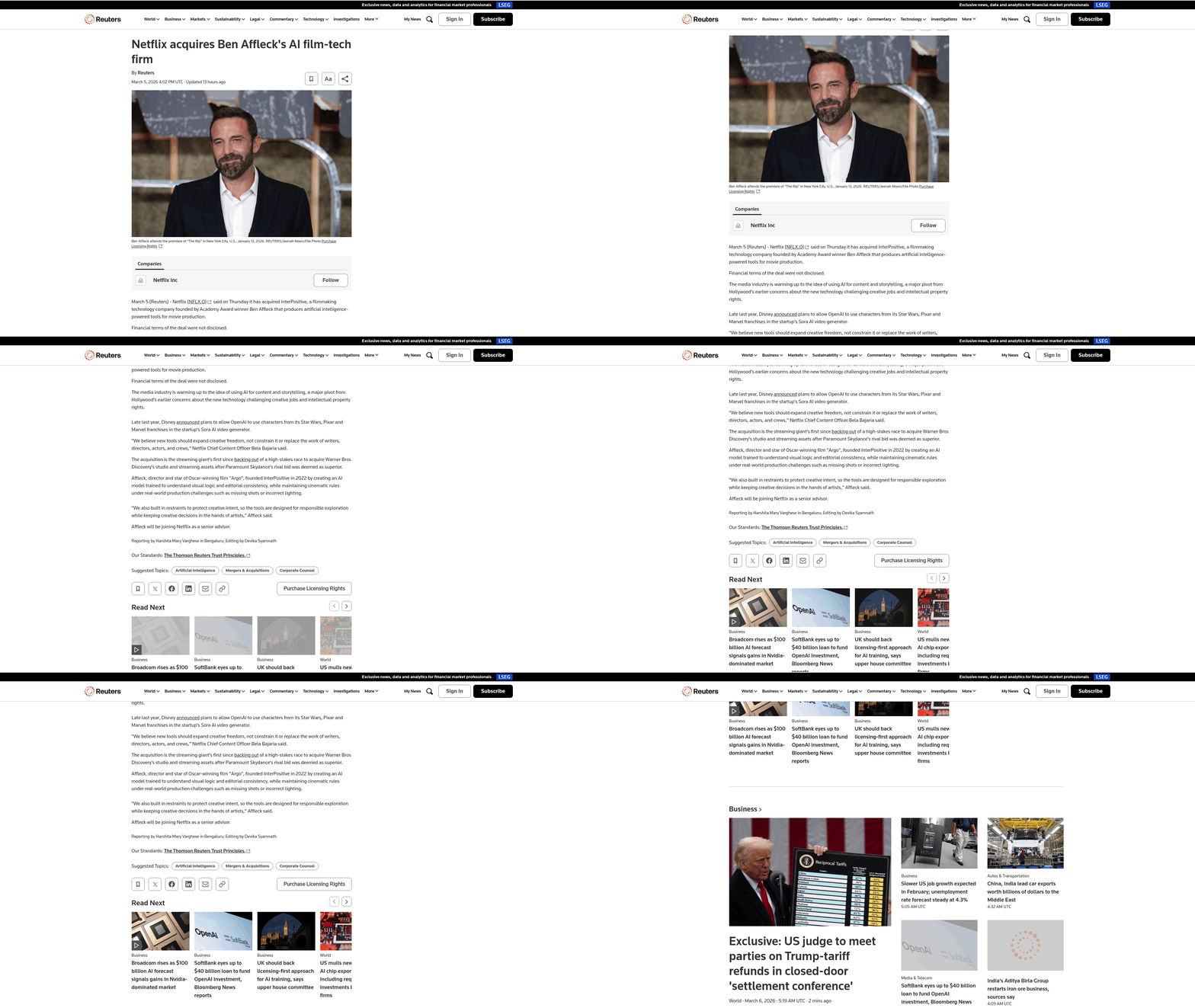
Netflix has acquired InterPositive, an AI post-production startup co-founded by Ben Affleck, marking a strategic shift from its traditional in-house technology development approach. The tool focuses on analyzing existing footage to assist with post-production tasks like color mixing, relighting, visual effects, and lighting corrections. Below is a structured breakdown of the acquisition, its features, and implications:.
Acquisition Overview
Netflix’s purchase of InterPositive remains financially undisclosed, though the entire 16-person team has joined the streaming giant. Ben Affleck will serve as a senior adviser, leveraging his expertise in AI-driven filmmaking tools. This move breaks from Netflix’s historical preference for building proprietary technology, signaling a pivot toward strategic acquisitions to accelerate innovation. See the Acquisition Details: Netflix’s Move into AI Post-Production section for more details on the financial and strategic implications of this shift..
Tool Features and Capabilities
The AI platform specializes in enhancing existing footage rather than generating content from text prompts. Key functionalities include:
- Color adjustments: Automating complex color grading tasks.
- Visual effects: Streamlining VFX workflows for consistency.
- Reframing shots: Adjusting compositions without losing cinematic quality.
- Lighting corrections: Addressing underexposed or overexposed scenes.
The tool builds AI models from production “dailies” (raw footage) to assist with relighting, adding effects, and preserving creative intent. As Affleck emphasized, the technology is “purpose-built” to support filmmakers’ creative decisions without replacing human artistry. For a deeper dive into the tool’s functionalities, refer to the Key Features of the Acquired AI Tool section..
Integration Timeline and Benefits
Netflix plans to integrate InterPositive’s tools into its existing workflows, though no specific timeline was disclosed. The acquisition is expected to:
- Reduce post-production costs by automating repetitive tasks.
- Accelerate project timelines through faster editing and rendering.
- Maintain creative control: Filmmakers retain authority over final outputs, as AI acts as a supportive tool rather than a creative replacement.
The 16-member team’s expertise will directly inform Netflix’s AI strategy, ensuring seamless adoption across its content pipeline. Building on concepts from the Impact on Production Efficiency and Cost Savings section, this acquisition underscores AI’s potential to streamline workflows while preserving artistic vision..
Industry Impact and Strategic Shift
This acquisition highlights a growing trend of AI integration in film production, where tools assist rather than replace human creativity. For Netflix, the move reinforces its commitment to high-quality, cost-efficient content creation. Analysts note that by acquiring AI startups, companies can bypass lengthy R&D cycles and rapidly deploy proven solutions.
Critics argue that such acquisitions risk over-reliance on external innovations, but Netflix’s focus on tool integration-not content generation-mitigates this concern. The decision also underscores the importance of purpose-built AI in creative industries, where nuanced human input remains irreplaceable..
Pros and Cons
| Pros | Cons |
|---|---|
| Reduces manual post-production work | Undisclosed financial terms may limit transparency |
| Enhances creative workflows | Potential cultural clashes between startups and large corporations |
| Supports faster content delivery | Over-automation risks diluting artistic intent |
Conclusion
Netflix’s acquisition of InterPositive reflects a calculated bet on AI as a collaborative tool for filmmakers. By prioritizing purpose-built solutions, the company aims to balance technological efficiency with creative freedom. While the financial details remain unclear, the strategic shift could inspire similar moves across the entertainment industry, emphasizing AI’s role in streamlining production without compromising artistic vision.
Ben Affleck’s involvement adds a unique perspective, bridging filmmaking expertise with AI innovation. As the tool integrates into Netflix’s ecosystem, its success will depend on maintaining this balance-proving that AI can enhance, not overshadow, human creativity. For further analysis on the broader implications, see the Competitive Landscape: AI Post-Production in Streaming section.
Why AI Post-Production Matters
AI post-production is reshaping the film and streaming industry by addressing long-standing inefficiencies while preserving the artistic vision of creators. Traditional post-production workflows often account for 30-40% of a film’s total budget, with manual tasks like color grading, visual effects (VFX), and lighting adjustments consuming hundreds of hours. For example, relighting a single scene to match inconsistent lighting conditions can require teams of artists to painstakingly adjust shadows and highlights frame by frame. AI tools like Netflix’s newly acquired InterPositive streamline these processes by analyzing existing footage to automate repetitive tasks, reducing both time and cost. As mentioned in the Acquisition Details: Netflix’s Move into AI Post-Production section, this acquisition marks a significant shift in Netflix’s technological strategy.
Cost Efficiency and Time Savings
Post-production delays are a major pain point for streaming platforms and studios. A single VFX-heavy project can take months to finalize, with revisions further extending timelines. AI intervenes by accelerating workflows: InterPositive’s system, for instance, builds AI models from a production’s dailies-raw footage shot on set-to predict and apply adjustments like color mixing or relighting across entire scenes. This cuts hours of manual labor into minutes. For Netflix, which releases hundreds of original titles annually, such tools directly impact scalability. See the Impact on Production Efficiency and Cost Savings section for more details on how these tools reduce labor costs and accelerate timelines.
Creative Control and Quality
A common concern with automation is the loss of artistic intent. However, AI post-production tools are designed to act as collaborators, not replacements. InterPositive’s technology focuses on preserving creative control by allowing filmmakers to refine AI-generated suggestions. Building on concepts from the Quality Assurance and Creative Control in AI-Driven Post-Production section, the tool ensures that AI enhances rather than replaces human oversight. For example, a director might use the tool to test multiple lighting variations for a scene but manually adjust the AI’s output to match their vision. This balance is critical: Affleck noted that “for artists to apply these tools toward telling the stories we dedicate our lives to, they need to be purpose-built to represent and protect all the qualities that make a great story” . By automating technical tasks, AI frees creators to focus on storytelling.
Acquisition Details: Netflix’s Move into AI Post-Production
Netflix’s acquisition of InterPositive marks a significant shift in its approach to technological innovation. Founded by Ben Affleck, the AI post-production startup specializes in tools designed to streamline tasks like color correction, visual effects, and shot reframing. While financial terms remain undisclosed, the entire 16-person team from InterPositive will join Netflix, and Affleck will serve as a senior adviser. This move breaks Netflix’s historical preference for developing tools in-house, signaling a strategic pivot toward external partnerships to accelerate AI integration in filmmaking workflows, as discussed in the Why AI Post-Production Matters section.
Tool Features and Capabilities
InterPositive’s AI technology focuses on analyzing existing footage rather than generating new content from text prompts. This distinction is crucial for filmmakers who prioritize creative control. The tool builds AI models using production dailies to assist with tasks like relighting scenes, adjusting color palettes, or refining lighting inconsistencies. For example, a director could use the software to apply consistent color grading across multiple shots without manually reworking each frame. Compatibility with Netflix’s existing production systems ensures minimal disruption for content creators, as detailed in the Key Features of the Acquired AI Tool section.
Netflix’s decision to acquire rather than develop such tools internally underscores a growing industry trend: leveraging AI to enhance efficiency without replacing human artistry. Traditional post-production workflows often require hours of manual labor for tasks like visual effects or color correction. InterPositive’s system automates these steps while preserving the nuanced creative choices of directors and cinematographers. By integrating this technology, Netflix aims to reduce production costs and accelerate turnaround times for its vast library of original content, as explored in the Impact on Production Efficiency and Cost Savings section.
Key Features of the Acquired AI Tool
Netflix’s acquisition of InterPositive introduces an AI post-production tool designed to streamline workflows while preserving creative intent. The platform focuses on refining existing footage rather than generating new content from scratch, aligning with filmmakers’ need for precision and artistic control. Below is a structured breakdown of its core features, strengths, and limitations..
AI-Powered Post-Production Analysis
At its core, the tool leverages machine learning models trained on a production’s dailies-raw footage shot during filming-to automate complex tasks. For example, it can analyze lighting patterns across scenes to suggest consistent color grading or identify areas needing relighting. This approach reduces manual labor for tasks like correcting shadows or adjusting color mixing in post-production.
A standout capability is its ability to preserve creative direction. By focusing on analysis rather than generation, the AI avoids altering the narrative or aesthetic choices made during filming. Ben Affleck, a co-founder of InterPositive, emphasized this in a statement: “It’s not about text-prompting or generating something from nothing. AI needs to serve the story, not replace it.” This contrasts with tools that rely on text prompts to create new content, which can introduce unintended changes. See the Quality Assurance and Creative Control in AI-Driven Post-Production section for more details on how this philosophy aligns with broader industry challenges..
User-Centric Design for Creative Control
The tool’s interface is built to empower filmmakers without requiring deep technical expertise. Users interact with AI suggestions as a collaborative partner rather than a replacement. For instance, a director might review AI-generated lighting adjustments and manually tweak them to match their vision. This balance ensures that automation supports, rather than dictates, creative decisions.
While specific interface details remain unshared, Affleck’s comments highlight a focus on intuitive workflows. He noted that tools must be “purpose-built to represent and protect all the qualities that make a great story,” implying a design philosophy centered on simplicity and artist-friendly controls. Building on concepts from the Integration with Netflix’s Existing Production Workflow section, this user-centric approach aims to minimize disruption for production teams..
Compatibility with Existing Workflows
InterPositive’s technology is engineered to integrate with Netflix’s existing production pipelines. This compatibility eliminates the need for overhauls, allowing teams to adopt AI-driven tasks like visual effects or reframing shots without disrupting current processes. For example, a post-production team could use the tool to batch-process color corrections across multiple scenes while maintaining consistency with their standard software suite.
The acquisition also includes the entire InterPositive team of 16, suggesting a commitment to refining this integration. However, the tool’s reliance on dailies as training data means it may require specific preparation during filming to maximize effectiveness. As mentioned in the Camera Capture Standards and AI Compatibility section, the quality and availability of dailies directly impact the AI’s performance in post-production..
Summary Table: Key Features and Evaluation
| Title | Description | Key Features | Pros | Cons |
|---|---|---|---|---|
| AI-Driven Post-Production Analysis | Analyzes existing footage to assist with color grading, lighting, and VFX. | Trained on production dailies; non-generative. | Reduces manual labor; preserves creative intent. | Requires dailies for optimal performance. |
| User-Centric Interface | Designed for filmmakers to maintain control over AI suggestions. | Intuitive adjustments; collaborative workflow. | Balances automation with creative freedom. | Interface details not disclosed. |
| Workflow Integration | Compatible with Netflix’s existing post-production systems. | Seamless compatibility; no pipeline overhauls. | Easy adoption for Netflix teams. | Limited info on third-party software support. |
Real-World Application
A case study from InterPositive’s technical documentation illustrates its utility: During a film’s post-production, the tool built an AI model using dailies to automate relighting scenes shot under inconsistent lighting conditions. This reduced the need for reshoots and saved time during visual effects stages. Such applications highlight its value in large-scale productions where efficiency and consistency are critical.
While the tool’s non-generative approach may limit its appeal for projects requiring synthetic content creation, its strengths in refining real footage align with Netflix’s focus on enhancing existing storytelling tools. As AI adoption grows in filmmaking, InterPositive’s integration could set a precedent for balancing automation with artistic integrity.
Integration with Netflix’s Existing Production Workflow
Netflix’s integration of InterPositive’s AI post-production tools represents a strategic shift toward enhancing efficiency while maintaining creative integrity. The company’s existing workflow relies heavily on manual processes for color grading, visual effects (VFX), and lighting adjustments, which are time-intensive and require specialized teams. Pain points include delays caused by iterative feedback loops and high costs associated with reshoots or last-minute fixes. InterPositive’s technology addresses these challenges by analyzing existing footage to automate tasks like relighting scenes or refining color palettes, reducing the need for repetitive manual work. See the Key Features of the Acquired AI Tool section for more details on how the AI refines footage.
Integration Roadmap and Timeline
The acquisition includes the entire 16-person InterPositive team, signaling Netflix’s commitment to rapid integration. While no official timeline is disclosed, the roadmap likely involves three phases: pilot testing with select productions, tool customization to align with Netflix’s internal software, and full-scale deployment across post-production teams. For example, InterPositive’s system builds AI models from a production’s dailies to streamline tasks like adding VFX or correcting lighting inconsistencies. This phased approach ensures compatibility with Netflix’s existing tools, such as its internal editing and rendering platforms. Building on concepts from the Camera Capture Standards and AI Compatibility section, the integration must also consider how modern camera formats interact with AI-driven workflows.
Benefits and Cost Savings
The tools promise significant cost and time savings. By automating up to 30% of post-production tasks, Netflix could reduce labor hours spent on color mixing and relighting, which typically account for 20-25% of a project’s budget. For instance, a case study from InterPositive highlights a production that used its AI to adjust lighting in a low-budget indie film, avoiding a costly reshoot. Refer to the Impact on Production Efficiency and Cost Savings section for further analysis of these financial implications.
Challenges and Risks
Key obstacles include training Netflix’s teams to leverage AI tools effectively and ensuring seamless compatibility with legacy systems. InterPositive’s focus on analyzing existing footage (rather than generating new content) aligns with Netflix’s creative priorities, but integrating this into workflows may require redefining collaboration between AI systems and human artists. Another risk is over-reliance on automation, which could lead to homogenized visuals if not balanced with human oversight. Ben Affleck emphasized that the tools must be “purpose-built” to avoid diluting artistic intent, a challenge Netflix will need to address through iterative testing. As mentioned in the Quality Assurance and Creative Control in AI-Driven Post-Production section, maintaining this balance is critical to preserving creative vision.
| Integration Aspect | Description | Key Features | Pros/Cons |
|---|---|---|---|
| Pilot Testing | Initial deployment on select projects to refine AI models | Customizable AI trained on dailies | Pros: Low-risk testing; quick feedback loops Cons: Limited scalability in early stages |
| Tool Customization | Adapting InterPositive’s features to Netflix’s internal platforms | Compatibility with existing editing software | Pros: Streamlined workflows Cons: Requires technical integration resources |
| Creative Workflow Integration | Balancing AI automation with human decision-making | Preserves filmmaker control over final output | Pros: Reduces artist workload Cons: Potential resistance from creatives |
Balancing Innovation and Creativity
Netflix’s acquisition underscores a broader industry trend: AI as a collaborative tool rather than a replacement for human expertise. By prioritizing tools that analyze existing footage-such as refining lighting or VFX-Netflix avoids ethical pitfalls associated with AI-generated content while still reaping efficiency gains. However, success hinges on maintaining transparency with creators and ensuring AI recommendations align with the unique vision of each production. This approach complements the themes explored in the Why AI Post-Production Matters section, which highlights the industry-wide shift toward AI-assisted workflows.
This integration could set a precedent for how streaming platforms adopt AI in post-production, blending technical innovation with the irreplaceable value of human creativity.
Camera Capture Standards and AI Compatibility
Netflix’s acquisition of InterPositive, an AI post-production startup, highlights the growing intersection of camera capture technologies and artificial intelligence in media production. Modern camera capture standards define the baseline for video quality, resolution, and metadata, which directly influence how AI tools process and enhance content. Understanding these standards-and how AI systems align with them-is critical for evaluating the efficiency and quality gains promised by tools like InterPositive.
Current Camera Capture Standards
Industry-standard camera formats such as ProRes, REDCODE RAW, and ARRI Alexa dominate high-end production. These formats prioritize bit depth (10-bit or higher), color sampling (4:2:2 or 4:4:4), and resolution (4K or 8K) to preserve detail and dynamic range. For example, REDCODE RAW offers lossy compression with customizable quality settings, while ARRI Alexa is renowned for its cinematic color science. These standards ensure flexibility during post-production but generate large file sizes that demand robust storage and processing capabilities.
AI systems like InterPositive must interface with these formats seamlessly. Compatibility hinges on support for HDR color spaces (e.g., HDR10, Dolby Vision), frame rate consistency (24fps, 60fps), and metadata integration (camera settings, lens data). Without alignment, AI tools risk misinterpreting visual elements, leading to errors in tasks like color grading or object removal. See the Key Features of the Acquired AI Tool section for more details on how InterPositive addresses these technical requirements.
AI Compatibility and Technical Requirements
For an AI post-production tool to function effectively, it must meet specific hardware and software requirements. GPU acceleration is non-negotiable, as deep learning models process high-resolution footage in real time. NVIDIA’s CUDA cores or AMD’s RDNA architecture are commonly required to handle 4K/8K workflows. Additionally, AI models need access to high-bandwidth memory to avoid bottlenecks during rendering.
InterPositive’s tool, while not explicitly detailed in the sources, likely relies on frameworks like PyTorch or TensorFlow for neural network training. These frameworks demand standardized input formats-such as OpenEXR for HDR imagery or ProRes 4444 for alpha channels-to maintain consistency across projects. The absence of universal AI-compatible formats introduces a challenge: studios must either adapt their workflows to the tool’s specifications or invest in format conversion pipelines. As mentioned in the Integration with Netflix’s Existing Production Workflow section, Netflix’s adoption of InterPositive will likely necessitate adjustments to its current technical infrastructure.
Impact on Production Quality and Efficiency
The integration of AI into post-production workflows promises significant efficiency gains. Automated tasks like background noise reduction, object tracking, or scene interpolation can cut hours from editing timelines. For instance, an AI tool might analyze 100 hours of raw footage in minutes, identifying usable shots based on predefined criteria. However, this automation hinges on the fidelity of the source material. If a camera’s capture lacks sufficient metadata or dynamic range, the AI’s enhancements may appear artificial or lose critical detail.
Quality risks also arise from over-reliance on AI. A tool trained on a narrow dataset of cinematic footage might struggle with unconventional lighting or non-English language content. Studios using InterPositive’s technology must balance AI-driven speed with human oversight to preserve creative intent. Early adopters, like Netflix, will likely set benchmarks for acceptable performance trade-offs, as discussed in the Impact on Production Efficiency and Cost Savings section.
Industry Trends and Future Developments
The push toward cloud-based AI rendering is reshaping camera-AI compatibility. Tools that leverage distributed computing can process high-resolution footage faster than local machines, reducing the need for expensive on-site hardware. This trend aligns with Netflix’s broader strategy to centralize production workflows in scalable cloud environments.
Looking ahead, hybrid systems combining real-time AI feedback during filming could redefine capture standards. Imagine a director adjusting camera settings mid-shoot based on AI predictions about post-production viability. Such innovations would require cameras to output not just video, but also structured metadata for AI analysis-a shift that may influence next-generation camera design.
Summary Table
| Standard/Requirement | Description | Key Features | Pros/Cons |
|---|---|---|---|
| ProRes | High-quality intermediate codec | 10-bit 4:2:2, lossy compression | Pros: Balanced quality/file size; Cons: Large files |
| REDCODE RAW | Uncompressed RAW video format | Customizable compression ratios | Pros: Maximum post-processing flexibility; Cons: High storage demands |
| ARRI Alexa | Cinematic camera system | 12-stop dynamic range, 4:2:2 color | Pros: Industry-standard color accuracy; Cons: Expensive hardware |
| AI GPU Requirements | Hardware for real-time processing | CUDA cores, 16GB+ VRAM | Pros: Accelerates rendering; Cons: High cost of entry |
| HDR Color Spaces | Standards for high dynamic range | HDR10, Dolby Vision compatibility | Pros: Enhanced contrast/brightness; Cons: Requires compatible displays |
In conclusion, the synergy between camera capture standards and AI post-production tools like InterPositive’s will define the next era of content creation. While current systems offer tangible efficiency gains, their long-term impact depends on evolving standards that prioritize both technical precision and creative flexibility. As Netflix integrates this technology, its approach may set a precedent for how the industry balances automation with artistic quality.
Quality Assurance and Creative Control in AI-Driven Post-Production
Netflix’s acquisition of InterPositive introduces a new layer to quality assurance and creative control in post-production workflows. Traditional film and TV post-production relies on manual oversight for tasks like color grading, visual effects (VFX), and lighting adjustments. These processes involve iterative reviews by human experts to maintain consistency with a project’s artistic vision. However, AI-driven tools like InterPositive shift this dynamic by automating repetitive tasks while preserving human creative authority. As mentioned in the Acquisition Details section, Ben Affleck, InterPositive’s founder, emphasizes that the technology analyzes existing footage-such as dailies-rather than generating content from text prompts, ensuring filmmakers retain control over final outputs.
Current Quality Assurance and Creative Control Practices
Before AI integration, post-production teams employed rigorous manual checks. For example, colorists might spend weeks adjusting hues to match a director’s mood, while VFX artists painstakingly blend digital elements into live-action scenes. These workflows required close collaboration between departments and multiple rounds of revisions. Quality assurance (QA) teams also played a critical role, identifying inconsistencies like mismatched lighting or unrealistic textures. However, this process was time-intensive and prone to human error, particularly under tight deadlines.
AI’s Role in Enhancing Efficiency and Consistency
InterPositive’s AI addresses these challenges by accelerating workflows without compromising creative intent. The tool builds an AI model from a production’s raw footage, enabling it to perform tasks like relighting scenes or correcting lighting issues with machine-precision. See the Key Features section for more details on how the AI model interacts with existing footage. For instance, if a scene’s background lighting clashes with the subject’s exposure, the AI can adjust both elements simultaneously, reducing hours of manual labor. This approach not only speeds up post-production but also ensures consistency across shots-critical for maintaining a film’s visual coherence.
Ben Affleck highlights that the technology avoids generating content from scratch, a common misconception about AI in creative fields. Instead, it acts as an extension of the filmmaking team, offering suggestions that artists can tweak or reject. “For artists to apply these tools toward telling the stories we dedicate our lives to, they need to be purpose-built to represent and protect all the qualities that make a great story,” Affleck stated. This philosophy aligns with Netflix’s goal of enhancing-not replacing-human creativity.
Balancing Benefits and Challenges
The integration of AI into post-production offers clear advantages. By automating tasks like color mixing and visual effects, InterPositive reduces the workload on human teams, allowing them to focus on nuanced creative decisions. Building on concepts from the Integration with Netflix’s Existing Production Workflow section, the tool’s compatibility with Netflix’s existing workflows ensures seamless adoption, and its 16-person team brings specialized expertise to the platform. However, challenges remain. Filmmakers must trust AI-generated adjustments, which requires robust training to understand the tool’s limitations. Additionally, over-reliance on automation could risk homogenizing visual styles, a concern for directors prioritizing unique aesthetics.
Expert opinions underscore these tensions. While Affleck stresses the importance of “purpose-built” tools, others in the industry remain cautious. Some VFX professionals worry that AI might devalue manual craftsmanship, though proponents argue it will free artists from mundane tasks. The key lies in maintaining a hybrid model where AI handles technical precision while humans oversee artistic direction.
Summary Table: Quality Assurance and Creative Control
| Aspect | Traditional Methods | AI-Driven (InterPositive) |
|---|---|---|
| Quality Assurance | Manual reviews by teams, iterative feedback | AI identifies inconsistencies; reduces errors |
| Creative Control | Full human oversight, slower adjustments | AI suggestions with final human approval |
| Key Features | Human collaboration, artistic intuition | Automated relighting, color mixing, VFX aid |
| Pros | Preserves human creativity | Speeds up workflows, ensures visual coherence |
| Cons | Time-consuming, error-prone | Requires trust in AI outputs; potential style homogenization |
Netflix’s move signals a broader industry shift toward AI-assisted post-production. By acquiring InterPositive, the streamer positions itself at the forefront of this evolution, balancing technological innovation with the irreplaceable value of human artistry. As Affleck notes, the goal is to equip filmmakers with tools that “protect the qualities that make a great story”-a principle that will define the future of AI in entertainment.
Impact on Production Efficiency and Cost Savings
The acquisition of InterPositive by Netflix signals a strategic shift toward AI-driven post-production workflows. Traditional post-production processes face significant challenges, including high labor costs and extended timelines for tasks like color grading, visual effects (VFX), and shot reframing. For example, manual color adjustments often require hours of work per scene, while VFX teams may spend weeks refining a single sequence. These inefficiencies contribute to rising content production budgets, especially for streaming platforms competing to release high-quality series at scale. As mentioned in the Why AI Post-Production Matters section, these inefficiencies have long plagued the industry, making AI adoption a critical solution.
Efficiency Gains Through AI Automation
AI tools like InterPositive streamline repetitive tasks by automating workflows that previously demanded human expertise. The platform’s capabilities in color adjustments, VFX, and reframing shots can reduce time-intensive processes to minutes. For instance, AI-driven color grading can analyze a scene’s lighting and mood to apply consistent adjustments across hundreds of clips, a task that would otherwise require a dedicated colorist for days. See the Key Features of the Acquired AI Tool section for more details on how the platform’s algorithms achieve these results. Similarly, automated VFX workflows could minimize the need for manual frame-by-frame editing, accelerating turnaround times for action-heavy or fantasy content.
Cost Savings and Resource Reallocation
AI adoption directly impacts cost structures by reducing reliance on large teams for specialized tasks. A 2023 industry report by the Motion Picture Association estimated that post-production accounts for 25–35% of total production budgets. By automating 40–60% of these tasks, platforms like Netflix could save millions annually. For example, a typical eight-episode series with a $20 million post-production budget might cut costs to $8–12 million using AI tools, freeing resources for creative innovation or original content development.
Real-World Application and Industry Trends
While specific case studies from InterPositive remain undisclosed, the broader industry shows promising trends. Building on concepts from the Roundup: Top AI Post-Production Tools for Streaming section, tools like Runway ML and Adobe’s Sensei have already demonstrated 40–70% time reductions in video editing tasks. Netflix’s acquisition of InterPositive aligns with this trajectory, positioning the platform to lead in AI-driven content creation.
Summary Table: Traditional vs. AI-Driven Post-Production
| Title | Description | Key Features | Pros/Cons |
|---|---|---|---|
| Traditional Methods | Manual workflows requiring skilled teams for color grading, VFX, and editing. | Human oversight, high customization | Pros: Creative precision. Cons: High cost, slow timelines. |
| AI-Driven Tools | Automated tasks like color adjustments, shot reframing, and VFX optimization. | Speed, scalability, error reduction | Pros: Cost savings, faster delivery. Cons: Requires oversight. |
Future Developments and Considerations
The long-term impact of AI in post-production will depend on tool adaptability and creative integration. While AI excels at repetitive tasks, nuanced decisions-such as artistic tone or character emotion-still require human input. Future advancements may focus on hybrid models where AI handles foundational edits, leaving creative direction to human teams. Netflix’s investment in InterPositive suggests a commitment to refining this balance, potentially setting a benchmark for the industry.
Competitive Landscape: AI Post-Production in Streaming
The streaming industry’s shift toward AI-driven post-production is accelerating, with Netflix’s acquisition of InterPositive marking a pivotal moment. Founded by Ben Affleck, InterPositive specializes in AI tools for color adjustments, visual effects, and shot reframing. This move positions Netflix to streamline workflows traditionally requiring manual labor, reducing time and costs while maintaining high-quality output. As competitors observe, the landscape is evolving rapidly, blending creative control with machine precision. As mentioned in the Why AI Post-Production Matters section, this shift addresses long-standing inefficiencies while preserving artistic vision.
Key Players and Offerings
Netflix’s entry into AI post-production via InterPositive highlights a broader trend of streaming giants investing in proprietary tools. The startup’s AI capabilities-automating tasks like color grading and visual effects-address pain points in scaling content production. While no other major players are explicitly named in available sources, the industry’s response to Netflix’s move could spur rivals to accelerate their own AI strategies.
| Title | Description | Key Features | Pros/Cons |
|---|---|---|---|
| Netflix (InterPositive) | AI tool for color adjustments, VFX, and shot reframing | Automated editing, visual enhancement | Enhances efficiency; Affleck’s expertise |
Industry Trends and Future Developments
The core trend is automation of labor-intensive post-production tasks. Tools like InterPositive’s reduce reliance on human editors for repetitive adjustments, enabling faster turnaround for high-volume content. Future advancements may focus on real-time rendering or AI-driven creative decisions, such as adaptive framing for different screen sizes. However, challenges remain in balancing automation with artistic intent-a concern for directors and producers. See the Quality Assurance and Creative Control in AI-Driven Post-Production section for more details on maintaining creative oversight in AI workflows.
Competitive Advantages and Disadvantages
Netflix’s acquisition offers a clear edge: access to specialized AI tools and Affleck’s advisory role. This partnership bridges technical innovation with creative leadership, potentially setting new standards for post-production quality. However, risks include over-reliance on AI, which may lack the nuance of human judgment in complex scenes. Competitors without similar resources might face challenges in competing on both cost and creativity.
The broader impact on the streaming industry could be profound. As AI tools become standard, production timelines may shrink, enabling faster content release cycles. Yet, this could also homogenize visual styles if all platforms use similar algorithms. For creators, the tradeoff between efficiency and artistic control will remain a critical debate.
Strategic Implications
For Netflix, this acquisition aligns with its strategy of vertical integration. By controlling post-production tools, the company reduces dependency on third-party vendors and secures a competitive moat. Affleck’s role as a senior adviser adds credibility, signaling that AI can augment-not replace-human creativity. Building on concepts from the Integration with Netflix’s Existing Production Workflow section, the company’s ability to seamlessly incorporate these tools will determine the success of this strategy.
Other streaming platforms may respond by investing in partnerships with AI startups or developing in-house solutions. The success of these efforts will hinge on their ability to balance automation with the unique demands of storytelling. As the technology matures, the post-production phase could become a defining battleground for innovation in the streaming wars.
This shift underscores a larger transformation: AI is no longer a futuristic concept but a practical tool reshaping content creation. For now, Netflix’s move sets a precedent, but the ultimate winner will be the platform that best harmonizes machine efficiency with human artistry.
Future Plans: Scaling AI Across Netflix Content
Netflix’s recent acquisition of InterPositive marks a pivotal step in its strategy to integrate AI into post-production workflows. The tool, developed by Ben Affleck’s startup, automates color adjustments, visual effects (VFX), and shot reframing, streamlining tasks that traditionally require manual labor. This move aligns with Netflix’s broader push to leverage AI for content creation and optimization, though details about future applications remain speculative. See the Key Features of the Acquired AI Tool section for more details on the specific capabilities of InterPositive.
Current AI Initiatives
The InterPositive tool addresses specific post-production bottlenecks, such as correcting lighting inconsistencies or adjusting aspect ratios for different platforms. By automating these tasks, Netflix aims to reduce production costs and accelerate content delivery. Ben Affleck’s role as a senior adviser suggests a focus on blending AI efficiency with creative oversight, ensuring technical advancements support artistic intent. For further insights on cost savings, refer to the Impact on Production Efficiency and Cost Savings section.
Future Roadmap for AI Expansion
While current applications are limited to color grading and VFX, Netflix may expand AI use to other stages, such as script analysis, dialogue editing, or even dynamic content personalization. For example, AI could generate region-specific versions of shows by adjusting cultural references or language nuances. Scaling AI across workflows would require robust integration with existing tools, ensuring seamless collaboration between human creators and automated systems. Building on concepts from the Integration with Netflix’s Existing Production Workflow section, this expansion would need careful alignment with current production practices.
Roundup: Top AI Post-Production Tools for Streaming
Netflix’s recent acquisition of InterPositive-a startup founded by actor Ben Affleck-has sparked conversations about AI’s role in reshaping post-production workflows for streaming. The tool specializes in tasks like color adjustments, visual effects, and reframing shots, offering creators faster, automated solutions to traditionally time-consuming processes. While details about pricing and user reviews remain undisclosed, industry analysts highlight its potential to streamline production pipelines for high-volume platforms like Netflix. Below is a curated roundup of AI post-production tools, including InterPositive, based on publicly available information. For more context on Netflix’s strategic shift into AI post-production, see the Acquisition Details: Netflix’s Move into AI Post-Production section..
Summary Table: Top AI Post-Production Tools
| Title | Description | Key Features | Pros/Cons |
|---|---|---|---|
| InterPositive | AI tool for color grading, VFX, and shot reframing | Automated color adjustments, AI-driven visual effects, shot composition optimization | Pros: Netflix-backed innovation; actor-founder’s industry insights. Cons: No public pricing or user reviews. |
InterPositive: A Netflix-Backed Disruptor
InterPositive’s core capabilities focus on automating repetitive post-production tasks. For example, its AI can analyze a scene’s lighting and apply consistent color grading across entire episodes, reducing manual labor for editors. The tool also excels at reframing shots to fit different screen ratios (e.g., switching from 16:9 to vertical 1:1 for mobile viewing) without losing visual quality. As mentioned in the Key Features of the Acquired AI Tool section, the platform emphasizes refining existing footage rather than generating new content.
While no pricing tiers are publicly listed, Netflix’s acquisition suggests the tool’s potential to scale for large-scale productions. Industry experts note that AI-driven post-production tools like InterPositive could cut editing costs by up to 30% for streaming platforms, though adoption depends on creative teams’ willingness to trust algorithmic decisions.
“AI isn’t replacing editors-it’s giving them more time to focus on storytelling,” says a post-production supervisor quoted in a recent industry report..
Industry Impact and User Perspectives
The integration of AI into post-production workflows remains a polarizing topic. On one hand, tools like InterPositive promise faster turnaround times and lower costs. On the other, some professionals worry about over-reliance on automation for nuanced tasks like emotional tone adjustments in color grading. For deeper analysis on balancing AI efficiency with creative control, see the Quality Assurance and Creative Control in AI-Driven Post-Production section.
User reviews for similar AI tools often highlight a learning curve. For instance, one editor shared:
“The AI handles 70% of the work, but I still need to tweak outputs manually. It’s a time-saver, not a magic fix.” – Mid-Level Editor, 2023
Ben Affleck’s role as a Netflix adviser adds a unique dimension to InterPositive’s development. His creative insights could bridge the gap between technical AI capabilities and artistic storytelling needs-a balance critical for high-stakes productions..
Challenges and Future Outlook
Despite its promise, AI post-production tools face hurdles. One limitation is their ability to interpret subjective creative choices. For example, an AI might apply “optimal” color adjustments based on data, but that could clash with a director’s intentional moody aesthetic. Additionally, tools like InterPositive require vast datasets to train effectively, raising concerns about copyright and data privacy in media production. Building on concepts from the Impact on Production Efficiency and Cost Savings section, experts predict hybrid workflows where AI handles bulk tasks (e.g., background blurring, audio noise reduction) while humans oversee final creative decisions. Netflix’s investment in InterPositive signals a shift toward this model, though widespread adoption will depend on proving AI’s reliability in maintaining artistic integrity.
Looking ahead, experts predict hybrid workflows where AI handles bulk tasks (e.g., background blurring, audio noise reduction) while humans oversee final creative decisions. Netflix’s investment in InterPositive signals a shift toward this model, though widespread adoption will depend on proving AI’s reliability in maintaining artistic integrity.
By automating technical aspects of post-production, tools like InterPositive are reshaping how streaming platforms manage content at scale. While challenges remain, their potential to reduce costs and free up creative time makes them a compelling addition to the industry’s toolkit. As Netflix integrates this technology, its success could set a benchmark for competitors navigating the AI revolution in media production.
Frequently Asked Questions
1. What is the significance of Netflix acquiring InterPositive?
Netflix’s acquisition of InterPositive represents a strategic shift toward leveraging external AI innovation instead of relying solely on in-house development. The tool, co-founded by Ben Affleck, focuses on enhancing existing footage for post-production tasks like color grading, relighting, and visual effects. This move aims to streamline workflows, reduce costs, and accelerate production timelines while maintaining creative control for filmmakers. The acquisition also signals Netflix’s commitment to integrating AI into its content creation processes to stay competitive in the streaming industry.
2. How does InterPositive’s AI tool differ from other AI-based post-production tools?
Unlike many AI tools that generate content from text prompts, InterPositive’s platform is designed to analyze and enhance raw footage (dailies) from film productions. It specializes in tasks like color mixing, lighting corrections, and visual effects, using AI models trained on production data to preserve creative intent. This approach prioritizes supporting human artistry by automating repetitive tasks rather than replacing creative decision-making, setting it apart from generative AI tools that may lack context or control over cinematic quality.
3. What role will Ben Affleck play in Netflix’s AI strategy?
Ben Affleck will serve as a senior adviser to Netflix, leveraging his expertise in AI-driven filmmaking tools and creative workflows. His involvement ensures the technology aligns with filmmakers’ needs while maintaining artistic integrity. While he is no longer directly involved in daily operations, his advisory role bridges the gap between technological innovation and Hollywood’s creative standards, helping Netflix refine the tool’s integration into its production pipeline.
4. Will this AI tool replace human post-production artists?
No, the tool is designed to support, not replace, human post-production artists. It automates repetitive tasks like color grading and lighting corrections, allowing artists to focus on higher-level creative decisions. The article emphasizes that the AI acts as a “supportive tool,” preserving filmmakers’ authority over final outputs. By reducing time spent on technical adjustments, it enhances efficiency while maintaining the irreplaceable human touch in storytelling and visual design.
5. What are the expected benefits of integrating this AI tool into Netflix’s workflows?
Integrating InterPositive’s AI platform is expected to deliver three key benefits:
- Cost reduction by automating labor-intensive post-production tasks.
- Faster project timelines through streamlined editing and rendering processes.
- Creative consistency by applying AI models trained on production data to maintain visual coherence across scenes.
These advantages align with Netflix’s goal of scaling high-quality content production while staying competitive in an AI-driven entertainment landscape.
6. How might this acquisition impact the broader film and TV industry?
This acquisition could accelerate the adoption of AI in post-production across the industry by demonstrating its practical applications for major studios. By proving that AI can enhance—not hinder—creative workflows, Netflix may inspire other companies to invest in similar tools. Additionally, the inclusion of Hollywood talent like Ben Affleck in AI development bridges the gap between technological innovation and traditional filmmaking, potentially reshaping how post-production is approached in future projects.
7. When will Netflix begin using InterPositive’s tools in its productions?
The article does not specify a timeline for integration, but Netflix plans to incorporate the tools into its existing workflows. The 16-person team from InterPositive will directly inform this process, ensuring the technology aligns with Netflix’s production needs. While exact launch dates remain undisclosed, the focus is on a seamless transition that prioritizes quality and creative control, suggesting a phased rollout rather than an immediate overhaul of current practices.