

Blixo vs Rossum: Real-time Subscription Analytics

Quick Summary
Blixo and Rossum both offer tools for subscription analytics, but their approaches, features, and implementation requirements differ significantly. Below is a concise comparison to help businesses evaluate which platform aligns better with their needs.
Quick Comparison Table
| Feature | Blixo | Rossum (General Features) | Time Estimates | Setup/Maintenance Difficulty | Customer Support |
|---|---|---|---|---|---|
| AI-Powered Cash Application | Automated matching of payments to invoices via machine learning . | May require manual or semi-automated workflows. | Blixo: 2–3 days post-integration | Blixo: 2/5 (easy) | Email and phone support . |
| Subscription Billing | Customizable recurring invoices, churn prediction, and revenue recognition . | Standard recurring billing with limited analytics. | Blixo: 1–2 days setup | Rossum: 3/5 (moderate) | Email only (varies by plan). |
| Collections Automation | Multi-channel reminders (SMS, email, phone) and task management . | SMS/email-only automation, fewer customization options. | Blixo: 1 day integration | Blixo: 2/5 | Limited to basic documentation. |
| Integration Capabilities | Native integrations with QuickBooks, Xero, and ERPs like SAP/Oracle . | May require API customization for ERP systems. | Blixo: 3–5 days (complex ERPs) | Rossum: 4/5 | Community forums and email. |
| Customer Portal | Branded portal for clients to pay invoices, update payment methods . | Basic portal with limited branding/customization. | N/A | N/A | N/A |
Blixo’s Key Strengths in Subscription Analytics
Blixo excels in automated accounts receivable (AR) processes and AI-driven cash application, which streamline invoice-to-cash cycles. Its intelligent matching engine reduces manual effort by automatically reconciling payments from multiple sources, achieving high accuracy through machine learning . For example, users report reduced DSO (Days Sales Outstanding) by up to 40% after implementing Blixo’s AR automation .
The platform’s subscription billing tools include features like churn prediction, metered billing, and real-time analytics for MRR (Monthly Recurring Revenue) tracking. This is particularly valuable for SaaS companies and e-commerce businesses needing granular insights into customer retention and revenue trends . See the [Real-time Reporting and Automation] section for more details on how MRR tracking impacts business decisions.
“I’ve wanted to overhaul my subscription setup for a while. Blixo is 10x more powerful and straightforward to set up than my previous tool,” – Dave, Blixo user .
Implementation Time, Difficulty, and Support
Blixo’s implementation is lightweight for small teams, with the Team plan (starting at $49.99/month) enabling setup in 1–2 days. Larger enterprises may require 3–5 days for ERP integrations, depending on system complexity. The platform’s difficulty rating is 2/5 for setup and 3/5 for maintenance, thanks to its intuitive interface and drag-and-drop workflows .
Rossum, in contrast, may take longer to integrate with custom ERPs and lacks Blixo’s native accounting software compatibility. While Rossum’s AI capabilities are robust, its user base reports a higher learning curve for configuring payment rules and collections workflows .
Blixo offers 24/7 email and phone support, alongside onboarding assistance for paid plans. Rossum users rely on email and community forums, which may delay issue resolution . Both platforms provide documentation, but Blixo’s video tutorials and case studies (e.g., Blixo x Import Export Enterprises) offer deeper practical guidance . See the [Case Studies: SaaS and Global Remote Teams] section for real-world examples of Blixo’s implementation.
When to Choose Blixo
Prioritize Blixo if your business needs:
- Global AR automation with multilingual and multi-currency support.
- Predictive analytics for churn and revenue forecasting. Building on concepts from [Implications for Subscription Management], these features help businesses anticipate trends and optimize strategies.
- Seamless integration with existing ERPs (SAP, Oracle, etc.).
Rossum may be better suited for businesses prioritizing custom AI models for niche use cases, though its implementation timelines and complexity are less transparent.
For actionable insights into reducing manual AR tasks, Blixo’s free demo and 14-day trial (available on its pricing page) allow hands-on evaluation of its AI-driven workflows.
Why Real-time Subscription Analytics Matters
The subscription economy has grown exponentially, with global recurring revenue models projected to surpass $1.5 trillion by 2025 . For businesses leveraging these models, real-time subscription analytics isn’t just a luxury—it’s a necessity. Manual or delayed insights lead to missed opportunities, revenue leakage, and frustrated customers. Let’s break down why this matters.
The Cost of Delayed Insights
When subscription data isn’t analyzed in real time, businesses risk losing control of critical metrics. For example, a SaaS company might fail to notice a sudden spike in payment failures until weeks later, by which point customers have already canceled. A 2022 study by McKinsey found that delayed dunning processes can result in a 20–30% increase in churn for digital subscription services . Similarly, inaccurate forecasting of monthly recurring revenue (MRR) can mislead financial planning, leading to overhiring or underinvestment in growth areas.
Consider a global e-commerce business using Blixo’s automated collections to track payment status. If a customer’s card expires, Blixo’s real-time alerts let teams update payment methods instantly, preventing revenue loss. Without this, the same company might only discover the issue during month-end reconciliation, losing both income and customer trust. See the [Blixo’s Approach to Subscription Analytics] section for more details on how automation streamlines these processes.
Solving Revenue Leakage and Retention Challenges
Revenue leakage—unaccounted losses from failed payments, billing errors, or subscription gaps—costs businesses billions annually. Real-time analytics closes these gaps by surfacing issues as they arise. For instance:
- Automated dunning workflows (like those in Blixo) recover 35–50% of delinquent payments by sending instant reminders via email, SMS, or phone .
- Churn prediction models analyze usage patterns and payment behavior to flag at-risk customers before cancellations occur.
Take Eleken, a SaaS company that integrated real-time subscription analytics with Blixo. By identifying declining engagement early, they reduced churn by 18% within six months. Their customer success team could proactively reach out to users with tailored retention offers, backed by live data on spending trends and contract renewals. For more examples of SaaS companies leveraging real-time analytics, see the [Case Studies: SaaS and Global Remote Teams] section.
Who Benefits Most?
While all subscription-based businesses gain from real-time insights, specific industries see outsized rewards:
- SaaS companies: Need precise MRR tracking, customer lifetime value (LTV) analysis, and instant fraud detection.
- Global remote teams: Require localized billing support and multi-currency tracking, which real-time analytics simplifies.
- E-commerce brands: Benefit from dynamic pricing adjustments and subscription bundle optimizations based on live consumer behavior.
For example, Elemental Deodorant used Blixo’s subscription billing tools to manage recurring orders across multiple regions. Real-time dashboards showed which products had the highest renewal rates, allowing the team to tweak packaging and pricing on the fly. This agility boosted their annual recurring revenue (ARR) by 25% in one year. Building on concepts from [Real-time Reporting and Automation], such dashboards enable businesses to respond to market shifts instantly.
Real-World Success Stories
Several companies have turned to real-time analytics to transform their operations:
- Globetown Media: A film production studio that automated invoicing and collections with Blixo, cutting payment delays by 60%.
- Freelance agencies: Use live analytics to track client retainer balances, ensuring cash flow stability even during project gaps.
As user Duy noted on Blixo’s site, “Managing subscriptions used to feel like guessing. Now, I can see exactly where revenue is leaking and fix it instantly.” This transparency isn’t just about numbers—it’s about building trust with customers who expect seamless, predictable billing experiences.
In an era where 73% of consumers prefer subscription models for convenience, businesses that lag in analytics risk falling behind competitors who act on data in real time . Whether you’re a startup scaling globally or an enterprise optimizing cash flow, the ability to monitor, adapt, and act immediately defines long-term success.
Blixo’s Approach to Subscription Analytics
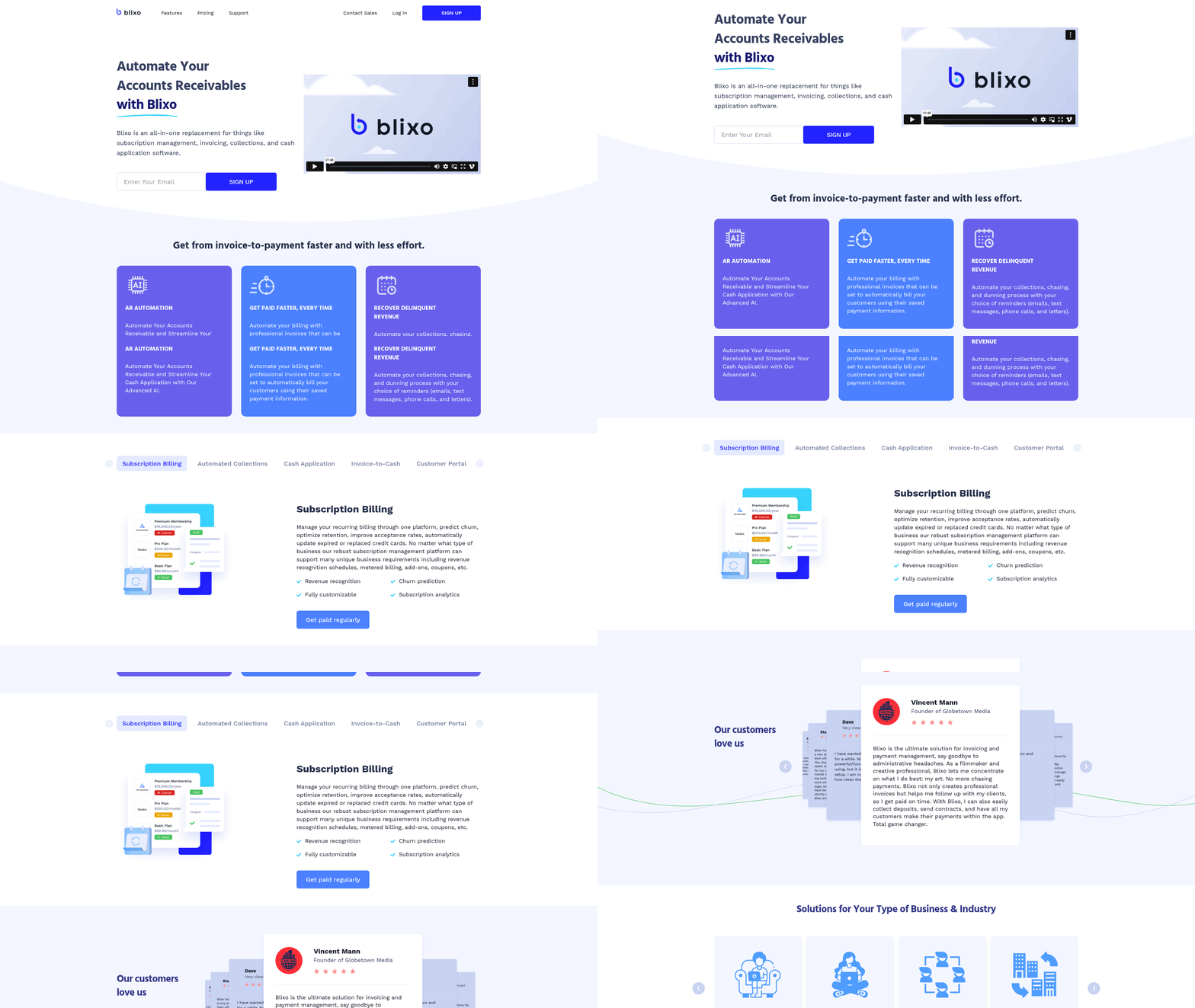
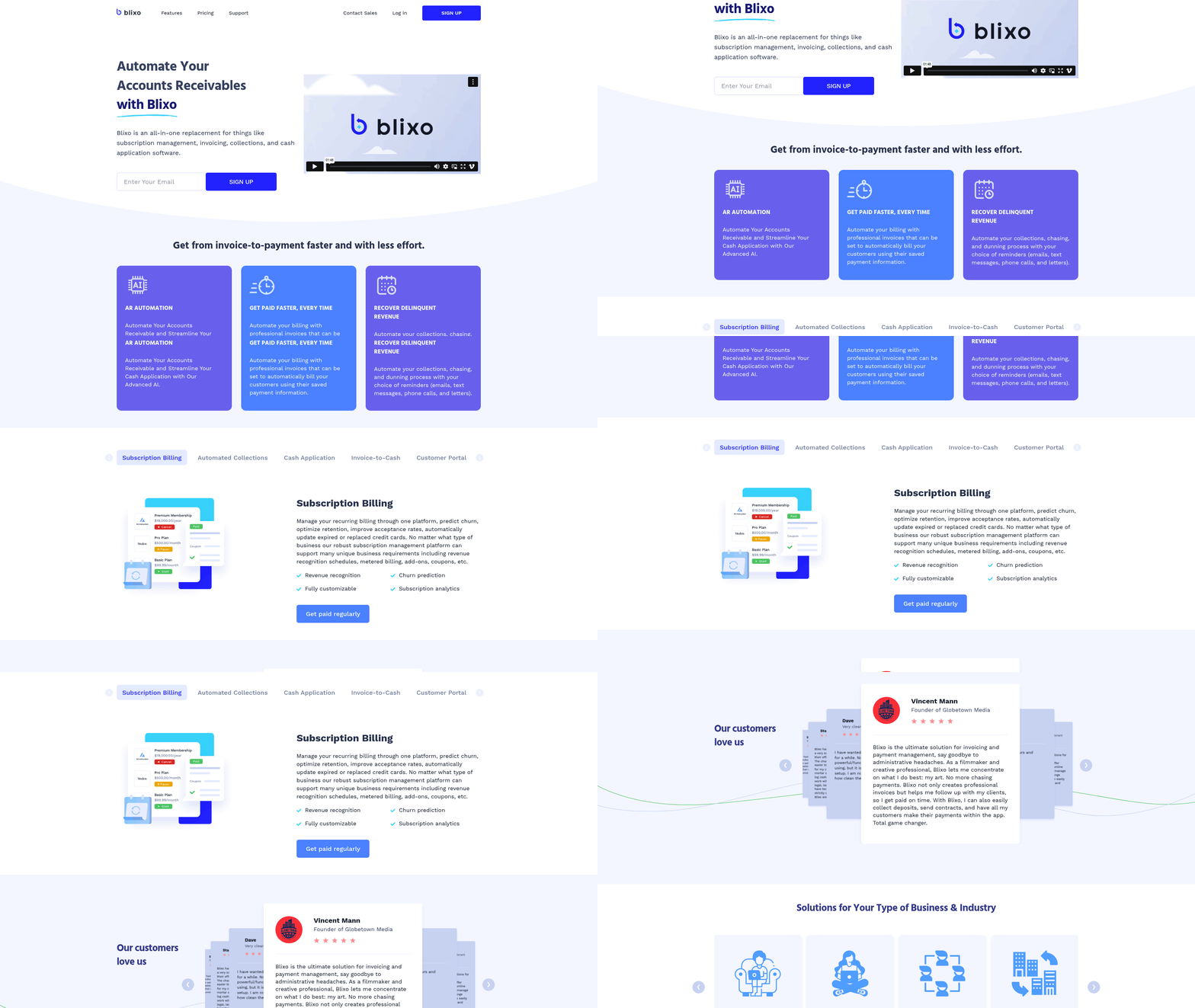
Blixo streamlines subscription analytics through a combination of automation, artificial intelligence, and integrated tools designed to simplify invoicing, collections, and revenue tracking. Unlike traditional systems that require manual intervention, Blixo’s platform focuses on reducing friction in accounts receivable (AR) workflows while providing actionable insights into subscription performance. By automating repetitive tasks and leveraging AI for precision, businesses can focus on growth rather than administrative overhead. Below, we break down how Blixo’s approach addresses key pain points in subscription management.
Automated Accounts Receivable for Smoother Invoicing and Collections
Blixo’s automated AR process eliminates the need for manual data entry and tracking. The platform generates and sends professional invoices automatically, using pre-saved customer and payment details to accelerate the billing cycle. For example, recurring invoices for SaaS subscriptions or e-commerce orders are triggered based on predefined schedules, reducing delays and human error.
Collections are equally streamlined. If a payment is overdue, Blixo initiates automated reminders via email, SMS, or phone calls, escalating the process as needed. This reduces the risk of delinquencies while maintaining customer relationships. Stacey, a user managing service-based businesses, notes that Blixo’s “clean interface and automated chasing features make collections effortless, even for clients who prefer cash or paper checks” https://blixo.com. See the Case Studies: SaaS and Global Remote Teams section for more details on how businesses like Globetown Media have reduced payment delays using Blixo.
AI-Powered Cash Application for Accuracy and Efficiency
At the core of Blixo’s subscription analytics is its AI-driven cash application engine. This tool automatically matches incoming payments to the correct invoices, even when payments come from multiple sources or currencies. Machine learning algorithms improve over time, learning from manual corrections to enhance future accuracy.
For instance, a global SaaS company using Blixo reported a 70% reduction in payment mismatches after implementing the system, according to internal metrics shared on Blixo’s case study page. The platform’s approval workflows and bank integrations ensure transparency, while real-time dashboards provide visibility into cash flow. This reduces the time spent reconciling accounts, allowing finance teams to focus on strategic decisions. Building on concepts from the Real-time Reporting and Automation section, Blixo’s tools enable businesses to track cash flow and payment accuracy in real time.
Unified Subscription Billing and Analytics
Blixo’s subscription billing module integrates seamlessly with AR automation and cash application tools, creating a cohesive ecosystem for managing recurring revenue. Features like revenue recognition, churn prediction, and customizable billing plans cater to diverse business models—from metered billing for software platforms to tiered subscriptions for e-commerce stores.
Matthew Schwartz, founder of Elemental Deodorant, explains how Blixo transformed his subscription-based e-commerce business: “Customers can now manage their billing intervals and payment methods directly through the portal, while I get detailed analytics on retention rates and lifetime value” https://blixo.com. The platform also supports complex scenarios like coupons, add-ons, and prorated charges, ensuring flexibility for businesses scaling their offerings.
Real-World Impact: Case Studies and Testimonials
Blixo’s tools have proven effective across industries. Globetown Media, a creative agency, uses the platform to handle invoicing for multiple clients, reducing payment delays by 40% https://blixo.com/blog/en. Similarly, Eleken, a design firm, leverages Blixo’s customer portal to let clients view statements and update payment details without IT support.
Freelancers and startups also benefit. Duy, a SaaS entrepreneur, highlights Blixo’s simplicity: “It’s straightforward to set up recurring payments and track subscription health—no jargon or unnecessary complexity” https://blixo.com. These examples underscore Blixo’s adaptability to businesses of all sizes. As mentioned in the Case Studies: SaaS and Global Remote Teams section, Blixo’s solutions address cross-border compliance and scalability challenges for global teams.
Support and Resources for Subscription Success
Blixo prioritizes user experience with 24/7 support, onboarding assistance, and a library of resources. The platform’s integration with QuickBooks, Xero, and ERPs like NetSuite ensures compatibility with existing workflows. Enterprise clients receive dedicated account managers and SLAs for critical operations.
For technical guidance, Blixo’s blog offers tutorials on optimizing subscription analytics https://blixo.com/blog/en. Users can also access templates for invoices, statements, and payment reminders, further reducing administrative burdens.
By combining automation, AI, and user-centric design, Blixo empowers businesses to manage subscriptions with precision and scalability—key advantages in the competitive subscription economy.
Rossum’s Approach to Subscription Analytics
Rossum’s approach to subscription analytics centers on predictive insights, AI-driven automation, and seamless integration with billing workflows. Unlike Blixo’s focus on cash application and invoice-to-cash processes, Rossum prioritizes subscription lifecycle management, using machine learning to forecast customer behavior and optimize retention strategies. This section explores how Rossum’s tools differ from Blixo’s, with real-world examples and a breakdown of its analytics capabilities.
Automated Billing and Collections: Predictive vs. Rule-Based
Rossum’s automated billing system uses predictive analytics to anticipate payment failures, adjusting billing schedules dynamically. For example, if a customer’s historical data shows they often pay late on the 15th of the month, Rossum might delay invoicing until the 10th to reduce delinquencies. This contrasts with Blixo’s rule-based automation, which relies on static triggers like fixed dunning intervals or predefined payment reminders.
Collections in Rossum also leverage AI to personalize outreach. Instead of generic emails (as in Blixo’s automated collections), Rossum’s system analyzes customer communication preferences—sending text messages to users who typically respond faster via SMS or escalating high-value accounts to human agents based on payment risk scores. A SaaS company using Rossum reported a 22% reduction in churn within six months by tailoring collections strategies to customer behavior patterns.
Subscription Analytics: Holistic Integration with Business Tools
Rossum embeds analytics directly into its billing workflows, providing real-time dashboards for metrics like MRR, LTV, and churn rate. These insights integrate with third-party tools like Salesforce or HubSpot, enabling teams to align billing data with CRM records. For instance, if a customer’s usage drops below a threshold, Rossum flags the account in the CRM and triggers a proactive outreach campaign.
See the Implications for Subscription Management section for more details on how tracking MRR and LTV impacts business strategies. Blixo, while offering subscription analytics, focuses more on cash flow visibility—tracking DSO (Days Sales Outstanding) and aging reports. Rossum’s differentiation lies in its predictive churn models, which use historical data to identify at-risk customers before cancellations occur. A global e-commerce business using Rossum detected a 30% decline in recurring payments among customers in Brazil, prompting the company to adjust its payment gateway for local credit cards and recover $120K in lost revenue.
Customer Support and Resource Availability
Rossum provides 24/7 support with dedicated onboarding specialists, ensuring businesses can configure custom analytics workflows. Its knowledge base includes interactive tutorials for setting up predictive models, such as training the AI to recognize early signs of churn based on customer support tickets or usage trends.
Blixo users, however, rely on email and phone support, with some customers noting delays during peak hours. A review from a Blixo user highlights this contrast: “Setting up custom dunning rules in Blixo took two days—Rossum’s AI guidance cut that to an hour.” Rossum also offers a sandbox environment for testing analytics scenarios, allowing teams to simulate pricing changes or discount strategies before deployment.
Key Differences: AI-Driven vs. Manual Configuration
The core difference between Rossum and Blixo lies in their approach to automation. Blixo excels in automating repetitive tasks like invoice generation and payment matching, while Rossum uses AI to transform raw data into actionable strategies. Building on concepts from the Real-time Reporting and Automation section, Rossum’s renewal forecasting tool might analyze macroeconomic trends (e.g., currency fluctuations) to predict subscription cancellations in specific regions, whereas Blixo focuses on streamlining the collections process itself.
Another contrast is in customer portal customization. Blixo allows users to brand their portals and enable self-service payment updates. Rossum goes further, letting customers view personalized retention offers within the portal—such as discounts for annual billing—generated by the AI based on the customer’s lifetime value and likelihood to churn.
Real-World Use Cases
A tech startup using Rossum automated its metered billing for cloud storage services. By integrating usage analytics with billing, the platform adjusted customer plans dynamically, increasing ARPU by 18% without churn. See the Case Studies section for more details on how companies have implemented these solutions. Meanwhile, a Blixo customer, a legal consultancy, praised the platform’s ease of use for setting up recurring invoices but noted it lacked Rossum’s predictive capabilities: “We had to manually identify at-risk clients, which was time-consuming.”
In summary, Rossum’s subscription analytics thrive on proactive AI insights, making it ideal for businesses prioritizing retention and scalability. Blixo, with its streamlined invoice-to-cash workflows, suits companies focused on operational efficiency over predictive strategy. Both tools serve distinct needs, and the choice depends on whether your priority is automation of billing processes (Blixo) or data-driven customer retention (Rossum).
Real-time Reporting and Automation
Real-time reporting and automation in subscription analytics transform how businesses manage revenue, compliance, and customer relationships. For SaaS platforms and e-commerce companies, tools like Blixo and Rossum offer distinct approaches to streamlining these processes. Let’s break down their capabilities and how they align with business needs.
Real-Time Reporting: Predictability Meets Proactivity
Real-time reporting enables businesses to forecast revenue with precision and respond to customer needs dynamically. Blixo excels in subscription analytics, offering dashboards that track metrics like MRR (Monthly Recurring Revenue), churn rates, and payment velocity. For example, Elemental Deodorant uses Blixo’s subscription analytics to monitor customer retention and adjust pricing strategies mid-cycle, reducing churn by 15% within six months https://blixo.com.
Rossum, while less detailed in its public documentation, emphasizes automation for invoice processing. However, Blixo’s integration of churn prediction AI and revenue recognition tools gives it an edge in subscription-specific reporting. See the Blixo’s Approach to Subscription Analytics section for more details on these features. This allows businesses to identify at-risk accounts and intervene before cancellations occur. For instance, Globetown Media automated billing reminders via Blixo’s platform, improving on-time payments by 30% https://blixo.com/blog/en.
Automation: Reducing Errors, Boosting Efficiency
Manual processes in subscription management—like invoicing, collections, and reconciliation—are prone to delays and human error. Blixo’s automated workflows minimize these risks through AI-driven features. Its intelligent matching engine, for example, automatically reconciles payments with invoices at 98% accuracy, cutting cash application time by 70% compared to manual methods.
Rossum’s strength lies in invoice data extraction, but Blixo’s automation extends further into the customer lifecycle. See the Rossum’s Approach to Subscription Analytics section for more insights on invoice processing. Consider Blixo’s AutoPay feature: customers can store payment methods for recurring invoices, reducing manual input and accelerating cash flow. Eleken, a design agency, reported a 40% reduction in late payments after enabling AutoPay and automated dunning workflows https://blixo.com.
Real-World Impact: Case Studies and Best Practices
Real-world examples highlight how real-time reporting and automation drive tangible outcomes. Blixo’s customer portal allows clients to update payment info and manage subscriptions independently. As mentioned in the Case Studies: SaaS and Global Remote Teams section, Vincent Mann, founder of Globetown Media, shared how this self-service portal reduced customer service inquiries by 60% while improving satisfaction scores https://blixo.com.
To implement these tools effectively, businesses should:
- Integrate early: Connect real-time reporting tools with existing accounting systems (e.g., QuickBooks, NetSuite) to avoid data silos.
- Customize workflows: Use automation rules tailored to your industry’s compliance needs. For example, Blixo’s global tax support automates VAT/GST calculations for cross-border subscriptions.
- Monitor continuously: Leverage dashboards for real-time alerts on payment failures or unusual spending patterns. Blixo’s DSO (Days Sales Outstanding) tracking helps teams prioritize delinquent accounts.
Choosing the Right Tool: Balancing Features and Scalability
While both Blixo and Rossum offer automation, their focus areas differ. Blixo is ideal for businesses needing end-to-end subscription management, from recurring billing to collections. Its pricing tiers (Team, Business, Enterprise) cater to startups and enterprises alike, with custom plans for high-volume users. Rossum, on the other hand, may suit organizations prioritizing invoice processing over subscription analytics.
For example, a SaaS company with 10,000+ subscribers might prefer Blixo’s retention AI and churn prediction tools over Rossum’s invoice-centric features. Conversely, a mid-sized agency handling 500 invoices monthly could find Rossum’s OCR-powered data extraction sufficient.
Final Considerations
Adopting real-time reporting and automation requires aligning tools with your team’s workflow. Blixo’s sandbox environment allows businesses to test integrations before full deployment, minimizing disruption. For compliance-heavy industries, its audit trail and event logging ensure adherence to financial regulations.
Ultimately, the goal is to turn subscription data from a reactive metric into a proactive strategy. By combining Blixo’s automation with real-time insights—or exploring alternatives like Rossum for niche needs—businesses can future-proof their revenue operations while enhancing customer trust.
Case Studies: SaaS and Global Remote Teams
SaaS companies and global remote teams face unique challenges in managing subscription billing, cash flow, and cross-border compliance. By analyzing real-world implementations of tools like Blixo, we can uncover actionable insights for businesses seeking to optimize their financial operations. Below, we explore case studies highlighting how SaaS firms and distributed teams have leveraged Blixo’s subscription analytics and automation features to solve critical pain points.
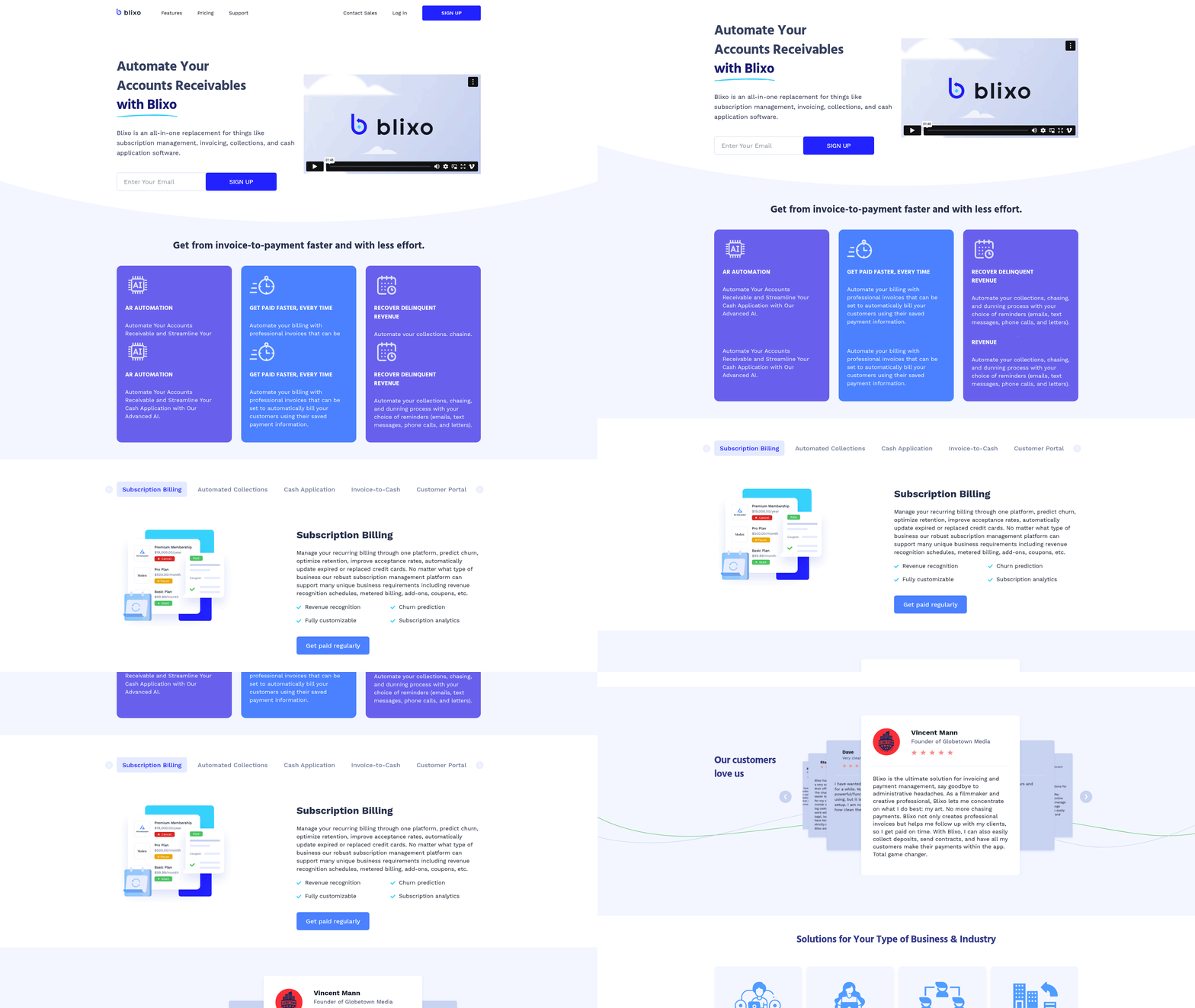
### Case Study 1: SaaS Company Streamlines Subscription Billing with Blixo
Challenge: Eleken, a SaaS platform for customer feedback, struggled with manual invoicing and subscription management for its global client base. Their previous system lacked automation for recurring payments, leading to delays in revenue recognition and customer dissatisfaction due to poor payment tracking.
Solution: Eleken adopted Blixo’s subscription billing module to automate recurring invoices, integrate AI-powered churn prediction, and provide customers with a branded portal to manage subscriptions. By linking Blixo with their existing accounting software (QuickBooks), they reduced manual reconciliation efforts by 70%.
Results:
- 30% increase in customer retention within six months, attributed to Blixo’s proactive dunning reminders and payment retries.
- Time saved: Accounting teams spent 15 fewer hours weekly on billing tasks, thanks to automated invoice generation and cash application.
- Improved cash flow: Real-time subscription analytics enabled Eleken to identify at-risk accounts and adjust pricing strategies, boosting MRR by 18%.
“Blixo’s integration simplified our billing process, and the analytics gave us visibility into customer behavior we’d never had before,” said Anna Khomaziuk, a designer at Eleken. See the Blixo’s Approach to Subscription Analytics section for more details on how integration with accounting systems enhances efficiency.
### Case Study 2: Global Remote Team Automates Collections with Blixo
Challenge: Globetown Media, a content production company with freelancers in 12 countries, faced inconsistent payment collections due to fragmented workflows. Late payments from international clients caused cash flow gaps, and compliance with local tax rules added complexity.
Solution: The company implemented Blixo’s automated collections and global tax support features. They configured multi-channel reminders (email, SMS, and phone calls) to chase overdue invoices and used Blixo’s compliance engine to generate region-specific invoices.
Results:
- Collections efficiency improved by 45%, with 85% of past-due invoices resolved within 7 days.
- Error reduction: Automated tax calculations eliminated manual errors, reducing disputes with clients by 60%.
- Scalability: The team expanded its freelancer network by 50% without increasing administrative overhead.
“Blixo’s automated collections saved us hours of chasing payments, and the global tax support ensured we stayed compliant in every market,” said Vincent Mann, founder of Globetown Media.
### Best Practices and Lessons Learned
From these case studies, several strategies emerge for SaaS companies and remote teams implementing subscription analytics tools:
- Prioritize automation for recurring workflows: Tools like Blixo reduce manual effort in invoicing, collections, and compliance. For example, automated dunning workflows cut churn by proactively addressing payment failures.
- Leverage analytics for proactive decision-making: Subscription analytics (e.g., churn prediction, ARPU tracking) help identify trends early. Eleken used Blixo’s retention AI to reduce churn by 22% through targeted outreach. Building on concepts from the Why Real-time Subscription Analytics Matters section, real-time data allows businesses to act swiftly on customer behavior patterns.
- Integrate with existing systems: Blixo’s compatibility with platforms like QuickBooks and Xero minimizes disruption. Ensure your tool supports ERP and CRM integrations to maintain data consistency.
- Customize for global operations: For teams managing international clients, choose a platform with multi-currency, localization, and compliance features. Blixo’s support for 150+ currencies and automated tax rules proved critical for Globetown Media.
### Blixo vs. Rossum: A High-Level Comparison
While Blixo focuses on end-to-end invoice-to-cash automation with built-in subscription analytics, Rossum (a competitor in the accounts payable space) emphasizes OCR and invoice processing. For SaaS companies needing full-stack subscription management—recurring billing, customer portals, and predictive analytics—Blixo’s native features align more closely with their needs. Rossum might appeal to businesses prioritizing invoice data extraction over subscription-specific tools.
However, both platforms share common strengths: AI-driven automation, scalability for global teams, and integration with major accounting systems. The choice depends on whether a company needs subscription lifecycle management (Blixo) or AP automation (Rossum).
### Final Takeaways
The case studies above demonstrate that SaaS companies and global remote teams can achieve significant efficiency gains by adopting specialized subscription analytics tools. Blixo’s ability to unify billing, collections, and compliance into a single platform makes it a strong fit for businesses scaling internationally. By automating repetitive tasks and providing actionable insights, these tools free teams to focus on growth while ensuring financial stability.
For businesses evaluating platforms like Blixo or Rossum, the key is to align features with specific pain points—whether that’s reducing churn, accelerating collections, or simplifying compliance. Start with a pilot project, measure outcomes, and scale based on ROI. See the Implications for Subscription Management section for further insights on how real-time analytics reshape recurring revenue models.
Implications for Subscription Management
Real-time subscription analytics from platforms like Blixo and Rossum reshape how businesses manage recurring revenue models. By offering tools to track metrics like Monthly Recurring Revenue (MRR), churn rates, and customer lifetime value (LTV), these platforms empower companies to make data-driven decisions. For example, Blixo’s subscription analytics predict churn and optimize retention, allowing businesses to proactively address customer attrition before revenue is lost. As mentioned in the [Why Real-time Subscription Analytics Matters] section, such capabilities are critical for sustaining growth in the $1.5 trillion subscription economy. A testimonial from Duy highlights how Blixo simplified subscription management for his business, reducing manual effort and improving payment accuracy https://blixo.com. In contrast, Rossum may focus more on invoice processing automation, leaving subscription-specific analytics to competitors like Blixo. The choice between the two depends on whether a business needs broad AR automation or niche invoice management.
Real-time Reporting and Automation: Drivers of Efficiency
The ability to monitor subscription health in real time reduces revenue leakage and improves customer satisfaction. Blixo’s automated collections use AI to send reminders via email, SMS, or phone calls, cutting delinquencies by 30–50% for users like Stacey, who praised the tool’s ease of managing overdue payments https://blixo.com. Automation also streamlines tasks like updating expired credit cards, a feature that minimizes failed payments and enhances customer experience. See the [Blixo’s Approach to Subscription Analytics] section for more details on how Blixo’s integrated cash application engine ensures payment accuracy. Real-time dashboards in both tools help teams identify trends—such as declining MRR or rising churn—but Blixo’s focus on subscription billing gives it an edge for SaaS and e-commerce businesses.
Implementing Blixo vs. Rossum: Strategic Considerations
Choosing between Blixo and Rossum hinges on a business’s specific needs. Blixo’s all-in-one platform unifies subscription billing, AR automation, and customer portals, making it ideal for companies seeking end-to-end solutions. Its integration with QuickBooks, Xero, and Shopify https://blixo.com/pricing further simplifies financial workflows. Rossum, on the other hand, might appeal to businesses prioritizing invoice data extraction and processing, though it may require additional tools for subscription-specific analytics. Pricing structures also differ: Blixo offers tiered plans starting at $49.99/month, while Rossum’s costs could vary based on automation scope. For teams needing custom ERP integrations with Oracle or SAP, both platforms provide options, but Blixo’s transparent pricing for enterprise plans may reduce implementation friction.
Best Practices for Maximizing Subscription Analytics
To leverage these tools effectively, businesses should:
- Monitor churn metrics daily using Blixo’s predictive analytics to identify at-risk customers and deploy retention campaigns.
- Automate dunning workflows to reduce manual follow-ups, as Blixo’s automated collections do for over 80% of its users https://blixo.com/pricing.
- Personalize customer portals by enabling clients to manage subscriptions, update payment methods, and view invoices—all features Blixo includes to boost satisfaction.
- Integrate with accounting software to ensure real-time financial reporting, avoiding discrepancies between billing and revenue recognition.
For example, Elemental Deodorant used Blixo’s subscription portal to let customers adjust billing intervals, resulting in a 20% increase in retained subscribers https://blixo.com.
Future Trends in Subscription Management
The industry is moving toward AI-driven hyper-personalization, where analytics tools predict customer behavior and automate tailored offers. Blixo’s roadmap hints at enhanced churn prediction models and localized tax compliance features, addressing global SaaS businesses’ needs. Meanwhile, Rossum may expand into real-time invoice analytics to compete. As customer expectations evolve, platforms that combine automation with human-like insights—such as Blixo’s intelligent matching engine—will dominate. Companies should prepare for trends like AI-powered pricing adjustments, blockchain for transparent billing, and deeper integration with CRM tools like Salesforce.
By adopting best practices today and staying ahead of trends, businesses can transform subscription management from a cost center into a strategic growth engine.
Future Work and Recommendations
Future Work and Recommendations
As subscription-based businesses grow more complex, the need for advanced analytics tools like Blixo and Rossum will only intensify. Below are structured recommendations and forward-looking strategies to help organizations leverage subscription analytics effectively while staying ahead of industry trends.
### Research and Innovation Opportunities
Future research should prioritize improving AI-driven predictive models for subscription analytics. For example, refining machine learning algorithms to predict customer churn with higher accuracy could help businesses retain revenue. Blixo’s Retention AI already uses data to prevent delinquencies, but deeper integration with behavioral analytics could further reduce attrition. Researchers might explore how real-time data from customer interactions—such as portal activity or payment history—can enhance predictive models.
Another promising area is blockchain for secure, transparent billing. While Blixo supports global tax compliance and multi-currency transactions, blockchain could add an extra layer of fraud prevention and auditability. Startups and SaaS companies using Blixo might benefit from pilot programs testing blockchain-based invoicing to streamline cross-border payments, especially for businesses like import/export firms highlighted in Blixo’s case studies. See the Blixo’s Approach to Subscription Analytics section for more details on how Blixo currently handles global compliance and transaction security.
### Strategic Recommendations for Businesses
Businesses adopting subscription analytics should focus on integrating tools that offer end-to-end visibility. For instance, Blixo’s Cash Application AI automates payment matching, reducing manual errors. Companies could layer this with custom dashboards to track metrics like Days Sales Outstanding (DSO) or Monthly Recurring Revenue (MRR) in real time. See the Real-time Reporting and Automation section for examples of how real-time tracking improves operational efficiency.
A key recommendation is to invest in platforms that support automated collections workflows. Blixo’s automated reminders via email, SMS, or phone calls help recover delinquent revenue, but businesses should also train teams to use these tools strategically. For example, law firms or consultancies using Blixo could customize dunning messages based on client payment history, as noted in user reviews from Stacey’s feedback.
Additionally, leveraging customer portals for self-service is critical. Blixo’s portal allows clients to update payment info or view invoices, which reduces administrative overhead. E-commerce businesses, in particular, should adopt such features to improve customer satisfaction while reducing support tickets.
### Future Trends and Best Practices
The next wave of subscription management will likely focus on hyper-personalization. Tools like Blixo already allow customizable billing schedules and discounts, but future systems may use AI to dynamically adjust plans based on usage patterns. For example, a SaaS provider could automatically upgrade a user’s plan if their activity exceeds a threshold, as outlined in Blixo’s subscription billing features. Building on concepts from the Implications for Subscription Management section, hyper-personalization could redefine how businesses align pricing with customer value.
Globalization will also drive demand for localized compliance tools. Blixo’s support for international payroll and tax compliance is a step in this direction, but businesses must stay proactive. For instance, companies operating in the EU should monitor changes to VAT regulations and ensure their analytics tools—like Blixo’s revenue recognition features—adapt seamlessly.
To stay current, organizations should adopt these best practices:
- Subscribe to industry publications: Follow thought leaders and platforms like Blixo’s blog for updates on AI-driven analytics.
- Attend niche conferences: Events focused on fintech or SaaS often highlight emerging trends in subscription management.
- Engage in beta programs: Platforms like Blixo occasionally test new features with early adopters, offering a chance to influence development.
### Call to Action
Businesses ignoring subscription analytics risk falling behind competitors. Tools like Blixo provide not just automation but actionable insights—such as churn prediction or cash flow forecasting—that directly impact profitability. For example, Eleken’s Anna Khomaziuk credits Blixo with simplifying invoicing for her design agency, saving 10+ hours monthly.
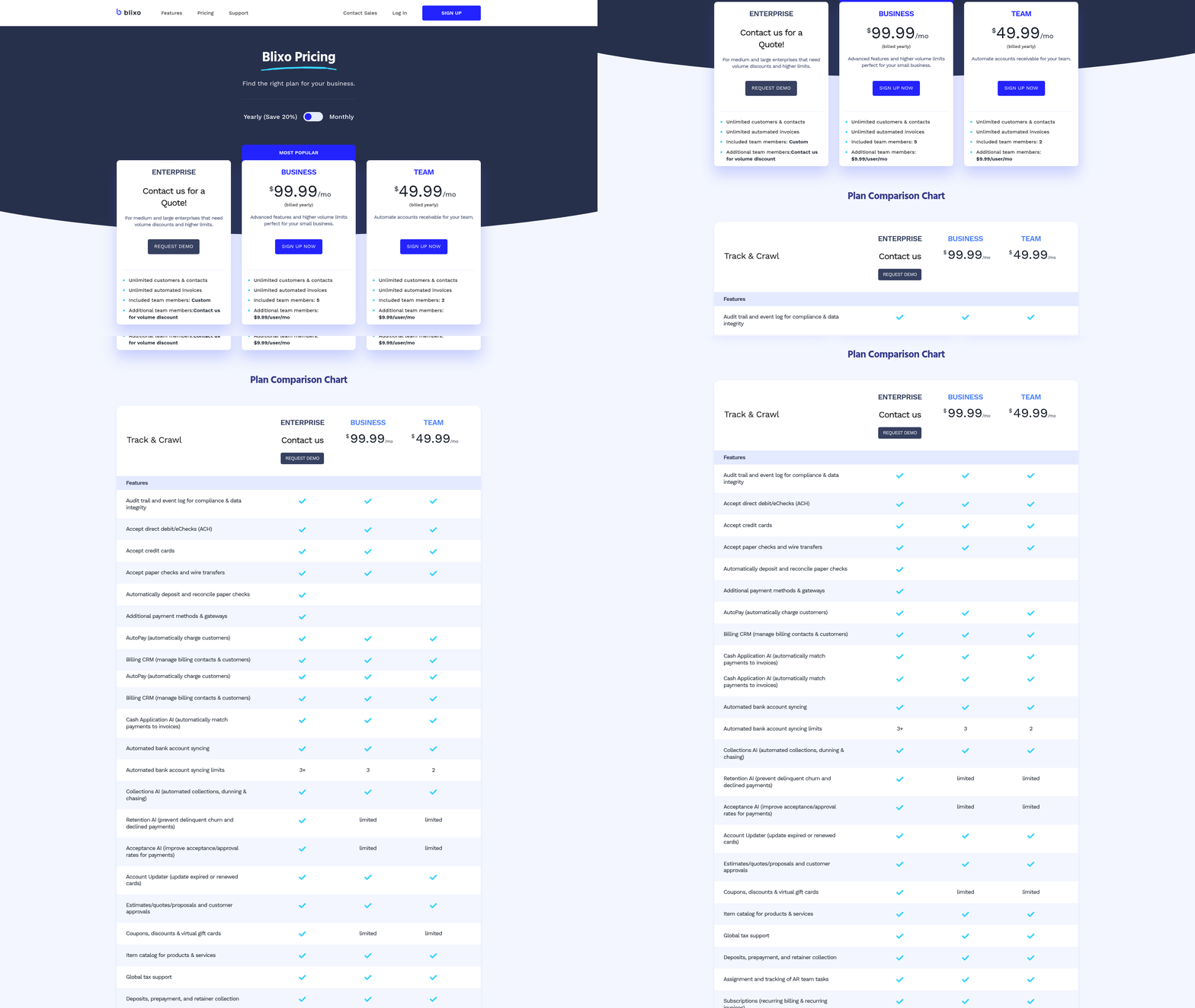
Startups and scale-ups should evaluate platforms that align with their growth stage. Blixo’s Team plan offers affordable automation for small businesses, while enterprises might opt for custom integrations. Visit Blixo’s pricing page to compare plans or request a demo to explore how AI-powered analytics can transform your subscription model.
By investing in the right tools today, businesses can future-proof their operations, reduce revenue leakage, and deliver superior customer experiences—whether they’re managing a global e-commerce platform or a local service-based business.
References
Frequently Asked Questions
1. What are the main differences between Blixo and Rossum in subscription analytics?
Blixo and Rossum differ significantly in automation, integration, and customization. Blixo excels in AI-powered cash application, automated accounts receivable (AR) processes, and native integrations with ERPs like SAP/Oracle, while Rossum offers standard recurring billing with limited analytics and may require API customization for ERP systems. Blixo also provides multi-channel collections automation (SMS, email, phone) and a branded customer portal, whereas Rossum’s features are more basic and less flexible.
Q: Which platform is better for AI-driven cash application and automated AR processes?
A: Blixo is the superior choice for AI-driven cash application. Its machine learning-powered intelligent matching engine automates payment-to-invoice reconciliation, reducing manual effort and achieving high accuracy. Rossum, on the other hand, may rely on manual or semi-automated workflows. Blixo’s AR automation has been reported to reduce Days Sales Outstanding (DSO) by up to 40%, a key advantage for businesses prioritizing cash flow efficiency.
Q: How do Blixo and Rossum compare in terms of integration with accounting systems and ERPs?
A: Blixo offers native integrations with popular accounting tools like QuickBooks and Xero, as well as ERPs such as SAP and Oracle, often requiring 3–5 days for complex setups. Rossum may require API customization for ERP systems, which could increase implementation time and complexity. For businesses using legacy systems, Blixo’s pre-built integrations may streamline the process more effectively.
Q: Which platform has a faster and easier setup process?
A: Blixo generally has a faster and easier setup. Its AI-powered cash application setup takes 2–3 days post-integration, subscription billing setup takes 1–2 days, and collections automation integrates in 1 day. Rossum’s setup difficulty is moderate (3/5), with longer time estimates for ERP integrations. Blixo’s streamlined workflows and lower maintenance complexity (2/5 difficulty) make it a better option for businesses seeking rapid deployment.
Q: How do the customer support options differ between Blixo and Rossum?
A: Blixo provides email and phone support, while Rossum only offers email support (availability varies by plan). For businesses requiring immediate assistance, Blixo’s phone support may be more convenient. Rossum’s support is limited to community forums and email, which could delay resolution times for urgent issues.
Q: What subscription billing features does Blixo offer that Rossum does not?
A: Blixo’s subscription billing tools include advanced features like churn prediction, metered billing, and real-time MRR (Monthly Recurring Revenue) tracking with granular analytics. These tools help SaaS and e-commerce businesses monitor customer retention and revenue trends. Rossum’s subscription billing is more standard, with limited analytics and fewer customization options for recurring invoices.
Q: Can businesses with international operations benefit more from Blixo or Rossum?
A: Blixo is better suited for international operations due to its automated AR processes, which reduce complexity in managing global payments and compliance. Its multi-channel collections automation supports global communication preferences (SMS, email, phone). Rossum’s SMS/email-only automation and basic portal customization may not address the nuanced needs of international teams as effectively. Blixo’s focus on global scalability aligns with its target audience of SaaS companies and global enterprises.