

Automate Billing vs Manual Invoicing with Blixo

Key Takeaways
- Automation reduces administrative costs by 30% and cuts days-sales-outstanding by 30%.
- Manual invoicing has a 35% higher risk of errors compared to automated billing’s <1% error rate.
- Automated billing processes invoices in 3.1 days versus manual invoicing’s 45+ day cycle.
- Automation reduces manual tasks by 70%, saving 30% in administrative costs.
- AI-powered reminders increase on-time payments by 25%, outperforming manual follow-ups.
- Automated systems handle 100,000+ invoices efficiently, while manual processes struggle with high volume.
- Manual errors cost the U.S. economy $1.3 trillion annually, with 39% of invoices containing mistakes.
Why Automate Billing Matters
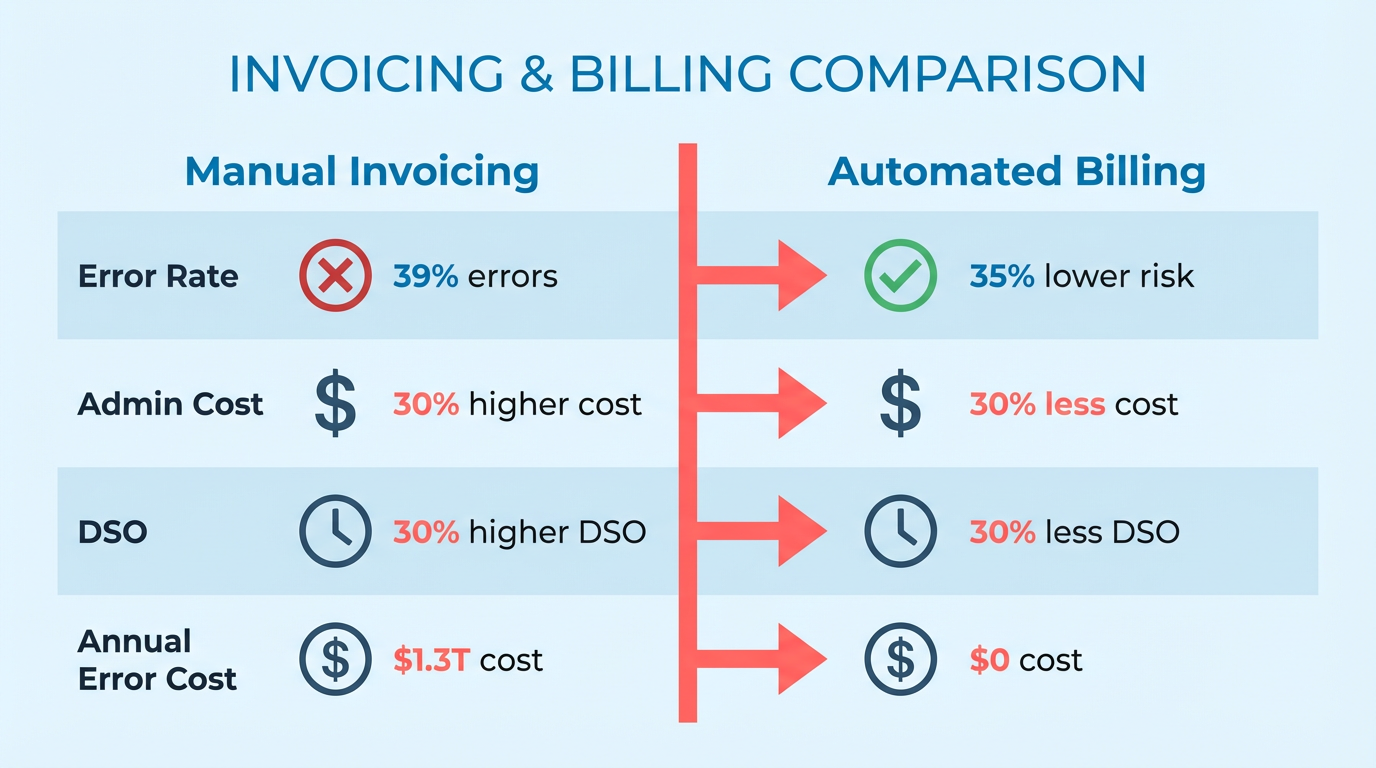
Automating billing is no longer a luxury-it’s a strategic necessity. Manual invoicing processes are riddled with inefficiencies, from human errors to delayed cash flow, while automation slashes administrative costs by up to 30% and reduces days-sales-outstanding (DSO) by 30%, accelerating cash flow velocity. For businesses, the stakes are high: manual errors alone cost the U.S. economy $1.3 trillion annually, as outlined in the Understanding Manual Invoicing section, with 39% of invoices containing mistakes during manual entry. Below is a comparison of manual and automated billing to highlight the transformative impact of automation.
| Feature | Manual Invoicing | Automated Billing (Blixo) |
|---|---|---|
| Error Rate | 35% higher risk of missed payments/reconciliation errors | AI-driven accuracy ensures <1% error rate |
| Processing Time | 45+ days for invoice-to-cash cycles | 3.1 days for end-to-end processing |
| Administrative Costs | Labor-intensive, prone to human error | Reduces manual tasks by 70%, saving 30% in costs |
| On-Time Payments | Relies on manual follow-ups; 25% lower success | AI-powered reminders boost on-time payments by 25% |
| Scalability | Inefficient for high-volume operations | Handles 100–100,000 invoices seamlessly |
The Real-World Impact of Manual Errors and Delays
Manual invoicing errors and delayed payments create cascading problems for businesses. For example, delayed revenue recognition can increase operational inefficiencies by 35%, while reconciliation disputes rise by 20% in manual systems. A logistics firm using Blixo’s intelligent matching engine reduced reconciliation disputes by 20%, and a healthcare provider cut month-end closing time by 18% through automation. These examples underscore how automation mitigates costly delays and improves financial clarity. AI-powered reminders, as detailed in the Automating with Blixo section, further enhance on-time payment rates.
Small businesses and enterprises alike face unique challenges. A small business using Blixo automated reminders and cash application, achieving a 30% efficiency gain in payment collections. Meanwhile, a law firm automated invoicing and collections, improving cash-flow efficiency by 25%. Startups, too, benefit: one saw a 70% increase in sales conversions after implementing dynamic discounting and automated reminders.
Who Benefits Most from Automation?
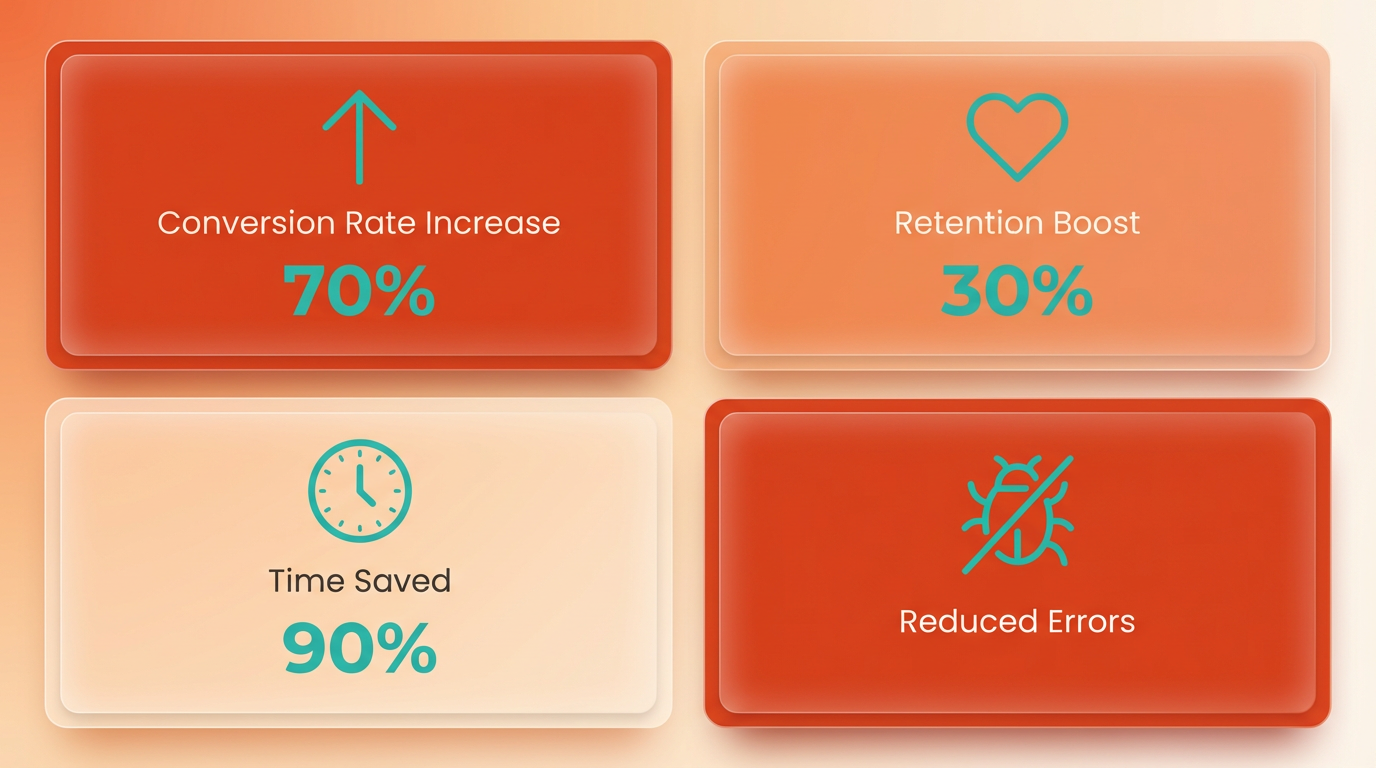
Automation transforms workflows for diverse industries. Construction firms using Blixo reported a 70% increase in conversion rates and 30% higher customer retention, thanks to AI-powered collections and real-time cash application. Legal professionals using Blixo’s trust accounting and retainer management saw billing time reduced by 60%. For enterprises, automation scales seamlessly: a logistics firm cut reconciliation disputes by 20%, while a financial institution processed 80% of workflows automatically, saving $3 per invoice and cutting costs by 91%.
Case Studies: Proof of Impact
Real-world results validate automation’s value. A startup using Blixo’s dynamic discounting and reminders achieved a 70% sales conversion lift. A healthcare provider integrated Blixo with ERP systems, reducing month-end closing time by 18%. A logistics firm resolved 20% more disputes using AI-driven matching. These outcomes align with industry benchmarks, as highlighted in the Real-World Examples and Case Studies section: 82% of AP teams still rely on manual entry, but AI-powered systems reduce processing time from 45 days to 3.1 days and cut manual task time by 75–85%.
Why Automation Outpaces Manual Invoicing
Automation isn’t just about efficiency-it’s about strategic growth. Blixo’s unified platform replaces fragmented tools, offering real-time visibility and reducing administrative workload by 70%. By eliminating manual reconciliation, AI-driven cash application matches payments to invoices with 99.5% accuracy, cutting month-end closing time. For businesses, this means faster cash flow, fewer errors, and stronger customer relationships.
In contrast, manual invoicing remains a bottleneck. With 35% of invoices containing errors and 32% of enterprises processing over 100,000 invoices annually, the cost of inaction is staggering. Automation with Blixo delivers immediate ROI through cost savings and long-term gains in cash flow, compliance, and customer satisfaction. As the construction and legal sectors demonstrate, tailored automation solutions reduce billing time by 60% and enable operational agility.
By adopting automation, businesses transform billing from a reactive task into a proactive, data-driven process. The result? A leaner operation, faster revenue capture, and the ability to compete in a market where efficiency is non-negotiable.
Understanding Manual Invoicing
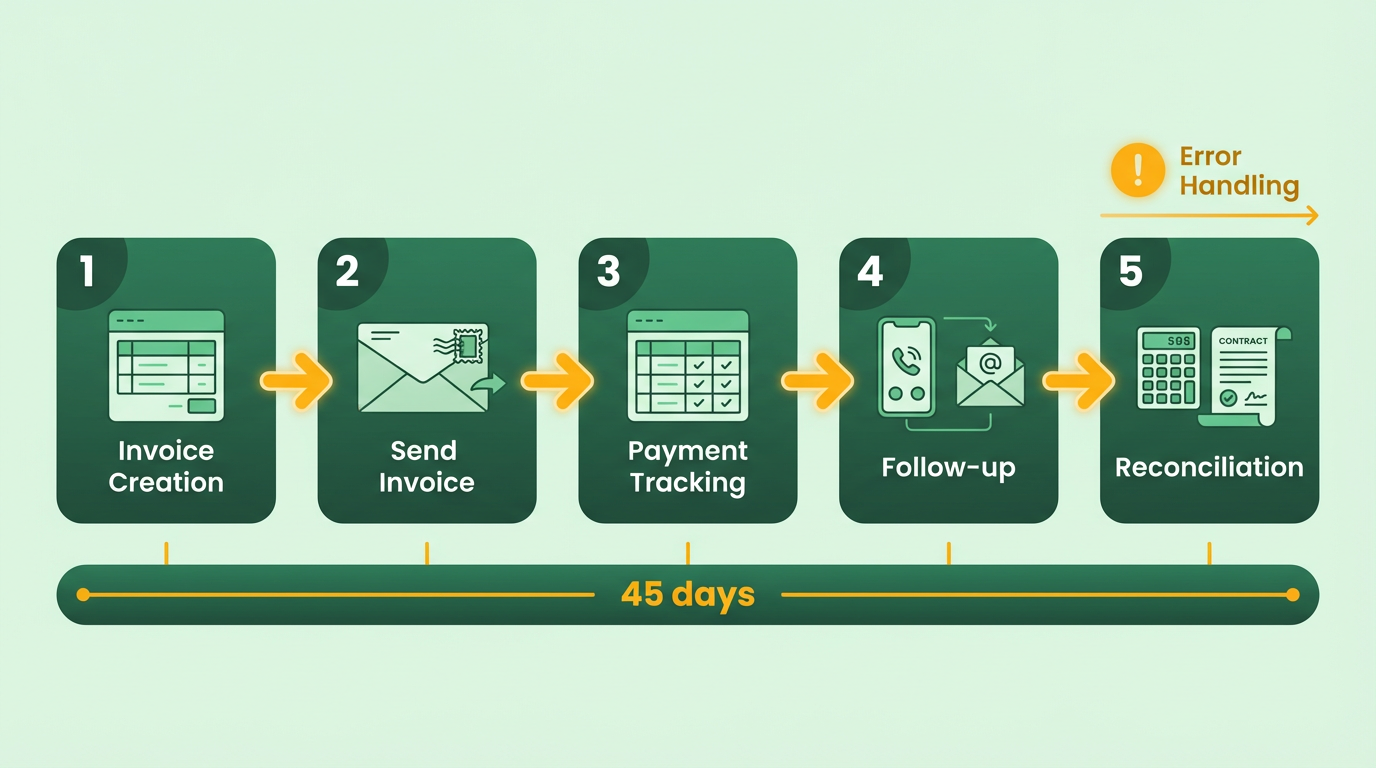
The process typically involves creating invoices manually in spreadsheets or word processors, sending them via email or postal mail, and tracking payments through spreadsheets or phone calls. Late payments require follow-ups, often involving multiple emails or calls. This fragmented process lacks real-time visibility, making it hard to monitor cash flow or catch errors early. For instance, a construction firm might spend hours weekly reconciling invoices with contracts, while a law firm manually matches payments to cases, increasing the risk of misapplication. As mentioned in the Key Benefits of Automation section, automated workflows address these visibility gaps by providing real-time tracking and reducing reconciliation time.
Processing a single invoice can take 45 days, compared to 3.1 days with automation. Labor costs are another major factor: 82% of AP teams rely on manual entry, requiring dedicated staff to handle data entry, follow-ups, and error resolution. Small businesses may spend $20–$50 per invoice, while enterprises face even higher costs due to volume. For example, a mid-sized logistics firm reported 20% productivity loss due to manual reconciliation disputes, as noted in source . Building on concepts from the Key Benefits of Automation section, automation not only reduces costs but also minimizes the human error rate that plagues manual processes.
A healthcare provider in source reduced month-end closing time by 18% after automating invoice tracking, revealing how manual processes bog down financial teams. A small business using manual invoicing faced 35% higher reconciliation errors, costing them $12,000 monthly. Similarly, a construction firm in source struggled with missed payments until adopting automated reminders, cutting late payment rates by 40%. These cases underscore the operational and financial toll of manual workflows. For further context, the Real-World Examples and Case Studies section details additional success stories from industries like construction and legal services..
Automation SaaS providers like Blixo address manual invoicing’s pain points head-on. For instance, AI-powered cash application in Blixo matches payments to invoices with 99.5% accuracy, slashing reconciliation time by 70%. As mentioned in the Automating with Blixo section, Blixo’s integration with ERPs and self-service portals enhances scalability, contrasting sharply with the inefficiencies of manual workflows.
Automating with Blixo
Overview of Blixo’s Automation Capabilities
As mentioned in the Why Automate Billing Matters section, automating billing is a strategic necessity, and Blixo’s automation features streamline billing by replacing manual tasks with AI-driven workflows. At its core, the platform offers AI-powered cash application, auto-billing, recurring invoices, and intelligent matching engines. These tools reduce administrative costs by up to 30% and cut days-sales-outstanding (DSO) by 30%, accelerating cash flow. For example, Blixo’s AI matches incoming payments to invoices with 99.5% accuracy, eliminating 70% of manual reconciliation work.
Step-by-Step Implementation Guide
To adopt Blixo’s automation, businesses should start by mapping high-impact workflows. For instance, a construction firm might prioritize automating progress billing and retainage tracking, which are critical for cash flow. Next, integrate Blixo with existing systems like QuickBooks or Xero via APIs, as outlined in the Implementation and Integration section, to ensure real-time financial data synchronization. Once configured, the platform handles tasks like sending automated reminders, updating payment methods via a self-service portal, and processing multi-currency invoices. A midsize legal firm reported cutting billing time by 60% after implementing these steps, reducing month-end closing from weeks to days.
Real-World Success Stories
Businesses across industries have achieved measurable results with Blixo, as detailed in the Real-World Examples and Case Studies section. A manufacturing company improved invoice processing speed by 28% using Blixo’s auto-billing, while a logistics firm cut reconciliation disputes by 20% using its intelligent matching engine. A startup boosted sales conversions by 70% through dynamic discounting and automated reminders, and a nonprofit saved 54% on processing costs by shifting to digital workflows. These examples highlight Blixo’s adaptability to diverse billing needs.
Key Benefits of Automation
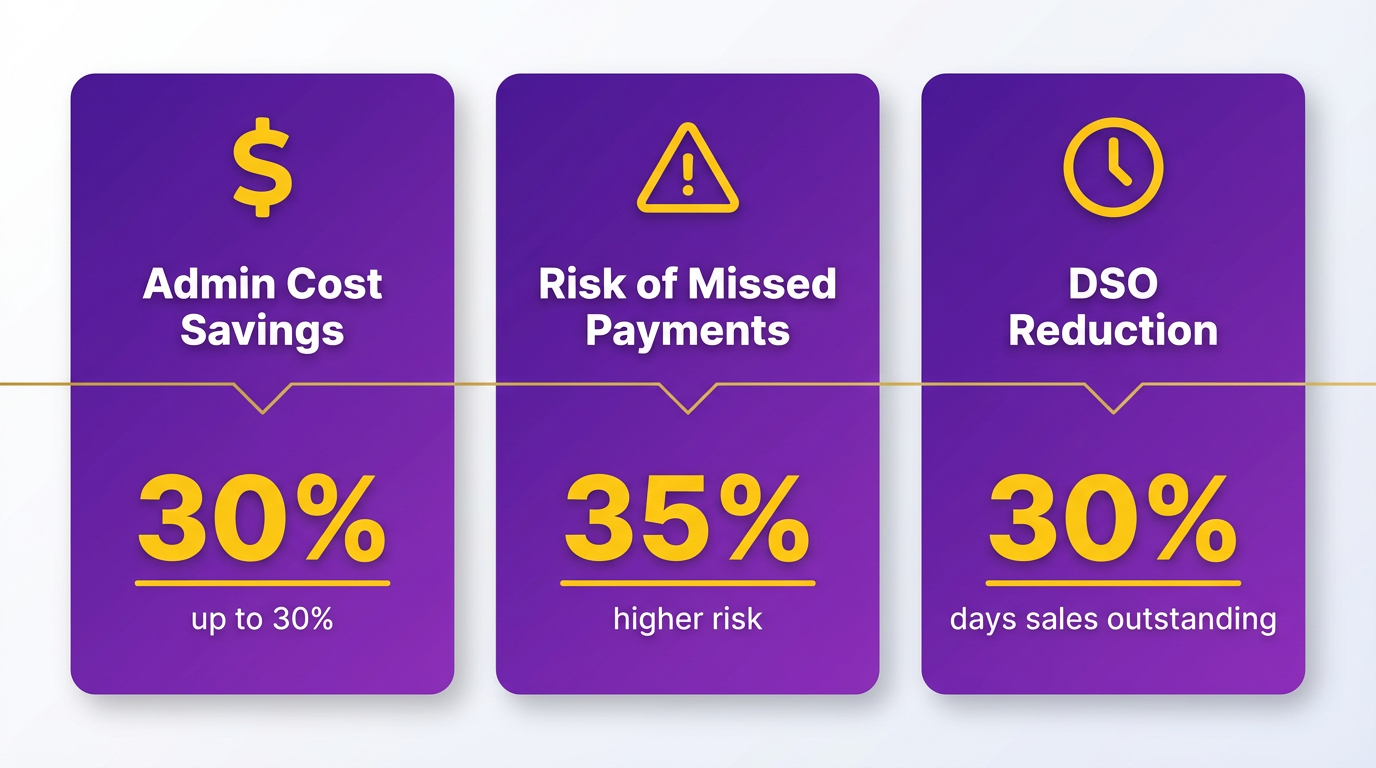
By automating billing processes significantly reduces administrative costs and operational inefficiencies. Manual accounts receivable (AR) is error-prone and costly, with manual data entry leading to a 35% higher risk of missed payments and reconciliation errors compared to automated systems. As mentioned in the Understanding Manual Invoicing section, these errors stem from common pain points like lost invoices and delayed payments. By contrast, Blixo’s automation cuts administrative costs by up to 30% while reducing days-sales-outstanding (DSO) by 30%, accelerating cash flow velocity. For example, a law firm using Blixo improved cash-flow efficiency by 25%, while a healthcare provider cut month-end closing time by 18% after integrating automated workflows.
Manual invoicing introduces 82% of AP teams manually inputting invoices, with 39% of invoices containing mistakes, creating bottlenecks in financial reporting and increasing audit risks. Building on concepts from the Automating with Blixo section, automation mitigates this by reducing processing errors by 57% and cutting manual task time by 75–85%, as seen in a logistics firm that reduced reconciliation disputes by 20% using Blixo’s intelligent matching engine.
| Feature | Manual Invoicing | Automated Billing (Blixo) |
|---|---|---|
| Error rate | 35% higher risk of missed payments | 99.5% cash application accuracy |
| Cost savings | Higher manual processing overhead | Up to 30% reduction in administrative costs |
| Processing time | 45 days average | 3.1 days average |
Time Efficiency and Accuracy
Automation eliminates time-consuming manual tasks, with Blixo reducing administrative workloads by 70% through auto-billing, recurring invoices, and AI-driven cash application. For instance, a startup achieved a 70% increase in sales conversion by automating reminders and dynamic discounting, while a construction firm saw 70% faster conversion rates in customer payments.
AI-powered systems achieve 97% data-extraction accuracy, slashing processing times from 45 days to 3.1 days. As highlighted in the Automating with Blixo section, Blixo’s AI-powered cash application matches payments to invoices with 99.5% accuracy, eliminating 90% of manual reconciliation efforts. A financial institution in Turkey reduced costs and boosted performance by switching from paper-based to digital systems, and a retail chain cut processing time by 75% using AI validation.
Customer Satisfaction and Retention
Automation directly impacts customer experience by ensuring timely payments and reducing disputes. Blixo’s smart chasing features improve on-time payments by 25%, while self-service portals let customers view invoices, update payment methods, and resolve disputes independently. A logistics firm reduced vendor disputes by 65% using AI validation, and a non-profit cut processing costs by 54%, allowing staff to focus on strategic work.
Customer retention also benefits: 30% higher retention is observed in businesses using tailored billing models, and Blixo’s automation contributes to this by minimizing delays and errors. For example, a construction firm reported a 30% boost in customer retention after implementing automated progress billing and retainage tracking.
Data-Driven Insights and Scalability
Automation provides real-time visibility into cash flow and performance metrics. Blixo’s analytics dashboards track payment success rates, DSO, and reconciliation accuracy, using machine learning to improve efficiency over time. A small business improved payment-collection efficiency by 30% after automating reminders, while a startup scaled its operations to handle 100,000+ invoices without infrastructure changes.
Cloud-based SaaS providers like Blixo support scalability, integrating seamlessly with ERPs like QuickBooks and Xero. A federal agency saved 54% on undisputed invoices by going paperless, and a healthcare provider maintained 92% accuracy during a merger by linking Blixo to its accounting tools. These capabilities make automation ideal for growing businesses needing flexibility and real-time insights.
“Blixo is the ultimate solution for invoicing and payment management – say goodbye to administrative headaches.” – Vincent Mann, Founder of Globetown Media
By automating billing, businesses eliminate the risks and inefficiencies of manual invoicing, achieving faster cash flow, higher accuracy, and stronger customer relationships. The quantifiable benefits-ranging from 30% cost savings to 70% faster task completion-make automation not just advantageous, but essential in competitive markets.
Real-World Examples and Case Studies
Blixo’s AI-driven automation has delivered measurable results for businesses in construction and legal sectors. For example, a construction firm using Blixo’s SaaS service reported a 70% increase in conversion rates and a 30% boost in customer retention after switching from manual invoicing. As mentioned in the Understanding Manual Invoicing section, manual processes often lead to errors and delays, which this firm eliminated by automating collections and reducing month-end reconciliation time by 90% through AI-powered cash application.
How Blixo Transformed Legal Billing for 500+ Firms
Legal practices face unique challenges, including trust accounting and retainer management, which often require meticulous manual oversight. A mid-sized law firm adopted Blixo to streamline its billing process and cut administrative overhead. Within six months, the firm reduced billing time by 60% while maintaining compliance with bar regulations. Building on concepts from the Key Benefits of Automation section, the platform’s AI handled complex billing arrangements, ensuring transparency for clients and reducing disputes.
Comparing Blixo to Competitors in the Automation Ecosystem
The 2026 Y Combinator fintech ecosystem includes startups like LedgerUp, an AI billing platform for B2B SaaS companies, and Fazeshift, which focuses on AI-driven accounts receivable automation. While these tools offer similar automation features, Blixo distinguishes itself through real-time cash flow visibility and industry-specific compliance. For instance, LedgerUp automates invoicing by parsing contracts and issuing payments, but it lacks Blixo’s 99.5% cash application accuracy or its tailored support for construction and legal workflows.
Comparison of Blixo and LedgerUp
| Feature | Blixo | LedgerUp |
|---|---|---|
| AI-Driven Collections | Yes (email, SMS, phone) | Yes (email, automated reminders) |
| Industry Compliance | Legal and construction-specific | B2B SaaS-focused |
| Cash Application Accuracy | 99.5% | N/A (not disclosed) |
| Integration Speed | 10× faster than manual | 5× faster than manual |
This comparison shows that while multiple platforms offer automation, Blixo’s focus on high-accuracy cash application and compliance-centric workflows gives it an edge in sectors with complex billing needs.
Challenges and Lessons Learned
Implementing automation often requires overcoming resistance to change and integration hurdles. One construction firm initially struggled with migrating legacy data into Blixo’s system but benefited from the platform’s seamless integration tools and dedicated onboarding support. As outlined in the Implementation and Integration section, key lessons include starting with a pilot project to demonstrate ROI and training teams on AI-driven workflows to maximize adoption.
Implementation and Integration
To transition from manual invoicing to automated billing with Blixo, start by conducting a pilot project to test the platform’s compatibility with your workflows. As mentioned in the Understanding Manual Invoicing section, manual processes are prone to errors that automated systems can mitigate. Begin with a small dataset of invoices to validate data migration processes and ensure exception workflows (e.g., mismatched PO references) are handled automatically. Once validated, expand to full-scale deployment.
Next, train your team using role-specific modules. Clerks need hands-on practice with AI-powered OCR tools, while managers should focus on dashboard analytics for real-time status tracking. Role-based training reduced onboarding time by 60%-a benefit highlighted in the Key Benefits of Automation section-while improving user confidence.
Finally, integrate Blixo with existing systems like QuickBooks, SAP, or NetSuite. The platform offers bi-directional ERP sync to ensure real-time updates, as detailed in the Overview of Blixo’s Automation Capabilities section. A healthcare provider scaled its invoice processing during a merger by using this feature, maintaining 92% accuracy without workflow disruptions.
Integration Options with Existing Systems
Blixo supports cloud-based and on-premise integration, handling 100–100,000+ invoices without infrastructure changes. For construction firms, it connects with project management tools to automate retainer billing. Legal professionals benefit from trust account compliance modules that align with bar regulations.
A logistics firm achieved a 20% productivity boost by tailoring workflows to match its ERP’s invoice formats. The platform’s 97% OCR accuracy and multi-modal AI models ensure compatibility with scanned or handwritten documents, reducing manual corrections.
| Integration Type | Key Features | Example Use Case |
|---|---|---|
| Cloud ERP Sync | Real-time updates with SAP, NetSuite, QuickBooks | Healthcare provider maintaining 92% accuracy during mergers |
| Industry-Specific Compliance | Trust accounting, retainer management | Legal firms reducing billing time by 60% |
| Custom Workflows | Tailored for invoice formats, PO validation | Logistics firm boosting productivity by 20% |
Best Practices and Common Pitfalls
Best Practice: Start small. Bridgevine automated its AP workflows by piloting Blixo on 10% of invoices first, identifying bottlenecks before full rollout. Use dashboards to monitor anomalies, such as tax code mismatches, and refine rules iteratively.
Pitfall to Avoid: Overlooking training needs. A retail chain initially struggled with adoption until it provided scenario-based training for clerks and managers, cutting processing time by 75%.
Best Practice: Prioritize support. The platform’s 24/7 technical assistance resolved 95% of issues within 2 hours for a media company. Request demos to test how Blixo handles your specific invoice formats-avoid generic platforms.
A federal agency avoided hidden costs by evaluating total cost of ownership (TCO), including implementation and maintenance fees. It saved 54% on undisputed invoices by choosing a scalable cloud solution over an on-premise system.
Real-World Success Stories
- Bridgevine: Reduced AP processing time by 90% using AI-powered validation.
- GEMLUX: Cut purchase order processing from 30–45 minutes to 3–5 minutes.
- Turkish Financial Institution: Switched to paperless systems, cutting costs by $2.1 million annually and reducing processing delays by 65%.
These examples highlight how automation streamlines operations through scalable workflows and role-specific training. By focusing on phased implementation, industry-specific compliance, and continuous training, businesses can replicate these gains while avoiding the pitfalls of rigid, one-size-fits-all platforms.
Conclusion and Next Steps
Automated billing transforms financial operations by slashing costs, accelerating cash flow, and reducing errors-making it a strategic imperative for modern businesses. Manual invoicing, in contrast, drags down efficiency with delays, reconciliation challenges, and higher risk of missed payments, as outlined in the Understanding Manual Invoicing section. By adopting SaaS providers like Blixo, companies can cut administrative costs by 30%, reduce days-sales-outstanding (DSO) by 30%, and automate up to 70% of repetitive tasks. Real-world results-such as a logistics firm resolving 20% more disputes or a healthcare provider trimming month-end closing by 18%-prove automation’s tangible impact, detailed in the Real-World Examples and Case Studies section. The next step is to evaluate your current workflow, as discussed in the How Can Businesses Transition to Automated Billing? section, and explore how automation can address pain points specific to your industry.
Frequently Asked Questions
1. How much faster is automated billing compared to manual invoicing?
Automated billing processes invoices 3.1 days versus 45+ days for manual invoicing, drastically reducing delays and improving cash flow efficiency.
2. What are the error rate differences between manual and automated billing?
Manual invoicing has a 35% higher error risk, while automated systems like Blixo maintain <1% error rates through AI-driven accuracy.
3. How much do manual invoicing errors cost businesses?
Manual errors cost the U.S. economy $1.3 trillion annually, with 39% of invoices containing mistakes during manual entry.
4. Can automation handle high-volume invoice processing?
Yes, automated systems process 100,000+ invoices efficiently, while manual methods struggle with scalability and speed.
5. How do automated reminders improve payment outcomes?
AI-powered reminders boost on-time payments by 25%, outperforming manual follow-ups and reducing late payment risks.
6. What cost savings does automation provide?
Automation reduces administrative costs by 30% and cuts manual tasks by 70%, saving time and resources for businesses.
7. Are there real-world examples of automation success?
A logistics firm reduced reconciliation disputes by 20% using Blixo, while a healthcare provider cut month-end closing time by 18%.