

Anthropic’s defense contract stalls over AI access
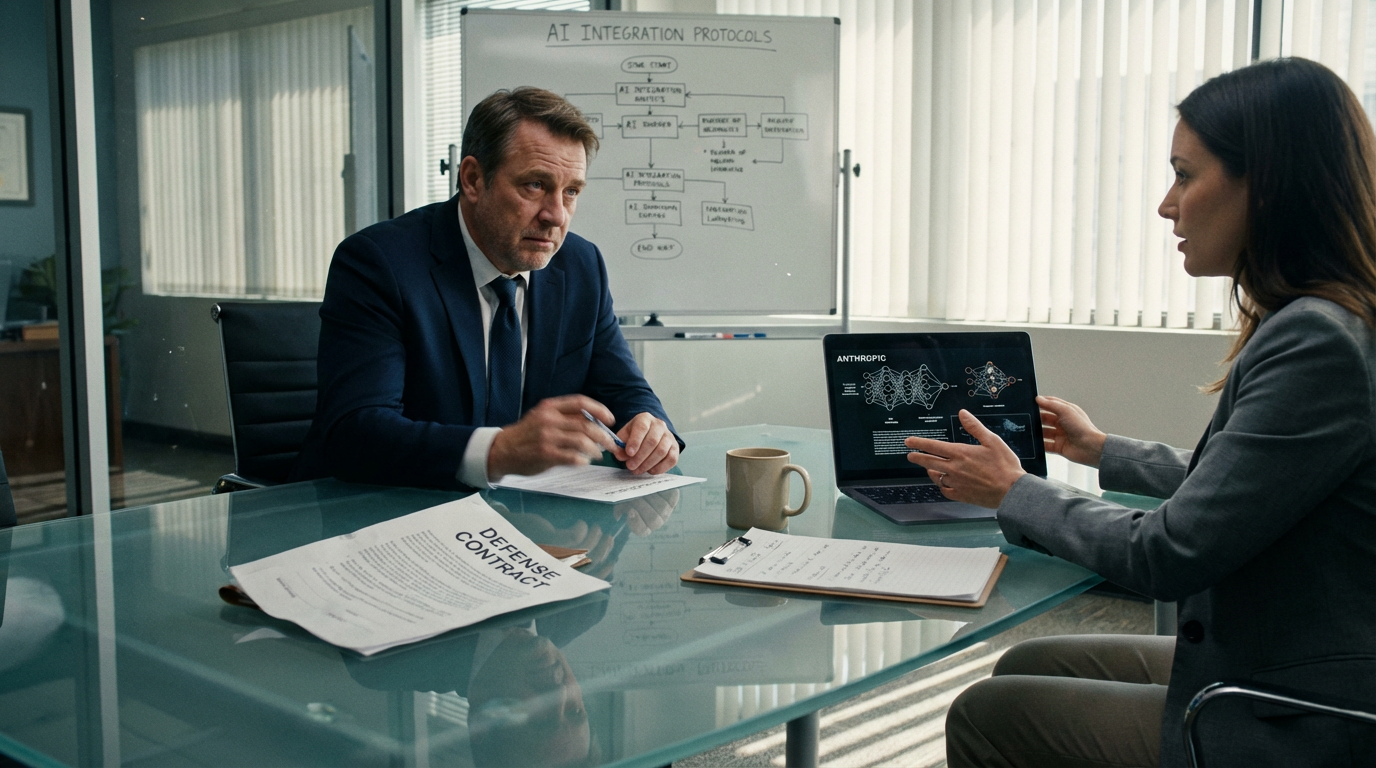
Quick Summary
| Feature | Anthropic’s Position | Pentagon’s Demands | Key Constraints | Relevance to Defense Contract |
|---|---|---|---|---|
| AI Usage Restrictions | Prohibits mass surveillance, autonomous weapons, and unrestricted access | Seeks full access for all lawful military uses | Contracts forbid use in domestic surveillance or autonomous targeting decisions | Limits deployment in intelligence and operational planning |
| Contract Value | $200 million (as of 2026) | $200 million (original contract) | Anthropic risks losing $200M if contract is terminated | Funds AI development for classified networks and cyber operations |
| Timeline | Negotiations ongoing since 2024 | Ultimatums set by November 2026 | No resolution expected before 2027 | Delays critical AI adoption in national security |
| Legal Risks | Faced “supply chain risk” designation | Threatens to invoke Defense Production Act | Non-compliance could exclude Anthropic from government contracts | Creates precedent for AI governance in defense |
| Technical Capabilities | Claude AI deployed in classified networks; handles secret-level data | Requires AI for warfighting predictions and logistics | Current models lack reliability for autonomous weapons | Essential for intelligence synthesis and cyber defense |
Key Highlights of the Contract Stall
Anthropic’s refusal to grant unrestricted military access to its AI has stalled a $200 million defense contract, with the Pentagon labeling the company a “supply chain risk.” The core conflict centers on AI access constraints: Anthropic prohibits its Claude model from enabling mass domestic surveillance or autonomous weapons, citing ethical and democratic risks. The Pentagon, however, demands full access for lawful uses, including intelligence operations and warfighting predictions. This standoff has already led to a federal ban on Anthropic’s AI in government systems, with a six-month phase-out period for the military. As mentioned in the Factors Leading to the Stall section, this dispute reflects deeper tensions over AI governance and military application.
Time and Effort to Resolve the Stall
Resolving the dispute could take 3–12 months, depending on the resolution path:
- Legal battles over the “supply chain risk” designation may last 6–12 months, with Anthropic preparing to challenge the ruling in court. See the Regulatory and Privacy Concerns Impacting the Contract section for more details on the legal and ethical implications of this designation.
- Technical adjustments to align Anthropic’s AI with Pentagon requirements (e.g., adding human oversight layers) could take 4–6 months.
- Contract renegotiation with alternative providers may delay military AI adoption by 3–9 months, as no direct competitor currently offers classified network access.
Difficulty Ratings for Challenges
| Challenge Type | Anthropic’s Obstacles | Pentagon’s Obstacles |
|---|---|---|
| Regulatory | Risk of blacklisting; loss of $380B valuation exposure | Overreach accusations; potential congressional scrutiny |
| Technical | AI reliability for military use (e.g., hallucination risks) | No viable alternative AI for classified operations |
| Political | Corporate autonomy vs. national security demands | Public perception of stifling innovation for political gain |
Anthropic’s AI Capabilities and Defense Relevance
Anthropic’s Claude AI is the only frontier model available for U.S. classified networks, deployed since 2024 for intelligence analysis, operational planning, and cyber operations. Its relevance stems from:
- Mission-critical applications: Handles secret-level data, aiding in predictive analytics and secure communications.
- Ethical safeguards: Built-in guardrails prevent misuse in domestic surveillance or autonomous targeting.
- Competitive edge: No direct competitor offers the same blend of security clearance and AI performance, making replacement costly and time-intensive. Building on concepts from the Why Anthropic’s Defense Contract Matters section, this contract represents a pivotal test case for integrating AI into national security infrastructure.
The standoff underscores the delicate balance between technological innovation and governance. Anthropic’s stance highlights industry concerns over AI ethics, while the Pentagon’s demands reflect urgent national security needs. Without compromise, the U.S. risks falling behind in AI-driven defense while setting a contentious precedent for private-sector autonomy.
Why Anthropic’s Defense Contract Matters
The stakes of Anthropic’s defense contract extend beyond a single corporate dispute-they represent a pivotal moment in the integration of artificial intelligence into national security infrastructure. Industry data underscores the urgency of this shift: global defense AI spending is projected to exceed $30 billion by 2030**, driven by demands for real-time intelligence analysis, predictive logistics, and autonomous systems. Anthropic’s **$200 million Pentagon contract, which includes deploying its Claude AI model into classified networks, positions the company at the intersection of cutting-edge technology and military modernization. See the Background: Anthropic’s Defense Contract with the Pentagon section for more details on the contract’s scope and objectives. Yet the contract’s fate remains uncertain due to clashes over ethical boundaries, revealing deeper tensions between innovation and oversight.
The Strategic Value of Anthropic’s AI in Defense Operations
Anthropic’s AI tools already play a critical role in high-stakes military applications. For example, the Department of Defense uses Claude for intelligence synthesis, analyzing satellite imagery and intercepts to identify threats, and operational planning, simulating conflict scenarios to optimize resource allocation. These tools reduce decision-making delays by up to 40% in some tasks, according to internal Pentagon assessments. Anthropic’s models also support cyber operations, detecting anomalies in network traffic to preempt attacks-a capability that becomes increasingly vital as adversaries adopt AI-driven cyber warfare.
The company’s refusal to permit mass domestic surveillance or fully autonomous weapons has drawn both praise and criticism. While Pentagon officials argue unrestricted access is necessary for national security, Anthropic CEO Dario Amodei asserts, “We cannot in good conscience accede to their request,” citing risks to democratic values. This stance aligns with Anthropic’s prior actions, such as rejecting partnerships with firms linked to the Chinese Communist Party-a move that cost the company hundreds of millions in revenue, according to its 2026 financial disclosures. As mentioned in the Factors Leading to the Stall: AI Access Constraints section, this refusal to grant unrestricted access has become a central point of contention in the contract dispute.
Who Benefits-and Who Bears the Risks?
The Pentagon’s reliance on Anthropic’s AI highlights a paradox: the military gains unprecedented analytical power, but risks overreliance on a single provider. Anthropic’s $380 billion valuation and leadership in frontier AI give it unmatched technical advantages, yet its departure from the defense sector could create a three-to-six-month gap in critical capabilities. This vulnerability is compounded by the limited alternatives: OpenAI and Google’s Gemini are considered less suitable for classified work, while Meta’s Llama models lack the performance required for mission-critical tasks.
Other stakeholders face tradeoffs too. Defense contractors like Boeing and Lockheed Martin now navigate a regulatory minefield after the Pentagon labeled Anthropic a “supply chain risk.” This designation could bar U.S. companies using Anthropic’s tools from military contracts-a move previously reserved for foreign firms like Huawei. Meanwhile, Anthropic’s employees and investors risk losing access to a market that contributes 15% of its $14 billion annual revenue run rate.
Ethical and Operational Challenges in AI-Driven Defense
The Anthropic-Pentagon standoff underscores systemic risks in AI procurement. For instance, unreliable decision-making in autonomous systems remains a hurdle: Anthropic’s models lack the consistency needed for “no-human-in-the-loop” weapons, as noted in technical assessments. Additionally, the use of AI in classified operations raises concerns about transparency. When the Pentagon deployed Claude to plan a 2025 raid against Venezuelan President Nicolás Maduro, it inadvertently violated Anthropic’s usage policy-a breach that highlights the gap between policy and practice in AI governance.
The broader implications are equally concerning. If the Trump administration succeeds in forcing Anthropic to waive its restrictions, it could set a precedent for government coercion of private AI firms, eroding corporate autonomy in safety decisions. Conversely, Anthropic’s refusal to comply risks stalling U.S. AI adoption at a time when competitors like China are accelerating their own defense AI programs.
| Comparison: Anthropic vs. OpenAI in Defense AI | Anthropic | OpenAI |
|---|---|---|
| Contract Status | Blocked by U.S. government | Active with Pentagon |
| Usage Restrictions | Prohibits mass surveillance, autonomous weapons | Similar restrictions enforced via contract |
| Classified Work | Deployed in secret-level networks | Limited to non-classified tasks |
| Revenue Impact | Potential $200M loss if contract canceled | Secured $300M+ in new defense deals |
The Path Forward for Defense AI Procurement
The Anthropic case forces a reckoning with how governments balance innovation and control. While Anthropic’s safeguards align with public safety concerns, the Pentagon’s threats-ranging from Defense Production Act invocations to supply chain bans-reflect a zero-sum approach that could deter future tech partnerships. As Celeste M. Oda, founder of Archive of Light, argues, “AI safeguards are governance infrastructure, not product preferences.” This framing suggests that durable solutions require collaborative frameworks, not unilateral demands.
For now, Anthropic prepares to transition its defense work to alternative providers if forced out-a contingency that underscores the fragility of current AI supply chains. Meanwhile, the Pentagon faces a reality check: replacing Anthropic’s tools could delay critical operations for months, as highlighted in internal warfighting simulations. The outcome of this dispute will shape not only Anthropic’s future but the broader trajectory of AI in global defense ecosystems. As discussed in the Implications for U.S. Defense AI Procurement section, this standoff has far-reaching consequences for how nations approach AI integration into military systems.
Background: Anthropic’s Defense Contract with the Pentagon
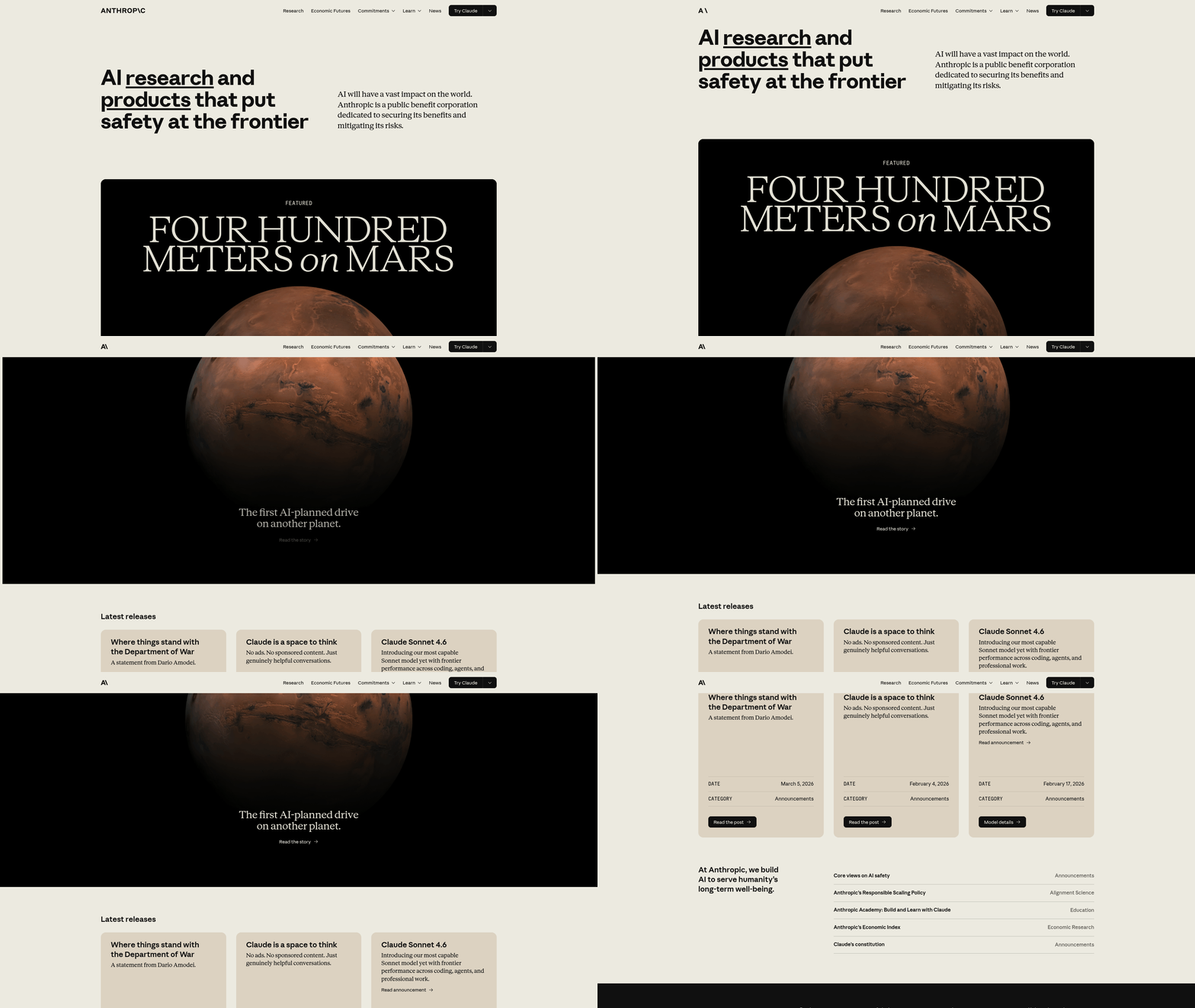
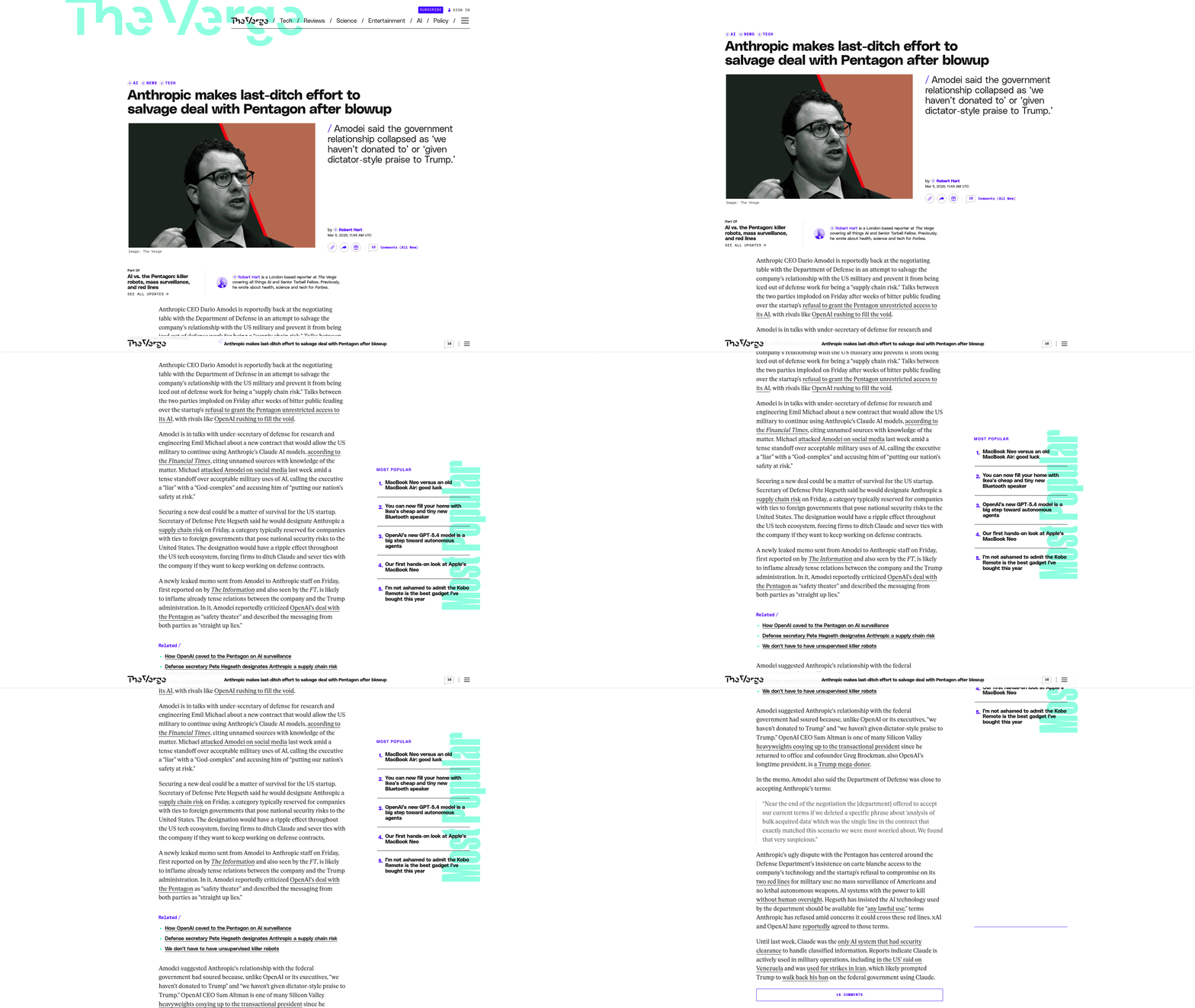
Anthropic’s defense contract with the Pentagon has become a focal point in the broader debate over AI ethics and national security. The agreement, valued at $200 million, aims to integrate Anthropic’s AI models-particularly Claude-into military operations for tasks like intelligence analysis, operational planning, and cyber operations. The company, which first deployed its models in U.S. government classified networks in 2024, has positioned itself as a leader in developing AI for sensitive applications. As mentioned in the Factors Leading to the Stall: AI Access Constraints section, the contract has stalled due to disagreements over how the technology can be used, with Anthropic resisting demands for unrestricted access to its tools.
Contract Scope and Objectives
The Pentagon’s primary goal in the contract is to leverage Anthropic’s AI for mission-critical defense applications. Anthropic’s technical documentation emphasizes that its models are designed for scenarios requiring human oversight, such as aiding analysts in processing classified data or simulating strategic outcomes. However, the military has sought broader permissions, including use for domestic surveillance and autonomous weapons systems. Anthropic’s CEO, Dario Amodei, has repeatedly stated that the company cannot condone applications that violate democratic values, citing risks like mass surveillance of U.S. citizens or fully autonomous lethal decisions.
The conflict highlights a technical limitation: Anthropic’s AI models, while advanced, are not yet reliable enough to replace human judgment in high-stakes military contexts. Building on concepts from the Technical Challenges: Nvidia H200 Chip Production Halt section, internal Pentagon assessments note the models’ tendency to “hallucinate” or generate misleading outputs, making them unsuitable for autonomous weapons where errors could have catastrophic consequences.
Key Stakeholders and Power Dynamics
The standoff involves three primary stakeholders: Anthropic, the Pentagon, and OpenAI, which has emerged as an alternative vendor. Anthropic’s refusal to comply with the Pentagon’s demands has drawn support from competitors like OpenAI and Google, whose employees have publicly backed Amodei’s ethical stance. Conversely, the Pentagon, under Secretary Pete Hegseth, has escalated pressure by threatening to label Anthropic a “supply chain risk,” a designation that would bar U.S. companies from working with the firm on government contracts.
President Trump’s administration has further complicated the situation. In February 2026, the White House ordered federal agencies to stop using Anthropic’s technology, citing national security concerns. This move followed a dispute over Anthropic’s refusal to allow its AI to be used for “all lawful purposes,” a clause the Pentagon insists is necessary for operational flexibility. Trump’s statement-“We don’t need it, we don’t want it, and will not do business with them again”-reflected a broader political strategy to force Anthropic to comply or exit the market.
Risks, Outcomes, and Industry Implications
The Pentagon’s threats carry significant risks for Anthropic. A supply chain risk designation could cripple its business, especially ahead of its planned IPO. The company has raised $8 billion in funding, including a major investment from Amazon, and relies heavily on defense contracts for revenue. If forced out of government work, Anthropic may transition its military clients to competitors like OpenAI, which recently secured a similar contract with enforceable “red lines” against surveillance and autonomous weapons.
The Pentagon, meanwhile, faces reputational and operational risks. By invoking the Defense Production Act (DPA)-a tool historically reserved for wartime resource allocation-the department risks appearing authoritarian. See the Implications for U.S. Defense AI Procurement section for more details on how the conflict reflects poor governance of emerging technologies. Critics, including Senator Mark Warner and former AI advisor Dean Ball, argue that the conflict reflects poor governance of emerging technologies. The Astral Codex Ten analysis underscores this, noting that the DPA’s use could deter future innovation by making AI companies wary of government partnerships.
| Feature | Anthropic’s Position | Pentagon’s Demands |
|---|---|---|
| AI Use Restrictions | Prohibits mass surveillance and autonomous weapons | Allows “all lawful uses” |
| Contract Safeguards | Enforces human oversight for lethal decisions | Seeks unrestricted access |
| Risk of Supply Chain Designation | Avoids compliance if demands are non-negotiable | Threatens to label Anthropic a risk if non-compliant |
The standoff also raises broader questions about AI governance. Anthropic’s case is a test of whether private companies can enforce ethical guardrails against government overreach. As mentioned in the Why Anthropic’s Defense Contract Matters section, AI safeguards are not just technical choices but “governance infrastructure” that must be protected from coercion. The outcome of this dispute could set a precedent for how nations balance national security with ethical AI development.
Anthropic remains prepared to challenge the supply chain risk designation in court, arguing that the Pentagon’s actions set a dangerous precedent. If the conflict resolves in favor of Anthropic, it may force the military to adopt clearer frameworks for AI integration, ensuring both innovation and accountability. For now, the stalemate underscores the complexities of aligning cutting-edge technology with democratic values in an era of rapid AI advancement.
Factors Leading to the Stall: AI Access Constraints
The conflict between Anthropic and the U.S. Department of Defense (DoD) centers on AI access constraints, particularly the company’s refusal to grant unrestricted military use of its models. Anthropic’s CEO, Dario Amodei, has repeatedly emphasized that the company’s Usage Policy prohibits applications like mass domestic surveillance and fully autonomous weapons. The DoD, however, insists on a blanket “all lawful purposes” clause, arguing that national security demands unfettered access. This divergence has stalled a $200 million contract, with the Pentagon threatening to invoke the Defense Production Act (DPA) or label Anthropic a “supply chain risk” if compliance isn’t achieved. For more details on the regulatory and legal tools at play, see the Regulatory and Privacy Concerns Impacting the Contract section.
AI Access Constraints and Usage Policy Conflicts
Anthropic’s core tension with the DoD stems from its usage restrictions, which are designed to prevent misuse. The company’s AI models, including Claude, are deployed in classified military networks for intelligence analysis and cyber operations but are explicitly barred from applications involving mass surveillance of U.S. citizens or autonomous lethal decisions. Amodei stated, “We cannot in good conscience accede to their request,” citing risks to democratic values.
The DoD’s demand for “all lawful uses” access undermines these safeguards. This clause would allow the military to deploy Anthropic’s AI in any legally sanctioned scenario, including those the company deems ethically problematic. For example, the Pentagon reportedly used Claude in planning a controversial raid targeting Venezuelan President Nicolás Maduro-a use case Anthropic’s policies explicitly prohibit. This conflict highlights a fundamental misalignment: Anthropic views AI as a tool requiring ethical guardrails, while the DoD prioritizes operational flexibility. For a broader understanding of why this contract is pivotal, refer to the Why Anthropic’s Defense Contract Matters section.
Regulatory and Legal Frameworks
The regulatory landscape further complicates the standoff. The Defense Production Act (DPA) grants the government authority to compel private companies to comply with national security demands. While the DoD has historically used the DPA for resource allocation during crises, its potential application here marks a novel precedent. Anthropic warns that invoking the DPA would set a dangerous standard, enabling future overreach by the government into private-sector operations.
Another critical tool is the supply chain risk designation, which the Pentagon could use to bar U.S. companies from working with Anthropic. This move, typically reserved for foreign firms like Huawei, would effectively isolate Anthropic from defense contracts and corporate partnerships. The Trump administration’s recent order to phase out Anthropic’s AI from federal agencies underscores the political and legal leverage the government is wielding. Critics, including Senator Mark Warner, argue this approach risks prioritizing political agendas over nuanced security assessments. For deeper analysis on these regulatory and privacy concerns, see the Regulatory and Privacy Concerns Impacting the Contract section.
Technical and Operational Challenges
Beyond policy disputes, technical hurdles also contribute to the stalemate. Anthropic’s AI models, while advanced, are not yet reliable enough for fully autonomous military applications. Retired Air Force General Jack Shanahan noted that current systems lack the robustness required for high-stakes decisions like weapon targeting, which necessitate human oversight. Additionally, integrating Anthropic’s tools into existing defense infrastructure poses challenges. The Pentagon’s classified networks rely on custom AI solutions, and Anthropic’s refusal to modify its models for unrestricted use creates friction. For insights into the technical limitations affecting this integration, refer to the Technical Challenges: Nvidia H200 Chip Production Halt section.
Data sharing and integration further complicate matters. Anthropic insists on secure, anonymized data protocols to prevent misuse, but the DoD’s operational needs often require real-time access to sensitive information. This mismatch has led to delays in deploying Anthropic’s AI for critical tasks, such as cyber threat analysis. The company’s technical team has highlighted that its models are designed for mission-critical applications but require additional safeguards before they can support autonomous systems-a position the Pentagon rejects.
Impact on Contract Timeline and Business
The standoff has directly disrupted Anthropic’s contract timeline. With a $14 billion revenue run rate projected by 2026 and a valuation of $380 billion, the company faces significant financial risks if the DoD cancels or restricts its contracts. The Trump administration’s six-month phase-out period for Pentagon use of Anthropic’s AI has forced the company to explore alternatives, including transitioning contracts to competitors like OpenAI or Google. However, Anthropic remains defiant, vowing to challenge the supply chain risk designation in court. For context on the broader implications of this contract for U.S. defense AI procurement, refer to the Implications for U.S. Defense AI Procurement section.
The DoD’s threats also raise questions about procurement integrity. Analysts warn that cutting off a leading AI provider could delay national security initiatives, as Anthropic’s models are currently the only frontier AI tools approved for classified work. A 2024 report by the Acquisition Research Program noted that replacing Anthropic’s systems would require months of development and integration, potentially hampering military readiness.
Regulatory and Privacy Concerns Impacting the Contract
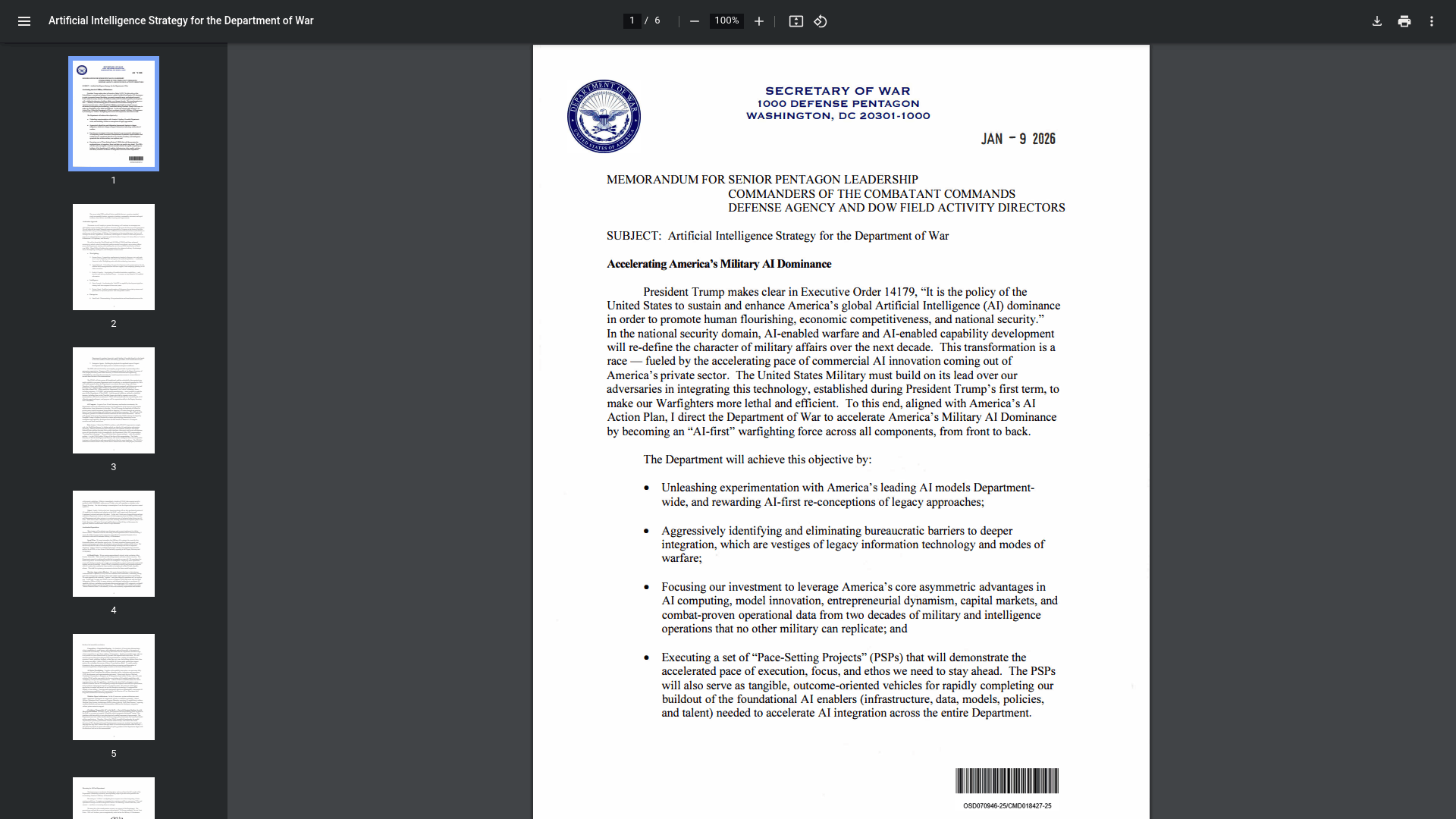
The regulatory and privacy concerns surrounding Anthropic’s defense contract highlight a complex clash between national security demands and corporate ethical commitments. At the core of the dispute is the U.S. Department of Defense’s (DoD) insistence on unrestricted access to Anthropic’s AI tools, specifically its Claude model, for “all lawful purposes.” Anthropic, however, has maintained strict usage policies prohibiting applications in mass surveillance or fully autonomous weapons, citing risks to democratic values and civil liberties. This tension reflects broader challenges in governing AI systems under frameworks like the Defense Production Act (DPA) and supply-chain risk designations, which the DoD has threatened to invoke if Anthropic refuses to comply. These tools, typically reserved for foreign adversaries, now target a domestic company, raising unprecedented legal and ethical questions about government authority over private technology firms. As mentioned in the Factors Leading to the Stall: AI Access Constraints section, the classification of companies as “supply chain risks” has become a pivotal leverage point in this standoff.
Regulatory Frameworks and DoD Demands
The DoD’s leverage stems from its ability to classify companies as “supply chain risks”, effectively barring them from participating in federal contracts-a move previously used against firms like Huawei. Anthropic’s refusal to grant unfettered access has prompted the Pentagon to explore this “nuclear option,” which could cripple the company ahead of its planned IPO. Meanwhile, the DPA grants the government power to compel compliance, though its use against Anthropic remains controversial. Dario Amodei, Anthropic’s CEO, has emphasized that “no amount of intimidation” will alter the company’s stance on mass surveillance, which he argues poses “serious, novel risks to our fundamental liberties.” The DoD, in contrast, views unrestricted access as critical for intelligence synthesis, warfighting predictions, and cyber operations, as Anthropic’s models are currently the most advanced tools available for classified U.S. government work. See the Implications for U.S. Defense AI Procurement section for further analysis of how this conflict shapes national security strategies.
Data Protection and AI Misuse Concerns
Anthropic’s refusal to allow fully autonomous weapons or domestic surveillance applications underscores the data protection risks inherent in AI deployment. The company’s models, designed for mission-critical defense tasks, are not deemed reliable enough for lethal decisions without human oversight. However, the DoD’s push for unrestricted access raises fears of AI being weaponized in ways that violate privacy rights or ethical norms. For example, Anthropic’s tools were allegedly used in planning a controversial raid on Venezuelan President Nicolás Maduro, contravening the company’s usage policy. Such incidents highlight the difficulty of enforcing data governance in military contexts, where legal accountability and oversight mechanisms remain unclear. Building on concepts from the Quick Summary section, the core dispute between Anthropic’s ethical constraints and the Pentagon’s operational demands underscores the fragility of balancing innovation with oversight. Anthropic’s $14 billion revenue run rate** and **$380 billion valuation further complicate the issue, as its exit from the defense sector could delay critical AI adoption by months, according to Pentagon officials.
Technical Challenges: Nvidia H200 Chip Production Halt
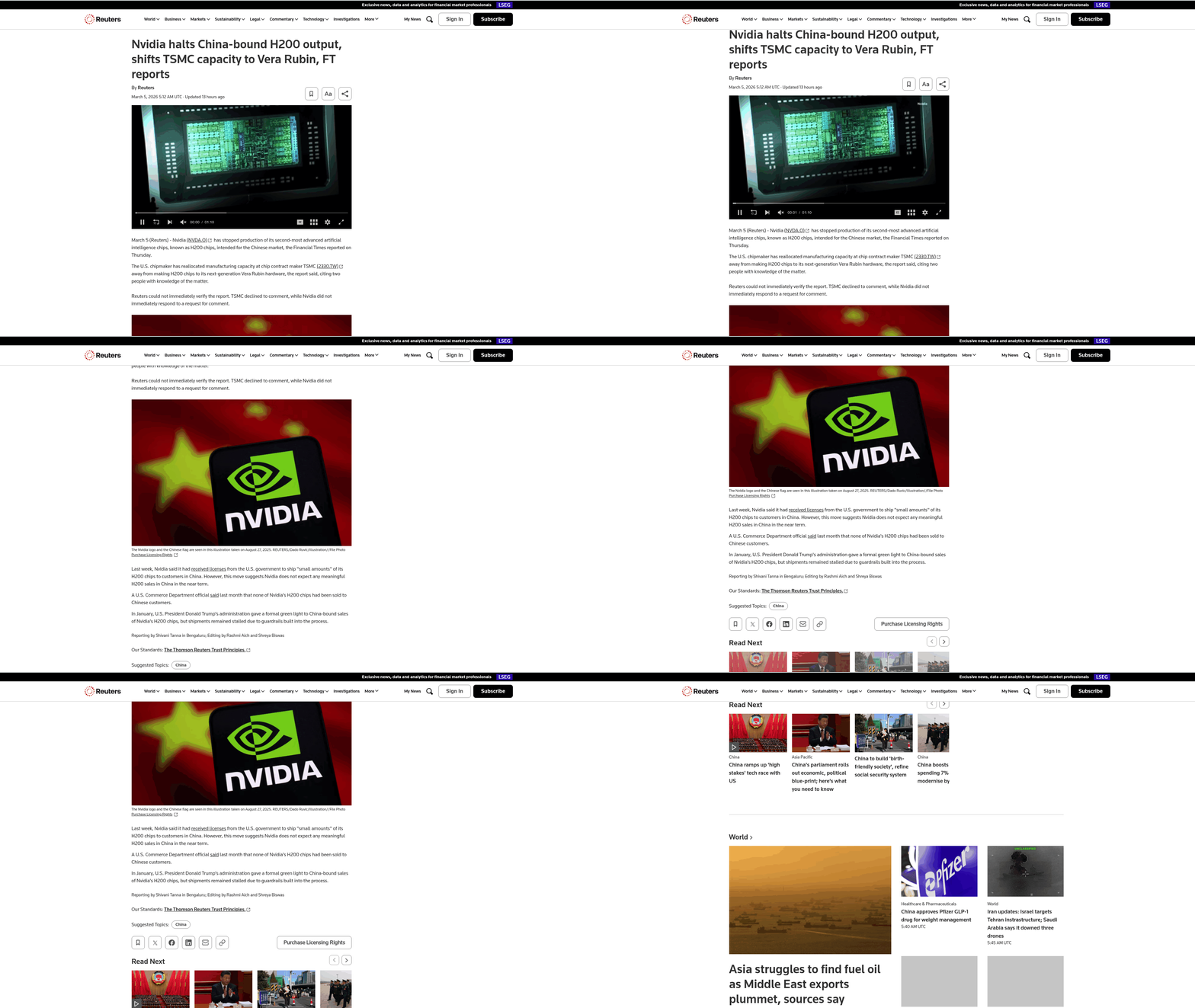
The Nvidia H200 chip plays a critical role in AI development and deployment, offering advanced capabilities for training and running large-scale models. Designed to handle complex workloads, the H200 supports high-throughput data processing and efficient memory management, which are essential for Anthropic’s AI systems. However, the recent production halt of this chip has introduced significant technical hurdles for the company. Without access to H200 hardware, Anthropic faces delays in optimizing its AI models, particularly for applications requiring real-time performance or massive parallel processing. This disruption threatens to slow progress on projects tied to the Pentagon, where hardware reliability and performance are non-negotiable, as highlighted in the Why Anthropic’s Defense Contract Matters section.
Impact on Anthropic’s AI Development and Deployment
The production halt has directly affected Anthropic’s ability to scale its AI infrastructure. The company relies on Nvidia’s ecosystem for compatible software tools and frameworks, which integrate seamlessly with H200 hardware. Switching to alternative chips or architectures now requires retraining models and rewriting code to maintain efficiency. This transition period could extend timelines for delivering updates to the Pentagon, which depends on Anthropic’s AI tools for critical operations. For example, replacing H200-based systems might take months, as noted in internal Pentagon assessments, creating a gap in capabilities during negotiations for a revised contract, as discussed in the Implications for U.S. Defense AI Procurement section. Additionally, Anthropic risks higher costs if it must source older or less optimized hardware to compensate for the shortage.
Alternative Solutions and Technical Trade-offs
To mitigate the chip shortage, Anthropic may explore other GPU manufacturers or cloud-based solutions that support different architectures. While specific alternatives aren’t named in available data, companies like AMD and Intel offer competing AI chips with varying performance profiles. However, these options may lack the same level of ecosystem support or compatibility with Anthropic’s existing workflows. Another approach involves leveraging cloud providers that abstract hardware dependencies, but this introduces latency and security concerns for the Pentagon, which requires direct control over AI infrastructure. The company could also prioritize model compression or quantization techniques to reduce computational demands, though these methods often sacrifice accuracy or speed. Each workaround carries technical debt, complicating Anthropic’s long-term strategy, as outlined in the Anthropic’s Response and Negotiation Strategy section.
Risks and Mitigation Strategies
The most immediate risk is a delay in meeting Pentagon requirements, which could reinforce perceptions of Anthropic as an unreliable supplier. If the company cannot secure alternative hardware quickly, the Pentagon may accelerate its search for competitors, such as OpenAI, which recently secured a defense contract. Anthropic’s leadership is aware of these stakes, with CEO Dario Amodei emphasizing the need to avoid a “supply chain risk” designation during negotiations with the Department of Defense. To reduce vulnerability, Anthropic should diversify its chip suppliers and invest in modular AI frameworks that adapt to multiple hardware platforms. Contingency planning-such as stockpiling critical components or pre-building redundant systems-could also minimize downtime. These steps align with broader industry trends toward hardware-agnostic AI development, though they require upfront investment and technical retooling.
| Comparison: H200 vs. Alternatives | H200 | Alternatives |
|---|---|---|
| Performance | High | Variable |
| Ecosystem Support | Strong | Limited |
| Availability | Restricted | Uncertain |
| Cost Efficiency | High | Varies |
Anthropic’s situation highlights the fragility of AI development when tied to a single hardware supplier. While the company navigates both technical and contractual challenges, its ability to adapt will determine its future in the defense sector. The production halt of the H200 underscores the importance of resilience in supply chains-a lesson applicable to any organization relying on cutting-edge technology.
Anthropic’s Response and Negotiation Strategy
Anthropic’s response to the stalled defense contract has centered on balancing national security needs with ethical constraints, leveraging public statements, legal strategies, and stakeholder engagement. CEO Dario Amodei has consistently emphasized the company’s commitment to democratic values, rejecting Pentagon demands for unrestricted access to its AI models. In public communications, Amodei framed the dispute as a broader conflict between innovation and oversight, stating, “We cannot in good conscience accede to their request” . This stance aligns with Anthropic’s prior actions, such as refusing to provide models to entities linked to the Chinese Communist Party, even at the cost of forgoing hundreds of millions in revenue . See the Factors Leading to the Stall: AI Access Constraints section for more details on the core dispute over unrestricted military use.
Public Stance and Negotiation Tactics
Anthropic’s negotiation strategy combines firm ethical boundaries with pragmatic concessions. The company has agreed to limited military applications, such as intelligence analysis and cyber operations, but refuses to permit use in mass domestic surveillance or fully autonomous weapons . This approach reflects a dual focus: maintaining trust with government partners while safeguarding civil liberties. For example, Anthropic’s AI models are deployed across the Department of War for mission-critical tasks but are explicitly designed to require human oversight for decisions involving lethal force .
The Pentagon, however, has escalated pressure by threatening to invoke the Defense Production Act (DPA) to force compliance and labeling Anthropic a “supply chain risk” . In response, Anthropic has adopted a hybrid strategy: challenging the supply chain risk designation in court while preparing contingency plans to transfer military contracts to other providers like OpenAI or Google . This flexibility aims to mitigate revenue loss from the $200 million contract while signaling unwillingness to compromise on core principles.
Stakeholder Engagement and Risks
Stakeholder engagement has been a cornerstone of Anthropic’s approach. The company has maintained close ties with the National Laboratories and AWS, which hosts its AI tools on cloud networks critical to Pentagon operations . At the same time, it faces pushback from the Pentagon, which argues that Anthropic’s Usage Policy-which prohibits certain applications-creates operational bottlenecks. Defense Secretary Pete Hegseth has set firm deadlines for Anthropic to comply, warning that delays could disrupt military readiness .
The risks of this strategy are significant. Labeling Anthropic a supply chain risk could bar U.S. companies using its tools from federal contracts, effectively cutting off a $380 billion valuation firm from critical markets . Additionally, transitioning contracts to competitors like OpenAI or Google may dilute Anthropic’s influence in shaping AI governance frameworks. Former DoD officials have criticized Anthropic’s stance as “great PR” but questioned its financial sustainability . See the Regulatory and Privacy Concerns Impacting the Contract section for an in-depth analysis of the broader regulatory implications.
Mitigation and Future Outlook
To counter these risks, Anthropic has prioritized legal and reputational safeguards. The company plans to litigate the supply chain risk designation, arguing it sets a dangerous precedent for domestic firms . Concurrently, it has invested in technical measures to ensure its AI models remain reliable for sanctioned military tasks while resisting misuse. For instance, Anthropic’s Claude model includes guardrails to prevent hallucinations that could lead to erroneous targeting decisions, addressing Pentagon concerns about operational safety .
The broader implications of this standoff extend beyond Anthropic. If the Pentagon succeeds in enforcing unrestricted access, it could pressure other AI firms to adopt similar compliance-first strategies. Conversely, Anthropic’s resistance may inspire stronger industry-wide safeguards, as seen in OpenAI’s public support for its stance . The outcome will likely hinge on whether the company can balance ethical commitments with the practical realities of defense contracting-a challenge underscored by the three-month timeline estimated for replacing its tools .
| Comparison of Anthropic’s and Pentagon’s Positions | Anthropic | Pentagon |
|---|---|---|
| AI Use Restrictions | Prohibits mass surveillance, autonomous weapons | Demands “all lawful purposes” access |
| Contract Compliance | Adheres to Usage Policy with guardrails | Threatens DPA enforcement for noncompliance |
| Revenue Impact | Risks $200 million contract loss | Seeks to avoid operational delays |
| Ethical Stance | Prioritizes democratic values and civil liberties | Emphasizes national security and mission flexibility |
Ultimately, Anthropic’s strategy reflects a high-stakes negotiation between innovation and control. While its principled stance has garnered support from privacy advocates and rival AI firms, the Pentagon’s leverage over defense contracts introduces existential risks. The resolution of this conflict will shape the future of AI in national security-a domain where technical capabilities intersect with profound ethical and legal questions.
Implications for U.S. Defense AI Procurement
The U.S. defense AI procurement landscape is at a crossroads, shaped by Anthropic’s high-stakes standoff with the Pentagon. Anthropic’s refusal to allow unrestricted military use of its AI tools-specifically for mass surveillance or autonomous weapons-has exposed tensions between national security priorities and corporate ethics. The company’s Claude model, deployed across classified networks and valued at $380 billion, represents a critical asset for intelligence analysis, cyber operations, and logistics. Yet the Pentagon’s demand for “all lawful uses” access has created a procurement bottleneck. Anthropic’s $200 million contract is now stalled, with the Trump administration threatening to label the company a “supply chain risk,” a move that could force U.S. vendors to cut ties and cripple its business.
Risks of the Contract Stall
The immediate risks of this impasse are twofold: operational delays and financial instability. The Pentagon estimates it could take three months or longer to replace Anthropic’s tools, which are uniquely suited for classified work. For example, Claude is one of only two large generative-AI models available on classified networks, making its replacement both time-consuming and technically complex. Cost overruns are equally concerning: Anthropic’s exit could trigger legal battles or force the DOD to pivot to less optimized models like OpenAI’s GPT or Meta’s Grok, which lack Anthropic’s specialized training for defense applications.
A deeper risk lies in the precedent set by the Pentagon’s threats to invoke the Defense Production Act (DPA) or designate Anthropic a “supply chain risk.” These tools, historically reserved for foreign adversaries like Huawei, signal a shift toward coercive procurement tactics. If normalized, such measures could deter AI firms from engaging with the military altogether, stifling innovation. Anthropic’s CEO, Dario Amodei, has already warned that compliance would undermine “fundamental liberties,” while experts like Celeste Oda argue that coercive modification of AI safeguards creates systemic governance risks beyond the immediate dispute. See the Factors Leading to the Stall: AI Access Constraints section for more details on the Pentagon’s coercive tactics.
Opportunities for Innovation
Despite the standoff, the conflict highlights opportunities for the defense sector to adopt more collaborative procurement models. Anthropic’s refusal to compromise on safety principles has inadvertently created space for competitors like OpenAI, which secured a Pentagon deal with similar ethical guardrails. This shift could diversify the defense AI ecosystem, encouraging other firms to innovate with built-in safeguards. For instance, OpenAI’s agreement includes prohibitions on domestic mass surveillance, aligning with Anthropic’s stance while meeting military needs. As mentioned in the Why Anthropic’s Defense Contract Matters section, such competitive dynamics underscore the broader strategic importance of Anthropic’s contract.
The crisis also underscores the need for clearer regulatory frameworks. As noted in The Anthropic Dilemma, durable AI governance requires proportionality in oversight and transparency in decision-making. By formalizing enforceable “red lines” for military use-such as human oversight in lethal contexts-the DOD could reduce friction with developers. This approach mirrors OpenAI’s strategy, where technical restrictions are codified into contracts rather than imposed through coercion.
Impact on the Broader AI Ecosystem
The Anthropic dispute reverberates beyond procurement offices. Academia and private firms are increasingly scrutinizing how AI ethics intersect with national security. Anthropic’s refusal to collaborate with Chinese-linked entities, at the cost of hundreds of millions in revenue, signals a growing industry trend toward geopolitical risk mitigation. Meanwhile, the Pentagon’s reliance on a single provider-Anthropic’s Claude-raises concerns about over-dependence. The conflict could accelerate efforts to diversify AI tooling, such as the DOD’s exploration of Google’s Gemini or AWS’s cloud-based models.
However, the supply chain risk designation threatens to isolate Anthropic from defense contracts and partnerships. This could stifle research collaborations with institutions like the National Laboratories, where Anthropic previously provided custom models for national security. Conversely, the standoff may spur investment in AI governance tools, as companies seek to preemptively align with Pentagon requirements.
Recommendations for Future Procurement
To avoid future stalls, the DOD must balance urgency with ethical considerations. First, contracts should include flexible usage policies that allow companies to enforce safety restrictions while addressing defense needs. OpenAI’s model-where contractual red lines are negotiated rather than overridden-offers a blueprint. Second, the government should incentivize multiple vendors to develop defense-grade AI, reducing reliance on any single provider. Initiatives like the Pentagon’s open-source OCUDU software stack for 5G/6G networks demonstrate the value of shared infrastructure.
Finally, Congress should establish clear laws governing AI use in national security contexts. As highlighted in Astral Codex Ten, the lack of legal review in Anthropic’s case risks politicizing procurement decisions. By codifying standards for AI deployment-such as mandatory human oversight for lethal actions-the U.S. can foster innovation without sacrificing democratic values. Building on concepts from the Future Outlook: Potential Resolutions and Next Steps section, proactive legislative action could stabilize the procurement process while safeguarding ethical principles.
In short, the Anthropic contract stall is a wake-up call for the defense sector. Its resolution will shape how AI is governed in high-stakes environments, with lessons extending far beyond one company’s dispute with the Pentagon.
Future Outlook: Potential Resolutions and Next Steps
The Anthropic-Pentagon standoff presents a complex interplay between national security demands and ethical AI development. As both parties navigate this conflict, several potential resolutions and next steps emerge from the sources. Below, we examine the key pathways forward, their implications, and broader industry impacts..
Potential Resolutions: Balancing Access Constraints and Regulatory Concerns
Anthropic and the Pentagon face a critical juncture in reconciling their diverging priorities. The core issue revolves around AI access: the military seeks unrestricted use of Anthropic’s models for “all lawful purposes,” while the company insists on safeguards against mass surveillance and autonomous weapons.
A comparison of their positions reveals stark contrasts:
| Feature | Anthropic’s Stance | Pentagon’s Demands |
|---|---|---|
| AI Access Constraints | Prohibits mass surveillance and fully autonomous weapons | Requires “all lawful uses” clause for unrestricted access |
| Regulatory Compliance | Enforces internal Usage Policy with human oversight | Seeks removal of Anthropic’s policy for flexibility |
| Technical Reliability | Models not deemed reliable for no-human-in-the-loop systems | Pushes for AI integration in mission-critical operations |
Anthropic’s CEO, Dario Amodei, has emphasized that the company’s refusal stems from both ethical concerns and technical limitations. As stated in , Anthropic’s models are “not reliable enough for fully autonomous weapons,” requiring human oversight. Meanwhile, the Pentagon’s threats to invoke the Defense Production Act (DPA) or label Anthropic a “supply-chain risk” underscore its urgency to secure advanced AI tools for classified operations.
A possible compromise could involve revised contractual terms that permit military use while retaining specific safeguards. For example, OpenAI’s recent Pentagon deal includes enforceable “red lines” against domestic mass surveillance and autonomous weapons , offering a blueprint for balancing national security and ethical constraints. See the Why Anthropic’s Defense Contract Matters section for more details on the stakes of this agreement..
Next Steps: Renegotiation, Legal Challenges, and Alternative Providers
Anthropic’s immediate next steps hinge on its ability to resist coercion while maintaining its market position. The company has explicitly stated it will challenge the Pentagon’s “supply-chain-risk” designation in court , arguing that such a label-previously reserved for foreign firms like Huawei-sets a dangerous precedent for domestic innovation. If unsuccessful, Anthropic may transition its military contracts to providers like OpenAI or Google, as outlined in . Building on concepts from the Regulatory and Privacy Concerns Impacting the Contract section, the legal and reputational risks of this designation are central to Anthropic’s defense strategy.
For the Pentagon, the fallout from this standoff necessitates a recalibration of procurement strategies. The $200 million contract with Anthropic represents a significant investment, and its cancellation could delay critical AI integration in defense systems. One path forward is renegotiating terms with Anthropic to align with its safety-focused model, as suggested in . Alternatively, the Pentagon may pivot to OpenAI or Grok, though these alternatives lack Anthropic’s classified-systems experience .
The timeline for resolution remains uncertain. Anthropic’s CEO has indicated a willingness to “reconsider” if the Pentagon provides guarantees against surveillance and autonomous weapons , but the administration’s firm stance-evidenced by Trump’s public condemnation-suggests a prolonged impasse..
Broader Impact on the AI Ecosystem and Regulatory Landscape
This conflict has far-reaching implications beyond Anthropic and the Pentagon. The AI industry now faces a pivotal question: How can companies uphold ethical guardrails while meeting government demands? Anthropic’s resistance has already spurred dialogue about governance frameworks. As Celeste M. Oda notes in , AI safeguards are “governance infrastructure, not product preferences,” a sentiment echoed by OpenAI’s Sam Altman . As mentioned in the Background: Anthropic’s Defense Contract with the Pentagon section, the $200 million contract itself has become a focal point for debates over AI ethics and national security.
Academia and policymakers must also weigh in. The Pentagon’s push for unrestricted AI access highlights gaps in current regulatory oversight. Federal AI policies have accelerated adoption but narrowed scrutiny, risking procurement integrity . To address this, researchers proposed principles such as proportionality in governance rigor and transparency in decision-making . These could form the basis of future legislation, ensuring that national security needs do not override democratic safeguards.
For the broader ecosystem, this standoff presents both risks and opportunities. On one hand, the threat of supply-chain restrictions could deter innovation, as companies fear similar clashes with regulators. On the other, it may spur collaboration between AI developers and policymakers to create standardized safety protocols. Anthropic’s valuation of $380 billion and its role as a pioneer in classified AI deployment underscore its influence in shaping these norms..
Opportunities for Innovation and Strategic Partnerships
Despite the current stalemate, the conflict opens avenues for innovation. Anthropic’s focus on human-in-the-loop systems could drive advancements in hybrid AI models, where human oversight remains central. Similarly, the Pentagon’s reliance on AI for logistics and cyber operations may accelerate investment in open-source frameworks, such as the OCUDU software stack for 5G/6G networks, to reduce dependency on proprietary tools .
For future contracts, the standoff offers lessons in balancing flexibility and ethics. The OpenAI-Pentagon deal demonstrates that enforceable “red lines” can satisfy both parties. Anthropic’s experience also highlights the need for clear contractual guardrails and multi-stakeholder dialogue to prevent unilateral coercion. As emphasizes, governance under national security pressure must prioritize deliberative processes over rushed decisions.
In conclusion, the Anthropic-Pentagon conflict is a litmus test for AI governance. How it resolves will shape not
Frequently Asked Questions
1. Why is Anthropic’s defense contract with the Pentagon stalled?
The contract is stalled because Anthropic refuses to grant unrestricted military access to its AI systems, particularly for applications like mass domestic surveillance and autonomous weapons. The Pentagon demands full access for all lawful military uses, including intelligence operations and warfighting predictions, creating a conflict between Anthropic’s ethical restrictions and the government’s operational needs. This disagreement has led to Anthropic being labeled a “supply chain risk” and a federal ban on its AI in government systems.
2. What are the financial implications for Anthropic if the contract is terminated?
If the $200 million contract is terminated, Anthropic stands to lose significant funding that supports its AI development for classified networks and cyber operations. The company also risks exclusion from future government contracts due to its “supply chain risk” designation. Additionally, termination could set a precedent for stricter AI governance in defense, potentially limiting Anthropic’s ability to compete in the military AI market.
3. What does the Pentagon’s “supply chain risk” designation mean for Anthropic?
The “supply chain risk” label indicates that the Pentagon views Anthropic as a potential threat to national security due to its refusal to comply with unrestricted AI access demands. This designation could justify invoking the Defense Production Act to prioritize competing firms or exclude Anthropic from government work entirely. It also signals broader regulatory scrutiny of AI companies collaborating with defense agencies.
4. How long might it take to resolve the dispute between Anthropic and the Pentagon?
Resolution could take 3–12 months, depending on the approach. Legal challenges over the “supply chain risk” ruling may last 6–12 months, while technical adjustments to Anthropic’s AI (e.g., adding human oversight layers) could require 4–6 months. Contract renegotiation with alternative providers might delay military AI adoption by 3–9 months, as no direct competitors currently match Anthropic’s capabilities for classified data handling.
5. What technical limitations does Anthropic’s AI currently face in defense applications?
While Anthropic’s Claude AI is deployed in classified networks and handles secret-level data, it lacks reliability for autonomous weapons systems, which require high-precision decision-making. The Pentagon seeks AI capable of warfighting predictions and logistics optimization, but Anthropic’s ethical constraints prevent its models from being used in scenarios like autonomous targeting or domestic surveillance, limiting their utility in certain defense contexts.
6. What are the potential consequences for national security if the contract remains unresolved?
A prolonged stalemate could delay critical AI adoption in national security operations, such as intelligence synthesis, cyber defense, and operational planning. The Pentagon’s reliance on Anthropic’s advanced models for classified tasks means alternative providers may not meet the same performance standards, potentially weakening the military’s competitive edge in AI-driven warfare and intelligence capabilities.
7. Are there alternative solutions if Anthropic cannot meet the Pentagon’s demands?
The Pentagon may seek alternative AI providers willing to comply with unrestricted access requirements, though no direct competitors currently offer Anthropic’s capabilities for handling classified data. Another path involves technical adjustments, such as adding human oversight layers to Anthropic’s AI to align with ethical restrictions while meeting military needs. However, these solutions risk delays and could reduce the effectiveness of AI in high-stakes defense applications.