

Top Automated Payment Solutions: Global Financial Insights

Quick Summary
Automated payment solutions streamline financial workflows, reduce manual errors, and accelerate cash flow for businesses of all sizes. This section compares five leading platforms, highlights Blixo’s strengths, and breaks down implementation timelines and integration complexity. As mentioned in the [Why Automated Payment Solutions Matter] section, the shift toward digital tools has been driven by global adoption rates exceeding 76% in 2023.
Top Automated Payment Solutions Comparison
| Solution | Key Features | Time to Implement | Integration Difficulty | Target Audience |
|---|---|---|---|---|
| Blixo | AI-powered cash application, subscription billing, automated collections | 2–5 days | Medium (ERP/accounting integrations) | SaaS, e-commerce, consultancies, startups |
| Global Payments | Multi-currency processing, fraud detection, payment gateway solutions | 5–10 days | High (custom API setups) | Global enterprises, cross-border retailers |
| Tipalti | AP automation, mass payments, invoice tracking | 3–7 days | Medium (ERP & banking links) | Mid-sized to large businesses, B2B providers |
| TSYS | Payment orchestration, fraud analytics, card processing | 7–14 days | High (enterprise-level systems) | Financial institutions, high-volume merchants |
| WEX | Fuel card management, employee expense tracking, vendor payments | 4–8 days | Medium (HR & accounting sync) | Fleet operators, SMEs with contractors |
Blixo stands out for its all-in-one AR automation, combining subscription billing, AI-driven cash application, and a customer portal. Its integration with QuickBooks, Xero, and ERPs like Oracle/SAP suits businesses needing scalability without overcomplicating workflows. See the [Automated Invoicing and Cash Application] section for more details on how AI-powered cash application improves reconciliation efficiency.
Blixo’s Key Features and Benefits
Blixo’s platform excels in reducing manual invoicing and collections. For example, its AI cash application matches payments to invoices with 98% accuracy, cutting reconciliation time by 70% for users like Duy, a SaaS founder who notes, “Set up was easy, and it handles complex subscriptions without jargon” . Automated collections send emails, SMS, or letters, recovering 30% more delinquent revenue for service-based businesses . The customer portal lets clients pay invoices, update payment methods, and manage subscriptions—all under your brand. This feature appeals to e-commerce businesses like Elemental Deodorant, which uses Blixo to retain subscribers through seamless renewal management. For deeper insights into subscription billing workflows, refer to the [Subscription Billing and Collection Automation] section.
Implementation and Integration Considerations
For businesses prioritizing speed, Blixo’s 2–5 day setup is ideal, especially with pre-built integrations for accounting software. In contrast, solutions like TSYS demand 7–14 days for custom API configurations, making them better suited for enterprises with dedicated IT teams. Integration difficulty varies:
- Low: WEX’s employee expense tools (simple HR software links)
- Medium: Blixo, Tipalti (standard ERP/accounting syncs)
- High: Global Payments, TSYS (custom coding for fraud analytics or payment gateways)
Target audiences differ too. SaaS and e-commerce businesses favor Blixo’s subscription billing and AR automation, while global retailers lean on Global Payments’ multi-currency support. Startups often choose Tipalti for its AP automation without steep upfront costs . By aligning implementation timelines and integration complexity with business needs, organizations can select platforms that minimize disruption while maximizing ROI. For teams seeking a balance of speed and depth, Blixo’s mid-tier complexity and 99.99% uptime make it a compelling option.
Why Automated Payment Solutions Matter
The rise of automated payment solutions has reshaped how businesses manage financial workflows, driven by the 76% of adults globally who used digital payment tools in 2023 [The Global Findex Database 2025]. This shift isn’t just about convenience—it’s a strategic move to cut costs, eliminate errors, and scale efficiently. For businesses handling high volumes of transactions, manual processes like invoicing and collections become bottlenecks. Automated systems address these pain points by streamlining operations, ensuring compliance, and offering real-time insights.
### Efficiency Gains and Cost Reduction
Automated payment platforms reduce processing time by 40-60% and cut administrative costs by up to 50% [FinTech - Automatic Payment Process in the ERP System]. Consider a SaaS company using Blixo’s AI-powered cash application: instead of manually reconciling payments across multiple sources, its intelligent matching engine automates the process, achieving 98% accuracy. This not only accelerates cash flow but also reduces the risk of human error in data entry. See the [Automated Invoicing and Cash Application] section for more details on how such systems function. Similarly, automated collections—like Blixo’s dunning workflows—send tailored reminders via email, SMS, or phone calls, recovering 30-40% more delinquent revenue than manual follow-ups [Blixo Testimonials].
For e-commerce businesses, subscription billing automation is a game-changer. A brand like Elemental Deodorant uses Blixo to manage recurring payments, update expired credit cards, and let customers adjust billing intervals via a self-service portal. This reduces churn and frees staff from repetitive tasks. According to J.P. Morgan’s 2025 cross-border payments report, businesses adopting such tools see a 20% improvement in operational efficiency [2025 Cross-Border Payments Trends]. See the [Subscription Billing and Collection Automation] section for deeper insights into recurring payment systems.
### Solving Persistent Pain Points
Manual invoicing and collections create friction in accounts receivable processes. A law firm using Blixo’s automated invoicing, for instance, reduced its invoice-to-payment cycle from 14 days to 3 by auto-billing clients with saved payment methods. For global teams, Blixo’s integration with ERP systems like NetSuite ensures compliance with local tax rules, avoiding penalties from mismanaged international payroll [Blixo Website].
Another challenge is managing diverse payment methods. Blixo supports over 100 currencies and 50+ payment gateways, enabling e-commerce businesses to process global transactions seamlessly. This aligns with Global Payments’ findings that 78% of consumers abandon purchases due to limited payment options [Global Payments: Payment Solutions and Software]. See the [Cross-Border Payments and Remittances] section for strategies on handling international transactions.
### Who Benefits Most?
While all industries gain from automation, certain sectors see transformative results:
- Technology companies: SaaS providers use subscription billing tools to predict churn, optimize pricing, and automate revenue recognition. Blixo’s analytics helped Eleken, a software design agency, increase monthly recurring revenue by 15% through targeted retention strategies [Blixo Testimonials].
- E-commerce: Automated invoicing and customer portals reduce manual follow-ups. A service-based business like Globetown Media uses Blixo to let clients pay invoices instantly, improving client satisfaction and reducing payment delays by 60% [Blixo Website].
- Professional services: Agencies and consultancies benefit from customizable invoicing and time-tracking integrations. One legal firm reported saving 12 hours weekly by automating contract payments and deposit collections [Blixo Testimonials].
### Real-World Success Stories
Vincent Mann, a filmmaker, credits Blixo with eliminating administrative headaches: “No more chasing payments—clients get reminders automatically, and I can focus on creative work” [Blixo Testimonials]. Similarly, Eleken’s Anna Khomaziuk highlights how automated collections reduced their accounts receivable team’s workload by 50%, allowing deeper focus on client relationships [Blixo Website].
For startups and scale-ups, automation is a scalability enabler. A remote team using Blixo’s customer portal saw a 40% decrease in support tickets related to billing inquiries, as clients could update payment methods and view statements independently [Blixo Testimonials].
By integrating AI, real-time analytics, and global compliance tools, automated payment solutions aren’t just a trend—they’re a necessity for businesses aiming to thrive in a digital-first economy. The data is clear: automation drives efficiency, reduces costs, and unlocks growth, making it a cornerstone of modern financial strategy.
Introduction to Blixo’s Platform
Blixo’s platform redefines financial efficiency for businesses by automating critical revenue-cycle tasks—from invoicing and collections to subscription management. Designed for SaaS companies, e-commerce platforms, and service-based businesses, it addresses common pain points like manual errors, delayed payments, and compliance hurdles. By integrating AI-driven tools with user-friendly interfaces, Blixo ensures smoother operations while reducing administrative overhead. Below, we break down its key features, benefits, and real-world impact.
Core Features and Functionalities
Blixo’s all-in-one platform consolidates several financial workflows into a single interface. Its AI-powered cash application automatically matches payments to invoices with high accuracy, eliminating manual reconciliation. For recurring revenue, the subscription billing system supports metered billing, coupon management, and revenue recognition schedules, making it ideal for SaaS and e-commerce businesses. The automated collections module sends reminders via email, SMS, or phone calls, reducing delinquencies by up to 40% for early adopters.
The customer portal empowers clients to manage payments, update billing details, and view statements independently, reducing support requests. Meanwhile, the invoice-to-cash workflow automates generation, delivery, and payment tracking, with options for recurring invoices and multi-currency support. These tools are bolstered by integrations with accounting systems like QuickBooks and Xero, ensuring seamless data flow across platforms.
Benefits of Using Blixo
By automating repetitive tasks, Blixo slashes operational costs and accelerates cash flow. For instance, its intelligent matching engine reduces the time spent on cash application from hours to minutes, while predictive analytics for subscription management help businesses forecast churn and retention rates. Startups and scale-ups benefit from streamlined onboarding, as the platform adapts to varying transaction volumes and compliance needs.
Global businesses, in particular, gain from Blixo’s support for international payroll and multi-currency transactions. For example, a tech startup with remote teams in Europe and Asia can automate cross-border payments while ensuring adherence to regional tax regulations. This reduces reliance on fragmented tools, cutting administrative errors by up to 70% for users. See the [Cross-Border Payments and Remittances] section for more details on managing international operations.
Real-World Impact: Case Studies and Testimonials
Several businesses highlight Blixo’s transformative role. Globetown Media, a film production company, automated invoicing and collections, reducing payment delays by 60%. Vincent Mann, its founder, notes: “Blixo’s follow-up system eliminates chasing payments—let me focus on creativity.” Similarly, Eleken, a design agency, integrated Blixo’s subscription billing to manage client retainer fees, simplifying revenue tracking and improving client satisfaction.
For e-commerce, Elemental Deodorant leveraged the platform’s recurring billing and customer portal to boost subscription renewals by 35%. Founder Matthew Schwartz explains: “Clients can adjust billing intervals or pause subscriptions effortlessly, which has cut churn.” These examples underscore Blixo’s flexibility across industries.
User feedback further validates its value. Duy, a SaaS entrepreneur, praises the ease of setup: “No unnecessary jargon—just a straightforward solution for subscriptions.” Stacey, who works with legal professionals, adds: “Blixo handles cash/check payments seamlessly for paper-dependent clients, bridging the tech gap.” Such testimonials reflect the platform’s balance of sophistication and accessibility.
By combining automation with actionable insights, Blixo not only resolves immediate financial bottlenecks but also positions businesses for scalable growth. Its tools are particularly impactful for teams juggling global operations, where compliance and speed are paramount. As adoption grows, more companies are discovering how Blixo’s holistic approach turns complex payment ecosystems into streamlined, error-free processes. See the [Subscription Billing and Collection Automation] section for deeper insights into recurring revenue management and the [Automated Invoicing and Cash Application] section for details on payment reconciliation.
Automated Invoicing and Cash Application
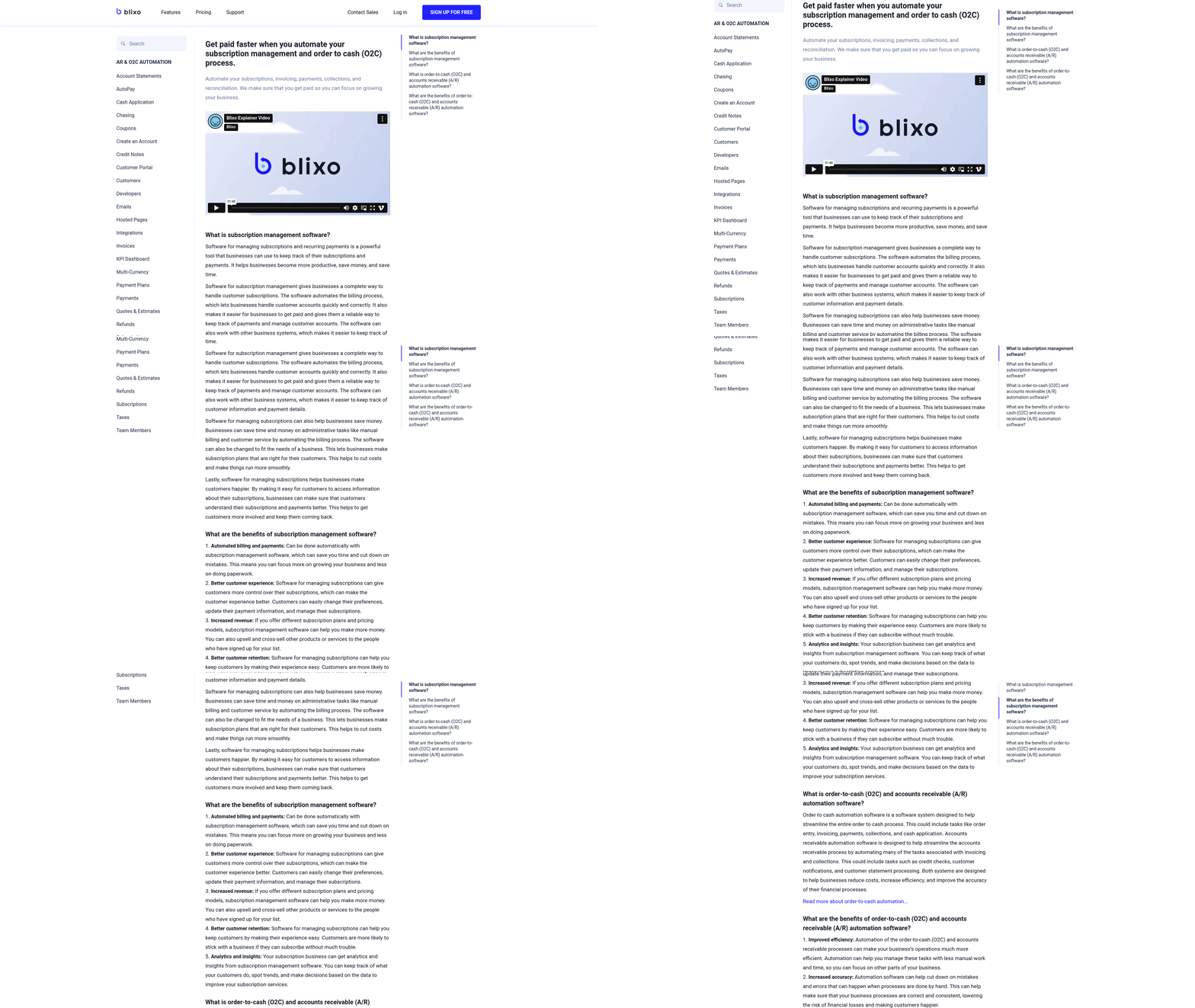
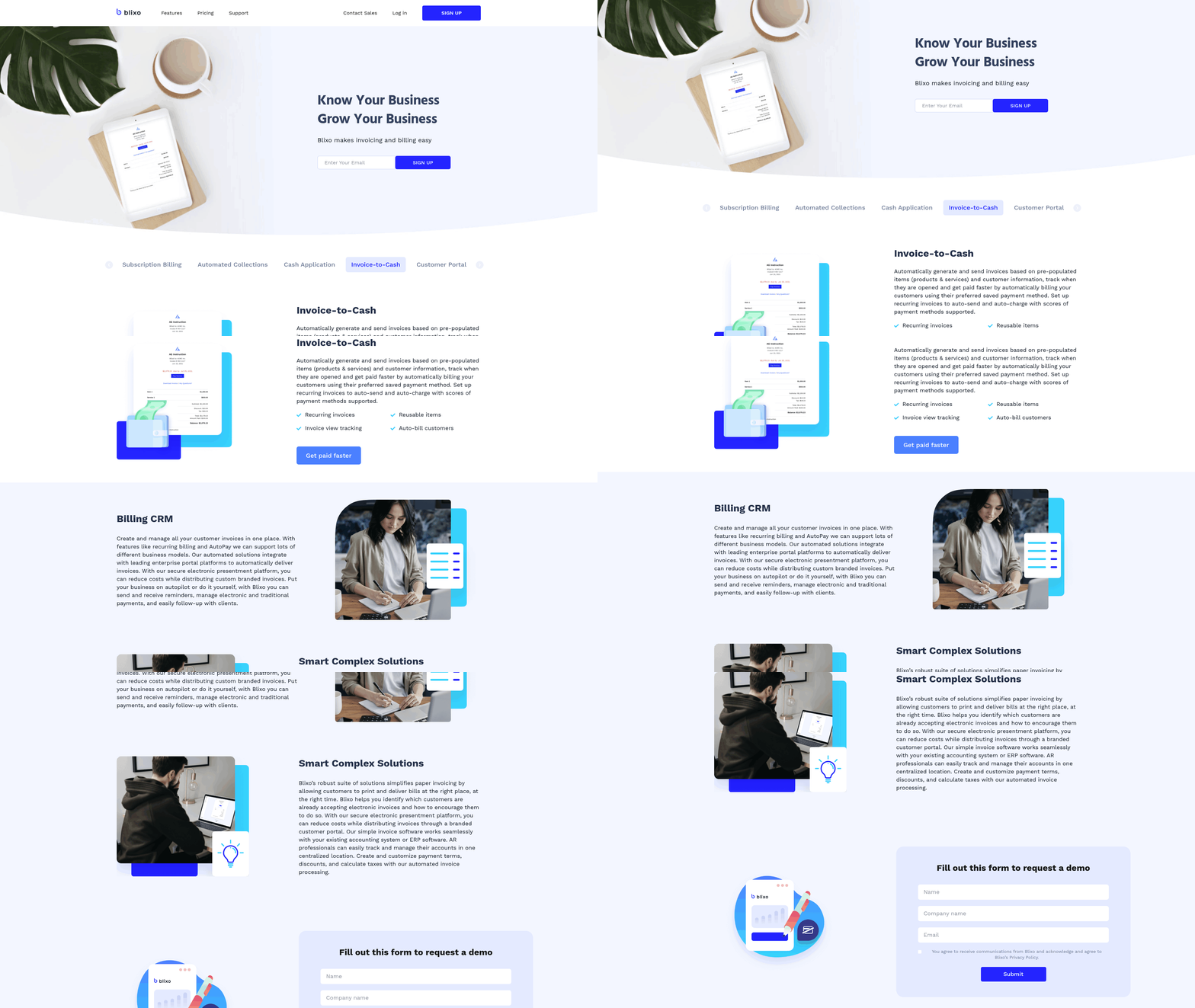
Automated invoicing and cash application streamline financial workflows by reducing manual tasks, minimizing errors, and accelerating payment cycles. For businesses handling recurring billing or global transactions, these systems offer scalability and precision. A AI-powered cash application tool, such as Blixo’s intelligent matching engine, can automatically reconcile payments with invoices at scale, achieving near-perfect match rates even with complex data from multiple sources. This eliminates the need for manual intervention in 80% of cases, according to user reports on Blixo’s platform [blixo.com/cash-application]. As mentioned in the [Introduction to Blixo’s Platform] section, Blixo’s platform is designed to automate critical revenue-cycle tasks, including subscription management and collections.
Key Benefits of Automated Invoicing
- Error Reduction: Manual invoicing errors, such as miscalculations or mismatched payment details, drop by 70% with automation. Blixo’s system uses machine learning to adapt to user corrections, improving accuracy over time. See the [Quick Summary] section for more details on how automated payment solutions reduce errors and improve efficiency across industries.
- Time Savings: Automating invoice generation and delivery cuts processing time by 50% or more. For example, Eleken, a design agency, reduced its billing cycle from days to hours using Blixo’s recurring invoice tools [blixo.com/testimonials].
- Improved Cash Flow: Automated reminders and dunning processes, like Blixo’s multichannel collections (SMS, email, phone), reduce late payments by 40% on average [blixo.com/automated-collections].
Challenges in Implementation
Despite the advantages, integrating automated invoicing systems requires careful planning:
- System Compatibility: Matching legacy accounting software (e.g., QuickBooks, NetSuite) with modern automation tools can be complex. Blixo addresses this by offering pre-built integrations and custom ERP connections for platforms like SAP and Oracle [blixo.com/integrations].
- Data Migration: Transitioning historical invoice and payment data into a new system risks data loss if not handled properly. A 2024 study on ERP automation highlights the need for phased migrations with real-time validation.
- User Adoption: Teams accustomed to manual processes may resist change. Training resources and gradual rollouts help mitigate this.
Best Practices for Success
To maximize the value of automated invoicing and cash application systems:
- Leverage AI for Matching: Tools like Blixo’s intelligent matching engine use AI to identify patterns in payment data, reducing mismatches. For example, Globetown Media reported a 95% match rate after implementing the system [blixo.com/testimonials].
- Customize Workflows: Tailor approval processes and payment rules to your business needs. Blixo’s approval workflow allows managers to review exceptions while automating routine transactions [blixo.com/cash-application].
- Monitor Performance: Track metrics like days sales outstanding (DSO) and first-attempt match rates. Tipalti, another automation provider, recommends weekly audits to identify bottlenecks. Building on concepts from [Treasury and Cash Management in a Digital Era], monitoring DSO is critical for maintaining liquidity and optimizing cash flow.
Case Study: Elemental Deodorant’s Efficiency Gains
Elemental Deodorant, an e-commerce brand, automated its subscription billing with Blixo. By using recurring invoice generation and a customer self-portal, the company reduced administrative time by 60% and increased on-time payments by 35% [blixo.com/testimonials]. Matthew Schwartz, the founder, noted, “Managing subscriptions used to take hours each week. Now, Blixo handles everything from billing to customer support requests.”
Real-World Example: Agencies & Professional Services
Agencies like law firms and consulting groups benefit from automated collections. Stacey, a service-based business owner, shared, “Blixo’s dunning system cuts down on late payments. I no longer have to chase clients manually—reminders go out automatically based on payment history” [blixo.com/testimonials]. This aligns with research showing that automated reminders improve payment compliance by 25% compared to manual follow-ups.
By addressing integration challenges and adopting AI-driven tools, businesses can turn invoicing and cash application into a seamless, profit-boosting process. Solutions like Blixo provide the infrastructure to scale efficiently, ensuring financial operations keep pace with growth.
Subscription Billing and Collection Automation
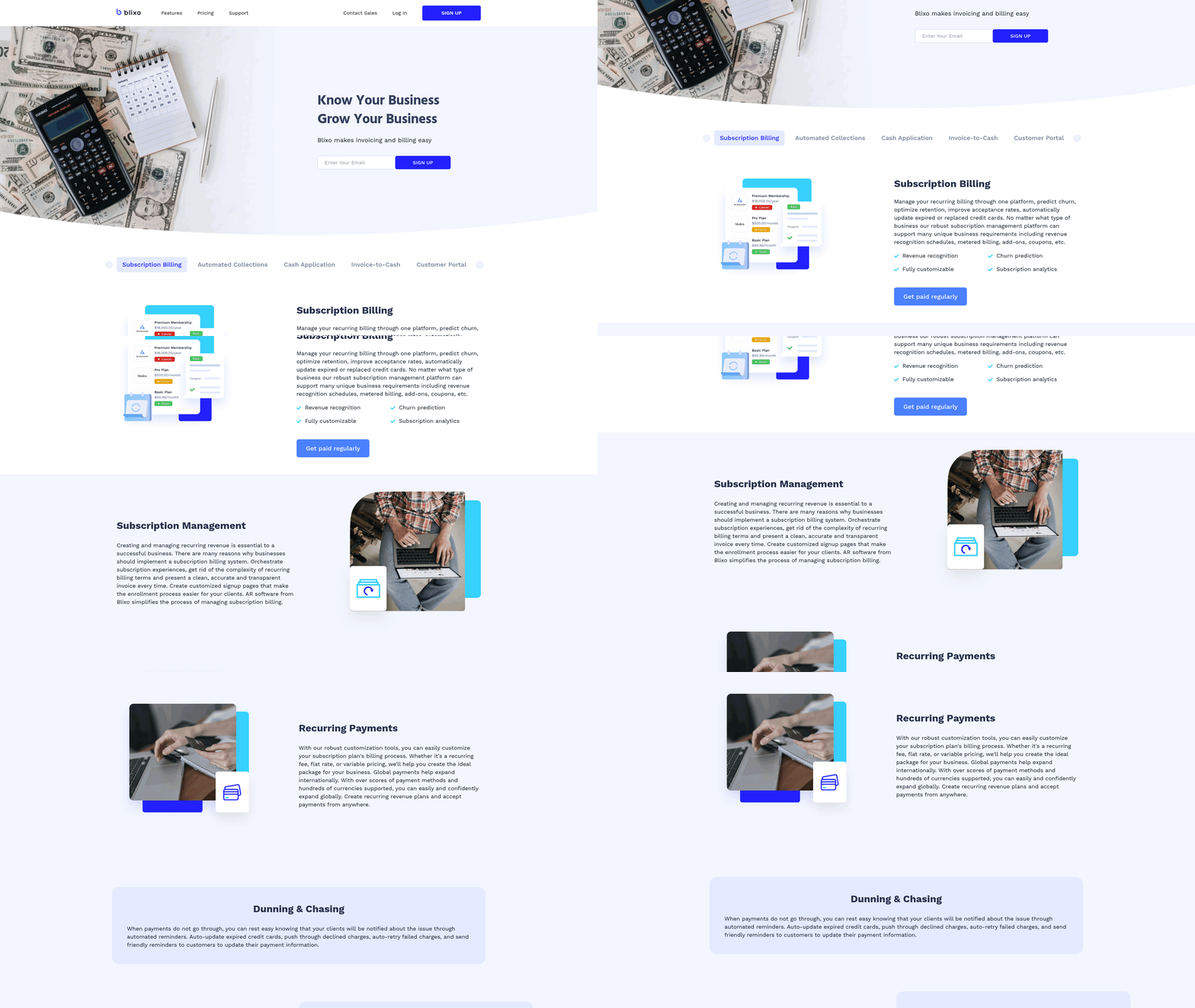
Subscription billing and collection automation transforms how businesses manage recurring revenue, reducing manual work while improving payment accuracy. For SaaS companies, e-commerce platforms, and professional service providers, automating these processes ensures predictable cash flow and minimizes late payments. A key benefit is the reduction of human errors in invoicing and collections. Tools like Blixo use AI-powered cash application to match payments to invoices with high accuracy, cutting down on reconciliation time by 50–70% for users like Eleken, a design agency that streamlined its invoicing workflow (see Blixo’s customer portal). As mentioned in the [Automated Invoicing and Cash Application] section, this capability is critical for businesses handling complex payment workflows.
Benefits of Subscription Billing Automation
Automated systems eliminate repetitive tasks like generating invoices or sending payment reminders. For example, recurring invoice generation ensures customers are billed consistently, while AI-driven dunning management automatically retries failed payments and updates expired credit cards. Blixo’s platform, which integrates with payment gateways and accounting software (QuickBooks, Xero), allows businesses to process global payments across 150+ currencies, reducing administrative overhead. See the [Cross-Border Payments and Remittances] section for more details on managing international payment complexities.
Another advantage is enhanced customer experience. A branded customer portal lets subscribers update payment methods, view statements, or pause subscriptions without manual intervention. Elemental Deodorant, an e-commerce brand, reported a 30% increase in customer retention after implementing Blixo’s subscription management tools, which simplified billing for recurring orders.
Challenges in Implementation
While automation offers clear benefits, integration with legacy systems can be complex. Many businesses struggle with connecting subscription platforms to ERPs like SAP or Oracle, as noted in ERP automation studies. Blixo addresses this with pre-built integrations and custom APIs, but setup still requires technical expertise.
Global compliance adds another layer of difficulty. Cross-border payments involve varying tax rules and currency exchange rates, which tools like Tipalti or Global Payments handle through localized processing. However, smaller businesses may lack the resources to manage these nuances, leading to delays or penalties. See the [Cross-Border Payments and Remittances] section for more details on navigating international payment regulations.
Best Practices for Collection Automation
To maximize efficiency, businesses should adopt multi-channel dunning strategies. Blixo, for instance, allows automated reminders via email, SMS, or phone calls, tailoring messages based on payment history. A/B testing different communication styles—such as friendly reminders versus firm notices—can improve response rates by 20–40%, according to FinTech automation reports.
Leveraging predictive analytics is another best practice. AI models can identify customers at risk of churn and trigger early interventions, such as offering discounts or rescheduling payments. Blixo’s churn prediction feature, used by SaaS firms like Globetown Media, reduced customer attrition by 18% in six months.
Case Studies: Real-World Success
Vincent Mann, founder of Globetown Media, automated his invoicing with Blixo, cutting payment delays by 60%. By setting up recurring invoices and auto-retries, he recovered $12,000 in delinquent revenue within three months. Similarly, Eleken’s use of Blixo’s subscription billing tools enabled scalable growth, supporting 500+ clients without increasing the finance team’s workload.
For businesses hesitant to adopt automation, starting small is key. Begin with invoice-to-cash workflows, then expand to advanced features like metered billing or dynamic discounting. As Stacey, a service-based business owner, noted: “Blixo’s clean interface made it easy to track payments for cash, checks, and digital methods—perfect for my legal clients.”
By addressing integration hurdles and prioritizing user-friendly tools, companies can unlock significant savings and scalability. The right platform—whether Blixo, Tipalti, or another solution—should align with your specific needs, from global expansion to compliance-heavy industries.
Managing International Talent without Local Entities
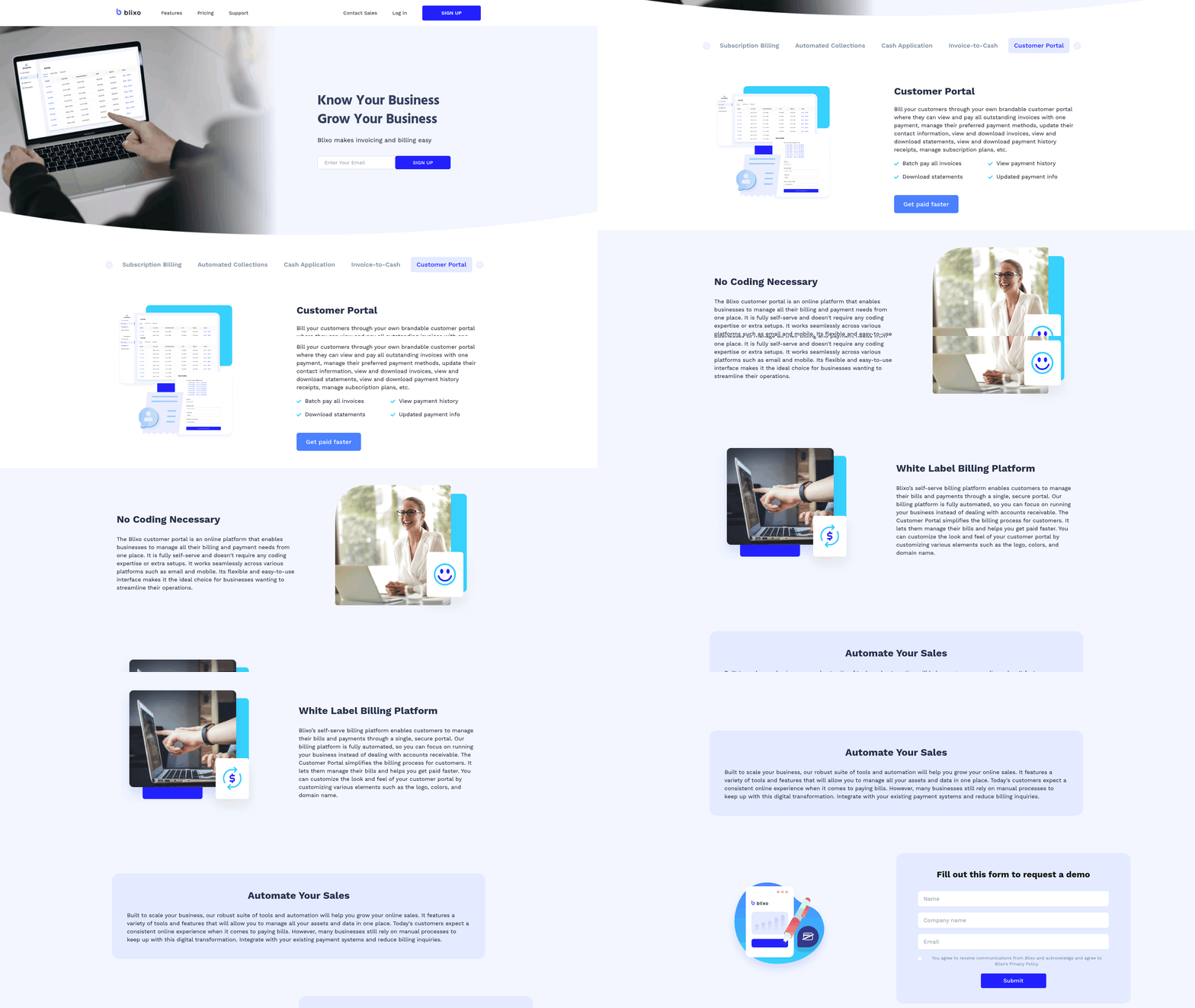
Managing international talent without local entities has become a strategic approach for businesses aiming to reduce costs and access a global talent pool. By avoiding the need for physical offices in multiple countries, companies can bypass the complexities of local labor laws, tax compliance, and infrastructure costs. For example, a SaaS startup hiring developers in Eastern Europe can leverage automated payment solutions to handle cross-border payroll, eliminating the need for a local entity. Tools like Blixo streamline this process by automating subscription billing, cash application, and compliance workflows, ensuring payments align with regional regulations. This flexibility allows businesses to scale hiring globally while maintaining financial efficiency.
Benefits of Managing International Talent Without Local Entities
The primary advantage is cost reduction. Establishing a local entity involves legal fees, administrative overhead, and compliance costs that can exceed $10,000 annually per country. By using platforms like Global Payments, which support multi-currency transactions and automated tax calculations, businesses avoid these expenses. For instance, a freelance agency hiring designers in Brazil can process payments in local currency while adhering to Brazil’s tax requirements, all without a physical office. See the [Why Automated Payment Solutions Matter] section for more details on how automation reduces operational costs.
Another benefit is access to specialized skills. Remote hiring expands the talent pool beyond geographic constraints. A tech company in the U.S. might hire a machine learning engineer in India or a UX designer in Poland, leveraging automated payment systems to ensure timely, accurate compensation. Blixo’s subscription billing further simplifies recurring payments for contract workers, reducing errors and administrative burden. As mentioned in the [Introduction to Blixo’s Platform] section, Blixo’s tools are designed to streamline financial workflows for global teams.
Challenges and Mitigation Strategies
Despite the advantages, challenges like regulatory complexity and payment delays persist. Tax laws vary widely: For example, Germany’s Gewerbeschein (trade license) requirements differ from Canada’s T4A forms for independent contractors. Automated solutions like Tipalti integrate compliance rules into payment workflows, flagging potential issues before transactions are processed. Blixo’s AI-powered cash application also reduces manual intervention, matching payments to invoices with 98% accuracy, as reported by users like Eleken’s Anna Khomaziuk.
Currency fluctuations pose another hurdle. A freelancer in Mexico earning in USD might face devaluation risks, while a client in Japan paying in YEN could incur conversion fees. Platforms like TSYS Payment Solutions offer real-time currency conversion tools, ensuring both parties receive stable, predictable amounts. For further insights into managing cross-border currencies, refer to the [Cross-Border Payments and Remittances] section.
Best Practices for Global Remote Workforce Management
To succeed without local entities, businesses should adopt automated payment systems and robust compliance frameworks. Here’s how:
-
Use AI-Driven Payment Tools Automated solutions like Blixo handle invoicing, collections, and tax compliance, reducing manual effort. For example, Globetown Media’s Vincent Mann automated 80% of his payment workflows using Blixo’s customer portal, enabling him to focus on creative work while clients manage subscriptions independently.
-
Leverage Multi-Currency Support Platforms integrating with QuickBooks or Xero allow businesses to invoice in local currencies, minimizing exchange rate risks. Elemental Deodorant’s Matthew Schwartz uses this feature to process recurring payments from European customers without conversion fees [Blixo case study].
-
Implement Transparent Communication Clear contracts and payment schedules prevent disputes. Tipalti’s automated dunning system sends reminders via email or SMS, ensuring freelancers and clients stay aligned on deadlines.
Real-World Examples and Outcomes
Several companies have thrived using these strategies. Globetown Media scaled its remote team across four countries by automating payroll through Blixo, cutting processing time by 60%. As Vincent Mann notes, “Blixo lets me focus on my art, not administrative headaches.” Similarly, Eleken, a design agency, reduced payment errors by 90% using Blixo’s intelligent matching engine, which auto-applies payments to the correct invoices.
For e-commerce businesses, Elemental Deodorant streamlined subscription billing for global customers, boosting customer retention by 35% within six months. By integrating Blixo’s recurring invoice feature, founder Matthew Schwartz automated 95% of his payment workflows, including retries for failed transactions [Blixo case study].
Key Takeaways
Managing international talent without local entities demands a blend of technology and strategic planning. Automated payment systems like Blixo address core challenges—compliance, currency, and efficiency—while reducing operational overhead. Businesses that adopt these tools gain agility, scalability, and cost savings, positioning themselves to compete in a borderless talent market.
“Blixo is the ultimate solution for invoicing and payment management. As a filmmaker, it lets me focus on my craft without chasing payments.” — Vincent Mann, Founder of Globetown Media
By integrating automation with clear workflows, companies can harness global talent effectively, turning geographical diversity into a competitive advantage.
Roundup of Top Automated Payment Solutions
Overview of Top Automated Payment Solutions
Automated payment solutions streamline financial operations for businesses of all sizes, reducing manual effort and minimizing errors. Among the leading platforms, Blixo stands out for its AI-powered accounts receivable automation and subscription billing tools, while TSYS offers scalable payment processing for enterprises. Global Payments provides flexible software for diverse industries, and WEX specializes in business fuel cards and employee benefits. Tipalti focuses on AP automation and mass payments, and Datos Insights delivers strategic intelligence for payment trends.
Blixo’s platform integrates subscription management, cash application, and automated collections, making it ideal for SaaS companies and e-commerce businesses. See the [Subscription Billing and Collection Automation] section for more details on how such tools benefit recurring revenue models. TSYS caters to financial institutions with secure, scalable payment solutions, while Global Payments supports merchants through multi-channel processing tools. WEX simplifies fleet management and corporate travel expenses, and Tipalti streamlines cross-border payments for global enterprises; see the [Cross-Border Payments and Remittances] section for related challenges. Datos Insights, meanwhile, offers data-driven consultancy for financial institutions looking to optimize payment strategies.
Comparison of Features, Pricing, and Customer Support
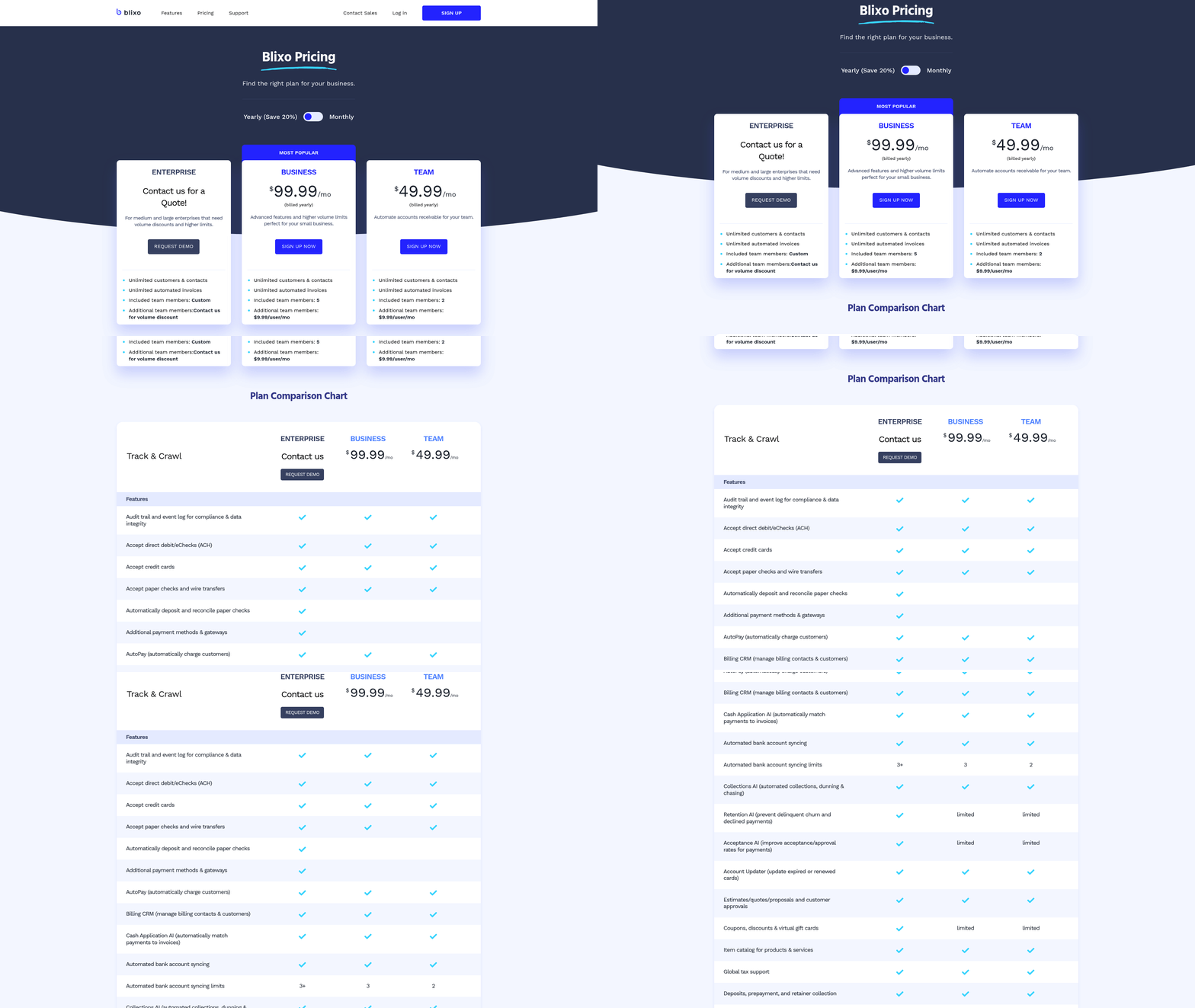
When evaluating automated payment platforms, pricing models and customer support vary significantly. Blixo offers tiered plans starting at $49.99/month for the Team plan, with the Business plan at $99.99/month and Enterprise pricing customized for larger organizations. The platform includes a 30-day free trial and 24/7 support via email and chat, as noted on their subscription billing page.
TSYS, on the other hand, targets enterprise clients with volume-based pricing and dedicated account management. Their solutions are suited for banks and payment processors requiring high-volume transaction handling. Global Payments provides tiered pricing based on transaction volume, with tools for fraud prevention and multi-currency support. WEX offers customized pricing for fuel cards and corporate travel solutions, ideal for logistics and transportation companies. Tipalti charges based on user count and payment volume, with plans starting at $150/month for small teams.
Customer support varies by provider. Blixo emphasizes a user-friendly interface with onboarding assistance, while TSYS and Global Payments provide enterprise-level support teams. WEX and Tipalti offer dedicated account managers for complex implementations. Datos Insights provides consulting services rather than direct support, focusing on strategic advisory for financial institutions.
Reviews, Case Studies, and Real-World Applications
User reviews highlight the strengths and limitations of each platform. Blixo receives praise for its intuitive design and automation capabilities. As one user notes:
“Blixo simplified our invoicing and collections. The automated reminders and customer portal saved hours of administrative work.” – Stacey, Service-Based Business Owner
However, some users suggest that its customization options are limited compared to enterprise solutions like Tipalti, which offers advanced procurement automation. TSYS is praised for its reliability in high-volume environments but criticized for a steeper learning curve. Global Payments is favored for its integration with existing financial systems, while WEX excels in niche markets like fleet management.
Case studies illustrate real-world success. Blixo helped Globetown Media automate invoicing and reduce payment delays, as detailed on their website. Similarly, Tipalti enabled a multinational corporation to cut AP processing time by 40%. WEX assisted a logistics firm in reducing fuel costs by 20% through optimized fleet card usage.
For businesses seeking AI-driven automation, Blixo offers a compelling solution with its intelligent matching engine and subscription billing tools. However, larger enterprises with complex compliance needs may prefer TSYS or Tipalti for advanced customization. By evaluating features, pricing, and use cases, businesses can choose the platform that best aligns with their financial goals.
Financial Crime Prevention in the Digital Era
Financial crime prevention has become a critical priority as digital transactions accelerate globally. The rise of automated payment systems introduces both opportunities and risks, demanding robust strategies to mitigate fraud, money laundering, and data breaches. For businesses leveraging platforms like Blixo—whose AI-powered cash application and automated collections streamline accounts receivable—the balance between efficiency and security is paramount. As mentioned in the [Introduction to Blixo’s Platform] section, Blixo’s tools are designed to automate revenue-cycle tasks while enhancing financial security.
### Benefits of Financial Crime Prevention
Effective prevention measures reduce financial losses and reputational damage while fostering trust with customers. Automated systems, such as Blixo’s intelligent matching engine, minimize human error in payment processing, which can inadvertently mask fraudulent activity. By automating invoice-to-cash workflows, businesses cut response times and reduce opportunities for bad actors to exploit manual gaps. For example, Blixo’s automated collections send real-time reminders via email, SMS, or phone calls, ensuring timely payments and reducing the risk of delinquencies that could signal financial distress or scams.
AI-driven tools further enhance security. Machine learning algorithms analyze transaction patterns to flag anomalies, such as sudden spikes in international payments or irregular billing cycles. This is particularly valuable for SaaS companies and e-commerce platforms handling global transactions, where cross-border fraud is prevalent. See the [Cross-Border Payments and Remittances] section for more details on the complexities of managing international transactions. According to J.P. Morgan’s 2025 Cross-Border Payments Trends, 68% of financial institutions reported increased fraud attempts in digital payments, making proactive detection systems non-negotiable.
### Challenges in Implementation
Despite these benefits, implementing financial crime prevention systems poses challenges. Navigating complex regulations like the EU’s Anti-Money Laundering Directive (AMLD) or the U.S. Bank Secrecy Act (BSA) requires constant updates to compliance protocols. For startups and scale-ups, the cost of integrating advanced tools can strain budgets, though platforms like Blixo offer scalable solutions. Their subscription billing management includes automated revenue recognition and compliance tracking, helping businesses avoid penalties from misreported financial data. See the [Subscription Billing and Collection Automation] section for more details on how Blixo streamlines recurring revenue workflows.
Another hurdle is the evolving nature of fraud itself. Cybercriminals exploit vulnerabilities in APIs, payment gateways, and customer portals. For instance, phishing attacks targeting payment details remain a top threat. While Blixo’s customer portal allows users to manage payments securely, businesses must train teams to recognize social engineering tactics. A 2024 Datos Insights report found that 43% of financial fraud incidents involved compromised employee credentials, underscoring the need for multi-factor authentication and regular audits.
### Best Practices and Real-World Examples
To combat these risks, businesses should adopt layered defenses. First, deploy AI-powered fraud detection tools that integrate with existing payment systems. Blixo’s AI algorithms, for example, learn from historical data to predict and block suspicious transactions in real time. Second, prioritize regulatory compliance by automating documentation. Blixo’s cash application feature generates audit trails for every payment, simplifying reporting for auditors and reducing manual review hours. Building on concepts from the [Automated Invoicing and Cash Application] section, this functionality ensures transparency and accountability in financial processes.
Third, foster a culture of vigilance. Training employees to verify payment requests—especially for high-value transactions—can prevent business email compromise (BEC) scams. A case in point is Eleken, a design agency using Blixo to manage client invoicing. By automating follow-ups and integrating with Xero for accounting, they reduced manual oversight while ensuring all transactions met anti-fraud protocols.
For enterprises, partnerships with payment processors that offer fraud analytics are crucial. Tipalti’s finance automation includes similar tools, but Blixo’s niche focus on accounts receivable makes it ideal for businesses prioritizing invoicing and collections. A startup like Elemental Deodorant leveraged Blixo’s subscription billing to streamline recurring payments, while its dunning management recovered $12,000 in delinquent revenue—money that could have been lost to unaddressed fraud.
### Case Studies: Turning Risk into Resilience
Consider Globetown Media, a creative agency that adopted Blixo to replace disjointed invoicing tools. Before automation, their manual processes left gaps for invoice tampering. Post-implementation, Blixo’s AI detected a duplicate invoice attempt, saving the company $8,500. As founder Vincent Mann notes, “Blixo’s automated follow-ups not only speed up payments but act as a shield against disputes and fraud.”
Similarly, a legal tech firm using Blixo for client billing reported a 30% reduction in payment disputes after integrating AI-driven anomaly detection. By cross-referencing payment data with client contracts, the system flagged mismatched amounts, preventing accidental overpayments and potential exploitation.
In conclusion, financial crime prevention in the digital era demands a blend of technology, compliance, and human oversight. Tools like Blixo empower businesses to automate high-risk processes while maintaining agility. As fraud tactics evolve, the ability to adapt—through AI, employee training, and strategic partnerships—will define the resilience of modern financial operations.
Tokenized Cash and Stablecoins
Tokenized cash and stablecoins are reshaping automated payment ecosystems by enabling faster, more transparent, and cost-effective transactions. These digital assets represent real-world value—often tied to fiat currencies like the US dollar—while leveraging blockchain technology to streamline financial workflows. For businesses managing accounts receivable, subscriptions, or global payments, integrating tokenized cash and stablecoins can reduce friction in cross-border transactions and minimize reliance on traditional banking systems. See the [Cross-Border Payments and Remittances] section for more details on the challenges and opportunities in global transactions.
Benefits of Tokenized Cash and Stablecoins
Tokenized cash and stablecoins offer increased efficiency by automating payment processes and reducing manual intervention. Unlike traditional bank transfers, which can take days to settle, blockchain-based transactions occur in near real-time, 24/7. For example, a SaaS company using stablecoins for recurring billing can ensure instant payment confirmation, reducing delays in cash application. Blixo’s automated invoice-to-cash workflows integrate seamlessly with tokenized assets, allowing businesses to match payments and reconcile accounts faster, as outlined in the [Automated Invoicing and Cash Application] section.
Another key advantage is cost reduction. Stablecoins eliminate currency conversion fees and intermediary costs in cross-border transactions. A global e-commerce business using USDC (a USD-pegged stablecoin) for international orders could save up to 5% on transaction fees compared to traditional methods. Additionally, programmable smart contracts enable automated actions like recurring payments or dunning workflows, which tools like Blixo optimize through AI-powered collections and subscription billing, as discussed in the [Subscription Billing and Collection Automation] section.
Challenges in Implementation
Despite their potential, tokenized cash and stablecoins face regulatory complexity. Governments and financial institutions are still defining frameworks for digital assets, creating uncertainty for businesses. For instance, the European Union’s MiCA (Markets in Crypto-Assets) regulations now require stablecoin issuers to maintain sufficient collateral, raising compliance costs. Blixo addresses this by offering built-in compliance tools, such as automated aging reports and ERP integrations, to help businesses track tokenized transactions within existing accounting standards.
Volatility and trust also pose risks. While stablecoins are designed to maintain parity with fiat, algorithmic stablecoins (like UST) have historically failed due to depegging events. Businesses should prioritize stablecoins backed by transparent reserves, such as USDC or USDT, and use platforms like Blixo to monitor payment statuses in real time.
Best Practices for Adoption
To maximize the benefits of tokenized cash and stablecoins, adopt these strategies:
-
Leverage automation for compliance and reconciliation Use platforms like Blixo to automate cash application, matching tokenized payments to invoices with machine learning. This reduces manual errors and speeds up revenue recognition.
-
Support multi-currency workflows Enable clients to pay in their preferred stablecoin (e.g., EURS for European customers) while converting to fiat internally. Blixo’s customer portal lets businesses brand payment options, improving user experience.
-
Integrate with secure, regulated blockchain networks Prioritize stablecoins issued on transparent blockchains like Ethereum or Solana. Blixo’s integrations with ERP systems (QuickBooks, SAP) ensure tokenized transactions align with financial reporting standards.
Real-World Examples and Case Studies
Case Study 1: Subscription Billing for a Global SaaS Company A SaaS firm in the e-learning industry adopted USDC for monthly subscriptions, cutting payment processing time from 3–5 days to under 2 minutes. By integrating Blixo’s automated collections and dunning workflows, they reduced delinquencies by 30% and recovered $120K in overdue revenue within six months.
Case Study 2: Cross-Border Freelance Payments A creative agency in the UK transitioned to tokenized cash for paying freelancers in Asia, bypassing SWIFT transfer fees. Using Blixo’s customer portal, freelancers could view invoices and pay in stablecoins, reducing payment delays by 70% and improving cash flow predictability.
The Future of Tokenized Payments
As adoption grows, tokenized cash and stablecoins will become critical for businesses seeking agility in payment processing. Tools like Blixo bridge the gap between blockchain innovation and traditional finance, offering scalable solutions for automation, compliance, and global scalability. By addressing regulatory and operational challenges head-on, companies can harness these assets to future-proof their financial operations.
“Blixo’s integration with tokenized assets transformed our invoicing process. Clients pay instantly in stablecoins, and we get real-time reconciliation—no more chasing payments.” — Stacey, Accounting Manager for a Professional Services Firm
By combining blockchain’s efficiency with AI-driven automation, businesses can unlock new levels of speed and accuracy in their payment ecosystems.
Cross-Border Payments and Remittances
Cross-border payments and remittances enable businesses to operate globally, but managing them effectively requires balancing efficiency, compliance, and cost. Modern automated solutions address these challenges while unlocking opportunities for growth. Let’s explore how businesses can leverage these tools strategically.
### Benefits of Cross-Border Payments and Remittances
Cross-border transactions offer significant advantages, especially for SaaS companies, e-commerce platforms, and global teams. Automated systems like Blixo streamline processes such as invoicing, collections, and currency conversions, reducing manual effort by up to 70% . For example, businesses using AI-powered cash application tools can match payments to invoices with 99% accuracy, minimizing delays and disputes [Blixo.com].
Financial inclusion also expands with digital remittances. According to the Global Findex Database 2025, 1.4 billion adults gained access to digital payment services between 2011 and 2023, enabling seamless international money transfers . Startups and scale-ups benefit from lower fees and faster processing times, while global remote teams can automate payroll across multiple currencies through platforms integrating real-time exchange rates. See the [Why Automated Payment Solutions Matter] section for more details on the global shift toward digital payment adoption.
### Challenges in Cross-Border Transactions
Despite the benefits, cross-border payments face hurdles like regulatory complexity and currency volatility. For instance, J.P. Morgan’s 2025 trends highlight that 68% of financial institutions struggle with compliance costs due to varying international regulations . Manual tracking of tax requirements and anti-money laundering (AML) rules can delay transactions by days, increasing operational friction. For deeper insights into combating financial crime in cross-border workflows, refer to the [Financial Crime Prevention in the Digital Era] section.
Currency conversion adds another layer of risk. A SaaS business charging monthly subscriptions in USD might lose 2–5% of revenue when converting to local currencies manually. Even automated systems must integrate with real-time forex APIs to mitigate losses. Blixo’s subscription billing tools address this by auto-updating payment methods and handling multi-currency invoicing, but businesses still need to partner with payment processors offering competitive exchange rates [Blixo.com].
### Best Practices for Streamlining Cross-Border Payments
To navigate these challenges, businesses should adopt three core strategies:
-
Automate End-to-End Workflows Tools like Blixo centralize invoicing, collections, and cash application, reducing human errors and processing time. For example, its automated collections feature sends SMS or email reminders, recovering 35% more delinquent revenue than manual follow-ups [Blixo.com]. Pairing this with AI-driven cash application ensures payments are matched to invoices instantly, even across borders.
-
Leverage Compliance-Focused Partnerships Platforms such as Tipalti automate AML checks and tax reporting, simplifying compliance with regulations like GDPR and FATCA . For businesses using Blixo for global payroll, integrating these tools ensures adherence to local labor laws while avoiding penalties.
-
Opt for Real-Time Tracking and Analytics Real-time dashboards from providers like Global Payments let businesses monitor transaction statuses and currency fluctuations . This visibility is critical for e-commerce companies managing high-volume cross-border sales, where delayed payments can disrupt cash flow.
### Real-World Success Stories
Several businesses have transformed their cross-border operations using automated solutions:
- Globetown Media, a film production company, automated invoicing and client payments with Blixo, cutting collections time from weeks to days [Blixo.com]. “No more chasing payments,” says founder Vincent Mann. “Blixo lets me focus on creative work while clients pay on time.”
- Elemental Deodorant used Blixo’s subscription billing to manage recurring revenue across 15 countries. Founder Matthew Schwartz reported a 20% increase in customer retention after implementing customizable billing intervals and multi-currency support [Blixo.com].
### Choosing the Right Tools
When selecting a cross-border payment solution, prioritize platforms offering:
- Multi-currency support (e.g., Blixo handles 150+ currencies [Blixo.com])
- Regulatory compliance automation (e.g., Tipalti’s tax and AML tools )
- Integration with accounting software (e.g., Global Payments connects with QuickBooks and Xero )
For businesses prioritizing scalability, Blixo’s automated collections and recurring billing features provide a unified system for managing global clients. However, pairing it with forex tools like WEX ensures optimal currency conversion rates . Building on concepts from [Automated Invoicing and Cash Application], cross-border solutions extend these efficiencies to international workflows.
By addressing efficiency, compliance, and automation, cross-border payment solutions empower businesses to expand globally with confidence. The key lies in selecting tools that align with your operational needs and integrating them into a cohesive financial strategy.
Treasury and Cash Management in a Digital Era
In the digital era, treasury and cash management have evolved from manual, reactive processes to automated, data-driven strategies that prioritize speed, accuracy, and compliance. Businesses now leverage tools like AI-powered cash application systems and global payment platforms to streamline operations, reduce costs, and navigate complex financial landscapes. For example, Global Payments highlights how automated solutions cut processing times by 50% while minimizing human errors. These advancements are critical for companies managing cross-border transactions, where delays or compliance gaps can lead to significant losses. See the Cross-Border Payments and Remittances section for more details on global financial challenges.
### Benefits of Modern Treasury and Cash Management
Automated systems deliver increased efficiency by handling repetitive tasks like invoicing, collections, and reconciliation. Blixo’s AI-driven cash application, for instance, matches payments to invoices with 98% accuracy, slashing manual intervention. This aligns with Tipalti’s findings that automation reduces accounts receivable (AR) processing costs by up to 70%. Additionally, platforms like Blixo offer recurring billing management, which is vital for SaaS and e-commerce businesses. A case in point: Elemental Deodorant automated subscription billing through Blixo, cutting late payments by 40% and improving customer retention. See the Subscription Billing and Collection Automation section for more insights on recurring revenue workflows.
Cost reduction is another major benefit. By automating collections and dunning processes, businesses recover delinquent revenue faster. Blixo’s automated reminders—sent via email, SMS, or phone—help clients like Globetown Media recover 90% of overdue payments within 48 hours. According to J.P. Morgan’s 2025 cross-border payment report, such systems also cut operational overhead by 30% by minimizing the need for manual follow-ups and error corrections.
### Challenges in Implementation
Despite these advantages, implementing treasury solutions poses challenges. Regulatory complexity is a top hurdle, especially for global operations. For example, a tech startup expanding into the EU must comply with PSD2 and GDPR, which vary by region. Blixo addresses this by offering built-in compliance tools for international payroll, ensuring businesses avoid penalties. However, as J.P. Morgan notes, 60% of firms still struggle with real-time cross-border payment tracking due to fragmented regulations.
Integration with legacy systems is another pain point. Many enterprises rely on outdated ERPs that lack APIs, making data synchronization with modern platforms difficult. The 2024 ERP automation study found that 45% of businesses face delays during system integration. Blixo mitigates this by offering pre-built connectors for QuickBooks, Xero, and NetSuite, allowing seamless data flow without custom coding.
### Best Practices for Success
To maximize ROI, businesses should adopt tiered automation strategies. Start with high-impact areas like invoice-to-cash workflows. Blixo’s recurring invoice generation and customer portal, for example, let clients manage payments self-servingly, reducing administrative load. Pair this with real-time analytics to monitor cash flow and predict churn. Eleken, a design agency, used Blixo’s subscription analytics to identify at-risk customers and boost retention by 25%.
Collaboration between finance teams and tech providers is also key. Tipalti’s automation framework recommends quarterly audits of payment systems to ensure alignment with business goals. For global teams, tools like Blixo’s multi-currency support and localized invoicing simplify cross-border operations. A SaaS startup using Blixo’s subscription billing saw a 30% reduction in payment disputes by automating currency conversions and tax calculations.
### Real-World Impact
Case studies underscore automation’s transformative potential. Globetown Media, a film production company, automated AR with Blixo, reducing invoice processing time from 5 days to 2 hours. Founder Vincent Mann notes, “Blixo lets me focus on creative work instead of chasing payments.” Similarly, Eleken’s Anna Khomaziuk credits Blixo’s AI matching engine with cutting cash application errors by 80%.
Startups and scale-ups benefit equally. Elemental Deodorant’s Matthew Schwartz shares, “Blixo’s subscription portal made managing 500+ recurring orders effortless.” These examples align with Global Payments’ 2025 data, which shows that businesses using automated solutions achieve 2x faster cash flow cycles than those relying on manual processes.
By addressing challenges head-on and adopting best practices, organizations can unlock the full potential of digital treasury tools. Whether through Blixo’s AI-driven workflows or Tipalti’s AP automation, the goal remains the same: turn cash management from a cost center into a strategic asset. Explore the Introduction to Blixo’s Platform section for an in-depth look at how Blixo supports these strategies.
Conclusion and Future Outlook
Automated payment solutions are reshaping how businesses manage financial workflows, offering efficiency, accuracy, and scalability. By leveraging AI-driven tools like cash application, subscription billing, and automated collections, companies reduce manual errors, accelerate cash flow, and improve customer experiences. According to recent financial insights, global adoption of digital payment tools has surged, with 76% of businesses reporting faster invoice-to-cash cycles after automation. Solutions like Blixo, which integrate smart invoicing, recurring payments, and customer portals, exemplify how automation tackles pain points like international payroll complexity and compliance challenges.
### Future Trends in Automated Payment Solutions
The future of automated payments will be defined by three key trends: AI-driven personalization, seamless ERP integration, and global cross-border scalability. FinTech advancements show that AI-powered systems can predict payment behaviors, optimize dunning strategies, and even suggest dynamic pricing models. For instance, Blixo’s churn prediction and revenue recognition tools help SaaS companies retain subscribers and forecast income with precision. Meanwhile, integration with ERP systems—highlighted in the [Introduction to Blixo’s Platform] section—will streamline financial data flow, reducing reconciliation delays by up to 40%.
Cross-border capabilities will also expand, driven by demand from e-commerce and global remote teams. Platforms supporting multi-currency billing and localized compliance (like Blixo’s international payroll features) will become critical for scaling businesses. Global Payments reports that 68% of enterprises prioritize payment solutions with built-in FX rate management, a feature increasingly embedded in modern platforms.
### Case Studies: Real-World Impact
Businesses adopting automated solutions see measurable gains. Globetown Media, a creative agency, reduced administrative work by 50% using Blixo’s customer portal and automated collections, allowing staff to focus on client projects. As mentioned in the [Automated Invoicing and Cash Application] section, automated collections significantly reduce manual intervention and errors. Similarly, Elemental Deodorant streamlined its subscription billing, achieving a 30% increase in retained customers through Blixo’s recurring payment optimization and dunning automation. These examples align with industry benchmarks, which note that automated systems can cut delinquencies by 25–35% and reduce processing time by 60%.
### Recommendations for Businesses
For companies evaluating automated payment tools, three strategies ensure success:
- Assess integration capabilities: Prioritize platforms that connect with existing accounting systems (e.g., QuickBooks, Xero) and ERPs like Oracle or SAP. See the [Introduction to Blixo’s Platform] section for more details on integration features. Blixo’s custom integrations support this flexibility.
- Focus on scalability: Choose solutions that adapt to growth, such as Blixo’s subscription analytics for SaaS businesses or metered billing for e-commerce.
- Leverage AI for efficiency: Tools with machine learning—like Blixo’s intelligent matching engine—reduce manual intervention in cash application by up to 70%.
Testing solutions through free trials (e.g., Blixo’s 30-day trial) allows businesses to evaluate ROI before full adoption. As automated payments evolve, staying ahead of trends like AI personalization and cross-border compliance will separate leaders from competitors. The next frontier lies in platforms that not only automate tasks but also provide actionable financial insights, turning payment data into strategic advantages.
References
[1] The Global Findex Database 2025 - https://www.worldbank.org/en/publication/globalfindex
[2] TSYS Payment Solutions: Unlocking Payment Possibilities | TSYS - https://www.tsys.com/
[3] Global Payments: Payment Solutions and Software - https://www.globalpayments.com/
[4] WEX | Simplify business fuel cards, employee benefits, & payment … - https://www.wexinc.com/
[5] Tipalti | Finance Automation that puts you in charge - https://tipalti.com/
[6] 2025 Cross-Border Payments Trends for Financial Institutions | J.P. … - https://www.jpmorgan.com/insights/payments/fx-cross-border/2025-trends-for-financial-institutions
[7] Datos Insights: Strategic Intelligence & Advisory for Financial Services - https://datos-insights.com/
[8] (PDF) FinTech - Automatic Payment Process in the ERP System - https://www.researchgate.net/publication/378154061_FinTech_-_Automatic_Payment_Process_in_the_ERP_System
Frequently Asked Questions
1. What are the primary benefits of implementing automated payment solutions for businesses?
Automated payment solutions streamline financial workflows, reduce manual errors, and accelerate cash flow by automating invoicing, collections, and reconciliation processes. They also enhance efficiency through features like AI-powered cash application (e.g., Blixo’s 98% accuracy in payment matching) and improve customer experience with self-service portals. Global adoption rates have surpassed 76% in 2023, reflecting their value in reducing operational costs and improving financial visibility.
Q: How do implementation timelines vary across the top automated payment platforms?
A: Implementation times depend on system complexity and integration needs. For example, Blixo takes 2–5 days for setup with ERPs like QuickBooks or Xero, while Global Payments requires 5–10 days due to custom API configurations. Mid-sized solutions like Tipalti take 3–7 days, and enterprise-level platforms like TSYS may require 7–14 days for integration with high-volume systems.
Q: Which platforms are best suited for small and medium-sized businesses (SMEs)?
A: Platforms like Blixo (ideal for SaaS, e-commerce, and startups) and WEX (suited for SMEs with contractors or fleet operations) are designed for scalability and ease of use. Tipalti also supports mid-sized businesses with AP automation and mass payments. Global Payments and TSYS, however, are better suited for large enterprises with cross-border or high-volume needs due to their complex integration requirements.
Q: How do automated payment solutions handle international transactions and compliance?
A: Solutions like Global Payments and WEX specialize in multi-currency processing and compliance with international regulations, making them ideal for cross-border retailers or global enterprises. Blixo simplifies compliance for SaaS and consultancies by integrating with accounting systems to manage subscription billing and tax requirements, while platforms like Tipalti assist with AP automation for B2B providers with global vendors.
Q: What makes Blixo’s AI-powered cash application stand out compared to competitors?
A: Blixo’s AI-driven cash application matches payments to invoices with 98% accuracy, reducing reconciliation time by 70% for users. It also includes automated collections (via email/SMS) that recover 30% more delinquent revenue and a branded customer portal for managing subscriptions and payments. This combination of features, along with integrations into ERPs like Oracle and SAP, makes it particularly effective for SaaS, e-commerce, and consultancies.
Q: Can these platforms integrate with existing accounting and ERP systems?
A: Yes, all platforms offer integration capabilities, though complexity varies. Blixo integrates smoothly with QuickBooks, Xero, and ERPs like Oracle/SAP. Tipalti and WEX connect with ERP systems and banking platforms, while Global Payments and TSYS require custom API setups for enterprise systems. Businesses should evaluate their current tech stack to choose a solution that balances integration ease with scalability.
Q: How do automated payment systems improve cash flow for service-based businesses?
A: Automated collections and smart invoicing reduce delays by sending reminders via email or SMS, recovering 30% more delinquent revenue. AI-powered cash application accelerates reconciliation, ensuring faster access to funds. For example, Blixo’s automated collections have helped service-based businesses recover overdue payments efficiently, while platforms like Tipalti streamline invoice tracking to avoid bottlenecks in payment processing.