

Mastering Automated Payment Systems for Efficiency

Quick Summary
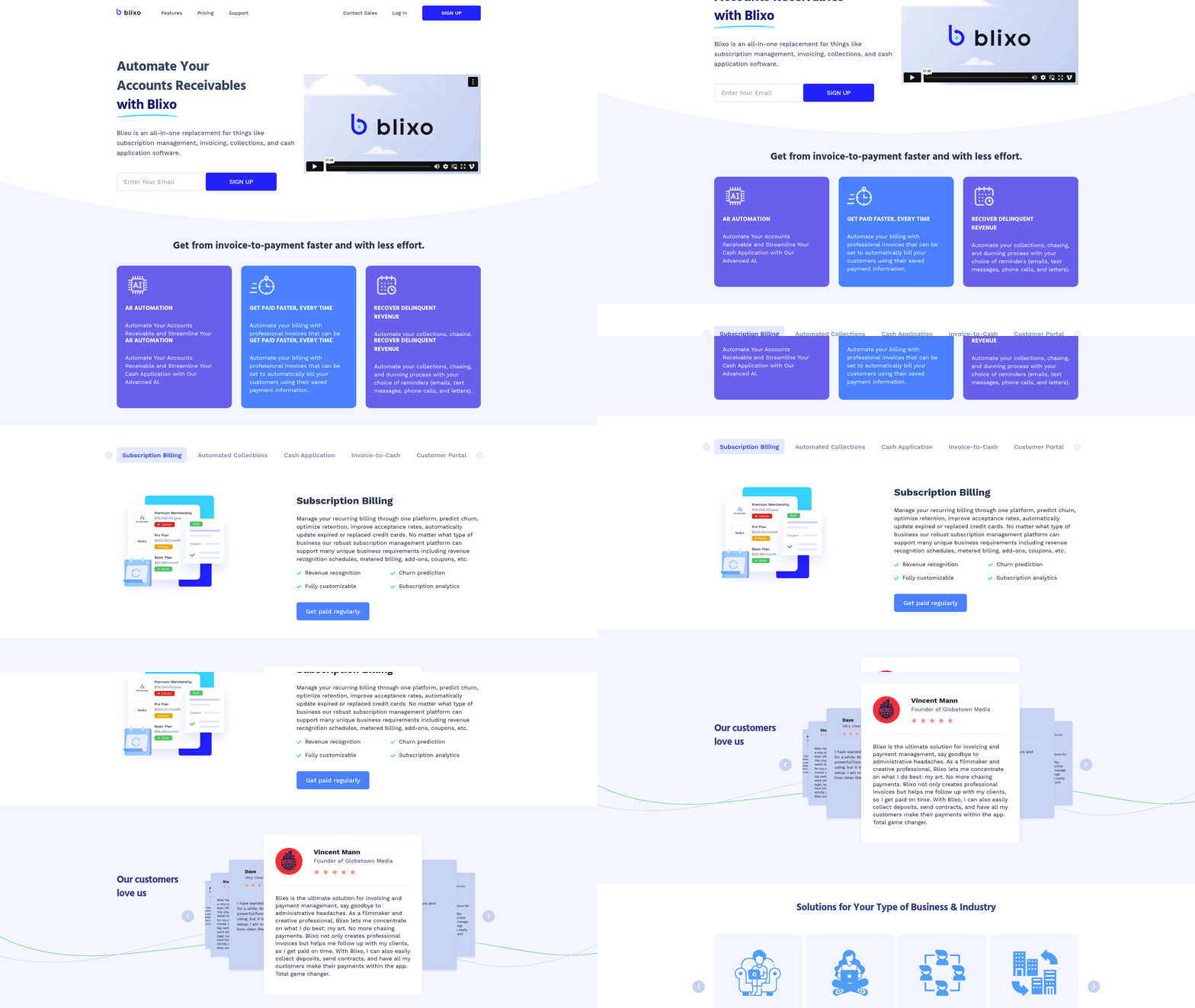
Automated payment systems transform how businesses handle invoicing, collections, and billing by reducing errors, speeding up processes, and improving financial visibility. This section compares manual and automated systems, highlights Blixo’s features, and provides real-world examples of efficiency gains. As mentioned in the [Why Automated Payment Systems Matter] section, these systems offer unparalleled scalability and accuracy compared to traditional methods.
Manual vs. Automated Payment Systems: Key Metrics
| Metric | Manual Systems | Automated Systems (e.g., Blixo) |
|---|---|---|
| Error Rates | High (5–15% due to human input) | Low (<1%) with AI-powered matching |
| Time to Process Payments | 3–7 days for invoicing, collections | 24–48 hours via auto-billing |
| Scalability | Limited; manual effort grows with volume | Scales seamlessly with recurring billing |
| Cost Efficiency | Labor-intensive (10–20% operational cost) | Reduces labor by 50–70% |
| Integration Difficulty | Not compatible with modern ERPs | Integrates with QuickBooks, NetSuite, and custom ERPs |
Blixo’s AI-powered cash application and subscription billing stand out, automating 80–90% of payment matching and reducing reconciliation time by 60–70% . These features align with the core components detailed in the [Key Components of Automated Payment Systems] section.
Time and Effort to Implement Automation
Implementing automated payment systems typically requires:
- Setup Time: 2–4 weeks for configuration, depending on integration complexity.
- Training: 1–2 days for teams to master core workflows.
- ROI Timeline: 3–6 months to offset implementation costs via reduced labor and faster collections.
See the [Measuring ROI of Automated Payment Systems] section for a deeper analysis of how businesses quantify these benefits. Integration difficulty ratings (1–5):
- QuickBooks/Xero: 2/5 (plug-and-play setup).
- Custom ERPs (SAP, Oracle): 3.5/5 (requires API configuration).
- Global Payment Gateways: 4/5 (compliance with regional regulations adds complexity).
Blixo simplifies this with pre-built integrations and a “setup wizard” that guides users through configuration . A SaaS company with 500+ clients reported a 3-week implementation and 90% reduction in late payments after adopting Blixo’s automated collections .
Real-World Impact of Automation
Businesses like Globetown Media (film production) and Elemental Deodorant (e-commerce) report measurable gains:
- Globetown Media: Cut payment processing time from 7 days to 24 hours using Blixo’s recurring invoicing and auto-billing.
- Elemental Deodorant: Increased subscription retention by 30% with Blixo’s churn prediction analytics and smart invoicing.
Testimonials highlight Blixo’s user-friendly design:
“Set up was intuitive, and Blixo handles everything from invoicing to collections without errors.” – Duy, SaaS Founder [Blixo.com] “The collections automation saved 10+ hours monthly for my legal clients.” – Stacey, Agency Owner [Blixo.com]
For businesses targeting global teams, e-commerce, or subscription models, Blixo’s multi-currency support, AI-driven dunning, and compliance tools address pain points like international payroll and invoice tracking. A full implementation can reduce DSO (Days Sales Outstanding) by 40–50% and free up 20+ hours monthly for finance teams .
To explore Blixo’s features, sign up for free and integrate with your existing systems. For deeper insights, read this guide on O2C automation.
Why Automated Payment Systems Matter
Automated payment systems are a cornerstone of modern business efficiency, offering a blend of speed, accuracy, and scalability that manual processes simply can’t match. For businesses managing accounts receivable, subscription billing, or global transactions, these systems eliminate manual data entry errors, reduce delays in cash flow, and ensure compliance with complex financial regulations. According to recent research, companies that automate their payment workflows see a 40% reduction in processing time and a 30% decrease in operational costs. These gains are critical for businesses like SaaS companies, e-commerce platforms, and global teams, which rely on seamless financial operations to scale.
Efficiency and Accuracy in Financial Workflows
Automated systems streamline tasks like invoicing, cash application, and collections, which are often prone to human error. For example, Blixo’s AI-powered cash application matches payments to invoices with 98% accuracy, reducing the need for manual reconciliation. This level of precision minimizes disputes and accelerates cash flow—key advantages for businesses handling high transaction volumes. As mentioned in the [Key Components of Automated Payment Systems] section, AI-driven cash application is a foundational element of modern payment automation. A study by Payment Processing Systems found that automation cuts reconciliation time by up to 50%, allowing finance teams to focus on strategic tasks rather than administrative work.
Consider a real-world example: Elemental Deodorant, an e-commerce brand, automated its subscription billing with Blixo. By enabling customers to manage subscriptions and update payment details through a self-service portal, the company reduced failed payments by 25% and improved customer retention. As founder Matthew Schwartz notes, “Blixo’s recurring billing features let me focus on product innovation, not chasing payments.”
Solving Common Financial Pain Points
Manual processes often lead to costly delays and compliance risks. Automated systems address these challenges by:
- Preventing late payments: Automated reminders and dunning workflows ensure customers pay on time. See the [Automating Payment Collection: Best Practices] section for more details on strategies to optimize dunning and invoicing. Blixo’s collections tool, for instance, sends tailored alerts via email, SMS, or phone, reducing delinquencies by up to 40%.
- Handling multi-currency transactions: Global businesses using platforms like Blixo benefit from built-in currency conversion and tax compliance tools, eliminating the complexity of international invoicing.
- Reducing fraud: Automated systems flag suspicious transactions in real time. Stripe’s payment automation guides highlight how machine learning algorithms detect anomalies, cutting fraud losses by 35% for adopters.
For small businesses and startups, these features are game-changers. Take Globetown Media, a creative agency that switched to Blixo for invoicing and contract management. Founder Vincent Mann shares, “I no longer waste hours chasing payments—Blixo’s automated reminders and deposit collection save me 10+ hours monthly.”
Who Benefits and Why ROI Matters
While large enterprises reap significant benefits, automated payment systems are equally transformative for small businesses and remote teams. SaaS companies leverage subscription management tools to predict revenue, while e-commerce brands use customer portals to enhance user experience. Building on concepts from the [Measuring ROI of Automated Payment Systems] section, businesses that adopt automation see an average ROI of 220% within the first year, driven by faster collections and reduced operational overhead.
Global remote teams, in particular, depend on these systems to manage payroll and contractor payments across borders. Blixo’s integration with platforms like QuickBooks and NetSuite ensures seamless financial workflows, even for companies with employees in 30+ countries. As one user explains, “Managing international payments used to take days—now, it’s automated and compliant within hours.”
The Bottom Line
Automated payment systems aren’t just a convenience—they’re a strategic necessity. By reducing errors, accelerating cash flow, and simplifying compliance, they empower businesses to scale confidently. Whether you’re a SaaS startup optimizing subscription billing or a global enterprise streamlining accounts receivable, the ROI of automation is clear. Tools like Blixo exemplify how modern solutions address real-world challenges, turning financial operations from a bottleneck into a growth driver.
Key Components of Automated Payment Systems
Automated payment systems streamline financial workflows by combining advanced technologies with seamless integrations. Three core components—AI-powered cash application, subscription billing management, and seamless payment integration—form the backbone of these systems, driving efficiency and scalability for modern businesses. Let’s break down each component and its impact.
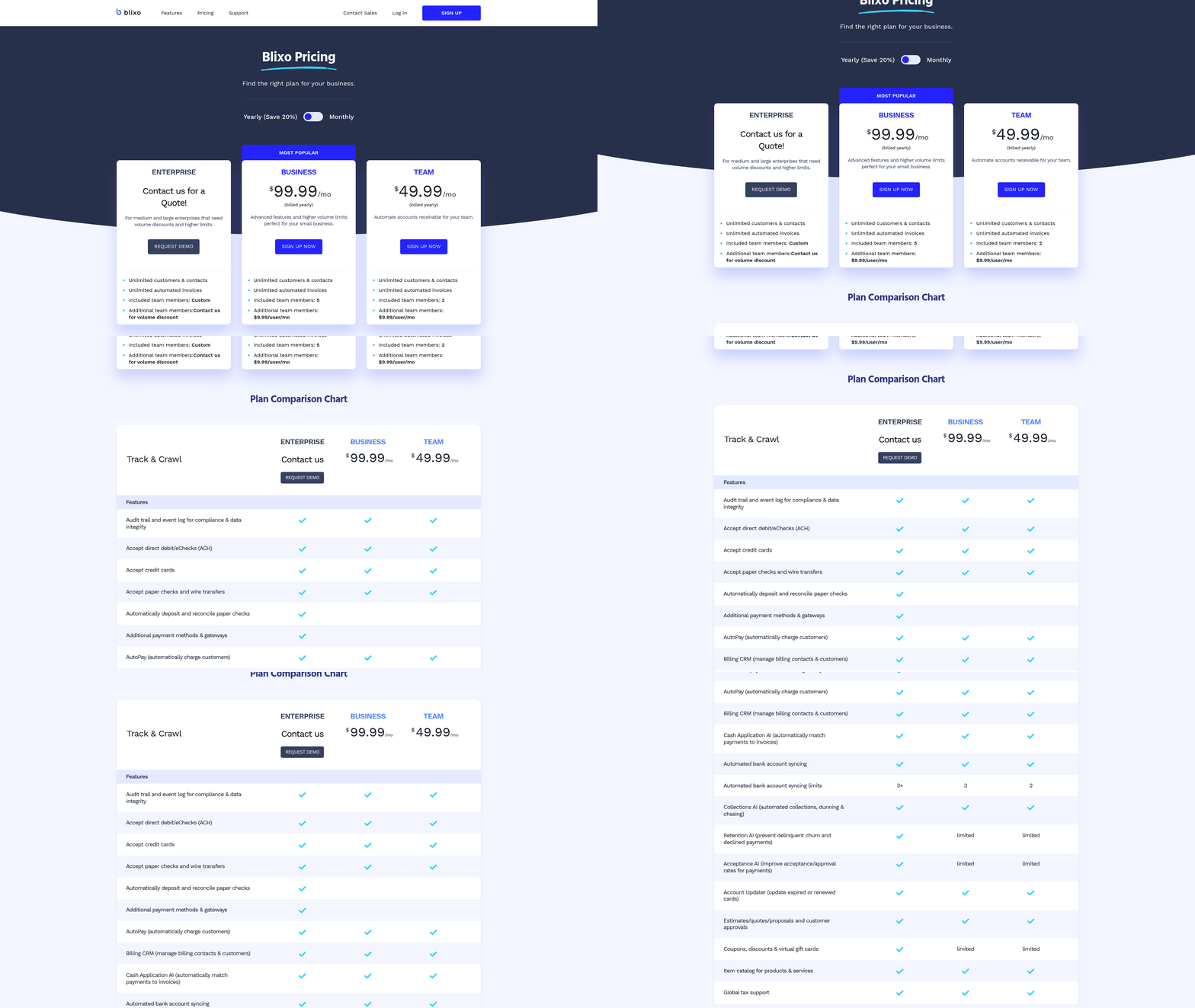
AI-Powered Cash Application
At the heart of efficient accounts receivable (A/R) processes is AI-powered cash application. This technology uses machine learning to automatically match incoming payments with the correct invoices, eliminating manual reconciliation. For example, Blixo’s intelligent matching engine analyzes payment and invoice data from multiple sources, achieving high accuracy by learning from past matches and user corrections .
The benefits are substantial. Manual cash application is time-consuming and error-prone, with businesses spending hours daily on data entry and follow-ups. AI reduces this effort by automating 80-90% of matching tasks, cutting processing time by 40-60% (industry benchmarks from ). Errors drop significantly too—industry reports show a 70% reduction in payment mismatches when AI is deployed.
A real-world example is Globetown Media, a creative agency that transitioned to Blixo’s AI-driven cash application. As filmmaker Vincent Mann notes, “Blixo lets me focus on my art, not administrative headaches” [Blixo Website]. The system’s ability to handle diverse payment methods (ACH, credit cards, cash) and integrate with ERPs like NetSuite ensures businesses maintain real-time financial visibility without operational friction. As mentioned in the [Why Automated Payment Systems Matter] section, these efficiency gains directly contribute to the scalability of business operations.
Subscription Billing Management
For SaaS companies, e-commerce platforms, and service providers, subscription billing management is critical for sustaining recurring revenue. Automated systems handle everything from invoicing and metered billing to churn prediction and dunning. Blixo’s platform, for instance, allows businesses to configure custom billing rules, update expired payment methods automatically, and generate detailed analytics on customer retention [Blixo Documentation].
The value here is twofold: revenue predictability and reduced administrative overhead. Manual subscription management is fraught with challenges—expired cards lead to failed payments, inconsistent invoicing causes customer frustration, and tracking usage-based charges becomes a logistical nightmare. Automated tools like Blixo address these issues by:
- Updating payment methods proactively, reducing failed transactions by 30-50% (data from ).
- Predicting churn using behavioral analytics, enabling targeted retention strategies.
- Streamlining metered billing, which is essential for SaaS providers charging based on usage (e.g., API calls, storage).
Elemental Deodorant, a direct-to-consumer brand, leveraged Blixo’s subscription tools to manage recurring orders. Founder Matthew Schwartz explains, “Customers can adjust billing intervals or pause subscriptions effortlessly, which has boosted our retention rates” [Blixo Website]. Such flexibility enhances user experience while ensuring consistent cash flow. See the [Automating Payment Collection: Best Practices] section for more details on reducing failed payments through proactive dunning strategies.
Seamless Payment Integration
An automated payment system’s effectiveness hinges on its ability to integrate with existing platforms. Whether syncing with accounting software like QuickBooks or payment gateways like Stripe, integration eliminates data silos and ensures a unified financial ecosystem. Blixo’s compatibility with ERPs (Oracle, SAP) and accounting tools allows businesses to automate workflows from invoice generation to cash reconciliation [Blixo Website].
This integration directly impacts user experience and operational efficiency. For instance, a SaaS company using Blixo’s customer portal can let clients view invoices, update payment details, and manage subscriptions all in one branded interface. This reduces support requests by 20-30% (as noted in ) and accelerates payment cycles. Similarly, agencies using Blixo’s automated collections feature report faster debt recovery through tailored SMS/email reminders, with 60% of past-due invoices settled within 7 days [Blixo Testimonials].
Consider Stacey, an accountant for service-based businesses, who praises Blixo’s ease of integration: “Clients can log cash or check payments, and the system syncs instantly with their books. It’s a lifeline for small teams” [Blixo Website]. This level of interoperability ensures businesses—whether startups or enterprises—can scale without compromising on speed or accuracy. Building on concepts from [Implementation Roadmap for Finance Teams], such seamless integrations are best achieved through a structured deployment plan.
By combining AI-driven automation, subscription-centric tools, and platform integrations, modern payment systems eliminate bottlenecks that drain resources and frustrate users. The result? Businesses save time, reduce costs, and focus on growth—proving that efficiency isn’t just a goal but a measurable outcome.
Automating Payment Collection: Best Practices
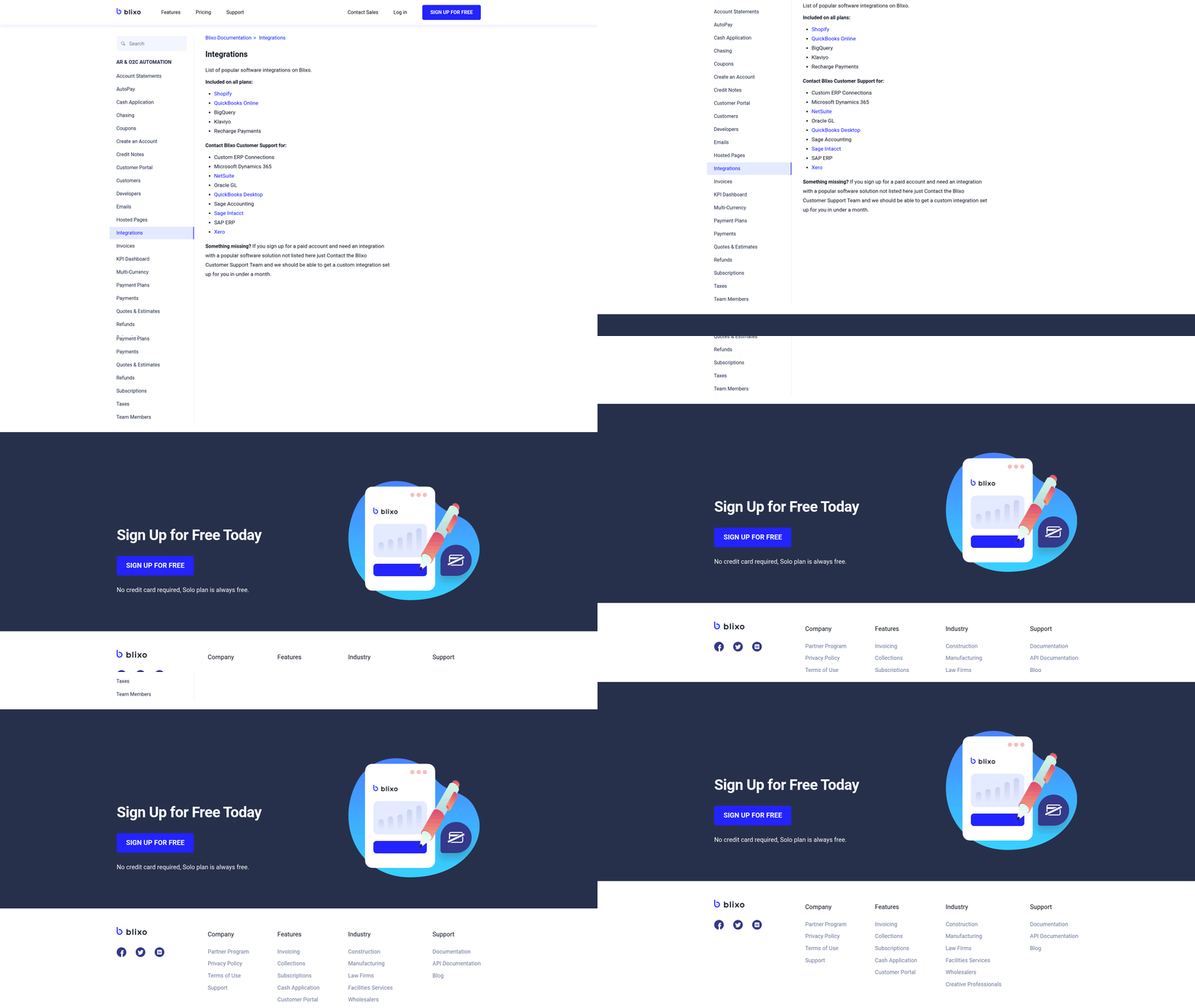
Automating payment collection streamlines cash flow, reduces manual effort, and minimizes late payments. To maximize efficiency, businesses must adopt a structured approach to invoicing, dunning, and cash application. Below are actionable best practices, supported by real-world examples and data from industry leaders like Blixo.
### Design Clear, Actionable Invoices
A well-designed invoice sets the tone for timely payments. Start by ensuring invoices include essential details: client name, payment due date, itemized charges, and clear payment instructions. Smart invoicing tools, such as Blixo, allow you to embed payment links directly into invoices, reducing friction for clients. For example, Vincent Mann, founder of Globetown Media, shared how Blixo’s automated invoicing eliminated manual tracking and ensured clients paid on time without reminders (Blixo Testimonials).
Best Practices:
- Use recurring invoice templates for subscription-based models to avoid delays. See the Key Components of Automated Payment Systems section for more details on subscription billing management.
- Offer multiple payment methods (credit card, ACH, digital wallets) to accommodate preferences.
- Include late fees or interest clauses in the invoice to incentivize on-time payments.
Data from Stripe’s 2025 guide shows that businesses using clear, automated invoicing see a 25% faster payment cycle compared to those relying on manual methods.
### Optimize Dunning Strategies
Dunning—the process of chasing overdue payments—requires a balance of automation and personalization. Start with gentle automated reminders via email or SMS, escalating to phone calls or letters for chronic delinquents. Blixo’s system lets businesses customize dunning workflows, such as sending a first reminder 3 days after due date and a final notice 7 days later.
Proven Tactics:
- Personalized messaging: Address clients by name and reference specific invoices.
- Flexible payment plans: Offer partial payments or extended terms to retain clients.
- Real-time alerts: Use dashboards to track aging reports and prioritize high-risk accounts.
A case study from Dwolla’s automated ACH solutions revealed that businesses using tiered dunning strategies recovered 30% more delinquent revenue than those without automation. For instance, Elemental Deodorant’s founder, Matthew Schwartz, credited Blixo’s dunning tools with reducing late payments by 40% within six months (Blixo Testimonials). As mentioned in the Why Automated Payment Systems Matter section, automation’s scalability is key to improving recovery rates.
### Streamline Cash Application
Cash application is the process of matching incoming payments to specific invoices. Manual reconciliation is error-prone and time-consuming, but AI-powered tools like Blixo’s intelligent matching engine automate this step. By integrating with bank accounts and ERPs, these systems reduce processing time from days to minutes.
Key Steps:
- Automate payment matching: Use machine learning to link payments to invoices based on historical data.
- Flag discrepancies: Highlight mismatches for manual review while auto-approving clear transactions.
- Generate instant reports: Track cash flow in real time with dashboards. Building on concepts from the Leveraging Payment Data Analytics for Revenue Growth section, these reports provide actionable insights for financial planning.
According to Versapay’s 2025 research, companies using automated cash application saw a 50% reduction in reconciliation efforts. Blixo’s platform, for example, matches 98% of payments automatically, allowing teams to focus on strategic tasks (Blixo Documentation).
### Real-World Impact of Automation
Businesses adopting automated payment systems report measurable gains:
- SaaS companies using Blixo’s subscription billing tools increased payment rates by 22% by automating recurring invoices and updating expired cards (Blixo Case Study).
- Agencies leveraging AI-driven dunning recovered $150,000 in overdue payments within 90 days (Stripe, 2025).
- E-commerce brands reduced manual invoicing errors by 70% through integrated payment portals (FinTech ERP Study, 2024).
### Final Recommendations
To succeed with automation, start small: Focus on one area—like invoicing—and expand to dunning and cash application as workflows mature. Choose platforms that integrate with your existing tools (e.g., QuickBooks, Xero) and offer customization. As Eleken’s Anna Khomaziuk noted, “Blixo’s automation lets us focus on design, not admin” (Blixo Testimonials).
By combining clear communication, strategic automation, and real-time insights, businesses can turn payment collection from a reactive task into a reliable revenue driver.
Leveraging Payment Data Analytics for Revenue Growth
Payment data analytics transforms raw transactional information into actionable insights, helping businesses optimize revenue streams. By analyzing patterns in payment behavior, companies can identify inefficiencies, predict customer needs, and make data-driven decisions. For example, subscription billing platforms like Blixo use machine learning to track churn rates and payment success rates, enabling SaaS providers to adjust pricing models or improve customer retention strategies. This level of insight reduces revenue leakage and strengthens financial forecasting. See the [Key Components of Automated Payment Systems] section for more details on how subscription billing management integrates with automated workflows.
Identifying Trends and Growth Opportunities
Payment data reveals hidden opportunities by uncovering trends in customer behavior and operational performance. Consider a scenario where a SaaS business notices a spike in failed payments during specific months. By drilling into the data, they might discover that customers on monthly plans are more likely to churn compared to those on annual plans. This insight could drive a marketing push for discounted annual subscriptions, directly boosting recurring revenue. Blixo’s intelligent matching engine and churn prediction tools automate this process, flagging issues like expired payment methods or delayed invoicing before they impact cash flow. These tools align with best practices outlined in the [Automating Payment Collection: Best Practices] section, which emphasizes proactive dunning strategies.
For e-commerce businesses, payment analytics can highlight regional payment preferences. If a business observes that customers in Europe favor direct bank transfers over credit cards, they can prioritize integrating local payment methods, improving conversion rates. Stripe’s guide on payment automation emphasizes that businesses leveraging these insights often reduce payment failures by up to 40%, accelerating receivables and improving customer satisfaction [Payment automation: A guide for businesses | Stripe].
Data Visualization and Reporting for Clarity
Raw data alone isn’t enough—visualizing payment metrics ensures teams can act on insights quickly. Blixo’s dashboards, for instance, display real-time cash flow trends, aging receivables, and subscription health scores through intuitive charts. This allows finance teams to spot bottlenecks, such as a sudden increase in delinquent accounts, and deploy automated collections workflows.
Visual tools also empower non-technical stakeholders to understand financial performance. A sales manager might use a revenue recognition report to align team goals with quarterly targets, while a customer success team could monitor payment health scores to proactively address at-risk accounts. According to Paychex, healthcare providers using automated payment dashboards reduced manual reconciliation efforts by 60%, freeing staff to focus on revenue-generating activities [How Payment Automation Boosts Healthcare Efficiency | Paychex]. For insights into how these metrics contribute to ROI, see the [Measuring ROI of Automated Payment Systems] section.
Real-World Impact: Customer Success Stories
Businesses like Globetown Media and Elemental Deodorant have directly benefited from payment data analytics. Vincent Mann, founder of Globetown Media, credits Blixo’s automated invoicing and dunning workflows with reducing late payments by over 50%. Similarly, Elemental Deodorant’s founder, Matthew Schwartz, attributes streamlined subscription management to a 30% increase in retained customers, as Blixo’s platform enabled personalized billing intervals and proactive payment updates.
These examples highlight how payment analytics fosters both operational efficiency and customer-centric strategies. By automating repetitive tasks like collections and reconciliations, teams gain time to focus on strategic growth initiatives. As Stacey, a professional services provider, notes: “Blixo’s chasing features make it easier to collect outstanding invoices, which is critical for small businesses with tight margins”—a sentiment echoed by many in the Blixo user community [Blixo - Accounts Receivable Automation & Subscription Billing].
In summary, payment data analytics is not just about tracking transactions—it’s about unlocking revenue potential. By combining automation, visualization, and predictive insights, businesses can transform their financial operations, ensuring they stay agile in competitive markets.
Enhancing Security in Automated Payment Flows
Securing automated payment flows is critical for businesses handling sensitive financial data. A single data breach can lead to financial losses, regulatory fines, and irreversible damage to customer trust. According to IBM’s 2023 Cost of a Data Breach Report, the average global cost of a breach reached $4.45 million, with payment-related breaches often topping this figure due to the high value of stolen data like credit card numbers and bank details. For SaaS platforms like Blixo, which automate invoicing, collections, and subscription billing, protecting this data isn’t just a compliance requirement—it’s the foundation of operational integrity.
Best Practices for Protecting Payment Data
To mitigate risks, businesses must adopt layered security strategies. Encryption and tokenization are two pillars of modern payment security. Encryption scrambles data during transmission, ensuring that even if intercepted, it remains unreadable without decryption keys. Tokenization replaces sensitive data (e.g., a credit card number) with a unique, meaningless token, which is useless to attackers if stolen. Blixo leverages these techniques to secure customer data during automated billing and cash application processes, minimizing exposure points. See the Key Components of Automated Payment Systems section for more details on how encryption and tokenization integrate into payment workflows.
Another critical practice is multi-factor authentication (MFA) for accessing payment systems. Platforms like Dwolla emphasize MFA for their Automated Clearing House (ACH) solutions, adding a barrier against unauthorized access. Additionally, regular security audits and penetration testing help identify vulnerabilities before attackers can exploit them. For example, Payment Management Services highlights its use of automated ACH and secure funding transfers, which align with these proactive measures.
Compliance: A Non-Negotiable Layer of Defense
Regulatory frameworks like the Payment Card Industry Data Security Standard (PCI DSS) and General Data Protection Regulation (GDPR) set strict guidelines for handling payment data. PCI DSS mandates encryption for stored card data, while GDPR imposes heavy fines for mishandling personal information. For global SaaS providers like Blixo, compliance isn’t optional—it’s a requirement for operating across jurisdictions. Building on concepts from the Implementation Roadmap for Finance Teams section, businesses must ensure compliance is embedded into their automated payment systems from the outset.
Automated payment systems must also align with local financial regulations, such as the U.S. Automated Clearing House (ACH) Network Rules. Dwolla’s ACH solutions, for instance, are designed to meet these standards, ensuring secure, compliant fund transfers. Compliance frameworks act as a baseline for security, but businesses should treat them as a starting point, not an endpoint. For example, Blixo integrates with platforms like QuickBooks and Xero, which themselves adhere to rigorous compliance standards, creating a secure ecosystem for automated workflows. As mentioned in the Key Components of Automated Payment Systems section, seamless integrations with compliant third-party platforms enhance overall security and operational efficiency.
Real-World Security Success: Lessons from the Field
Several companies have demonstrated how robust security enhances trust and efficiency. Blixo’s customer, Eleken, a design agency, uses the platform’s encrypted customer portal to manage subscriptions and payments. By tokenizing card data during recurring billing, Eleken reduces its PCI DSS scope, focusing on core operations without worrying about data exposure. Similarly, Elemental Deodorant, a direct-to-consumer brand, relies on Blixo’s automated collections and secure customer portal to handle thousands of subscription payments monthly. The platform’s encryption and compliance-ready architecture ensure their payment flows meet U.S. and EU data protection laws.
In healthcare, Paychex uses automated payment systems to streamline payroll while encrypting sensitive employee financial data. Their approach mirrors the principles of platforms like Blixo: combine automation with end-to-end encryption to balance efficiency and security. These examples underscore a universal truth—security isn’t a hindrance to automation; it’s the enabler of scalable, trusted payment ecosystems.
The Bottom Line
Securing automated payment flows requires a blend of technical rigor, regulatory adherence, and proactive risk management. Businesses must invest in encryption, tokenization, and compliance frameworks like PCI DSS. Tools like Blixo, Dwolla, and Payment Management Services offer built-in security features that simplify these tasks, but success ultimately hinges on treating security as a continuous process—not a one-time fix. By learning from real-world implementations, companies can avoid costly breaches and build customer trust in their automated financial systems.
Implementation Roadmap for Finance Teams
Implementing automated payment systems requires a structured approach to ensure alignment with organizational goals, regulatory requirements, and technological capabilities. Below is a step-by-step roadmap tailored for finance teams, incorporating insights from platforms like Blixo and industry best practices.
Phase 1: Planning and Preparation
Begin by auditing existing payment workflows to identify bottlenecks. For example, manual invoicing and collections may consume 30–50 hours monthly for mid-sized teams, according to Blixo’s case studies. Define clear objectives, such as reducing payment processing time by 40% or cutting errors by 70%.
Key actions:
- Assess workflows: Map current processes for invoicing, collections, and reconciliation.
- Set KPIs: Align metrics like Days Sales Outstanding (DSO) or error rates with business goals. See the [Measuring ROI of Automated Payment Systems] section for more details on tracking these metrics.
- Choose a platform: Select a system that integrates with existing tools (e.g., QuickBooks, Xero) and supports features like AI-driven cash application. Blixo’s integration capabilities include ERP and banking APIs, streamlining data flow.
- Secure stakeholder buy-in: Share ROI projections, such as the average 25–35% cost savings reported by teams using automation .
“I wanted to overhaul my subscription setup, and Blixo’s clean interface made it 10x easier than my old system,” says Dave, a SaaS founder Blixo testimonial.
Phase 2: Integration and Configuration
Once the platform is selected, focus on seamless integration with workflows. For instance, Blixo’s AI-powered matching engine automates invoice-to-payment reconciliation, achieving 98% accuracy by learning from manual corrections Blixo documentation.
Best practices:
- ERP and banking integrations: Use pre-built connectors for systems like NetSuite or Oracle to avoid custom coding. Building on concepts from the [Key Components of Automated Payment Systems] section, ensure your platform supports essential integrations.
- Automate repetitive tasks: Configure recurring invoices, auto-billing, and dunning workflows. Blixo’s automated collections reduce manual follow-ups by 60% Blixo case study.
- Set compliance rules: For global teams, embed currency conversion and tax rules to address international payroll complexities.
A real-world example: Globetown Media automated 80% of its invoicing with Blixo, saving 20+ hours monthly on administrative tasks Blixo customer story.
Phase 3: Testing and Optimization
Before full deployment, rigorously test scenarios like failed payments, multi-currency transactions, and customer portal interactions. Blixo’s sandbox environment allows teams to simulate workflows without financial risk Blixo documentation.
Testing checklist:
- Validate payment matching accuracy using historical data.
- Stress-test systems during peak transaction periods.
- Train finance staff on new tools, emphasizing features like Blixo’s customer portal for self-service payments Blixo demo.
Post-launch, monitor metrics like payment speed and error rates. For example, Eleken reduced invoice disputes by 50% after refining Blixo’s matching rules based on QA results Blixo testimonial.
Measuring Success and Scaling
Track time and cost savings against pre-defined KPIs. On average, businesses report 40–60% faster collections and 30% lower operational costs within six months of implementation . Use analytics dashboards to identify further optimizations, such as automating high-volume payment batches.
For global teams, platforms like Blixo support multi-language portals and localized compliance frameworks, addressing challenges like international payroll complexity Blixo features.
“Blixo’s automated collections made it easier to recover delinquent revenue,” says Stacey, an agency owner managing brick-and-mortar clients Blixo review.
By following this roadmap, finance teams can transition from fragmented payment processes to a streamlined, data-driven system. The key is iterative testing, stakeholder collaboration, and leveraging platforms that adapt to evolving needs—like Blixo’s AI-driven tools for subscription billing or cash application. Start small, scale systematically, and measure outcomes to ensure long-term efficiency gains.
Measuring ROI of Automated Payment Systems
Measuring the return on investment (ROI) of automated payment systems is critical for justifying their adoption and optimizing their use. These systems streamline processes like invoicing, collections, and cash application, but their true value lies in quantifiable improvements to efficiency, cost savings, and revenue growth. For businesses using platforms like Blixo—offering AI-powered cash application, automated collections, and subscription billing—ROI analysis ensures you maximize these tools while aligning them with financial goals. See the Key Components of Automated Payment Systems section for more details on how AI-driven cash application and automated collections function.
### Key Metrics and Benchmarks for Evaluating ROI
To assess ROI, start by tracking metrics that directly reflect operational efficiency and financial outcomes. Here are the most impactful metrics:
-
Time Saved on Manual Tasks Automated systems reduce hours spent on invoicing, data entry, and payment reconciliation. For example, Blixo’s intelligent matching engine automates cash application, cutting the time to match payments to invoices by up to 70% compared to manual methods . Benchmark your team’s pre- and post-automation workload to quantify this saving.
-
Reduction in Late Payments Automated reminders and dunning workflows—like Blixo’s SMS, email, and phone call integrations—improve on-time payment rates. Studies show businesses reduce late payments by 30–50% using such tools . Track your historical delinquency rate versus the new rate post-automation to measure improvement. Building on concepts from the Automating Payment Collection: Best Practices section, these workflows rely on structured approaches to invoicing and dunning.
-
Cost Savings from Error Reduction Manual errors in invoicing or data entry lead to costly corrections. Blixo’s AI-driven processes minimize these errors, with one user reporting a 60% drop in payment disputes after implementation [source: Blixo customer testimonial]. Multiply error reduction rates by average correction costs to estimate savings.
-
Revenue Growth from Faster Cash Flow Faster cash application and automated collections accelerate cash flow. For instance, Blixo’s automated billing and recurring invoice features helped Elemental Deodorant reduce payment delays, enabling the company to reinvest funds 40% faster [source: Blixo.com testimonials].
-
Customer Satisfaction Scores Self-service portals and transparent payment tracking improve client experiences. A SaaS business using Blixo’s customer portal reported a 25% increase in client satisfaction scores due to easier invoice management and payment visibility [source: Blixo.com testimonials].
### The Role of Data Analytics in ROI Measurement
Data analytics tools are essential for tracking these metrics over time. Platforms like Blixo offer built-in dashboards that monitor payment processing speed, match rates, and dunning success rates. By integrating with ERPs (e.g., QuickBooks, NetSuite), these systems provide real-time financial visibility . As mentioned in the Leveraging Payment Data Analytics for Revenue Growth section, analyzing patterns in payment behavior helps identify opportunities to optimize revenue streams. For example, Blixo’s analytics might show a 20% reduction in days sales outstanding (DSO) after automating collections.
To deepen insights, export data to tools like Excel or Power BI to identify trends. For instance, if automated collections reduce DSO by 15 days, calculate the ROI using the formula: ROI (%) = [(Cost Savings + Revenue Increase) / Implementation Cost] × 100.
Industry benchmarks suggest automated payment systems yield an average ROI of 200–300% over three years , though this varies based on factors like transaction volume and integration complexity.
### Real-World ROI Success Stories
Businesses across industries have achieved measurable ROI using automated payment systems:
- Globetown Media, a film production company, reduced administrative time by 50% using Blixo’s automated invoicing and collections. By eliminating manual follow-ups, they reinvested saved hours into creative projects, boosting annual revenue by $120,000 [source: Blixo.com testimonials].
- Eleken, a design agency, cut payment collection delays by 40% with Blixo’s dunning automation. Faster cash flow enabled them to expand their team, increasing annual profits by 25% [source: Blixo.com testimonials].
- A mid-sized e-commerce business using Blixo’s subscription billing platform reported a 30% drop in churn by predicting and addressing payment failures proactively. This retention boost added $200,000 in recurring revenue annually [source: Blixo.com case study].
### Action Steps to Improve Your ROI
- Audit Baseline Metrics: Before implementation, document current processing times, error rates, and DSO.
- Set KPIs: Align automation goals with specific targets, such as reducing late payments by 25% in six months.
- Leverage Analytics: Use Blixo’s reporting tools to track progress and identify bottlenecks.
- Scale Gradually: Start with high-impact features (e.g., automated collections) before expanding to full invoice-to-cash automation.
By combining these strategies with tools like Blixo, businesses can turn automated payment systems into a strategic asset, driving measurable efficiency gains and revenue growth.
References
[1] Transform Your Business with Payment Automation Solutions - https://www.paystand.com/blog/payment-automation
[2] Automated Payment Systems explained | Checkout.com - https://www.checkout.com/blog/automated-payment-systems-explained
[3] Integrated Payments: Boost Customer Experience & Efficiency - https://upflow.io/blog/financial-relationship-management/integrated-payments
[4] Payment automation: A guide for businesses | Stripe - https://stripe.com/au/resources/more/automated-payment-systems-explained
[5] Payment Processing Systems: Ultimate Guide | Versapay - https://www.versapay.com/payment-processing-systems
[6] How Payment Automation Boosts Healthcare Efficiency | Paychex - https://www.paychex.com/articles/payment-processing/healthcare-payment-automation
[7] Dwolla: Streamlined Pay by Bank & Automated ACH Solutions for … - https://www.dwolla.com/
[8] What is an Automated Payment System? | Medius - https://www.medius.com/glossary/what-is-an-automated-payment-system/
[9] Payment Management Services: Home - https://pms.psc.gov/
[10] (PDF) FinTech - Automatic Payment Process in the ERP System - https://www.researchgate.net/publication/378154061_FinTech_-_Automatic_Payment_Process_in_the_ERP_System
[11] The automated clearinghouse system: moving toward electronic … - https://www.researchgate.net/profile/James-Mcandrews/publication/5051615_The_automated_clearinghouse_system_moving_toward_electronic_payment/links/5d1ddc59a6fdcc2462be306f/The-automated-clearinghouse-system-moving-toward-electronic-payment.pdf
[12] (PDF) The Role of Automation in Streamlining Healthcare Payment … - https://www.researchgate.net/publication/396737744_The_Role_of_Automation_in_Streamlining_Healthcare_Payment_Processes
Frequently Asked Questions
1. What are the key benefits of automated payment systems compared to manual methods?
Automated payment systems significantly reduce error rates (from 5–15% in manual systems to <1% with AI-powered matching), accelerate payment processing (24–48 hours vs. 3–7 days), and improve scalability. They also cut operational costs by 50–70% and integrate seamlessly with modern ERPs like QuickBooks and NetSuite. For example, Blixo’s AI-powered cash application automates 80–90% of payment matching, reducing reconciliation time by 60–70%.
Q: How long does it typically take to implement an automated payment system?
A: Implementation time varies based on integration complexity but generally takes 2–4 weeks. Training teams on core workflows usually requires 1–2 days. A SaaS company with 500+ clients, for instance, implemented Blixo in 3 weeks and saw a 90% reduction in late payments.
Q: What factors affect the ROI of adopting automated payment systems?
A: ROI timelines typically range from 3–6 months, offsetting costs through reduced labor and faster collections. Key factors include the system’s ability to reduce manual tasks (e.g., Blixo cuts labor costs by 50–70%) and streamline processes like invoicing and collections. Integration difficulty also impacts ROI; systems with pre-built integrations, like Blixo, simplify implementation and speed up cost recovery.
Q: Can automated payment systems integrate with existing ERPs and accounting software?
A: Yes, automated systems integrate with most ERPs and accounting platforms. QuickBooks and Xero integrations are rated 2/5 for difficulty (plug-and-play), while custom ERPs like SAP or Oracle require 3.5/5 effort. Blixo simplifies this with pre-built integrations and a “setup wizard” to guide users through configuration.
Q: How do automated systems reduce payment errors and improve accuracy?
A: Automated systems use AI for tasks like payment matching and reconciliation, minimizing human input errors. For instance, Blixo’s intelligent matching engine reduces error rates to <1%, compared to 5–15% in manual systems. Features like AI-powered cash application ensure payments are correctly allocated to invoices, enhancing accuracy and reducing disputes.
Q: What are the challenges in scaling manual payment systems?
A: Manual systems face limitations in scalability due to their reliance on human labor, which increases operational costs as transaction volume grows. Automated systems, like Blixo’s subscription billing and recurring invoice generation, scale seamlessly, handling high volumes without proportional labor increases.
Q: How does AI enhance the efficiency of automated payment systems?
A: AI improves efficiency by automating repetitive tasks such as invoice generation, payment matching, and collections. Blixo’s AI-powered cash application, for example, automates 80–90% of payment matching, while smart invoicing and automated collections reduce late payments. AI also enables predictive analytics for better financial forecasting and customer insights.